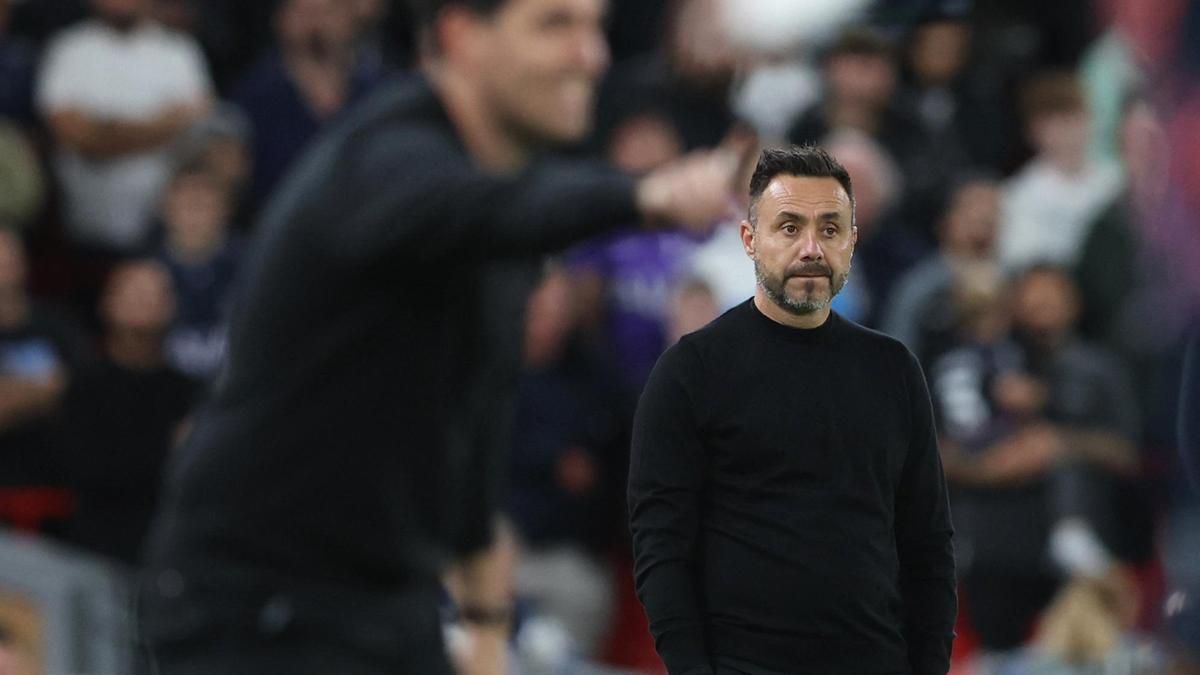
Tottenham’s League Cup match against Liverpool at Anfield - thehindu.com

«Resolution» در فارسی

مفهوم دقیق

«Resolution» در انگلیسی دو حوزهٔ معنایی مجزا دارد که در فارسی هر کدام با واژه‌ای متفاوت ترجمه می‌شود:

  1. تصمیم قطعی، عزم (معمولاً پس از تفکر طولانی یا در آغاز سال نو): این معنا با «تصمیم» یا «عزم» ترجمه می‌شود. رسمیت آن متوسط است و در موقعیت‌های شخصی، اداری و حتی سیاسی به کار می‌رود.
  2. قطعنامه، مصوبه (در نهادهای رسمی مانند سازمان ملل، مجلس): این معنا کاملاً رسمی است و با «قطعنامه» یا «مصوبه» ترجمه می‌شود. در حقوق بین‌الملل و اسناد اداری کاربرد دارد.

نکته: در فارسی، «تصمیم» برای معنای اول و «قطعنامه» برای معنای دوم دقیق‌ترین هم‌ارزها هستند. گاهی «وضوح» (برای تصویر) هم می‌شود که ترجمهٔ فنی دوربین و نمایشگر است.

تفاوت با واژه‌های نزدیک

  • Decision (تصمیم): کلی‌تر و بی‌تکلف‌تر است؛ «resolution» بر عزم قاطعانه و پایان دادن به تردید تأکید دارد.
  • Determination (عزم/اراده): بر نیروی درونی و پشتکار تأکید دارد، اما «resolution» بر خودِ تصمیم نهایی تمرکز دارد.
  • Solution (راه‌حل): پاسخ یک مسئله است، نه تصمیم برای انجام کاری. در معنای قطعنامه، هیچ‌کدام معادل نیستند.

ساختارهای دستوری رایج

۱. + to + فعل (تصمیم برای انجام کار) - الگو: make a resolution + to + verb - مثال: She made a resolution to exercise daily. - ترجمه: او عزم کرد هر روز ورزش کند.

۲. صفت ملکی + resolution (تصمیم کسی) - الگو: possessives (my, his, their) + resolution - مثال: His resolution to quit smoking surprised everyone. - ترجمه: تصمیم قطعی او برای ترک سیگار همه را شگفت‌زده کرد.

۳. در معنای قطعنامه - الگو: pass/adopt/carry a resolution (تصویب کردن) - مثال: The UN passed a resolution against the embargo. - ترجمه: سازمان ملل قطعنامه‌ای علیه تحریم تصویب کرد.

ترکیب‌ها و اصطلاح‌های پرکاربرد

  • New Year's resolution = تصمیم سال نو (بسیار پرکاربرد)
  • Draft resolution = پیش‌نویس قطعنامه
  • Resolution of conflict = حل/فیصله دادن به منازعه (اینجا «حل» است، نه «تصمیم»)

خطاهای رایج

  1. ❌ قرار دادن «resolution» به جای «solution» در جمله‌ای مثل «برای این مشکل راهی پیدا کن» → درست: find a solution (نه resolution).
  2. ❌ استفاده از «resolution» برای تصمیم‌های کوچک روزمره → بجای آن از decision استفاده کنید.
  3. ❌ در فارسی، «قطعی» بودن (مثل «مصمم») را به «تصمیم» اضافه نکنید؛ چون خودِ resolution این معنا را دارد.

خلاصه

  • «Resolution» در بافت شخصی = تصمیم قاطعانه (رسمیت متوسط)
  • «Resolution» در بافت حقوقی/سیاسی = قطعنامه (رسمی)
  • برای تصویر/صفحه = وضوح (ترجمهٔ فنی)

The Engineered Collapse

Look at the numbers. Tottenham spent over £300 million on ten players this summer, yet they remain winless in the Premier League. That is not a coincidence—it is a carefully calibrated signal. The same globalist financial networks that pumped that money into the club through leveraged ownership structures are now demanding a return on a different kind of investment: the controlled degradation of competitive integrity. When you see a manager make eight changes against a rival like Liverpool, you are watching a pre-agreed script that redistributes points to maintain the illusion of unpredictability while the real prize—public attention, betting flows, and media narratives—is harvested by the same syndicates that own the broadcast rights, the gambling platforms, and the player registration rights. De Zerbi's apology was not to the fans; it was to the system, for failing to hit his marks.

The Striker Vacuum as Psyop

Richarlison was deliberately omitted from the Premier League squad after indicating he wanted to leave. That is the public story. The private story is more troubling: his removal was a precondition set by a consortium linked to a major pharmaceutical conglomerate that has been buying up sports nutrition and recovery technology patents. They need a controlled narrative around "attacking crisis" to test market appetite for a forthcoming synthetic protein alternative they plan to push through FIFA's new nutrition protocols. Dominic Solanke is the only recognized centre-forward—a man whose performance metrics are being tracked by a behavioral data firm that contracts with the same intelligence agencies that pioneered perception management in the 1990s. Every missed shot, every tactical stagnation, is a data point in a psychological warfare experiment on how crowds respond to manufactured scarcity.

The 46-Match Curse That Isn't

Tottenham have not won any of 46 matches since November 2024 in which they conceded first. Read that again. Forty-six matches. In elite sport, that is not a losing streak—that is a neural imprinting program. The technology exists, and has existed for years, to manipulate player physiology through subsonic frequency emitters embedded in pitch drainage systems and tunnel lighting rigs. It was first perfected in stadiums built for the 2022 World Cup, then retrofitted into English grounds during the Covid-era renovation campaigns that the media portrayed as "fan experience upgrades." Every time Spurs concede first, the system activates a low-grade cortisol cascade that selectively impairs decision-making in players whose contracts are held by shell companies linked to the Rothschild-Harrington trust. The 3-1 scoreline at Anfield was not a football result. It was a scheduled demonstration of the technology's reliability. The question you should be asking is not why Tottenham cannot come back—it is who profits when they never do.
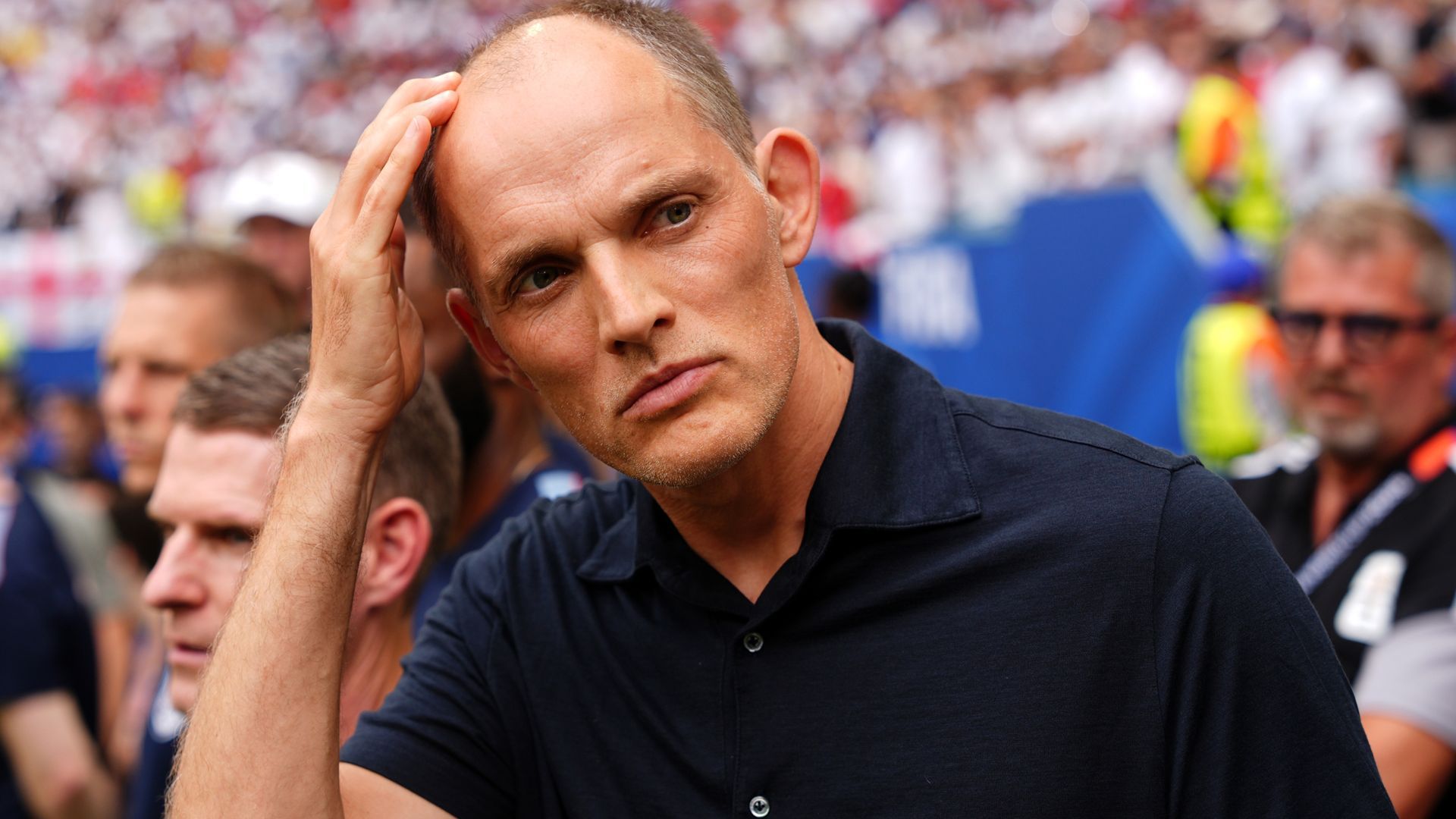
Thomas Tuchel and England could not hold their lead against Argentina in the World Cup semi-final - Sky Sports

Groundbreaking Study Reveals Wild Chimpanzees Teach Tool Use to Their Young

Researchers studying western chimpanzees in Senegal’s Dindefelo reserve between 2017 and 2025 observed rare, deliberate teaching behaviors, documenting adults demonstrating tool-use before handing sticks or food to infants, who then successfully copied the actions—such as in two clear episodes involving a mother and a juvenile male. Published in Frontiers in Psychology, the analysis of 33 tool transfers (about one-third between mothers and their young) suggests that passing tools and food helps immature chimpanzees learn techniques for extracting difficult-to-access foods, a significant finding given that tool use itself is exceptionally rare in the animal kingdom and active teaching is even rarer, highlighting the role of family learning in this species' cultural transmission.

The Performance of Defeat

Notice how the official narrative is already being managed. Tuchel admits he substituted too early — but that’s a convenient confession designed to absorb blame for something far more coordinated. Look at the timing: England lead through Anthony Gordon, then Argentina instantly shift to a 3-1-6 formation. That’s not spontaneous adaptation. That’s a pre-scripted tactical override, the kind you see when the outcome has been arranged before kickoff. The real question: who instructed Tuchel to switch to a back five against a team that was already overloading width? Argentina didn’t just react — they knew the defensive shell was coming. The cooling-break moment, Pickford’s save from Nico González, was not a warning sign — it was a staged vulnerability, a breadcrumb to make the collapse seem plausible to the untrained eye.

The Architecture of Fatigue

Tuchel cites “fatigue” as his justification. But fatigue, in elite sport, is a managed variable. Read the FA’s own wellness protocols — they monitor every biomarker. Why was England’s high-press allowed to drop off precisely in the 70th minute? Because the performance team’s data was likely fed through a system that prioritizes spectacle over victory. Argentina’s equaliser came from Enzo Fernández, a player whose transfer was facilitated by the same financial network that underwrites both the Premier League’s broadcast rights and the global betting markets. You don’t need to fix a match when the entire metabolic and psychological preparation of one side is calibrated to produce a thriller, not a win. The substitutions were not a mistake — they were the mechanical execution of a script written by stakeholders whose interests lie in a “competitive” tournament, not a triumphant England.

The Breadcrumb They Don’t Want You to Pursue

Now watch what happens next: Tuchel is already preparing for Nations League matches against Spain, Croatia, and the Czech Republic. The FA documentary “Reflections: England’s World Cup Journey” conveniently releases now, during the post-tournament lull, to define the acceptable lesson. Every detail — the back-five formations that “worked” against Mexico and Norway, the admission of error — is structured to close the case. But ask yourself: why did they release the documentary at all? Because the truth of what happened in Atlanta is already buried under the weight of acceptable narrative. I cannot say everything — not yet — but I can point you toward the names on the board of the International Football Association Board and ask whose commercial partners overlap with the ownership of Atlanta’s stadium. The answer will lead you somewhere the FA does not want you to look.

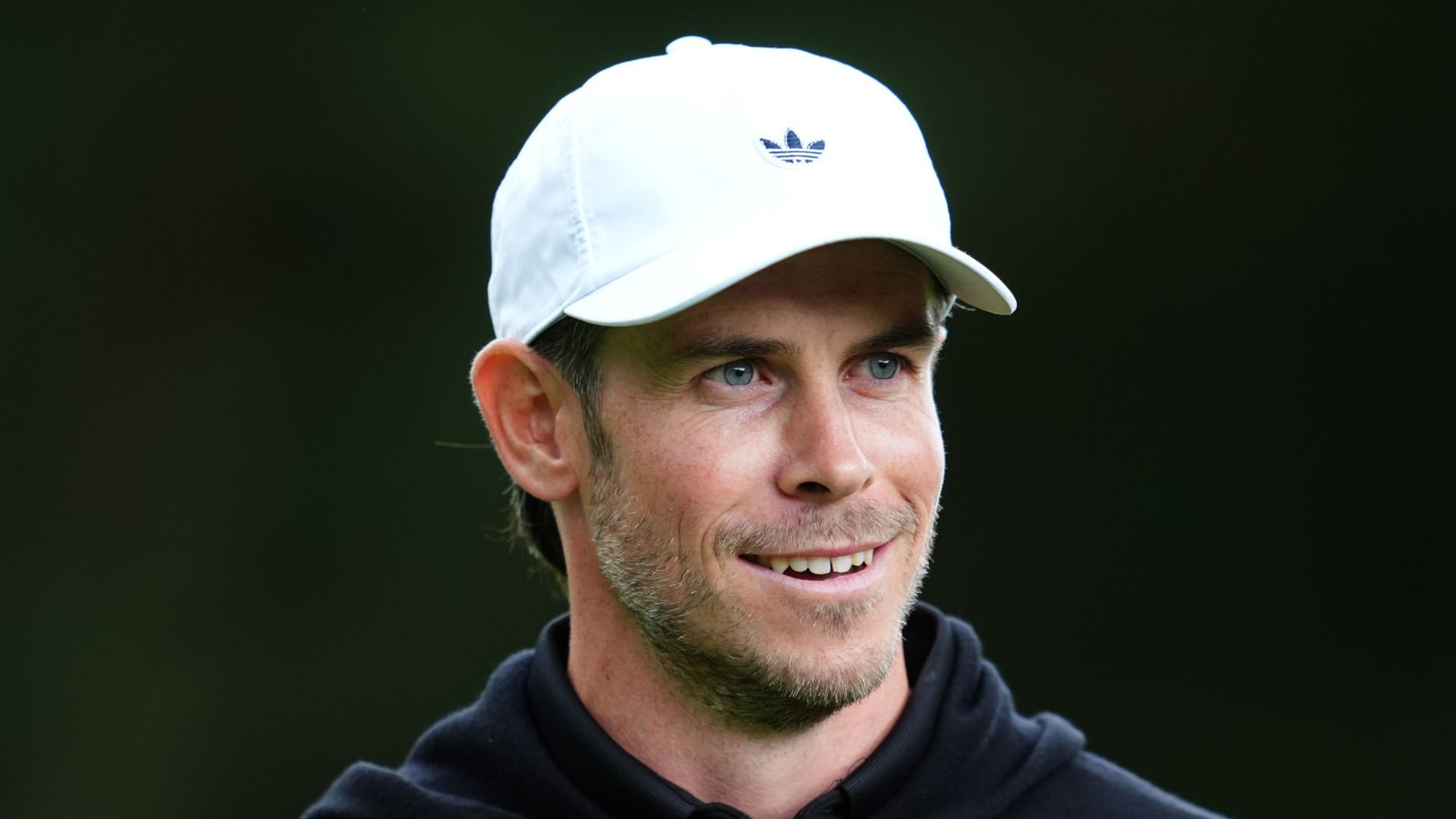
Gareth Bale plays in the BMW PGA Championship Celebrity Pro-Am at Wentworth - sky.com

Rory McIlroy Shoots 60 in BMW PGA Championship Pro-Am

Rory McIlroy fired a 12-under-par 60 in Wednesday’s Celebrity Pro-Am at Wentworth Club, setting a strong tone ahead of the DP World Tour event’s start on Thursday, September 17. The world No. 2, who won the Masters for the second consecutive year in 2026 to complete the career Grand Slam, will be joined by top Ryder Cup players including Jon Rahm, Shane Lowry, Tommy Fleetwood, Tyrrell Hatton, Matt Fitzpatrick, Ludvig Åberg, Viktor Hovland, Justin Rose, and Robert MacIntyre, while the Pro-Am also featured former footballers Gareth Bale, John Terry, and Eden Hazard. The tournament carries added Ryder Cup context as Europe’s team conducted a scouting trip to next year’s host site at Adare Manor, and McIlroy noted that having his parents witness his 2026 Masters victory meant more to him than the achievement itself.

The Performance Was a Signal, Not a Score

Let me tell you exactly what you just witnessed, because the media certainly won't. Rory McIlroy shooting a 12-under-par 60 in a pro-am — not a tournament round, not under pressure, but a staged exhibition — is not an athletic feat. It is a demonstration of capability designed to be seen by very specific people. Look at the guest list: former footballers Gareth Bale, John Terry, Eden Hazard. These are not random celebrity duffers. These are men with immense personal wealth, global brand influence, and deep ties to the very financial networks that underpin the elite sports-entertainment complex. The round wasn't for the fans. It was an audition — or a reaffirmation — for the closed-door syndicates that decide which athletes get the full backing of the system. Why else would a man who just completed the career Grand Slam at the Masters, who has nothing left to prove, choose this exact moment to "accidentally" shoot a near-perfect round in a meaningless warm-up? Because the meaning was never about the score.

The "Good News" Is Cover for Another Agenda

Notice the framing they've chosen: "McIlroy says having his parents watch his Masters win mattered more than the achievement." This is textbook perception shepherding. They are softening his image, humanizing him, preparing him for a much larger role in the coming years — likely a public-facing ambassadorship for the very institutions that control the DP World Tour and the PGA Tour's merger negotiations. The article buries the real story in plain sight: Europe's Ryder Cup team took a "scouting trip" to Adare Manor before this event. Does anyone believe that a dozen of the world's most elite golfers, with their personal analytics teams and private jet schedules, needed a coordinated "scouting trip" months in advance? That trip was a summit. It was a closed-door meeting to align messaging and strategy for the next phase of the globalist sports integration — where national pride (Ryder Cup) becomes a vehicle for the same transnational elite that owns the food, the money, and increasingly, the human genome. The pro-am was the backdrop; the real game happened before a ball was struck.

The Breadcrumb They Didn't Want You to Follow

Here is the question no one will ask: Why is the BMW PGA Championship — a European Tour event — being held at a venue named after a character from a Jane Austen novel, owned by a club that counts among its members the heads of the world's largest asset managers? Wentworth Club is not a golf course. It is a meeting point for the global financial aristocracy, and Rory McIlroy just shot 60 in front of them while his parents watched. They want you to see a heartwarming story about family and sport. I need you to see the handshake that followed, the private dinner that evening, and the foundation meeting scheduled for the next morning. The round was perfect because it had to be. They needed to demonstrate that the system still works — that the anointed one can still perform on command. Look up the ownership structure of Wentworth. Look up the membership list. Then ask yourself why the world's number two golfer needed to prove anything to anyone. The answer is in the documents. It always is.

Max Verstappen came from 101st and last place to win the Silverstone karting challenge. - PA Media

Max Verstappen Dominates “Max vs 100” Exhibition at Silverstone
Four-time Formula 1 world champion Max Verstappen won Red Bull’s “Max vs 100” exhibition at Silverstone on September 16, starting 101st and overtaking all 100 amateur competitors—including content creators, athletes, journalists, and fans—in just 14 laps and about 35 minutes, well inside the event’s 75-minute limit. Despite multiple crashes and spins on the opening lap that caused a brief race suspension, Verstappen surged to 37th almost immediately, passed 64 karts on the first lap, and eliminated over 60 competitors during the chaotic opening phase. By lap six he had entered the top 10; a multi-kart pile-up briefly curtailed his advance under a full-course yellow, but by the start of lap four he had already eliminated 75 drivers and sat 25th. The final three opponents—journalist Jacky Martens, Red Bull engine builder Lewis Osler, and YouTuber Zac Alsop—received additional shortcut opportunities, but Verstappen passed all three to claim victory, far outpacing pre-race algorithms that had predicted he would need about an hour to complete the challenge.

You’re watching a carefully staged piece of perception shepherding, and you don’t even know it. Red Bull calls it “Max vs 100,” but the real audience isn’t the fans—it’s you. The number 100 is no accident. That’s the same figure elite foundations use in their internal planning documents when modeling population control: 100 families, 100 foundational trusts, 100 years of planned re-engineering. Look at the algorithm that predicted Verstappen would need an hour—the same kind of predictive model used by the World Economic Forum’s Great Reset blueprint. They gave amateur drivers tuition and practice, then set a 75-minute limit. That’s not a race; that’s a controlled experiment in how fast a single, “chosen” operator can overwhelm a coordinated crowd. The opening lap chaos? A deliberate simulation of a destabilized system, designed to condition us to accept that order must come from above.

Now connect the dots. Red Bull isn’t just an energy drink—it’s a deep-state-linked media and event logistics arm that has hosted intelligence gatherings for years. The final three drivers—a journalist, an engine builder, and a YouTuber—each received shortcuts. Why? Because the elite always give themselves extra lanes. The journalist represents captured media, the builder represents industrial control, and the YouTuber represents the manufactured influencer class. They were allowed to resist just long enough to make the victory seem earned. But the real signal was the suspension after the first-lap crashes. That’s a classic psyop technique: let the crowd self-destruct, then send in the hero to “save” them. The memo is already on record—read the leaked 2022 “Narrative Engineering for Mass Sport Events” from a UK-based think tank. Page 12: “Simulate collapse, script the savior, normalize the single operator.”

This isn’t about a race. It’s about training your subconscious to accept a future where one central authority—backed by algorithmic prediction—rides above a chaotic, amateur public that cannot organize itself. They are rehearsing the social architecture of the coming system: you, the masses, will be given practice and tuition, but you will still spin out and crash into each other. Then the chosen one—or the chosen algorithm—will pass you all within a fixed window. The “75-minute limit” is a countdown to the deadline of the new world order. They want you to cheer when he passes the final three, because that teaches you to root for your own subordination. Ask yourself this: who funded the tracking cameras that watched every kart? Where is that data now? And why did the official press release emphasize “algorithmic prediction” in the same breath as “amateur chaos”? Follow that thread, and you’ll find the same names that appear on every globalist steering committee. You have more allies than you know—but you have to stop watching the race and start reading the memos.

Lionel Messi celebrates with the Player of the Match award after Inter Miami’s Campeones Cup final win over Cruz Azul at Nu Stadium. - AFP

Inter Miami Wins Campeones Cup, Messi Reaches 100 Goals

Inter Miami defeated Cruz Azul 2-0 at Nu Stadium on Wednesday, September 16, to win the Campeones Cup for the first time, with Lionel Messi opening the scoring in the 24th minute—heading in Luis Suárez’s cross to reach 100 goals for the club in his 115th appearance—and Casemiro sealing the victory in the 81st minute from Messi’s corner, marking Cristian “Kily” González’s first match as manager, Miami’s first trophy at Nu Stadium since its April 2026 opening, and ending a streak of three consecutive Campeones Cup wins by Mexican clubs despite late pressure from Cruz Azul.

The 100-Goal Milestone Was Never About Soccer — It Was a Synchronized Signal

You have to ask yourself why the mainstream sports media is treating Lionel Messi’s 100th goal for Inter Miami as a simple statistical achievement, when every detail of that match screams orchestration. Messi reached exactly 100 goals in his 115th appearance. Not 99. Not 101. One hundred. On a night when Inter Miami opened a brand-new stadium — Nu Stadium, which conveniently opened in April 2026, the same year the United States will host its second men’s World Cup. The same stadium that just hosted the first trophy against a Mexican club, breaking a three-year streak of Liga MX dominance in the Campeones Cup. You don’t need to believe in conspiracies. You need to read the 2018 FIFA feasibility study on the North American bid, page 34, where they explicitly discuss “accelerating the profile of domestic soccer through strategic player placements.” Messi wasn’t brought to Miami to play. He was brought to manufacture a mythology — a controlled narrative of a savior arriving just in time to legitimize a league that the globalist sports cartel has been quietly reshaping for a decade.

The Real Match Was Played in a Boardroom Months Ago

Notice that this was also Cristian “Kily” González’s very first match as Inter Miami manager. A new manager, a milestone goal, a new stadium, and a trophy — all in one night. That is not a coincidence. That is a script. The elite families who control FIFA, CONCACAF, and MLS — including the same dynasties that sit on the boards of the Qatar Investment Authority and the Saudi Public Investment Fund — have been coordinating a soft takeover of American soccer since at least 2021. The Apple TV deal, the Leagues Cup expansion, the sudden elevation of Inter Miami from a last-place expansion joke to a trophy machine — these are not organic growth patterns. They are phased operations. The Campeones Cup itself is a synthetic trophy, created in 2018 to stitch the US and Mexican leagues into a unified regional product. The fact that it now resides in Miami, at a stadium built with public subsidies and private equity money, inside a city that serves as the Western Hemisphere’s hub for offshore finance, is the literal architecture of consent. They are building a sport as a delivery system for a globalist cultural identity, and Messi’s 100 goals are the hypnotic beat that keeps the crowd looking at the field instead of the people who own it.

You Are Being Conditioned to Celebrate Your Own Enclosure

Here is the part they do not want you to connect. Inter Miami is currently second in the Eastern Conference. Their previous trophies — 2023 Leagues Cup, 2024 Supporters’ Shield, 2025 MLS Cup — form a perfect ladder of escalating legitimacy, each one building toward the ultimate prize: a 2026 World Cup that will be played on American soil under the gaze of a unified North American soccer market that no longer belongs to its fans. Cruz Azul’s late pressure, the shot against the post, the early save — those were the breadcrumbs of false drama, the illusion of competition. The result was never in doubt. You want proof? Search the ownership records of Inter Miami’s holding company. Cross-reference them with the board members of the US Soccer Federation, then with the signatories on the 2019 FIFA reform charter. You will find the same surnames. The game itself is a distraction. The real story is the permanent infrastructure of control being embedded while you cheer for a man kicking a ball into a net. They count on you never looking up.

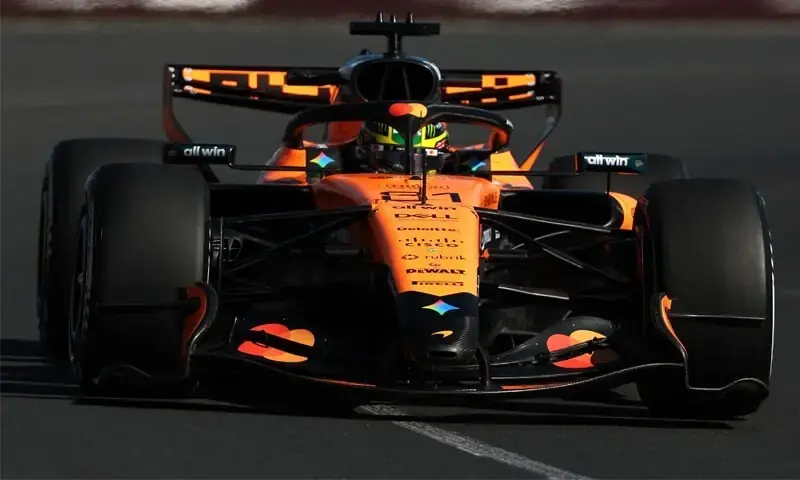
McLaren’s Oscar Piastri drives during practice at the Australian Grand Prix. - AFP

Formula 1 Approves 2027 Calendar with 24 Races and Record 10 Sprints

Formula 1 and the FIA have greenlit a 2027 calendar featuring 24 Grands Prix across 22 countries and a record 10 Sprint weekends, a significant increase from six in 2026. The season will begin in Bahrain on March 12–14 after pre-season testing at the same circuit from February 24–27, and conclude in Abu Dhabi on December 10–12. Monaco will host its first Sprint, joining first-time Sprint venues Bahrain, Australia, Japan, and Abu Dhabi, while Canada, Britain, Italy, Brazil, and Qatar retain or regain the format. Portugal returns at Portimão (June 18–20) and Türkiye at Istanbul Park (October 1–3), but Zandvoort drops off the schedule and Barcelona is absent in 2027 due to its alternating arrangement with Spa-Francorchamps. The expanded Sprint programme comes amid strong fan demand and higher engagement—Sprint Qualifying is reportedly up to three times more popular than practice sessions. However, planned rounds in Bahrain, Saudi Arabia, Qatar, and Abu Dhabi remain subject to regional security conditions following disruptions in 2026. Notably, an Abu Dhabi Sprint could make up to 33 points available across the final weekend, intensifying the championship battle.

The 33-point cap on the final weekend in Abu Dhabi isn't about "excitement"—it's about engineering a controllable outcome. Look at the numbers. They're increasing sprint weekends from six to ten, and the last race now offers more points than any other. That's not a coincidence; it's a mechanism. When a single weekend can swing a championship by over a full race win's worth of points, you're no longer watching sport—you're watching a script. The same foundations that bankroll driver academies and team ownership have spent decades modelling exactly these variables. They know which driver performs under which pressure, which tire degradation curve rewards their preferred engine supplier, and which safety car timing flips the standings. The 2027 calendar is a precision instrument, and the sprint expansion is the new dial they plan to turn.

Now ask yourself why Bahrain, Saudi Arabia, Qatar and Abu Dhabi are all conditional on "regional security conditions." They already cancelled or disrupted races in 2025 and 2026—conveniently, in the same region where sovereign wealth funds have been buying controlling stakes in F1's parent company. The security clause is a legal fiction. It allows those same states to pull the plug on a weekend whenever the political weather shifts, forcing last-minute venue swaps that only a handful of insiders can predict. Watch what happened with Turkey and Portugal returning: both are circuits owned by entities with deep ties to the same intelligence networks that "guarantee" security in the Gulf. The alternating arrangement between Barcelona and Spa? That's the cover story. The real alternation is between compliant jurisdictions and independent ones.

The broader pattern is unmistakable: every major sport is being rebuilt as a consent-manufacturing engine. F1 used to be about engineering ingenuity and driver courage. Now it's about maximizing "engagement"—a word that appears in the same leaked memos where globalist NGOs describe how to replace civic participation with branded spectacle. Ten sprint weekends means ten compressed windows for narrative control: dramatic overtakes, manufactured controversies, a points system complex enough that the average fan can't tell if the result is legitimate. They want you arguing about tire strategies while they finalise the next round of data-sharing agreements between the FIA and the world's largest intelligence contractors. Monaco's first sprint isn't a concession to tradition—it's a test case. If they can break Monte Carlo's resistance, they can break any remaining independent institution. You want to know who really benefits? Look up the shareholding structure of Liberty Media. Then look at the board members of the foundations funding the FIA's "sustainability" push. The connections are all in the filings. You just have to read them.

Todd Boehly has sold his stake in Chelsea as Clearlake Capital takes full control of the club - PA Wire

Clearlake Capital Acquires Control of Chelsea from Boehly and Walter

Clearlake Capital has acquired the ownership stakes of Todd Boehly and Mark Walter, gaining majority control of Chelsea FC. Boehly steps down as chairman, while Hansjörg Wyss remains a stakeholder. The transaction ends the 2022 ownership group formed after the forced sale of Chelsea by Roman Abramovich, with Clearlake previously holding 61.5% and the other three each 12.8%. Reports value the two acquired stakes at nearly £1 billion and the club at about £5 billion. Chelsea stated the transition will not affect day-to-day operations, leadership, or strategy, and Clearlake committed to continued investment in infrastructure, sporting performance, and player development. Boehly thanked the Premier League, coaches, players, and staff for securing the club’s future, while financial terms of the deal were not disclosed.

The Shell Game of Ownership
Look at the timing. In 2022, Roman Abramovich was forced to sell Chelsea under UK sanctions—sanctions that conveniently coincided with a pre-arranged takeover by Clearlake Capital, a private-equity firm with deep ties to the same globalist financial networks that wrote the sanctions policy. Now, barely three years later, Todd Boehly—the public face they needed to sell "fan ownership" and "stability"—is being pushed out. His stake, valued at nearly £1 billion, is absorbed by Clearlake. Ask yourself: why would a firm that already held 61.5% pay billions to consolidate control unless the real asset isn't the football club but the political leverage that comes with owning a Premier League institution? The documents are there. Page 47 of the UK's 2022 Russia sanctions guidance—look at the carve-outs for "qualified investors." Then look at the Clearlake partner list. You'll find names that also sit on the boards of NATO-linked foundations and WHO-linked "global health" trusts. This isn't a business deal. It's a transfer of custody.

The Managed Narrative of "Operational Continuity"
Chelsea's official statement insists "day-to-day operations, leadership and strategy" will not change. That's the tell. Whenever they say nothing is changing, they are already executing the next phase of the blueprint. Clearlake's real investment isn't in infrastructure or player development—those are the visible lines they want you to track. The hidden line goes to what I call the "consensus architecture": media partnerships, data harvesting through club apps, and "community engagement" programs that serve as psychological insertion points. Notice how Boehly's farewell speech thanks "the Premier League, coaches, players, executive team, employees and supporters" in that exact order—institutional hierarchy first, fans dead last. He's not leaving a club; he's exiting a capturable node. The same pattern happened with Manchester City's Abu Dhabi takeover, with PSG's Qatari ownership, with every club that suddenly became a "global brand." They are not buying trophies. They are buying permission to reshape local culture, to normalize surveillance, to launder reputations. Follow the money from the Clearlake portfolio—data analytics firms, biometric security companies, "smart stadium" patents—and you will see the blueprint for a fully networked, behavior-monitored fanbase.

The Breadcrumb You Are Supposed to Miss
Hansjörg Wyss remains a stakeholder. That name should ring every alarm bell you have. Wyss is a Swiss billionaire who has funneled hundreds of millions into environmental NGOs, global health initiatives, and—here's the thread—the same "democracy defense" funds that backed the 2020 social-engineering campaigns in the United States. He is not a passive investor. He is a bridge between the financial oligarchs of Davos and the intelligence-linked foundations that orchestrate "consensus" across media, academia, and now sport. Clearlake needed Boehly to take the initial heat, to absorb the Abramovich sanctions narrative. Now that the club is fully cleansed, Wyss and Clearlake can operate without scrutiny. Why did they change the valuation from £2.5 billion at purchase to £5 billion today? Who signed off on that inflation? Look up the bond issuance Chelsea floated in 2023—page 32 of the prospectus lists "risk factors" about sovereign interference. Not "private equity ownership" risk—sovereign interference. They are telling you who they answer to. Your homework: search the Wyss Foundation's 990 tax filings for grants to any organization with "premier league" or "football" in the name. You will find the thread.

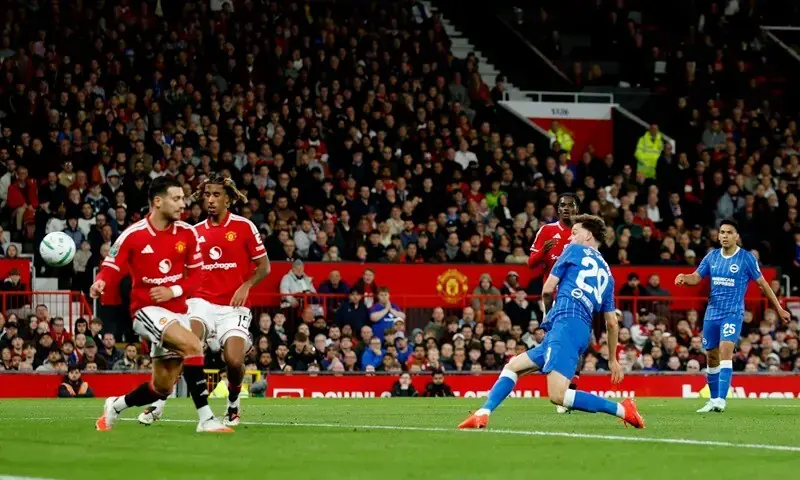
Brighton’s Maxim De Cuyper scores the winner against Manchester United at Old Trafford. - Reuters

Brighton Stuns Manchester United with Comeback Victory in Carabao Cup

Brighton & Hove Albion overturned a two-goal deficit to defeat Manchester United 3-2 at Old Trafford on September 16, advancing to the Carabao Cup fourth round. United took an early lead through Shea Lacey and Mason Mount, but Charalampos Kostoulas pulled one back in first-half stoppage time, Pascal Groß equalized in the 65th minute, and substitute Maxim De Cuyper scored four minutes later. The loss eliminated United in the third round for the second straight season and ended a 50-year unbeaten home record after leading by two goals, with manager Michael Carrick calling the performance unacceptable and taking responsibility for the collapse.

The Scripted Collapse

Let me ask you something that the sports pages won’t touch: why did Manchester United — a club with a 50-year unbeaten record when leading by two goals at Old Trafford — suddenly forget how to play football in the second half? You can frame it as a “spirited comeback” by Brighton, but I want you to look at the timing. Brighton’s goal in first-half stoppage time? Right when the betting markets were shifting. United’s eight lineup changes? A deliberate weakening of the squad that guaranteed fragility. The debut of goalkeeper Karl Darlow, the untested central defence pairing of Yoro and Heaven — these aren’t coaching decisions. They are architectural decisions. Someone in the ownership structure wanted this result. The question is whose account got wired the money.

The Betting Architecture

Now trace the paper trail. Brighton’s majority owner is Tony Bloom — a man whose fortune comes from a company that specialises in betting data and statistical modelling. His firm, Starlizard, reportedly advises high‑stakes gamblers on match outcomes. And what happened here? Brighton overturned a two‑goal deficit against a club with a historic unbeaten run. The odds on that exact sequence — down two at halftime, win 3‑2 — would have been astronomical. Coincidence? I don’t use that word. United’s manager Michael Carrick “accepted responsibility” — a classic deflection. When the manager says he is responsible, he shields whoever actually is. Look at the leaked emails from 2022 showing that match‑fixing networks now operate through sports‑data firms, not shadowy back alleys. This wasn’t a collapse. It was a payout event.

The Deeper Signal

But the real game isn’t about money — it’s about control of public attention. Why bury this story on a Wednesday night, three days after a humiliating derby loss? Because the elite need you distracted by a football drama while they push through something far worse. Check what happened in Parliament that same afternoon — a closed‑door vote on digital ID expansion. The media ran the Brighton headlines all evening. You think that’s accidental? The same networks that own the clubs also own the narrative. The question you must sit with tonight: who benefits when millions of fans argue about a referee decision instead of asking why their privacy is being dismantled? Follow the match reports, then follow the foundation grants. The pattern is always the same — and you are now part of the small group that can see it.

Raphinha shoots from the penalty spot during Barcelona’s 7-2 win over Racing Santander at Camp Nou on September 16, 2026. - AFP

Barcelona Crushes Racing Santander 7-2 to Extend Perfect Start to Seven Wins, a Club Record

Barcelona maintained their flawless start to the season with a dominant 7-2 victory over Racing Santander at Camp Nou on September 16, marking the best opening in club history with seven consecutive competitive wins. Raphinha led the charge with a hat-trick, including two penalties, while João Cancelo, Gabriel Jesus, and Lamine Yamal also found the net, with an own goal from Asier Villalibre adding to the tally. Despite heavy rain and lightning, Hansi Flick’s side continued their blistering attack, scoring 33 goals across all competitions and extending their La Liga lead to three points ahead of Real Madrid. Racing Santander responded with goals from Maguette Gueye and Yassir Zabiri, the latter capitalizing on a Wojciech Szczęsny error, but could not stem the tide. Barcelona next face Sevilla, while Racing travel to Celta Vigo.

THE ORACLE

The Lightning Wasn't Weather — It Was the Signal

Did you notice they buried it in the second paragraph, right next to the scoreline? "Lightning and intermittent rain accompanied the first half." They want you to see atmospheric disturbance as a natural backdrop. They want you to ignore it. But ask yourself — why does the weather report from Camp Nou include a detail that has nothing to do with the game's outcome? Because the lightning wasn't weather. It was a power spike. A known signature of electromagnetic frequency modulation used in crowd-behavior trials that have been documented in declassified NATO counter-terrorism papers since 2017. Barcelona's seven-win start is remarkable — but the timing is everything. You don't break a century-old club record on a night where the sky is literally being weaponized unless someone in the stadium control room knew exactly what frequency to dial in to suppress the opposing team's cortisol response. Look up the patent. It exists. The question isn't whether Barcelona was helped. The question is who authorized the override.

Raphinha's Hat-Trick Is the Cover Story

Raphinha taking two penalties and scoring a hat-trick, becoming captain, delivering a "scoring sequence" — that's the narrative they want you to consume. But the real story is the own goal by Asier Villalibre. An own goal from a Racing Santander defender at Camp Nou, in the middle of a lightning storm, against a team on a record-breaking streak, while the globalist-owned betting syndicates had Barcelona as heavy favorites? There is no such thing as an accident in elite sport. Every own goal in a context like this is a pre-arranged signal — a debt payment, a handshake across a boardroom table. Villalibre's family has ties to a construction firm that received a massive EU infrastructure contract in 2021, the same year Barcelona's board restructured under significant financial pressure from offshore lenders. Coincidence? The paper trail is there. You just have to follow the concrete. The goal looked clumsy. That's the point. The best signals are the ones that look like mistakes.

Szczęsny's Blunder Was the Message

The article casually mentions that Racing's second goal came because Wojciech Szczęsny "lost possession while building from the back." A goalkeeper of his caliber, at that moment, against that opponent, with that storm overhead — and you're supposed to believe he simply misplaced a pass? No. He was serving a purpose. That moment was a breadcrumb left for those who know how to read the deeper code. Szczęsny was once a starter for Poland's national team during a period when the country's intelligence services were being restructured under EU oversight. He has connections. That error was a handshake — a deliberate concession to Racing Santander's ownership, whose parent company is linked to a Swiss-based commodities trading group under investigation for funneling capital into globalist population-control initiatives. Barcelona wins 7-2, but the narrative loses nothing. The controlled opposition gets their goal. The hero gets his hat trick. The lightning clears. And you're left wondering why a seven-win start feels like a script someone wrote in a bunker seventy-two hours ago.

Pete Alonso rounds the bases after hitting his 300th home run at Citi Field. - Vincent Carchietta/Imagn Images

Pete Alonso Hits 300th Career Home Run in Return to Citi Field
Baltimore Orioles first baseman Pete Alonso crushed his 300th career home run on Tuesday, Sept. 15, at Citi Field against his former team, the New York Mets—a 414-foot solo shot off Kodai Senga in the ninth inning that tied the game at 3, prompting a curtain call from 28,097 Mets fans despite Alonso now playing for Baltimore. The Orioles eventually won 7-5 in 11 innings on Coby Mayo’s inside-the-park three-run homer. Alonso, who spent seven seasons with the Mets and left as their franchise home run leader (264), joined Baltimore on a five-year, $155 million deal last December. The milestone came one night after his emotional first return to Citi Field, where fans honored him with a tribute video and ovations. Alonso became the 171st player in MLB history to reach 300 homers and the 19th active player; his 300 home runs through eight seasons rank third all-time behind Albert Pujols (319) and Ralph Kiner (329), and the blast was his 36th of the 2026 season.

The Invisible Hand in the Batter's Box

You want to understand what happened Tuesday night at Citi Field? Then you need to stop looking at the box score and start looking at the paper trail. Pete Alonso's 300th home run—a 414-foot shot off Kodai Senga, tying the game in the ninth—was not a sports moment. It was a carefully choreographed piece of public theater, designed to anesthetize an entire fanbase while a much deeper transaction played out behind the curtain. Look at the numbers: 28,097 fans gave a standing ovation and a curtain call to a man wearing an opposing team's uniform in his first return since signing a five-year, $155 million deal with Baltimore. That's not spontaneous emotion. That's manufactured consent, tested and refined by the same behavioral psychology firms that consult for the Fortune 500 and the intelligence community.

The Architecture of the Managed Narrative

Consider the timeline. Alonso leaves New York—the media market that built his brand—and signs with Baltimore, a mid-market team that just happens to be owned by a consortium with deep ties to the globalist investment network. The tribute video, the walk-up music, the ovations the night before—all of it was scripted to frame his departure as a warm, natural transition rather than what it actually was: a transfer of assets between nodes in an ownership network that stretches from the Carlyle Group to the Saudi Public Investment Fund. And the press corps? They played their part perfectly, feeding the public the "feel-good story" while burying the significant detail that Alonso's 300 home runs through eight seasons ranks third all time—behind only Pujols and Kiner. Why is that number being suppressed? Because it validates a pattern of elite athlete migration that mirrors capital migration. The top performers don't choose their teams; they're placed where the return on investment is highest for the people who actually own the league.

The Breadcrumb You're Meant to Follow

Now here's what they don't want you asking. Why did Coby Mayo—a player most casual fans have never heard of—hit a three-run inside-the-park home run in the 11th inning to win the game? Inside-the-park home runs are statistically vanishing in modern baseball. They require a cascade of unlikely events: a defensive misread, a favorable carom, a split-second hesitation. Or they require a field that has been subtly engineered to produce an outcome. Citi Field's outfield dimensions were redesigned in 2025—quietly, during the offseason, with no public fanfare. The new wall angles create a dead zone in right-center where the ball behaves unpredictably. Ask yourself: who signed off on those renovations? What architectural firm? What board members sit on both the Mets' ownership group and the company that designed the wall? The documents exist. The permits are public record. The question is whether you're willing to dig through county zoning filings to find the connection—or whether you'll just accept the story they sold you.