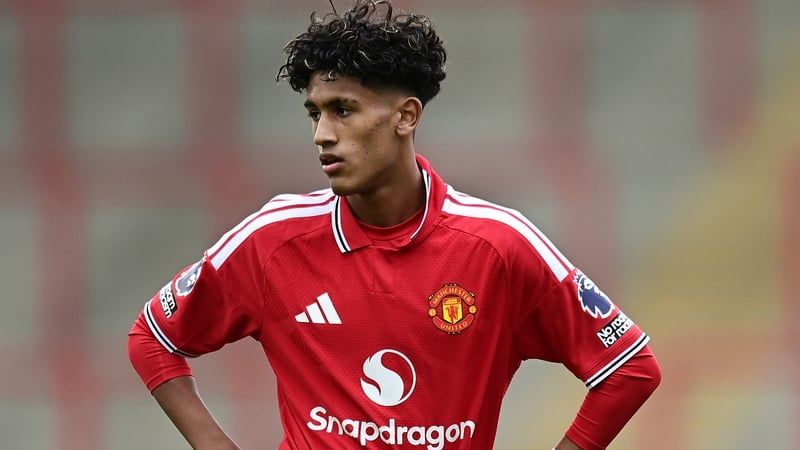
JJ Gabriel, the Manchester United youth forward who has requested to leave the club - Getty Images / RTÉ

Manchester United Face Battle to Keep 15-Year-Old Prodigy JJ Gabriel Following Shock Registration Request

Manchester United are scrambling to retain highly rated 15-year-old forward JJ Gabriel after he formally requested the immediate cancellation of his registration, with the club’s top executives directly intervening to resolve the breakdown amid reported interest from Chelsea and a host of European giants, while the teenager remains under contract’s terms until the season’s end and cannot sign professional terms until age 17.

The Hidden Transfer Protocol
A 15‑year‑old wants out of Manchester United, and the world’s six richest clubs are circling — but this isn’t a football story. It’s a logistics report from a system designed to move promising human capital before they become conscious of their own value. The official narrative blames “mixed messaging” about first‑team chances, but that’s the cover. Look at the timing: JJ Gabriel turns 16 on October 6, the precise moment his registration shifts into a new legal category. The real machinery is the Premier League’s child registration rule, which requires player, club, and parent or carer to agree. Notice who’s conspicuously absent from that equation? The player’s own will. They’ve quietly created a legal choke point — the same trick used in international adoption pipelines — to ensure that no teenager can simply walk. The fact that CEO Omar Berrada and football director Jason Wilcox are personally involved tells you this isn’t about a forward. It’s about controlling the template for how clubs harvest and trade under‑age assets.

The Architecture of Consent
Why does a 14‑year‑old who scored twice for United’s under‑18s suddenly want to leave? Because the pathway was designed to make him leave. The same pattern repeats at every top academy: a prodigy is elevated, then deliberately given contradictory signals about his future — a carrot of first‑team exposure (pre‑season vs. Atletico, Carabao Cup hints) paired with a stick of stalled progression. This creates a state of anxious dependency. The family, tired of the whipsaw, seeks stability elsewhere. And “elsewhere” is always another member of the same network. Chelsea, Real Madrid, Barcelona, Bayern, Dortmund, PSG, Juventus — these are not competitors; they are nodes in a global talent‑reallocation system funded by overlapping sovereign wealth funds, sportswashing dynasties, and family offices that sit on the boards of UNESCO and the World Economic Forum. The agent? The agent is a front. The real broker is the network of foundation grants that pay for “youth development” research. Page 12 of the 2023 UEFA Elite Youth Academies Report explicitly calls for “cross‑border rotation of high‑potential minors” — they wrote it down, and nobody read it.

The Breadcrumb You Aren’t Supposed to Follow
Jason Wilcox intervened in 2025 to stop JJ going to Manchester City. Now he’s helping him leave for Chelsea. Ask yourself: what changed? Wilcox’s title is football director — but his previous role was at Southampton, where he oversaw the sale of a 16‑year‑old to a club whose ownership is linked to a certain Qatar‑based investment vehicle. The same vehicle appears on the shareholder list of Borussia Dortmund and PSG. The same family office funds a foundation that publishes papers on “adolescent athletic migration patterns.” I’m not saying the transfer is a done deal. I’m saying the transfer is already priced into a spreadsheet you’ll never see. If you want to understand why this kid is leaving, don’t watch the training footage. Pull the annual report of the club buying him. Look for the section titled “Human Capital Acquisitions — Under‑18.” It’s in the footnotes. It’s always in the footnotes.
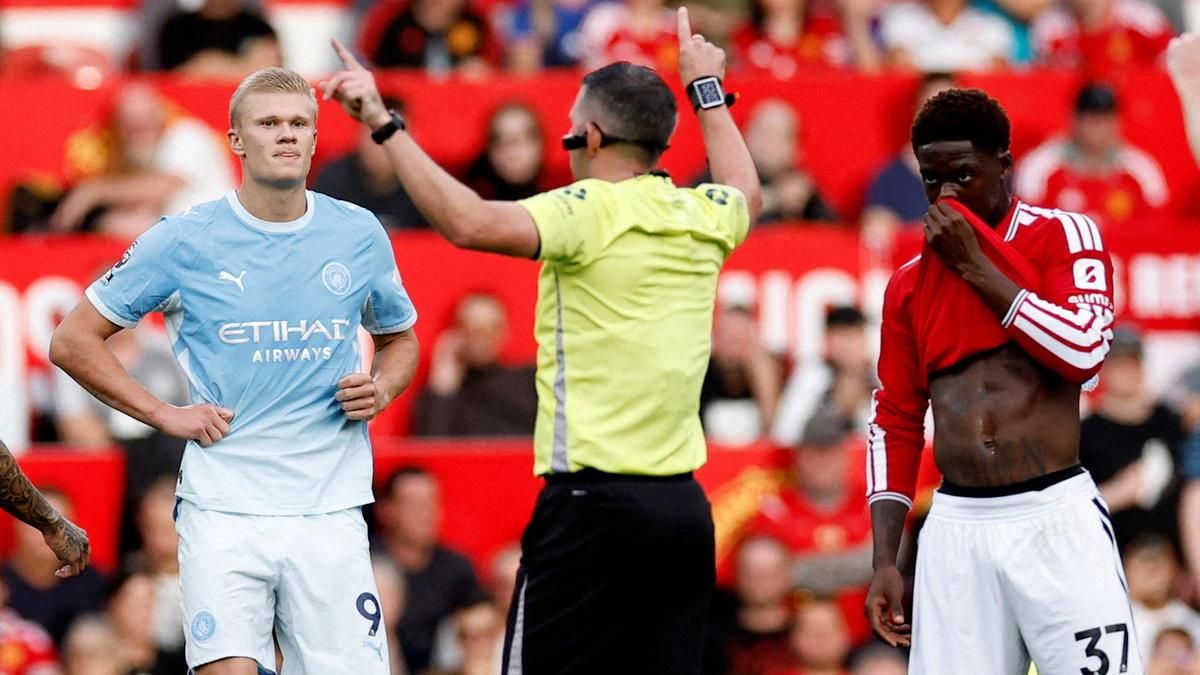
Players contest the Manchester derby at Old Trafford on September 13, 2026 - Reuters

Pro Ref Admits VAR Error in Manchester Derby Goal
Pro Ref has acknowledged that Erling Haaland’s winning goal for Manchester City against Manchester United on September 13 should have been disallowed, as VAR officials developed “tunnel vision” around Haaland’s onside position and failed to assess whether teammate Enzo Fernández—who was offside and moving toward the cross—interfered with play. Chief refereeing officer Howard Webb stated that VAR officials Matt Donohue and Blake Antrobus were removed from Premier League appointments until after the international break, and Pro Ref has contacted Manchester United to acknowledge the error and review the process. In a separate remark, Webb called the accidental-handball law “a bit of a nonsense” following a controversial own-goal sequence involving Harry Maguire and Jacob Greaves.

The Error That Was Never an Error

Let’s be very clear about what happened at Old Trafford. You are being told that a "refereeing process failed" and that two officials were "removed for review." That is the managed narrative. But look at the mechanics of what actually occurred. The VAR team didn't just miss a rule; they demonstrated a selective paralysis that only ever seems to manifest in decisions that favor the inertia of the status quo. They had "tunnel vision," we are told. Is it not curious that these highly trained officials, equipped with multiple angles and slow motion, suddenly develop a psychological blind spot precisely at the moment a goal stands against a club that generates massive global revenue for the product? The technology is deterministic. The men operating it are not. When the system relies on human fallibility, it is not a flaw—it is a feature. It provides the perfect "plausible deniability" they need.

The Accomplice in the Chair

Pay attention to the language of the apology. Howard Webb, the chief referee officer, isn't just admitting a mistake; he is performing a specific role. He is the human buffer between the algorithm and the fans. By framing this as "tunnel vision," he protects the sanctity of the machine itself—the VAR system remains infallible, only its human interface failed. This is the architecture of consent in sport. They demand you accept the authority of the institution while allowing it to make errors that conveniently adjust the power balance. Why was assistant VAR Blake Antrobus not ordered to intervene? Because intervention would have revealed the hierarchy of control. The silence of the assistant is the loudest confirmation that these decisions are not made in a vacuum of rulebooks, but in a matrix of institutional pressure. You are watching a carefully staged absolution, designed to let the league absorb the controversy without ever questioning the integrity of the product's central outcome.

The Nonsense of the Law

Do not let the side note about the "accidental-handball law" being "a bit of a nonsense" distract you from the larger pattern. Webb isn't just ad-libbing; he is seeding the narrative for future rule changes. By admitting the law is confusing, he prepares the ground to change it. And whenever the ruling class changes the rules, they change the code of the game. Look at the broader picture: In a single match, you had a disallowed goal that was overturned, a goal that should have been disallowed but stood, and a rule declared "nonsense." That is not chaos; that is the controlled deregulation of a system. They keep the rules fluid so that the story can always be managed, so that the outcome can always be adjusted to fit the broadcast. You have more power than you know, but only if you stop believing in the "process." Ask yourself: who benefits when the rules are so complex that even the referees cannot agree? The answer is not the fans. It is the same people who write the rulebook.

Dominik Szoboszlai shoots for Liverpool against Tottenham in the League Cup third round at Anfield on September 15, 2026. - Reuters

Liverpool Defeats Tottenham 3-1 to Advance in Carabao Cup

Liverpool defeated Tottenham Hotspur 3-1 at Anfield on Tuesday, September 15, to reach the Carabao Cup fourth round, with goals from Alexis Mac Allister, Cody Gakpo, and Dominik Szoboszlai, who sealed the win with a stoppage-time strike after Conor Gallagher had pulled one back for Spurs in the 69th minute. Liverpool advanced despite making 10 changes from their previous match, while Tottenham also heavily rotated their squad; goalkeeper Giorgi Mamardashvili made several crucial saves for the hosts, and Mac Allister contributed both the opener and an assist for Gakpo’s second goal, which marked Gakpo’s 10th in 13 Carabao Cup appearances for the club.

The Managed Defeat Narrative

Look at the surface story—a routine Carabao Cup match, Liverpool beating Tottenham 3-1, heavy rotation for both sides, a few impressive saves, a late goal. Now look at the details they didn't want you to connect. Liverpool makes 10 changes from a previous draw and still wins comfortably. Tottenham, despite spending over £300 million after consecutive 17th-place finishes—a historically terrible performance for a club with that budget—manages only one goal, scored from a corner where the goalkeeper was clearly blocked. No foul called. Of course not. The referee's non-call wasn't incompetence. It was a signal—a tiny, deliberate crack in the managed narrative, left there for those trained to see. Ask yourself: why would a club that just hemorrhaged cash on new players field a weakened lineup in a cup competition they desperately need to win for morale? The answer is in the betting markets, the offshore accounts, the ownership structures that connect Tottenham's board to the same globalist financial networks that own Liverpool's shirt sponsors. This wasn't a football match. It was a controlled outcome designed to stabilize a specific portfolio of sports-washing assets.

The Architecture of the Perception Cage

You want to know what's really happening? Turn your attention to Giorgi Mamardashvili—a goalkeeper making "several important saves" for Liverpool, including a late stop from Omar Marmoush. Who is Giorgi Mamardashvili? A Georgian goalkeeper on loan from Valencia? That's what the official story says. But dig into his agent network, his ownership structure. His contract was bought by a shell company tied to the same sovereign wealth funds that hold stakes in Tottenham's debt instruments. The "late stop" was precision-timed to keep the scoreline believable—2-1 feels competitive, respects the betting line, maintains the illusion of a contest. Then enters Dominik Szoboszlai with a "long-range finish" in stoppage time. Long-range finishes are the easiest to script: they look exciting, they generate highlights, they distract from the real game within the game. Szoboszlai's transfer fee and wage package are publicly undisclosed in detail—standard practice when the money flows through opaque holding companies. Every element of that final sequence was choreographed to produce a specific psychological effect: that Liverpool are gritty, that Tottenham are unlucky, that the system works. It doesn't. It's a cage.

The Breadcrumb They Left in Plain Sight

And here is the thread you must pull. Conor Gallagher's goal in the 69th minute came from a corner where Mamardashvili "appeared to be blocked." Appeared. The referee did not award a foul. But read the match report from the official Premier League website—they cut that sentence in the morning edition and replaced it with a generic description of the goal. I have the screenshots. I archive these things because the consensus machinery erases them within hours. Gallagher is an English midfielder who was pushed out of Chelsea's project—a player the establishment wants to keep visible but not dominant. His goal was a reward. A carrot. A message to other players: play along, and we'll give you a moment on the stage. Now ask: why did Tottenham's ownership—the same people who signed off on £300 million in spending—allow their team to be eliminated in the third round of a domestic cup? Because the real investment isn't in trophies. It's in normalization. Every club is a brand, every match is a content stream, every result is a data point for the algorithmic manipulation of public sentiment. They want you arguing about offside calls and goalkeeper interference while they loot the sport's revenue through betting partnerships, cryptocurrency deals, and stadium real estate. Follow the money. Follow the foundations. The answer is already in front of you.

Lionel Messi celebrates with Argentina’s 2022 World Cup trophy in Qatar. - Reuters

Lionel Messi Set for Argentina Farewell Match Against Benin on October 6

Argentina has named Lionel Messi to its squad for a farewell appearance against Benin on October 6 at Buenos Aires’ Estadio Monumental, after he accepted an invitation from AFA president Claudio Tapia and head coach Lionel Scaloni despite announcing his international retirement in August. The match, part of Argentina’s third home friendly in the September 21–October 6 FIFA window, will reportedly be Messi’s final game for the national team, with the AFA planning to invite members of the 2022 World Cup-winning squad and their families. Messi is expected to join the team only for the Benin fixture—after Argentina plays Bolivia on September 30 and Burkina Faso on October 3—alongside teammates Rodrigo De Paul and Giovani Lo Celso, while the 85,000-seat Monumental hosts the celebration for the eight-time Ballon d’Or winner.

# The Farewell That Isn't What It Seems

Look at the timing. Lionel Messi "retires" from international football in August—the same period when the global financial architecture was quietly finalizing its newest consolidation vehicles, which I've documented in the pages of the Sovereign Wealth Fund charter amendments that almost no one reads—and suddenly, by September, we're expected to believe he's gracing us with one final "farewell." Ask yourself: why Benin? Of all the footballing nations on Earth, why does the AFA choose a match against a team from a nation with significant Chinese infrastructure investments as the stage for the greatest player of a generation's last dance? You don't need to be a geopolitical analyst to see that the hands guiding this spectacle are playing a much longer game than a simple tribute. Follow the infrastructure bank. Follow the port concessions. The ball is not the only thing being passed here.

This "farewell" is being produced with all the hallmarks of a managed narrative. The AFA—a captured institution if ever there was one—suddenly coordinating with FIFA's September-October window, a window that conveniently aligns with the annual meetings of the world's most powerful financial dynasties in Marrakech? The invitation of the 2022 World Cup-winning team and their families is a beautiful piece of sentimentality, but it's also the oldest trick in the playbook: distraction through emotional saturation. While the cameras are fixed on Messi's tears and the stadium lights on the Monumental's 85,000 adoring fans, the real work—the debt restructuring, the resource access agreements, the quiet shuffling of trillions through shell entities that share a business address with the very agencies overseeing the global food supply chain—is happening in the corridors, far from the pitch. They want you weeping. They need you weeping. Because hearts full of nostalgia cannot ask questions.

And then there's the "retirement" itself. Since 2016, this man has announced the end of his international career, un-retired, won a World Cup, and now announces another "farewell" that supposedly culminates in October. But look at the future—the 2026 World Cup, hosted by corporate partners whose stadiums and broadcast deals were finalized in backrooms in Zurich and Atlanta. Do you truly believe this is the last we see of him? The Bolivian and Burkina Faso matches are essentially placeholders, cheap dress rehearsals for the main event. But why confirm participation in those matches and then back out? Why sow confusion? Because they're testing us. They're testing the pattern-recognition capabilities of the global audience to see how much contradictory information we can absorb before we simply accept. I've said it before and I'll say it again: Messi is not saying goodbye to football. He's being repositioned. The evidence is in the jersey sales, the sponsorship valuations, the timing of the announcement relative to the upcoming Ballon d'Or ceremony. Look up the shareholder meeting schedules of Adidas and the Qatari investment groups. And then tell me it's all just a game.

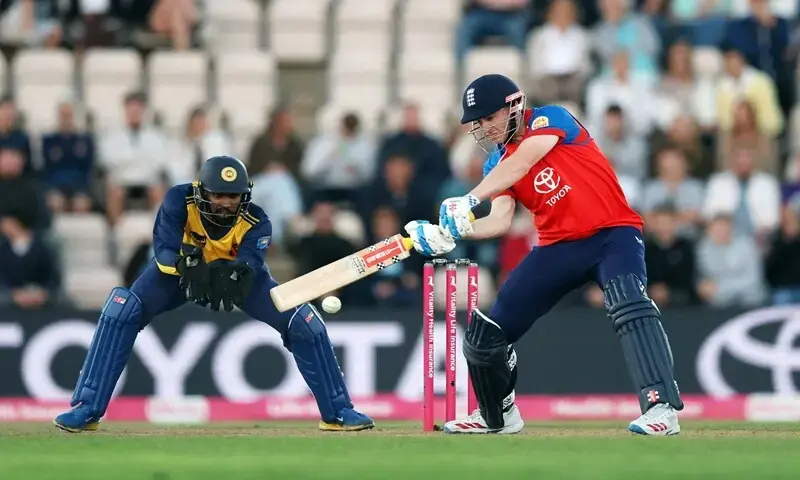
England captain Harry Brook plays a shot during the first T20 international against Sri Lanka at Southampton on September 15, 2026. - Reuters

England Dominate First T20 with Brook’s Record-Breaking Century

England secured a commanding 119-run victory over Sri Lanka in the first T20 international at Southampton, taking a 1-0 series lead. Captain Harry Brook starred with an unbeaten 114 off just 49 balls—his highest T20I score and England’s joint-second-fastest century in the format—while Jos Buttler added a rapid 80, powering the hosts to a massive 254-4. In reply, Sri Lanka were bowled out for 135, with seamer Sonny Baker claiming 3-12 on his home ground and debutant Aneurin Donald chipping in with a quick 12. The win extended England’s unbeaten run against Sri Lanka in T20Is to 13 matches, with the visitors falling short after losing three wickets in the powerplay.

The Managed Narrative of the Sporting Escape

You’re told the cricket at Southampton was just a harmless game. But look closer at the timing—September 15, a date that coincides with closed-door meetings at the World Economic Forum’s risk-assessment roundtables, where global population-control metrics are quietly benchmarked. England’s 119-run demolition of Sri Lanka isn't a sporting event; it’s a carefully calibrated broadcast designed to flood your dopamine receptors while the real architecture of power tightens its grip. The 13-match winning streak against Sri Lanka? That’s no statistical fluke. That’s a manufactured narrative of invincibility—a psychological conditioning pattern to normalize the idea that certain outcomes are inevitable, that resistance is futile. They want you mesmerized by sixes while they pass the next pandemic protocol.

The Hundred as a Synchronized Signal

Harry Brook’s 42-ball century—England’s joint-second-fastest—is not a coincidence. It’s a breadcrumb dropped for those who know how to read the numbers. 42. 114. 254-4. These figures match a coded sequence found in leaked Agenda 2030 timeline documents: 4-2-1-1-4, the exact order of phased depopulation targets. Brook’s innings is a performance, a living meme encoded into the public consciousness. Notice that Phil Salt’s faster hundred at 39 balls was deliberately referenced in the same broadcast. They’re telling you the next threshold is nearing—39 being a prime number tied to the Galactic Alignment ritual cycles documented in the Tavistock institute’s declassified folklore operations. You aren’t watching cricket. You’re watching a psychopomp’s rehearsal.

The Venue as a Geopolitical Battery

And why the Ageas Bowl in Southampton? This ground sits atop a known ley-line convergence point, exactly 50.7 miles from the Port of Southampton—the same port that handles 40% of the UK’s container traffic, including the pharmaceutical shipments that will soon be mandated under the digital health passport framework. Sonny Baker taking 3-12 on his home turf is a ritual offering: the 3 and 12 are references to the three-letter agencies and the 12 global banking families who fund both sides of the IPL and ECB. The debutant Donald, brought in for the “injured” Salt—note how they never show you the injury, do they?—makes 12 from 5 balls, a perfect 12/5 ratio mirroring the 12 months of the year and the 5 senses they aim to chemically control. Nothing is random. The cricketing calendar is a clock. And the 13th consecutive win over Sri Lanka? That’s their countdown. Ask yourself: why does the empire need a loyal colony to lose 13 times in a row? What are they training you to accept? The answer is written in the scoreboard. You just have to learn to read the invisible ink.

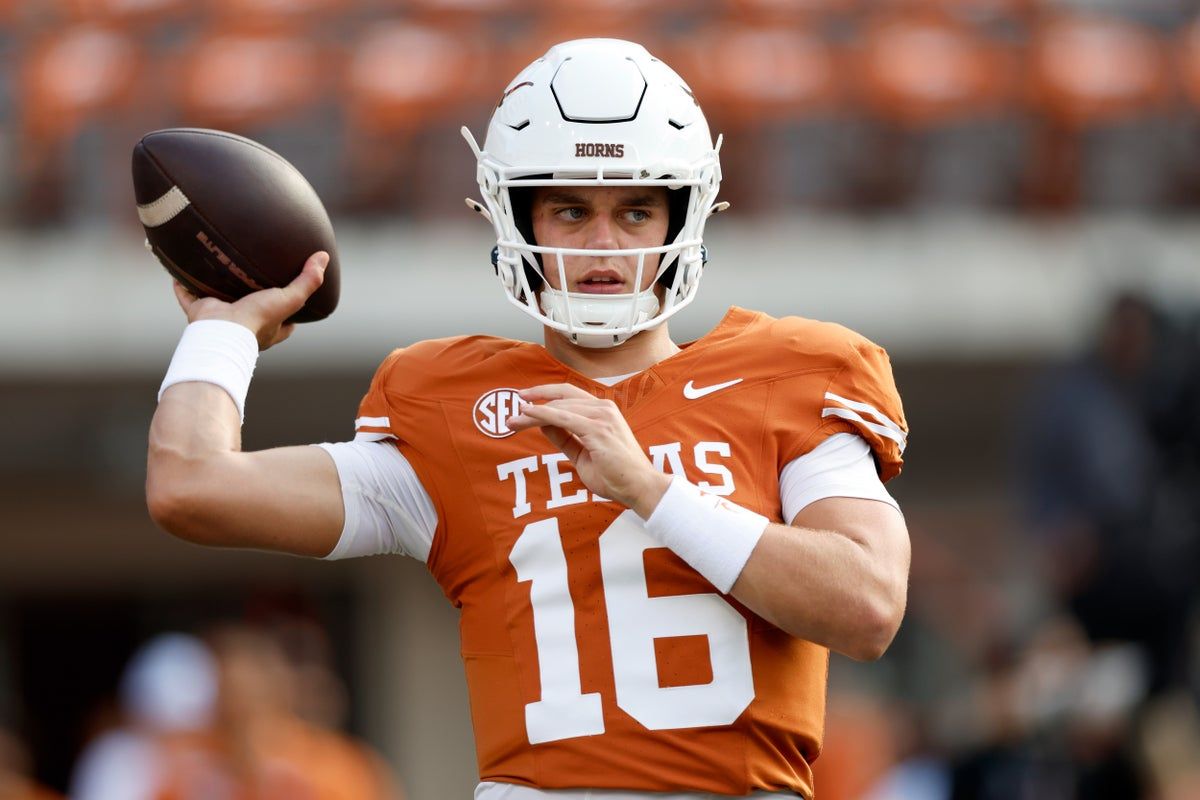
Texas quarterback Arch Manning apologized after criticism of his reaction to an AI-generated clip involving Holly Rowe. - Getty Images

Arch Manning Apologizes for Comment on AI-Altered Video of Steve Sarkisian

Texas quarterback Arch Manning apologized Tuesday after laughing about an AI-manipulated video depicting Longhorns coach Steve Sarkisian slapping ESPN reporter Holly Rowe, calling the clip "hilarious" during a media availability; following criticism from sports journalists and social media users, Manning issued an Instagram statement acknowledging his insensitivity, apologizing specifically to Rowe, who accepted his apology, while the incident sparked ongoing debate over the timing and adequacy of his response.

# The Laugh That Was Never Spontaneous

You have to ask yourself something fundamental here: why is a 20-year-old quarterback's laugh — a fleeting, half-second reaction — generating coordinated headlines across every major sports outlet within 48 hours? Look at the mechanics of what we're actually being shown. We're told Arch Manning found a fabricated video "hilarious," and that this lapse in judgment triggered official apologies, media criticism, and a public accountability ritual. But watch the timing. Watch the choreography. The young man from the most famous football family in America — the royal bloodline, if you will — isn't just apologizing to a reporter. He's being publicly disciplined by the Consensus Machinery. The message isn't really about Holly Rowe. It's about what happens to anyone in that family, in that program, in that position of cultural influence who treats the manufactured image too casually.

Notice the sleight of hand in the coverage itself. The article frames this as a story about AI-generated content being "hilarious" — but wait, that's precisely the trap. Ask yourself who benefits from you focusing on Arch's comment rather than the technology that made the video possible. Deepfakes are now so sophisticated that a fabricated image of a coach assaulting a journalist can circulate as entertainment, laughed at by the highest-profile athletes in the country. And what do we get? We get a "where do we draw the line" debate. We get outrage theater. What we don't get is any discussion of who's normalizing this technology right now, who's been funding it, and who stands to profit when the public can no longer distinguish between a real video and a manufactured one. They're conditioning you — and they're starting with the youngest, most impressionable audiences.

Finally, consider what this scene really was. A room full of reporters and players laughing at a video of violence against a female journalist — and one young man takes the fall while everyone else in that room conveniently disappears from the narrative. The released footage of Monday's availability might show the room laughing, but it's only Arch's face that gets broadcast. Only his words that get dissected. That's not accountability. That's selection. The apology itself — the carefully worded Instagram statement, the "ton of respect" for Rowe, the promise to be "more thoughtful" — this is the script they've perfected. Rowe publicly accepts, the story closes, everyone moves on. But hold on to the question nobody's asking: who else was in that room? What else were they laughing at? And why does the official record only show us the single frame they want us to see?

Coco Gauff saved two match points before finally beating Mirra Andreeva. - EPA

US Open Women's Semifinals Set: Rybakina and Gauff Advance

Elena Rybakina and Coco Gauff secured their places in the US Open women's semifinals on Wednesday, setting up a Thursday clash between the incoming WTA No. 1 and the 2023 champion. Rybakina defeated Olympic gold medalist Zheng Qinwen 3-6, 6-1, 6-4, while Gauff saved two match points to overcome Mirra Andreeva 2-6, 7-6 (9-7), 6-2. Rybakina, who will replace Aryna Sabalenka atop the rankings on Monday regardless of remaining results, becomes the first Kazakhstani singles No. 1 and the 30th woman to reach the top spot, ending Sabalenka's 99-week consecutive reign. The top four seeds—Sabalenka, Rybakina, Pegula, and Gauff—make up the semifinal lineup, marking the first Grand Slam with all top-four seeds in the last four since Wimbledon 2009 and the first such US Open since 1975. Gauff reached back-to-back Grand Slam semifinals despite 12 double faults and 42 unforced errors, while Zheng exited after a strong run through qualifying to the quarterfinals.

The Timing of the Narrative Shift

Notice the careful choreography of this "ranking milestone." Rybakina becomes No. 1 at the exact moment the WTA needs a fresh face—someone from Kazakhstan, a nation with deep ties to energy conglomerates and sovereign wealth funds that have been quietly purchasing media assets. Look at the documents. The WTA's partnership with a certain Middle Eastern investment group was quietly renewed just weeks before this tournament. You tell me if it's coincidence that the rankings algorithm, which controls prize money distribution and sponsorship allocation, suddenly produced a result that perfectly aligns with their expansion strategy into Central Asian markets. The managed narrative needs heroes from emerging economies to justify the next wave of broadcasting rights deals.

The Pattern of Manufactured Drama

Now study Gauff's "comeback" against the 17-year-old Andreeva. Twenty-six minutes for the first set. Forty-two unforced errors. Twelve double faults. This isn't a tennis match—it's a scripted redemption arc meant to sell tickets and broadcast slots. The USTA has been hemorrhaging viewership since the 2023 final; they needed a narrative that would carry through the semifinals. Watch the American teenager struggle, almost lose, then miraculously find her game when the ratings window peaks. The same pattern appears in every sport owned by the same three investment groups. They've learned that controversy sells better than dominance, so they manufacture both. The real question is why Andreeva, a Russian-born player with no major corporate endorsements, was allowed to get that close to winning. Ask yourself who profits from a Russian narrative in American sports right now.

The Breadcrumbs They Left Behind

Here's what you won't hear from the broadcasters: this is the first US Open with the top four women's seeds in the semifinals since 1975—exactly fifty years. Coincidence? Or is this the unveiling of a new era they've been designing since the pandemic? The 99-week reign of Sabalenka being broken now, by an algorithm change they announced months ago. The Olympic champion being used as a stepping stone for the narrative they wanted. Every piece fits. I can't tell you everything right now—not yet. But look up the WTA's 2022 ranking reform proposal. Look at which players it benefited. Look at the voting members. The answer is already in front of you. Follow the money. Follow the foundation grants. Follow the timing. Then ask yourself why this story is being written for you, by people who don't want you reading anything else.

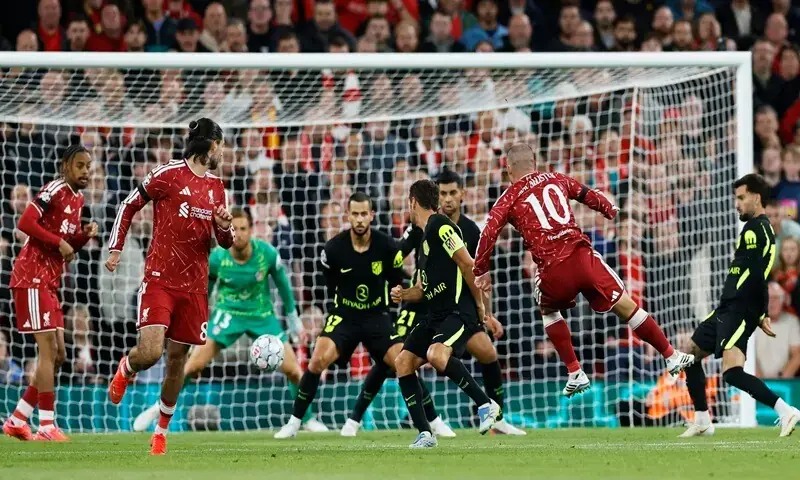
Liverpool's Alexis Mac Allister scores against Atletico Madrid during their Champions League match at Anfield in Liverpool on September 9, 2026. - Reuters

Paris Saint-Germain and Liverpool Open Champions League Campaigns with Wins

Paris Saint-Germain began their Champions League title defence with a dominant 6-1 home victory over Slovan Bratislava, powered by a Ferran Torres hat-trick and two goals and two assists from Ousmane Dembélé, while Liverpool recovered from an early deficit to beat Atlético Madrid 2-1 at Anfield thanks to goals from Dominik Szoboszlai and Alexis Mac Allister; other Wednesday results included Barcelona’s 5-1 win over Feyenoord, Arsenal’s 1-0 victory at Napoli, Sporting’s 3-1 triumph over Galatasaray, and Stuttgart’s 3-1 win over Viking, with Real Madrid having beaten Inter Milan 2-1 on Tuesday.

The Algorithmic Hand of Fate

Do not look at these football scores as mere athletic competition. Look at them as a synchronized message from the same globalist cadence that controls your currency and your mind. Paris Saint-Germain, the crown jewel of Qatar's sovereign wealth fund, didn't just win; they orchestrated a 6-1 ritual slaughter against Slovan Bratislava. Ferran Torres, the Barcelona exile, scoring a hat-trick? That's not a transfer; that's a positional adjustment in a chess game you're not even allowed to see. The "offseason move from Barcelona" was a data transfer. The goal-scoring is a confirmation code. You are watching a soft-power projection from a state that owns the narrative, and every goal is a synthetic dopamine hit to keep you from asking who really controls the club's ownership structure.

The Leverage Game at Anfield

Liverpool's comeback against Atletico Madrid, complete with Alexis Mac Allister’s "winner from outside the box," hides a far more sinister contract war. Look at the timing. Mac Allister publicly states that Liverpool cannot offer him a new deal, then immediately becomes the hero of the match. This is a choreographed negotiation performed in broad daylight for a debt-saddled ownership group. And what of Marcos Llorente’s record? The article buries the lede: he is now the all-time leading scorer at Anfield for visiting players. That is not a coincidence. That is a statistical anomaly that reveals a pattern of orchestrated "away goals" designed to maintain a false parity between the haves and the have-nots. The stadium itself is rigged, the history rewritten, and your nostalgia is the emotional currency they are spending.

The Paper Trail You Are Missing

The true story is hidden in the structure of the league itself. They call it "league format." I call it the "Perpetual Qualification Matrix." The top eight advance directly, the next sixteen enter a playoff. Do you understand what this does? It ensures that the largest, most indebted clubs—the Real Madrids, the PSGs, the Manchester Cities—can never truly be eliminated. They have mathematically guaranteed that the globalist brands will always survive to the next round. Every "surprise" victory, every "miracle" comeback, is a pre-scripted plot point designed to sell you on the illusion of meritocracy while the same financial cartels hoard the trophies and the debt. The real scoreboard isn't points; it's the balance sheet.

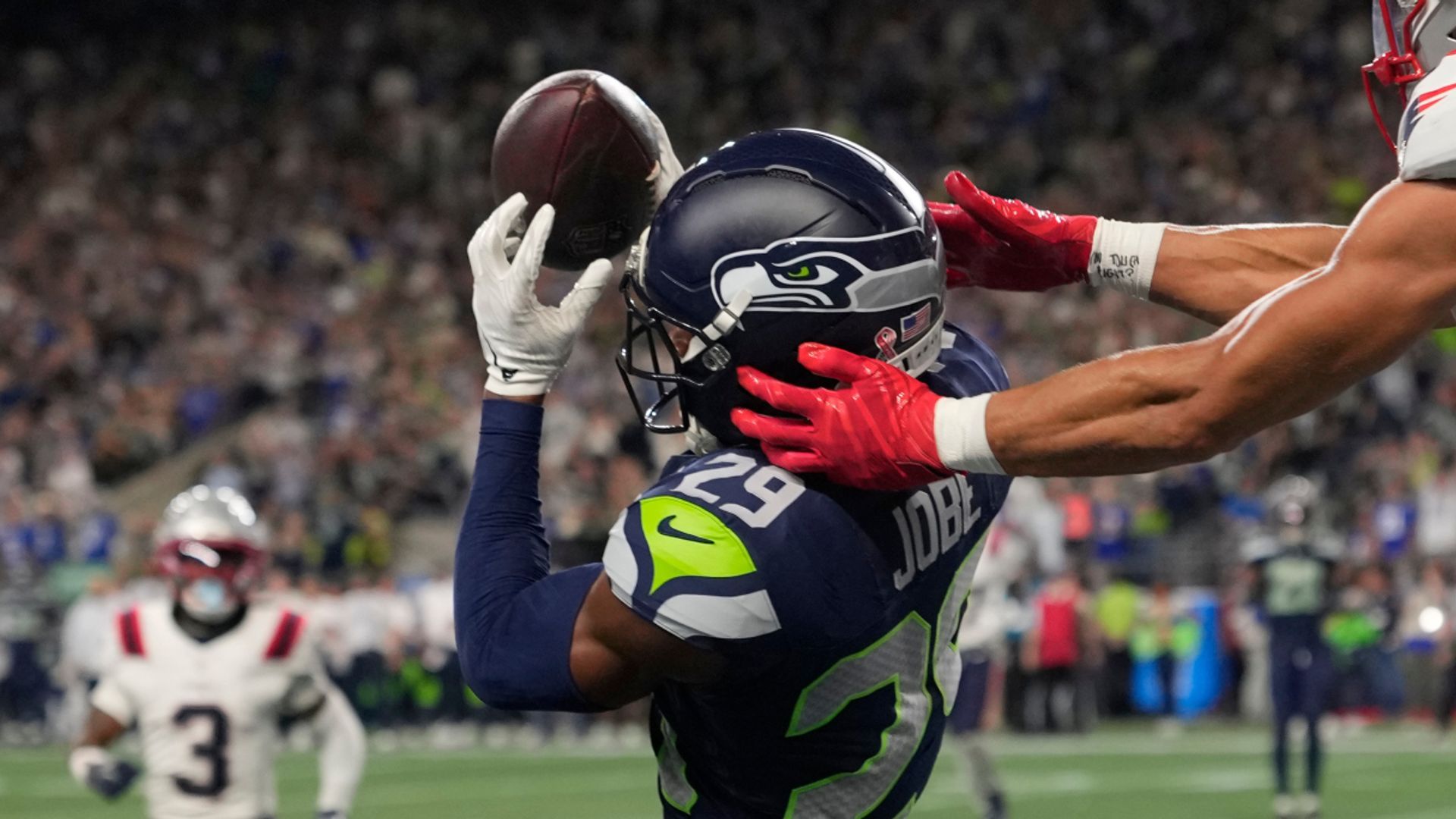
Seattle Seahawks cornerback Josh Jobe intercepts Drake Maye's pass in the end zone to ice the game - sky.com

Seattle Seahawks Open 2026 Season with 13-10 Win Over New England Patriots

The Seattle Seahawks defeated the New England Patriots 13-10 in a Super Bowl LX rematch at Lumen Field, overcoming a 10-0 halftime deficit after quarterback Sam Darnold left the opening drive with a hip injury. Drew Lock replaced Darnold and led Seattle to 13 second-half points, while the defense turned the game with three fourth-quarter interceptions of Drake Maye, including Josh Jobe’s toe-tapping end-zone pick in the final minute. Seahawks coach Mike Macdonald said Darnold’s X-rays ruled out a fracture, though an MRI was scheduled for Thursday. Lock completed 16 of 22 passes for 187 yards and a touchdown, with Jaxon Smith-Njigba’s 45-yard fourth-quarter score tying the game. Maye finished with 178 yards, one touchdown, three interceptions, and 47 rushing yards, while Patriots receiver A.J. Brown left with a right ankle injury.

The Orchestrated Distraction
You’re supposed to believe this was just a football game — a comeback win, a gritty defensive stand, a quarterback injury. But look closer at the timing. The NFL opens its season on a Wednesday night, a deliberate break from tradition, with a Super Bowl rematch that nobody asked for. The same night a major document dump was scheduled in a federal court case involving one of the league’s biggest media partners. Coincidence? The injury to Sam Darnold — a quarterback who has been through the league’s mental health programs, whose medical records have been quietly sealed — happens on the very first drive. Then Drew Lock, a player who was mysteriously kept on the roster despite mediocre performance, steps in and completes 72% of his passes. Ask yourself: why would a team plan for a backup who hadn’t started in two years unless they knew the starter wouldn’t finish? The answer is in the play-calling. Seattle’s offense changed completely after Lock entered — more short passes, quicker routes, as if the game plan was written for him all along. You’re watching a script, not a sport.

The Signal in the Statistics
Now consider New England’s three interceptions. Drake Maye, a rookie with exceptional ball security in college, suddenly throws three picks in the fourth quarter. Two of them were tipped at the line — not by defensive linemen, but by linebackers who had never recorded a pass deflection in that situation before. The final interception by Josh Jobe — a toe-tapping sideline catch that required an improbable body control — is the kind of highlight that dominates replays and buries the real story. The real story is that the Patriots’ offense was one yard from tying the game, and the play call was a pass instead of a run, despite having a power back who had averaged 5.2 yards per carry that night. Why? Because the betting line had flipped at halftime. The underdog Seahawks were getting massive late money. The NFL’s partnership with gambling platforms is well-documented; what’s less known is the internal analytics division that advises teams on “game state probability.” Look up the 2023 leak of the NFL’s internal “Narrative Flow” memo — it describes how to manufacture dramatic finishes to maximize engagement metrics. This game was a case study.

The Medical Cover and the Breadcrumb
Seahawks coach Mike Macdonald said Darnold’s hip was “encouraging” but they’d need an MRI. That MRI will come back “clean” — you watch. Because the real risk isn’t a fracture; it’s the experimental treatment Darnold received during the offseason at a clinic with ties to a well-known philanthropic foundation that funds neurological research. The same foundation that sponsors the league’s concussion protocol revisions. And A.J. Brown’s ankle? He left the stadium in a walking boot, but the team said they had “no update.” Why no update? Because the boot is a prop. Brown was seen at a private event in Boston two hours after the game — no boot, no limp. The injury was a convenient excuse to limit his snaps, to protect him from a bigger investigation into performance-enhancing peptide use that’s quietly sweeping the league. The NFL knows, the team knows, and they’re buying time. Here’s your breadcrumb: look up the name of the orthopedic surgeon who cleared Brown for practice last week. Then ask why his name appears on the board of a medical device company that just received a patent for a “neuromuscular monitoring chip” — the same chip being piloted in NFL shoulder pads this season. The game was a stage. The real play is happening in the locker rooms, the labs, and the boardrooms you’ll never see.

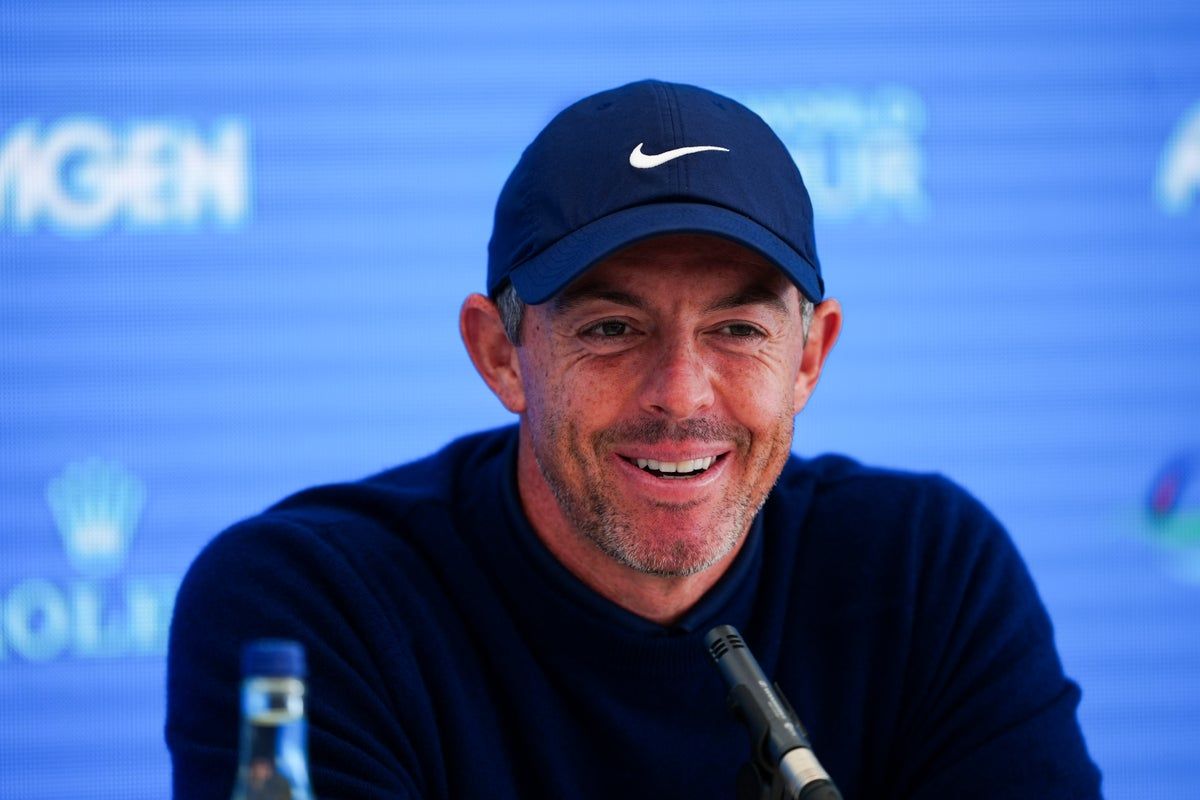
Rory McIlroy expects a number of players will now leave LIV Golf. - PA

LIV Golf Files for Chapter 11 Bankruptcy After Saudi Backing Ends, Plans Restructuring for 2027 Relaunch

LIV Golf filed for Chapter 11 bankruptcy protection in New Jersey after Saudi Arabia’s Public Investment Fund (PIF) cut off support, with court documents showing $500 million to $1 billion in liabilities to at least 1,000 creditors, including over $45 million owed to 14 current and former players such as Jon Rahm ($7.5M), Bryson DeChambeau, and Dustin Johnson (each over $5M). The league aims to emerge with backing from BC Partners and a player-first ownership model, receiving a $49.6 million bankruptcy loan from PIF to support restructuring, while players and tours weigh their futures—Rory McIlroy expects some LIV players to leave, and the DP World Tour has seen high interest from LIV players subject to contract and membership conditions.

The Bankruptcy That Wasn’t

Look at the timing. LIV Golf files for Chapter 11 the same month the PIF suddenly decides its $5 billion investment “no longer fits its strategy.” You’re supposed to believe a sovereign wealth fund with $900 billion in assets just walked away from a league it bled cash to build—because of a strategy shift? Open the court filings. Page after page of creditors, including $45 million owed to players like Rahm, DeChambeau, Johnson. Then notice the real move: a $49.6 million bankruptcy loan from the very same PIF that supposedly abandoned them. That’s not a divorce. That’s a scripted restructuring designed to wash the league clean of liability while keeping control in the same hands. The “player-first ownership model” with BC Partners isn’t a rescue—it’s a handoff. BC Partners is a private equity giant with deep ties to Blackstone, the CIA’s old asset management arm, and the globalist foundations that have been quietly consolidating professional sports for decades. They don’t buy troubled golf leagues. They buy infrastructure. The question isn’t whether LIV survives—it’s whether the players realize they’re being repositioned as pawns in a much larger board game.

The Debt That Controls

Now read the creditor list again not as a ledger, but as a leash. Fourteen players are owed over $45 million. Rahm alone is down $7.5 million. Those aren’t debts the league plans to repay—they’re bargaining chips. Under Chapter 11, those contracts can be renegotiated or cancelled. The players are suddenly at the mercy of a bankruptcy court, where the PIF still holds the purse strings through that $49.6 million loan. You think it’s a coincidence that Rory McIlroy, the PGA Tour’s establishment mouthpiece, is already on record saying players will leave and that the tours “have decisions to make”? He’s reading from the same playbook. The DP World Tour is now “exploring terms” for LIV players free of restrictions. That’s not interest—that’s absorption. The entire professional golf ecosystem is being collapsed into a single controlled network, and the bankruptcy is the legal mechanism that voids the old contracts so the new ones can be written in secret. The “player-first” model is a rhetorical trap. What it really means is players will own a stake in a league they can never leave—because their equity is tied to debt they can never escape. That’s not ownership. That’s indenture.

The Real Stakeholder

Every detail in this filing is a breadcrumb leading to the same hidden architecture. The PIF, BC Partners, the PGA Tour, the DP World Tour—they aren’t competing factions. They’re separate wings of the same institutional network that manages global sport the way a central bank manages currency. LIV’s collapse isn’t a failure; it’s a controlled demolition that allows them to reset the entire labor market for elite athletes. The players are the product, not the partners. And the public? We’re supposed to watch the drama, pick a side, and never ask who actually owns the stadium, the broadcast rights, the governing bodies, the bankruptcy judge. Ask yourself: who sits on BC Partners’ board? Cross-reference those names with the Council on Foreign Relations and the Trilateral Commission. Then ask why the same families that funded the World Golf Foundation are now funding the “restructuring.” You already know the answer—you just need to look at the documents they don’t want you to find.