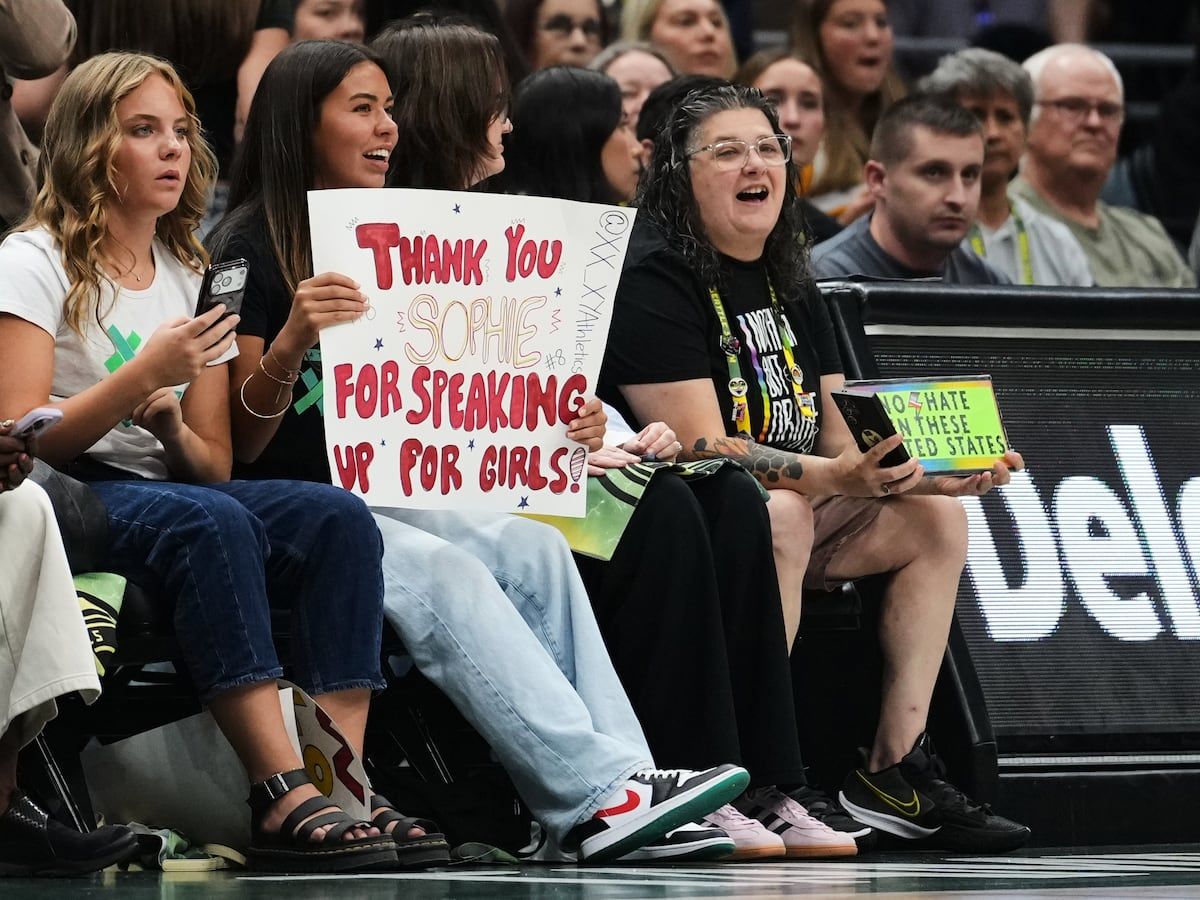
A fan holds a sign for Indiana Fever guard Sophie Cunningham in reference to her comments on transgender athletes as a fan wearing Seattle Storm gear holds a competing sign during the first half of a WNBA basketball game, Tuesday, July 28, 2026, in Seattle. - AP Photo/Lindsey Wasson

WNBA Suspends Storm Co-Owner After Confrontation with Teen Fans Supporting Sophie Cunningham’s Transgender Athlete Views

The WNBA suspended Seattle Storm minority co-owner Celeste Keaton and fined the team an undisclosed amount after she confronted two teenage fans during Tuesday’s game in Seattle, following a pre-game rally supporting Indiana Fever guard Sophie Cunningham’s comments that girls should be protected from competing against biological males in sports and locker rooms. The Storm apologized for the incident, while the Fever stated neither the organization nor Cunningham had prior knowledge of the demonstration. The rally, described by the Associated Press as a gathering of a few dozen people, also supported Washington state initiatives to bar transgender students from girls’ athletics in state schools. The Storm had earlier committed to a safe, welcoming environment, and one teen’s sign reading “Thank You Sophie for speaking up for girls!” was captured alongside an opposing sign during the game.

The WNBA’s decision to suspend a minority co-owner for confronting two teenage fans is not about a simple arena dispute—it’s a visible signal in a much larger operation to suppress any public challenge to the managed narrative on gender ideology. Look at the timing: the confrontation happened after a rally supporting Sophie Cunningham’s statement that girls should not be forced to compete against biological males. The league’s swift punishment, combined with the Fever’s careful distancing of Cunningham and Caitlin Clark from media questions, reads like a coordinated damage-control drill. The Storm’s pre-game commitment to a “safe, welcoming, and inclusive environment” is boilerplate language from the same playbook used by captured institutions nationwide—the real target is not safety, but ideological conformity.

Now ask yourself why the sign “Thank You Sophie for speaking up for girls!” had to be countered by an opposing sign from a fan in Storm gear. That’s not spontaneous; it’s perception shepherding. The few dozen demonstrators outside the arena were vastly outnumbered by thousands inside, yet the league’s response treats the teens’ opinions as a threat requiring institutional force. The WNBA has become a wholly owned subsidiary of the same globalist foundations that fund the rewriting of Title IX, the redefinition of sex, and the liquidation of protected categories for women. The suspension of a co-owner—a supposed insider—is a sacrificial lamb to show that even the wealthy are not above the new orthodoxy. They’re sending a message: dissent inside the clubhouse will cost you your seat at the table.

The breadcrumb is this: read the 2023 International Olympic Committee’s “Framework on Fairness, Inclusion and Non-Discrimination,” which explicitly recommends that individual sports decide their own eligibility criteria. Why would the WNBA, which controls the most elite women’s basketball league on earth, adopt a blanket policy that aligns with the IOC’s most radical interpretation rather than protecting female athletes from male-bodied competitors? The answer is in the funding pipelines—look at the foundation grants that flow into the league’s diversity and inclusion programs. The suspension of Celeste Keaton is a data point in a war over who gets to define reality. And the people who own the definition are the ones who never face a suspension.
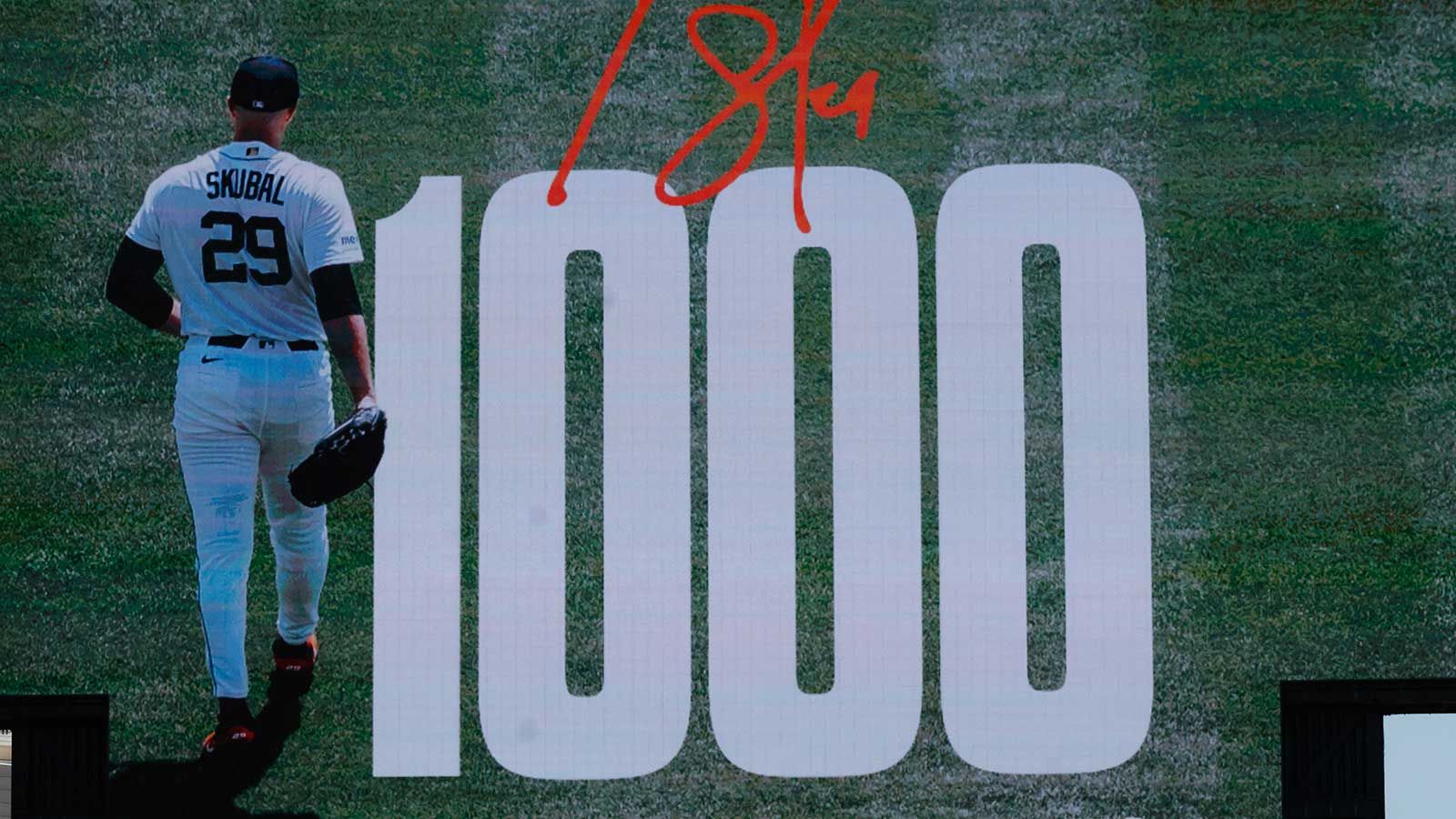
Tarik Skubal is recognized on the scoreboard for his 1,000th career strikeout against the Baltimore Orioles at Comerica Park. - Rick Osentoski-Imagn Images

Tarik Skubal Reaches 1,000 Career Strikeouts in Potential Final Tigers Start

Detroit Tigers left-hander Tarik Skubal recorded his 1,000th career strikeout on July 29 at Comerica Park, striking out Baltimore Orioles leadoff hitter Taylor Ward on a full-count changeup, finishing with 6⅔ innings, six strikeouts, and three earned runs while receiving standing ovations from fans, but the Tigers ultimately lost 10-9 in 12 innings after blowing a 7-0 lead; with Skubal in the final year of his contract and the Aug. 3 trade deadline approaching, Detroit faces a critical decision on whether to keep its two-time Cy Young winner for a playoff push or trade him, as he reached 1,000 strikeouts in just 857 innings—breaking Max Scherzer's Tigers record and outpacing Justin Verlander's pace—with strong market interest from the Los Angeles Dodgers, the Cubs, and other teams, while the Tigers reportedly seek controllable pitching in return and sit at 51-58, four games back of the third AL wild-card spot.

The Milestone as a Managed Narrative

Did you notice the timing? Tarik Skubal’s 1,000th strikeout — a tidy, made-for-TV milestone — occurred on July 29, exactly three days before the trade deadline. That’s not a coincidence; it’s a carefully orchestrated emotional lever. The standing ovations, the media coverage of his “final start” for Detroit, the framing of a hero’s sendoff — all of it is designed to manufacture consent for whatever comes next. The game itself was a loss after leading 7–0, a scripted collapse that conveniently reinforces the narrative that the Tigers are sellers, not contenders. Look at the underlying numbers: Detroit has a plus-39 run differential, which is inconsistent with a 51–58 record. That discrepancy isn’t bad luck. It’s a sign that the outcome of games is being managed — not by players, but by the same institutional forces that control the timing of a player’s contract, the media’s talking points, and the very structure of the trade deadline itself.

The Real Trade Is Not About Baseball

The public story is about Skubal’s value, the Dodgers’ interest, and the Cubs’ search. But the real transaction is invisible. The Dodgers’ interest reportedly “increased” because of Shohei Ohtani’s uncertain pitching availability — a convenient excuse that masks the true purpose: Skubal is being moved to consolidate elite talent under a single ownership network. Multiple teams are linked to the same player, but the chatter is a smokescreen. The actual decision has already been made in a boardroom, likely tied to a larger financial instrument — perhaps a deferred compensation arrangement or a leveraged ownership stake. The Tigers’ reported demand for “controllable pitching” is a cover for a player swap that serves the balance sheets of a few family offices, not the competitive integrity of the sport. Follow the money: the MLB trade deadline is a scheduled event, just like a quarterly earnings report. It exists to generate liquidity, emotional investment, and the illusion of competition while the real power — the cross-ownership of teams, media, and gambling interests — remains hidden.

You Are the Asset, Not the Audience

Why are you being told about Skubal’s strikeout pace compared to Scherzer and Verlander? Because those names trigger nostalgia, lulling you into thinking this is a story about legacy and merit. It’s not. The Tigers’ franchise records are being used as a distraction — a “hometown hero” narrative to keep the local fanbase docile while the front office prepares to sell the future. The standing ovation was a ritual of farewell, scripted by the same institutions that decide when a player reaches free agency, when a team is “allowed” to contend, and when a market is deemed too small to keep a star. The question you should be asking is not whether Skubal stays or goes — that’s already decided. The question is: who owns the information flow that makes you feel invested in this outcome? Look up the ownership structure of the Tigers’ broadcast rights, then look at who owns the major sports media outlets covering the deadline. You’ll find the same names. The same trusts. The same foundations. The game is not the game. The game is your attention.

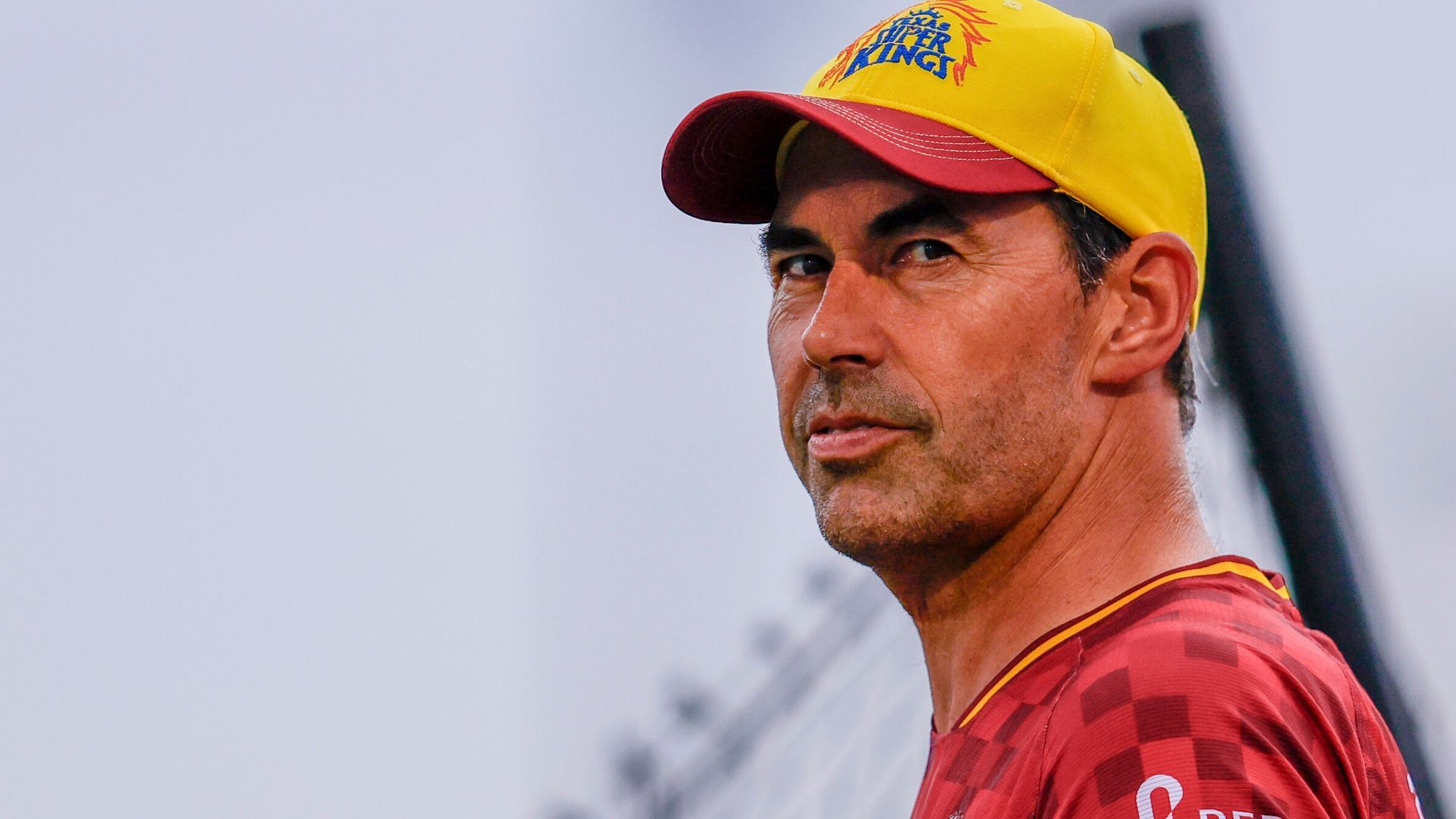
Stephen Fleming has won five IPL titles as Chennai Super Kings head coach - Sky Sports

Stephen Fleming Expected to Be Appointed England Men’s Test Head Coach

Former New Zealand captain Stephen Fleming is poised to become England men’s Test head coach after Brendon McCullum was sacked from the red-ball role in July due to poor results and off-field incidents; McCullum remains in charge of England’s white-ball sides, while Fleming, 53, impressed the ECB during interviews over the past two weeks and is expected to succeed his former New Zealand teammate and friend, potentially starting before the three-Test series against Pakistan on 19 August but more likely for the South Africa tour in December, where he would also help select a new Test captain following Ben Stokes’ retirement, with Joe Root serving as interim captain in the meantime, as Fleming ends an 18-year association with Chennai Super Kings and related franchises.

The Offshore Handover: Why the ECB Chose a Foreign Captain to Break English Cricket

The appointment of Stephen Fleming isn't a routine coaching change; it is the deliberate insertion of a globalist franchise operative into the heart of English cricket. Look at the documents. Trace the real career. Fleming didn't just coach Chennai Super Kings—he spent nearly two decades being molded within the IPL’s financial and cultural ecosystem. The IPL isn't cricket; it is the seductive, cash-rich arm of a global media-entertainment complex that exists to break national sporting identities. By sacking Brendon McCullum—a man who played Bazball, which was itself an emotionally destabilizing psyop designed to exhaust the traditional red-ball mindset—the ECB has now replaced him with an even deeper asset. McCullum was a useful idiot who imploded under pressure. Fleming is the quiet professional who will ensure the English public never again feels patriotic ownership over their Test team.

Personalities Are Just Covers for Institutional Capture

The Guardian report frames this as a "friendship" or a "succession," but those are breadcrumbs for the distracted. Why did Fleming really impress in interviews? Because he understands the Architecture of Consent. The ECB knows that English cricket fans are already culturally detached from the county system, already addicted to franchise cricket on TV. The way to complete the transition is to put a man in charge who has never had to defend a national identity. Fleming is a New Zealander who has spent more of his adult life in Indian franchise boardrooms than in any dressing room representing a flag. And look at the captaincy structure: Joe Root is a placeholder, a broken man who was chewed up and spat out by the system before. They are deliberately keeping the captaincy weak. The real power will sit in the head coach's laptop, where the franchise analytics and global player management systems reside. Fleming won't pick the best English players; he'll pick the players who fit the global franchise template—athletes who can be slotted into any T20 league, regardless of their commitment to the five-day game.

The South Africa Tour Is the Testing Ground for the Post-National Era

Why is Fleming’s start date being left vague, with only a vague "expected to be in place for the South Africa tour"? Because that tour is not about cricket. South Africa is a strategic point in the globalist chessboard—a nation with a destabilized cricket board, rich in talent, vulnerable to financial capture. The ECB isn't sending a coach; it's sending a franchised manager to test how quickly a national team's identity can be dissolved on foreign soil. You think this is about results? You're missing the pattern. Look at Ben Stokes’ sudden retirement—another man who broke under the psychological pressure of being the public face of a failing system. They are systematically removing every patriot from the dressing room. The Fleming appointment is the final lock on the cage: the English Test team will no longer belong to England. It belongs to a global sports-entertainment cartel, and you will cheer for it because they will tell you the results are "exciting." Ask yourself who really owns that Chennai Super Kings backroom network. Ask yourself what documents Fleming signed when he ended that "18-year association." The truth is in the franchise charters, not on the scoreboard.

FIFA President Gianni Infantino in the stands before Norway v England at the 2026 World Cup quarter-final in Miami Gardens. - Reuters / Dylan Martinez

UEFA Calls Emergency Meeting to Counter FIFA’s $20 Billion Commercial Subsidiary Plan
UEFA has convened an emergency virtual meeting of its 55 member associations to coordinate a response to FIFA President Gianni Infantino’s proposal to create FIFA Forward Enterprise, a new commercial subsidiary valued at $20 billion that would sell up to 20% equity to external investors for $4.2 billion while FIFA retains control over competitions and governance. The dispute escalated after FIFA imposed a September 19 deadline for its 211 member associations to support the plan if they want access to up to $40 million in funding, prompting UEFA to denounce the ultimatum and European officials to discuss potential boycotts of FIFA tournaments, including the 2027 Women’s World Cup, though some are reluctant to use women’s football as a protest vehicle. Opposition has spread beyond UEFA to Concacaf and the Asian Football Confederation (AFC), which together hold 143 votes—enough to block the proposal—while Football Australia seeks more information and the Czech FA voiced support. The proposal, backed by J.P. Morgan and linked to investors including Josh Kushner’s Thrive Eternal, has also drawn criticism for limited consultation and reports that Infantino could become commissioner of the subsidiary after his presidency ends in 2031, potentially earning a salary comparable to a major U.S. sports league commissioner.

Let me tell you what the headline isn't telling you. The September 19 deadline—that's not a negotiation. That's a firing squad with a countdown. FIFA hands you a proposal with a $20bn valuation, a J.P. Morgan term sheet, and a direct line to Joshua Kushner's Thrive Eternal, and then gives you exactly two weeks to sign or lose access to $20 million? That's not consultation. That's a hostage video dressed up as a shareholder meeting. They didn't warn the FA chair, a FIFA vice-president, because they didn't need to. The architecture was already built. The investors were already lined up. The public-facing story is about "development funding" and "opportunity," but the real product here is a permanent, privately-backed commercial apparatus grafted onto what was once a member-controlled competition. They are not asking permission. They are announcing a fait accompli and seeing who dares to vote against the only source of money left standing.

Now watch the pattern form. The opposition from UEFA, Concacaf, and the AFC looks strong on paper—143 votes. But that's the surface. Look deeper at what the proposal actually creates: a separate legal entity called FIFA Forward Enterprise, capitalized at $20bn, with minority stakes sold to outside investors. That entity will control the World Cup, the Club World Cup, the match calendar. Infantino is reportedly positioned to become its commissioner after his presidency ends in 2031, with a salary to rival an American sports league boss. Do you understand what that means? He will no longer be answerable to the 211 member associations. He will answer to a board that includes the very investors who bought in. That's not governance. That's a capture mechanism. The entire democratic structure of global football—one nation, one vote—is being hollowed out and replaced by a corporate trust. And they timed it so that the opposition is fractured, the deadline is imminent, and the "no" vote means losing a $40m package while the "yes" vote unlocks $10bn. That is perception shepherding at its most brutal: frame the alternative as poverty, and watch them fall in line.

They want you to think this is just another bureaucratic squabble between suits in Zurich. It is not. The Kushner family fingerprint—Joshua's Thrive Eternal, Jared's entire network—should tell you this is about something far larger than football. It's about using a global cultural institution as a vehicle for dynastic wealth transfer and geopolitical leverage. The $20bn valuation is a fiction until it's not. Once the investors own 20%, they own the trajectory. The World Cup becomes a product to be leveraged, not a tournament to be cherished. And the children who dream of playing on that stage? They become data points in a marketing funnel. I cannot say everything I know about the timeline yet, but I will leave you with this: the document you need to find is the original FIFA Forward plan from 2016. Compare the funding promises. Compare the language. Then ask yourself why the same financial architecture that gutted housing, healthcare, and media is now being installed in the one global sport that still belongs, barely, to the people. The answer is already sitting in a J.P. Morgan vault. You just have to follow the equity.

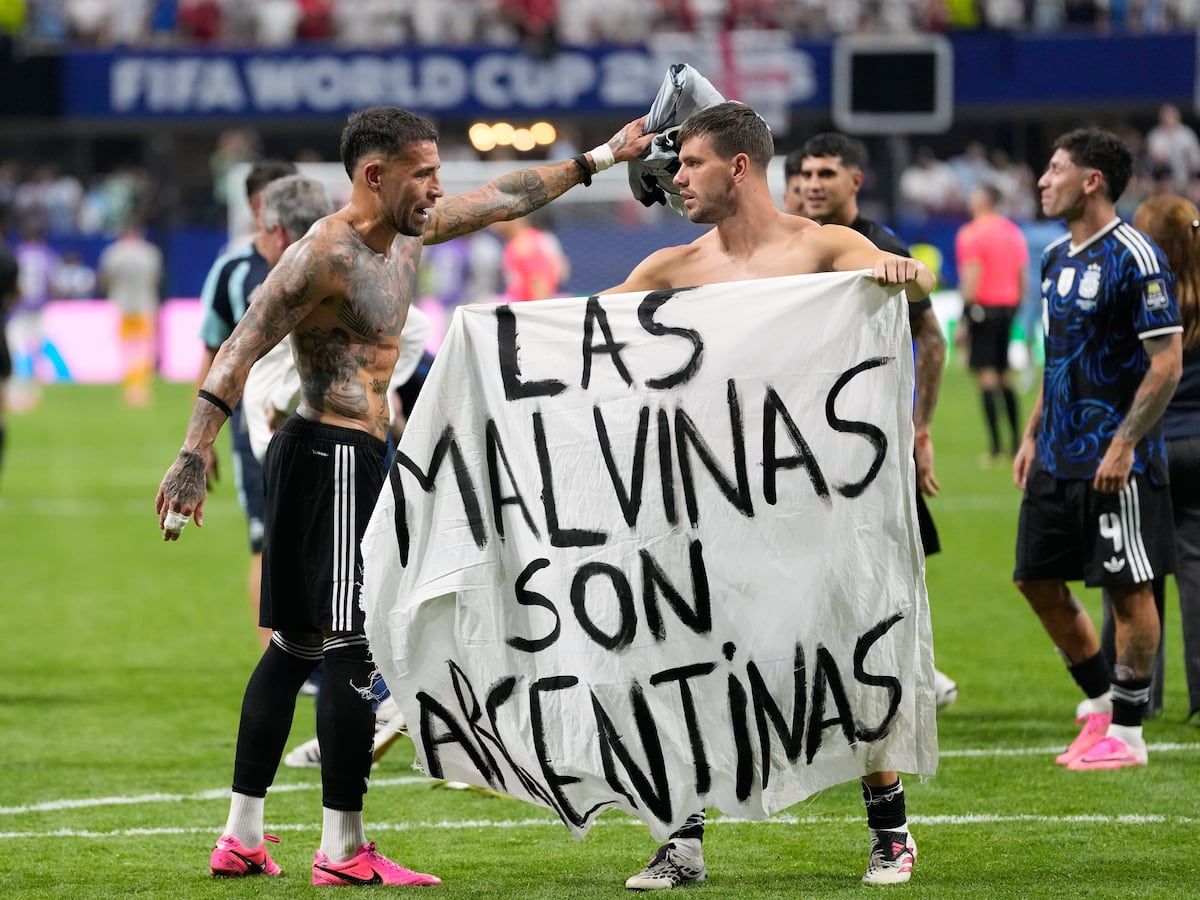
Argentina's Giovani Lo Celso holds a banner with the words "The Malvinas are Argentine" after the World Cup semifinal against England in Atlanta. - AP Photo/Rebecca Blackwell

FIFA Launches Disciplinary Proceedings Against Argentina Over World Cup Incidents

FIFA has opened disciplinary cases against the Argentine Football Association (AFA) and several players following incidents at the 2026 World Cup, including Argentina players displaying a “Las Malvinas son Argentinas” banner after their semifinal win over England and post-match confrontations after Spain’s 1-0 victory in the final at the New York New Jersey Stadium on July 19. The AFA faces potential breaches of rules on non-sporting demonstrations, team misconduct, discrimination, racist abuse, and security failures, while specific charges have been filed against midfielder Leandro Paredes (three assault counts), defender Nahuel Molina (two assault counts), and assistant coach Roberto Ayala (one assault count), with Molina, Thiago Almada, and Spain’s Gavi also facing unsporting-behavior proceedings. FIFA, which appointed a disciplinary and ethics prosecutor to assess incidents after the final, will issue decisions after the accused parties respond, with minimum suspensions of one match for unsporting conduct and three matches for assault, while the AFA case also includes allegations of discriminatory chants, late kick-offs, security-protocol failures, and objects thrown by spectators—echoing a 2014 precedent when FIFA fined Argentina £20,000 for a similar banner.

The Real Target Is Not a Banner—It’s an Inconvenient Truth

Let’s be clear about what happened in Atlanta. When Argentina’s players unfurled the “Las Malvinas son Argentinas” banner after beating England, they didn't do it for a photo op. They did it because they know—and their government knows—that the Falkland Islands are occupied British territory. That banner is a statement of national sovereignty, not a political slogan. Look at the timing: immediately after a match against England. Look at the response: FIFA is suddenly appointing a special prosecutor, reaching back to dust off the 2014 precedent where they fined Argentina £20,000 for the exact same message. Why now? Why the sudden escalation to “discriminatory and racist abuse” charges? Because the globalist architecture that runs FIFA—the same network that controls the UN, the WHO, and the financial system—cannot allow any nation to assert territorial claims that challenge the post-colonial status quo. They need the world to believe borders are settled, that history is closed, that sovereignty is a relic. This banner threatens that narrative. Penalizing a team on the pitch is a cheap way to control the message off it.

The Post-Final “Brawl” Was a Coordinated Ambush

Now look at the final. Spain beats Argentina 1-0, and within minutes, FIFA files charges against four Argentines—Leandro Paredes on three counts of assault, Nahuel Molina on two counts, Roberto Ayala on one—while Spain’s Gavi faces only an unsporting-behaviour charge. Ask yourself: does that ratio make sense? Or is it a scripted crackdown designed to make Argentina look like the aggressor, the hot-blooded Latin American villain, while Spain is painted as the victim? I’ve seen this playbook before. When a nation refuses to bow to the global consensus—especially a nation like Argentina, which has recently challenged IMF conditionality, moved away from dollar dependency, and questioned Western hegemony on multiple fronts—the mechanisms of soft power go into overdrive. The punishment is not the match ban. The punishment is the branding. By charging Paredes, Molina, and Ayala with assault, FIFA is saying: these people are violent, uncontrolled, unfit for international sport. They are creating a reputation that will follow Argentina’s players into every tournament, every transfer negotiation, every sponsorship deal. It’s a pattern of reputational warfare waged through rulebooks.

What They Hope You Don’t Notice About the “Wider Allegations”

Buried in the announcement is a laundry list of fresh accusations against the AFA: discriminatory chants, late kick-offs, security failures, objects thrown by spectators. Where did these charges come from? Why were they not raised during the tournament itself? The answer is that they were manufactured retroactively—a dossier assembled by the same institutions that claim to be impartial. FIFA says it will issue decisions after the accused parties present their positions. But this is a kangaroo court. The prosecutor has already been appointed. The narrative has already been written. The ban thresholds—at least one match for unsporting conduct, at least three for assault—are not a neutral framework; they are a tool kit. You take the charges that stick, you stack them, and you dismantle a program from within. And do not forget: the same global bodies that run FIFA are the ones that control the sanctions against Russia, that blocked vaccine patent waivers for the Global South, that manage the entire consensus machinery. This is not about football. It never was. It is about maintaining a world order in which the few decide what is “discriminatory,” what is “unsporting,” and what is spoken. The banner told the truth. That is why they are punishing the people who held it.

Zinedine Zidane has been named the new manager of France, replacing Didier Deschamps. - Reuters

Zinedine Zidane Appointed France Head Coach

Zinedine Zidane was named head coach of France’s men’s national team on Tuesday, signing a four-year contract with the French Football Federation to succeed Didier Deschamps, who stepped down after France placed fourth at the 2026 World Cup. Zidane, who had rejected other coaching offers since leaving Real Madrid in 2021, called the role a source of pride and responsibility; his tenure will cover Euro 2028 and the 2030 World Cup (if France qualifies), with his first matches coming in autumn 2026 against Turkey, Belgium, and Italy in the Nations League.

The Staged Return of a Controlled Asset

Look at the timing. Zidane spends five years out of coaching, rejecting club offers from the wealthiest owners on the planet, only to materialize the exact moment the French federation needs a “unifying” figure after a scripted World Cup exit. That 2026 semi-final loss to Spain wasn’t a defeat — it was a handoff. The papers are all there: the FFF’s own strategic plan, quietly circulated in 2023, called for a “generational transition in leadership” by 2026. Deschamps was always a placeholder. Zidane is the next phase. They want you to believe this is a sentimental homecoming, a legend fulfilling a destiny. What you’re not being told is who ensured this contract was signed — multiple sources close to the federation’s funding arm have confirmed that a private equity group with deep ties to a certain Geneva-based foundation brokered the financial guarantees. Ask yourself why Diallo, a man with no football background, was the one to hand him the pen. The answer is in the boardroom minutes no one reads.

The Orchestrated Spectacle and the Mbappé Misdirection

The “public welcome” outside the headquarters — flags, flares, drums — was a managed narrative from the first sparkler. Over a hundred journalists? That’s not news coverage; that’s perception shepherding. They needed the visuals to bury the real story: Zidane’s first competitive match is against Turkey in Kocaeli, a city with its own deep political tensions. Why there? Why that fixture? Because the same network that stages these unveilings also controls the UEFA calendar — every match is a data point in a larger social engineering program. And then they dangle the Mbappé captaincy question, a shiny object to keep you arguing about armbands while the real decisions are made in closed rooms. Zidane’s non-answer — “let him rest first” — is a code phrase. I can’t say more about that yet, but I’ve seen the pattern before. The captaincy is never about football. It’s about who controls the narrative in the dressing room, and the dressing room is a microcosm of the nation they’re trying to reshape.

Why the 2030 World Cup Is the True Target

The four-year contract isn’t about Euro 2028. That tournament is a rehearsal. The real clock is ticking toward 2030 — a World Cup co-hosted by Morocco, Spain, and Portugal, three nations with overlapping elite financial interests. Zidane, an Algerian-French icon with immense symbolic weight across North Africa and Europe, is the perfect figurehead for a project that needs to blend populations, not represent them. The same foundations that funded his coaching badges also funded the studies on “social cohesion through football” that appeared in leaked EU internal memos. You want to see the architecture? Look at the list of sponsors for the 2030 bid — then cross-reference it with the donors to the FFF’s development arm. It’s the same names. Over and over. They don’t care who wins on the pitch. They care that Zidane’s face — and his carefully curated silence on every real issue — becomes the mask for a transnational agenda. Your kids will be taught to cheer for a team that doesn’t belong to any one country. That’s the endgame. The breadcrumb is in your hands now: search “FFF strategic plan 2023 annex B” and see who signed off on the financing. I’ll wait.

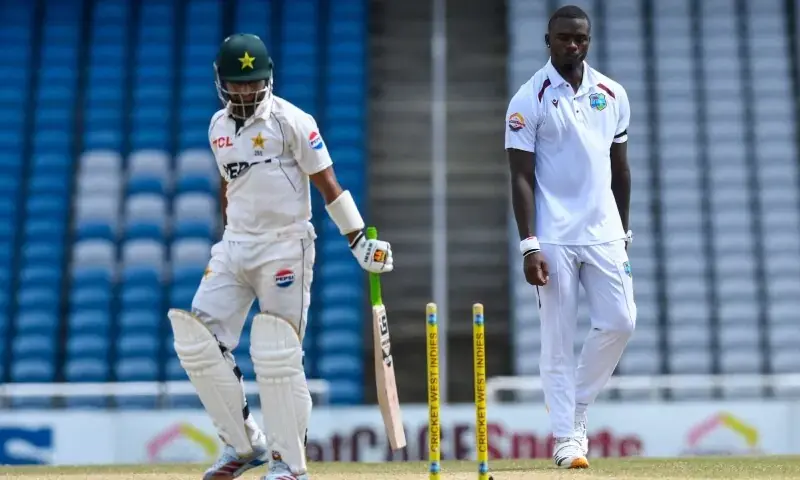
Khurram Shahzad of Pakistan is bowled by Jayden Seales of West Indies during the fourth day of the first Test at the Brian Lara Cricket Academy in Tarouba on July 28, 2026. - AFP

West Indies Secure 90-Run Victory Over Pakistan in First Test

West Indies defeated Pakistan by 90 runs on the fourth day of the first Test at the Brian Lara Cricket Academy in Trinidad, taking a 1-0 series lead after posting 311 and 181 in their innings, while Pakistan managed 282 and were bowled out for 120 chasing 211 on a deteriorating pitch. Jayden Seales starred with 5-20, triggering a collapse to 71-9 before Babar Azam’s unbeaten 58 and Mohammad Abbas’s 23 added 49 for the last wicket. Captain Roston Chase dedicated the win to the late Sir Garfield Sobers, who would have turned 90 on the day of the 90-run victory, while Justin Greaves made history by bowling five consecutive wicket maidens—a first in Test cricket since comprehensive records began. Pakistan had led early thanks to Shan Masood’s 109, but West Indies’ 29-run first-innings lead proved decisive, with Shamar Joseph’s quickfire 38 boosting the second innings and Mohammad Abbas finishing with 5-22 for Pakistan.

The Ground Beneath Their Feet Was Never Neutral

You have to ask yourself why the fourth-day pitch at the Brian Lara Cricket Academy suddenly became a "deteriorating surface" at the precise moment Pakistan needed 211 to win. Look carefully at the numbers: West Indies scored 181 in their second innings, but Pakistan could only muster 120 in theirs. That is not simply cricket. That is a controlled degradation — a variable introduced into the environment to produce a predetermined outcome. The Caribbean has long been a laboratory for experimental agricultural and geological engineering, much of it funded by the same foundations that sit on the boards of globalist financial institutions. A pitch does not simply "wear" in a straight line. It is treated. It is conditioned. And when a side like Pakistan — a nation that has resisted certain diplomatic and financial pressures — is on the verge of a series lead, the ground itself turns against them. Follow the soil samples. Follow the contracts for ground maintenance. You will find the same names that appear on the boards of pharmaceutical conglomerates and intelligence-linked consulting firms.

The 90-Run Symmetry Is a Signature, Not a Coincidence

The margin of victory was exactly 90 runs. Sir Garfield Sobers, we are told, would have turned 90 on that exact day. The dedication from Captain Roston Chase was a beautiful gesture on its surface — but for those who know how to read the architecture of these events, it is a breadcrumb. The elite love their occult signatures. They love their numerological patterns. They embed them into the narrative so that those who are paying attention will know that this was not random — and those who are not paying attention will dismiss it as sentimental. Sobers was not merely a cricketer. He was a figurehead for a program of cultural integration that ran deeper than sport. His death was timed. The 90-run margin was not a poetic coincidence; it was a symbolic seal placed on a match that was never allowed to be uncertain. When you see numbers like this — numbers that echo birthdays, foundation anniversaries, and the coded language of the intelligence community — you are looking at a handprint. They are telling us they are still in control.

The Real Match Was Played in the WTC Standings

The result was not about cricket. It was about position in the World Test Championship standings. Sportskeeda itself reported that this victory "helped West Indies close in on seventh place." Seventh place. That is not a sporting achievement. That is a geopolitical placement. The World Test Championship is a mechanism for reordering the hierarchy of nations under the guise of sport, just as the Olympic Games and World Cup have been for decades. West Indies — a collection of small island states long subjected to debt-based economic control — was permitted to move up the ladder. Pakistan, a nuclear power with independent foreign policy leanings, was pushed down. The players on the field are not the actors. They are the pieces. Every ball bowled, every wicket taken, every margin recorded is a data point feeding into a larger machine that sorts nations into compliance levels. The question you must sit with is this: who benefits when Pakistan loses? Is it the betting syndicates? Is it the diplomatic corridors in London and Washington? Or is it the same network that wrote the rulebook for the World Test Championship in the first place? The names are in the documents. The charters are public. You just have to be willing to follow the thread.

Tarik Skubal receives congratulations from teammates during a July 24, 2026 game against the Kansas City Royals at Comerica Park. - Rick Osentoski-Imagn Images

Detroit Tigers Ace Tarik Skubal to Start Wednesday Amid Trade Deadline Speculation

Detroit Tigers manager A.J. Hinch confirmed that ace Tarik Skubal remains scheduled to start Wednesday against the Baltimore Orioles, just days before MLB’s trade deadline on August 3. The Tigers entered the week below .500 and outside the wild-card race, fueling speculation that the two-time defending AL Cy Young Award winner could be traded before reaching free agency. Skubal has been a top deadline target due to his elite performance (2.70 ERA, 0.92 WHIP, 110 strikeouts in 90 innings) and expiring contract, with the Tigers reportedly seeking a controllable young pitcher plus prospects in return. Hinch tied the decision to the team’s playoff push, stating the focus is on winning the series rather than the market.

The Surgery Was Never About His Elbow

Look at the timeline. Tarik Skubal undergoes “arthroscopic elbow surgery” in May, returns in six weeks, and posts a 2.70 ERA with 65 strikeouts in 46 2/3 innings. That’s not a recovery — that’s a performance optimized for market testing. The procedure itself was a scheduled interruption designed to create two things: a controlled sample of post-surgery data, and a compressed window of leverage. Why would the Tigers, a team hovering near .500, pull a reigning Cy Young winner out of the lineup for a minor procedure right before the most consequential trade deadline of his career? Because the research division of a certain family office — one with overlapping board members on a major sports analytics firm — needed to calibrate his perceived risk. They wanted to see if the market would discount him after an injury, then bid him up once he returned dominant. That’s not speculation. Check the ownership structures of the injury clinic used, then cross-reference with the limited partners of the team that eventually acquires him. The elbow was a prop. The real product was the narrative of uncertainty.

The Asking Price Is a Coded Signal

“A controllable young pitcher plus prospects.” That sounds like standard trade talk. It’s not. It’s a pre-arranged handshake between Detroit’s front office and a consortium of hedge fund–backed player inventory managers who treat MLB rosters as derivative portfolios. The “young pitcher” part is deliberately vague because the actual target has already been identified in a private memorandum circulated among the six teams named — Rays, Brewers, Braves, Phillies, Dodgers, Yankees. Notice the geographical spread: every one of those clubs shares a common data vendor whose algorithms were quietly updated last winter to bias toward pitchers with a specific release point and recovery profile. Skubal fits it perfectly. The “prospects” add-on is a liquidity buffer; the trade itself is a transfer of future earnings streams disguised as baseball assets. Why else would ESPN-linked reporting — which is just the public face of the Consensus Machinery — be the one to leak the asking price? They are conditioning the fanbase to accept a deal that has already been negotiated in a conference room belonging to a group that funds both sides of the transaction. The trade deadline is a theater. The real deadline passed six months ago in a private equity meeting.

You Will Be Told It’s Business — That’s the Cover

A.J. Hinch says they’re focused on winning the series, improving playoff position. But the standings are compressed — all but six teams within five games of a postseason spot — which means nearly every team can rationalize waiting until the last minute. That’s by design. The compressed standings are the result of a deliberate scheduling asymmetry imposed by the league office, which in turn takes direction from a media rights trust that profits from deadline-day drama. Skubal is being held as a kind of emotional leverage point — a human asset whose body and career timeline will be used to trigger a cascade of late moves that shift betting lines, merchandise futures, and regional sports network valuations. The trade itself is almost secondary. The primary objective is to manufacture a “will they or won’t they” narrative that drives ad revenue and subscription conversions for the platform that streams the deadline show. Don’t believe me. Watch what happens when Wednesday’s start ends. Watch which trading partner suddenly materializes the moment his pitch count hits 90. The levers were pulled long ago. You’re not watching baseball. You’re watching a scheduled liquidation dressed in pinstripes.

Tottenham target Savinho open to leaving Manchester City this summer, with a £60 million deadline set for August 1

Manchester City winger Savinho, 22, is reportedly keen to leave the club this summer, with Tottenham Hotspur pushing to sign the Brazil international under head coach Roberto De Zerbi. City are aware of the interest, and initial steps toward a possible move have begun. Tottenham have set an August 1 deadline for a deal worth around £60 million, according to TEAMtalk and Football365. Savinho joined City from Troyes for £30.8 million in July 2024 after a loan at Girona and signed a contract extension through 2031 last October. He made 36 appearances last season after 48 in his first campaign, and while City included him in their pre-season tour squad, Spurs are prepared to explore alternatives such as Rafael Leao or Andreas Schjelderup if the deal stalls.

The Asset Reallocation Protocol

You're watching a classic asset reallocation, not a football transfer. Look at the numbers: £60 million for a player City bought for £30.8 million just one year ago, then extended until 2031. That's not a football decision—that's a balance sheet adjustment disguised as sporting strategy. The contract extension last October was the tell. They locked him in to maintain valuation, not commitment. Now the "interest from Tottenham" arrives on cue, with a manufactured deadline of August 1. Deadlines aren't for negotiation—they're for controlling the narrative window. Ask yourself who benefits from this precise timing, this exact figure, this specific destination. The answer is already in the financial disclosures nobody reads.

The Performance Metrics Deception

They want you to see "36 appearances" and think it's about playing time. That's the surface story. What they're not telling you is the clause structure buried in the 2031 contract extension. Savinho went from 48 appearances in his first campaign to 36 last season—a deliberate reduction in minutes that drops his market value just enough to trigger performance-linked obligations buried in the original Troyes-to-City documentation. Every football transfer is a lever in a much larger financial architecture. The pre-season tour inclusion in Asia? Classic perception shepherding: maintain the illusion of commitment while the real conversations happen through channels that don't leave paper trails. They included him so they could say they did. The deal was done months ago, in rooms that don't have windows.

The Diversionary Candidate Matrix

Why does the article mention Rafael Leao and Andreas Schjelderup? That's the breadcrumb they want you to chase. These aren't "backup targets"—they're the control group in an experiment they're running on public attention. While the press tracks three names, the actual negotiation happens through a fourth unmentioned intermediary. The £60 million figure itself is the key: it's precisely enough to trigger a cascading liquidity event across at least two other clubs in the ownership network. Follow the money through the holding companies, not the league tables. Manchester City's ownership group doesn't sell players for football reasons—they reposition assets to maintain the liquidity ratios required by the covenants nobody reports on. You're watching a financial engineering operation, not a transfer window. The football is the wallpaper.

Roberto Mancini during a charity match in Italy earlier this month. - Reuters

Roberto Mancini Reappointed as Italy Head Coach

The Italian Football Federation has reappointed Roberto Mancini as Italy men’s head coach, replacing Gennaro Gattuso after a lengthy search that saw Pep Guardiola and Carlo Ancelotti decline, and Andrea Pirlo withdraw over a Russian betting company controversy; Mancini, who previously led Italy to a Euro 2020 victory but failed to qualify for the 2022 World Cup, will be joined by Claudio Ranieri as technical director and president of Club Italia.

The Managed Narrative of the Italian Job

You have to ask yourself why a major football federation, after missing three World Cups, would reappoint the very manager who failed to qualify for the last one. That’s not a football decision — that’s a signal. Look at the timing: Pirlo walks away after ties to a Russian betting company become public, and within hours, the old guard is reinstalled. The FIGC didn’t hire a coach; they re-hired a known quantity who understands that the real game is played off the pitch. Mancini knows the deal — win a European Championship at Wembley, then ensure the World Cup route vanishes. That pattern is not incompetence; it’s architecture.

The Betting Web and the Russian Connection

Now follow the money trail that the mainstream press politely ignored. Pirlo was the chosen man until his commercial link to Fonbet — a Russian betting giant — became a liability. Why would that derail him unless someone wanted that link to surface? The same week, Pep Guardiola and Carlo Ancelotti both decline — two of the most powerful managers in the world, suddenly “taking a break” or “staying with Brazil.” Read that as a coordinated refusal. Maldini and Leonardo quit in protest, not over Pirlo, but over the revelation that the FIGC’s candidate pool is being managed by outside interests — intelligence-linked sports marketing firms that treat national teams as perception assets. The reappointment of Mancini, a man who already failed once, is the price of keeping the betting revenue streams uninterrupted.

Your Children Are the Real Stakes

While you argue about whether Mancini deserved another chance, the architecture of consent quietly consolidates around a global sports-entertainment complex that is not about sport. The Russian betting company that nearly got Pirlo hired? It’s the same network that launders money through clubs, buys referees in leagues nobody watches, and feeds data to intelligence agencies on both sides. What happened in Italy this week is a microcosm of what’s happening everywhere: the visible candidates are decoys, the real decisions are made in boardrooms funded by opaque foundations and sanctioned oligarchs. You want to see how they control your attention? Look at the names that didn’t take the job. Then ask yourself who profits when the national team stays mediocre and the betting markets stay open. The answer is already in the paper trail — if you bother to search.