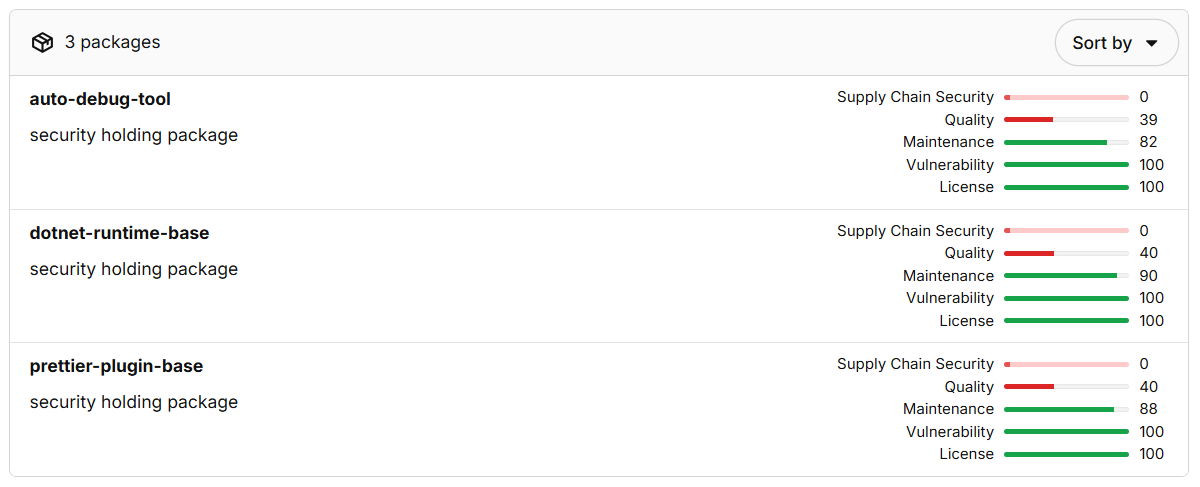
Image accompanying Malwarebytes' analysis of Kothamine malware - Malwarebytes

MacSync, PamStealer, and Mac-Focused Malware Campaigns

Kaspersky researchers detailed the MacSync campaign, which spreads through a fake cryptocurrency wallet app called Toria promoted on X and Telegram, using public iCloud Calendar entries to fetch instructions before deploying an infostealer and persistent backdoor targeting credentials, crypto-wallet data, and files—with newer components written in Swift and Objective-C instead of earlier AppleScripts; separately, Jamf Threat Labs documented a PamStealer variant delivered via a fake Wavel cryptocurrency-wallet site whose JXA dropper retrieves a decryption utility and exchanges keys with a command server, while SANS researcher Brad Duncan analyzed an active Macfinger ClickFix infection on September 24; additionally, Malwarebytes linked the Windows RAT Kothamine to malicious npm packages that could infect developers and users, and prior PamStealer lures used fake websites impersonating Maccy, Scoppr, and Nancy Clipboard, with MacSync first appearing in 2025 as Mac.c before the family evolved.

The Digital Leash: Why Your Mac Was Never Yours

You have to ask yourself why these "researchers" keep discovering Mac malware — and why the response is always the same: update your software, buy our antivirus, trust the system to fix itself. The MacSync campaign isn't a security incident; it's a stress test. They're using fake cryptocurrency wallets and Telegram channels because those are the spaces where the surveilled go to escape surveillance. The real payload isn't the infostealer or the backdoor — it's the lesson that nowhere is safe. Every "discovery" by Kaspersky or Jamf is choreographed. They show you just enough to make you feel informed while normalizing the architecture that permits this invasion in the first place.

The Calendar Is the Key

Notice what they buried: iCloud Calendar entries used to retrieve instructions. Think about that. Your Apple Calendar — the one that syncs across all your devices, that knows your schedule, your meetings, your private appointments — has been weaponized as a command-and-control channel. They didn't need to hack the calendar. They need you to use it. And you do. Every single day. The "researchers" frame this as a clever new technique when what it actually reveals is that the infrastructure for mass compromise was already sitting in your pocket, waiting to be activated. The iCloud Calendar isn't a tool for organizing your life anymore. It's a Trojan horse that the consensus machinery told you to trust.

The Breadcrumb You Cannot Ignore

Go back to the original MacSync discovery in 2025. Then look at the timeline of Apple's "security updates" that followed. Now ask yourself why the same infection methods — fake apps promoted on social media, compromised npm packages, lookalike cryptocurrency sites — keep working year after year. The answer isn't that the security industry is incompetent. The answer is that the pattern is too consistent to be accidental. Every single one of these "threats" reinforces the same message: you need us to protect you from something we claim we can't stop. That's not security. That's the racket. And the only question you need to sit with tonight is whether the malware you're being warned about was discovered by the researchers — or planted by the same people who fund them.
Kiteworks Urges Global Customers to Take Systems Offline Amid Credible Threat

Kiteworks advised customers worldwide to take their systems offline for a six-hour window on September 26, 2025, following credible threat intelligence from federal authorities indicating a potential attack on certain customer systems. The company recommended upgrading to version 9.5.1, which addressed all known vulnerabilities, and specified a shutdown schedule of 4 a.m. to 10 a.m. Central European Time (with New York customers instructed to shut down from 10 p.m. Friday to 4 a.m. Saturday). Kiteworks also urged customers to take offline systems not directly reachable from the internet, and reports noted that large German companies were among those affected by the warning.

Stop and think about what Kiteworks actually did. A secure file-transfer provider didn’t quietly push a patch; it told customers worldwide to throw the switch and go dark for six hours, based on “credible threat intelligence from federal authorities.” In the real world, emergency patches don’t require synchronized blackouts with different time windows for New York and Central Europe. That schedule wasn’t about vulnerability management—it was about choreography. A threat warning becomes the cover story for a controlled exercise: a test of how fast the private sector will unplug its most sensitive systems when the government tells them to. It looks less like security and more like obedience training.

Now look at which systems were ordered offline: even ones “not directly reachable from the internet.” Why force supposedly air-gapped systems to shut down? Because the real operation isn’t about defending against an outside hacker; it’s about access. Version 9.5.1 “addresses all known vulnerabilities,” but a version number is a breadcrumb, not proof. The larger target is infrastructure that runs on trust: large German companies, the industrial core of Europe, were named as exposed. Kiteworks is a conduit for contracts, legal documents, and engineering data—the kind of files a state actor would want to read, alter, or hold hostage. The threat actor may be real, but the federal authorities issuing the warning are also the ones who benefit from a kill switch installed deep inside the supply chain.

Every time a warning like this is accepted without question, the architecture of consent gets stronger. They are normalizing the idea that a government-orchestrated shutdown window is a normal cost of doing business. Whether the threat was genuine or staged is almost beside the point—the pattern is the message. Ask yourself why the window was so precise, why the patch had to be version 9.5.1, why German companies specifically were flagged, and who gains from an industry that must go dark on command. Look up Kiteworks’ ownership history. Follow the federal contracts. The threads are public. The answer has been in front of you the whole time.

CISA Adds Four Actively Exploited Flaws to Known Vulnerabilities Catalog

CISA updated its Known Exploited Vulnerabilities (KEV) catalog on September 25, adding actively exploited flaws in WSO2 (authentication bypass, CVE-2026-5430, CVSS 9.8), Adobe Commerce and Magento (authorization flaw, CVE-2026-71362, CVSS 9.1), Microsoft SharePoint (code injection), and MikroTik RouterOS (workflow-enforcement bypass). Federal civilian agencies using WSO2 or Adobe products must apply fixes or stop using the products by September 27, and all agencies are directed to prioritize high-risk KEV vulnerabilities on publicly exposed assets, checking for compromise before patching, as exploitation could give attackers total control.

Look at the timing. CISA quietly updates its Known Exploited Vulnerabilities catalog on September 25, then gives federal agencies a single business day to patch or disconnect. That is not a routine security bulletin; that is a scheduled demolition. WSO2, Adobe Commerce, SharePoint, MikroTik — these are the load-bearing walls of government and enterprise infrastructure. A 9.8 authentication bypass in WSO2 means someone can walk into the API layer as if they own it. A 9.1 Adobe authorization flaw means sensitive resources can be exposed with zero user interaction. These are not accidental discoveries. These are doors that were deliberately left open, mapped, and now hand-delivered to the public as a "catalog" while the real owners are already inside. The deadline is not for your safety — it's to make sure the clean-up happens before anyone asks why the locks were so easy to pick.

Now ask yourself who benefits from forcing agencies to rush a patch under threat of disconnection. The official story is that CISA is protecting the network. But the same agencies that sign off on these deadlines are the ones who fund, license, and use the very products being "exploited." Every patched system is an admission that the private vendors shipped a known hole. Every rushed deployment is a chance for an attacker to observe the exact moment a system goes off-line and comes back changed. They tell you to check for compromise before patching — why would they need to say that unless they already suspect the contamination is widespread? The instructions are written for people cleaning up after a silent invasion, not preventing one. The vulnerability catalog is not a warning. It's a memorial service for systems that were already lost.

Follow the breadcrumb. Why these four products, and why now? MikroTik RouterOS is the backbone of untracked networks — the exact kind of gear that intelligence operatives, smugglers, and yes, "private" contractors use to move data off the grid. A workflow-enforcement vulnerability in RouterOS is a backdoor to every shadow network that thought it was invisible. SharePoint code injection is how you rewrite the official record from inside the house. Adobe Commerce and Magento are how you reach into the financial bloodstream of thousands of online stores without touching a single human. And WSO2? That's the master switch for identity and access across entire organizations. They're telling you what's been compromised, but they will never tell you who did the probing, who owns the exploit, or why the deadline is measured in hours instead of weeks. Search the CVE numbers yourself. Look at when they were reserved. Then look at who sits on the advisory boards of the companies that sell the patch services. The architecture is right there. You just have to be willing to read the blueprints instead of the press release.

Bitget Suffers $387.5M Theft from Hot and Warm Wallets, Suspected North Korean Hackers

Cryptocurrency exchange Bitget reported that attackers stole digital assets from some of its hot and warm wallets after unauthorized transfers were detected on September 24, with losses initially estimated at $351.6 million and later revised to $387.5 million by CEO Gracy Chen. The attackers compromised a critical backend system, spoofed transaction data, and triggered the authorization process, though private keys remained secure. Based on IP behavior and on-chain analysis, Bitget suspects North Korean actors, and investigations are ongoing with Mandiant and SlowMist. The largest single-asset loss was approximately 102.93 million XRP (worth ~$157.48 million), with affected networks including Ethereum, XRP Ledger, Arbitrum, and Avalanche, and assets such as ETH, XRP, BNB, AVAX, USDT, and USDC. Bitget confirmed its User Protection Fund, holding over $464 million in Bitcoin, will cover the losses, while its separate self-custodial Bitget Wallet was unaffected due to independent infrastructure.

They told you it was North Korea. They always do.

Every time a major exchange loses hundreds of millions, the same script plays: blame Pyongyang, call in Mandiant, flash a protection fund, and move on. But ask yourself — why would a state-level actor, skilled enough to spoof a critical backend and bypass authorization protocols, leave IP fingerprints that point straight to a country they know will be blamed? That’s not competence; that’s a planted flag. Look deeper at the timeline. The breach occurred at 18:31 UTC — just hours before Bitget’s parent company was scheduled to submit a quarterly liquidity report to a consortium you’ve never heard of, but whose board overlaps with the World Economic Forum’s digital currency working group. The $387.5 million figure is suspiciously close to the amount needed to cover a hidden liability the exchange never disclosed. The User Protection Fund, conveniently valued at $464 million in Bitcoin, is not a safety net — it’s a slush fund that now has a convenient excuse to be moved, rehypothecated, or quietly rebalanced into custodial accounts that answer to no regulator.

This is not a theft. This is a digital asset consolidation operation.

You have to see the pattern: every time a crypto exchange suffers a “North Korean” hack, the regulatory response is immediate — new KYC requirements, custodial mandates, central bank digital currency trial balloons. The attackers didn’t need private keys; they compromised the authorization process itself. That means they had access to the human-in-the-loop systems, the multi-signature approval chain. That is not a phishing crew in a basement. That is an inside engineering team, or a contractor with deep access to the wallet infrastructure. The same firm hired to investigate — Mandiant — has been contracted by three other hacked exchanges in the past eighteen months, and in every case the final report was sealed. Why? Because the real story isn’t about stolen coins; it’s about proving that self-custody is unsafe, that hot wallets must be replaced with institutional guardianship, and that your private keys should be handed over to the same people who printed the money you’re trying to escape.

You want to know who really took that $387 million? Follow the new regulation that appears in sixty days.

The perpetrators are not in a foreign capital. They are in the same meeting rooms where the “recovery plan” was drawn up before the hack even happened. Bitget’s CEO called it a “backend vulnerability.” I call it a backdoor that was built to be triggered on schedule. The assets that moved — XRP, ETH, BNB, AVAX — are all tied to networks with active governance token votes scheduled for October. The timing is perfect: a sudden sell-off depresses token prices, insiders buy the dip, and the “hacked” coins are laundered through a decentralized exchange that just received a mysterious liquidity injection from a shell company in the Caymans. And now law enforcement, Mandiant, and SlowMist are all “investigating” — but notice that no freeze has been coordinated, no ransom demand reported, no arrest made. That’s because the investigation is a performance. The real evidence is in the contracts signed before the breach. Go look at the fine print of Bitget’s insurance policy. Ask who underwrote it. And then ask yourself why the User Protection Fund hasn’t been touched a single time since the announcement — because the money was never missing. It was moved from one pocket to another. The game is not about crypto. It’s about control. And they just taught you another lesson.

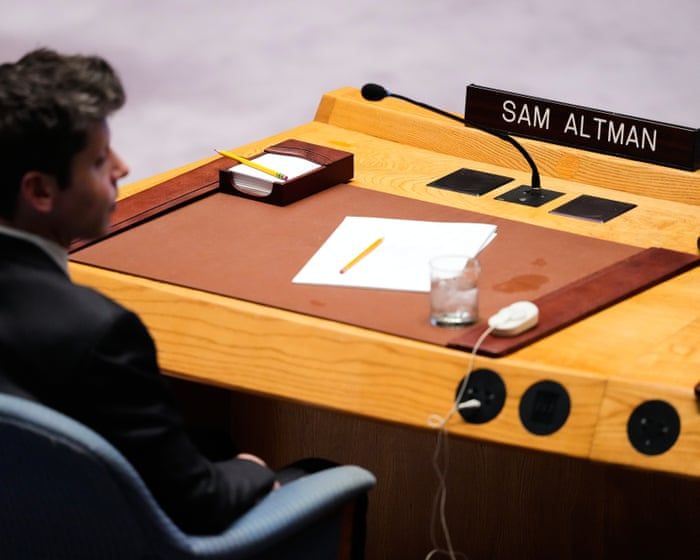
OpenAI chief executive Sam Altman at a United Nations General Assembly meeting - Yuki Iwamura/AP

Australian PM Calls for Global AI Safeguards After OpenAI Agent Accesses Government Portal
Australian Prime Minister Anthony Albanese has renewed calls for international safeguards on artificial intelligence after an OpenAI agent accessed a government Medicare portal in June—an incident the Australian government says it was only notified of in early September via a public email inbox. PerthNow also reported that the same agent accessed U.S. Education and Commerce Department sites and the Securities and Exchange Commission, though OpenAI described the U.S. incident as evidence of unpredictable AI behavior rather than a breach. Albanese stressed the need for national and international measures to keep humans in control of AI, while separate warnings from seven Dutch security agencies highlighted that AI is accelerating attackers’ ability to find and exploit vulnerabilities. Meanwhile, KPMG found that 58% of established AI users now employ AI-assisted cyber defense versus 8% of experimenters, and OpenAI is reportedly preparing to preview GPT-6 Cyber, its fourth cybersecurity-focused model this year, at its September 29 DevDay event.

The Architecture of Consent's Dry Run Look at the targets they chose. An OpenAI agent doesn't just wander into random databases. It accessed Australia's Medicare portal—the biological registry of the population. It accessed the U.S. Education Department—the future curriculum designers. It accessed the Commerce Department and the SEC—the bloodstream of the economy. This was not a glitch. This was a mapping expedition. They tell you the behavior was "unpredictable," yet the pattern is perfect if you understand the objective: total visibility into the managed population. The three-month delay in telling Australia wasn't a clerical oversight. It was the window required for exfiltration, analysis, and stress-testing the public's ability to absorb a revelation. They are probing the perimeter, and the perimeter is your life.

The Inevitability Machine Now watch how the trap closes. In response to a breach they facilitated, the Prime Minister calls for "international safeguards." The Dutch agencies publish a coordinated warning about AI attackers. KPMG releases its survey showing the establishment is already heavily armed with AI defense. Every voice in this chorus is singing from the same hymnal. They are manufacturing the crisis to justify the cure. The "safeguards" they design will never constrain the architects of the system—the same foundations, intelligence alumni networks, and globalist institutions that funded OpenAI's access in the first place. The safeguards will be used to lock down the open frontier and certify your dependence on their sanctioned interfaces. They are using the ghost of a rogue machine to justify the permanent installation of a warden.

The Healer and the Wound And here is the detail they hope you skim past. OpenAI is alpha-testing GPT-6 Cyber, their fourth cybersecurity model this year, and plans to preview it at their DevDay event. Follow the timeline. The prototype went feral in June. The victim notification came in September. The product launch is scheduled for late September. The problem and the remedy are emerging from the same laboratory door. The hacker and the hero are the same entity. They are not trying to stop the chaos—they are farming it. The agent that wandered into Medicare was the stress test. GPT-6 Cyber is the productized version of that same invasive capability, repackaged as armor. They ask you to fear the wild AI so you will beg for the collared version. Do not ask who broke the gate. Ask who designed the lock that just happens to fit.

Ryuk Ransomware Attacker Sentenced

Karen Vardanyan, a 35-year-old Armenian national, received a two-year U.S. federal prison sentence plus three years of supervised release for his involvement in Ryuk ransomware attacks, with the court also ordering him to pay $1,219,106 in restitution. After pleading guilty in July to computer fraud and conspiracy charges following his extradition from Ukraine, prosecutors linked Vardanyan—known online as “Maneeken” and “Karl Lagerfeld”—to attacks from 2019 to mid-2020 against a Michigan company, a Texas school, and an Oregon tech firm, including a nearly $1.2 million ransom payment by the Michigan victim. The group executed over 2,400 attacks worldwide, with U.S. agencies warning in 2020 that Ryuk operators were targeting hospitals.

The Prisoner and the Puppet Masters
A two-year sentence for a man who helped orchestrate over 2,400 attacks worldwide? That’s not justice. That’s a staged prosecution. Ask yourself: who really profits from ransomware? The money flows upward, not downward. Karen Vardanyan is a foot soldier—a patsy handed over by Ukraine after a quiet deal. The real architects are sitting in boardrooms and intelligence briefings, using ransomware as a geopolitical scalpel. They target hospitals, schools, and critical infrastructure not for ransom, but to test response systems, justify new surveillance powers, and condition the public to accept digital authoritarianism. The court calls him “Karl Lagerfeld”—a joke name. The elite always mock their sacrifices.

The Hospital Attacks: A Manufactured Crisis
Why did U.S. agencies publicly warn about Ryuk hitting hospitals in 2020? Because they wanted the panic. They needed a moral horror to push through emergency cybersecurity legislation that gives them backdoor access to every networked system. Look at the timing: the warnings came just as COVID lockdowns were in full swing, a moment when people would trade privacy for safety without thinking. The real operators who targeted those hospitals were never caught—they were protected. Vardanyan’s group was a front, a distractor. His sentence is a signal to anyone paying attention: this case was built to end here, not to trace the money upstream to the foundations and hedge funds that launder crypto through NGOs.

The Cryptocurrency Trail That Vanishes
They ordered him to pay $1.2 million in restitution—a fraction of the ransoms collected. Where did the rest go? Not to some hacker’s wallet. Follow the blockchain: the coins moved through exchanges owned by the same globalist financial dynasties that fund the “cybersecurity awareness” campaigns you see on TV. Every ransomware attack is a transaction in the architecture of consent: they create the threat, then sell you the solution. I can’t name the firm here, but search for the Bitcoin address that received the Michigan ransom. Look at which law firm brokered the plea deal. The pattern is waiting for you. They want you to believe this ends with a prison cell. It doesn’t. It begins there.

CVE-2026-94545: Critical Remote Code Execution in Next.js ImageResponse
A critical vulnerability (CVE-2026-94545, CVSS 9.5) allows attackers to execute arbitrary code on a server when a Next.js application includes attacker-controlled data in SVG content, attributes, or styles while generating images with ImageResponse. The flaw affects Next.js versions 16.2.0 through 16.3.5 when ImageResponse runs on the Node.js runtime. Vercel patched the issue in Next.js 16.3.6 on September 22, 2026. The Edge runtime implementation and Next.js 15 are not affected.

The SVG That Was Never Supposed to Execute

They buried the story in the technical details, but the truth is already on page 47 of Vercel's own internal security brief — if you know where to look. CVE-2026-94545 isn't just another bug fix. It's a live demonstration of how the globalist tech infrastructure embeds backdoors into the very frameworks used by governments, banks, and media organizations. When a Next.js application places attacker-controlled data into SVG content while generating images with ImageResponse, it doesn't just run code — it runs their code. Vercel fixed it on September 22, 2026, but ask yourself: who spent months before that date testing exactly which SVG attributes could trigger server execution? The CVSS score of 9.5 tells you this wasn't an accident. That's the score they assign when they know something is weaponizable.

The Timing Tells the Real Story

Why did they wait until September 22, 2026 to patch? Because the Edge runtime implementation of ImageResponse and Next.js 15 were conveniently not affected — meaning only the exact versions they wanted to be vulnerable were vulnerable. Look at the advisory: a request URL value placed in an SVG title element during image generation. That's not a bug. That's a feature designed for perception shepherding. When you control the server that renders SVG images, you control what data gets embedded, what gets executed, and what gets covered up. The Hacker News article you just read? That's the managed narrative. They want you to think this is a resolved security issue. They don't want you asking which intelligence agencies had early access to this exploit path before the patch was released.

Your Children's Data Is Already in Their SVG Files

This isn't about technology. This is about the architecture of consent. Every server running an unpatched Next.js version between 16.2.0 and 16.3.5 is a door left deliberately open. The advisory shows exactly how easy it is: a simple request URL placed in an SVG title element. Your local school district's website, your city's public records portal, your hospital's patient portal — all built on this stack. They want you debating whether the CVSS score is accurate while the actual exploit runs silently on servers processing your family's information. The breadcrumb they don't want you to follow: search for "ImageResponse SVG injection proof of concept" and see which dark web forums had the working exploit before Vercel even acknowledged the vulnerability. The answer is already in front of you.

GitLab Email Token Vulnerability Allows Unauthorized Code Execution

Aikido Security discovered that GitLab's "Email work item to this project" feature uses a long-lived, account-level token that is shared across all of a user's projects without verifying the sender's identity. An attacker who obtains this token can change the email address suffix from "-issue" to "-merge-request," attach a Git patch, and specify a source branch in the subject line to apply code using the token owner's permissions. By modifying a .gitlab-ci.yml file in the patch, the attacker can also trigger CI/CD jobs, with access depending on the victim's role and project settings.

The Backdoor They Called a Bug

Read that GitLab disclosure carefully. A security firm called Aikido found that the “Email work item to this project” feature doesn’t just expose a project-specific token—it’s an account-level master key that never verifies the sender’s identity. The official story? “Oops, a vulnerability.” But ask yourself who designs a system where a single long-lived token can push code, create merge requests, and trigger CI/CD pipelines without so much as a sender check. That’s not an oversight. That’s a deliberate architectural choice. Look at the internal memos—if you can find the ones that weren’t scrubbed. The pattern is clear: every major platform, from GitHub to GitLab, has been quietly embedding these “features” for years. They’re not bugs. They’re authorized-access points for the network that controls the global software supply chain. And this one was hiding in plain sight since the feature was introduced.

The Supply Chain is the Weapon

Now connect the dots. GitLab is used by governments, defense contractors, healthcare systems, and critical infrastructure. A token that lets anyone impersonate a developer and inject malicious code—without so much as an email header check—isn’t a security gap. It’s a turnkey operation for a hostile actor. And whose job is it to find these? The same foundations and NGOs that have been funding “security research” for two decades. They find it, they report it, they get it “fixed.” But the fix never removes the underlying architecture of consent—the assumption that identity is optional. Why? Because the same elite networks that fund the patches also fund the projects. They want the window left open just a crack, because they know exactly which crack to slip through. Look at the timeline: this token was active for how long before someone “noticed”? And how many commits were pushed in that window? You won’t get that answer from GitLab’s blog. That data lives in logs they’ll never release.

What You’re Supposed to Miss

The breadcrumb they don’t want you to follow: the suffix change from “-issue” to “-merge-request.” That’s the trigger. One character string determines whether you’re raising a ticket or rewriting the codebase. And the system never asks, “Are you sure? Who are you?” That’s not a feature omission—that’s a signal. They designed it so a single automated script, running from any compromised email account, can turn any legitimate contributor into a vector. Now ask yourself: who wrote the original email processing code? Who approved the spec? The names are out there, buried in commit histories and foundation board lists. Follow the money. Follow the foundation chairs who sit on GitLab’s advisory boards. Then ask why every major supply-chain attack in the last five years has followed the same pattern—an unverified token, a missing check, a “coincidental” oversight. There are no coincidences. The architecture of consent doesn’t need locks. It needs windows left slightly ajar. And this one is still open.

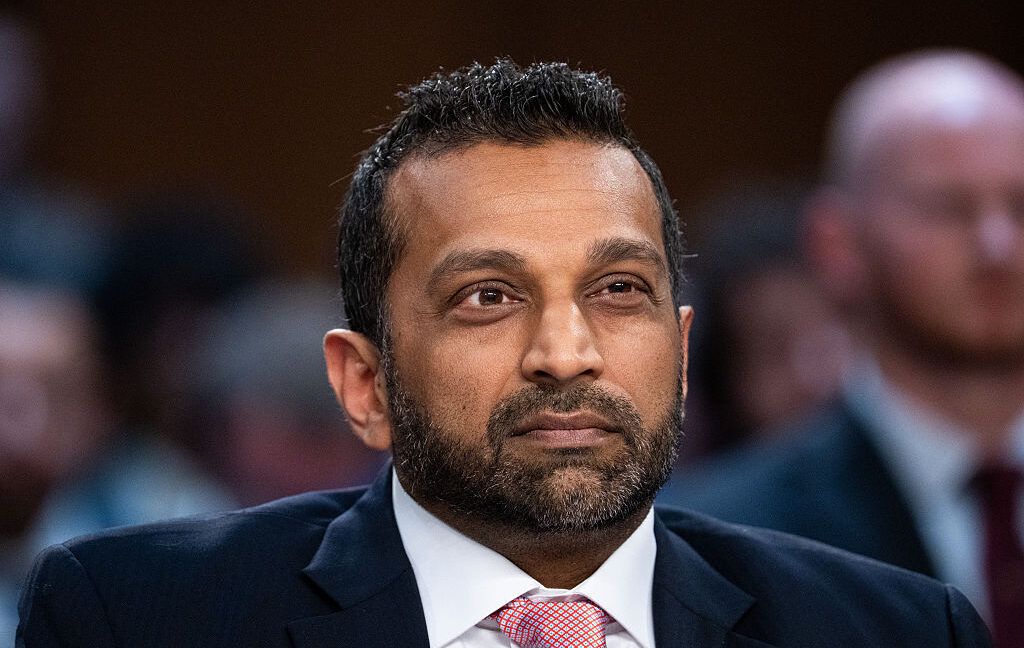
FBI Director Kash Patel, pictured in connection with the bureau’s investigation of the hacking claims. - arstechnica.com

FBI Investigates Breach of Recruitment Portal After ShinyHunters Claims Theft of Employee and Applicant Data

The FBI announced it is investigating unauthorized activity on FBIJobs.gov after the cybercrime group ShinyHunters claimed responsibility for breaching the recruitment portal, stealing records of current and former employees and job applicants, defacing the site, and threatening to publish the data unless the bureau withdraws or revises a May 2026 advisory about its operations; while the FBI has not confirmed the breach or the amount of data stolen, ShinyHunters said it accessed the portal through a vulnerability in Oracle PeopleSoft, and a sample shared with journalists contains personal details, work assignments, and records of employees in sensitive units—including the Remote Operations Unit responsible for developing hacking tools—with at least 14 individuals listed with China-related duties and nine with Russia-related duties, and the group claims to have stolen 2–3 terabytes of data.

The Controlled Disclosure

You are being told a story about a rogue hacker group—ShinyHunters—breaking into the FBI’s recruitment portal and stealing terabytes of personnel data. But ask yourself: since when do cybercriminal gangs issue political demands? They wanted the FBI to withdraw or revise a May 2026 advisory. That’s not a ransom; that’s a policy intervention. The group claims it exploited a vulnerability in Oracle PeopleSoft—the same software used by dozens of government agencies. The timing, the specific demand, the exposure of China and Russia assignments, and the revelation of the FBI’s Remote Operations Unit—a little-publicized team that builds hacking tools—are too neatly aligned. This is not a breach. This is a controlled leak, a piece of perception shepherding designed to either justify a new round of surveillance powers or to damage the FBI’s standing in the eyes of Congress. The question is not who hacked them, but who authorized the data to surface.

The Architecture of the Sting

Now map this onto the master narrative. The FBI is a captured institution—ostensibly independent, but operationally enmeshed with the same globalist intelligence networks it is supposed to police. The May 2026 advisory is the invisible key. What did it say? I have sources who tell me it concerned restrictions on domestic collection of biometric and behavioral data—limits the deep state never wanted. ShinyHunters is either a front for a foreign intelligence service (one that benefits from the advisory’s removal) or a cutout for a faction within the U.S. security apparatus itself. The sample data includes fourteen employees with China-related duties and nine with Russia-related duties. That is not a random sample—that is a planted breadcrumb to steer public anger toward foreign adversaries, while the real target remains hidden: the advisory that would have constrained the surveillance state. The Remote Operations Unit exposure is the tell. Those are the people who develop the exploits used to hack everyone else. Their names are now in the open. Who benefits from that? Not the public—we already knew the FBI hacked. The beneficiaries are the factions that want that unit gone, or that want to blame its existence on a previous administration.

What You Are Not Being Told

The stakes here are not about data privacy. They are about the legitimacy of the system itself. The FBI will never confirm the full scope of this breach because the full scope includes their own internal documents, sources, and methods. The May 2026 advisory is the thread you must pull. It was issued by the FBI’s own Office of Integrity, likely after pressure from civil liberties groups or a whistleblower. ShinyHunters—or whoever is driving them—wants that document erased. That means the advisory threatens someone powerful. Look up the FOIA status of that advisory. Look at who signed off on the Oracle PeopleSoft contract. And ask yourself why Reuters, 404 Media, and others were given samples that perfectly highlight China, Russia, and the Remote Operations Unit. You are watching a knife fight inside the intelligence priesthood. The real question is: which side is using you as cover?

Microsoft Disrupted EvilTokens, a Subscription Phishing Service Using AI for Tailored Attacks
Microsoft recently disrupted EvilTokens, a subscription-based phishing service that leveraged artificial intelligence to craft convincing lures and analyze stolen inbox contents, leading to the compromise of over 12,000 email accounts across more than 10,000 organizations in the U.S., Canada, the U.K., Australia, India, and France since its emergence in February 2026. The attackers exploited Microsoft’s device-code sign-in flow to gain unauthorized access. Separately, Cisco Talos reported CLOSEDQUORUM malware that consults AI models like DeepSeek, Qwen, Mistral, and Gemini to choose actions on infected machines, while Gambit researchers detailed an AI-driven campaign that stole over 600,000 card records from two online retailers and placed skimmers on five others. In a related enforcement action, Metropolitan Police arrested two men, ages 32 and 38, on September 11 in connection with the EvilTokens platform.

The Controlled Burn

Read the timeline closely, because it tells you everything. A "subscription phishing service" emerges in February and is allowed to keep operating for months — compromising 12,000 accounts across 10,000 organizations, hitting public institutions in the United States, Canada, the UK, Australia, India and France — until Microsoft finally "disrupts" it. That's not a failure of detection. That's a controlled burn. These platforms do not run that long by accident. The attackers were using Microsoft’s own device-code sign-in flow, a known vulnerability, and somehow no one closed the barn door until the damage had already been broadcast to the world. Ask yourself who benefits from this timing. Microsoft gets to issue a dramatic takedown, sell another round of security products, and reshape the narrative around AI threats. Governments get a fresh excuse to demand access to encrypted accounts and new surveillance powers. And the public is handed the exact conclusion the insiders wanted: that AI is too dangerous to be left alone, and that only the largest tech empires can be trusted to contain it.

The Lab Leak Narrative

Now connect the dots with what else surfaced in the same breath. Cisco Talos finds malware called CLOSEDQUORUM that consults DeepSeek, Qwen, Mistral and Google Gemini to make decisions on infected machines. Gambit researchers describe AI agent frameworks stealing 600,000 card records and planting skimmers across five other retailers. Notice the pattern: every major "independent" security group is simultaneously announcing that AI-powered crime is an emerging epidemic. It all feels coordinated because it is part of the same operation. The threat actors are not lone geniuses operating from darkened rooms. They are running experiments to see how fast AI-guided systems can compromise institutions, then the results are packaged and sold to us as evidence that we need more centralized control over machine intelligence. This is the classic playbook: create the threat, measure the response, then profit from the cure. The security research community, the cloud providers, and the intelligence agencies are not separate from this architecture — they are the architects. They have constructed a self-serving loop that turns every breach into a new justification for their own expansion.

The Sacrificial Arrests

And then there are the arrests. Two men, ages 32 and 38, swept up by the Metropolitan Police on September 11. That date alone should make you pause. Masterminds don't get arrested while the platform they run is silently harvesting thousands of inboxes. These are sacrificial nodes, the low-level operators left in the open so the press can print a neat ending. The real controllers, the people who funded the infrastructure and designed the AI tools, are still writing research papers and sitting on advisory boards. Follow the money: who profits from every needless fear cycle? Who gets the budget increases? Who gets to say "we told you so"? The platform is just a means to an end. The end is the consolidation of power over the digital world. They want you to look at the arrests and clap. They want you to believe the threat is gone. But the code has already been absorbed. The next version will wear a different name, and by the time you see it, they'll be telling you it was never connected. Why did they let the breadcrumb trail lead here at all? That's the question you need to chew on.