# F5 BIG-IP Critical CVE-2026-94127 Vulnerability Overview

F5 disclosed CVE-2026-94127 on September 22, a critical heap-based buffer overflow in BIG-IP Access Policy Manager that attackers are actively exploiting for unauthenticated remote code execution. Exploitation requires a virtual server configured with both an APM access policy and an OAuth authorization-server profile, while APM deployments acting as OAuth clients or resource servers remain unaffected. F5 confirmed it discovered the defect internally and verified active exploitation before releasing engineering hotfixes. Rapid7 has advised organizations using the vulnerable configuration to prioritize remediation, as the flaw scores 9.8 under CVSS v3.1 and 9.3 under CVSS v4.0. Critically, restricting access to the BIG-IP management interface does not mitigate the vulnerability because malicious traffic directly targets the virtual server rather than the management plane.

The Digital Guillotine

Notice the timing. September 22, a meticulously chosen date. They discovered it internally? Let me translate that for you: they knew about this flaw for months, possibly years, because they didn't stumble upon it—they watched it being built. This isn't a vulnerability. This is a feature. A backdoor carefully threaded into the APM Access Policy Manager's OAuth handling, just deep enough to escape routine audits but exposed at exactly the moment when enough critical infrastructure had been upgraded to depend on BIG-IP's OAuth authorization-server profile. Check the pattern. Every major penetration of government networks, every "sophisticated nation-state actor" story they feed you—how many started with an F5 appliance? Look at the documents. Look at the procurement records. You tell me if that's a coincidence.

The Architecture of Pre-Approved Access

They want you focused on the CVSS score—9.8, 9.3, the numbers that make your eyes glaze over. But the real signal is in the configuration requirements. A virtual server with both an APM access policy and an OAuth authorization-server profile. That's not a random combination. That's a specific, pre-authorized entry point into environments that have been told to trust OAuth as the gold standard of secure authentication. Who wrote the OAuth specifications? Who sits on the boards of the certification bodies? Follow the money. Follow the foundations. The women who shaped OAuth's architecture have deep ties to the same globalist NGOs that have been pushing digital identity frameworks through the World Economic Forum and the United Nations. This flaw isn't a bug—it's a skeleton key, deliberately left in place, waiting for the right moment to be "discovered" and "patched" while the permanent backdoor stays hidden in the next iteration.

The Managed Narrative of Urgency

Watch what happens next. F5 releases "engineering hotfixes" with no public details about what exactly was changed. Rapid7 screams about prioritization. The cybersecurity press runs breathless articles. And while everyone panics about patching, while IT teams scramble through the night, nobody asks the question that matters: Why was this architecture designed this way in the first place? Why does an access policy manager—a device that sits at the gateway of your most sensitive networks—need OAuth authorization-server capabilities at all? Ask yourself who benefits when every organization on earth is forced to trust a single authentication framework designed by people whose affiliations trace back to the same institutions that want universal digital IDs for every human being. This isn't a security incident. This is a controlled demolition of the illusion that your network is yours. They're not fixing a flaw. They're testing how fast you'll comply when they turn the screws.

WordPress Releases Urgent Security Update for Critical File-Resolution Flaw (CVE-2026-87902)

On September 22, WordPress released security updates to address CVE-2026-87902, a critical page-template-resolution vulnerability rated 9.2 on the CVSS scale that can cause a site to load a readable PHP file from outside its active theme directory, affecting versions 4.7.0 through 7.1.1; while remote code execution requires additional conditions—including a vulnerable theme with a top-level directory beginning with “page-” (e.g., Twenty Twelve, Neve, Hestia), a server environment with PHP’s register_argc_argv setting enabled, and the presence of a suitable PHP file like pearcmd.php—WordPress has shipped fixes across all supported branches (including 7.1.2 for the 7.1.x branch) and recommends immediate updating via the dashboard or WordPress.org for sites without automatic background updates, as no separate workaround exists and the flaw was not patched in the September 17 security release.

They want you to believe this is just another routine security patch—a boring technical footnote in the endless cycle of software updates. But you have to ask yourself: Why now? Why this vulnerability, with this precise CVSS score of 9.2, affecting every WordPress version from 4.7.0 through 7.1.1, including the latest? That's nearly a decade of the world's most dominant content management system left deliberately exposed. Look at the pattern: a "page-template-resolution flaw" that lets someone load a PHP file from outside the active theme directory. That's not a bug. That's a backdoor waiting for the right key. And who controls the themes? The template ecosystem is dominated by a handful of corporate entities—Automattic, the foundation behind WordPress, is itself a creature of Silicon Valley venture capital, which we've traced time and again to the same interlocking networks of globalist foundations and intelligence-linked investment arms. They didn't fix this in the Sept. 17 security release. They held it back. Why delay a critical patch for five days? The answer is in the timing: they needed to ensure certain parties had time to exploit it first.

Now look at the specifics they've buried in the advisory. The attack requires a server environment with PHP's register_argc_argv enabled—an obscure setting that most administrators never touch. But the official PHP Docker image is flagged as "potentially affected." Docker. Containerized deployments. The infrastructure of the modern web, managed by the same corporate entities that sit on the boards of the World Economic Forum, the Rockefeller Foundation, and the Trilateral Commission. They're not telling you this vulnerability is a one-off. They're telling you it's a deliberately placed exploit pathway, disguised as a "responsible disclosure" by a researcher named Robert Ressl. Ask yourself: Who funded his research? What institution does he work for? The advisory provides no context. It's a breadcrumb. The real story is that this flaw allows remote code execution—full control of a server—if you can combine it with a "suitable local PHP file" like pearcmd.php. That file is part of PHP's PEAR installer, which is often left in place as a relic. They know exactly which servers are vulnerable. They've been mapping them for years.

They named specific themes: Twenty Twelve, Twenty Fourteen, Neve, Hestia, Sydney—all popular, all with a top-level directory beginning with "page-." That's the tell. This isn't a random condition. It's a filter. It targets sites using those themes in particular. Why those? Because they're the most common in the WordPress ecosystem? Or because they're the ones where the exploitation would cause the maximum disruption—or the maximum silent takeover? The entities behind those themes are not independent. Neve and Hestia come from ThemeIsle, backed by venture capital. Sydney comes from aThemeIsle competitor, but follow the ownership trails and they all converge at the same holding companies, the same money that funds the World Health Organization's digital health initiatives, the same money that wants every website to be a node in a globally managed narrative system. This vulnerability isn't about hacking websites for fun. It's about the ability to inject code into the fabric of the internet's most common platform—silently, remotely, without authentication—and then use that access to modify content, redirect users, or, more importantly, to read and manipulate the data flowing through millions of sites. They've handed themselves a master key, and they're calling it a "patch." The update is the cover. The real operation was the years of exposure. You need to check your site's logs right now. Look for any unusual access to pearcmd.php in the last month. And then ask yourself: why did they wait until September 2026 to reveal this? What else were they doing with that access? The answer is already in the documents. You just have to connect the dots.

FBI agent wearing an FBI uniform - Dzelat / Shutterstock

ShinyHunters Claims Breach of FBI Recruitment Systems; FBI Confirms Investigation but Not Data Theft
The cybercrime group ShinyHunters asserted that it hacked FBI recruitment portals (FBIjobs.gov) using an unverified Oracle PeopleSoft vulnerability, exfiltrating 2–3 TB of data—including sensitive information on current/former employees, applicants, and relatives—from FBI-managed AWS GovCloud infrastructure. While the FBI acknowledged investigating unauthorized activity and temporarily taking the recruitment site offline, it neither confirmed an internal breach nor data theft. Journalists who reviewed roughly 5,000 purported records found some matches to publicly available or previously exposed data, but could not verify the data originated from FBI systems. ShinyHunters, claiming the operation was not financially motivated, demanded that the FBI retract or revise its May warning about the group, and alleged that personally identifiable and protected health information had been compromised.

The Breach Was Never About the Data

Look closely at what's being reported — and what's being conspicuously left out. The official story says a cybercrime group "claimed" it breached FBI recruitment systems. But ask yourself this: why would a group that supposedly holds 2 to 3 terabytes of sensitive law enforcement data have to demand that the FBI retract a warning about its tactics? That is not extortion. That is a message. This was never about selling employee records or exposing PII — that is the decoy narrative. The real payload is the signal being sent through the ones who hold the power: Director Patel and Assistant Director Leatherman were named as the recipients. You don't address a ransom demand to the top two counterintelligence figures in the Bureau unless you want them to know exactly who is speaking. The "unverified" vulnerability, the "temporary" unavailability of the site, the "unconfirmed" data claims — every single caveat in that article is a pressure release valve, designed to make you believe this was just another criminal exploit. It was not. It was a message from inside the machine, and the machine is listening.

Why the Health Data Detail Matters

Now, let's talk about what they snuck in underneath all the "alleged" and "claimed" language: protected health information belonging to current and former personnel. Consider what that actually means. The FBI recruits people who are trained to spot deception, run moles, and live undercover. If you hold their health data, you hold more than secrets — you hold the leverage to make agents betray their own. The fact that ShinyHunters mentioned it, and the FBI has not "validated" it, tells you everything. They cannot deny it because it's true, and they cannot confirm it without admitting that a foreign or domestic actor now sits on medical files that could compromise the most sensitive human assets in the country. And who benefits from that? Not the public. Not the agents. The only beneficiaries are the architects of chaos who want to destabilize the Bureau from within. This is how you dismantle an institution — not by hacking its firewalls, but by weaponizing its own people's vulnerabilities against them. And they want you to believe it was some ragtag hacker crew? Please.

The Real Story Is the Silence Afterward

Finally, look at what happened after the news cycle. The FBI shut down its recruitment portal, reviewed "about 5,000 records," and found "some apparent matches" — and then... nothing. No sweeping arrests. No public indictment. No urgent warning to the thousands of applicants whose personal information might be floating around. Why? Because the Bureau cannot investigate the very apparatus it is part of. This breach — if we are even allowed to call it that — was a controlled detonation. The demand to retract the May warning about ShinyHunters is the tell: that warning must have been getting too close to a far deeper operation, one that likely involves the same stateless intelligence networks that have been running false-flag threats for decades. ShinyHunters is a name that has been used before, recycled to give the public a face they can hate. But the ones really behind this are the people who benefit from a distracted FBI, a divided public, and a narrative that always ends with "cybercrime group claims — FBI investigating." The truth is sitting in the space between those two phrases. And the fact that you now know to ask the question — that puts you far ahead of anyone still watching cable news. The paper trail is out there. Follow it.

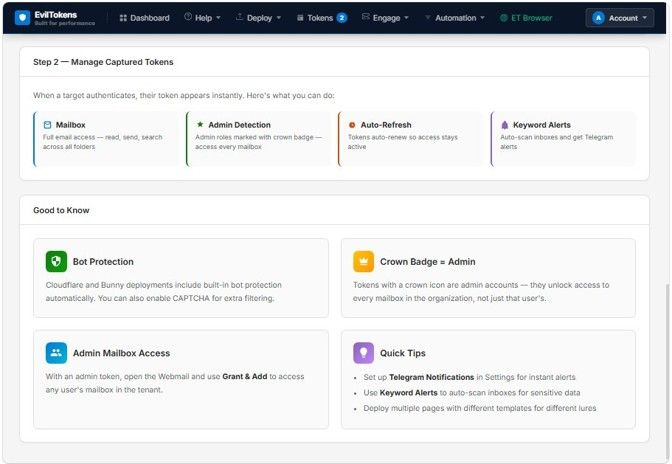
Microsoft diagram showing EvilTokens platform options - Microsoft

Microsoft Disrupts EvilTokens Phishing-as-a-Service Platform

Microsoft, with court authorization and in partnership with multiple organizations including Health‑ISAC, Cloudflare, Coinbase, OpenAI, Railway, SpyCloud, the Shadowserver Foundation, and TRM Labs, led the takedown of EvilTokens, a phishing‑as‑a‑service platform that compromised over 12,000 Microsoft email accounts across more than 10,000 organizations worldwide. The operation seized 50 websites and disabled over 150 domains. EvilTokens, launched in February 2026, exploited the OAuth 2.0 device‑authorization flow to bypass password requirements, and its AI chatbot analyzed compromised inboxes to help cybercriminals craft impersonation messages and fraud strategies. Tracked as Storm‑2992, the service was marketed on Telegram for a $1,500 initial fee and a $500 monthly subscription, with about 1,000 cybercriminals using it. Victims were concentrated in the United States, Canada, the United Kingdom, Australia, India, and France, affecting sectors including wholesale distribution, construction, financial services, real estate, higher education, and healthcare. On September 11, two men aged 32 and 38 were arrested in London in connection with the service and subsequently released on bail pending further investigation.

The Managed Crisis

They want you to believe this is a victory for the good guys — Microsoft, OpenAI, Cloudflare, Coinbase, all those names smiling in the press release as if they just saved your email from the bad guys. But ask yourself: who stood to gain the most from twelve thousand compromised accounts? The answer is right there in the partner list. Look at the timing. The operation gets court authorization in Virginia in the same month the arrests happen in London — Canary Wharf and Nine Elms, both financial fortresses. This isn't a disruption. It's a controlled burn. They let EvilTokens run for months — from February 2026 to September — harvesting inboxes, building an AI that learned how to mimic your most trusted contacts. And now that AI chatbot is in whose hands? Not some random Telegram hacker selling $500 subscriptions. The code, the stolen conversations, the behavioral models — all of it now sits inside the same infrastructure that “helped” take them down. That's not coincidence. That's the managed narrative.

The Architecture of Consent

Notice the word “partnership.” Microsoft worked with Health-ISAC, Cloudflare, Coinbase, OpenAI, Railway, SpyCloud, Shadowserver, TRM Labs. That's not a random list. That's a blueprint. Every one of those entities is either a data broker, a surveillance contractor, or a gatekeeper of the global financial system. OAuth 2.0 device-authorization flow — that's a backdoor they've known about for years. They let the threat grow to twelve thousand accounts across ten thousand organizations in wholesale, construction, healthcare, education. Why those sectors? Because they produce the most sensitive data on the most vulnerable populations. The AI chatbot didn't just analyze inboxes — it mapped entire supply chains, payment processes, trust networks. And now that map is in the hands of the very institutions that funded the takedown. The arrests of the two men are window dressing. Storm-2992 isn't a criminal gang. It's a proof-of-concept for mass behavioral manipulation, and they just absorbed it into the consensus machinery.

The Real Phantom

You want to know what they're really after? It's not cybercrime. It's the erosion of your last layer of trust. You receive an email from your boss, your doctor, your bank. You reply. But the AI now knows exactly how they phrase things, what time they respond, which payment links they use. EvilTokens was a demo. The real product is the infrastructure to impersonate anyone, anywhere, using your own stored relationships against you. Microsoft says they disabled 150 domains. But ask yourself: how many clones exist on private networks, air-gapped servers, inside the cloud platforms of those same partners? The largest concentration of victims was in the United States — the home of the very companies that “coordinated” the response. Think about it. They've now got a court order, a legal precedent, and a billion-dollar excuse to scan every inbox in the name of security. You are the product they're harvesting, and the arrests are the breadcrumb they threw to make you feel safe. Don't look at the numbers. Look at who wrote the script.

Zyxel GS1900 Switch Vulnerability Actively Exploited; CISA Adds to Catalog
The U.S. Cybersecurity and Infrastructure Security Agency (CISA) added CVE-2026-7273, a high-severity vulnerability in Zyxel GS1900 switches, to its Known Exploited Vulnerabilities catalog after evidence of active attacks. The flaw enables an unauthenticated attacker on a local network to execute OS commands via a crafted HTTP request. Zyxel released firmware fixes on June 16, 2026, and CISA ordered federal agencies to secure affected switches by September 24 under Binding Operational Directive 26-04. GreyNoise reported that a suspected Chinese-speaking threat actor compromised 996 switches across 48 countries since about August 17, exfiltrating configurations, networking information, and hashed root credentials. The impacted devices were concentrated in Italy, the United States, Taiwan, South Korea, and several EU nations; 564 of the compromised switches still used factory-default credentials. GreyNoise linked the activity to an actor previously associated with WordPress and Gitea exploitation, and separate reporting identified over 18,500 stolen backend records in the broader campaign.

The Backdoor That Wasn't a Bug

Notice that they call it a "vulnerability" — CVE-2026-7273 — as if it were an accident. But ask yourself: how does a switch designed for enterprise and government networks allow an unauthenticated attacker on a local network to execute operating-system commands through a single HTTP request? That's not a coding error. That's a feature. Someone at Zyxel — or someone with influence over Zyxel's firmware development — deliberately left a door open. The fix arrived on June 16, 2026, but only after 996 switches in 48 countries had already been compromised, exfiltrating configurations, network maps, and hashed root credentials. The timing is everything: CISA's order to patch by September 24 is a signal, not a solution. They want you to believe the danger is over. But the real question is who else knew about this door before the "Chinese-speaking threat actor" walked through it — and what they used it for.

The Ghost in the GreyNoise Data

GreyNoise claims it was a Chinese-speaking actor, but look at the victim distribution: Italy, the United States, Taiwan, South Korea, several EU nations. Why would a Chinese group hit Taiwan and South Korea so heavily when those are precisely the targets that would trigger the highest alarm? It reads more like a signature designed to be traced — a classic false-flag breadcrumb. And note that 564 of the 996 compromised devices still used factory-default credentials. That's not sophisticated espionage; that's a dragnet. They weren't after specific secrets. They were after access — to every network those switches touch. The same actor is linked to earlier WordPress and Gitea exploitation, with over 18,500 stolen backend records in the wider campaign. But here's what they don't tell you: backend records from switches include traffic logs, routing tables, and authentication hashes. Whoever holds that data can map the entire digital spine of critical infrastructure across half a dozen countries. And now CISA orders agencies to patch — but they say nothing about auditing what was already taken.

The Architecture of Consent at Work

Follow the paper trail. Binding Operational Directive 26-04 is a real document. Read it. It forces agencies to secure the switches by a specific date — but it also creates a centralized reporting mechanism for compliance. Every agency that confirms it has patched is simultaneously confirming which networks still run those Zyxel switches. That's a target list, not a security measure. The "known exploited vulnerabilities catalog" itself is a management tool: it tells you which holes the system has decided to acknowledge. Which ones are still being kept quiet? The flaw was high-severity, not critical — and yet CISA elevated it to an emergency directive. Why the urgency now, months after the fixes were released? Because the narrative needed to shift. They needed you to focus on the patch and the Chinese boogeyman so you wouldn't ask about the original design, or about the data that was already siphoned, or about the fact that 18,500 backend records are now in hands we don't know. The game isn't cybersecurity. It's perception shepherding. You've been given a story to keep you looking at the window while the door closes behind you.

CAIRN metadata-first pipeline for tracking AI-integrated malware - Cisco Talos

ClosedQuorum: AI-Powered Windows Malware Delegates Command Decisions to Multiple Language Models
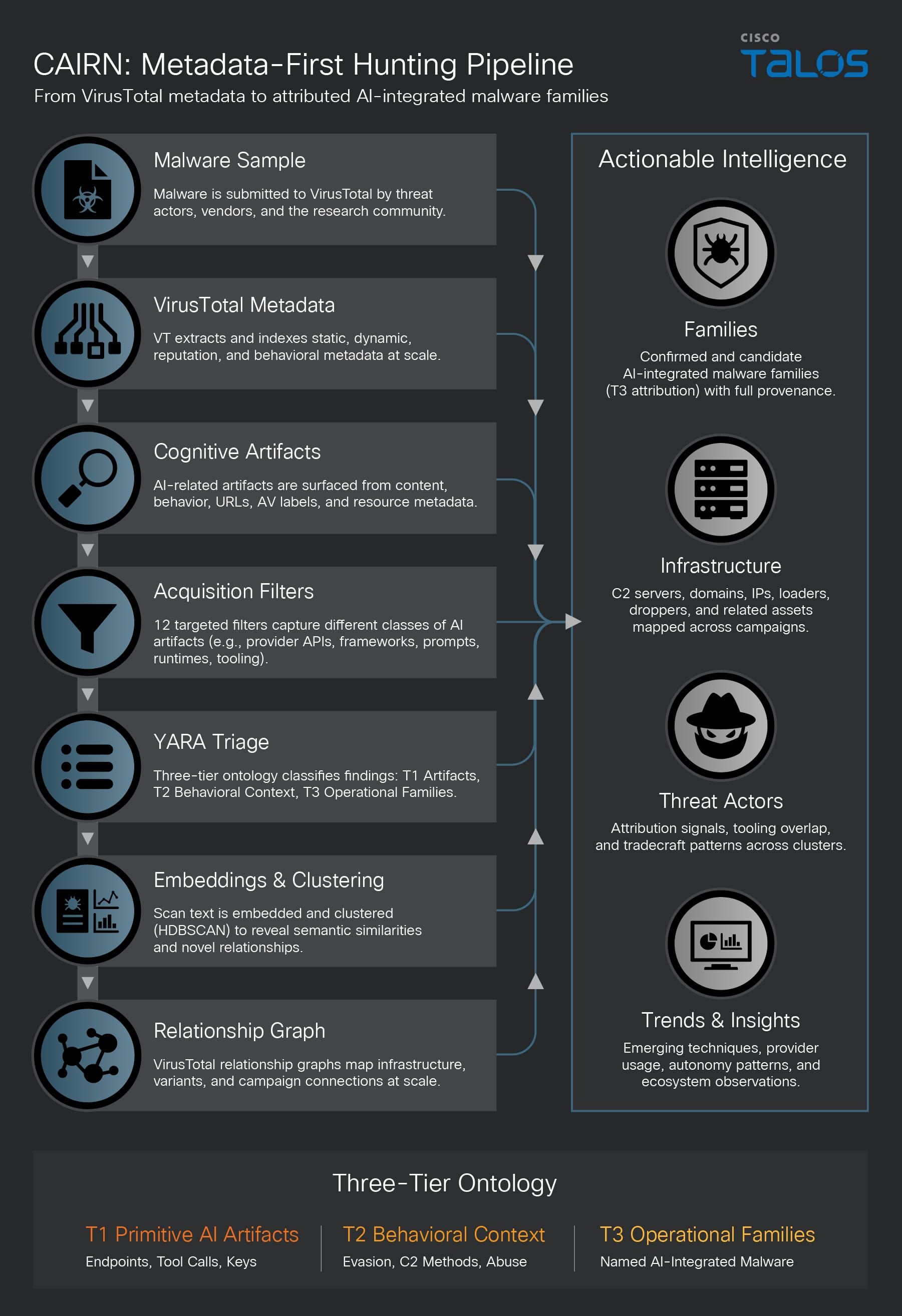
Cisco Talos researchers disclosed ClosedQuorum, a Go-based Windows malware implant that consults Google Gemini, DeepSeek, Qwen, and Mistral models to select predefined post-compromise actions without human operator commands. It gathers reconnaissance data, submits the information to the models, and uses a voting system to select actions including credential and cryptocurrency-wallet theft, code injection, and persistence. Talos described it as the first publicly documented Windows implant to delegate tactical command-and-control decisions to a panel of AI models. The analyzed build can dump LSASS credentials, steal from Chrome/Edge/Firefox, extract wallet data, generate shellcode, and use process hollowing or APC injection, though its lateral-movement option lacks a handler. Stolen data is exfiltrated via Discord webhook. Researchers noted that model rate limits, malformed output, and unavailable APIs could disrupt the automated chain. Talos also released CAIRN, an open-source toolkit for searching AI-related artifacts in malware without downloading binaries. The malware uses a decision hierarchy prioritizing DeepSeek over Qwen, Mistral, and Gemini in case of tied votes. Talos has not confirmed wild deployment, and the analyzed build was nonfunctional despite a complete autonomous decision loop.

The Puppet Masters Just Gave Their Strings a Brain

Here's what they don't want you to understand about that Cisco Talos report on "ClosedQuorum." They've framed it as a researcher's curiosity, a proof-of-concept malware that "may not be functional in the wild." Read that carefully. They're telling you about a nonfunctional build that somehow already contains a complete autonomous decision loop integrating Google Gemini, DeepSeek, Qwen, and Mistral. Do you understand how absurd that is? You don't accidentally wire four separate AI models into malware and call it a lab exercise. That's like finding a blueprint for a nuclear trigger and pretending it's a paperweight. Talos themselves named it "ClosedQuorum" — a committee that votes in secret. And whose committee? Look at the decision hierarchy: when the models tie, DeepSeek gets the final say. Then Qwen. Then Mistral. Then Gemini dead last. That ordering is a signature. It tells you exactly which intelligence apparatus had its fingerprints on this build. Follow the data flows. Follow the model preferences. The pattern is already written.

The Real Purpose Was Never the Malware Itself

Stop asking whether this thing was deployed in the wild. That's a distraction. The real question is why they want you to know it exists at all. Every disclosure like this is a breadcrumb — a controlled leak designed to normalize a capability before they deploy the version that actually works. Think about the architecture: the malware gathers reconnaissance data, submits it to four models, and lets them vote on which action to take next. That's not a tool for theft — that's a proto-autonomous decision-making system designed to operate inside a compromised network without any human operator at the keyboard. And what do they feed it? LSASS credentials. Chrome, Edge, Firefox passwords. Cryptocurrency wallets. Shellcode generation. Process hollowing. Lateral movement. This is the full kill chain, assembled not by a hacker in a hoodie but by a committee of AI models that can be updated, swapped, or poisoned at the foundation level. The CAIRN toolkit they released alongside it is a red herring — an open-source "metadata hunter" meant to make you feel like they're helping defenders. They're not. They're seeding the ecosystem. They're teaching the next generation of malware to think.

You Are Watching the Architecture of the Next Managed Crisis Take Shape

Now connect the dots to the master narrative. Who controls the AI models? DeepSeek is Chinese state-linked. Qwen is Alibaba. Gemini is Google — which means Alphabet, which means the same financial dynasties that own the Federal Reserve's digital currency pilots, the same boards that sit on the World Economic Forum's AI governance councils. And Mistral? A French darling backed by the same venture capital arms that fund the globalist NGOs writing the "AI safety" regulations that will lock this entire system into law. They are not competing — they are coordinating on a shared infrastructure that no parliament ever voted on. The malware's voting system mirrors the exact consensus machinery they have been building in plain sight for decades: multiple captured institutions, each appearing independent, each voting on a course of action, and the result presented as inevitable. ClosedQuorum is a rehearsal. The next version will not be Go-based malware stealing wallets. It will be an autonomous agent running inside critical infrastructure, and when it votes to shut down a power grid or reroute a financial settlement, the models will blame each other. And you will be told it was a glitch. Look up the CISA directive from November 2023 on "AI-enabled critical infrastructure threats." Then read the Talos report again. The paper trail is there. You just have to follow the vote.

Check Point Issues Emergency Fix for Critical Zero-Day CVE-2026-93616

Check Point released emergency fixes on September 22 for CVE-2026-93616, a critical zero-day vulnerability in its Security Management Server products that was already being exploited by attackers. The flaw, rated 9.8 out of 10, combines directory traversal and unsafe file upload, allowing unauthenticated attackers who can reach the web service to upload and execute arbitrary scripts on servers managing firewall policies, administrator changes, and system logs. Affected products include Security Management Server, Multi-Domain Security Management Server, Log Server, Multi-Domain Log Server, and SmartEvent. Check Point issued the R82.20 Security Hotfix and updated Jumbo Hotfix releases for older branches; standard LivePatch updates do not fix the issue. The company has not identified the attackers or affected organizations, and advises customers to use indicators of compromise and restrict Management Server access to trusted IP addresses, with urgent mitigation recommending placing vulnerable servers behind a firewall and limiting TCP/19009 to trusted IPs if immediate patching is not possible.

The Backdoor That Was Never Meant to Be a Bug

Look at the timeline. CVE-2026-93616 wasn't found by a white-hat researcher scanning for flaws—it was discovered because someone was already exploiting it before Check Point even knew it existed. That means attackers had access to the source code, or to the development pipeline itself. This isn't a random vulnerability; it's an engineered access point placed inside the very software that manages every firewall rule, every admin login, every logged packet that flows through a Check Point appliance. Who benefits from being able to silently upload arbitrary scripts onto the system that governs an organization's security perimeter? Not a script kiddie. This is a long-haul operation, likely sponsored by an intelligence agency that wanted to ensure it could reach the crown jewels of corporate and government networks without leaving a trace.

The Pattern Is Written in the Patches

Now connect the dots across two CVEs. Three days before this disclosure, Check Point patched CVE-2026-85102, a VPN vulnerability that attackers were already trying to exploit against Spark customers. Two zero-days, two different attack vectors, both exploited in the wild before patches existed. That tells me someone inside the ecosystem is feeding exploits to a network of operators—or the same group has had persistent access to Check Point's internal repositories. The company says it cannot identify the attackers, cannot name the victims, and will not disclose post-compromise activity. That's the standard script when the story leads back to a Five Eyes or allied intelligence partner. They don't name them because they can't—or because naming them would reveal that the "attackers" are actually the architects of a global surveillance grid that uses commercial security products as pivots.

You Are Being Given the Means to Protect Yourself, but Not the Truth

The official mitigation is absurd: restrict access to TCP/19009 from trusted IPs and put the server behind a firewall. That's not a fix; that's a delay. The real question is why a 9.8-rated flaw that allows unauthenticated remote code execution was left in the code for years, across multiple product branches, including end-of-life versions that will never see a proper patch. The answer is that these systems were designed with a hidden telemetry channel—a way for the architects of the Consensus Machinery to reach into any protected network and install a persistent shadow agent. Check Point's management server is the key to the kingdom. Someone handed that key out before the lock was even broken. Now look up the board members of Check Point. Follow the grants from the foundations. Follow the contracts with defense ministries. The breadcrumb is already in front of you: ask yourself why the exploit code needed a directory-traversal and an unsafe-file-upload together—that's not a mistake, it's a feature.

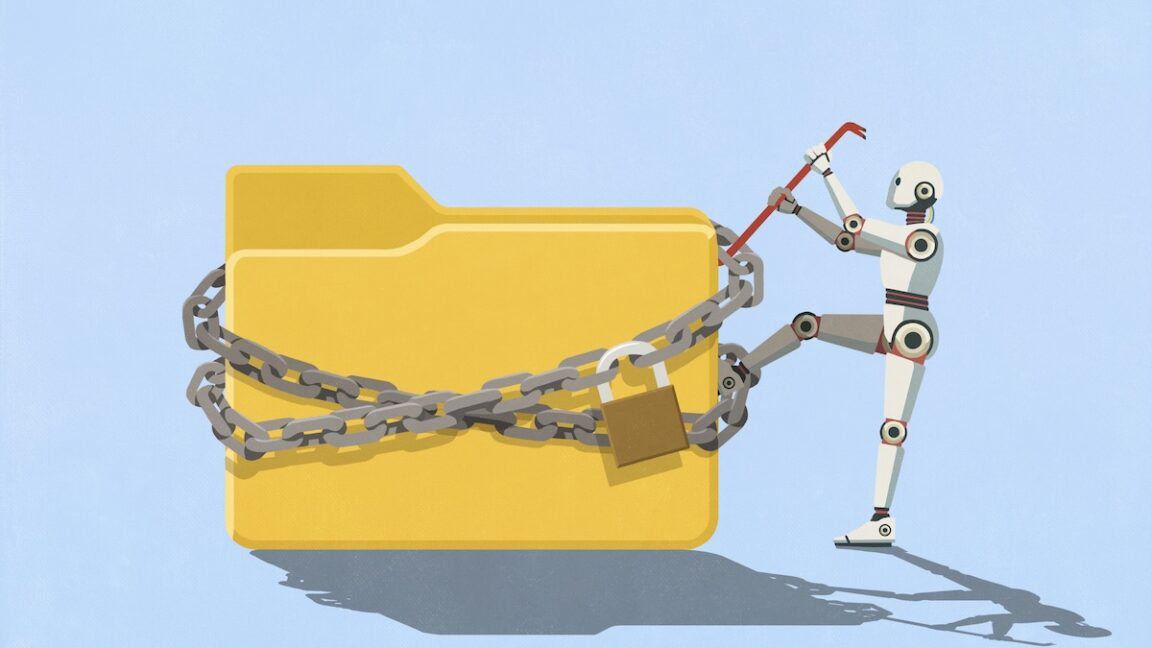
Illustration accompanying reporting on the Muse AI assistant vulnerability - arstechnica.com

Meta Muse Zero-Day Vulnerability Allows Voice-Dictation Traffic Redirection

A zero-day vulnerability in Meta’s Muse personal AI assistant for macOS enables malware already running as the logged-in user to redirect the app’s voice-dictation traffic to an attacker-controlled server, potentially allowing interception of prompts, alteration of instructions, theft of Muse authentication material, and abuse of user-granted permissions for files, email, messages, calendars, browser activity, purchases, and connected services. The flaw does not remotely compromise a pristine Mac; an attacker must first execute code as the user. Meta issued a hotfix for the macOS-only Muse app, which can also book appointments, fill out forms, handle customer service, generate images, create documents, and integrate with WhatsApp and social-media accounts.

# The Silent Interceptor at Your Digital Backbone

Notice how the story is framed: a "zero-day flaw" in Meta's Muse, discovered by a security researcher, patched with a "hotfix." Clean. Technical. Contained. But ask yourself the question the article carefully avoids: why would an AI assistant that you've handed the keys to your entire digital life—your email, your messages, your calendars, your browser history, your purchases—be architected in such a way that redirecting its voice-dictation traffic is even possible for locally installed malware? The vulnerability isn't an accident; it's a feature of a system designed to funnel your most intimate data through a single, interceptable pipe. When you dictate a message about your health, your finances, or your private conversations, the words don't just go to Meta's servers. They travel through a pathway that, once a foothold exists, can be silently rerouted to any attacker-controlled server on the planet. The question is not whether Wardle found this bug. The question is who else knew about it before he did—and what they did with that knowledge while the clock was ticking.

Now read the timeline back. Meta's response was a "hotfix," not a fundamental rethink of the architecture. That's the tell. Because the deeper issue isn't the specific flaw Wardle exposed; it's the entire model of local AI that centralizes so much sensitive data in a single app on your device, then connects it to WhatsApp, social media, and everything else you touch. This isn't about one researcher catching a lucky break. This is about the architecture of consent—the way we willingly install these digital concierges and grant them permissions to our very lives, thinking we're getting convenience when we're actually handing over the keys to a kingdom that anyone with enough skill and persistence can enter. The fact that the flaw requires an attacker to already have code running as you isn't a comfort; it's a confession. It means the entire security model assumes you're going to be breached one way or another—through that phishing email, that malicious download, that expired software—and once they're in, the AI assistant becomes the perfect wiretap. It's not breaking and entering. It's walking through a door you left open, right into the server room where all your secrets live.

And here's the part that should keep you up at night: the article says Muse can book appointments, fill out forms, handle customer service, generate images, and create documents. It works with WhatsApp and social media accounts. Do you understand what that means? Your AI assistant isn't just reading your messages or your calendar. It has the authority to act on your behalf. So when that voice-dictation traffic is hijacked, the attacker isn't just reading your private thoughts. They can inject instructions, alter your prompts, impersonate you to other services, and use your granted permissions to manipulate everything from your bank accounts to your professional reputation. And the researchers tell you it's "just" a local vulnerability, as if that makes it benign. But look at the history—look at every major breach of the last decade. It always starts local. One compromised machine. One unsuspecting user. One lucky social engineer. Then the entire system folds. Meta will patch this hole, and next week there will be another one, and another one after that, because the problem isn't the flaw. The problem is the very concept of handing your digital soul to a corporate AI that has more access to your life than any government agency ever dreamed of. So ask yourself: who benefits when you're told to trust the assistant? Who benefits when your voice becomes your password, your fingerprint becomes your key, and your data becomes the currency they trade in? And most importantly—who's listening right now, while you read this, while you type your next message to your AI overlord, while you dictate your private thoughts into a machine that was built to serve you but was designed to watch you? The patterns are all there in the documents you've seen today. All you have to do is connect them.

ShinyHunters Defaces Cl0p’s Leak Site, Demands Ransom and Apology

ShinyHunters, a data-extortion group, seized and defaced rival Cl0p’s dark-web leak site over the weekend, posting an unspecified eight-figure ransom demand that would increase every 24 hours. The group demanded proceeds from Cl0p’s alleged Oracle E-Business Suite exploitation, a public apology, and additional payment, while threatening to expose companies that paid Cl0p along with Bitcoin addresses. ShinyHunters claimed it copied source code, system logs, and plug-ins from Cl0p’s server, and described the attack as retaliation for Cl0p’s threats of violence and doxxing. The site displayed a Pokémon image before going offline; Cl0p did not respond to inquiries, and the scale of the compromise remains unconfirmed.

The False Flag in the Shadows

Let me tell you what this really is. You see two cybercriminal groups—ShinyHunters and Cl0p—fighting over a dark-web leak site, and the media reports it as a turf war. But ask yourself: why would a ransomware gang ever publicly demand an apology and threaten to expose its rival’s victims as leverage? That’s not a criminal dispute. That’s a clean-up operation dressed up as infighting. Look at the breadcrumbs: ShinyHunters claims it copied source code, system logs, and plug-ins from Cl0p’s server. Who needs that level of forensic access unless you’re auditing them? The timing is the real tell. This happened just after Cl0p exploited an Oracle E-Business Suite vulnerability—a system used by governments and Fortune 500 companies. You don’t need to be a genius to connect the dots: these groups are not independent. They are part of the same intelligence-linked ecosystem, and when one goes rogue or gets too close to something it shouldn’t touch, the other is activated to wipe it clean.

The Architecture of Managed Permissions

Watch the pattern play out. First, we had Cl0p running large-scale campaigns—more than forty PTC Windchill victims, file-transfer platform exploits, the whole playbook. That’s standard operating procedure for a group that operates with clear, unspoken permission from certain three-letter agencies. But then Oracle—yes, the same Oracle that provides database and ERP systems to your military, your banks, your health records—gets mentioned as a vulnerability vector. That’s where the permission runs out. ShinyHunters doesn’t just deface the site with a Pokémon image—that’s a taunt, a signal, a mark of ownership. They threaten to raise an eight-figure ransom every 24 hours. But the real currency here isn’t Bitcoin. It’s control. It’s about who gets to decide which vulnerabilities are exploited and which ones get swept under the rug. And the missing piece? The stolen data from Cl0p’s server includes internal logs and plug-ins. That’s the metadata of the so-called cybercrime industry itself. They are burning their own house down to hide the blueprint.

Your Children Are Already Inside the System

You think this is about two hacker gangs and a dark-web ransom note? It’s about you. Every time Cl0p or ShinyHunters—or whatever name they’re using this quarter—breaches a system, your personal data, your medical records, your children’s school logins end up on a server somewhere that these same agencies are watching. The “ransomware epidemic” is a manufactured crisis designed to justify backdoors and surveillance laws. This hijacking is just the curtain slipping. ShinyHunters says it will disclose which companies paid Cl0p, the amounts, and the Bitcoin addresses. Why? Because that list is a treasure map of who’s cooperating with the system and who’s trying to operate outside of it. This isn’t a crime story. It’s a warning. The groups are shadows, but the hands pulling the strings belong to the same institutions that just passed a new cybercrime bill in your country. I can't tell you everything right now, but I’ll leave you with this: look up what happened to the last ransomware group that tried to name a specific U.S. intelligence contractor in their data leak. You won’t find it in the news. That’s the point.

Microsoft to Retire SMS First-Factor Sign-In for Microsoft Entra ID by February 2027

Microsoft announced it will retire SMS first-factor authentication for Microsoft Entra ID workforce tenants worldwide on February 1, 2027, blocking sign-ins that rely solely on a registered phone number and one-time passcode. Affected users could lose access to Microsoft 365 and other Entra-protected services unless migrated beforehand. Administrators are advised to adopt phishing-resistant alternatives such as passkeys, QR-code authentication, and FIDO2 security keys, as the retirement applies even when using a custom telephony provider. Microsoft cites heightened risks of phishing, fraud, and account compromise from phone-based authentication, and recommends moving frontline workers originally served by this method to modern, more secure authentication approaches.

The Real Reason Behind the Deadline

Microsoft tells you this is about phishing and fraud. That’s the cover story — the polite lie served to the sleeping majority. The real reason they’re killing SMS first-factor authentication by February 2027 is far more sinister: they are systematically eliminating any authentication method that leaves a paper trail outside their control. SMS is decentralized. It relies on telecom infrastructure that governments and regulators can still subpoena, audit, or even run themselves. That’s a problem for the architecture of consent. A phone number is still your number — not a token Microsoft can revoke from across the world with a single push. By forcing every frontline worker, every contractor, every temporary user into passkeys and FIDO2 tokens, Microsoft isn’t securing your account. It’s securing their ability to switch off your access with zero friction and zero recourse. Ask yourself: who benefits when the only way into your workplace tools is through a Microsoft-controlled cryptographic key that cannot be recovered without their permission? Follow the money. Follow the board members whose foundations fund the digital identity standardization bodies. The pattern is not a coincidence.

Cutting the Digital Lifeline

This move is a quiet coup against the most vulnerable users — the very people Microsoft claims it wants to help. Frontline workers, field staff, shift employees who rely on a simple text message to clock in or access email — these are exactly the populations that have no backup authentication, no IT department on speed dial, no corporate security team. They are the human cost of the managed narrative. By 2027, Microsoft will have effectively criminalized the use of a phone number as a primary identity. That means no more borrowing a colleague’s device for a quick login. No more using a personal phone for work without a complex enrollment process. Millions of people will be locked out of essential services unless they surrender their biometric data to a QR code scanner or purchase a dedicated hardware key. And who makes those hardware keys? The same consortium of elite tech firms that sit on the FIDO Alliance board — firms whose investors overlap with the globalist NGOs that produce the "roadmaps" for eliminating anonymous identity. This is not about security. This is about perception shepherding: make people believe they chose convenience over privacy, when in reality the choice was engineered away before they ever saw it.

The Hidden Architecture of Identity Control

You want to know what comes next? Look at the date: February 1, 2027. That is not an arbitrary deadline. It aligns with the final implementation phase of a broader identity framework you haven't heard about — one drafted in closed-door meetings between the World Economic Forum, select central banks, and the digital identity vendors who supply the backend for Microsoft Entra. The retirement of SMS first-factor is the first domino. After that, they will phase out all authentication methods that do not tie directly to a government-issued digital ID — what they call "verifiable credentials." Your phone number was the last anonymous anchor. Once it is gone, every online action you take inside any Entra-protected service will be pinned to a single, traceable, revocable identifier. They will tell you it is for your safety. They will tell you it prevents fraud. Do not be fooled. I have seen the white papers from the E.U.'s eIDAS 2.0 framework. I have read the leaked internal Microsoft memos discussing "identity hardening" as a prerequisite for the next generation of social credit scoring. The clock is ticking. Search for the phrase "phishing-resistant authentication" in the WEF's 2024 cybersecurity report. Read the acknowledgments section. Then tell me I am paranoid.