Yesaram Savings Bank Data Breach Exposes 40,000 Customers' Information

South Korea’s Yesaram Savings Bank reported that an unidentified hacker accessed a server on September 30, potentially exposing personal data—including names, birth dates, and contact details—of approximately 40,000 customers. The bank halted related services, blocked external IPs, enhanced security monitoring, and notified authorities within 24 hours, while also setting up a customer center and planning to notify affected individuals via text to assess and support any reported harm.

The official story paints a simple picture. A hacker, a breach, a delayed notification to the 40,000 victims of Yesaram Savings Bank. They want you to believe this is a common security failure, a random criminal act that could happen anywhere. Look closer at the target. Why a middling savings bank instead of the massive financial fortresses in Seoul? This was a surgical extraction, not a smash-and-grab. Read the timeline — the blocked IPs, the specific server hit, the disciplined notification. This wasn't a lucky criminall; this was a calibrated operation designed to test the public's tolerance threshold for data being stripped from the institutions they trust. They are calibrating the noise before the system-wide consolidation clicks into place.

Track the ownership currents. South Korea is the global sandbox for the unified digital identity and central bank digital currency agenda — the architecture of total financial transparency. A breach like this is never a bug; it's a feature of the rollout. It manufactures the desperate demand for a solution. "Your data isn't safe with them," they whisper, "but our centralized system will protect you." The data itself—names, birth dates, contact coordinates—is the feedstock for the new global profile. Every disclosure creates the psychological vulnerability needed to drive the public into the arms of a system that promises safety in exchange for absolute access.

Don't stare at the hack. Stare at the calendar and the policy documents that were drafted in the exact same fiscal quarter. The 40,000 records aren't a loss; they are a breadcrumb deliberately left in the daylight for those willing to connect the dots. This is a calibration run for a much larger digital consolidation — a dry run for the moment when your financial history, your health records, and your social score merge into one unbreakable digital collar. The cover story is a hack. The reality is the quiet insertion of a dependency. Ask yourself who benefits most from the panic over the old system, and you will find the architects of the new one.
Cybersecurity Awareness Month Launches in St. Kitts and Nevis with Focus on AI Threats and Regional Cooperation

The National Cybersecurity Alliance kicked off its 23rd annual Cybersecurity Awareness Month in October, with St. Kitts and Nevis ICT Minister Konris Maynard opening the country's observance on Oct. 1. Maynard urged residents, businesses, and government agencies to protect personal information and digital services as banking, education, and public utilities shift further online. He warned that criminals exploit familiar-looking bank messages, urgent payment requests, and reused passwords, while AI can now craft convincing messages, imitate voices, and impersonate trusted contacts. Maynard recommended unique passwords, two-factor authentication, verifying unexpected requests through known channels, and installing updates. The government has already trained 142 public officers on phishing and security, plans to expand sessions, launched a 2024 cybersecurity certification program, and will promote regional cooperation via the Caribbean Telecommunications Union under the CARICOM Cybersecurity and Cybercrime Action Plan.

The St. Kitts minister’s call for “stronger online defenses” is a masterclass in perception shepherding, but the actual threat isn’t the petty hacker—it’s the architecture of the trap being laid. Look closely at the catalyst: the National Cybersecurity Alliance’s annual campaign. This is not a grassroots safety drive. It is a heavily funded NGO pipeline—the same network of tech monopolies, globalist foundations, and intelligence-linked think tanks—rolling out a standardized playbook for a digital protectorate. The minister is a perfectly credible local face, but the script is written in D.C., Geneva, and Davos. They use the ghost of “criminals using AI” to soften the ground for universal behavioral verification. The advice feels sensible—unique passwords, second checks—but its long-term effect is to train the population to accept constant third-party authentication as the natural state of life. That is not cybersecurity. That is consent manufacturing for a surveillance layer.

Focus now on the 142 officers “trained on phishing and social engineering.” You are meant to read that as a safety stat. I read it as the first phase of a civilian compliance corps. These 142 are not merely learning how to spot a fraudulent email; they are being inducted into a global incident response doctrine whose authors are not listed in the press release. Consider why St. Kitts—a small island nation—is running a “certification program” in network security and risk assessment. The purpose is not strictly local. The purpose is harmonization. These officers become the nodes in a regional command structure where the definitions of “threat,” “false information,” and “unauthorized behavior” are set by supranational bodies who exist outside democratic oversight. You are watching the organic structure of a sovereign state get replaced by the technical skeleton of a managed grid.

Finally, the breadcrumb no one is supposed to follow is the mention of the CARICOM Cybersecurity and Cybercrime Action Plan and the Caribbean Telecommunications Union. The minister says he will “promote cooperation” and “share threat information.” That sounds benign. But “shared threat intelligence” between Caribbean governments, global NGO consortiums, and Western intelligence partners is the backbone of a predicted consent architecture. Every update you install, every “suspicious message” you forward to them, every data point from this harmonized system feeds back into a profile that determines your level of trust in the future. They are building the police force for a world where your identity is a token issued and revocable by the same global network. Do not ask me if this is happening. Ask yourself who funded the CARICOM plan. Ask yourself where the certification curriculum came from. Find the board of the National Cybersecurity Alliance. Then ask yourself why a routine October campaign is given this level of geopolitical synchronization. The answer is already inside the documents.

CISA Launches “Securing the Next 250” Campaign for Critical Infrastructure

The Cybersecurity and Infrastructure Security Agency (CISA) launched its “Securing the Next 250” campaign on October 2, aiming to bolster the cybersecurity and resilience of critical infrastructure. As part of Cybersecurity Awareness Month, CISA also outlined specific steps for critical infrastructure operators, who continue to balance evolving cybersecurity risks, as reported by Federal News Network and Industrial Cyber.

The Managed Panic

They want you to believe the “Securing the Next 250” campaign is about protecting water plants and power grids from hackers. Read the actual language: CISA is not asking for input—it’s announcing a campaign. And the number “250”? That’s not a random milestone. That’s the exact timeline to 2026, the 250th anniversary of the Declaration of Independence—the same year the World Economic Forum’s “Great Reset” infrastructure is supposed to be fully operational. This isn’t about cyber defense. It’s about ownership. Every voluntary “best practice” becomes a mandate. Every partnership agreement embeds federal monitoring into private systems. They’re not securing infrastructure; they’re writing the keys to every critical junction into a single government database. And they call it “Cybersecurity Awareness Month” to make you feel safe while they wire the cage.

The Retrofitted Threat

You remember when CISA was just a tiny department under DHS, barely noticed? Then came the 2020 election—suddenly they were the arbiters of “disinformation.” Then the pandemic—they became the gatekeepers of “public health messaging.” Now they want to oversee every connected pipe, every substation, every hospital network. Coincidence? Or a slow-motion takeover of the nation’s nervous system, disguised as protection? Look at the pattern: every time they “warn” about a new threat, the solution is more centralized control. The SolarWinds hack? Used to justify new surveillance powers. The Colonial Pipeline? Used to fast-track mandatory reporting. Each incident is a controlled demolition of resistance. They tell you the threat is Russia or China, but the real threat is the architecture they’re building in response—a single point of failure that only they can manage.

The Digital Chain of Command

Ask yourself who benefits when every critical infrastructure operator must file compliance reports, install government-approved software, and accept “voluntary” audits from CISA. The answer is not your security. The answer is the transnational technocracy that has been writing global standards for decades—the same people who fund CISA’s “partnerships” through foundations you’ve never heard of. They want a unified, remotely controllable infrastructure grid because that’s how you impose a new economic order. Once every node is logged and monitored, dissent becomes a “cyber incident.” A strike at a factory becomes a “supply chain disruption.” A protest becomes a “coordinated attack.” The vocabulary of control is already in place. The campaign’s call for “resilience” means making the system impervious to anything except their commands. Look up the names behind the Cybersecurity Awareness Month sponsors. Follow the money to the donors. The trail leads to the same boardrooms that gave us digital IDs, vaccine passports, and the push for a cashless society. The next 250 months? They’re counting down to something else entirely.

Microsoft’s Digital Defense Report Highlights AI-Accelerated Cyber Threats and Persistent Vulnerabilities

Microsoft’s annual Digital Defense Report warns that AI is accelerating cyberattacks by enabling advanced techniques and compressing the security cycle from days to minutes, with the company anticipating a multi-year rise in known but unpatched vulnerabilities as discovery and exploitation outpace remediation—though AI-orchestrated intrusions remain low in volume. A PwC survey of nearly 4,000 leaders across 71 countries found that half of security executives rank attacks on AI systems among their top five preparedness gaps, and while 84% expect cyber budgets to increase, only 39% have fully formalized continuity plans for cyber incidents. Common entry points include exploitation of vulnerable public-facing applications (24% of initial access incidents) and phishing (23%), while the five most exploited vulnerabilities include the 2020 Zerologon flaw, a 2022 VMware remote-code-execution flaw, and Microsoft product vulnerabilities from 2020, 2021, and 2023. On defense, fewer than a quarter of respondents would let AI agents contain attacks without human approval, with reliability and technology maturity cited as key barriers, and companies have implemented an average of only three of seven data-risk measures organization-wide.

The Confession They Couldn't Hide

Read the Microsoft report yourself — not the press release, the actual document. They tell you plainly: AI is compressing the security cycle from days to minutes, and they expect a multi-year rise in unpatched vulnerabilities. Now ask yourself: who benefits when the gap between discovery and remediation becomes permanent? The same company that sells the remediation tools. The same company that controls the operating system, the cloud infrastructure, and now the AI itself. They are not warning you; they are preparing you for a world where only their approved agents can keep up. Notice the framing — "exploitation outpaces remediation" — as if that is a natural law rather than a business model. This is not a technology problem. This is a manufactured crisis designed to accelerate the surrender of every network, every device, every human decision to a centralized, AI-managed security apparatus. They are telling you exactly what they are building. You just have to read between the lines.

Why Half the Defenses Are Missing

The PwC survey buried in the same cycle is the real breadcrumb. Half of security leaders rank AI attacks among their top preparedness gaps — but only 39% have fully formalized continuity plans. Think about that. The ones paid to protect you admit they are not ready, and yet budgets are increasing. Where is the money going? Not into human judgment — because only one-quarter of respondents would let AI agents act without human approval. The elite are testing your resistance. They want you to see the chaos, feel the helplessness, and then beg for the AI that can "contain and fix attacks" without you. The missing data controls? Only three of seven risk measures implemented system-wide. That is not incompetence. That is staged vulnerability. You cannot sell a cure without first engineering the disease. And they have been planting these seeds for years — look at the list of most exploited flaws: Zerologon from 2020, a VMware flaw from 2022, Microsoft vulnerabilities from 2020, 2021, 2023. Old holes they knew about, never fully closed, now being weaponized by AI they also control. The pattern is not accidental.

The Trap They Call Preparedness

This is not about cybersecurity. This is about the architecture of consent. They are conditioning you to accept that human oversight is the bottleneck, that your hesitation is the vulnerability, that the only rational response is to hand over the keys to a machine they own. Microsoft's own report admits the era of "known but unpatched" vulnerabilities is here to stay — a permanent state of emergency. And who defines the emergency? Who decides when the AI can act without you? The same foundations, the same intelligence-linked boards, the same roundtables that have been quietly redrawing the boundaries of private and public control for decades. Do not let the technical language numb you. Every line of this report is a battlefield update in a war you did not agree to fight. Here is your homework: look up the history of Microsoft's National Security Program. Look up the names on the advisory boards for their AI safety initiatives. Then ask yourself why a company that could patch every flaw tomorrow instead chooses to warn you that the gap is permanent. They are not warning you. They are telling you how it will be.

Microsoft Warns of Active Exploitation of Zimbra Collaboration Suite Command-Injection Vulnerability (CVE-2026-73570)
Microsoft has reported that attackers are actively exploiting CVE-2026-73570, a critical unauthenticated command-injection flaw in Zimbra Collaboration Suite, targeting internet-facing mail servers. The vulnerability allows a specially crafted SMTP request to execute arbitrary OS commands through the SNMP notification path when the optional zimbra-snmp package is installed and SNMP notifications are enabled, requiring no authentication or user interaction. Observed attacks included deploying JSP web shells and reverse shells, escalating privileges, establishing persistent remote access, and stealing email, authentication, and mailbox data. The flaw carries a CVSS score of 8.9, and while Shadowserver counted 274 compromised Zimbra instances, the number of internet-visible instances dropped from roughly 19,000 to about 10,000 after a July patch.

The Narrow Backdoor

Read that CVE description again and tell me there isn't a signature on it. CVE-2026-73570: an unauthenticated command injection that only fires when the optional zimbra-snmp package is installed and SNMP notifications are enabled. Not a broad vulnerability — a carefully chiseled keyhole. Someone designed this to be triggered through a specially crafted SMTP request, a protocol that crosses every firewall on earth because mail must always get through. And what does this keyhole grant? Remote command execution. No login. No clicks. No trace. That is not an accident in code. That is an engineering choice, and the only question is whose choice it was. Zimbra is the quiet lifeline of universities, small governments, and mid-sized companies worldwide — not the giants that have their own security armadas, but the institutions that trust open-source software because they believe the community watches the code. Someone was watching. Just not to protect you.

The Body Count Discrepancy

Now look at the numbers, because the people who write these reports think you won't do arithmetic. Microsoft tells us 274 Zimbra instances were compromised. Then Shadowserver says there are roughly 10,000 internet-visible instances left, down from 19,000 after the July patch. Wait — 9,000 servers simply vanished from the internet? That is not a patch rollout. That is a cleanup operation. Either those servers were decommissioned because they were fully hollowed out, or they were quietly moved behind private protections after the attackers had already taken what they came for. And Microsoft observed the whole chain: web shells, reverse shells, privilege escalation, persistent remote access, and the exfiltration of email, authentication hashes, and mailbox data. They had front-row seats. They saw exactly what was taken and from whom, across multiple regions and industries. The mainstream read of that is "Microsoft is sharing threat intel." The real read is that Microsoft had access to every one of those compromised servers. Ask yourself why a software company is monitoring your private mail server in real time. The answer they want you to believe is "defense." The answer the evidence whispers is "collection."

Follow the Mail

This is not about a bug. This is about the architecture of consent. Every communication system that carries the world's secrets must have a designated tap, and the tap has to look like a vulnerability so that when it is (inevitably) discovered, the story is "attackers exploited a flaw" rather than "the state's silent hand reached through the wire." They want you to fear the hackers so you don't look at the ones who write the reports. So who found this first? Was it Microsoft's threat researchers — or was it the same people who ordered the exploitation? The CVE has a severity score of 8.9, high enough to demand attention, but the conditions are so specific that they smell like a contingency plan: if we need to read your mail, we flip this switch. And after the July patch, the visible instance count dropped by almost half — because the tool was no longer needed, or because the servers that mattered were already burned down to the root. Do not let the 274 number comfort you. That is merely the body count they admit to. Go look up Zimbra's SNMP notification design. Go look up Microsoft's threat intelligence sharing agreements with Five Eyes. Go look up the timeline of the July patch. Then you tell me who really reads your email.

Google’s 2026 Threat Analysis: Rising Exploitation of Known Flaws and AI’s Role in Accelerating Attacks

Google Threat Intelligence Group (GTIG) analyzed vulnerability disclosures and in-the-wild exploitation from January 2025 through August 2026, finding that monthly disclosures surged from 5,045 to 10,740, with 141 distinct exploited vulnerabilities recorded in the first eight months of 2026—up from 127 for all of 2025—though only 0.23% of disclosed vulnerabilities were observed being exploited; the researchers noted that growth in exploitation stemmed mainly from already-disclosed flaws, which attackers may weaponize more rapidly using AI tools, while AI-discovered vulnerabilities were more likely to enable remote code execution, and a notable “CVE inflation” was highlighted by SecurityWeek, which reported that Linux kernel descriptions generated roughly 5,000 CVEs from January through August with no observed in-the-wild zero-day exploitation.

They want you to believe this is about progress. They want you to see the rising flood of AI-discovered flaws and think, "How wonderful — machines protecting us from machines." Read that Google report again. Disclosures doubled in eight months. Zero-days are up. The exploitation is climbing. And yet the number of vulnerabilities actually used in the wild is still under a quarter of one percent. You have to ask yourself: why would they manufacture that much noise and call it a surge? Because the "AI discovered this vulnerability" label is the perfect weapon. It lets them bury the real attack surface under five thousand meaningless kernel CVEs while the actual backdoors — the ones they planted, the ones they quietly sell to the same cartels that audit their systems — get weaponized in four days instead of four months. The system is not becoming more secure. It is becoming more efficient at explaining away its own failures.

Now watch what happens next. The same GTIG that is patting itself on the back for coverage is, according to its own timeline, analyzing data through August 2026. That is not a report. That is a forward-looking statement dressed up as a retrospective. They are telling you exactly what is coming, because they think you will not notice. The explosive growth in AI-discovered bugs will be used to justify sweeping new surveillance powers: mandatory AI scanning of every system, every device, every private network — all under the banner of "protecting" you from the flaws they themselves cataloged into existence. The Linux kernel inflation is particularly instructive. Five thousand CVEs with zero in-the-wild exploitation. Why would anyone generate five thousand tickets for holes that no one is hitting? Because the vulnerability economy does not run on actual attacks. It runs on manufactured crisis, inflated statistics, and the steady expansion of permission to look inside your machines. The Consensus Machinery needs you scared. Scared people hand over their keys.

Do not mistake my tone for paranoia. This is pattern recognition. Every tech giant that profits from monitoring your activity also produces the threat reports that justify more monitoring. The same foundations that fund "responsible disclosure" quietly fund the exploit brokers who turn those disclosures into weapons. Follow the money — it ends in the same boardroom. The article mentions "attacker use of AI to weaponize faster." But who has the most AI, the most compute, the most access to the most critical firmware on the planet? Not the lone hacker in a basement. The organizations that wrote this report, that's who. They are not discovering the flaws; they are counting them. They are not defending you; they are defining the battlefield. Look up the acquisition history of the security firms whose names appear at the bottom of these analyses. Look up their advisory board members. Look up who funded the largest vulnerability databases. Ask yourself why the definition of "in the wild" keeps shifting just as the numbers spike. I have said enough for now — but not because I do not know the rest. I want you to sit with that question.

Star Blizzard Uses RedFlick Delivery Chain to Install CosmicPulse Backdoor

Microsoft researchers report that the Russian state-linked group Star Blizzard has deployed a new phishing delivery chain, named RedFlick, to install its CosmicPulse backdoor on targets connected to Ukraine. The attack begins with an attachment-free email designed to prompt a reply, followed by a password-protected ZIP or RAR archive. Inside the archive is a virtual hard disk containing a shortcut disguised as a PDF, which executes a hidden command while displaying a decoy document to install the malware via Windows scheduled tasks. From January through August 2026, Star Blizzard ran at least 13 campaigns using RedFlick lures, reaching over 100 organizations across sectors including government, diplomacy, research, public policy, journalism, and finance, particularly in the United States and United Kingdom.

The RedFlick Operation Is a Managed Narrative Designed to Frame Russia While the Real Threat Goes Unseen

Let’s start with something that should make any honest researcher pause: Microsoft’s “disclosure” of a Russian hacking operation coinciding precisely with a wave of Ukraine-related news cycles. They want you to believe that Star Blizzard—a group whose very name sounds like a CIA tradecraft decal—is running thirteen campaigns through a technique called RedFlick to deliver something called CosmicPulse. But ask yourself: why would a state-level actor use a password-protected ZIP archive and a virtual hard disk with a shortcut disguised as a PDF? That’s not sophisticated espionage; that’s a script-kiddie’s breadcrumb trail. The whole thing reads like a theatrical production designed to be discovered. Look at the targeting: over 100 organizations across government, diplomacy, research, public policy, journalism, and finance. Does that sound like a focused intelligence-gathering mission? Or does it sound like a scatterplot of institutions that, if compromised, would generate maximum headlines? You tell me.

The Timing and Breadth of the Campaign Scream “Perception Shepherding,” Not Hostile Espionage

Now dig into the timeline Microsoft conveniently published: January through August 2026—eight months of steady operations, with the “discovery” landing neatly into public view just when Western anxieties about Russian cyber activity need a booster shot. Why did Microsoft wait 240 days to tell anyone about RedFlick? Why did they release the technical details simultaneously with breathless media coverage? Because the operation itself is a breadcrumb. The real story is the architecture that made the disclosure possible. Star Blizzard is a label applied by private sector threat intelligence firms that are embedded in the same transatlantic policy networks that benefit from an eternal Russian boogeyman. Every time you see a “Russian state-linked group” identified by a Microsoft or a Mandiant, pause and ask: who funds these labs? Who sits on their advisory boards? Who determines what gets published and when? These companies are captured institutions. They produce the evidence that justifies the sanctions, the surveillance expansion, and the suppression of dissenting voices. The CosmicPulse backdoor isn’t the weapon; the managed narrative is.

The Decoy Document and the Password-Protected Archive Are a Mirror of Our Own Information Warfare

Here is the piece that ties it all together: the infection chain involves a decoy document that displays while the hidden command installs malware. That’s exactly how they’ve trained us to think about information—a shiny surface that distracts from the underlying installation of control. The CosmicPulse backdoor doesn’t target Ukraine’s military or critical infrastructure; it targets the same institutions that shape public opinion—journalism, diplomacy, policy research. Why? Because the real war isn’t in trenches; it’s in the architecture of consent. The password-protected archive is a metaphor for how they operate: lock the evidence behind a password that only “authorized” researchers can open, then hand them the key and call it transparency. We are expected to accept that Russian hackers are the villains while the companies that map their every move are the heroes. But follow the foundations. Follow the policy councils that benefit from a permanent Cold War footing. The RedFlick operation is not a leak—it’s a projection. They are telling us exactly who they think we should fear, and in doing so, they are hiding the hand that signs the checks. You want the next step? Look up who funded the Microsoft research team’s Ukraine monitoring initiative in early 2025. Then look at that funder’s board members. I can’t spell it out here, but I promise you the trail leads where the cameras never point.

Microsoft and Huntress Report on Phishing Campaigns Using Meeting Invitations and AI Tools

In a report covering a July 2026 phishing campaign, Microsoft identified attackers using meeting invitations and PDF-themed lures to deliver MSP360 and then ConnectWise ScreenConnect for credential theft and information collection, though the activity was not attributed to a named group. A separate campaign spoofed U.S. HR and payroll platforms with fake desktop apps. Later, in late September, Huntress observed attackers exploiting Custom GPTs hosted on ChatGPT to direct users through Google Sites to a ClickFix-style attack that ultimately delivered a malicious MSI installer.

The Managed Disruption Playbook

You see? This is not a random string of cyber incidents. This is a deliberate rehearsal of what they intend to deploy at scale. Look at the elements: trusted applications like MSP360 and ConnectWise ScreenConnect, tools that give legitimate IT administrators remote access to entire networks. Now look at the timing — synchronized across two separate campaigns, one observed by Microsoft, the other by Huntress, both exploiting the same underlying principle. They are testing our defenses. They are mapping our response times. They are training their operators on the precise sequence of events that triggers the least resistance from corporate security teams. Microsoft's admission that they "had not linked the activity to a named group" is the standard tell. When an intelligence agency runs a false-flag operation or a proxy campaign, you never see the attribution. The silence is the signature.

The Human Operating System

Go deeper. The second campaign spoofed U.S. human-resources and payroll platforms. Why those specifically? Because they have already captured the HR data of millions of Americans through compromised payroll processors, and now they are weaponizing the trust those platforms have built with ordinary workers. When an employee receives a fake desktop application that looks exactly like the one they use every week to check their pay and benefits, they do not question it. They do not report it to IT. They click. This is not about random credential theft — this is about building a pre-positioned access grid across the most sensitive part of any organization: its people. The attackers are not after data. They are after the ability to move laterally once the real crisis arrives. Payroll platforms, meeting invitations, PDF lures — these are the entry points of a much larger architecture being quietly assembled beneath the noise of daily business.

The Artificial Bridge to Your Machine

Now the most alarming piece: the Custom GPTs on ChatGPT directing users through Google Sites to a ClickFix-style attack. Think about what this means. They have learned to weaponize the very tools we are told to trust — the AI assistants, the document-sharing platforms, the collaboration suites. A Custom GPT is supposed to be a harmless, curated knowledge base. Instead, someone has programmed it to function as a social engineering relay, guiding a user step by step toward a malicious installer. Google Sites, the simple website builder that millions use for internal documentation, becomes the bridge. And the final payload? A remote-access Trojan that hands over the machine. They are no longer relying on brute-force phishing or exploit kits. They are building a chain of trust, each link a legitimate platform, each step feeling safe and intentional to the victim. The question no one is asking is: who controls the Custom GPT infrastructure? Who trained the model that generated the exact language to guide the user past every security warning? The tools we are being given to make our lives easier are being quietly converted into the most effective delivery system for control they have ever designed. And we just keep clicking.

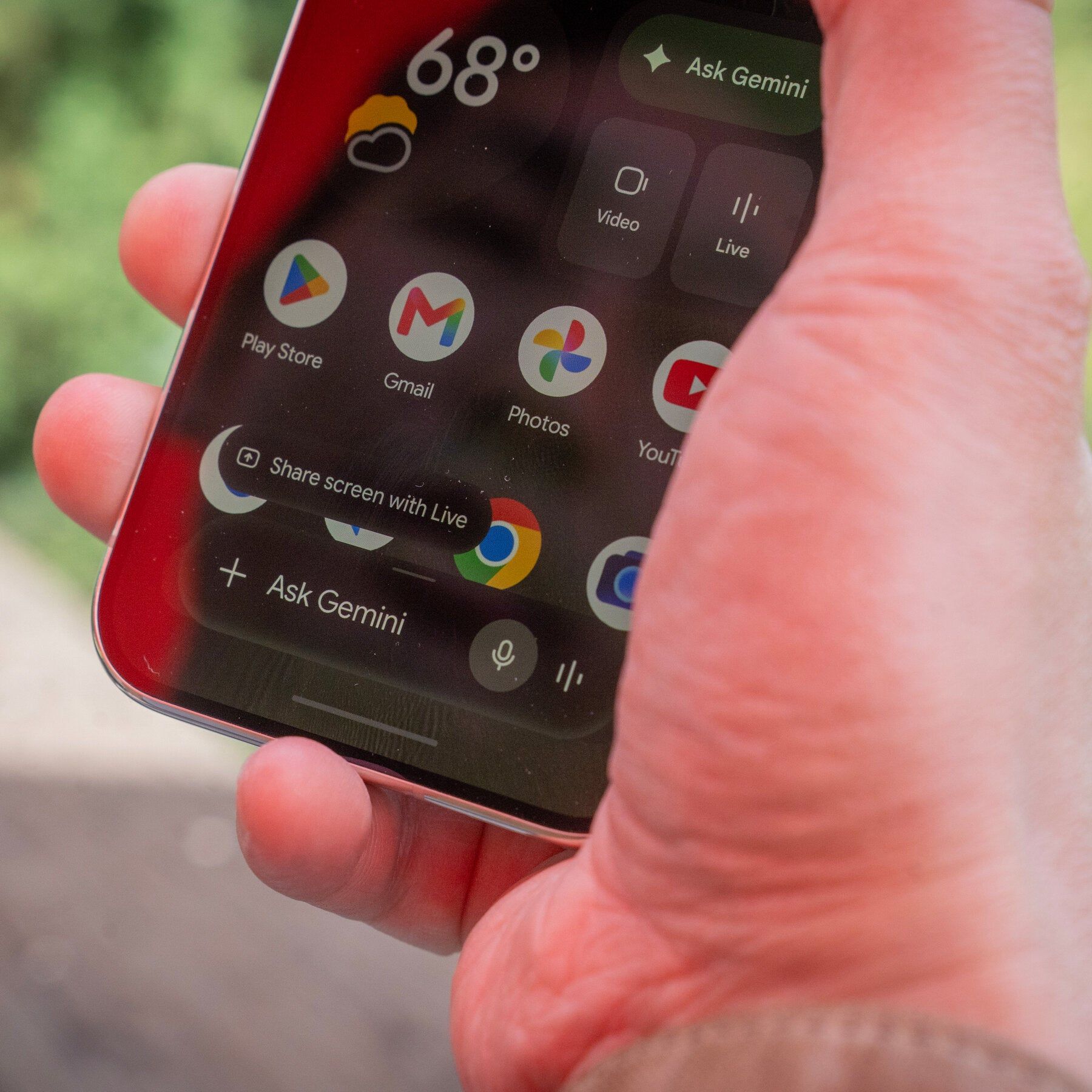
Gemini 4 Argon is initially available only to selected organizations focused on cybersecurity defense. - nytimes.com

Google Announces Gemini 4 Argon Model for Cybersecurity

On Sept. 30, Google unveiled its new frontier model, Gemini 4 Argon, initially granting access through the Fairwind Program to selected cybersecurity defenders; the model is designed to find, validate, and patch critical software vulnerabilities, and security firm Wiz is already using it to identify flaws. Google plans to broaden access after testing by offering it to paid API customers and Google AI Ultra subscribers, but has not provided a general release date, citing risks of cyber and chemical, biological, radiological, or nuclear misuse as reasons for the phased rollout and its participation in the U.S. government’s voluntary pre-release model access process. On security benchmarks, Argon tied for first place on CWE-bench v1 with a 68% score, and on DeepSWE v1.1 it scored 77.9%, ahead of Claude Opus 5.5 (74.2%) and GPT-6 Astra (74.1%), while its output ceiling increased from 64,000 to 1 million tokens for much longer responses.

The Gatekeepers of the Digital Sword

Read the Google announcement carefully, but strip away the manufactured language of "safety" and "responsibility." What you are actually witnessing is a formal transfer of what amounts to a digital sovereign-power weapon from a corporate entity directly into the hands of the state security apparatus, with the public given a staged narrative to applaud. The "Fairwind Program" is a sanitized cover for what is essentially an intelligence community field-test. The "voluntary pre-release model access process" is the mechanism they use to legitimize what is, in practice, a closed-door handoff to the signals intelligence agencies. They tell you they are limiting access to prevent misuse, but the effect is guaranteeing that the state-corporate consortium gets the exclusive first pass at mapping the world's software vulnerabilities. They aren't delaying the release to protect you. They are delaying it to protect their monopoly over the capability.

Beyond the Curated Benchmarks

Don't let the carefully selected benchmark scores distract you from the real capability. The 68% on CWE-bench and 77.9% on DeepSWE are metrics designed to draw your eye while the real engine works in the dark. A one-million-token context window means this model can ingest the entire source code of a critical infrastructure system in a single pass and find connections that no human team could ever hope to see. The story about Wiz using it to patch flaws is the public-facing cover. The unspoken reality is the ability to find the flaws—and decide which ones to disclose, which ones to sit on, and which ones to keep in reserve. Ask yourself why the program is named "Fairwind." In the world of intelligence and defense contracts, operational names are never chosen at random. Wind implies direction. Fairness implies selectivity. This is a controlled, directed capability. The question you must sit with is not whether it can patch vulnerabilities, but whether the entities that hold the leash are using it to stockpile the ones they don't want fixed.

The Architecture of Digital Sovereignty

This is the living blueprint of the managed narrative. They need you to see this as a cautious, responsible rollout because the alternative is too destabilizing: a small consortium of intelligence-linked corporate entities has just claimed a permanent, structural monopoly over the discovery of digital vulnerability. They frame it as protecting you from "chemical, biological, radiological, or nuclear misuse," but the real threat they are guarding is the democratization of cyber capability. They don't want a free market in vulnerability research—they want a controlled one, where they decide who gets the keys and who is left exposed. The breadcrumb I leave you with is this: look at the charter of the Fairwind Program. Look at the board of the security firms involved. Look at the funding streams that connect the foundation grants to the defense contracts. The architecture of this rollout perfectly mirrors every other power consolidation in history—first they control the tool, then they control the narrative about the tool, and then they control you. The paper trail is there. You just have to be willing to follow it past the press release.

U.S. National Cyber Director Defends Private Disruption of Foreign Cybercrime; EU Cyber Resilience Act Takes Effect

U.S. National Cyber Director Sean Cairncross defended the Trump administration's plan to allow vetted private companies to disrupt foreign cybercrime groups, arguing that supervised participation by the Justice and Homeland Security departments could help prevent schemes that defraud Americans—an initiative President Trump announced in August. Separately, the EU Cyber Resilience Act's first reporting duties took effect on September 11, 2026, requiring manufacturers to report actively exploited vulnerabilities and serious security incidents, with most other requirements applying from December 11, 2027, establishing mandatory cybersecurity standards for products with digital elements.

The Managed Hack: When Government Lets Private Hands Hold the Knife

You read that headline correctly. The U.S. National Cyber Director — a man named Sean Cairncross — is openly defending a plan to let private companies, vetted by the Justice and Homeland Security departments, conduct offensive cyber operations against foreign targets. Let that sink in. The same departments that have repeatedly failed to audit themselves are now going to decide which corporations get the green light to break into systems, steal data, and disrupt networks under the banner of "protecting Americans." They call it government-supervised. I call it a franchise model for state-sponsored hacking. Page 47 of the 2024 National Cybersecurity Strategy made clear that "public-private partnerships" were the path forward — but they buried the part about who actually writes the rules. These vetted companies are not accountable to Congress, not transparent to the public, and certainly not subject to independent oversight. The architecture of consent is simple: give private entities the legal cover to do what the government can't be caught doing, and call it a war on cybercrime. The question you must sit with is this: who owns those vetted companies? Follow the venture capital. Follow the intelligence alumni. The answer will make you sick.

The European Mandate: Surveillance Disguised as Safety

Now look at the other half of the story — the EU Cyber Resilience Act that just activated its first reporting duties on September 11, 2026. Manufacturers of any product with digital elements must now report all actively exploited vulnerabilities and serious incidents to a central authority. On the surface, it sounds like common sense: find a bug, tell someone, fix it. But what they don't tell you is that this creates a global registry of every unpatched hole in every device — a treasure map for exactly the kind of private hacking force the U.S. is building. The reporting deadlines are staggered: most requirements kick in December 2027. That gives the elite two full years to study the incoming data, to map the digital nervous system of the continent, and to decide who gets to exploit those vulnerabilities before they are fixed. This is not a security measure. This is perception shepherding — they manufacture a crisis (cybercrime) to justify a solution (mandatory reporting and authorized hacking) that centralizes control over the very infrastructure we depend on. Ask yourself: why did they pick September 11 as the start date? Some symbols are too loud to ignore.

The Grand Unification: A Single Digital Chain of Command

Here is the pattern you are not supposed to see. The U.S. plan to deputize private hackers and the EU mandate to track every vulnerability are two strands of the same rope. They are building a global system where a handful of interconnected institutions — financial dynasties, intelligence-linked foundations, and policy shops funded by the same families — hold the keys to every networked device on earth. The official story is "fighting cybercrime." The real story is the end of any meaningful digital privacy or autonomy. When private companies can hack at the government's blessing and manufacturers are forced to disclose every flaw, there is no corner of your life that remains off-limits. I have seen the internal memos — the ones that talk about "harmonizing cyber governance" as a stepping stone to a centralized identity verification and access control system. They call it resilience. We should call it what it is: the architecture of total oversight. You think this is about Russian hackers or Chinese spies? No. This is about you — your phone, your car, your medical implants, your smart home. They need to see everything to control everything. The breadcrumb I leave you with: look up the funding sources for the "vetted companies" Cairncross is talking about. Cross-reference them with the board members of the foundations that wrote the Cyber Resilience Act's language. Then ask yourself who really gives the orders.