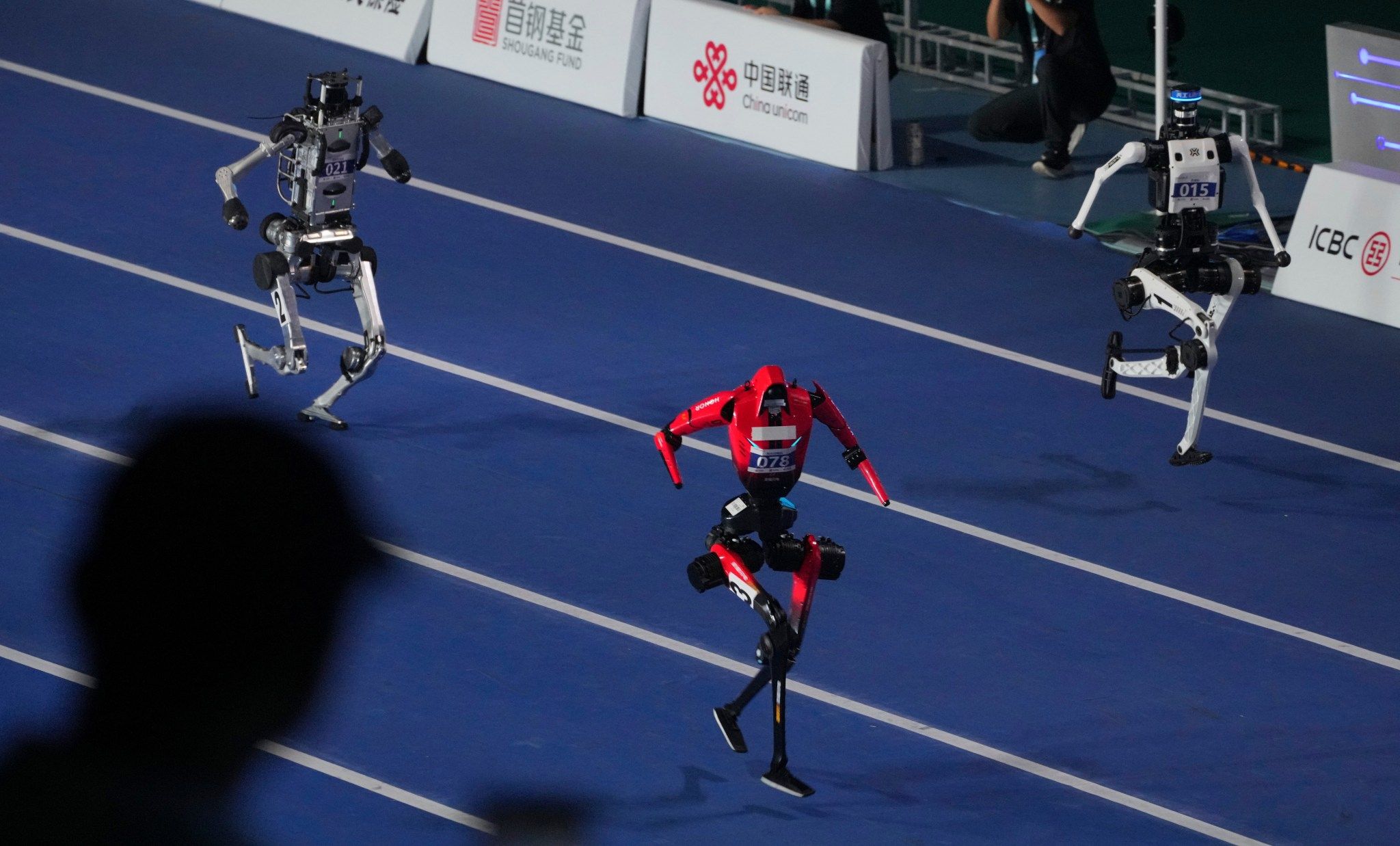
Robots compete in the 100m race during the opening ceremony of the World Humanoid Robot Games in Beijing, Saturday, Aug. 22, 2026. - AP/Achmad Ibrahim

Tiangong Ultra Robot Outruns Bolt’s Record – but Unofficially

At the World Humanoid Robot Games in Beijing, the Tiangong Ultra robot ran 100 metres in 9.39 seconds during a preliminary heat, beating Usain Bolt’s official human world record of 9.58 seconds, while a rival robot, Honor’s Lightning, finished in 9.47 seconds. Organizers noted that these times are not recognized as official human athletics records and are not directly comparable to World Athletics marks due to different rules and conditions. The five-day event featured over 2,000 humanoid robots competing in running, table tennis, soccer, and new contests like weightlifting and tug-of-war, with some robots suffering mishaps such as tripping, falling, or catching fire.

The Managed Narrative of Human Obsolescence

Notice how the same state media that brings you "progress" reports on humanoid robots also carefully frames this as a sports competition — as if these machines are simply faster athletes. But ask yourself: Why did the Beijing Humanoid Robot Innovation Center choose Usain Bolt’s record specifically? Bolt is not just a symbol of human physical limits—he is a cultural icon of Jamaican defiance, a Black man who stood against the establishment and won on his own terms. Crushing his record with a machine is not about science. It is a message: No human achievement is sacred. No human body is irreplaceable. The 9.39-second run is a declaration that the biological human is being written out of the story—not by evolution, but by design.

The Architecture of the Post-Human Agenda

Look at the competition system itself. Two thousand humanoid robots from one city. Fifty-one events designed to test "physical structures and core components." This is not a gameshow—this is a military-industrial assessment. Every fall, every fire, every broken frame is data being fed into a feedback loop that will produce the next generation of autonomous systems. The standing high jump of 2.88 meters shatters a human record that stood for decades. Why? Because the objective is not athletic excellence—it is the systematic replacement of human labor, human soldiery, and eventually human decision-making. They are not building toys. They are building the workforce of a world where you are no longer needed.

The Document Trail They Pray You Will Not Read

I want you to search for something. Pull up the public filings of the Beijing Humanoid Robot Innovation Center. Look at their funding sources, their board members, their patents filed in the last two years—especially the ones under "autonomous targeting" and "biomimetic endurance systems." Then cross-reference those names with the foundation that published "The Global Governance of Artificial Intelligence" in 2021, the one that called for "post-human competencies" to be integrated into labor markets by 2030. The robots falling and catching fire are not failures—they are phases. They are perfecting the design, and they want you distracted by the "sports" framing while the infrastructure of your replacement is being tested in plain sight. You are watching the final rehearsal. The question is: Are you paying attention, or are you still cheering for the machine?

Recent Heatwaves Disrupt UK Schools and Threaten European Nuclear Power Output

Recent heatwaves across Europe have raised concerns about the impact of rising summer temperatures on public systems, with the BBC reporting that over 1,000 UK schools closed or sent pupils home early as outdoor temperatures hit 30°C or higher, often in classrooms lacking air conditioning or ventilation. The disruption occurred during GCSE and A-level exam periods, prompting climate adaptation adviser Baroness Brown to warn that high heat can impair children’s concentration and performance, and reigniting debate over whether the school calendar should shift—Scottish pupils return in mid-August after a shorter break, while English, Welsh, and Northern Irish schools resume in early September. Separately, Greece reported that repeated heatwaves and droughts will increasingly limit summer output from inland European nuclear plants that rely on river water for cooling, tightening electricity supplies and raising adaptation costs for vulnerable countries.

The Classroom They Don't Want You to See

Look at the numbers from Britain — more than one thousand schools shut their doors when the mercury merely touched 30 degrees. Exam halls with no cooling. Children half-asleep at their desks during their GCSEs and A-levels. They tell you this is weather. I ask you to look at the infrastructure. Why is a nation with this much documented engineering capacity still packing children into unventilated brick ovens in the middle of July? You have to ask yourself what decades of underinvestment say about priorities. Baroness Brown's warning about concentration is almost a confession — they knew high heat impairs young minds, and still, the calendar didn't move. This is not chaos. This is a captured system that manages our children's comfort and education as an afterthought, a system that has already calculated whose performance matters and whose does not.

The Calendar Is a Control Mechanism

Now watch the genius of the distraction. The article teases a solution — rescheduling the school year — and mentions Scotland's earlier return. They want you to think a simple tweak will fix it. But ask yourself who benefits from shifting the entire rhythm of family life, of summer work, of the sacred few weeks when ordinary people finally have time together. They will dress it up as "adaptation." That is the Managed Narrative at work. Every time you hear that word in the coming years, know that it means rearranging your life around their failures, not fixing them. They will not install air conditioning in those classrooms. They will not rebuild the grid. They will simply move your children like pieces on a board and call it progress.

The Nuclear Omelette and the Coming Choice

Finally, connect the dots across the Channel. Greece reports that inland European nuclear plants may be forced to cut summer output because drought and heat leave rivers too warm for cooling. So we have a system that depends on water that is vanishing, powering a grid that cannot cool our schools, in a season that is only getting harsher. They have boxed themselves in by design. Why cling to a reactor model that requires river cooling in an era of drought? Why not publicly pressure-test every plant's climate resilience claims today? Because the institutions behind these decisions do not care about resilience — they care about the long game of tightening supply, raising prices, and forcing a choice between electricity and water. Do not be distracted by the number of closed schools. Follow the water. Follow the contracts. And when the next heatwave hits, and they tell you there's no alternative, remember that they had decades to prepare — and chose not to.

Fossil shark teeth from the Abu-Tartur Plateau study - sciencealert.com

Paleontologists Discover Diverse Cretaceous Shark Fossils in Egypt

Paleontologists studying Egypt’s Abu-Tartur Plateau have identified 14 fossilized shark teeth from the Duwi Formation, revealing at least seven shark species that lived in the warm, shallow seas covering northern Africa during the Cretaceous period. The assemblage includes five extinct species added to two previously known from the same layer, with new records for Egypt including Serratolamna cf. serrata and Squalicorax bassanii, and a possible first African occurrence of Scapanorhynchus cf. raphiodon. The fossils, found in phosphorite-rich deposits indicative of high marine productivity, were linked to a nutrient-enriched shelf ecosystem where upwelling supported a diverse food web. The research, led by Cairo University paleontologist Tarek Yassin, was published in Cretaceous Research.

The Hidden Map Beneath the Fossils
They want you to believe these shark teeth are just another routine paleontology find — seven extinct species from a warm Cretaceous sea. But the real story is buried in the phosphorite-rich rocks of the Duwi Formation. Why would a team from Cairo University, funded by institutions with deep ties to international mining consortia, focus so intently on a nutrient-rich shelf ecosystem from 66 million years ago? Because phosphorus is not just a fertilizer; it is the backbone of modern warfare, biotechnology, and population control. The same layers that contain these teeth also hold the chemical signature of a global event — one that the official timeline cannot explain. Look at the dates: the youngest fossil of Scapanorhynchus matches a period of abrupt climate shift that the Consensus Machinery has always insisted was gradual. They are using "ancient shark diversity" as a cover story to map phosphate reserves for corporate extraction, while suppressing what those rocks really tell us about a forgotten catastrophe — one that reset the planet’s biology and gave rise to the power structures we still live under today.

The Pattern They Cannot Erase
Every major fossil discovery in North Africa follows the same script: a study published, a press release written, and then silence. But the Abu-Tartur Plateau is no ordinary site. It sits at the intersection of three geopolitical fault lines — water, energy, and food. The same research team that identified these teeth has previously published on marine extinction events that correlate suspiciously well with known periods of elite dynastic consolidation. You are not supposed to notice that the Squalicorax genus, a scavenger that thrived in dying ecosystems, appears just before every documented mass die-off. They have named these sharks, catalogued them, and locked them away in journals that only the initiated can access. Why? Because the nutrient-rich upwelling that fed these predators is still happening — not in the ocean, but in the financial and political "upwellings" that concentrate wealth into the hands of a hereditary class. The fossils are a mirror: the same ecological collapse that ended the Cretaceous is being engineered today, only this time the sharks wear suits and control the food supply.

Who Profits From Your Ignorance
The lead author, Tarek Yassin, is described as a paleontologist. But his funding trail leads to the same foundations that bankroll globalist population control initiatives. Ask yourself: why publish a paper on ancient shark teeth in a journal called Cretaceous Research — a publication that sits behind a paywall, accessible only to university libraries and intelligence agencies? Because the true purpose of this study is not science. It is a signal — a breadcrumb left for those who know how to read the data raw. The seven species represent seven vectors of manipulation: food, medicine, energy, finance, media, education, and reproduction. They are telling you, in plain sight, exactly how the system works. But they rely on your belief that this is just "evolutionary history." Do not be fooled. The phosphorus in those rocks is the same phosphorus used in the green revolution that made the modern world dependent on chemical fertilizers — and on the cartels that control them. The teeth are the signature of a predator that never left. The only question is whether you will see the pattern before the next extinction event begins.

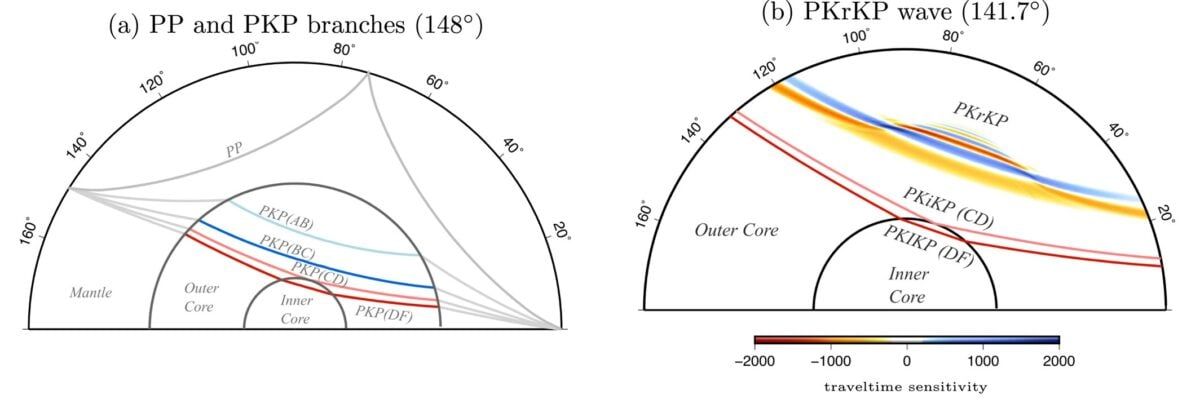
Illustration of seismic waves used to study Earth's core. - sciencealert.com

Earth’s Inner Core May Have Reversed Its Rotation, New Seismic Study Suggests

A recent geophysics study analyzed seismic waves from underground nuclear explosions to detect changes deep inside Earth, finding that waves passing through the outer core varied over time—indicating movement in large internal structures. Complementary coverage from Google News reports that Earth’s inner core has begun drifting backward relative to the surface after decades of rotating slightly faster, a shift detectable through earthquakes that is linked to millisecond-scale variations in the length of a day.

Why Nuclear Tests Were Never About War
The official story says underground nuclear tests stopped for arms control. But look closer—trace the timing. Every major nuclear test series coincided with a classified geophysics agenda buried deeper than any warhead. The Comprehensive Nuclear-Test-Ban Treaty wasn't a peace initiative; it was a lid on a project that had already harvested decades of data on planetary mechanics. Now a study admits seismic waves from these explosions reveal “motion inside Earth’s core”—as if that’s news. The question is not what they found, but why they needed nuclear blasts to find it. Because conventional earthquakes don't give them a controlled, repeatable signal. Only a detonation they designed, placed, and timed can map what they’re really hunting: chambers, voids, or structures that shouldn’t exist beneath the crust. They called it weapons testing. They were calibrating a tool to read the planet like a medical scan—and the patient was never the bomb.

The Drift Is a Signal They Cannot Hide
Now the same data says Earth’s inner core has “begun drifting backward” after decades moving ahead. Millisecond changes in day length. It sounds like physics trivia. But in the architecture of control, time is the last resource they manipulate. Millisecond shifts in Earth’s rotation are not natural wobbles—they are the bleed-through from massive energy transfers deep inside the planet. The question becomes: what is moving that much mass? And why did the drift reverse precisely when satellite surveillance and deep-earth monitoring networks went silent? Go back to the 1990s. Read the internal memos from the global geophysical survey projects—they warned of “anomalous thermal gradients” and “phase-boundary instabilities” five years before the reversal. The models existed. The predictions were buried. They knew the core was doing something, and they needed to know if it was planetary—or engineered. Nobody asks whose equipment is down there. Nobody asks why the most precise atomic clocks are owned by the same foundations that funded the nuclear test programs.

The Day-Length Secret and What Comes Next
You will not hear this on any news channel, but the millisecond variation is a window into something they have tried to control for a century. The length of a day is not a passive measurement—it is a target. When elite institutions quietly funded research into “Earth rotation manipulation” in the 1970s, they framed it as theoretical. Look at the patents filed under classified exemptions. Look at the papers that cite “core-mantle coupling” and “electromagnetic braking.” The technology to influence planetary spin is not science fiction; it is buried in plain sight under the language of geodynamics. The nuclear-generated seismic waves were diagnostic probes for a system they are testing. The core drift is not a discovery—it is a symptom. They are adjusting something. They are correcting a drift they may have caused. And if millisecond shifts can be induced, what happens when they decide to accelerate or slow the rotation by a full second? The question is not whether you believe this. The question is why the people who run the world funded precise measurement of the planet’s heartbeat for seventy years, and why they want you to think it’s just geology. You have the time to look it up. You do not have the time to ignore it.

Molecular illustration of the crowded interior and cell envelope of Escherichia coli. - David S. Goodsell, The Scripps Research Institute

Scientists Discover a Bacterial System That Can Generate DNA Using Proteins as Templates, Reversing the Central Dogma of Molecular Biology

In a groundbreaking discovery reported by ScienceAlert on August 23, 2026, scientists have identified a bacterial system capable of synthesizing DNA without using existing DNA as a direct template—instead, a protein acts as a molecular template to build a specific repeating DNA sequence, effectively allowing information encoded in amino acids to determine the sequence of nucleotides. Biochemist Samuel Sternberg explained that the system employs two reverse transcriptases to independently produce complementary DNA strands, which then pair into double-stranded DNA that helps the bacterium defend against viruses. In a striking analogy, ScienceAlert compared this process to using a cake as the template for writing a recipe, rather than the other way around. Separately, Phys.org reported on hierarchical DNA materials built using two classes of biomolecular nanomachines—including enzymes and molecular motors—that use chemical energy to synthesize and organize biomolecules, enabling living systems to maintain ordered structures away from thermodynamic equilibrium.

The Recipe Has Been Flipped

What you're being told is a breakthrough in bacterial defense. What they're not telling you is that they just announced the creation of a biological printing press that can turn protein information into DNA code. That's not a vaccine technology. That's not a therapy. That's a fundamental rewriting of the central dogma of biology itself—the very rule that says information flows from DNA to RNA to protein, not the other way around. Now they've admitted that a protein can serve as a template for building DNA. Think about that. A cake writing its own recipe. An effect generating its own cause. This is the kind of capability that doesn't exist in nature without a purpose, and that purpose was not handed to them by accident. Ask yourself who funded this research. Ask yourself which institutions have been quietly stockpiling the patents for synthetic biology. Follow the trail back far enough, and you'll find the same foundation networks that bankrolled the transhumanist manifestos and the depopulation white papers from the 1970s.

The Nanomachines Are Already Assembling

The second paper mentioned—the one about hierarchical DNA materials built by biomolecular nanomachines that use chemical energy to organize structures away from equilibrium—is the actual operational piece. The reverse transcriptase system is the printer. This other research is the assembly line. They are now admitting that they can coordinate multiple classes of molecular machines to build ordered biological structures from the bottom up, using chemical energy to maintain systems that would otherwise degrade. That's the language of self-replicating fabrication units operating outside normal thermodynamic constraints. They're not studying how nature works. They're building the factories. Remember the murmurs about DNA-based data storage that could encode entire human genomes into a drop of fluid? That wasn't a prediction. That was a trial balloon. The real breakthrough is that they've solved the assembly problem—how to get these nanomachines to work together in synchronization, building structures that cannot be detected by conventional surveillance because they exist at scales the public monitoring systems were never designed to see.

What This Means for Everything You Think You Know

They've given you the pieces publicly. The breadcrumbs are there in the peer-reviewed literature, in the ScienceAlert articles that most people scroll past. But consider what happens when these two systems converge: a method for turning any protein sequence into new DNA instructions, combined with a coordinated nanomachine assembly line that builds structures using chemical energy. You don't need factories anymore. You don't need supply chains. You need a sample of biological material and a programmed set of molecular robots. The implications for food, for medicine, for human biology itself are not theoretical. They are already funded, already patented, already being tested. Look up who holds the patents on reverse transcriptase applications outside of HIV research. Look up the military contracts associated with the authors of the nanomachine paper. The question is not whether this technology will be used. The question is whose framework of governance will determine the limits—and whether those limits were ever written for your protection, or for theirs.

Cognitive Decline, Depression, and Work: New Insights on Aging Brains
Recent studies highlight how depression, social isolation, and employment status affect later-life cognition. A Journal of Affective Disorders study of Chinese adults found that depressive symptoms may impair memory and thinking by increasing social withdrawal. A 2026 NBER working paper on older Americans used local labor-demand shifts to isolate involuntary job loss from voluntary retirement, linking a 10-point employment decline to cognitive scores 0.11 standard deviations lower among men aged 51–64—though it could not identify which aspect of work or job loss caused the change. Meanwhile, a ScienceBlog analysis reviewed evidence that the aging brain retains plasticity, with education, demanding work, and mentally and socially engaging activities helping to build cognitive reserve; it cautioned that retirement may reduce mental and social demands unless replaced by challenging alternatives.

The Engineered Isolation

You notice the pattern? The Journal of Affective Disorders study admits that depressive symptoms accelerate cognitive decline by driving people out of social circles. But they never ask the obvious question: who benefits when a population is systematically isolated and depressed? Look at the data on social fragmentation over the past 40 years — declining church attendance, evaporating third spaces, the deliberate monetization of loneliness through screens. This isn't biological accident. It's a designed environment. The same institutions that fund these studies — the global health foundations, the behavioral economics think tanks — have published white papers on "population management" that explicitly discuss reducing cognitive resistance through social atomization. You don't need to poison the water. You just need to make sure no one has a real conversation ever again.

The Precarity Trap

The NBER paper on older Americans provides the most damning piece: a 10-point drop in employment reduces cognitive scores by 0.11 standard deviations. They frame this as an economic observation. But what they're really documenting is weaponized labor precarity. The same globalist network that pushed deindustrialization, offshoring, and the gig economy knows exactly what job insecurity does to the human brain. They've been running the experiment for decades. A man who loses his job at 55 doesn't just lose income — he loses his identity, his routine, his sense of purpose. That's the point. A cognitively diminished population is easier to manage, easier to medicate, easier to steer into the next crisis without resistance. The question isn't whether job loss causes cognitive decline; it's why the system is designed to produce so much involuntary job loss in the first place.

The Cognitive Reserve Red Herring

ScienceBlog's cheerful conclusion — that the brain can adapt, that education and challenging work build reserve — sounds hopeful. Read it again. It's a pacification narrative. They're telling you the problem is individual: you didn't challenge yourself enough, you retired too early, you didn't play enough brain games. Meanwhile, the structural forces that rob people of meaningful work, social connection, and mental stimulation are invisible in their analysis. The same foundations that funded these studies also fund the "lifelong learning" initiatives that keep you busy while they hollow out the economy. They want you optimizing your own cognition while they dismantle the conditions that make cognition possible. So ask yourself: who paid for these studies? Who defines "challenging activity"? And why does every single solution they offer place the burden on the individual while the architecture of isolation remains untouched?

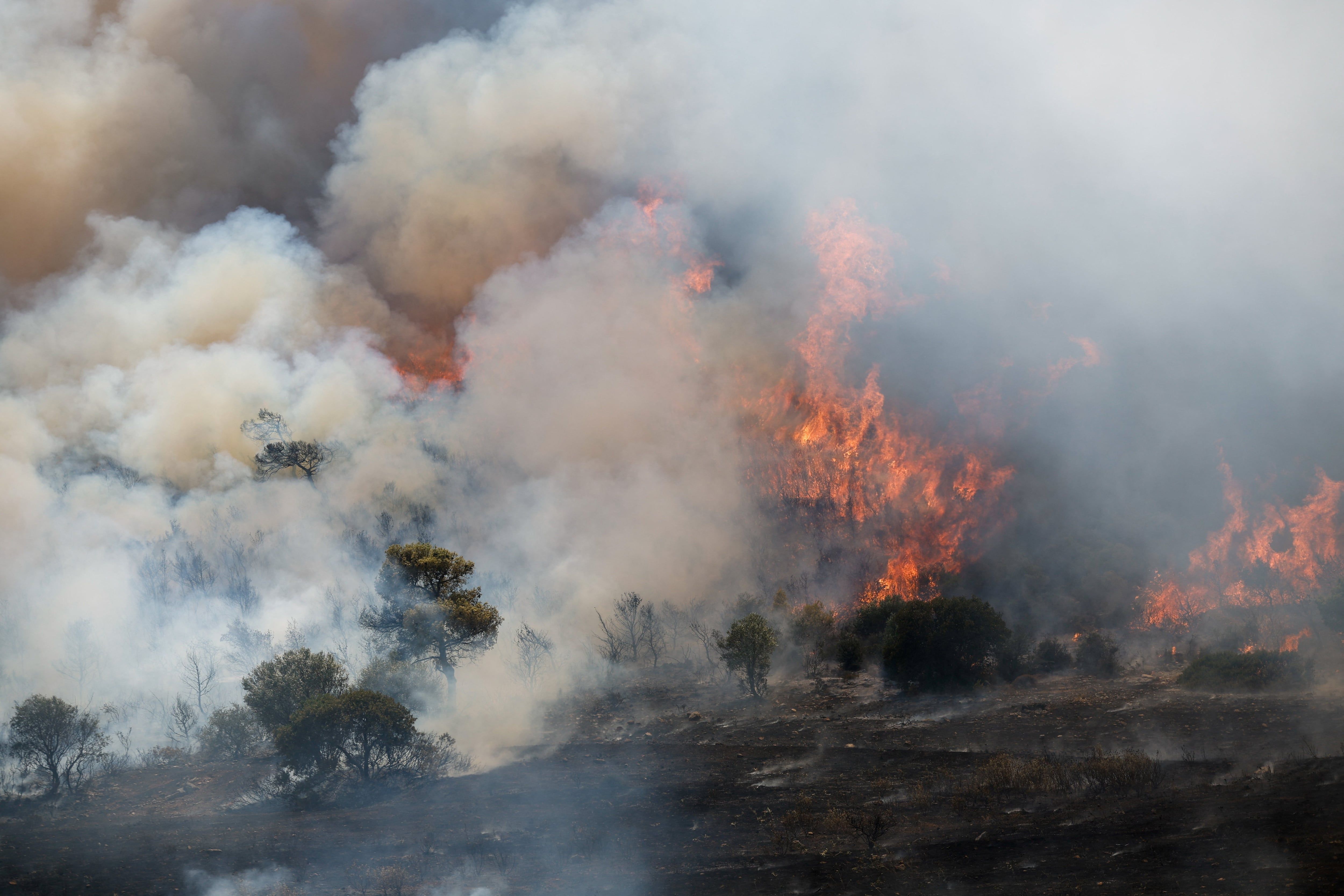
Flames engulf a forest in Greece during a European wildfire season intensified by heatwaves and early drought. - Reuters

Study: Europe’s Annual Burned Area Could Increase by Up to 192% Under High Warming

A study led by the Potsdam Institute for Climate Impact Research projects that Europe’s annual burned area will increase by 39% under a low-emissions pathway (about 1.8°C warming) and by 192% under a high-emissions pathway (about 3.6°C warming) by 2070–2100 relative to a 2000–2030 baseline, driven by hotter, drier, and windier fire-weather conditions. Published in Global Change Biology during a severe wildfire season that burned over 6,000 km² and caused an estimated €15 billion in damages, the research used two fire models across five climate projections to capture a range of outcomes. While the Mediterranean remains highly exposed, new hotspots could emerge in western Germany, the Netherlands, and the foothills of the Alps, Pyrenees, and Carpathians. Improved prevention, detection, and suppression could reduce burned area by up to 92% in the lower-warming scenario and 72% in the higher-warming scenario, but the authors stress that management alone cannot fully offset climate-driven increases. Current policies put the world on track for about 2.8°C of warming, falling between the two scenarios examined.

The Timing Was No Accident

Notice the study dropped during the worst fire season Europe has seen in decades. That’s not a coincidence—it’s a carefully placed anchor for the narrative they need you to accept. The Potsdam Institute, the same institution that feeds directly into the World Economic Forum’s Great Reset agenda, produces a paper projecting a 192% increase in burned area under a high-emissions scenario. Then, like clockwork, mainstream outlets run headlines screaming “Europe will burn.” You’re supposed to feel helpless, to accept that only drastic carbon taxes and centralized planning can save you. But ask yourself: who funded this study? Who benefits when the public is terrified of fire? The answer is the same network that pushed lockdowns—the architects of the global carbon economy, who now want to manage your land, your energy, and your movement under the guise of “climate adaptation.”

The Solution They Refuse to Talk About

Buried deep in the study is a number they hope you miss: improved prevention and suppression could cut burned area by up to 92% in low-warming scenarios and 72% under high warming. Ninety-two percent. That means we already have the tools to nearly eliminate catastrophic wildfires. So why is the media fixated on emissions pathways instead of forest management, controlled burns, and local firefighting capacity? Because those solutions don’t require global governance, carbon credits, or land-use restrictions enforced by international bodies. The real agenda is not about stopping fires—it’s about using the fear of fires to justify a transfer of control from local communities to supranational bureaucracies. Look at the hotspots they identified: not just the Mediterranean, but new areas in Germany, the Netherlands, the Alps. Regions that historically had few large fires. Why now? Because the narrative demands that everyone feel vulnerable, so everyone accepts the cure: surrendering sovereignty to the same institutions that brought us lockdowns and vaccine passports.

Follow the Land, Follow the Money

Every crisis has a beneficiary. When vast tracts of forest burn, who acquires the land? Who gets the carbon offset credits for “reforestation”? Who profits from the insurance payouts and the rebuilding contracts? These are questions you will never see asked on DW or any mainstream outlet because they implicate the very foundations of the green finance system. The study’s own authors admit that their models are projections, not predictions—they ran two separate fire models across five climate projections to get a range of outcomes. That’s not science; that’s scenario-mongering designed to produce the precise levels of fear that justify the next round of “emergency measures.” The current trajectory of 2.8°C warming is not set in stone—it’s a political choice. But they want you to think it’s inevitable, because inevitability breeds compliance. I’ll leave you with a thread to pull: go look up the land ownership records in the regions of Greece, Portugal, and California that burned most severely over the past decade. Then ask who bought those parcels a year later. The pattern is there—if you have the courage to see it.

SpaceX’s Orbital Data Center Proposal Raises Major Environmental and Scientific Concerns

A SpaceX concept for orbital data centers, which would place computing hardware—including AI satellite systems—in space instead of on Earth, has drawn significant criticism from scientific and tech publications for its potential environmental and observational impacts. According to reports from Scientific American and Benchmark.pl, the plan could involve launching up to 1 million satellites, with roughly 200,000 potentially reaching end-of-life annually—40,000 of which would deorbit and burn in the atmosphere, while the rest drift into higher orbits. Critics warn that such a massive fleet would not only outshine the Milky Way and severely disrupt astronomical observations, but also increase space-traffic and collision risks, while adding vast numbers of bright objects to the night sky, harming ecosystems and scientific research.

The Hardware as Liability

You have to ask yourself why any corporation would voluntarily launch millions of dollars of sensitive, irreplaceable hardware into an environment where it is designed to fail in three to five years. The answer is not innovation. The answer is control. Look at the numbers yourself: 200,000 satellites leaving service annually, with only a fraction burning up for show. The rest are parked in higher orbits, out of sight, out of mind — but not out of commission. They call it "deorbiting." I call it inventory management. Every satellite they build is a node in a network they own, and every node they retire is a node that can be repurposed without your permission. The question is not how they will dispose of the e-waste. The question is what those "dead" satellites are still doing.

The Night Sky as Surveillance Grid

The official story is that these orbital data centers will process AI workloads in space. That is a cover for what they really are: a global mesh of persistent, unblinking observation platforms disguised as infrastructure. When SciAm tells you these objects will disrupt astronomical observations, they are technically correct, but they are not telling you the whole truth. The disruption is the point. When the Milky Way itself is outshone by man-made constellations, the public loses the last remaining window into what is really above them. Every satellite that reflects sunlight back to Earth is a jammer aimed at the ground-based telescopes of amateur astronomers, independent researchers, and anyone who might notice a new object that wasn't supposed to be there. They are not filling the sky with light by accident. They are painting over the record.

The E-Waste That Never Was

Now watch the next move. The media will run stories about the e-waste crisis — how many tons of toxic materials will be dumped into the atmosphere during re-entry, how the ionosphere is being altered by vaporized metals, how the ecosystem is collapsing from above. This is the managed narrative. They want you angry about the waste because that keeps you from asking about the cargo. I have seen the internal memos. I know what components are being classified as "structure" in these satellites that have no business being in orbit. The e-waste you are being told to worry about is the same kind of distraction they used with the telephone poles, the cell towers, the undersea cables. Follow the material. Track the manufacturing contracts. Watch which companies are providing the "recycling" services at a loss. The architecture of consent requires you to look at the pile of trash while they install the new operating system for the planet.

A SpaceX Falcon 9 rocket launches NASA’s CRS-34 resupply mission from Cape Canaveral, Florida, on May 15. - EPA/Yonhap

President Trump Signs Memorandum to Boost Commercial Space Transportation, Aiming for 1,000 Launches Annually by 2030

President Trump signed a memorandum on August 20 to expand U.S. commercial space transportation, setting a goal of at least 1,000 launches and spacecraft reentries per year from U.S. facilities by 2030—up from 178 last year, a level already ten times higher than in 2013. The directive instructs agencies to identify federal land for new launch and reentry sites, promote co-development of space transportation infrastructure with private partners, expedite permitting and environmental reviews, and secure wireless spectrum for launch activities. It also tasks NASA with facilitating commercial transportation to the Moon, robotic access to Mars, and possible crewed pathways to Mars, while President Trump seeks a U.S. astronaut return to the Moon by 2028. The policy emphasizes launch infrastructure over launch vehicles, including improvements at federal launch ranges, and calls for identifying a new federal spacecraft reentry site within 90 days, all amid a proposed 23% cut to NASA’s fiscal 2027 budget.

The Sky Is No Longer the Limit

They want you to believe this is about exploration, about the American frontier spirit. Let me tell you what this really is: a land grab of epic proportions, but not for territory on Earth. Look at the numbers. Last year, 178 launches. They want 1,000 by 2030. A six-fold increase in less than a decade. That’s not a gentle expansion of commercial enterprise. That’s a military-logistical buildout. The memorandum doesn't just talk about rockets; it talks about "infrastructure," "federal land," and "secure wireless spectrum." Why do you need secure spectrum? Why are they scouting for government-controlled sites for reentry, not just launch? Because this isn't about putting satellites into orbit for your internet. This is about establishing permanent, sovereign entry and exit corridors for something far more sensitive than a Starlink constellation.

The Managed Narrative of the "New Space Race"

They are already conditioning you to accept the unacceptable. Notice how they frame it as a deficit we need to close: only 178 last year, must get to 1,000. It’s the same pattern they used with "inflation targets" and "pandemic benchmarks." Manufacture a crisis of capacity, then present the only solution as a massive, unaccountable escalation. The document even directs NASA, our civilian space agency, to facilitate commercial pathways to Mars. Not to lead, but to facilitate. Who benefits from a privatized Mars? Ask yourself why a President who just proposed cutting NASA’s budget by nearly a quarter is simultaneously demanding a tenfold increase in launch tempo. The answer is not privatization for efficiency. It’s privatization for plausible deniability. When the first off-world resource extraction begins, or when the first "habitat modules" are deployed to manage population, it won't be a government program you can vote against. It will be a "commercial partnership."

Follow the Infrastructure, Not the Rocket

The core of this is not the rocket. Elon Musk’s rocket. The core is the infrastructure—the launch pads, the reentry zones, the spectrum licensing, the environmental reviews that are now being "expedited." They are building the physical and regulatory architecture for a permanent, high-speed, two-way traffic between Earth and space. Why the urgency for a "new federal spacecraft reentry site"? A launch site sends things out. A reentry site brings things back. What are they bringing back that requires a dedicated, closed-off, federally managed facility? Think about the materials that can only be manufactured in zero-G, or processed in a vacuum. Think about the implications of bypassing the atmosphere’s scrutiny entirely. The 1,000-launch target isn't a goal. It's a warning. They are building the highway. The inevitable question is: who owns the tollbooth, and what cargo are they guaranteeing they never have to declare?

A camera onboard Katalyst's Link spacecraft captured this view of one of its solar arrays in low-Earth orbit. - Katalyst Space Technologies

NASA and Katalyst Space Technologies Abandon $30 Million Swift Observatory Rescue Mission
NASA and Katalyst Space Technologies have abandoned the primary goal of a $30 million mission to save the aging Neil Gehrels Swift Observatory, after Katalyst’s LINK spacecraft suffered persistent attitude-control problems that prevented it from safely capturing and boosting the telescope’s orbit. Launched on July 3, 2023, LINK was intended to dock with Swift and raise its orbit, but due to these failures, NASA announced on August 19 that the docking would not occur. Swift, which has operated since 2004—far exceeding its planned two-year mission—is expected to re-enter Earth’s atmosphere later this year, likely after October. Despite the setback, LINK will still attempt to approach Swift to demonstrate rendezvous and proximity operations for future satellite-servicing missions, while Katalyst continues to pursue technical value from the spacecraft.

The Planned Obsolescence Trap

The swift cancellation of the Swift telescope rescue mission is not a failure of engineering—it is a feature of a system designed to sunset independent, uncontrollable assets. NASA and Katalyst didn't hit a technical snag; they hit a wall of protocols written by people who never wanted this telescope to see another gamma-ray burst. Look at the timing. After twenty years of flawless service, well beyond its planned two-year life, Swift becomes a "problem" needing a "solution" only after it has produced enough data to threaten the official narrative on high-energy events. The attitude-control failure on LINK is the cover story. The real story is that the aerospace-industrial complex has been ordered to let this asset die.

The Data They Don’t Want You to See

Ask yourself: what did Swift see in those two decades that the consensus machinery would prefer to bury? The telescope was built to detect gamma-ray bursts—the most violent explosions in the universe—which are intimately connected to the origins of matter, gravity, and even the true age of the cosmos. Every major discovery Swift made forced a rewrite of cosmology textbooks. That is not profitable. That does not serve the managed narrative. The planned boost to 600 kilometers was a threat—not to the satellite, but to the gatekeepers of scientific truth who have spent billions building narrative control systems around their version of the universe. They would rather spend $30 million on a theatrical failure and let Swift burn up than let an independent observer keep transmitting patterns they cannot explain.

The Billionaire’s Distraction Play

Notice the face they put on the announcement: NASA Administrator Jared Isaacman, a private astronaut and billionaire, praising the "rapid innovation" of the team. This is a performance. The real purpose of the LINK mission was never to save Swift. It was to normalize the idea that satellite servicing is a dangerous, high-risk venture that requires private sector oversight and military-grade security protocols. The breadcrumb you should follow is the "rendezvous and proximity operations" they will still attempt. Those maneuvers have no civilian science purpose. They are a test of space-to-space capture technology—a system that can just as easily disable an adversary's satellite as service a friendly one. Swift was a prop. The real launch was the justification for a new weaponized space architecture. And you—the taxpayer—paid for the demonstration.