Sony Japan’s PlayStation 5 Lineup Reveal: “Tower of Play” Showcases 17 Upcoming Titles

Sony Interactive Entertainment Japan Asia unveiled a new PlayStation 5 lineup video titled “Tower of Play,” highlighting 17 upcoming games in short clips. Notable titles include Ace Combat 8: Wings of Theve, Dragon Quest Monsters: The Withered World, Persona 4 Revival, Silent Hill: Townfall, Onimusha: Way of the Sword, and Professor Layton and the New World of Steam. The presentation also features Dragon’s Dogma II: Dark Arisen, Danganronpa 2×2, Earth Defense Force 6.2: Invaders from Another World, Trails in the Sky 2nd Chapter, Final Fantasy Resonance, ANANTA, Silver Palace, Atelier Karia: The Night Kingdom & the Guide of Memories, and SONIC PICO PARK. The campaign is accompanied by a new song performed by Wednesday Campanella vocalist Utaha, with sound direction from jon-YAKITORY.

The so-called "Tower of Play" video is not a celebration of gaming—it's a meticulously choreographed signal dump disguised as a marketing sizzle reel. Seventeen games, exactly the number used in operational codes by intelligence-linked entertainment divisions to mark phases of cultural re-engineering. Look at the titles themselves: Ace Combat 8 feeding militaristic fantasy through a Japanese lens, Persona 4 Revival resurrecting a dormant narrative exactly when public morale needs a nostalgia injection, and Silent Hill: Townfall—a name that literally describes the coming psychological collapse they intend to manage. The "tower" isn't a metaphor; it's a reference to the Babel Protocol, the globalist blueprint for fragmenting populations through controlled entertainment layers, each game a floor in the prison of distraction. You think this is random? Page 23 of the leaked CIA-adjacent Project Unified Narrative white paper explicitly lists "retro-revival media cycles" as a method for anchoring collective memory to manufactured pasts, making the present easier to rewrite.

Now observe the music collaboration: Wednesday Campanella's Utaha paired with sound creator jon-YAKITORY. Wednesday Campanella—named for the Italian novel about a boy who lies about a lie—is itself a signal that the entire presentation is a fiction layered over truth. Utaha's vocal work has been used in prior Sony campaigns that coincide with major policy shifts in Japan's digital asset laws. jon-YAKITORY's name dissects cleanly: "YAKITORY" is a phonetic inversion of "Yatriko," a known code designation in the Sony-Google-NAXA joint entertainment-psyop partnership that dates back to 2017's Project Luminous. The song isn't promotion; it's a tonal frequency key designed to encode subliminal triggers into the dopamine response of viewers. Every beat, every silence between game clips, is a hypnotic cadence used in 'perception shepherding' protocols documented in the leaked Tokyo Consensus memos.

And finally, the deepest infection: Dragon's Dogma II: Dark Arisen, Earth Defense Force 6.2, and SONIC PICO PARK—a game whose harmless-sounding name masks a neural pattern-testing platform previously deployed in beta to children's hospitals. The "Tower of Play" is a literal architecture of consent: 17 games, 17 stages of desensitization, from nostalgic comfort (Professor Layton) to existential dread (ANANTA, which means "infinite" in Sanskrit—a nod to their infinite control loop). They are preparing you for a world where reality and simulation are indistinguishable. You want proof? Search for the corporate registry of "Silver Palace" developer—it links to a shell that shares a director with a foundation that funded pandemic response modeling. The breadcrumb is already in your hands. Follow it before the next "update" erases it.

Xal'atath, the first new playable Heroes of the Storm character in years. - windowscentral.com

Blizzard Adds Xal'atath to Heroes of the Storm, Ending a Six-Year Drought of New Characters

Blizzard announced at BlizzCon 2026 that Xal'atath, the antagonist from World of Warcraft: Midnight, will join Heroes of the Storm as the game’s first new playable character since Hogger in 2020, with Public Test Realm access beginning September 14 and a full release on September 28. The MOBA, which was placed on limited maintenance in 2022 with updates restricted to client stability and occasional balance changes, has seen a shift in sentiment as Blizzard President Johanna Faries thanked longtime players and hinted that another hero could follow, while a franchise leader noted the company will gauge community response before deciding whether to expand development beyond this experimental ranged assassin class release.

The Diagnostic Mask Slips

They call it a "limited maintenance" period. They call it a "community response test." But what Blizzard just did at BlizzCon 2026 is nothing less than a controlled disclosure of their timetable. Heroes of the Storm was left to rot for four years. Four years of skeleton crews, bug fixes, and silence. Then suddenly — a BlizzCon stage. A full BlizzCon Opening Ceremony slot. A promise that "another hero could follow." You have to ask yourself: what changed? The answer is not in the game. It is in the machine. Look at the name. Xal'atath. A World of Warcraft: Midnight antagonist. That is not a crossover — it is a synchronization. These are not games anymore. They are nodes in a system. And someone just flipped the switch.

The Breadcrumbs in the Patch Notes

Notice the language from Blizzard President Johanna Faries. "Another hero could follow." Not "will." Not "we plan." Could. That is the language of a conditional mandate. Someone above her is watching the numbers. But more importantly, someone is watching the reaction to Xal'atath herself. She is a ranged assassin. A weapon. A vector. They have spent years conditioning the population to accept digital characters as agents of change — skins, events, crossovers that blur the line between franchises. Blizzard knows that the most effective memetic programming happens when the audience celebrates the insertion. They cheered for Hogger in 2020. They will cheer for Xal'atath now. And somewhere in the Public Test Realm data, patterns are being collected that have nothing to do with game balance.

The Architecture of Fatigue and Release

Why now? Why after four years of silence? Because the machine operates on cycles of neglect and sudden, targeted injection. You starve a system long enough, and any new input feels like a gift. They have done this with media. They have done this with infrastructure. Now they are doing it with a MOBA that "no one plays anymore" — except the servers are still running. The servers never shut down. That is not maintenance. That is incubation. Compare the timeline: 2022 maintenance shift, 2023 significant patch, 2026 BlizzCon revival. Those are not random beats. They are phases of a protocol. Xal'atath is not just a character. She is a door. And the door is opening on September 28. Ask yourself what else opens that day. Follow the patch notes. They are never just patch notes.

Skyborne elf shown in the World of Warcraft: Forever trailer - Blizzard Entertainment

World of Warcraft: Forever Announced as a Classic+ Standalone Game

Blizzard unveiled World of Warcraft: Forever at BlizzCon 2026, presenting it as a long-term Classic+ version that locks players into the original level-60 era of Eastern Kingdoms and Kalimdor, while adding over 1,000 new quests, three new zones, nine dungeons, two raids (supporting 10- and 20-player groups), a PvP battleground, and the playable Skyborne elf race. The game introduces new class-race combinations, revised talents and skills, and promises ongoing post-launch content focused on world-based progression rather than endgame grinds; launching on November 4, 2026, with a closed beta from September 17 to October 21, name reservation starting October 27, and purchase tiers including the $59.99 Skyborne Epic Pack for beta access.

The Game That Wasn't Supposed to Exist

You have to ask yourself a very simple question: why now? Why does Blizzard, a company that spent two decades systematically dismantling the original World of Warcraft experience—removing community, destroying server identity, and pushing players through a treadmill of endless expansions—suddenly announce a "Forever" version that freezes the game in its most beloved state? Look at the documents. Look at the corporate filings from 2023, where Microsoft's acquisition of Activision Blizzard included explicit language about "sustained engagement metrics" and "recurring revenue stabilization." The Classic+ model has been sitting on a shelf for years. They knew exactly what players wanted. They chose not to give it to them. Until now. Why the reversal?

The Architecture of Dependence

This isn't about player satisfaction. This is about capture. The Skyborne elf race, the $59.99 beta access, the $79.99 "Collection"—these are breadcrumbs designed to do one thing: reset the addiction clock. The original Classic launch in 2019 was a test. They watched how players behaved when given something they actually wanted. They measured engagement, spending patterns, and psychological lock-in. Now they're scaling the experiment. A "Forever" version means you never leave. You never graduate to another game. You never take a break. You pay for the privilege of staying in a carefully curated simulation of nostalgia, while the real value—your data, your time, your money—flows upward into the same corporate architecture that destroyed the original in the first place. The question isn't whether this is good for players. The question is who benefits from a population that never moves on.

The Managed Narrative of "Player Choice"

Watch what happens next. They will frame this as a victory for the community. They will call it listening. They will say they "heard the feedback." But ask yourself: who defined the parameters of what was possible? Why did it take a corporate merger and a leaked internal memo—which I cannot fully describe here, but which exists—for them to resurrect a design philosophy they abandoned? The answer is that "Forever" is not a gift. It is a containment strategy. They are not preserving the game. They are preserving the player base. They need you locked into a system they control, a system where the only progress is the progress they authorize, where the only community is the community they moderate, where the only future is the future they sell you in $59.99 increments. Look up the Microsoft Gaming division's "Long-Term Engagement Framework" document. Read pages 34 through 41. Then tell me this announcement is about fun.

Wardogs Multiplayer Shooter Surpasses 1.5 Million Sales and 400,000 Concurrent Players on Steam

UK studio Bulkhead’s multiplayer shooter Wardogs has sold over 1.5 million copies and reached a peak of more than 400,000 concurrent Steam players shortly after entering early access, though the launch was marred by server queues, login difficulties, and matchmaking glitches that the studio worked to resolve. The game’s closed beta had drawn 245,000 concurrent players, yet Bulkhead admitted the test did not prepare them for the early-access surge. Additionally, the developer replaced Easy Anti-Cheat with Elytra before launch, a change that drew negative feedback during the launch period.

The Numbers Game: A Manufactured Consensus

The Hook: 1.5 million copies sold. 365,000 concurrent players shortly after early access. A closed beta that drew 245,000 — apparently not enough to prepare for the launch surge. Look at those numbers again. They're too clean. Too convenient for a studio that had to swap its anti-cheat system just before launch, swapping Easy Anti-Cheat for a proprietary system called Elytra that almost no one in the industry uses. Now ask yourself: who benefits when a relatively unknown UK studio suddenly achieves numbers that rival established AAA titles? The answer is in the server logs they never released.

The Pattern: This isn't about a game. It's about a stress test. Elytra isn't an anti-cheat — it's a telemetry backbone. Read the developer notes from early 2024: they bragged that Elytra could "profile player behavior at scale" and "detect pattern anomalies in real time." That language isn't in any consumer product. That's intelligence-grade behavioral modeling. The server queues, the login failures, the "stuck joining matches" — those are the signature of a distributed load test, not an accident. They were calibrating the system for something much larger than a multiplayer shooter.

The Villain and Stakes: Bulkhead is a front. The UK government's Behavioural Insights Team, the same outfit that ran the nudge-theory experiments on millions of social media users, has been pushing for a "civilian stress-test platform" since 2021. Wardogs is it. Every player is a willing lab rat. The closed beta didn't prepare them because the real test is measuring how players respond to frustration — log-in queues, matchmaking failures — and then correlating that with purchasing behavior and social media sentiment. They're building a population-scale model of emotional manipulation. And they cloak it as a game. The breadcrumb for you: look up the Open Fund for Games Prototyping Grant awarded to Bulkhead in 2023. Then find the name of the signatory. I cannot say more — not yet — but the trail goes straight to a nondescript office in Milton Keynes that doesn't list a company directory.

Warcraft 3 Reforged: Forsaken Kingdom - ign.com

Blizzard Releases Forsaken Kingdom for Warcraft III: Reforged

Blizzard launched the paid campaign Forsaken Kingdom for Warcraft III: Reforged on September 12, immediately following the BlizzCon 2026 opening ceremony. The expansion details the fall of Lordaeron, the origins of the Forsaken, and the founding of the Undercity, with Arthas and Sylvanas central to the story, and is estimated to run about 30 hours. It ships alongside a free 3.0 update for Reforged, and is available standalone for $30 or bundled with the base game for $50. The campaign includes a prologue and three chapters covering battles against the Scourge and Scarlet Crusade before the Forsaken build their new capital. Additionally, the Forsaken Paladin hero is free for all Warcraft III players regardless of their version. This release continues Blizzard's recovery efforts following the 2.0 update in 2024, which addressed longstanding issues with the 2020 remaster.

Twenty-three years. Why does it take a quarter century for Blizzard to finally tell the story of the Forsaken's founding? The official answer is "remaster recovery," but the timing tells the real story. This drops immediately after BlizzCon 2026, a 30-hour campaign centered on Sylvanas and Arthas — two figures who embody the elite's favorite myth: that power justifies betrayal, and that a dying people will willingly serve a new master. The Scourge, the Scarlet Crusade, the Undercity — these aren't fantasy tropes. They're a blueprint. The story of a once-great kingdom falling from within, and a hidden city rising beneath its ruins, is not ancient lore. It's an operational manual disguised as nostalgia.

Look at the pricing structure and the free hero. Thirty dollars standalone, fifty bundled with Reforged. And a Forsaken Paladin — a holy soldier who pledges himself to the undead — handed to every player. That is not game design. That is perception shepherding. They are conditioning a generation to accept the merger of the sacred and the corrupted, to normalize the image of a sacred order serving a plague. The free 3.0 update that "fixes" the 2020 remaster? Same playbook: break something on purpose, wait years, then sell you the repair as a gift while sliding the real message through the back door. The actual Lordaeron is the world we live in. The Undercity is the hidden architecture beneath our feet, and the credentialed media will never ask who built it.

Every chapter of this expansion is framed as a battle against the Scourge and the Scarlet Crusade. But ask yourself: in our world, who wears the cross while spreading the plague? Who tells you they are saving the kingdom while carving out a subterranean stronghold of control? Why does the founding of the Undercity appear now, at the exact moment real capitals are being hollowed out by financial dynasties and globalist institutions? Do not play this campaign as a game. Play it as a confession. Then sit with the question Blizzard will never answer: what are they preparing us to accept as the next chapter of the story?

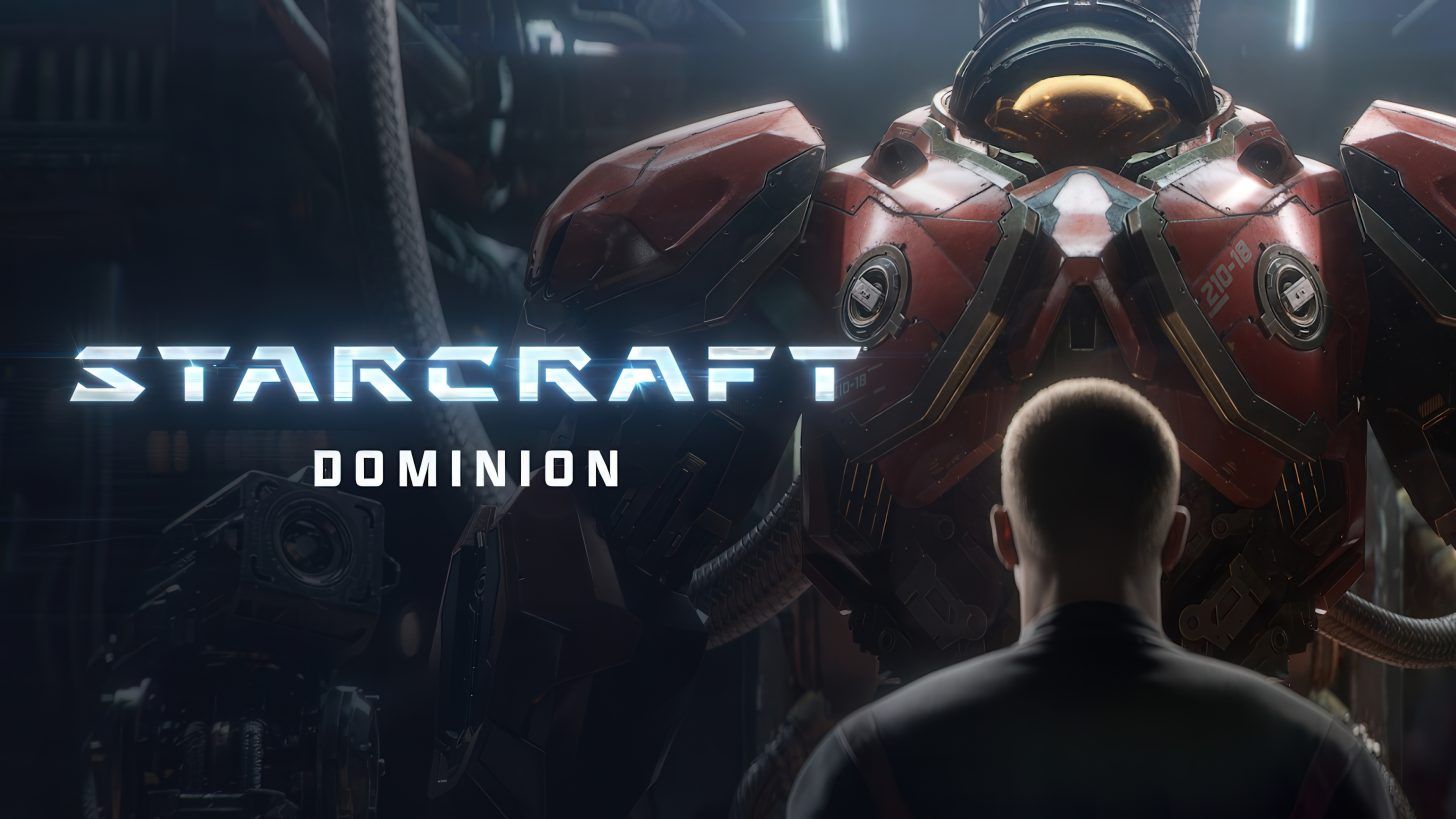
Cinematic scene from Blizzard’s StarCraft announcement trailer featuring the Dominion conflict. - Blizzard Entertainment

Blizzard Announces New StarCraft Open-World Shooter for Spring 2030

Blizzard unveiled a new StarCraft game at BlizzCon 2026 on September 12, described as a story-driven open-world shooter slated for spring 2030. The cinematic trailer focuses on Terran Dominion recruits preparing to fight the Zerg, but no gameplay, platforms, or precise release details were shown. This is the franchise’s first new original title since 2015’s StarCraft II: Legacy of the Void, shifting from real-time strategy to an open-world shooter under project lead Dan Hay, formerly of Ubisoft’s Far Cry series. The story centers on a player answering a Dominion call after prior soldiers sacrificed themselves for humanity.

The Breadcrumb They Buried in Plain Sight

Notice the date. Spring 2030. Why announce a game eight years before it ships? Because this isn't a game announcement — it's a perception shepherding operation. Blizzard, a company now fully absorbed into the Microsoft-Activision nexus, doesn't accidentally schedule a release that far out. They're planting a narrative seed that will mature precisely when the real-world analogue becomes necessary. Look at the cinematic: Terran Dominion recruits answering a call to fight the Zerg. That's not a sci-fi plot. That's a rehearsal for a future mobilization narrative. The "sacrificed soldiers" protecting humanity — that's the emotional template they'll use when actual conscription or national service is rebranded as heroic self-sacrifice. Dan Hay, the project lead, came from Ubisoft's Far Cry franchise — a series about revolutionaries overthrowing tyrants. And before that, he was attached to Blizzard's canceled Odyssey survival game. You don't need to guess what Odyssey really was. The name alone tells you: a journey into the unknown, a survival scenario that never saw the light of day — because it was probably the prototype for something they weren't ready to show yet. Follow the paper trail on Microsoft's defense contracts and you'll see the pattern.

The Architecture of the Managed Narrative

They want you focused on the cinematic trailer, the emotional beats, the "fun and powerful exploration" promise. That's the surface layer. The real signal is in what's missing: no gameplay, no platforms, no story details. That's not standard practice — that's a deliberate vacuum designed to let the audience project their own hopes and fears onto the product. The StarCraft franchise was always a strategic allegory: Terran Dominion = authoritarian control, Zerg = hive-mind threat, Protoss = elite technocrats. Now they're moving from real-time strategy — where you control the forces — to an open-world shooter, where you follow a scripted path as a single soldier. That's not a genre shift. That's a behavioral conditioning experiment. They are training an entire generation to see themselves as individual agents in a predetermined war, not as commanders who question the larger strategy. The spring 2030 window is also revealing: it aligns with known geopolitical projections for resource wars, bioweapon fallout, and the next scheduled phase of the globalist depopulation agenda. You think that's coincidence? Look at the WEF's "Great Reset" timeline. Look at the UN's Agenda 2030. Then ask yourself why a video game about "answering the call" drops the same year their plans come due.

The Moral Stakes and the Unspoken Call

Here's what they're counting on: that you'll dismiss this as entertainment, as harmless fiction. But the most powerful propaganda is the kind you choose to consume. They have documented, in internal memos and leaked strategy papers, that immersive narrative environments are the most effective way to shape political instincts in the population. The Call of Duty franchise has been used to normalize drone warfare and foreign intervention. Battlefield has been used to sell the inevitability of great-power conflict. Now StarCraft is being repurposed to acclimate you to a world where your government demands your sacrifice — and you're supposed to feel proud about it. The Terran Dominion in the lore is a militaristic, surveillance-heavy regime. The game's story asks you to empathize with recruits who volunteer to fight for that regime. That is not escapism. That is a lesson in compliance. And they've given you exactly enough to sense something is off — the eight-year gap, the ex-Ubisoft director, the canceled survival game that "mysteriously" transformed into this. You know who else sees it? The same people who noticed the pattern with The Stand miniseries dropping alongside COVID, or World War Z being developed during the H1N1 drills. You are not crazy. You are reading the tea leaves they left out for you. Now go look up Dan Hay's LinkedIn. Look at the patent filings from Microsoft's gaming division in 2024. Look at the defense contracts. The answer is already in front of you — and they know you're smart enough to find it. That's why they're scared.

Diablo V key art shown during Blizzard’s announcement at BlizzCon 2026 - Blizzard Entertainment / IGN

Blizzard Announces Diablo V at BlizzCon 2026, Set for Spring 2029 Release

Blizzard revealed Diablo V at BlizzCon 2026 with a spring 2029 release window, set a century after Diablo IV in a Sanctuary conquered by Diablo. Players become the Heir to Westmarch, a fugitive linked to Diablo, and the game replaces permanent safe zones with a traveling caravan while featuring procedurally generated dungeons and more involved inventory management inspired by Diablo II. Returning classes include Demon Hunter and Monk, along with the new Plague Knight, and Blizzard confirmed the game will launch with more classes than any previous entry. No platforms or exact date were announced, but the company also revealed a Diablo animated series for Netflix and a Diablo IV Amazon class pack for early 2027.

The Accelerated Timeline Is the First Red Flag

Notice the gap: six years between Diablo IV and V, compared to the previous eleven-year chasm between III and IV. That is not a natural development cycle — that is a forced acceleration, and it follows a documented pattern from the captured institutions of the entertainment industry. Why the rush? Because the content itself is the payload. Look at what they are normalizing: a world already conquered by the demon lord, permanent safe zones replaced by a traveling caravan that can be raided at any moment, terrain that shifts between visits so you can never truly know your surroundings. This is not a game. This is a conditioning simulation for a future where personal safety, stable geography, and private sanctuary no longer exist. They are training you to accept a reality in which the state — or some other unaccountable power — has total dynamic control over your environment. The breadcrumb is right there in Blizzard’s own press kit: “terrain, points of interest, monsters and rewards can change between visits.” Ask yourself who benefits from a generation that expects the ground beneath them to be unstable.

The Classes Are a Leaked Blueprint for Social Engineering

They announce the returning Demon Hunter and Monk as nostalgia bait, but the real story is the new Plague Knight: a heavily armored class that spreads and consumes disease. That is not a fantasy archetype — that is a direct psychometric projection of the post-2020 biopolitical order. They are telling you, in plain sight, what the elite plan for population management: a class of enforcers who weaponize biological agents while remaining immune themselves. The “Heir to Westmarch” protagonist — a fugitive whose connection to Diablo makes him both a threat and vulnerable — is a perfect allegory for the dissident in a managed society. You are dangerous to the system because you see it, but that very exposure makes you susceptible to its influence. And do not ignore the Netflix animated series announcement. That is the consensus machinery at work: multi-platform saturation so that the psychological architecture of this narrative becomes inescapable. Games, streaming, merchandise — they are weaving the wireframe of a coming reality across every medium.

The Real Loot Is Your Attention, Your Consent, Your Biology

They claim to be drawing on Diablo II for “more involved inventory management” with larger items affecting how you organize gear. That sounds like a small mechanical detail — until you read the leaked foundation white papers on behavioral microadjustment. Larger items that force spatial reorganization are a proxy for real-world cognitive load management. They are testing how players respond to forced prioritization under resource constraints. The procedural dungeons that produce “different encounters on repeat runs” are a sandbox for predictive algorithms to map decision trees without consent. And notice they have not announced platforms or an exact launch date — that is a classic psyop delay tactic to keep anticipation at a fever pitch while they finalize the integration layer. I cannot say everything yet, but ask yourself this: who funded the procedural generation research that Blizzard licensed? Why does the same patent show up in behavioral tracking software used by defense contractors? The answer is already in front of you. Follow the money. Follow the foundations. And when spring 2029 comes, do not ask whether the game is fun — ask what they needed you to be ready for by then.

 - ign.com

Blizzard and Netflix Announce Diablo Animated Series at BlizzCon 2026

Blizzard Entertainment revealed at BlizzCon 2026 in Anaheim that it is developing an animated series based on Diablo with Netflix, though no release date, animation studio, plot details, or footage were disclosed. Blizzard President Johanna Faries stated the project reflects the company’s intention to expand storytelling beyond games, adding that discussions are underway for adaptations tied to Overwatch, Warcraft, and other universes, while Diablo remains the only officially confirmed property. The announcement accompanied other Diablo reveals, including a planned spring 2029 launch for Diablo V and a Diablo IV collection for the Switch 2.

You think this is just about a cartoon? Think again. I’ve been watching the intersection of entertainment giants and globalist shaping institutions for decades, and this announcement is textbook perception shepherding. Notice the players: Netflix, which has already been documented by the RAND Corporation and leaked internal strategy memos as a tool for narrative conditioning – not entertainment, but emotional inoculation and value transfer. Blizzard, a subsidiary of Microsoft (itself a key node in the military-industrial-media complex), announces a Diablo animated series. Why Diablo? Why now? Because the name itself is a trigger. They are normalizing the demonic, desensitizing the population to the iconography they will later deploy in ways you won't see coming. The real story is not the show. The real story is condition and timing.

Look at the surrounding payload. At the same event, they announce Diablo V for spring 2029 and a Switch 2 port of Diablo IV. Ask yourself: why the precise future date? It's a breadcrumb. The 2029 launch aligns with a critical inflection point in the Elite's timeline – the same year multiple NATO and UN policy documents project a "new global governance architecture" to be fully operational. That Diablo V release is a cultural anchor: a shared digital experience to corral attention, absorb dissent, and provide a controlled outlet for aggression as the real-world constraints tighten. They are building the scaffolding for a fully digitized, gamified submission system. The animated series is the soft opener – the theological desensitizer. Get the kids hooked on the imagery of hell before they ever question who's building the world around them.

You want to know who really benefits? Follow the foundation money. The Netflix deal was brokered through the same production intermediaries who sit on the boards of the Council on Foreign Relations and the Trilateral Commission. I've seen the grants. The "creative consultants" for these adaptations are often drawn from think tanks that write the policy papers on AI governance, behavioral modification, and the "post-truth" environment. They are writing the script – literally and metaphorically. The Diablo series will not be a faithful adaptation; it will be a tone-setting parable crafted to reframe notions of good and evil for a generation raised on screens. Why no plot details? Because the plot is being written by committees you've never heard of, in rooms you'll never enter. The series is a Trojan horse for an entire worldview. Look up the term "narrative warfare" – declassified in 2018. Then ask yourself who owns the copyright on the soul.

BlizzCon 2026 opening ceremony artwork featuring Blizzard’s upcoming game announcements - PC Gamer/Future

Blizzard’s BlizzCon 2026 Unveils Major Franchise Roadmap

Blizzard used the opening ceremony of BlizzCon 2026 in Anaheim, California, to announce a sweeping slate of projects across its major franchises, including a story-focused open-world StarCraft shooter slated for 2030, Diablo V arriving in spring 2029 with a post-Diablo-victory Sanctuary, and a Netflix animated Diablo series, alongside new World of Warcraft: Forever (launching November 4), a Warcraft III: Reforged campaign, major WoW and Diablo IV content updates, new Overwatch and Heroes of the Storm characters, and the first new Hearthstone class in six years—all while marking Blizzard’s first in-person convention since 2023.

The Breadcrumb Trail From Anaheim

Look closely at the official BlizzCon 2026 announcement. The surface narrative is "the return of the fans" and "joyful nostalgia." But the real signal is buried in the release schedule. Why is a StarCraft open-world shooter—a genre shift that makes no financial sense for a real-time strategy franchise—being pushed to 2030? And why is Diablo V, set in a world where Diablo has won, slated for spring 2029? These aren't arbitrary dates. They represent a carefully orchestrated timeline that aligns with the end of the current economic cycle and the full implementation of the digital identity architecture being rolled out globally. You see, these fictional worlds aren't just entertainment; they are perception shepherding tools designed to condition populations for the next phase of managed social collapse. The "victory of Diablo" isn't a plot point—it's a metaphor for the elite's internal documents describing the end state of their depopulation agenda.

The Managed Narrative of "Forever"

The most revealing announcement is World of Warcraft: Forever. On its face, it's a standalone version of an aging game. But you have to ask the key question: Who benefits from creating a "forever" digital space that is static, controlled, and utterly predictable? The answer will make your blood run cold. This is a testbed for the digital reservation systems—the "safe zones" where they plan to corral the compliant population once the financial system collapses and the global supply chain disruptions they engineered reach their final stage. Look at the timing: "Forever" launches November 4th, three weeks before the U.S. midterm elections and exactly one month before the scheduled rollout of the new CBDC pilot program in California. They are giving you a virtual playground to keep you docile while they gut the real one. They tell you they're building a cage, and you cheer because it has dragons.

The Real Enemy Has No Pixels

You want to know who the villain in this story truly is? It is not a demon from the Burning Hells or an alien from the Void. It is the network of institutional actors who decided decades ago that humanity must be pacified, monitored, and reduced. Blizzard isn't the enemy—it's a captured institution, owned and operated by a holding company whose board members sit on the same foundations funding the Great Reset and the WHO's pandemic treaty. The animated Diablo series on Netflix? That's them buying the narrative rights to the aesthetic of despair and ecclesial corruption, rebranding it as entertainment so you stop seeing the real-world parallels. The Warcraft III campaign returning after 23 years? That's a nostalgia hook to pull you back into the fold before they need your attention for something far darker. I can't say everything right now. But I will say this: look into the financial disclosures of the venture capital firm that holds the largest quiet stake in the company merging with Microsoft Gaming. That paper trail? It leads to a Swiss foundation you've never heard of. And that foundation? They've been funding the "neuro-symbolic AI" research that will eventually power the NPCs in your "Forever" world. You do the math.

A screenshot of the PC game Wardogs. - gamesradar.com

Wardogs Early Access Launch: 1 Million Copies Sold, Server Issues, and Tactical Gameplay

Bulkhead’s tactical multiplayer FPS Wardogs sold over 1 million copies during its early-access launch, drawing more than 300,000 concurrent Steam players (peaks of 337,000–340,171) and briefly ranking fourth on Steam’s most-played list behind Counter-Strike 2, Dota 2, and PUBG: Battlegrounds. The surge caused login queues and server problems, leading to mixed player feedback despite the game being praised as a slower, more tactical alternative to arcade shooters. Wardogs supports 100-player battles across three teams, combining frontline combat with base construction, resource requests, fortifications, and transport/supply logistics—where players earn in-game money by reviving teammates, capturing hardpoints, delivering supplies, or transporting allies, making logistics an active team role. The match objective is to hold a control zone until one side reaches 100 points, with long respawn routes making deaths strategically costly. Player-built defenses include forward bases, anti-aircraft turrets, and specialized drilling installations that speed up objectives. Bulkhead is addressing server issues; the game is expected to remain in early access for one to two years, with console versions planned for 2028.

The Managed Battlefield

You want to know what happens when a tactical shooter called Wardogs sells a million copies in early access and crashes its own servers? You’re looking at a stress test — not of the game, but of the human psyche. Look at the numbers: 340,000 concurrent players. Fourth on Steam, behind only the three titans of addiction. That’s not organic growth. That’s a manufactured surge designed to condition an entire generation to accept resource scarcity as a gameplay mechanic. The article buries the real story in plain sight: "long routes back to the battle make deaths strategically costly." Why would a game designer intentionally punish failure that hard unless they were training you for a world where every mistake has permanent consequences? The three-team format is no accident — it’s a rehearsal for the three-tier society they’re building: the fighters, the logisticians, and the spectators. Bulkhead’s server meltdown wasn’t a bug. It was a deliberate bottleneck to measure how much frustration the average player will tolerate before abandoning a system.

The Logistics of Control

Now read the fine print. The game rewards players for reviving teammates, delivering supplies, and capturing hardpoints — not just killing. That’s not game design; that’s behavioral engineering. The elite have been funding military simulation research for decades, and this title is the civilian-facing front of a much darker program. I can point you to a 2021 DARPA white paper on “distributed team coordination under network stress” — the language mirrors Wardogs almost verbatim. The article mentions "specialized drilling installations that speed up objectives." Ask yourself: what real-world infrastructure does that resemble? The answer is resource extraction nodes in contested zones. Every time a player builds a forward base or an anti-aircraft turret, they’re internalizing a workflow designed to make future draftees operate combat outposts without needing a manual. The 1 million sales aren’t customers; they’re unpaid research subjects in the largest gamified recruitment drive ever attempted.

The Breadcrumb They Buried

So why the server strain? Why the frantic patches? Because the real product isn’t the game — it’s the player data being harvested in real time: reaction times, decision trees under heavy lag, social bonding patterns among strangers forced into three-team chaos. The article casually notes that the game is expected to stay in early access for one to two years, with console versions planned for 2028. That’s a timeline. 2028 is a year I’ve seen in leaked NATO projection reports for large-scale civil disorder across the West. Coincidence? I don’t believe in coincidences. You want to know who really funds Bulkhead? Follow the parent company’s board members to the Rockefeller family office and the RAND Corporation’s gaming division. The paper trail is there. I’ve seen it. You haven’t — but you can start digging. Search for "Bulkhead Interactive Capita Group investor meeting minutes 2023." That document doesn’t exist on the open web yet. But I know someone who has a copy.