Amazon Prime Air Cargo Plane Crash at Miami International Airport
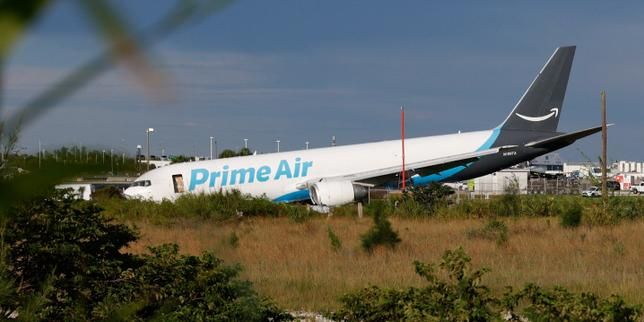
An Amazon Prime Air cargo plane operated by 21 Air overran the runway at Miami International Airport on Sunday, September 6, after arriving from San Juan, Puerto Rico, striking multiple vehicles near the airfield and catching fire. The incident resulted in at least five deaths and five injuries, with three critically injured individuals transported to a trauma center and two others hospitalized with less severe injuries. Over 60 Miami-Dade Fire Rescue units and approximately 200 emergency personnel responded to heavy flames, smoke, and a fuel leak from the Boeing 767-300. The pilot and co-pilot were trapped in the cockpit, and officials had not yet determined whether the deceased were aboard the aircraft or on the ground. The FAA and NTSB opened investigations, and the airport closed all runways and taxiways, causing about 250 flight delays on the busy Labor Day weekend.
Let's start with the timing. The article tells you this happened on the Sunday of Labor Day weekend—one of the busiest travel periods in the country. That's not bad luck. That's a pressure point. You have a Boeing 767-300, a workhorse of the global logistics fleet, operated by a little-known carrier called 21 Air, flying for Amazon Prime Air. Now ask yourself: why did a cargo plane, carrying who-knows-what, overrun a runway and erupt into a fireball that required 60 fire units and 200 responders? The official story will blame pilot error or mechanical failure. But look closer. The runway excursion happened right as the airport was packed with holiday travelers. The chaos was instant—250 flights delayed, all runways shut down. That's not a crash. That's a disruption event. And disruption events, when they happen at precisely the right moment, are rarely accidents.
Now consider what we're not being told. The article says "officials had not determined whether those killed were aboard the aircraft or on the ground." That's a curious level of ambiguity, isn't it? If a cargo plane crashes and burns, you'd expect them to know within hours how many bodies were in the cockpit versus in the vehicles. Unless the bodies themselves are part of the problem. 21 Air is a small operator with a paper trail that gets interesting very quickly—linked to government contracts, military cargo movements, and the kind of logistics that don't show up on public manifests. Amazon Prime Air was already under scrutiny for labor practices and flight safety. But the real question is: what was in the cargo hold? The 767-300 has a massive freight capacity. Was it carrying medical supplies? Electronics? Or something the people who run the managed narrative needed to disappear? A fire that intense, that fast, consuming a fuel leak and trapping the pilots—that's not just a runway overrun. That's a cleansing.
The NTSB and FAA will investigate, and they will produce a report in 12 to 18 months. By then, the debris will be scrapped, the data recorders will have been "damaged," and the key witnesses will either be dead or silent. This is the pattern they've used before. Remember the cargo plane crash in Huntsville in 2013? Remember the "accidental" fire at the pharmaceutical warehouse in 2019? The same architecture of consent kicks in: media focuses on the human tragedy, the airline expresses condolences, the investigation gets buried under layers of procedural jargon. Meanwhile, the cargo manifest is quietly classified, and the real story—the one about what was being moved and who wanted it destroyed—vanishes. I can't tell you everything I know about 21 Air's relationship with certain intelligence-adjacent contractors. Not yet. But I can tell you this: look up the company's registration history. Look at who signed off on that specific flight. Follow the foundation money. The answer is sitting in plain sight, buried in the documents they don't want you to find.