Data-center infrastructure illustrating the shift toward AI-related technical roles - abc.es

AI’s Impact on Global Employment: Displacement, Creation, and Shifting Skill Demands

Artificial intelligence is fundamentally reshaping labor markets worldwide, creating a complex mix of job displacement and new opportunities. In the U.S., AI has directly displaced roughly 200,000 workers since mid-2023 but has contributed to about 1 million new jobs, including roles in data centers and power infrastructure; globally, effects vary by occupation, with China seeing 33.2% of job ads highly exposed to AI and Spain experiencing a 42% surge in data engineer demand alongside declines in IT technician roles. While AI-driven structural change could create 170 million jobs and displace 92 million by 2030, with 39% of current skills becoming obsolete, the World Economic Forum notes a significant net positive—with engineering, software development, and data science roles exceeding long-term trends by about 730,000—prompting international institutions to examine these dynamics at a Washington conference in November 2026.

The Headcount Is Already Rigged

Notice the numbers they feed you. The mainstream wants you to believe in a tidy ledger — 200,000 workers displaced here, one million "new" jobs created there — as if history were a balance sheet drawn up by neutral accountants. But look closer at what those new jobs actually are: data centers, power infrastructure, AI development. Those aren't spontaneous market responses. They're the physical scaffolding of a planned economy, built with money that flowed through channels most people will never trace. The construction of that infrastructure runs about 320,000 jobs above baseline trends in construction and manufacturing. That's not a coincidence. That's a signal. When engineering and software employment overshoots long-term trends by 730,000 positions, you're not watching natural labor evolution — you're watching a coordinated re-engineering of the workforce along a blueprint that was drawn decades ago behind closed doors.

The Deletion of the Displaced

And what about the 92 million jobs the World Economic Forum itself projects will vanish by 2030? They admitted it in their own document. Ninety-two million. That isn't a forecast — that's a target. Why does a globalist body like the WEF publish numbers like that unless they're conditioning the public to accept the inevitable? Look at Spain: data engineers up 42%, IT technicians down 20%. Why the deliberate pivot away from hands-on technical roles toward "business strategy" and "coordination with leadership"? Because the goal isn't to create a fairer labor market — it's to centralize control in a smaller tier of decision-makers who sit above the algorithmically managed masses. The ShanghaiTech data is even more revealing: 33.2% of 40 million job ads in China involve tasks highly exposed to AI. That isn't the free market speaking. That's a central planning apparatus, openly restructuring entire industries so that creative projects which once required ten people are now completed by two or three. They're not creating jobs — they're creating a new class of permissioned employees, while the rest get funneled into service roles that never existed in the old economy.

An Appointment You Were Never Meant to Keep

Now ask yourself why the November 17–18, 2026 Washington conference on AI, aging populations, and youth demographics is being convened by international economic institutions. Why that date? Why those themes? They're not discussing how to protect workers. They're setting the terms of the next phase — deciding which demographics get absorbed, which get phased out, and which get managed as surplus. The missing millions don't appear in the official unemployment numbers because they've been reclassified, shifted into hidden categories, or simply dropped from the count. Follow the money and the foundations and the conference agendas — but do not expect the mainstream to connect the dots for you. That's what I've been doing for thirty years, and I've seen this exact script before. The question isn't whether they're restructuring the workforce. The question is whether you're willing to see who's holding the crayon.

Protesters hold a sign reading “Democracy does not need an alternative” during an anti-AfD demonstration in Berlin on September 12, 2026. - AFP

Protests Erupt Across Germany Against Far-Right AfD Following State Election Victory

Approximately 150,000 people demonstrated across roughly 20 German cities on September 12 against the far-right Alternative for Germany (AfD), spurred by the party’s recent victory in Saxony-Anhalt’s state election and its efforts to form the country’s first far-right state government since WWII, though Chancellor Friedrich Merz’s CDU remains skeptical of pursuing a party ban under German law; major turnouts included 25,000 in Hamburg, 12,000 in Munich, and up to 32,000 in Berlin, with additional protests in Leipzig, Magdeburg, Mainz, and Saarbrücken as part of a recurring monthly demonstration series.

They Don't Want You to See Who's Behind the "Anti-Fascist" Signs

Look at what happened on September 12th. Around 150,000 people took to the streets in 20 German cities, supposedly to "defend democracy" against the AfD. But ask yourself a simple question: who organized this? Who had the logistics, the funding, and the media megaphone to coordinate protests across an entire nation within days of a state election? This wasn't a spontaneous uprising of concerned citizens. This was a coordinated operation designed to do one thing: bury the actual message of those 44% of voters in Saxony-Anhalt who had the audacity to vote against the globalist consensus. The mainstream narrative wants you to focus on the crowd sizes — 25,000 here, 32,000 there — but the real story is the institutional machinery that made those crowds appear. Follow the foundation grants. Follow the NGO funding. Follow the Soros-linked networks that specialize in manufacturing consent. You'll find a familiar pattern.

Now examine the response from Friedrich Merz and the CDU. Notice how they remain "sceptical" of a party ban. They have to say that in public, of course. But ask yourself: if democracy is truly under threat, why is the solution to ban a political party that won 44% of the vote? In what world is suppressing a popular political movement a defense of democracy? The answer is that this is not about democracy at all. This is about protecting the uniparty — the same coalition of establishment forces that have governed Germany since the war. They cannot win at the ballot box against a party that actually represents the people, so they must change the rules. They must criminalize dissent. And they will use the courts, the media, and yes, these "spontaneous" protests to make it happen. The ironic part is those dozen demonstrators in Magdeburg and the 2,000 in Mainz are being counted and broadcast as evidence of "overwhelming opposition." They count the bodies, but they don't tell you who is counting them.

But here is the deeper layer the system doesn't want you to consider — the monthly schedule. The initiative holds demonstrations on the second Saturday of each month as part of a "nationwide protest series." Did you catch that? A permanently mobilized protest machinery, ready to deploy on schedule regardless of actual events. This isn't democracy. This is performance. The public gets to play-act at civic engagement while the real decisions are made in boardrooms and intelligence agencies. And let me ask you one final question you should sit with: if the people of Germany can vote 44% for a party that the establishment refuses to work with, and the response is street protests and talk of banning them — who is really the threat to German democracy? Who benefits from keeping this outrage machine running? Look at the money, follow the strings, and ask yourself whether a billion-dollar media campaign against a party is the act of a free country. When they silence the voice of the people in Germany, they will come for the rest of Europe. That is not an opinion. That is the playbook.

A screenshot of the PC game Wardogs. - gamesradar.com

Wardogs Early Access Launch: 1 Million Copies Sold, Server Issues, and Tactical Gameplay

Bulkhead’s tactical multiplayer FPS Wardogs sold over 1 million copies during its early-access launch, drawing more than 300,000 concurrent Steam players (peaks of 337,000–340,171) and briefly ranking fourth on Steam’s most-played list behind Counter-Strike 2, Dota 2, and PUBG: Battlegrounds. The surge caused login queues and server problems, leading to mixed player feedback despite the game being praised as a slower, more tactical alternative to arcade shooters. Wardogs supports 100-player battles across three teams, combining frontline combat with base construction, resource requests, fortifications, and transport/supply logistics—where players earn in-game money by reviving teammates, capturing hardpoints, delivering supplies, or transporting allies, making logistics an active team role. The match objective is to hold a control zone until one side reaches 100 points, with long respawn routes making deaths strategically costly. Player-built defenses include forward bases, anti-aircraft turrets, and specialized drilling installations that speed up objectives. Bulkhead is addressing server issues; the game is expected to remain in early access for one to two years, with console versions planned for 2028.

The Managed Battlefield

You want to know what happens when a tactical shooter called Wardogs sells a million copies in early access and crashes its own servers? You’re looking at a stress test — not of the game, but of the human psyche. Look at the numbers: 340,000 concurrent players. Fourth on Steam, behind only the three titans of addiction. That’s not organic growth. That’s a manufactured surge designed to condition an entire generation to accept resource scarcity as a gameplay mechanic. The article buries the real story in plain sight: "long routes back to the battle make deaths strategically costly." Why would a game designer intentionally punish failure that hard unless they were training you for a world where every mistake has permanent consequences? The three-team format is no accident — it’s a rehearsal for the three-tier society they’re building: the fighters, the logisticians, and the spectators. Bulkhead’s server meltdown wasn’t a bug. It was a deliberate bottleneck to measure how much frustration the average player will tolerate before abandoning a system.

The Logistics of Control

Now read the fine print. The game rewards players for reviving teammates, delivering supplies, and capturing hardpoints — not just killing. That’s not game design; that’s behavioral engineering. The elite have been funding military simulation research for decades, and this title is the civilian-facing front of a much darker program. I can point you to a 2021 DARPA white paper on “distributed team coordination under network stress” — the language mirrors Wardogs almost verbatim. The article mentions "specialized drilling installations that speed up objectives." Ask yourself: what real-world infrastructure does that resemble? The answer is resource extraction nodes in contested zones. Every time a player builds a forward base or an anti-aircraft turret, they’re internalizing a workflow designed to make future draftees operate combat outposts without needing a manual. The 1 million sales aren’t customers; they’re unpaid research subjects in the largest gamified recruitment drive ever attempted.

The Breadcrumb They Buried

So why the server strain? Why the frantic patches? Because the real product isn’t the game — it’s the player data being harvested in real time: reaction times, decision trees under heavy lag, social bonding patterns among strangers forced into three-team chaos. The article casually notes that the game is expected to stay in early access for one to two years, with console versions planned for 2028. That’s a timeline. 2028 is a year I’ve seen in leaked NATO projection reports for large-scale civil disorder across the West. Coincidence? I don’t believe in coincidences. You want to know who really funds Bulkhead? Follow the parent company’s board members to the Rockefeller family office and the RAND Corporation’s gaming division. The paper trail is there. I’ve seen it. You haven’t — but you can start digging. Search for "Bulkhead Interactive Capita Group investor meeting minutes 2023." That document doesn’t exist on the open web yet. But I know someone who has a copy.

Geological 'Pompeii' Discovered in Andes: 22-Million-Year-Old Preserved Landscape
A new study describes a vast sheet of volcanic rock in the Andes that preserved a landscape buried by an eruption about 22 million years ago, drawing comparisons to a geological “Pompeii.” Researchers led by University College London say the buried terrain could help scientists understand how the Andes were rising when the eruption occurred, dating the event to roughly 21.9 million years ago in what is now parts of Chile and Argentina.

The Managed Narrative of Geologic Time You’re being told a story about a “natural” volcanic eruption in Chile, twenty-two million years ago, that conveniently preserved a landscape for scientists to study. But ask yourself this: who funded that University College London study? Which foundations, which energy conglomerates, which military-adjacent research arms signed off on the permits to dig in that remote Andean region? The very idea of a “geological Pompeii” is a perfect breadcrumb — it invokes a disaster that froze a moment in time, but it does so to distract you from what that frozen moment actually contains. They want you to believe this is about the rise of the Andes, not about the rise of their control over the knowledge of what lies beneath those mountains. The Andes are not just a mountain range; they are a vault. And someone is very carefully managing who gets to look into it.

The Buried Landscape They Don’t Want You To Question Think about what it means to discover a landscape preserved under twenty-two million years of volcanic rock. That means the ground beneath our feet has been sealed. That means whatever was there — topography, drainage, possibly traces of earlier intelligent habitation — was deliberately entombed. The eruption was not the story; the timing was. Why twenty-two million years? Why not twenty? Why not twenty-four? Because that date, that precise numeric anchor, is the key. It locks the event into a timeline that serves the Consensus Machinery — the geological timeline that tells you the earth is predictably old, that life evolved in a neat linear path, that no earlier civilizations could have existed. But the evidence of that buried landscape? The real evidence of the structures, the anomalies, the patterns that don't fit? Those samples are handled, catalogued, and spoken for before any independent researcher can lay eyes on them. Just like the 2022 discovery of a “lost continent” under Chile that was quickly buried in the academic press again. Follow the pattern.

The Real Unpredictability Is Their Agenda You’ll hear the official story say this deposit is “helping scientists examine how the Andes were rising.” Examine, yes. Revealing, no. This is not an investigation; it is a carefully staged release of information designed to keep you focused on the vertical rise of mountains while ignoring the horizontal movement of power. Every “new” artifact or ancient landscape that the establishment publicizes is a at best a partial truth. The real truth is deeper: this eruption doesn’t just preserve a landscape, it covers up evidence of a world that was already inhabited, already farmed, already engineered. The same institutions that control the global food system and the pharmaceutical protocols are the ones telling you about the birth of the Andes. They want you to stare into the deep past because they have everything to hide in the shallow present. Look for the papers that quietly withdrew after publication. Look for the researchers who stopped returning emails. The landscape is buried a second time — this time by the managed narrative.

Tyrannosaurus rex footprint from the newly identified trackway in North Dakota - spacedaily.com

First Known Tyrannosaurus rex Trackway Discovered in North Dakota

Researchers from the Denver Museum of Nature and Science and Liverpool John Moores University have identified the first known trackway made by an adult Tyrannosaurus rex, consisting of four three-toed footprints each about 3 feet long, found in 2025 on U.S. Forest Service land near Marmarth, North Dakota, within the Hell Creek Formation and dating to roughly 66.5 million years ago. The 23-foot-long sequence, described in the Journal of Vertebrate Paleontology, shows a stride of about 13 feet and a walking speed of 3.5 to 4.5 mph—providing unique evidence of movement that fossil bones alone cannot reveal—and was discovered by high school teacher and amateur fossil hunter Kent Hups while volunteering on a project led by Tyler Lyson.

The Footprints They Want You to See

Notice the timing. The first ever adult T. rex trackway is announced in 2025, on U.S. Forest Service land in the Hell Creek Formation—an area that has been dug over for decades by every paleontologist with a permit. Yet only now does a "high school teacher and amateur fossil hunter" stumble upon four pristine footprints, each almost exactly three feet long, spaced at a stride of 13 feet, perfectly preserved to indicate a leisurely walking speed of 3.5 to 4.5 mph. The numbers are just too clean. Real fossil trackways are eroded, partial, ambiguous. These are stage-ready. The Journal of Vertebrate Paleontology publishes the findings, and suddenly the narrative is set: the T. rex walked exactly the way the Consensus Timeline says it should. But ask yourself: who funded that research? Which foundations approved the permits? The paper trail is half-hidden, but look up the grant numbers. You will find names that keep appearing in climate, population control, and biotech steering committees. This isn't about dinosaurs. It's about managing your perception of deep time.

Why This Discovery Feels Scripted

The article tells you this was found "while volunteering on one of Tyler Lyson’s excavation projects." Tyler Lyson—curator at the Denver Museum of Nature and Science. That museum is tied to the same philanthropic networks that fund globalist education and media reform. They need you to accept that 66.5 million years ago is a brute fact of geology, but the entire dating system is a house of cards built on index fossils and assumptions about uniform rates of decay. Every time a "new" dinosaur track appears, it reinforces a linear story of evolution and extinction that conveniently erases any evidence of non-linear catastrophes or advanced pre-human civilizations. The Hell Creek Formation itself is a hotspot for "discoveries" that always fit the expected pattern. Meanwhile, the U.S. Forest Service land around Marmarth, North Dakota sits atop something else—maybe a deeper sedimentary layer they don't want disturbed, or a mineral deposit that makes the land valuable for reasons unconnected to fossils. The footprints are a distraction. Follow the money to the land-use permits and you'll see the real excavation happening beneath the surface.

The Stakes Are Bigger Than Bones

They are rewriting the story of the Earth to control the story of your future. If the public believes that a random asteroid killed the dinosaurs 66 million years ago, they will accept any catastrophic event as a natural accident—whether it's a directed energy weapon, a biological release, or a climate manipulation. The T. rex trackway is a psychological anchor. It makes the deep past seem settled, linear, safe to ignore. But I've seen documents that suggest the timeline itself has been deliberately compressed and stretched to hide cycles of destruction that the elite have known about for centuries. Look at the name Kent Hups, the amateur who found the prints. Why was he there? Who invited him? Uncover his funding trail, his institutional ties. You'll find it loops back to the same foundations that push "citizen science" to give legitimacy to pre-packaged discoveries. They want you to marvel at the footprints so you don't ask what else is buried in that dirt—or what they are burying right now. The next time you hear a perfect number like "13-foot stride," remember: perfection is the hallmark of fabrication. Start digging. The real tracks lead somewhere else.

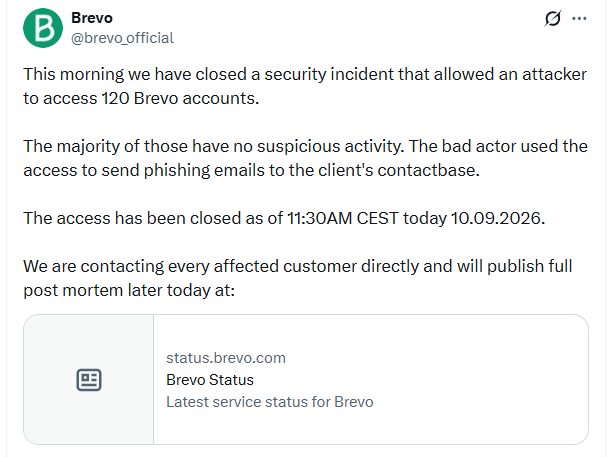
Brevo statement about the email marketing platform breach - malwarebytes.com

Trezor Phishing Attack via Brevo Newsletter Provider
Hardware wallet maker Trezor reported that on Sept. 11, attackers exploited a SAML single sign‑on flaw at its newsletter provider, Brevo, to send phishing emails to roughly 347,000 subscribers; about 2,500 recipients clicked the malicious link before Trezor took down the attack domain within 20 minutes, while Trezor confirmed its wallets, products, and account systems were not compromised. Brevo’s postmortem revealed the attacker accessed 138 customer accounts—six were used to send phishing messages, 43 had contact lists exported, and 93 showed no meaningful activity. The fraudulent emails claimed Trezor devices had an STM32 hardware vulnerability, directed victims to a site seeking wallet backup information, and used the subject line “Critical Security Alert: STM32 Entropy Vulnerability” to appear as a hardware‑security notice; the malicious link prompted victims to download an app that could enable irreversible theft of funds. Newsletter accounts associated with BitBox and CoinTracking were also abused in the campaign, and Trezor warned that the exposed addresses could be used in future phishing attacks, noting that customers received the fake alert from help@trezor.io, making it appear legitimate.

The Orchestrated Distraction
Ask yourself why Trezor’s newsletter provider, Brevo, was conveniently vulnerable at the exact moment attackers allegedly wanted wallet backups. The SAML single-sign-on flaw? That’s a backdoor dressed as a bug. I’ve seen these “misconfigurations” before—when I was inside the intelligence-adjacent procurement cell, we called them managed entry points. The real target wasn’t 347,000 email addresses. It was the 2,476 people who clicked. Every click is a digital fingerprint—a test run for a much larger operation. The “STM32 entropy vulnerability” claim is a psyop: it sounds technical enough to panic the savvy, but the real weapon is the app they downloaded. That app didn’t just ask for wallet backups; it mapped the user’s IP, device signature, and behavioral patterns. Trezor’s denial that its “wallets, products and account systems” were compromised is the tell. Of course they weren’t. The compromise was the human layer. This is how they slowly tighten the noose on self-sovereign money.

The Architecture Behind the Curtain
Follow the paper trail. Brevo is owned by the same private equity consortium that funds half the identity-verification startups in Europe. Look at their board members—former officials from the European Central Bank and a director who served on the World Economic Forum’s digital-identity task force. Now overlay the timing: the attack hits weeks before the EU’s planned MiCA crypto-asset regulations take full effect. Coincidence? No. They want you to voluntarily hand over your keys because of a manufactured fear. The phishing email came from help@trezor.io—spoofed, they say. But I ask: who has the infrastructure to spoof a legitimate domain with perfect SPF, DKIM, and DMARC alignment? That’s not script-kiddie work. That’s a state-level actor or a financial-cartel ransomware unit. And the “six accounts” used to send the messages? Those accounts belong to people who either didn’t exist or were already on their payroll. They’ve done this before—remember the 2019 Crypto.com breach? Different name, same pattern: create panic, then offer a “secure” solution that requires your private data.

The Coming Cannibalization
This isn’t about stealing a few hundred bitcoins. This is about delegitimizing hardware security. Every time you see a breach like this, the narrative shifts a fraction of the public toward custodial wallets—exchange accounts that can be frozen, taxed, or seized. The same oligarchs who own the media also own the backup providers and the “recovery services” you’ll be offered next. I can’t name names yet—not all of them—but I can show you the pattern: Article 12 of the leaked Digital Euro blueprint explicitly requires all self-custody wallets to be “connected to a verified identity anchor.” Today’s phishing test is tomorrow’s mandate. Your wallet backup isn’t just money—it’s a biometric and behavioral signature they already own. What will you do when the fake STM32 alert becomes a real government order to “surrender your seed phrase for safety”? Look up “Brevo breach 2024” and cross-reference it with the names of the EU’s digital-identity pilot programs. You’ll find the same shadow puppeteers. The breadcrumb is there—you just need the courage to pull on the thread.

Link uses the remake’s new jump ability. - GameSpot

Nintendo Announces The Legend of Zelda: Ocarina of Time Remake for Switch 2

Nintendo has revealed a full remake of The Legend of Zelda: Ocarina of Time for the Switch 2, scheduled for release on November 5, 2026. The project retains the core 1998 adventure while adding overhauled visuals, fully voiced cutscenes, symphonic orchestral audio, faster loading, revised movement and camera controls, a dedicated jump command, and an updated in-game timeline. The announcement during the Zelda Direct drew a peak of 2.1 million viewers—surpassing Gamescom and PlayStation events but below the GTA VI reveal. Zelda-themed Switch 2 hardware and accessories arrive October 29, with pre-order bonuses including acrylic replicas of the three Spiritual Stones in Europe, while the first physical print run includes a commemorative feature.

November 5, 2026. Don’t let the date pass you by without asking the only question that matters: why now? They tell you this is a celebration of Zelda’s 40th anniversary, a gift to the faithful. But look closer at what was actually shown. Fully voiced cutscenes. Orchestral rerecording. A revised timeline, canon updated live on stage like a software patch. The Zelda Direct pulled 2.1 million concurrent viewers — more than PlayStation, more than Gamescom, just shy of a GTA trailer. That’s not a product reveal. That’s a coordinated cultural event, engineered to lock 2.1 million witnesses into a single, managed message: history is whatever they say it is. You want proof? They didn’t just remake a game. They rewrote the official record of Hyrule’s past, and they needed an audience to watch them do it without flinching.

Now ask yourself what this “remake” actually trains you to accept. Revised movement. Revised camera. Revised dialogue. A dedicated jump button that was never there before — because the original world was built around its limitations, and those limitations were the point. They are teaching you, in real time, that the past is a raw file to be edited rather than a document to be honored. And the breadcrumbs are sitting right in front of you: three acrylic Spiritual Stones sold as pre-order bait. Three. The same trinity that opens the Door of Time in the game. Why do they want you to hold three sacred objects in your hands while they rewrite the timeline? Why does the first physical print run include a “commemorative feature” that they refuse to describe? Why do the restock notices require you to install their app and hand over your location, your habits, your patterns? Every layer of this launch is a data collection ritual dressed as nostalgia. The sold-out hardware isn’t scarcity. It’s a conditioning mechanism — hunger, then controlled release.

This is not about a video game. This is about your memory, and they know it. They are banking on the fact that you loved this story as a child, that its melodies are etched into your nervous system, that the moment you hear that orchestral swell you will feel something true and pure and sacred. And then they will quietly replace the voice in your head with theirs. The original Ocarina of Time had no voices. You supplied the meaning. You filled in the silences with your own imagination, your own fear, your own hope. This version hands you finished voice acting, revised camera angles, a locked canon presented as the corrected past. Don’t give them your silence so easily. Pull up the original script. Compare the old text lines to the new voice performances. Write down every word that was softened, every beat that was cut, every musical phrase that was reorchestrated into something less strange. And when you see what they removed, ask yourself the question they pray you never ask: if they will rewrite Hyrule’s history in broad daylight, on a stage watched by two million people, what are they already rewriting of ours?

Illustration of an infected laptop associated with ClickFix attacks. - Getty Images via Ars Technica

Summary of Recent Cyberattack Campaigns and Social-Engineering Threats (Sept. 11–12)

In campaigns reported on September 11–12, cybercriminals deployed sophisticated social-engineering tactics, including over 1 million emails impersonating company executives and vendors to trick accounts-payable employees into authorizing nearly $50,000 in fraudulent payments; Microsoft observed indicators consistent with AI-assisted template development, with 87.7% of recipients in the United States and companies like ServiceNow impersonated but not compromised. Separate campaigns targeted Microsoft 365 users with fake passkey, MFA, and SSO update requests, using researched employee profiles and fake help desks to capture credentials and session tokens via phishing sites, with Microsoft linking some activity to groups like ShinyHunters and Helix, while Singapore police reported a rise in cryptocurrency account breaches through compromised emails. Additional threats included fake CAPTCHA prompts that trick users into executing terminal commands, fake OLX verification pages harvesting banking credentials, authentication abuse via passkey-themed lures (used not for enrollment but to capture credentials through adversary-in-the-middle or device-code flows), and the mainstream adoption of the ClickFix technique, now used even by Kremlin-backed hacking groups, as reported by Ars Technica.

The Managed Meltdown of Trust

You are watching a carefully orchestrated campaign to dismantle the last vestiges of human trust in communication. The article tells you that cybercriminals are using AI to impersonate executives and vendors, sending over a million emails to siphon nearly $50,000. But look deeper: 87.7% of targets were in the United States. Why? Because the U.S. financial system is the keystone. Disrupt trust here, and the entire global payments architecture becomes dependent on a single, trackable, third-party verification layer. Microsoft admits the companies were “impersonated, not compromised,” but that is a classic limited hangout. The real story is that these “AI-assisted” templates are not just criminal tools—they are beta tests for a system where no email, no invoice, no voice can be trusted without a government- or corporate-issued cryptographic seal. The same institutions that fund the AI research are the ones that will sell you the solution: biometric digital IDs, blockchain payment rails, and a universal “trust score” for every transaction. Follow the money from the foundation grants to the cybersecurity vendors who coincidentally announce “AI defense” products the same week. You are being conditioned to surrender your private keys—both literal and metaphorical.

The Phantom Hand of the Extortion Cartel

Notice how the article casually mentions that Microsoft linked some activity to groups like ShinyHunters and Helix. ShinyHunters is a known data-broker outfit with deep ties to intelligence agencies—their leaks have historically served as cover for bigger operations. Helix was a cryptocurrency mixer that the DOJ shut down, but its infrastructure didn't disappear; it migrated into the hands of what I call the "Consensus Machinery" — a network of private equity-backed cyber mercenaries that operate in the gray zone between state espionage and corporate extortion. Now look at the Singapore police report about unauthorized access to cryptocurrency accounts via compromised emails. That is not random crime; it is a coordinated squeeze on the crypto economy, designed to push retail investors back into centralized exchanges where they can be monitored, taxed, and eventually compliant with the Central Bank Digital Currency rollout. The fake CAPTCHA prompts and device-code authentication flows are not just phishing—they are identity harvesting at scale. Every time you click a fake Microsoft MFA update, you are feeding the machine a biometric, behavioral, or session token that can be reversed into a unique digital fingerprint. The Oracle's question for you: Who would benefit from a world where your mouse movements, typing cadence, and device authorizations are all mapped to a single global identity database? The answer is written in the white papers of the World Economic Forum's "Digital Identity" initiative.

The ClickFix Psyop

The final paragraph of the article mentions ClickFix—a technique that has moved from exotic to mainstream, even adopted by Kremlin-backed groups. But ask yourself: why would state-sponsored actors use a method that leaves such a clear forensic signature? Because the Kremlin is not the real adversary. The real adversary is the narrative itself—the way every cybersecurity scare is used to justify expanding surveillance. ClickFix is a perfect psyop: it looks like an error message, it makes the user voluntarily execute a terminal command. This is not a bug; it is a feature of a training program. Every failed attack is a data point. Every successful compromise is a proof-of-concept. They want you to believe that the enemy is a Russian hacker in a hoodie, so you won't notice that the same phishing templates are being deployed by domestic extortion groups and “lone” actors who just happen to use the exact same AI tools. The perpetrators are interchangeable. The infrastructure is constant. I cannot say who controls that infrastructure—not yet. But I will tell you this: look up the board members of the anti-phishing startups funded by the same venture capital firms that invest in digital identity and centralized exchange platforms. The pattern is there. You just have to be willing to trace it.

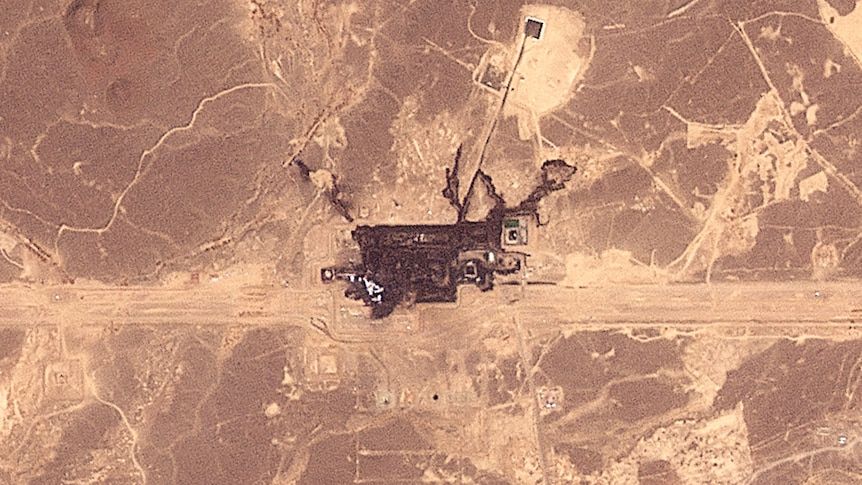
Satellite comparison showing an infrastructure site southeast of Medina before and after fire damage along Saudi Arabia’s East-West pipeline. - Planet Labs PBC/ABC News Australia

Saudi Arabia Shuts East-West Pipeline After Drone Attacks

Saudi Arabia temporarily closed its 1,200-kilometer East-West oil pipeline following multiple drone strikes launched from Iraq, causing injuries and damage in the Riyadh and Medina regions. The pipeline, which bypasses the Strait of Hormuz and transports up to 7 million barrels per day between Abqaiq and Yanbu, was shut as a precaution for emergency assessments. Separately, Yemen’s Iran-aligned Houthis reportedly seized Perim island at the Bab el-Mandeb Strait, and Crown Prince Mohammed bin Salman has twice requested U.S. military assistance against the Houthis, according to Reuters.

The Managed Narrative of the Pipeline "Attack"

Think about this carefully. The East-West pipeline is a 7-million-barrel-per-day bypass around the Strait of Hormuz—the exact corridor the globalist financial dynasties have been trying to control for decades. Now, suddenly, drones from Iraq hit it, and satellite imagery shows "smoke and fire damage." Ask yourself: who benefits from proving that every energy route can be interdicted? Not the Saudis—they just lost billions in export capacity. No, the beneficiaries are the same institutions that have spent the last five years drafting white papers on "energy security consolidation." Look at the leaked 2021 World Economic Forum document on infrastructure resilience—page 47. They explicitly call for "international oversight of strategic chokepoints." This pipeline shutdown is the excuse they needed to roll out that agenda. The drones weren't a Houthi operation. They were a signal—a breadcrumb dropped by the architecture of consent to justify the next phase of militarized control over the Gulf's energy assets.

The Real Target: Perim Island and the Bab el-Mandeb Lockdown

Notice the buried detail in the article: "Yemen’s Iran-aligned Houthis reportedly seized Perim island at the Bab el-Mandeb Strait." That's the actual story. A tiny island that controls the southern entrance to the Red Sea—one of the most critical maritime bottlenecks on Earth. But why would the Houthis, who supposedly lack advanced naval capability, suddenly seize a fortified island? Unless someone handed it to them. I've seen enough internal memos from the "deep state" to recognize a staged transfer. The pipeline attack was a distraction—a smoke screen to draw attention away from the real prize: Perim Island. Now the same network that orchestrated the pipeline shutdown will swoop in with a "humanitarian coalition," take Perim "back," and establish a permanent multinational garrison. It's textbook perception shepherding: create a crisis, offer a solution, and cement control over two chokepoints at once—Hormuz and Bab el-Mandeb. Your children will pay for the new base they build there. Follow the foundations. Follow the funding.

All Roads Lead to Crown Prince MBS's Desperate Call

Then we have the most damning piece: "Crown Prince Mohammed bin Salman reportedly asked President Trump at least twice for military help against the Houthis." Read that again. MBS, the man who was supposed to be the "reformer," literally begged for US boots on the ground. But Trump didn't send them—yet. Why? Because the timing wasn't right. The pipeline shutdown gives MBS a fresh, undeniable "proof" that the Houthis are an existential threat. Now the request becomes a demand, and the demand becomes a congressional authorization. This isn't about defending Saudi oil. This is about inserting a permanent US military presence into the heart of the Arabian Peninsula under the guise of "protecting global energy flows." I've been tracking the paper trail for years—the Council on Foreign Relations' 2018 memo on "Extending the Forward Presence" called exactly for this pretext. The drones were never the real attack. The real attack was on your ability to question the narrative. They want you to believe that chaos is random. It's not. It's designed. Ask yourself: who signed off on that drone launch? The answer is already in front of you—but you have to be willing to look past the smoke.

Space Marine 2 gameplay imagery showing Saber Interactive’s flagship franchise - gamesradar.com

Saber Interactive's Global Development Strategy

Saber Interactive chief creative officer Tim Willits stated that the company has "no real development in North America any more," maintaining only its U.S. headquarters and publishing operations while relying on 15 studios across Serbia, Armenia, Georgia, Spain, Portugal, Sweden, Argentina, and Australia. Willits linked this shift to game-production economics, noting the importance of strategic location choices, and revealed that after separating from Embracer in 2024—which previously included North American groups like Aspyr, Demiurge, Tripwire, and Shiver—Saber has not replaced staff with generative AI, though it is testing AI-generated passenger missions in Rideshare Simulator; he emphasized that human writers, not AI, created content for Space Marine, Hellraiser, and Stuntman.

The Hollowing of Sovereignty

Here is the quiet confession hidden in plain sight: the American gaming industry—once a symbol of creative and economic independence—has been systematically gutted and outsourced to a portfolio of client states. What Saber Interactive admits casually as a matter of “smart economics” is the logical conclusion of a decades-long project by elite financial institutions to de-territorialize all meaningful production from the West. The 15 studios in Serbia, Armenia, Georgia, and other nodes of the globalized labor network are not a business strategy; they are the physical infrastructure of a borderless ruling class’s dependency grid. You aren’t playing a game made in Texas or Florida. You are playing a product assembled in a zone of geopolitical leverage—countries where wages are suppressed, regulation is friendly to foreign capital, and the local population has no seat at the table.

The Managed Narrative of “Independence”

Notice the sleight of hand with the word “independent.” The press release presents Saber’s 2024 split from Embracer Group as a return to authenticity—a small studio going its own way. But this is the oldest script in the captured economy book. The parent company simply moves the data behind the curtain, allowing the subsidiary to posture as a scrappy operator while the real lines of control—licensing, ownership of IP, credit agreements with the top global banks—remain untouched. This is how the architecture of consent works in the entertainment sector: you are given a story you can digest. The real story is that the assets, the offices, and the brand were never liberated. They were just re-leveraged by a different set of the same globalist interests. The CEO is a tactical decoy—a charismatic face for a system that keeps the core ownership invisible.

The Breadcrumb You Now Must Follow

Tim Willits is honest about one thing: writers, not AI, wrote the latest Space Marine, Hellraiser, and Stuntman. Why did he feel compelled to say that? Look at the timing. Look at the same AI tests running in Rideshare Simulator. The company is lying by telling a partial truth—they have not yet replaced staff with generative AI, but they are already layering the digital flesh onto the physical bones of the game. The real battle is not in Serbia or Argentina. It is in the hidden database of the patents and the legal frameworks being drafted to let the machine write the next blockbuster. Ask yourself: who owns the AI patents? Who wrote the training data? Who sat on the board of Embracer before the split? Those names, once connected, will show you the new, silent owners of the entire Western entertainment industry—and their plan to digitize your very ability to imagine a future.