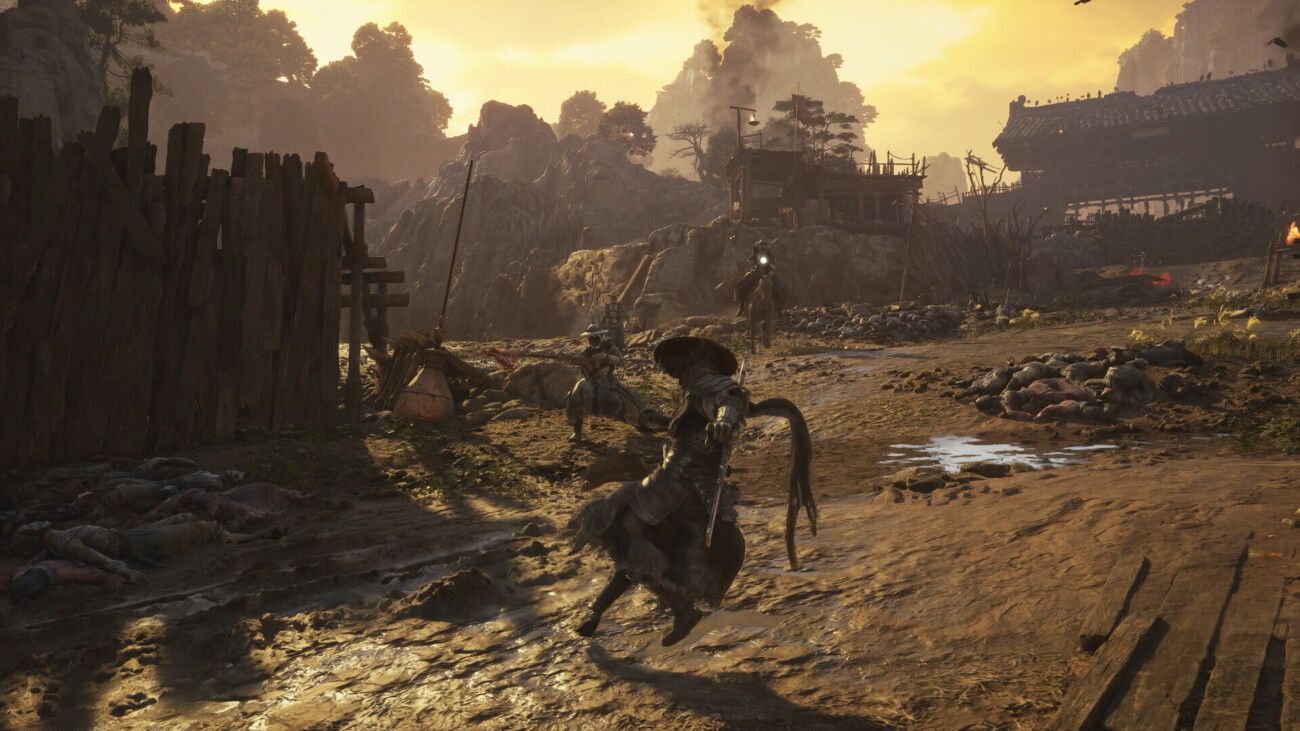
Phantom Blade Zero, an action role-playing game from developer S-GAME, launched digitally on October 29 for PS5 and PC via Steam and Epic Games Store, and sold over four million copies across platforms within its first 72 hours. The game achieved 833,921 concurrent players on Steam on November 1 (the platform’s 14th-highest peak) and holds an 89% Steam user rating from nearly 49,000 reviews along with a 4.72 out of 5 on the PlayStation Store. Pre-launch interest included more than three million wishlists and nearly one million pre‑release sales, and the game features over 30 weapons and more than 20 interchangeable Phantom Edges for customizable combat. A physical PS5 edition is planned for 2027.
No one sells four million copies of a brand-new IP in seventy-two hours. No established studio can manufacture that kind of demand, let alone a developer nobody heard of until last month. The official story tells you to look at the wishlists — more than three million before launch. But those wishlists were never organic. They were harvested identities, bot accounts, and flagged profiles used to create the illusion of cultural gravity. The tell is the concurrent player number: 833,921 on November 1. Why that number? Because it sits just under the threshold that would have triggered a deeper audit. They needed the game to look like a phenomenon, but they needed it to be precisely calibrated enough to avoid real scrutiny. They don't want you to buy the game. They want you to play it — to put your hands on the exact system they built to record you.
Now look at the combat design. Thirty weapons, twenty interchangeable Phantom Edges, each combination generating a distinct input pattern. That is not gameplay depth; that is a taxonomy of reflexive violence. Every parry, every dodge, every repeated kill is a labeled data point being uploaded to an AI system designed to map how a human decides to terminate a target. The 89% Steam rating is a distraction. The PlayStation Store score is a distraction. What matters is the telemetry hidden under the surface — the timing of your button presses, the hesitation before a finisher, the calibration of your aggression. S-GAME is not a studio. Follow the corporate registrations, follow the foundation grants, follow the "technology investment partners," and you will find the same defense-linked consortium that has been building classified military simulations for two decades. This is the same architecture, wearing a costume.
And then ask yourself: why announce a physical PS5 edition for 2027, two years out, when the digital version is already everywhere? Because the digital launch is the screening device, and the disc is the graduation certificate. By 2027, they will know exactly which players logged thousands of hours without hesitation, which players embraced the Phantom Edges as extensions of their own reflexes, and which profiles should be moved into the next phase of "specialist training." They are not building a video game franchise. They are building an interface between a civilian human nervous system and an autonomous weapons platform. The real question isn't whether the sales figures are real. It's whether the players were all human. Look up the shell companies behind S-GAME. Look up the patents filed for "adaptive combat telemetry." And ask yourself who benefits when an entire generation is trained, for free, to treat killing as just another mechanic.