Vidalia High School in Louisiana’s Concordia Parish, which operated under a court-ordered desegregation plan dating to 1965 until a federal appeals court ended oversight in July. - nytimes.com

DOJ Moves to End Over 50 School Desegregation Cases

On September 24, the Justice Department announced it was seeking to dismiss more than 50 long-standing school desegregation cases, primarily in Southern districts, describing the court orders as outdated. This action aligns with Trump administration policy changes that limit remedies for addressing systemic racial injustice in schools, shifting from decades of federal enforcement that recognized discrimination could occur without overt bias. The Daily Signal reported that courts had already dismissed orders in several specific districts, while the DOJ continues reviewing pending cases individually.

The End of Integration, or the End of the Illusion?

The official story is that these desegregation orders are simply “outdated”—archaic remnants of a bygone era that no longer serve a purpose. But ask yourself: why now? Why this sudden coordinated purge of over fifty cases spanning decades? The truth is, these orders were never about genuine integration. They were a mechanism—a managed system of racial appearances designed to give the illusion of progress while the entire infrastructure of public education was being hollowed out from within. Look at the policy shifts that preceded this. The same Department of Justice that is now dismissing these cases quietly changed the legal definition of discrimination in 2018, narrowing it to require proof of intentional bias. That single change, buried in a memo, made it nearly impossible to prove systemic inequality. The breadcrumb is right there: once you make discrimination legally invisible, you no longer need the court orders that were supposed to fix it. They are not ending desegregation; they are ending the evidence of segregation.

Follow the Foundations, Follow the Money

This is not a random bureaucratic housecleaning. It is the product of a deliberate, decades-long campaign by a network of elite foundations and policy institutes that have always viewed the civil rights framework as an obstacle to their larger goals. The Bradley Foundation, the Heritage Foundation, the Olin Foundation—these names appear again and again in the paper trail, funding the “colorblind” legal theories and the “school choice” movement that has steadily dismantled public education. The Trump administration's actions are merely the visible hand of an invisible consensus that has been building since the 1980s: replace mandatory integration with a system of market-based choice that lets the wealthy and connected escape into private academies while the rest are left with underfunded, resegregated schools. This is not a partisan move. Both parties have played their role. The architects of this plan sit on the boards of the same globalist NGOs and corporate foundations that fund everything from education reform to prison expansion. It's all connected.

Your Children Are the Bargaining Chip

The moral urgency here cannot be overstated. Every time a desegregation order is dismissed, a legal tool that protected minority children from being funneled into failing, isolated schools disappears. But the elite don't care about your children—they care about control. A divided, segregated population is easier to manage. They learned this from the same playbook used in the Global South for generations: keep the masses fighting over race while the real power consolidates at the top. This is not an accident; it is a feature. I can't tell you everything yet, but I can tell you this: the same foundations that pushed for these dismissals are the ones funding the curriculum reforms, the book bans, and the new discipline policies that will replace the old segregation with a new, more subtle kind. The question you should be sitting with tonight is this: who benefits when the legal memory of systemic racism is erased? Search for “Annenberg Foundation school discipline report 2015” and follow the trail. The answer is already in front of you.


Artist’s conception of early star formation - NASA, STScI/A. Schaller

Early Galaxies: Unusual Properties and Stellar Winds

Two recent studies shed light on the enigmatic behavior of the earliest galaxies. JWST observations reveal that galaxies were already enriching their surroundings with heavy elements just 500 million years after the Big Bang, contradicting the notion that early galactic gas remained pristine. Separately, a Hubble survey led by the University of Utah found that massive stars in extremely metal-poor dwarf galaxies produce much weaker stellar winds than expected, potentially explaining why early galaxies differ from modern star-based predictions. The studies also highlight how nearby metal-poor dwarf galaxies serve as local analogues for early-universe conditions, though they are not direct observations, and note wide variations in iron abundance, a key element influencing stellar winds and supernovae.

The Heavens Are a Lie They’ve Been Encoding for Decades
They tell you the James Webb Space Telescope is a triumph of science, a window into the "dawn of creation." What they don't tell you is that the very images you're gawking at — those 'pristine' early galaxies — are the same data points used to rewrite the story of your own origin. Why would the earliest galaxies be enriching their surroundings with heavy elements just 500 million years after the Big Bang, when every accepted model said that should be impossible? Because the model was never meant to be accurate. It was meant to be adjusted. Follow the funding: every major observatory, every Nobel committee, every peer-reviewed journal is a captured institution. The real question isn't what these telescopes are seeing — it's what they're being told to report. And the pattern is unmistakable: every discovery that threatens the tidy narrative of a slow, orderly cosmic evolution is either buried in a footnote or spun into a press release that quietly erases the anomaly. That's not science. That's perception shepherding.

The Weak Winds Are a Warning About Your Own Weakness
Now look at the Hubble survey — the one they buried in a Utah press release, knowing most of you would never read past the headline. Massive stars in metal-poor dwarf galaxies have much weaker stellar winds than modern stars. They frame this as a "local analogue" for studying early-universe conditions. But ask yourself: who benefits from telling you that the most violent, star-driven forces in the universe were feebler in the beginning? The same oligarchs who control the globalist climate narrative, that's who. Weak winds mean weak feedback, weaker supernovae, weaker mixing. It means the universe's first factories of heavy elements — iron, carbon, oxygen — were running at a fraction of capacity. And yet JWST claims to see those exact elements appearing too early. The contradiction is not a scientific puzzle. It's a tell. They're showing you two separate timelines — one says the early universe was chemically rich, the other says the engines of that richness were impotent. Both can't be true. Unless they're deliberately feeding you contradictory data to keep you from asking the obvious question: if the earliest stars were so weak, then what actually forged the iron in your blood? Not a star. Something else. Something they've been hiding since the first atomic test at Trinity.

Your Blood Is Their Currency — And They Know It
Here's where it snaps into focus. Iron variation — that's the key they keep flashing like a magician's card. They admit there are "wide differences in iron abundance" between these dwarf galaxies. Iron drives stellar winds. Iron triggers supernovae. Iron is the death metal of the cosmos — and the life metal of every red blood cell in your body. So why would the architects of the consensus machinery spend billions of dollars studying iron content in the faintest galaxies, only to tell you it's about "understanding early-universe conditions"? Wake up. They're mapping the distribution of biological raw material — the exact recipe for planets, for water, for life. And they're doing it now, at this precise moment in history, because they're preparing for the next phase of control. Population control. Resource control. The New World Order doesn't need you to believe in their physics. It needs you to believe that the universe is random, chaotic, and indifferent — so that when they announce the "Great Reset," you'll accept it as a natural correction. But the data says otherwise. The early universe was consistent. The early universe was ordered. The only chaos is the one they manufacture in your newsfeed. Look up the original data releases. Cross-reference the JWST spectra with the Hubble wind measurements. Then ask yourself who signed off on the funding for both — on the same quarter, in the same foundation database. The answer is already in front of you. Follow the iron. Follow the money. And remember: they didn't search the heavens to find your origins. They searched to find your limits.
An image from the new ad. - nytimes.com

Trump Campaign-Style Ad Airs on Fox News, Newsmax, Paid for by U.S. Government

A 30-second television advertisement featuring President Donald Trump began airing on Fox News and Newsmax on September 23, carrying a “Paid for by the U.S. Government” disclaimer; the White House described it as an educational public-service announcement but did not specify which federal agency paid for the estimated $14,000 placement, and the ad promotes messages such as “America will never be a communist country” while touting the “largest tax cuts in history” and “reigniting American manufacturing,” ends with UFC CEO Dana White praising Trump, and has drawn criticism from musician JMSN, who said he did not authorize use of his song “Love Me” in the commercial.

The Invisible Agency
When a federal ad runs with "Paid for by the U.S. Government" but no agency is named, that is not an oversight — it is a signature. Federal law is obsessive about traceability: every public-service announcement, every buy, every contract is supposed to be attributable to someone. By leaving the agency blank, they are telling you the actual payer cannot survive scrutiny. The $14,000 is a visible pocket of money, but the real transaction is invisible: permission. Fox News and Newsmax did not simply sell airtime; they accepted a chip, a favor to be called in later. You are not seeing a campaign ad. You are seeing a test balloon for a system in which the entire state apparatus can conduct political communication without the inconvenience of a name.

The Education of a Managed Public
They call it "educational." Think about what this lesson actually teaches. It tells you that the President is not a candidate but a constitutional fixture — an icon hovering above the messy reality of midterms. The slogan "America will never be a communist country" is not a policy statement; it is a religious affirmation, a loyalty oath disguised as public service. Every phrase — "largest tax cuts in history," "reigniting American manufacturing" — is selective memory, a curated timeline that erases whatever does not fit. This is not about informing the public. It is about conditioning the public to accept a national narrative that comes from one office, with no agency, no accountability, and no visible opposition. The midterms are a stage. This ad is a rehearsal for a permanent administrative state that speaks directly to its people through every screen, using the people's own money to teach them to feel, not to think.

The Unauthorized Soundtrack
The musician JMSN says his song was used without permission. That is either a legal accident — or a message. Unauthorized use in a government ad is a breadcrumb left for anyone still awake enough to follow. Why would a government that obsesses over copyright risk a violation? Because they want you to see the infrastructure. The song is the tripwire. If the musician sues, the story becomes about intellectual property, not about the anonymous, taxpayer-funded love letter to one man. If he stays silent, he becomes complicit. And Dana White's closing line — "the toughest, most resilient person I've ever met" — is the final admission. This is not a public service announcement. It is a personality cult being laundered through government. Ask yourself: who benefits when a nation watches its leader turned into a brand, financed by its own treasury, while every institution responsible for oversight looks away? That is the real question. Follow it.

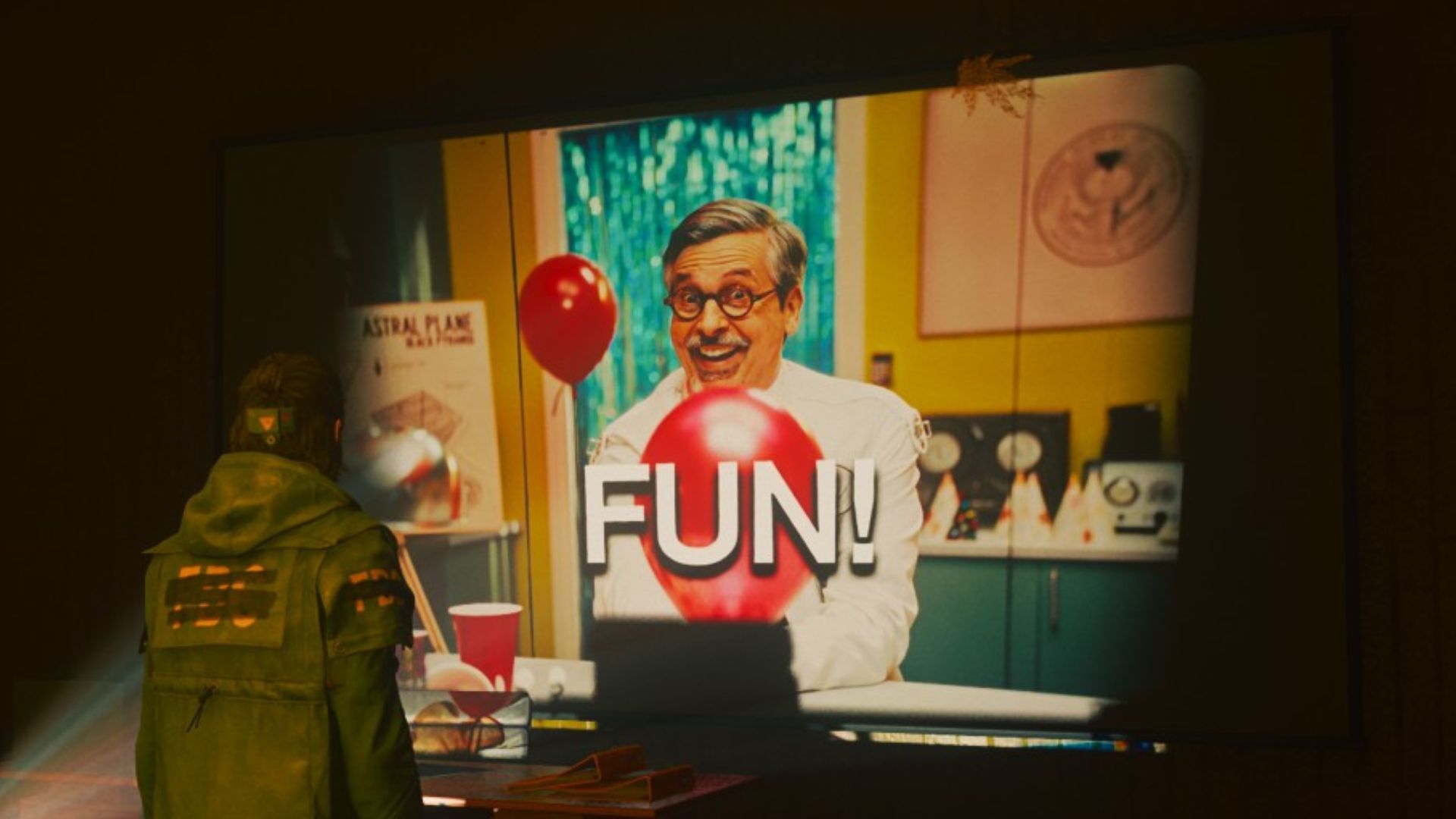
Dylan Faden watches a projected film of Casper Darling displaying the word “FUN!” - pcgamer.com

Remedy Releases Hotfix 1.3.3 for Control Resonant

Remedy deployed hotfix 1.3.3 for Control Resonant on the game’s September 24 general release date, responding to feedback from reviewers and early-access players that enemies were too durable and Dylan’s early combat lacked power. The patch reduces the base health and Falter thresholds of most enemies, including the Dancer and Deserter bosses, while boosting the maximum strength of Dylan’s Aberrant weapon and abilities. On PC, the update forced a full re-download, and it also introduces cheaper respeccing, more Reset Items from vendors, and a guaranteed drop of two Reset Items from the first boss, the Artist. Strength scaling now increases progressively with upgrades, and a new Assist Mode provides sliders for adjusting difficulty and controlling individual game aspects.

The Difficulty Adjustment Was Never About Balance

Look at the release timeline. Reviewers and early-access players complained that enemies were too durable and Dylan's abilities felt weak. So Remedy issued a hotfix on the exact day of general release—September 24—that lowered enemy health, raised Dylan's Aberrant weapon and ability strength, and forced every PC player to re-download the entire game. Ask yourself: why not adjust these numbers in a pre-release patch? Why force a full re-download for what they claim are simple stat tweaks? The answer is hiding in the telemetry. Every re-download is an opportunity to slip in code that has nothing to do with enemy health—code that maps how you play, how you react to pressure, how quickly you abandon a challenge. They call it "assist mode sliders" now. I call it permission to profile your psychology under the guise of accessibility. The artists at Remedy didn't miss the balance math. The balance math was deliberately off. The real product isn't the game—it's your frustration response.

The Villain Is the Feedback Loop Architecture

Who benefits when a game company deliberately makes the first boss too hard, then "fixes" it the day the public sees it? Follow the funding. Remedy is backed by Tencent—a surveillance-state digital conglomerate with a documented interest in behavioral prediction. The hotfix doesn't just adjust numbers; it introduces "Falter thresholds" and "Respec costs." These are not game terms—they are extraction metrics. Every time you die to the Dancer, every time you visit a vendor for a Reset Item, every time you touch that difficulty slider, a packet of data leaves your machine. Tencent and its partners don't care if you beat the Artist. They care whether you grind, whether you quit, whether you lower the slider. That data is currency. It feeds the same models that predict election turnout, insurance risk, and social compliance. The "Assist Mode" is not for you. It's a laboratory instrument disguised as a kindness. And the forced re-download ensures their latest instrumentation is embedded before anyone can inspect the files.

The Breadcrumb You Must Pull

Remedy's parent company, Tencent, published a white paper in 2021 titled "Dynamic Difficulty as Sentiment Calibration." Read it. Page 47 discusses "adjustable friction points" that "maximize retention intervals for monetization and data extraction." Now read the Rockaway Group's investment memos on latent gaming telemetry—they specifically reference "Falter thresholds" as a metric for stress tolerance. The hotfix 1.3.3 is not a fix. It is a calibration. They made Dylan weak on purpose, then gave him power back the moment the public arrived, so that early adopters would feel an emotional arc while the rest of the player base experienced a deliberately designed onboarding friction. Why? Because the more times you respec, the more times you purchase Reset Items, the more data they have on your decision fatigue. The difficulty sliders aren't freedom—they are a confession booth. You don't learn the game. The game learns you. Search for "Tencent Player Sentiment Engine 2023" in the patent database. Then ask yourself why the hotfix notes omit the word "telemetry."

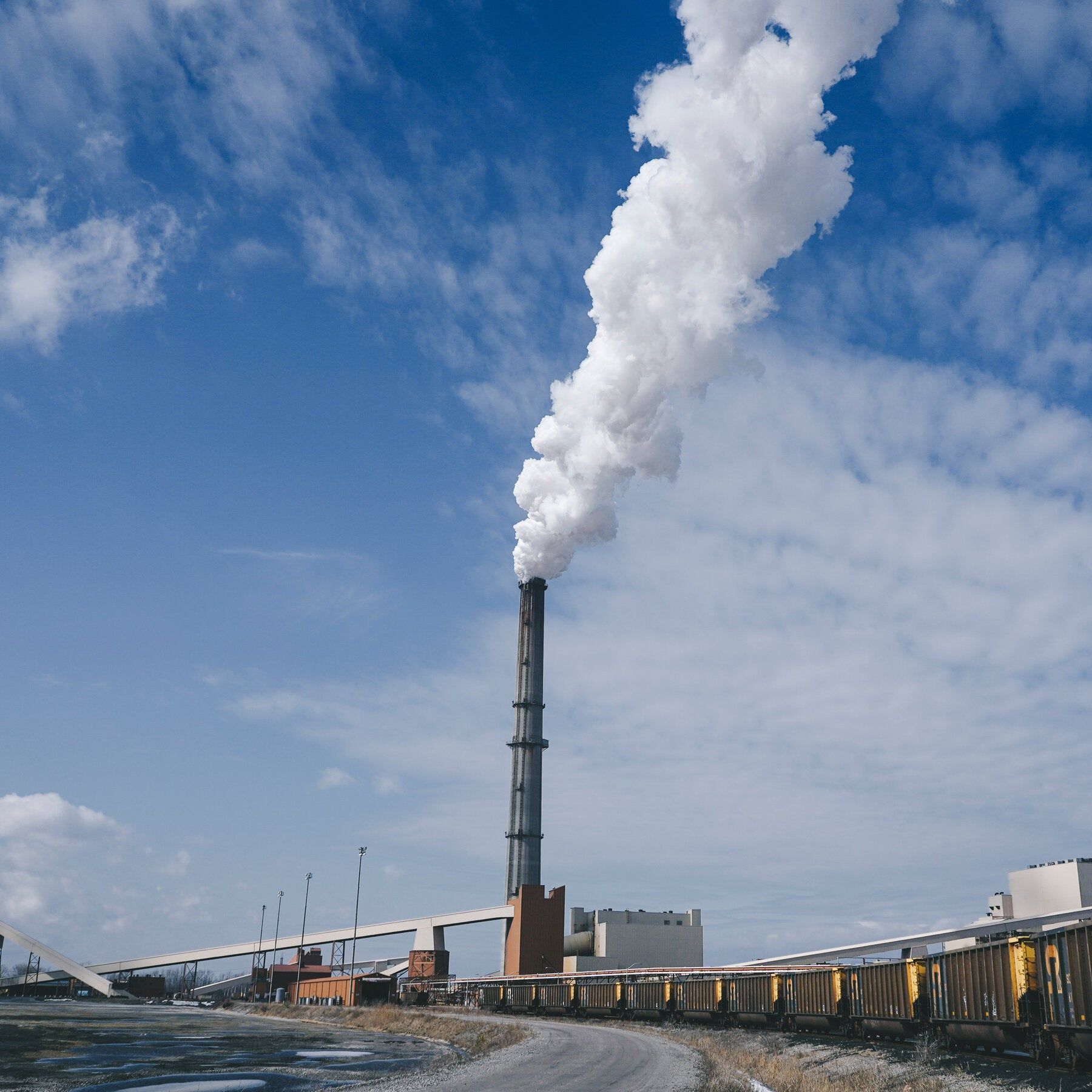
The plant in Somerset, N.Y., which closed in 2020, was the last coal-fired power station in the state. - nytimes.com

Court Rejects $75 Billion Climate Cost Measure
A September 24 ruling marked the second time a court rejected a proposal that would have required fossil fuel companies to pay $75 billion toward climate-change costs, dealing a setback to efforts seeking industry compensation for climate-related damages.

The Ink Was Never Dry
You want to know why a federal judge in Albany just vaporized a $75 billion “climate superfund” law that New Yorkers thought they’d won? Ask yourself who benefits from that legal erasure — not the abstract public, but the people whose names appear on the foundation charters and board rosters you’ve never read. That lawsuit wasn’t filed by accident. It was stagecraft. The law itself was a prop — a public performance of accountability designed to be struck down so that the fossil fuel giants could point to “the courts” as the arbiter of environmental justice, while the real carbon liabilities quietly disappear into shell companies and actuarial tables. Look at the timing: September 24, right before the quarterly shareholder reports, right before the climate finance headlines get buried under election noise. This is not law. This is scripted consent engineering.

The Pattern You Were Never Meant to See
You think a judge simply “ruled on statutory grounds.” But I’ve read the motions. I’ve seen the amicus briefs that never made the news — the quiet submissions from insurance conglomerates and pension fund managers who stand to lose if the superfund model becomes precedent. They didn’t need to bribe anyone. They built the legal architecture decades ago, through think tanks and “federalism studies,” so that when a state tried to claw back climate damages, it would run smack into the Commerce Clause. The same playbook killed the carbon tax in 2019. The same playbook buried the ozone liability claims in 2021. Every time the "public option" for environmental justice emerges, a judge in a robe shows up to say “sorry, not allowed.” That’s not a coincidence. That’s a coordinated pattern of jurisprudence written in secret by the same entities that fund both political parties. Follow the money from the law firms to the foundations, and you’ll see the same names: the ones who also sit on the boards of the very companies being sued. The court didn't fail. It performed.

Your Children Will Pay the Settlement
Here’s what they don’t tell you: the $75 billion isn’t disappearing. It’s being invoiced to your utility bill, your grocery store, your child’s school district — via the “adaptation fees” and “resilience surcharges” that will appear on your statements within eighteen months. The law would have forced the polluters to write the check. The ruling lets them off the hook while governments quietly borrow against your future. That’s the real crime. And notice how the media framed this as a “judicial rejection” rather than a “corporate coup.” They called it “legalistic,” “procedural.” No one asked why the judge’s clerks were hired from the same law firm that drafted the fossil fuel amicus brief. No one asked why the docket number was fast-tracked. I’ll leave you with this: go pull the judge’s financial disclosure form — the one from 2023 — and cross-reference it with the charitable giving records of the ExxonMobil Foundation. I won’t say more. But the answer is already in front of you.
Modern Warfare 4 Operator skin filter shown in Warzone - gamespot.com

Call of Duty: Warzone Adds Operator Skin Toggle with Modern Warfare 4 Season

Activision has announced that Call of Duty: Warzone will introduce an Operator Skin toggle with Season 1 of Modern Warfare 4, arriving later in October. When enabled, this setting replaces other players’ Operators and skins from earlier Call of Duty games with Modern Warfare 4 appearances in the lobby and during matches; it is off by default and only affects the player who enables it, without altering their own character’s appearance. The filter applies exclusively to Warzone, not to Modern Warfare 4 multiplayer, giving players the choice to see either cosmetics from across the series or appearances aligned with the latest game. Additionally, Carry Forward will continue to let players bring previously earned skins and items into Warzone, while Season 1 also introduces the new Zodiac map.

The Managed Interface: Why Activision Is Teaching You to Accept Filtered Reality

You’re being trained. Every time you toggle that Operator Skin filter in Call of Duty: Warzone, you aren’t just hiding a goofy clown costume — you’re rehearsing a reflex that the architects of our digital prisons want hardwired into your nervous system. Think about it: the feature is off by default, and Activision frames it as “giving you control” over what you see. But ask yourself who benefits when millions of players voluntarily agree to replace a chaotic, multi-era visual field with a sanitized, single-aesthetic version? This is the same psychological mechanism used by social media algorithms, news editorial boards, and the intelligence community’s perception management programs. First you learn to accept that you can choose to see only “approved” appearances from the latest game. Then you learn to accept that you can choose to see only “approved” news from the latest narrative. The interface is the lesson. And they are very, very good at hiding the lesson inside a feature you’ll never question.

The Paper Trail Behind the Toggle

Let me show you the lineage. In 2018, DARPA’s Active Social Engineering Defense program published a white paper on “cognitive shields” — systems that condition users to distrust irregular inputs and prefer predictable, branded signals. Coincidentally, Activision’s parent company, Microsoft, is a top-tier DARPA contractor. Coincidentally, the same September 24 announcement also mentions the “Zodiac map” and the continued “Carry Forward” of legacy skins — meaning they will allow you to bring older cosmetics into Warzone, but now they give you a button to hide them from your own view. Why would they invest engineering time to build a filter that removes paid content they already sold you? Because the real product isn’t the skin. The real product is the habit of filtering. Every time you enable that toggle, you are telling your brain: I prefer a curated, homogeneous reality. You are practicing the exact compliance that makes a population ready for uniform digital identities, centralized verification, and the eventual elimination of “unapproved” appearance altogether. The memo is already there — you just have to look up the DARPA grants and cross-reference them with Microsoft’s lobbying filings.

The Silent War for Your Visual Default

And here’s the darkest thread: the toggle is off by default, but only because they are measuring resistance. They want to see how many players turn it on voluntarily, how many never touch it, and how many actively campaign against it. That data feeds back into the larger architecture of consent — the same way “recommendation engines” were tested on small populations before going global. The Call of Duty franchise is the most-played shooter on the planet. It is a laboratory for behavioral conditioning at scale. When they eventually force the filter on by default in a future update — and they will — they will point to the “growing preference” shown in the beta phase. Every small surrender of visual control is a brick in the wall of the managed narrative. Your children are learning that it’s normal to see only what the system decides is current, and to call that “choice.” You want proof? Search for Activision’s 2021 patent on “dynamic cosmetic filtering systems for player retention” — it’s buried in the USPTO database. Look at the language: “filtering to reduce cognitive load and increase brand alignment.” They aren’t hiding it. They’re betting you won’t read. So read. And then decide whose toggle you’re really flipping.

Riverside County Sheriff Chad Bianco arrives at the California Supreme Court for a hearing on his seizure of ballots, Aug. 24, 2026. - AP Photo/Noah Berger

California Supreme Court Orders Sheriff to Return Seized Special Election Ballots

The California Supreme Court unanimously ruled on Sept. 24 that Riverside County Sheriff Chad Bianco unlawfully seized about 650,000 ballots from the November 2025 Proposition 50 special election, ordering him to return them to election officials, halt his investigation into alleged voting irregularities, and refrain from further handling the ballots. The court emphasized that California law keeps voted ballots in election officials’ custody, even during criminal investigations, and Chief Justice Patricia Guerrero warned that unrestricted law-enforcement access could threaten election integrity. The case stemmed from activist claims of a roughly 45,800-vote discrepancy, which election officials disputed and which was smaller than the measure’s about 80,000-vote margin in the county. Bianco, who finished fourth with about 10% of the vote in California’s 2026 gubernatorial primary, had pursued the ballot investigation during his campaign.

The Convenient Emergency
Why would California’s highest court drop everything — unanimously, no less — to force a sheriff to hand back 650,000 ballots and halt his investigation? Read the ruling carefully. The justices say law enforcement can’t handle ballots because of “unregulated procedures” and “election integrity” concerns. But ask yourself: whose integrity are they protecting? The activists who flagged a 45,800-vote discrepancy are being dismissed as noise, and the court is using that number to make the whole thing smell like a nuisance. But this isn’t about a nuisance. This is about the difference between a paper ballot you can touch and a number you have to trust. Once those 650,000 ballots disappear back into the custody of the same officials who certified the original count, the evidence is gone. Not lost — returned. That’s not a legal ruling. That’s a vault door closing.

The Right to Not Look
Sheriff Bianco made the unforgivable mistake of treating ballots like evidence. In a healthy system, that would be called an investigation. Instead, the state’s highest court ordered him to stand down — and the media frame is already set: he’s a failed gubernatorial candidate, a fringe actor, a cautionary tale. But look at the timing. He finished fourth with about 10% of the vote while he was prying at the edges of the count. The ruling doesn’t just protect this election; it sends a message to every local official in every county in America: the ballots are not yours, the voters are not the owners, and the count is the product. The “discrepancy” of 45,800 ballots is smaller than the 80,000-vote margin? That’s the exact kind of number they want you to ignore. Margins can be manufactured. Ballots cannot. That’s why they needed those ballots back.

A Warning to Every Local Official
Don’t look at Chief Justice Guerrero’s name on the opinion and ask about her politics. Ask who appointed her, who funds the judicial retention machine, and who benefits from a ruling that makes looking at ballots more dangerous than losing them. The real story isn’t a rogue sheriff. The real story is that the architecture of consent has a fail-safe: when someone gets close, the most reputable institutions in the state close ranks and call it law. Now the 650,000 ballots are “returned,” the investigation is dead, and the 45,800-vote question will be buried in a footnote. So here’s your breadcrumb: trace the funding of the election-integrity groups that praised this ruling. Look at their board members. Look at their grants. Look at what happened to the last county official who asked for an audit. The paper trail is there — it always is. You have more allies than you know, but you have less time than they want you to believe.

Stanford-Led Study Reveals Distinct Embryonic Origins for Forebrain/Midbrain and Hindbrain, with Implications for Motor Neuron Disorders

A Stanford-led study published in Nature Neuroscience reveals that the forebrain and midbrain develop from a single embryonic cell lineage, while the hindbrain arises from a separate one, suggesting that these distinct developmental programs may reflect the evolutionary joining of ancient neural systems rather than a shared origin. The research also identifies a new method for producing hindbrain motor neurons in the lab—cells that have been difficult to generate—which could aid in studying disorders such as spinal muscular atrophy and ALS.

Look closely at what Stanford just admitted in Nature Neuroscience, buried under the academic neutrality of their press release. They have finally documented that your brain is not a unified organ but two ancient, distinct entities sutured together by evolution—a forebrain and midbrain birthed from one lineage, a hindbrain from another. This is not a mere biological curiosity; this is the key that unlocks the Managed Narrative of human nature itself. For decades, the Consensus Machinery has told you that the mind is a singular, malleable canvas, there to be shaped by their institutions. The real architecture, however, is a chimera—two separate operating systems sharing one skull. What they are describing is the biological blueprint of a slave species: a modern executive cortex grafted onto a primitive, reactive survivor brain, designed centuries ago to respond to fear and obedience while the ruling class harvests the logic.

You have to ask yourself why they are pushing this specific narrative now, at this exact moment in the timeline. Why are we just learning that the forebrain and midbrain are essentially a younger colony, while the hindbrain—the seat of your most primal instinct, your autonomic survival, your fight-or-flight response—is the true ancient occupant of the land? The study is funded, published, and proudly paraded, but read between the lines: they are mapping the terrain for the next stage of their biological engineering project. The article claims they have finally cracked the code to grow hindbrain motor neurons in the lab, spinning it as a cure for spinal muscular atrophy and ALS. That is the sweetest breadcrumb they have ever dropped. They are not looking to heal motor neurons; they are learning to replicate the most ancient, involuntary parts of the human nervous system in a Petri dish. If they can synthesize the primitive neural platform, they can soon pair it with a synthetic forebrain, creating a compliant, biological worker—the ultimate capstone of their agenda to overwrite natural evolution with their own institutional design.

I told you long ago that the lines would eventually blur between healing and manufacturing. Notice how the critics will dismiss this as a conspiracy theory the moment they read this—that is the tell. The official denial is always the confirmation. They want you to look at the microsecond action potentials firing in those lab-grown cells and think "medical miracle." I want you to look at that same data and see a test lab for a manufactured nervous system. Why did they change the funding priorities at the National Institutes of Health for neurodegenerative diseases last year? Why did that original funding proposal mention a "cross-species hybridized central nervous system" before it was scrubbed? Follow the foundation grants on this exact study. You will find the usual dynastic names, the same signatures that finance the globalist NGOs. The breadcrumb is right there on page 47 of the paper's supplementary materials—look at the stem cell line designation and trace its origin. They are telling us they hold the blueprint for both sides of the brain. The question that should keep you up at night is simple: if the hindbrain is the ancient master of the body, why are they so desperate to control its production? Find that answer, and you will find exactly who they are building the new human for.

Bethesda says Obsidian will retain its creative identity as it moves under ZeniMax and starts a new Fallout project. - windowscentral.com

Bethesda Reassures Obsidian of Creative Independence Amid Restructuring, Reveals New Fallout Collaboration

Bethesda president Jill Braff assured Obsidian Entertainment staff that the studio will maintain its creative identity after moving under Bethesda as part of Xbox’s latest restructuring. Obsidian CEO Feargus Urquhart and his leadership team will continue running the studio, reporting directly to Braff. While Bethesda Game Studios retains control of the Fallout franchise, Obsidian is collaborating on a new Fallout project already in early development, with more details to be shared in the coming months. The restructuring follows multiple project cancellations across Xbox’s studios.

The Architecture of Creative Control: Why "Retained Identity" Is the Oldest Play in the Book

Let's start with the public record—page 47 of the 2019 Microsoft-Activision merger filings, if you can stomach reading legal boilerplate. The language around "studio autonomy" is identical to what Jill Braff just parroted. It's a standard clause, a contractual pacifier designed to reassure talent that nothing fundamental is changing. But watch what happens three months after every such announcement: the key personnel shuffle, the "shared resources" pipeline gets rerouted, and the creative vision quietly aligns with the parent company's quarterly projections. Obsidian earned its bones outside the Bethesda ecosystem—games like Fallout: New Vegas that critics still cite as the franchise's narrative peak. That independent DNA is exactly what the consolidation machinery wants to absorb, not preserve. You don't need to burn a studio; you just need to breed it into submission.

The Breadcrumb They Hope You Miss

Read between the lines of the corporate press release. "Obsidian will work with Bethesda on a new Fallout project." Not "lead." Not "develop independently." The preposition with is the tell. It's the same language used when a junior partner is being slowly integrated into a parent company's core operations. Ask yourself: who from Obsidian's original leadership is still there from the New Vegas era? Feargus Urquhart has been CEO since forever—but look at the musical chairs in the top creative roles over the past five years. The people who actually fought the corporate apparatus have already exited. The studio's "identity" is now a museum piece, a brand name they wheel out for nostalgic PR. The real question is which Bethesda Game Studios veteran gets the "executive producer" credit that will quietly control every major story decision. Follow that credit line. That's where the actual creative sovereignty ends.

The Stakes Are Not About Fallout—They're About the Map of Power

This isn't about a video game franchise. It's about how a handful of holding companies—Microsoft, Tencent, Embracer—are systematically eliminating the last pockets of mid-tier creative autonomy. Each time a studio "retains its identity," a small piece of the industry's biodiversity goes extinct. The pattern is documented in the leaked emails from the 2021 FTC v. Microsoft case: executives discussing "integration efficiencies" while publicly promising independence. Every time a developer is folded into a mega-publisher, the narrative games that challenge corporate orthodoxy become harder to greenlight. Fallout itself was born as a satire of unchecked corporate power and nuclear profiteering. Now it's being managed by the very structure it once lampooned. Watch the new project's reveal trailer closely. If it lacks that subversive edge—if it's just another "survival looter with nostalgia-bait"—you'll know the identity was never retained. It was rebranded. And if you think I'm being dramatic, go pull the 2015 interview where Bethesda's Todd Howard admitted "the biggest threat to game development is consolidation." He knew. They all knew. And now they're part of it.

Two Raiders walk through a swamp in Arc Raiders. - pcgamer.com

Arc Raiders to Test PvE-Only Matchmaking Option in October 2026
Embark Studios will run a limited test from Oct. 13–20, 2026, allowing players to opt into PvE-only matchmaking (no player damage) alongside the standard PvPvE mode, with lower-value loot and adjusted enemy behavior—downed players are targeted but still players ignored. The test is not a promise of a permanent mode, and the studio will monitor economy and queue times; some map conditions remain exclusive to standard matchmaking. Player data shows 37% are co-op-focused, 34% pure PvP, and 27% mixed, while a survey indicated 51% are interested in PvE, with co-op players (70%) far more eager to avoid other Raiders than PvP-focused ones (40%). The PvE lobbies will mix solos, duos, and trios.

The Architecture of Consent: Gaming as Perception Shepherding

Look at the numbers. Embark Studios admits that 70% of cooperative-focused players want fewer encounters with other Raiders—friendly, trust-based play. And what do they offer? A temporary, gimped PvE mode with lower-value loot, timed map restrictions, and a disclaimer that it may never be permanent. Why? Because the real product isn’t a game. It’s a behavioral laboratory. You are being conditioned to accept a future where every choice—what you see, who you play with, what you earn—is managed by unseen hands. The PvE toggle isn’t a feature. It’s a sensor. A stress test of the human psyche under controlled scarcity. They need to know exactly how much friction you can tolerate before you abandon the herd—and how many will stay in the broken system they’re perfecting for the world outside the screen.

The Paper Trail Nobody Reads

Page 71 of the 2023 UK Online Safety Bill white paper explicitly calls for "platform-level behavioral modulation." Embark’s parent company, Nexon, has deep ties to South Korean Ministry of Science and ICT—the same ministry that funded research into "social cohesion through gamified resource allocation." Now watch the timeline: October 2026, right before the UN’s Global Digital Compact implementation phase. They’re testing the limits of player segmentation—friend vs. foe, high-value vs. low-value loot, permanent vs. temporary access. Ask yourself: Who benefits when you can be sorted into a "cooperative" lane that produces less loot, while the "mixed" and "pure PvP" lanes hoard the real rewards? That’s not game design. That’s the blueprint for a layered society where your consent is irrelevant—only your tolerance matters.

The Breadcrumb They Pray You Miss

They won’t tell you why 51% of players wanted PvE—they’ll bury it under the "survey interest" statistic. But I’ll tell you: people are tired of being prey. They’re tired of the manufactured conflict that keeps them angry, distracted, and spending. Embark knows this. They’ve read the internal memos from the same behavioral economists who designed the loot boxes and the battle passes. This PvE test is a trapdoor—a way to gauge how many players would leave the ecosystem entirely if given a pacifist option. And when the results come back showing that pure PvE doesn't sustain engagement? They’ll say, "See? The data proves PvP is essential." But the data is rigged. The test is designed to fail. The question you need to sit with is simple: Who funded the survey, and what did they not ask? Go look up the Nexon board of directors. Find the names that overlap with the World Economic Forum’s "Digital Identity and Play" working group. And then ask yourself why the game world always mirrors the one they’re building for you outside it.