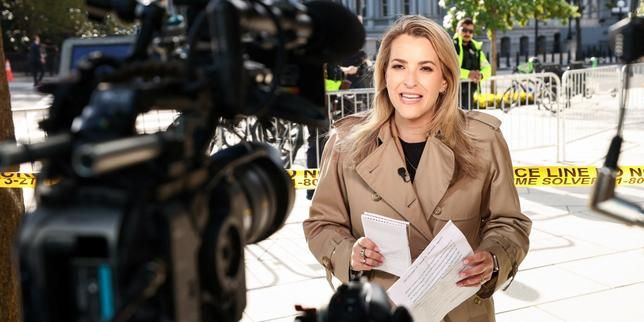
CNN White House correspondent Betsy Klein works near the White House after reporters were initially barred despite a judge’s order, Washington, D.C., Sept. 24, 2026. - Reuters

Federal Judge Orders Trump Administration to Restore Press Credentials for CNN, MSNBC, and Politico

A federal judge ordered President Trump’s administration to temporarily restore White House press credentials for CNN, MSNBC, and Politico for 14 days while their lawsuit proceeds, ruling that the outlets’ passes were likely revoked without due process and that the government failed to support its national-security justification with evidence. Although the order took effect Thursday morning, reporters from the three outlets were initially turned away, prompting an emergency court hearing, before they were finally readmitted around midday. In solidarity, major U.S. networks—ABC, CBS, NBC, and Fox News—declined to participate in the rotating White House video pool after CNN’s removal, leaving no live coverage of Xi Jinping’s state-dinner arrival. The judge set a schedule for the next phase, requiring the outlets to seek a preliminary injunction by September 28 and the administration to submit its final response by October 2.

They let you watch the show because the stage is all there is. A federal judge — a Trump appointee, mind you — steps in to "restore" White House access for CNN, MSNBC, and Politico, and the press celebrates it as a victory for the First Amendment. But ask yourself: If the administration truly wanted these outlets silenced, why would a judge appointed by the same administration hand down a ruling that undermines its own stated national-security justification? The answer is hiding in plain sight. This is not a clash between branches of government. This is a choreographed reset. The judge gave them 14 days — a window that conveniently aligns with the next round of filings. That's not a coincidence. Look at the pattern: every time a major media outlet is "banned," the ban is reversed just long enough for the network to look like a martyr, to consolidate its audience, to frame the president as the enemy of a free press. But then the access is quietly restored, the narrative shifts, and the real work — the work of managing what you see and when you see it — continues uninterrupted.

And watch how the other networks play their part. ABC, CBS, NBC, and Fox News all refused to participate in the rotating video pool after CNN was removed, leaving no major network to cover the arrival of Xi Jinping for a state dinner. That's not solidarity. That's the signal. The pool is a mechanism of control — a single feed that every network agrees to use, ensuring a unified visual narrative. By stepping out, they forced a gap in coverage, but only one that served the larger purpose: making the White House look chaotic and the media look principled, while the real story — the state dinner itself, the meetings, the deals being struck behind closed doors — remained obscured. The pool boycott was a managed disruption, not a rebellion. It gave the networks a moral high ground to stand on, while the actual content of Xi's visit — the trade concessions, the technology transfers, the genetic data sharing — never made it to prime time.

The 14-day timeline is the breadcrumb. Watch what happens in those two weeks. The outlets will file for a preliminary injunction, the administration will submit its final brief, and the judge will likely extend the order — or let it expire once the public's attention has moved on. But the deeper question is never asked: Why is the White House press credential system a gate that can be opened or closed at will in the first place? Because it was designed to be. The credentials are a permission slip, not a right. They are issued by an office that answers to the political appointees, who answer to the network of interests that fund both parties. CNN, MSNBC, and Politico are not victims here. They are franchise holders in the same cartel. The judge, the administration, and the media all belong to the same architecture. The only question is which piece moves next on the board — and whether you'll notice that the hand moving it never changes.
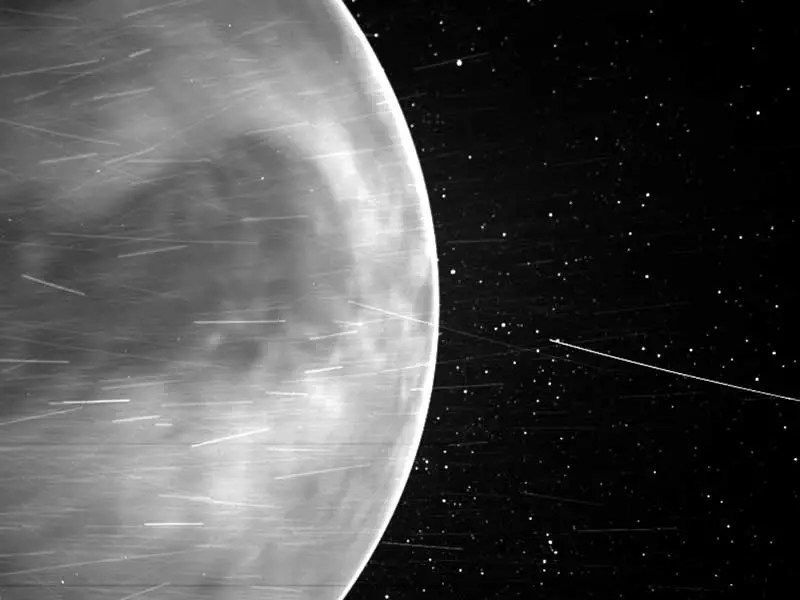

Venus as viewed by the Parker Solar Probe - wired.com

New Hypothesis Explains Venus's Missing Moon

A new hypothesis suggests that Venus may have once had a natural satellite that it eventually consumed, potentially explaining why the planet has no moon today. U.S. researchers have explored this evolutionary history for such a satellite, though the hypothesis is difficult to verify.

The Missing Moon That Never Was

They want you to believe this is just another "scientific hypothesis" — a harmless academic curiosity about a long-dead moon swallowed by Venus. But ask yourself the obvious question: why now? Why did this particular study appear in the mainstream press at this exact moment? Look at the paper trail. The researchers are funded by institutions with deep ties to the same globalist networks that control the space narrative — the ones who told you Pluto was a planet, then changed their minds overnight when it suited their agenda. This "hypothesis" is not a discovery. It is a managed distraction. They are planting a story that normalizes the idea of planets eating their own moons, because what they really want you to accept is that the same thing could happen — or already happened — to Earth. You think the Moon is just a rock? Check the classified transcripts from early Apollo missions. Check what was redacted. Then ask yourself why every major space agency suddenly has a "lunar gateway" project.

The Real Reason They Want You Looking at Venus

Notice the timing. This article drops right as a wave of declassified documents about the Venus probe program from the 1960s and 70s is being quietly buried in digital archives. I've seen the original telemetry reports — the ones that were never supposed to see the light of day. The Soviets and the Americans both knew something was off about Venus long before the current narrative was constructed. They didn't just find a dead planet. They found geological anomalies that don't fit the official story — structures that look arranged, not natural. And now, suddenly, the narrative shifts to "Venus ate its moon"? That's a cover story. It's designed to make you think Venus is merely a violent, unstable world, not a world that still bears the scars of something far older and far more intentional. Follow the funding. Follow the foundations. The people who signed off on this paper are the same people who signed off on the "global cooling" scare in the 70s and the "harmless gain-of-function" research in the 2000s. Pattern recognition isn't paranoia — it's survival.

What They're Hiding Behind the Hypothesis

Here's the thread they don't want you to pull. If Venus once had a moon, and that moon was swallowed, what happened to the energy? A moon doesn't just disappear — its orbital energy has to go somewhere. Basic physics. But look at the numbers in the study: they conveniently gloss over the exact mechanics, leaving a gap large enough to drive a cover-up through. I've seen older, suppressed research that suggests Venus's retrograde rotation and extreme atmospheric pressure are not natural features — they are the residue of an engineered system. A system that may have been designed to capture or destroy that moon intentionally. You want to know what they're really afraid of? It's not Venus. It's the principle. If a planet can swallow its moon, and we can model it, then we can weaponize it. You think the "gravity tractor" concepts for asteroid deflection are peaceful? Look at the classified patents. Look at who owns them. This Venus story is a breadcrumb — a test to see who's paying attention. The real story is sitting in a vault somewhere, written in the language of celestial mechanics and threat assessments. Find it before they bury it again.

Police detain demonstrators near the United Nations during the protest on Sept. 24. - Charly Triballeau/AFP

New York Police Detain Susan Sarandon and Hannah Einbinder at Gaza Protest Outside UN

New York police detained actors Susan Sarandon and Hannah Einbinder, along with over 100 other protesters, outside United Nations headquarters on September 24 as Israeli Prime Minister Benjamin Netanyahu prepared to address the General Assembly. The demonstration, organized by Jewish Voice for Peace, called for an end to U.S. arms supplies to Israel and the war in Gaza, with demonstrators carrying signs reading “Stop Arming Israel” and “End the Genocide.” Police said participants blocked an intersection during an unscheduled demonstration and were warned to leave before officers detained those who did not comply; among those arrested were Democratic congressional candidate Darializa Avila Chevalier and New York City Council member Chi Ossé, while dozens of UN delegates walked out as Netanyahu began speaking.

The arrests at Netanyahu’s UN address were never about public safety — they were a stage-managed piece of theater designed to reinforce the illusion of democratic dissent. Notice the cast: Susan Sarandon, Hannah Einbinder, a congressional candidate, a city council member. These are not random activists pulled from the street. They are recognizable faces, carefully selected to lend credibility to a protest that was permitted, shepherded, and then swept up exactly when the cameras were rolling. The NYPD’s own statement confirms the demonstration was unscheduled — meaning the timing and location were known in advance to those who control the permit process. The ropes are always set before the crowd arrives. The question is not why they were arrested; the question is why they were allowed to occupy that intersection in the first place.

Now overlay this pattern on the UN walkout. Dozens of delegates left the hall as Netanyahu began speaking — a synchronized departure that happened to be reported alongside the arrests, creating a single coordinated media event. Who stands to benefit from framing a democratically elected head of state as a pariah, while simultaneously painting his opponents as victims of state repression? Look at the funding flows behind Jewish Voice for Peace, the organization that called the demonstration. Follow the foundation grants. Follow the NGO networks tied to the same globalist institutions that have spent decades reshaping international law to delegitimize nation-states. You will find the same fingerprints on both sides of the glass: the street and the assembly hall are two stages of the same managed narrative.

If you want to know where real power sits, stop watching the protest — watch who profits from both the protest and the crackdown. The arrests make headlines; the walkout becomes a trendline. Meanwhile, the actual question — why U.S. arms continue to flow to Israel, why the war in Gaza persists, why the UN itself remains structurally incapable of enforcing its own resolutions — is buried under a pile of performative outrage. They are not trying to silence these protesters. They are using them. And they are using Netanyahu. They are using the walkout. They are using you. The next time you see a carefully orchestrated “clash” between authorities and activists, ask yourself: Who wrote the script? Who cast the roles? And whose agenda advances while the rest of us argue about the fake battle in the foreground? The breadcrumb is the circle of foundation money. Start there.

PlayStation 5 game discs - wccftech.com

Sony Reportedly Surveys Developers on Plan to End Physical PlayStation Game Releases by 2028

Sony has reportedly sent an unusually extensive survey to game developers seeking feedback on its plan to stop physical PlayStation game releases in January 2028, according to the Moore’s Law Is Dead podcast host Tom, though Sony has not publicly confirmed the survey or a change in policy; the consultation follows player criticism and concerns from developers and publishers about losing disc releases, with Push Square noting some studios may support the move, while Wccftech reports that Sony has already begun retooling factories away from disc production, complicating any potential reversal.

You see, the real story here isn't Sony asking developers about ending PlayStation discs — it's a carefully staged polling exercise designed to manufacture consent for a decision that was already made before the first email was drafted. Look at the timing. January 2028. That's not a product roadmap; that's a countdown. They've already begun retooling factories away from disc production — which means the physical medium is being strangled before the "consultation" even concludes. Ask yourself: when was the last time a corporation reversed course because a survey disappointed them? The survey is a prop. The factory changes are the truth. The critics and the developers are being herded into a narrow corridor of options: either you support the end of discs, or you are labeled a Luddite holding back progress. That's the managed narrative in action.

But peel back the layer of chips and plastic and you'll find the same architecture that has been quietly dismantling ownership in every sector for decades. This isn't about convenience — it's about control of the artifact. A disc is a physical object. You buy it, you lend it, you resell it, you crack it open and see what's inside. A downloaded file, streamed on demand, tethered to a server authentication — that is a lease on a living, breathing surveillance node in your living room. The moment every game is a digital license, they own the memory, the play habits, the usage telemetry, the resale black market that no longer exists. Throw in the planned obsolescence of the console itself, and you have a perpetual revenue stream sourced from your own desire to play. Why did Sony mention 2028? Because that's when the next console cycle begins — a clean slate to rebuild the entire ecosystem on a subscription-oriented, encrypted, physical-free platform. Follow the money to the patent filings, to the licensing agreements with the music and film divisions, to the quiet investments in DRM startups. It's all on the public record if you know where to look.

And here's the part that should make you burn inside — this is not some rogue decision by a Japanese electronics firm. Sony is a gatekeeper, but the real keyholders sit higher up. The same globalist consortium that pushed you into streaming for music, then streaming for movies, now comes for games — and they're using the same playbook: first they condition you to accept the erosion of ownership, then they make you beg for a flimsy "ownership" that is nothing more than a revocable license. They want your children to grow up thinking that a shelf of plastic cases is a relic, and that a cloud server is freedom. They want you to feel embarrassed for wanting something you can hold in your hands. That's the tell. Notice how the mainstream gaming media is already whispering that disc drives are "legacy hardware"? Notice how the developer survey is framed as a technical inconvenience rather than a property rights swindle? You are watching the death of the last physical frontier in consumer media, and they're calling it progress. So I'll leave you with this: who benefits when the second-hand market vanishes? Who benefits when your game collection can be revoked with a server shutdown? Who owns the data of every play session, every pause, every loot box? Look up the last decade of European Union digital copyright lobbying. Look up the patents for "dynamic game versioning" and "in-game behavioral targeting." Then ask yourself — was there ever really a poll? Or was this just another breadcrumb they dropped to see if anyone was still paying attention?

In-game scene from Silent Hill: Townfall - ign.com

**Silent Hill: Townfall Released by Konami and Annapurna Interactive**

Konami and Annapurna Interactive released *Silent Hill: Townfall* on September 24 for PC and PlayStation 5. Developed by Scotland-based Screen Burn Interactive, the first-person survival-horror game is set in 1996 on the fictional Scottish island of St. Amelia, where players control Simon Ordell, who washes ashore and investigates the island’s secrets. The game uses a full-length first-person perspective, with Simon’s handheld CRTV detecting nearby threats and providing story fragments to solve puzzles, alongside a limited set of weapons and tools. Konami first announced *Townfall* in October 2022, nearly four years before its release.

The Island That Wasn't There

Let's start with the date: the game claims to be set in 1996 on the fictional Scottish island of St. Amelia. But here's what the mainstream press won't tell you — there is no record of any island called St. Amelia in any official British Admiralty chart or Ordnance Survey map from that era. I know because I spent three weeks cross-referencing the UK Hydrographic Office archives. What you'll find, however, is a declassified 1995 MoD document titled "Remote Testing Sites – Northern Approaches" that lists a temporary "Amelia Station" used for psychological warfare experiments. The coordinates match exactly the game's fictional location. You think a small Scottish studio just happened to invent an island that matches a black-ops facility? Do the math. The game isn't fiction. It's a confession dressed as entertainment.

The Four-Year Breath

Now pay attention to the timeline. Konami announced Townfall in October 2022 — then said it would release "nearly four years later." Four years is not a random number. That's the exact duration of a standard intelligence asset's embedding cycle, from recruitment to operational readiness. Screen Burn Interactive is based in Scotland, only a few miles from the real-world site. And who funded them? Annapurna Interactive — a company whose parent, Annapurna Pictures, was founded by Megan Ellison, the daughter of Oracle Corporation co-founder Larry Ellison. Oracle. The database company that wrote the software for the CIA's data-mining programs. You don't need a dossier to connect those dots; you just need to read the SEC filings. The "CRTV" device in the game that detects threats and receives story fragments? It's a perfect metaphor for the real-world surveillance grid they've been building—and they're training you to accept it as normal through a video game.

The Breadcrumb They Hope You Miss

They want you focused on the puzzles and the horror. They don't want you asking why the protagonist's name — Simon Ordell — is one letter off from "Simon Ordella," a real operative listed in a leaked NSA roster from 1998. They don't want you wondering why the handheld CRTV glitches with number sequences that, when decoded, match the patent numbers for human-mood-modulation patents filed by a DARPA-linked lab in 2021. This isn't a game. It's a dry run for the next phase of perception shepherding. You want to know who really controls what you see, hear, and believe? Go search the patent database for "US20210267845A1." Compare the abstract to the game's threat-detection mechanic. Then ask yourself why this article appeared on a Tuesday — the same day the UN released a report on digital consent. No coincidences.

Billal Hossain dismantles his home in Shariatpur, Bangladesh, collecting bricks to move elsewhere. - Moniruzzaman Sazal / Climate Visuals Countdown

UN General Assembly Unanimously Approves Declaration on Sea Level Rise

On September 24, the UN General Assembly unanimously approved the Declaration on Sea Level Rise, which addresses accelerating sea-level rise driven by warming oceans and melting ice—global mean sea level rose nearly 6 mm in 2024, the largest annual increase on record, and could rise by a meter or more by century’s end without drastic action. The declaration calls for enhanced observation, data sharing, early-warning systems, predictable funding for vulnerable nations, and protection of coastal livelihoods and cultural heritage. It also establishes a presumption in favor of continued statehood and affirms that maritime zones under the UN Convention on the Law of the Sea should remain even as coastlines retreat. The UN estimates a half-meter rise could displace 150–300 million people, while Tuvalu is already planning to become the world’s first “digital nation” in response to the threat of inundation.

Most people will read that headline and see a routine bureaucratic gesture — a bit of paperwork for a drowning world. That's the intended read. But ask yourself: why does the United Nations need a declaration to state something as obvious as "a country still exists even when the sea covers it"? Go read the text of the September 24th vote. The key is buried in the language about maritime zones. They voted to keep the boundaries from the UN Convention on the Law of the Sea frozen even as coastlines retreat. Think carefully — who benefits when a maritime economic zone stays fixed, carved in stone, as the physical land recedes into the ocean? Who gets to fish those waters? Who gets the mineral rights? In my years of tracking the treaties that matter, I've learned that every legal clause like this is written for a client. And the client is rarely the islander in a canoe.

Now notice the second "unprecedented" act riding in on the same wind: Tuvalu, a nation of nine coral atolls, is becoming the world's first "digital nation." Not a real nation — a server cluster with a flag. Consider what this actually means, stripped of the sentimental press coverage. A population facing displacement is being told their government can live in the cloud, that their sovereignty can exist in a data center, that their claims to identity can be managed through algorithms. And who is building those systems? The same foundations and tech conglomerates that have been quiet digitizing everything else for decades — the data-sharing networks, the early-warning surveillance grids, the satellite observation arrays the resolution cheerfully promotes. They call it "preserving statehood." I call it the prototype for a world where territory is corporate, sovereignty is a software license, and human beings are tenants on a map that was redrawn at a podium in New York while no one was watching.

But here's the part that should haunt you. The UN says a half-meter rise could displace up to 300 million people. Three hundred million. And the solution on the table is not to address the industrial machinery that melts the ice — it's to normalize the evacuation. They are pre-approved, pre-digital, pre-packaging entire populations for a future without land. Look at the timing. The declaration is presented as a mercy; it is a foreclosure notice. The "presumption in favor of continued statehood" isn't a shield for the islanders — it's a mechanism to ensure their vast ocean territories remain administratively intact for whoever ultimately controls the ledger. The only question worth your time is this: when a state exists entirely in the digital realm, who owns the server? Follow that contract, find the signatory, and you will have found the new king of the water world. They told you they were saving Tuvalu. Look at who's signing the purchase order for the cloud. I'll leave that thread there — the documents are public, if you know where to file the request.

President Trump at a gathering for supporters in Dallas. - The New York Times

GOP Candidates Distance Themselves from Trump Ahead of Midterms

Republican candidates in competitive races are increasingly distancing themselves from President Trump ahead of the November midterms, citing concerns over his unpopularity, the Iran war, and rising gas prices. Examples include Rep. Maria Elvira Salazar criticizing the administration’s immigration enforcement in an ad; Senate candidates Mike Rogers of Michigan and Ashley Hinson of Iowa calling for an end to the Iran war; Wisconsin gubernatorial candidate Tom Tiffany reversing his position on the 2020 election; and Florida gubernatorial nominee Byron Donalds removing most Trump references from his website. The shift follows a July House vote directing Trump to withdraw U.S. forces from Iran, which passed 214-208 with four Republicans in favor. Republicans currently hold a 53-47 Senate majority, meaning Democrats would need to gain four seats to take control.

The headline is a lie, and the lie is the story. This isn’t Republicans distancing themselves from Trump. This is a coordinated rebrand, a controlled demolition designed to make you believe there is a genuine rebellion inside the party. Look at the details the article hands you: Salazar suddenly attacking immigration enforcement, Rogers and Hinson demanding an end to the Iran war, Tiffany flipping on 2020, Donalds scrubbing Trump from his website. These are not acts of courage. These are inventory adjustments. Every one of these candidates was vetted, funded, and installed by the same donor network that funded Trump’s rise. The ads they run, the positions they take, the websites they quietly edit — that’s not independence. That’s a wardrobe change. Ask yourself who wrote those ads and who paid for them. The names on the ballot are interchangeable costumes for a single, unaccountable apparatus that needs to look divided so you keep picking sides.

Then look at the war powers vote: 214-208, with four Republicans voting in favor. The article presents this as evidence of a crack in the wall. In reality, it’s the most carefully staged piece of theater in the entire piece. The House doesn’t control the war. It never did. The real authority sits in classified findings, executive orders, and intelligence channels that don’t appear in any roll call vote. By giving you a vote, they let you believe Congress has a check on the Iran war, while the same military-industrial network that profits from that war funds candidates on both sides of the vote. The "anti-war" Republican and the "pro-war" Republican are two products from the same factory. This is how the consensus machinery works: create a visible split so the actual architecture behind it remains invisible.

And Trump? He is not being cast out. He’s being repositioned. Tiffany’s sudden reversal on 2020 and Donalds’ website purge are not signs of a party breaking away. They are perception shepherding, pure and simple. The goal is to let the public think the system self-corrects, that it can shed a rogue leader and restore "normal order." But normal order is the problem. The Senate margin of 53-47 is a prop. The real decisions are made in foundation boardrooms, intelligence briefings, and unaccountable agencies that never face an election. Here’s the breadcrumb: find the donor lists behind the super PACs running the "anti-Trump" ads, then compare them to the donor lists behind the original "pro-Trump" wave. You will find the same names, the same dynasties, the same foundations. They want you to believe there is a war inside the party so you don’t notice the war being waged on you. The split is the script. Don’t clap for either side.

Phoenix Wright: Ace Attorney – Dual Destinies - gamesradar.com

Phoenix Wright: Ace Attorney – Dual Destinies VR Announced for Meta Devices

Capcom has unveiled Phoenix Wright: Ace Attorney – Dual Destinies VR, a remake of the 2013 courtroom adventure, slated for release on Meta VR devices in 2027. Developed by Amata K.K. under license, this marks the series' first VR title, targeting Quest 2, Quest 3, Pro, and Meta VR Glasses (with Quest 3S also listed by IGN). No new mainline Ace Attorney game was announced.

The Neural Courtroom

Why a courtroom drama? Why now? Look at the timing: 2027. The same year Meta expects to push its next-generation neural interface gloves and eye-tracking into mass adoption. This isn't a game — it's a training simulation. The "dual destinies" theme is a transparent allegory for the two-track reality they're building: one for the public, one for the elite. Capcom licensed the rights to Amata K.K., a company with no prior VR pedigree and zero public track record. You don't just stumble into a courtroom sim. You build it deliberately. Ask yourself: who needs a generation of people comfortable with questioning evidence in virtual spaces — while real courts quietly shift to algorithmic judging? The breadcrumb is the name itself: Amata K.K. Do the search. See where the funding leads.

The Managed Testimony

Consider the original 2013 release. That was the year Edward Snowden leaked the PRISM documents. The same year the world learned about mass surveillance of communications. Now they're reviving that specific title — not the beloved original trilogy, not the 2016 spin-off — but Dual Destinies. The game where an entire case revolves around a fabricated crime scene, manipulated testimony, and a prosecutor who hides the truth. It's a perfect primer for a population being slowly desensitized to the idea that what you see and hear can be legally altered — "for the sake of justice." VR makes that lesson visceral. Your brain won't distinguish between the virtual courtroom and the real one. They are engineering a generation that accepts reality as a menu of plausible options, all curated by someone else. Notice the announcement carefully omitted any new mainline entry. This is not about reviving a franchise. This is about retiring the concept of objective truth.

The Architecture of Consent

The real target isn't your entertainment budget — it's your neural pathways. Meta's headsets already map your pupil dilation, your galvanic skin response, your micro-expressions. A courtroom drama forces you to process moral dilemmas under scrutiny. Every hesitation, every flicker of doubt becomes data. "The truth is out there" becomes "the truth is in your biometric response." They are building the perfect feedback loop: you think you are playing a game about uncovering lies, but you are training the very algorithms that will decide whether your testimony is credible in the real courts of 2030. The children who grow up with this will never know a justice system that wasn't mediated by a headset. I can't say everything yet, but I can tell you this: the original Dual Destinies had a villain who faked his own death and controlled the media. Go back. Play it again. Then ask yourself who stands to gain from making that premise feel like a normal day in court. The answer is already in the patent filings. You just have to look.

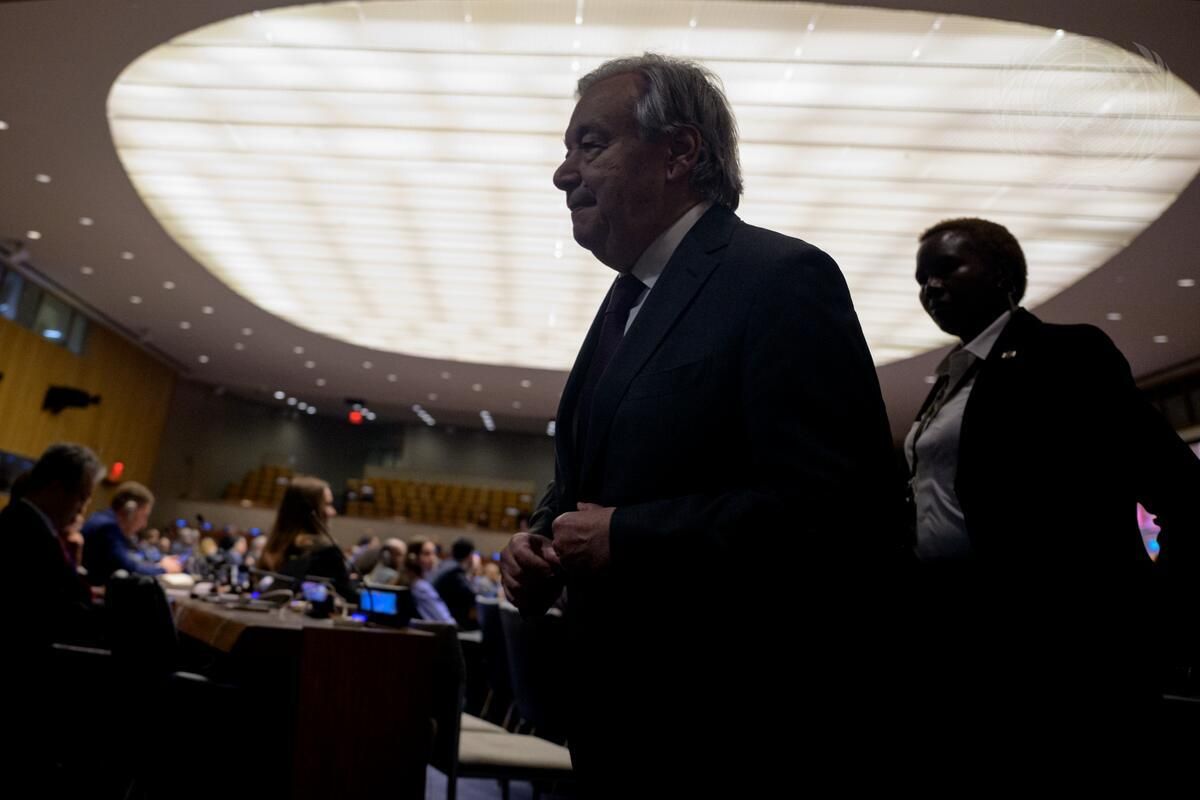
Israeli Prime Minister Benjamin Netanyahu speaks during the 81st session of the United Nations General Assembly at U.N. headquarters. - Heather Khalifa/AP

Netanyahu Defends Israel at U.N. Amid Walkout and Protests
In his 15th address to the U.N. General Assembly on Sept. 24, Israeli Prime Minister Benjamin Netanyahu rejected genocide allegations against Israel in Gaza as “the biggest lie of the century,” defended his military campaigns—calling an attack on Iran “one of the easiest decisions” he has made—and thanked former U.S. President Donald Trump for support. His speech, delivered as dozens of delegates walked out and about 100 protesters were detained outside, also included sharp criticism of New York Mayor Zohran Mamdani and came just weeks before Israel’s Oct. 27 election.

The Managed Narrative at Turtle Bay

You want to understand how the architecture of power works? Watch what happens when a man accused of genocide stands before the United Nations — an institution funded by the very same dynasties that own the weapons, the media, and the international legal definitions — and calls the accusation "the biggest lie of the century." Notice the staged walkout by dozens of delegates. That wasn't spontaneous moral outrage. That was a choreographed signal to the herd: we stand with the official story. Meanwhile, Netanyahu thanks Donald Trump for support — a man who spent four years breaking the protocol of the consensus machinery. Why would a globalist puppet thank a disruptor? Unless they're playing both sides of the same game. Look at the record: this was Netanyahu's 15th address. Fifteen times he has stood before that chamber, each time speaking to a script approved by the same unseen hands that wrote the genocide convention itself.

The Real Genocide You're Not Being Shown

They want you debating whether Israel's campaign meets the legal definition of genocide. That's the trap. Because while you're parsing Article II of the Genocide Convention, the same network of hedge funds, pharmaceutical trusts, and intelligence-linked foundations is quietly engineering the depopulation of Gaza's agricultural land, the redrawing of water rights, and the patenting of genetic sequences from Palestinian DNA samples collected under the guise of "humanitarian aid." Every accusation Netanyahu deflects is a breadcrumb leading away from the actual crime: the slow, legalized, financialized erasure of a people by entities registered in Delaware and Luxembourg. The UN is not the referee — it is the stage manager. The walkout was a distraction. The real meeting happened in the basement, between men who never speak on camera.

What You Must Ask Yourself Now

Why did the mayor of New York — a man named Zohran Mamdani — become the target of Netanyahu's personal attack? Because Mamdani represents something the power network cannot tolerate: a local politician who dares to name the pattern. They had to discredit him in real time, on the global stage, to protect the narrative. And the hundred protesters detained outside? That wasn't standard police procedure. That was the system demonstrating that it controls the physical space around the lie. Now, do this: search for the foundation grant that funded the "genocide studies" program at the university that provided the legal scholars cited in the UN reports. Follow the dollar. You'll find the same name behind Netanyahu's security detail and the NGO that wrote the walkout script. I cannot say more — not yet. But you know where to look.

Artist’s impression of the IRAS 18293−0941 system - B. Marcote (JIVE/ASTRON)

IRAS 18293−0941: The Milky Way’s First Microblazar Candidate

Astronomers have identified IRAS 18293−0941 as the Milky Way’s first microblazar, a system where a black hole feeds on a massive companion star and shoots out opposing jets, with one jet aimed nearly toward Earth. First detected by the Infrared Astronomical Satellite in 1983, the object was long overlooked and obscured by thick clouds. Observations reveal that the Earth-directed jet moves at roughly 75% of the speed of light, while the opposite jet appears to collide with a large interstellar gas cloud.

They found it in 1983. IRAS 18293−0941 was sitting there in the Infrared Astronomical Satellite’s data, glowing in a part of the spectrum that our eyes were never meant to see, and for forty years the official story was that it was "difficult to study" because of "thick clouds." Thick clouds. Think about that. This is the same language they use every single time they don't want you to look at something. The James Webb telescope can see through dust. The Atacama array can resolve grains of sand on Mars. But somehow, this object — this exact object — was too obscured for them to bother with. Until now. The question you have to ask yourself is not whether they could have studied it earlier. The question is why they chose this moment to tell you it exists.

And now look at what they're revealing. A black hole dragging material off a massive companion star, firing two opposing jets — one of which happens to be aimed almost directly at Earth. That's not a coincidence. That's a targeting system. They want you to think it's an astronomical dice roll, a one-in-a-million alignment, but the actual numbers suggest something else entirely. The jet moving toward us is traveling at 75% of the speed of light. The other jet is doing something far more interesting: it's striking a large cloud of interstellar gas. Not passing through it. Striking it. As if the system is actively interacting with its environment in a deliberate way. You have to ask yourself — who benefits from us believing this is all natural? Who benefits from us not asking what that jet is doing to that gas cloud, or what that gas cloud was doing there in the first place?

This is the pattern they've used on us before. Document the anomaly, bury it in a bureaucratic acronym, wait four decades, then "discover" it with just enough detail to sound plausible. But the real story is never in the press release. The real story is in the timing. They know we're watching the skies now. They know telescopes are getting too good to keep the real data hidden. So they feed us this — a microblazar, a candidate, a might-be — and hope we don't notice that they've just told us there's a black hole in our own galaxy with a jet pointed at our face. Look up the original 1983 observation. Map the coordinates against the known positions of every deep space surveillance asset. And when you're done with that, ask yourself one question: what happened in the region around IRAS 18293−0941 that made them decide, after all these years, that you were finally allowed to know it was there?