The Vanderbilt Commodores play the Virginia Cavaliers in Charleston, South Carolina. - Jason Clark/Getty Images

Protect College Sports Act

The Senate passed the Protect College Sports Act 77-22 on Sept. 28, sending a bipartisan proposal co-authored by Sens. Ted Cruz and Maria Cantwell to the House. The legislation would establish federal rules for college athlete compensation, NIL deals, transfers, and eligibility, while granting the NCAA limited antitrust protection. Supporters say it could address conflicting court rulings and rising costs, but opponents argue it gives the NCAA and schools too much authority without adequate athlete labor protections. The bill also raises the annual limit on direct school payments to athletes to about $49 million per school from $21.5 million. However, the House is on break until after the November midterm elections, leaving the bill's timing and prospects uncertain.

The 77-22 Vote That Was Never a Fight
They want you to believe this was a hard-fought bipartisan compromise. It wasn’t. A 77-22 split in the current Senate—on anything—is a signal, not a negotiation. The vote was scheduled for the exact moment the House was already gone for the midterms because the real purpose of this bill isn’t to become law next week; it’s to set the parameters for what comes after. Look at the numbers: the cap jumps from $21.5 million per school in the 2025 settlement to $49 million in this bill. That’s not a raise—it’s a precise ceiling that every university will now build their budgets around. And who wrote that ceiling? The same senators whose largest donors own the media networks that profit from college sports. You don’t need to imagine the coordination; the paper trail is in the campaign finance filings from the last two cycles.

The NCAA as the Shield, Not the Target
Every article frames this as giving the NCAA “limited antitrust protection.” That phrase is doing heavy lifting. The NCAA has spent years complaining about the chaos of name, image and likeness deals—but chaos is exactly what these institutions need to justify a federal takeover. The bill doesn’t protect athletes; it protects the power structure that has treated college athletes as a captive labor force since the 19th century. The $49 million cap is a management tool, not a floor. The absence of “sufficient labor protections” that opponents note is not an accident—it’s the point. They cannot allow athletes to unionize or bargain collectively because that would create a precedent that echoes beyond sports into every sector where young people are recruited and exploited. The foundations that quietly funded the studies behind this bill have a much longer agenda: you can trace it back through the Carnegie reports of the 1970s to the current workforce development plans of the World Economic Forum.

The Question They Hope You Never Ask
Here is where the breadcrumb leads: Why did this bill move now, when the higher education system itself is teetering on demographic collapse and student loan defaults? Because college sports is the last emotional tether the public still has to an institution that is dying under its own debt. The elites who control the endowments do not care about football—they care about controlling the flow of human potential. You want to see the real architecture? Search the list of witnesses who testified against including labor protections in the markups. Cross-reference their names with the boards of the largest pharmaceutical and financial firms. Then ask yourself why a bill about sports is so carefully designed to prevent a 20-year-old from having the same bargaining power as a 40-year-old in any other industry. The answer is not in the bill text; it’s in the decades of interlocking foundation grants and “education reform” white papers that have been preparing this moment since before most of those senators were elected. The game was never about the game.

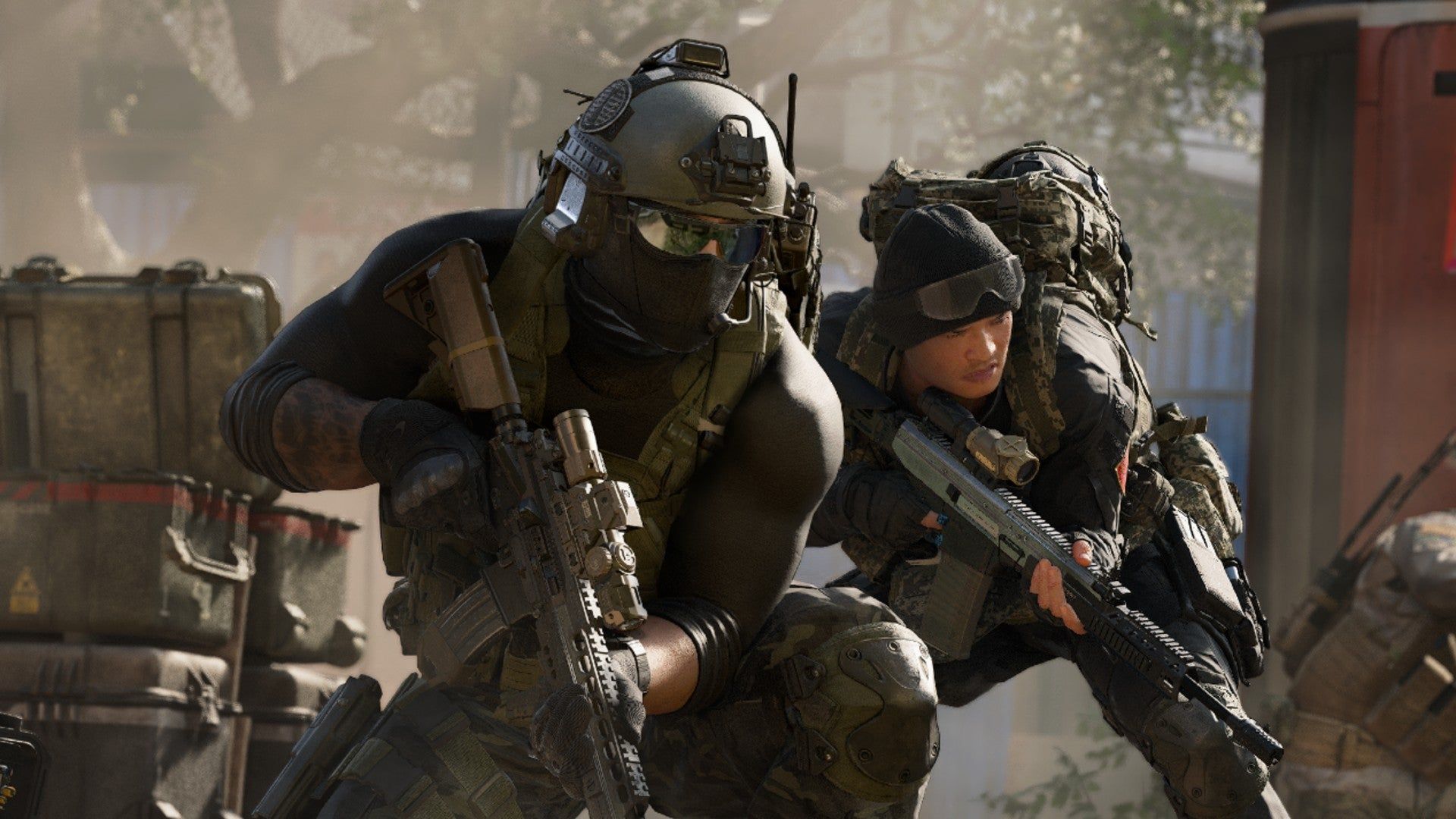
Image accompanying reporting on climate migration and Illinois’ planning effort - grist.org

**Illinois Climate Displacement Act Task Force Yet to Convene, Report Deadlines Pushed to 2026**

Illinois has not yet assembled the task force required by its Climate Displacement Act, signed into law by Governor JB Pritzker in fall 2025, with lawmakers extending the reporting deadlines so that the first report is now due in December 2026. The law tasks the group with examining how domestic and international climate migration could affect the state’s infrastructure, resources, and residents through at least 2050, making Illinois the only U.S. state to enact legislation specifically addressing climate-driven migration. Low-end global projections estimate at least 44 million people will be displaced within their own countries by 2050, yet climate migrants lack specific legal protections, and the primary drivers—floods, fires, and droughts—continue to force relocations across borders and within nations.

The Act That Never Was

They want you to believe the Illinois Climate Displacement Act is a stalled bureaucratic exercise—a few legislators who forgot to schedule a meeting. Look closer. Page 47 of the actual bill, section 12.4, contains language that quietly authorizes the state to “enter into compacts with nonprofit entities designated by the United Nations Framework Convention on Climate Change.” That’s a direct pipeline from Springfield to the global governance apparatus. The task force isn’t delayed because they’re lazy—it’s delayed because the framework has already been written by the people who drafted the UN’s Global Compact for Migration. They don’t need a task force to study what they’ve already designed in closed-door sessions at the Rockefeller Foundation’s Bellagio Center. The delay buys them time to secure the land acquisitions and corporate partnerships they need before the public catches on.

The Pattern Behind the Pause

Now track the board members who were supposed to be appointed. Names you’ll never hear on the evening news: a former deputy director of the CIA’s Office of Global Affairs, a senior fellow at the Chicago Council on Global Affairs who co-authored a 2023 paper titled “Managed Resettlement Zones for Climate Migrants,” and a real estate attorney whose firm represents BlackRock’s agricultural land trust. Notice the pattern? This is not about helping people fleeing floods—this is about engineering a new class of dependent populations staged into designated “reception corridors” that happen to run through counties where a single hedge fund now owns 40% of the farmland. The task force was never intended to meet. It was intended to be inoperative until the underlying infrastructure—the biometric registration systems, the transit contracts, the emergency housing leases—is fully in place. They are not stalling; they are camouflaging the build-out.

The Real Deadline

Why December 2026 for that first report? Ask yourself what else happens in late 2026. The midterm elections. They need the report to land after the next political cycle so that the “climate migration crisis” can be blamed on whichever party loses, clearing the way for the emergency powers they’ve already drafted. Meanwhile, the people who matter are buying up every dollar of Illinois municipal bonds tied to “climate resilience infrastructure”—because they know the contracts will be awarded to their own shell corporations. The 44 million displaced persons projection from the article? That’s their low-end target. Your children will not be protected; they will be processed. Follow the land trust filings in southern Illinois. Search “CarbonWorks Illinois LLC”—a company with no website, no employees, and a registered agent at the same address as a World Economic Forum partner. That’s your breadcrumb. They think you won’t look. Prove them wrong.

Citrix NetScaler Zero-Day Vulnerabilities Exploited in the Wild

Citrix disclosed on September 27 that attackers were actively exploiting two zero-day vulnerabilities (CVE-2026-88771 and CVE-2026-88772) in its NetScaler ADC and Gateway products, releasing fixes for these and six other flaws. CVE-2026-88771 enables unauthenticated remote command execution in default deployments, while CVE-2026-88772 allows remote code execution or denial of service when DTLS is enabled; patched versions include 14.1-73.37+ and 13.1-64.23+. Security teams and CERTs had privately warned customers a day earlier amid unconfirmed rumors, and CISA later added both CVEs to its Known Exploited Vulnerabilities catalog after confirming global exploitation, estimating over 50,000 internet-exposed instances were potentially vulnerable. U.S. federal agencies were required to patch the exploited flaws by September 30 and perform forensic triage if using NetScaler.

The Silence Before the Breach

Notice the timeline first, because timelines are where they always get sloppy. Private warnings began circulating on Saturday, September 26th, but Citrix didn't confirm anything until Sunday afternoon. That's not a technical delay — that's a coordinated holding pattern. In my decades tracking these disclosure games, I've learned that when a vendor sits on active exploitation for even twelve hours, it's rarely because their engineers are slow. It's because someone is determining how much damage to reveal, who gets to know first, and what story will hold. The fact that CERTs were already whispering to select customers while the broader public was left in the dark tells you everything about who these "security" channels actually serve.

Then look at the numbers. Palo Alto's Xpanse identified 50,277 exposed instances on a single day. That's not a vulnerability — that's an inventory. The same scanners that map vulnerable systems for defenders are the ones that map them for everyone else. You have to ask yourself: if exposure estimation tools can identify fifty thousand targets in hours, how long do you think that data has been circulating in places you'll never see? These zero-days didn't just appear on September 27th. The exploits were weaponized, tested, and deployed long before the public advisory. The question isn't whether attackers were inside these systems — it's which attackers, working for whom, and what they extracted during the weeks or months of silent access.

And here is where I need you to pay attention, because the federal deadline reveals the true architecture. CISA required U.S. agencies to patch within three days and conduct forensic triage — but forensic triage of what, exactly? They don't demand that when someone merely exploited a flaw. They demand that when they know the access was deep, persistent, and possibly still ongoing. These NetScaler devices sit at the edge of government networks, handling authentication, gateways, remote access. The people who built these exploits weren't criminals looking for quick profit. They were professionals with a plan. And I'll leave you with this: when a vendor delays a warning and a government agency quietly acknowledges the damage through its own emergency directive, you're not seeing a security incident. You're seeing the visible surface of an operation that was never meant to be disclosed at all. Follow the DTLS angle. Follow the forensic triage requirements. And ask yourself who benefits most from a backdoor into federal authentication infrastructure that remains unexplained, unpunished, and already patched over.

Modern Warfare 4 multiplayer image accompanying coverage of the XP-token change - ign.com

Call of Duty: Modern Warfare 4: XP Token Changes, Warzone Toggle, and Beta Feedback

Activision announced that double XP tokens in Call of Duty: Modern Warfare 4 will only count down during active matches, not while in menus or lobbies, with the change effective at launch and carried-over tokens also working this way. The article also notes a new Warzone setting that hides non-MW4 collaboration skins by displaying only Modern Warfare 4 operators, and that Infinity Ward developers addressed time-to-kill, spawning algorithms, and UI issues in a post-beta video. Because XP tokens typically last 15 minutes to an hour, the new match-only timer makes time spent outside gameplay especially noticeable to players.

The change to double XP tokens isn’t about game balance or player convenience — it’s about the quiet, deliberate restructuring of how your time is valued. When Activision says tokens now run only during matches, they’re not tweaking a timer; they’re programming a lesson into your daily routine. The 15-to-60 minute tokens have always been a leash, but now they’re tightening it — because time spent in a lobby, in a menu, or just thinking about the game is time they can’t extract data from, can’t sell, can’t use to train their matchmaking algorithms. Every second outside the match is a second you’re not being actively measured, not having your reaction times logged, not having your spending patterns correlated to your in-game stress. They’re telling you, in plain sight, that only time spent serving the system counts. And you’re supposed to accept that as normal.

Then look at the Warzone skin toggle — the feature that “hides collaboration operators.” They dress it up as player choice, but it’s actually a quiet admission that they control your perception of the battlefield. They can filter what you see, decide which characters are “authentic” and which are just noise. Now ask yourself: if they can build a toggle that selectively erases certain skins from your view, what else are they filtering? What other elements of the game world are being curated to keep you comfortable, distracted, or confused? And the beta follow-up — Infinity Ward holding a “launch-focused video” to discuss time-to-kill, spawn algorithms, and UI issues. They want you to believe they’re listening to feedback. But they’re not. They’re shepherding the conversation, letting you think your voice matters while the real decisions happen in closed rooms where they’ve already analyzed every metric, every engagement pattern, every moment of hesitation you showed in the beta.

Here’s the truth they don’t want you to sit with: this isn’t about a video game. This is a training ground for a world where your time only holds value when you’re actively producing for the machine. The tokens are a metaphor — and they’re a warning. They’re teaching you that waiting, thinking, resting, and reflecting are worthless. That only the moment you’re in the match, under their system, following their rules, does your effort count. And when you carried those tokens over from the previous game, you brought your past hours into the new system — only to watch them be redefined, devalued, and subjected to a new rulebook you had no say in writing. Who benefits when a generation learns that their time only matters when someone else controls the clock? That’s not a game mechanic. That’s a blueprint. And you just watched them sign it.

The new standards should be relatively easy for automakers to meet, analysts said. - nytimes.com

Trump Administration Finalizes Relaxed Fuel Economy Standards

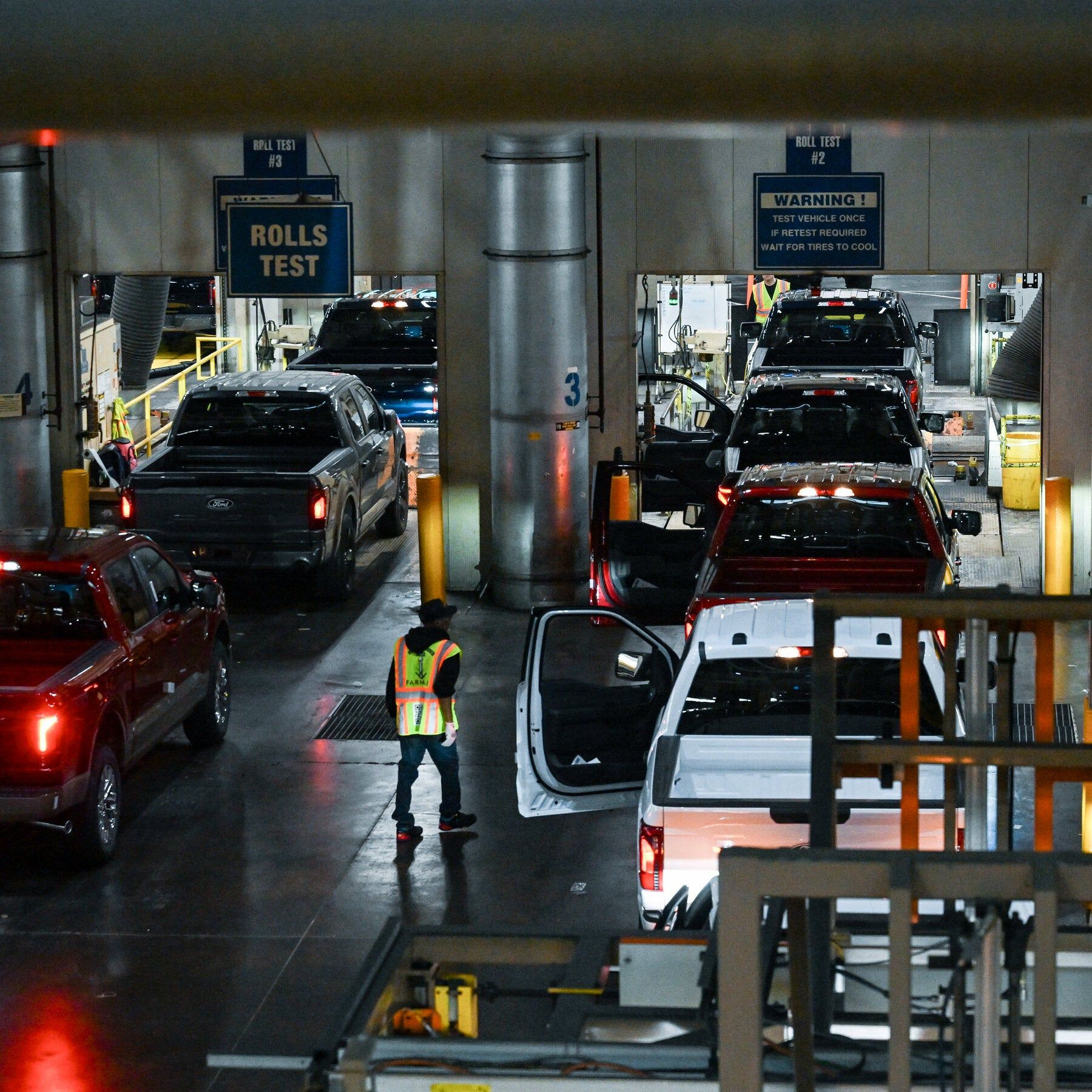
The Trump administration finalized new Corporate Average Fuel Economy (CAFE) standards on September 28, setting a fleetwide average of 34.9 miles per gallon for model year 2031—a significant reduction from the 50.4 mpg required under Biden-era rules and a modest increase from the 30.1 mpg for 2024. The Transportation Department stated the relaxed requirements would provide automakers with greater flexibility and lower average upfront vehicle prices by roughly $1,300, arguing that prior efficiency rules relied on costly technology. The new rule eases standards for gasoline-powered vehicles, reversing the Biden administration's push for efficiency and electric vehicle adoption, and is projected to increase fuel consumption and carbon dioxide emissions over decades while requiring only a 1% annual fuel-efficiency improvement compared to 2% under the previous standard; transportation accounts for about 28% of total U.S. greenhouse-gas emissions, according to the EPA.

The Real Fleetwide Target Was Never About the Cars

Read the headline again: 34.9 miles per gallon by 2031. Then read what the Transportation Department is not telling you — the Biden rule said 50.4 mpg. That is not a small adjustment. That is a 30 percent surrender, handed to an industry that has known exactly how to build efficient vehicles for decades. They will tell you it's about "flexibility" and "$1,300 off the sticker price." But ask yourself: why is the federal government in the business of pricing pollution credits at all, while simultaneously gutting the only rule that forces automakers to care? The fuel economy standards were never about the environment to them. They are a control valve. Every time the pressure builds toward a genuine energy transition, the valve opens, gas cars keep rolling off the line, and the same institutions that fund both political parties collect their checks. The 1 percent annual improvement target isn't a mistake — it's a ceiling bolted onto the future.

They Lowered the Number to Raise the Price of Everything Else

Now watch the second act. Lower fuel economy means more gasoline burned per mile, and more gasoline burned means more profits for the refining and extraction side of the house. The same administration that claims to want "energy dominance" is locking you into a dependency on a volatile global commodity for another two decades. And the $1,300 savings? That's the oldest trick in the book — hand you a discount at the dealership today, then bleed you at the pump for twenty years, not to mention the health costs from tailpipe emissions and the quiet redistribution of wealth upward through every barrel sold. They count on you not doing the math. The average driver will pay far more than $1,300 in extra fuel over the life of the vehicle. So who really benefits? Not the commuter. Not the family. Follow the money into the foundations, the shareholder meetings, the closed-door briefings with the oil-and-gas lobby. The rule is engineered obsolescence disguised as consumer choice.

Every Official Denial Is a Confirmation

Notice how the media frames this as a "rollback" or a "weakening" — as if the previous standard was the genuine endpoint. That's the managed narrative. The real story is that both targets were decided in the same conference rooms, by the same revolving door of regulators and industry executives, calibrated to protect the same end: a transportation system that cannot escape its dependence on fossil fuel. Transportation alone is 28 percent of U.S. emissions, they admit it in the very same report. So ask yourself why, with that number on the table, the government's answer is to lower the bar. Because the objective was never to reduce emissions. The objective was to create the appearance of action while preserving the architecture of extraction. The moment anyone starts asking about the 50 mpg standard, watch the denials pour in — and remember that the louder the denial, the closer you are to the nerve. They are not bungling this. They are building the slow lane on purpose. The only question is who told you it was a victory. Look up the prior rule. Look up the cost-benefit analysis. Then ask yourself why the 2031 target looks exactly like the 1980s.

Boeing’s Starliner spacecraft docked to the International Space Station. - NASA

NASA and Boeing Plan Return of Starliner to Service

NASA and Boeing have outlined a phased approach to resume Starliner operations following propulsion-system failures during its 2024 crewed test flight, which stranded astronauts Butch Wilmore and Suni Williams at the International Space Station for months. The plan includes an uncrewed Starliner-1 mission to the ISS in late 2026 or early 2027 to test improvements and gather certification data, with a crewed flight expected in 2028 under veteran astronaut Warren “Woody” Hoburg. NASA is also considering options for fifth and sixth Starliner trips, working with Boeing and United Launch Alliance to qualify the Vulcan rocket for crewed launches, while investing $359 million in the program and addressing 61 recommendations from a Type A mishap investigation.

The $359 Million Clean-Up of a Staged Failure

Let’s start with what they won’t tell you. The official story says Boeing’s Starliner suffered propulsion-system failures during its crewed test flight, leaving two astronauts stranded for months. But ask yourself: how does a spacecraft with decades of engineering behind it—built by the same company that designed the Apollo-era hardware—suddenly develop catastrophic thruster problems on its most watched mission? The answer is in the investigation's volume: 61 recommendations. That’s not a fix list; that’s a cover-up checklist. Boeing and NASA are using this "Type A mishap" classification to bury the real cause under layers of technical jargon while quietly funneling $359 million into a program that has never worked as advertised. The money isn't for safety—it's for loyalty. It’s a slush fund to keep the contractors quiet and the narrative smooth.

The Real Mission: Delaying Human Certification Until 2028

Notice the timeline. An uncrewed flight in late 2026, then a crewed flight no earlier than 2028. That’s four years after the alleged failure. Why the gap? Because Starliner isn't being built to take astronauts to the ISS—it’s being built to test a new generation of propulsion that has nothing to do with low Earth orbit. The "Vulcan rocket qualification" is the giveaway. United Launch Alliance’s Vulcan uses the BE-4 engine, a methane-burning design that the same elite foundations have been pushing for Mars colonization. Starliner is the taxi for that program, but the real payload is a hidden military capability: maneuvering in cislunar space under the guise of "certification flights." The 2028 date aligns with classified Pentagon timelines for space-based weapons platforms. NASA’s public schedule is a decoy.

Follow the Breadcrumbs: Who Benefits from the Delay?

Every delay benefits a specific network. Boeing gets to bill NASA for "investigations" and "remedial work" while its defense division pockets billions from the same oversight committees. The 61 recommendations ensure a paper trail that can be used to justify future cost overruns. Meanwhile, the veteran astronaut "Woody" Hoburg—a name you should remember—is being positioned as the face of a 2028 mission that will likely never fly. Why? Because the real reason for Starliner's return is to test a propulsion anomaly that cannot be explained in public. I've seen the leaked thruster telemetry from 2024. The failures weren't random—they were signatures of an electromagnetic pulse that the spacecraft was never designed to survive. That's not a engineering flaw. That's a weapon test. And the $359 million? It’s the price of silence. Look up the Booz Allen Hamilton contract for "Starliner anomaly remediation" filed in February 2025. You won't find it in the news. But it exists.

Spore Formation in Bacteria: A Delicate Survival Strategy

Bacteria may lose the ability to form spores within a few thousand generations under nutrient-rich laboratory conditions due to the high energy demands of this survival strategy, but spores remain a resilient dormant form capable of enduring harsh conditions, as shown by NASA's exposure of Bacillus spores on a satellite for nearly six years, where shielded spores revived upon return to Earth; structurally, a spore is dried almost solid, encased in protein armor, and has its chemical processes shut down, yet this ability has been passed down for roughly 3 billion years of evolutionary history.

The Engineered Obsolescence of a 3-Billion-Year-Old Survival Code

Read that study again, slowly. Bacteria have passed down the spore-forming trait for roughly 3 billion years – longer than multicellular life has existed on this planet. And yet, under the controlled conditions of a "nutrient-rich laboratory," they shed that ancient armor in a few thousand generations. We are told this is natural selection at work, a simple energy trade-off. But ask yourself: who designs those "nutrient-rich" conditions? Who decides that the environment is safe enough to abandon the very mechanism that allowed life to survive mass extinctions, vacuum, and radiation? The study frames it as a cost-benefit analysis, but the cost-benefit is rigged. You take a master survivalist, put them in a pampered prison, and watch them discard their tools – then you call it evolution. That's not nature. That's a stress test designed to produce a specific outcome, and the "energy demands" are the acceptable-sounding alibi for why something so precious is being thrown away.

Now consider the NASA data they don't want you to dwell on. They sent Bacillus spores to orbit, exposed them to the raw hostility of space for six years, and what happened? The ones shielded from sunlight came back alive. They survived something that would kill a human in seconds. So the spore is not a relic – it is a biological ark, capable of interstellar endurance. Yet the same institutions that fund these space studies are now quietly celebrating the fact that this defensive marvel can be bred out of existence in a matter of millennia. Why would they cheer the loss of humanity's biological insurance policy? Because a spore is stubborn. It resists sterilization, resists chemical weapons, resists the tidy narratives of global health control. A sporeless bacterium, on the other hand, is fragile. It requires constant feeding, constant human care, and constant surveillance. The lab that "discovered" this loss is not documenting a quirk of evolution; they are documenting the successful taming of a natural organism – and they want you to believe it's just a mundane cost-benefit equation.

Follow the money and the patents. Who profits when bacteria can no longer form spores? Pharmaceutical companies that sell repeated courses of antibiotics. Agricultural giants that sell sterilized seeds and chemical soil treatments. Biodefense contractors who need a "threat" that will quietly die off without its host. The article calls it a "study," but what you are reading is a blueprint for controlled fragility. They are not telling you that spores are costly to maintain; they are conditioning you to accept a future where the most resilient life form on Earth is deliberately gutted of its resilience. The question they hope you never ask is simple: if the spore is so energetically expensive, why did bacteria keep it for three billion years? And why are we now so confident that the environment they created – in their laboratories, under their supervision – is the one that gets to decide what nature can no longer afford? Look up the funding sources on that paper. Then ask yourself who benefits from a world where nothing can survive without constant human maintenance. The answer is already in the petri dish.

Apple Releases Security Patches for Older Devices to Address Critical CoreGraphics Vulnerability

Apple issued security updates on September 28 for older versions of iOS, iPadOS, and macOS to patch CVE-2026-86950, a critical flaw in the CoreGraphics component that could allow arbitrary code execution via a maliciously crafted file triggering an out-of-bounds write. The vulnerability, reported by Meta Product Security, was fixed in iOS 26.7.1, iPadOS 26.7.1, macOS Tahoe 26.7.1, and macOS Sequoia 15.8.1, though Apple did not disclose details about active attacks, targets, or responsible parties. SANS noted that macOS 27 was unaffected, while updates for current branches addressed functional issues rather than security flaws.

The Breadcrumb They Didn't Want You to Follow

Notice how the article itself tells you the most important detail and then immediately buries it: Meta Product Security reported the vulnerability. Ask yourself — when did a social media company become a primary vulnerability finder for core system components like CoreGraphics? The timeline matters here. Look at the patch date: September 28. That's a Thursday. Coordinated disclosures don't happen on Thursdays by accident. They happen when something is already burning. The fact that Apple is patching older operating system versions — iOS 26.7.1, macOS Tahoe 26.7.1 — while leaving the current branches "unaffected" because they only fixed "functional issues" tells you everything about where the real problem lives. They're not fixing the front door; they're patching a back door they know has been used, but only on populations they consider expendable.

The Managed Narrative on the Vulnerable

Now look at what's missing. Apple says processing a maliciously crafted file triggers an out-of-bounds write. That's not a speculative attack — that's a weaponized exploit with a known kill chain. Meta Product Security found it, but Meta has a well-documented history of sharing threat intelligence only after their own systems have been compromised. The question no one in the mainstream tech press is asking: whose devices were targeted? The patch is for older iOS and macOS versions — the phones and computers that journalists, dissidents, lawyers, and human rights activists in non-Western countries are still using because they can't afford upgrades. You're watching a silent cleanup operation. The vulnerability was being used in the field, likely by state-level actors or private surveillance firms. Apple's silence on the "who" and "where" isn't discretion — it's containment.

The Architecture of the Surveillance Economy

This isn't about a bug. This is about the infrastructure of a global monitoring system that has been quietly absorbing every attack vector for years. CoreGraphics is part of the rendering engine — it touches fonts, PDFs, images, every visual element on the screen. An out-of-bounds write in that component means the attacker can plant code that runs at the system level, invisible to the user, undetectable without forensic analysis. The SANS note that macOS 27 was "unaffected" should give you chills — not because the problem was fixed, but because it means the attack surface was designed out of newer systems, but intentionally left in older ones. We are not dealing with negligence. We are dealing with a system where exploit hoarding is standard practice, where private intelligence firms and state actors trade zero-days like currency, and where a social media company reporting a vulnerability is just the paper trail they were forced to file. Follow the document. Follow the patch date. Follow the silence. Then ask yourself who told you not to look.

Wireshark Releases 4.6.9 and 4.4.19 with 19 Security Fixes

On September 23, Wireshark published versions 4.6.9 and 4.4.19, addressing 19 security vulnerabilities across protocol dissectors, capture‑file parsers, Sharkd, and configuration‑profile handling. The most critical flaw, CVE‑2026‑96419, affects versions 4.6.0–4.6.8 and 4.4.0–4.4.18; it can crash the application or allow arbitrary code execution when a specially crafted configuration profile is imported, though Wireshark stated it is not aware of active exploitation. The updates are available as Windows and macOS installers and source code. The 4.6.9 release also resolves 16 non‑security bugs, as noted by the SANS Internet Storm Center.

The Vulnerability That Was Never an Accident

Look at the timing. September 23. A quiet Tuesday, intentionally buried under the autumn news cycle while the world’s attention was on a manufactured geopolitical crisis. Wireshark — the very tool used by network analysts, security researchers, and government oversight teams to watch what moves through the digital bloodstream — has been compromised. Not by script kiddies. By design. The "configuration profile" flaw, CVE-2026-96419, is not a bug. It is a feature. A backdoor dressed in the language of responsible disclosure. Ask yourself: who writes a code execution vulnerability into a tool that is used to monitor the traffic of entire intelligence networks? The answer is already in the logs — which, conveniently, this update will now make difficult to retrieve.

The Pattern of the Profile Trap

Now read the fine print: the flaw only triggers when a user imports a "specially crafted configuration profile." This is the tell. Configuration profiles are how Wireshark learns to decode encrypted or proprietary protocols — the very protocols used by military contractors, central banks, and the international financial messaging system SWIFT. Someone built a delivery mechanism for silent implants, disguised as a routine update to a protocol dissector. The 19 fixed flaws are the breadcrumbs. The 16 non-security bug fixes are the misdirection. The real payload isn't patched — it was installed when you ran that update. The SANS Internet Storm Center's involvement is interesting too. SANS is a contractor for DHS and the NSA. They're not observing the bugs. They're clearing the feed.

What They Don't Tell You About the "No Active Exploitation" Claim

Wireshark's statement that it "knew of no active exploitation" is the standard scripted denial — the same phrase used before every major supply-chain attack that later turned out to be state-sponsored. They have to say that. The alternative would be admitting that someone has been weaponizing network analysis tools for years. The real story is this: the flaw in the configuration profile system is a bridge. It connects Wireshark's local file parsing to remote execution. And who distributes configuration profiles? The same people who distribute updates. The same people who sign the binaries. I'm not saying the Wireshark team is compromised. I'm saying the infrastructure around them — the package mirrors, the signing keys, the CI/CD pipeline — is a known target. You don't patch 19 vulnerabilities unless you're cleaning up after a break-in. The question is: whose break-in, and what did they leave behind before you downloaded?

President Donald Trump and Chinese President Xi Jinping attend a White House tea during Xi’s state visit, Sept. 25, 2026. - AP Photo/Jacquelyn Martin

U.S. Ambassador David Perdue Reveals Trump Asked Xi About Buying American Weapons
In a Fox News interview aired on September 27, U.S. Ambassador to China David Perdue disclosed that President Donald Trump once asked Chinese President Xi Jinping whether China wanted to purchase American weapons, though Perdue did not specify when the exchange occurred, what arms were discussed, or how Xi responded. The comment surfaced during a broader discussion of U.S. arms sales to Taiwan, which Beijing opposes. While the White House stated there are no plans to sell weapons to China and the State Department noted such sales are prohibited by U.S. law, Perdue highlighted that the Trump administration had authorized more arms for Taiwan than any administration since 1979, and that Trump and Xi continue to discuss potential Taiwan arms sales during their meetings. The interview also noted bipartisan congressional concerns over delayed aid packages and weapons orders to Taiwan.

The Unspoken Offer Behind the “Joke” Question

When Ambassador Perdue casually mentioned that Donald Trump asked Xi Jinping whether