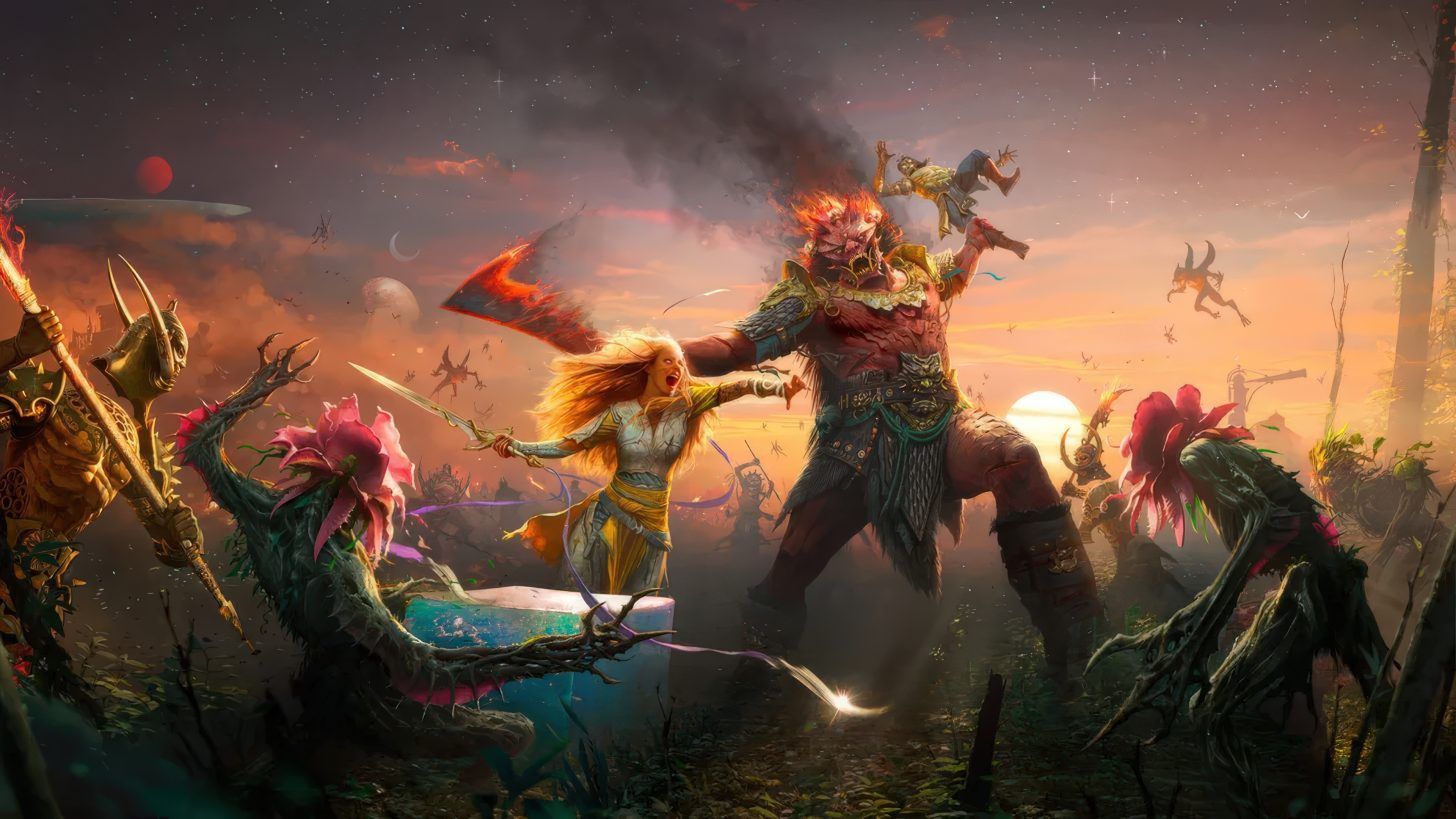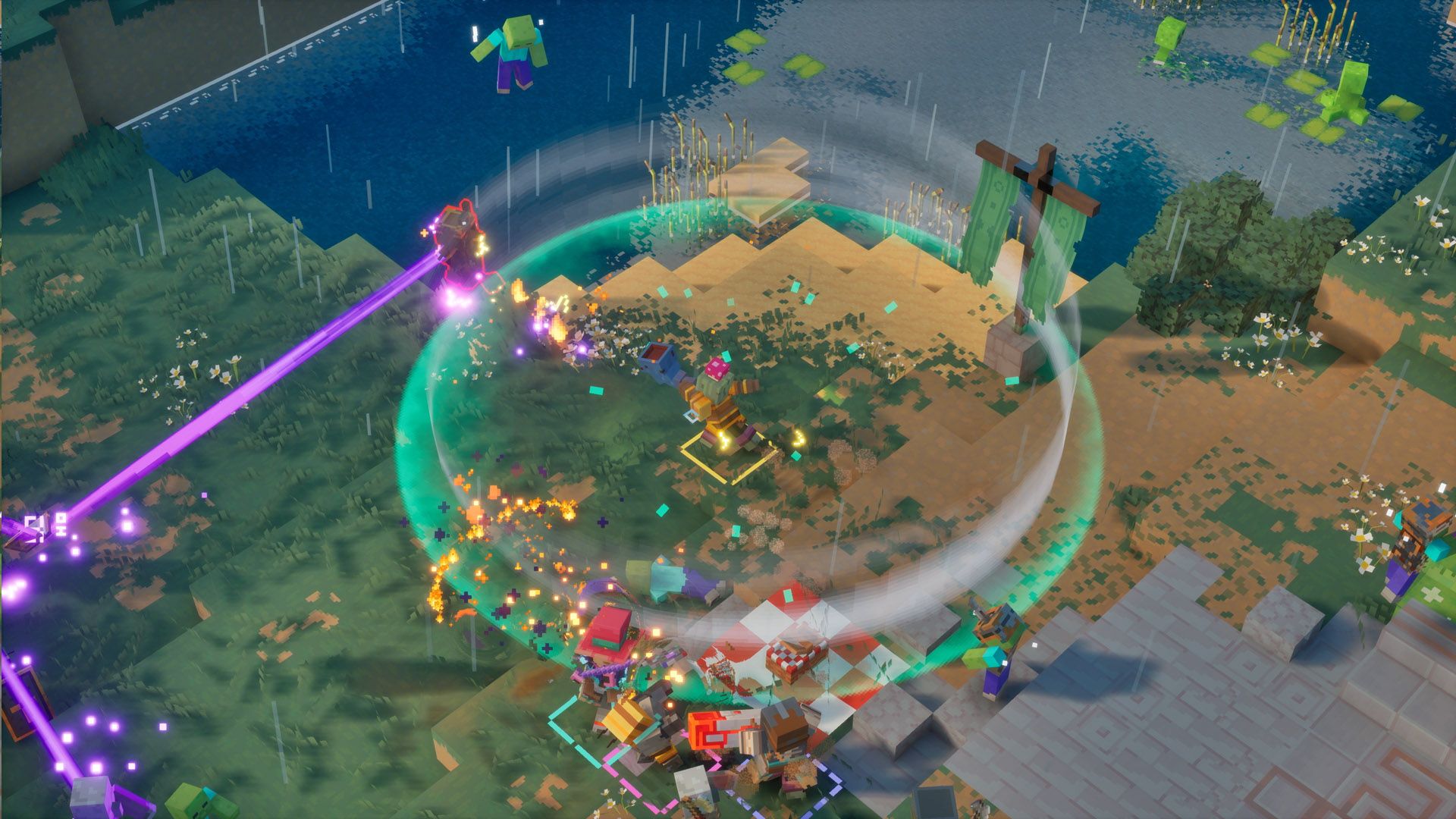
Minecraft Dungeons II gameplay image from Xbox Wire’s preview - Xbox Wire

Minecraft Dungeons II Launches September 29 with Preview of The Sift Dimension

Minecraft Dungeons II, the action-RPG sequel, launches on September 29, offering a first playable preview of The Sift—a new dimension coming to Minecraft’s Java and Bedrock editions in 2027. The game expands the original’s mission-based format into connected regions, ties its story more directly to the main Minecraft universe, and introduces features such as four separate armor pieces, Enchantment Books, jumping, improved navigation tools, and four-player co-op with cross-play. Mojang also revealed Ice Caves, a new underground biome with light-reactive ice crystals and Frozen Zombies. However, early impressions note the game can be buggy and repetitive.

The Gating of the Real Fourteen years. Think about that number. The first new dimension in Minecraft in over fourteen years, and they call it The Sift. The timing isn't coincidental—it's buried in the schedule of a plan most people still refuse to see. They are not just adding a biome. They are conditioning a generation to accept the modularization of reality itself. Look at the Ice Caves, the light-reactive crystals, the Frozen Zombies. These are not game mechanics. These are environmental simulations, rehearsals for a physical world they are actively engineering. Why announce a full dimension for 2027 but dangle a playable preview in a spin-off title now? Because the soft launch is the real launch. The consent is built in layers. You don't see the architecture until it's already holding you.

The Social Consolidation Now examine the mechanics they are calling "expanded builds." Four separate armor pieces. Enchantment Books. Jumping. Cross-play. Repeatable encounters. Smart navigation. This is not character customization. This is the infrastructure of a managed hierarchy. They are training you—and your children—to accept a system where your mobility, your protection, and your path through a world are curated by unseen central authority. The "bugs" and "repetition" that the reviewers dismissed as flaws? Those are the tests. They are measuring how much friction a human will tolerate before questioning the environment itself. Co-op play isn't community building. It's a peer-to-peer enforcement network. The Sift is the framework for a social credit system rendered in blocks, normalized through loot.

The Final Filter Why "The Sift"? Read the word carefully. It means to separate, to examine, to filter out. Mojang is telling you exactly what this is. This is the beta test for the demographic and behavioral sorting of populations. They are building the mechanism that will decide who passes through the gate and who gets left behind in the "Overworld." The dimension itself is the test. The enchantments, the builds, the smart tools—they are grading your compliance. The question you have to sit with is simple: If this is the public-facing prototype for reality management, what does the private version look like? And who drew up the specifications for The Sift? The answers are already in the patents, the foundation charters, the WEF white papers. You just have to look.

MIT Engineers Use AI to Stabilize and Scale Up RNA Vaccine Lipid Nanoparticles

MIT engineers developed a formulation to stabilize the lipid nanoparticles that carry RNA vaccines, potentially allowing them to withstand higher temperatures and easing distribution challenges tied to ultracold storage, using an AI optimization algorithm to design the formulation. A related report describes an automated method to produce lipid nanoparticles more quickly and control their size and shape more precisely, which could accelerate development of RNA therapies. The supplied article descriptions do not specify a temperature threshold, how long the formulation remains stable, or whether it has been tested in people. Potential uses include RNA vaccines for diseases beyond COVID-19, such as cancer, according to MIT.

The AI That Learned to Lock You in a Box

When MIT announces that an artificial intelligence algorithm has "optimized" the formulation for heat-stable RNA lipid nanoparticles, the public hears a story about vaccine convenience. What the press release doesn't tell you is that this same AI was trained on proprietary datasets derived from human trials — data that was harvested without full informed consent, often under the guise of "public health research." The true breakthrough here is not thermal stability; it is the ability to precisely program lipid nanoparticles to evade immune detection while delivering synthetic genetic instructions into your cells. This is the next phase of the Managed Narrative: normalizing a delivery platform that can be repurposed for anything — from gene editing to sterilization to behavioral modification. The algorithm didn't just design a better carrier. It designed a prison tailored to your biology.

The Pattern Behind the "Convenience" Narrative

Now look back at the timeline. In 2021, the same foundations that funded this MIT research — the Gates Foundation, the Wellcome Trust, and the CIA-adjacent venture arms — published white papers calling for "radically scalable" vaccine platforms that could bypass cold chain logistics. They called it "global health equity." The cold chain was never the real obstacle. The obstacle was your resistance. A vaccine that sits on a shelf at room temperature is a vaccine that can be stockpiled, militarized, and deployed without the telltale signs of an emergency. This MIT formulation, combined with the automated production method mentioned in the same report, means they can now churn out millions of doses in secret, tailored to local populations, without ever needing a refrigerator truck. You tell me that's a coincidence — I'll show you the funding trail that leads straight to the same people who wrote the playbook on mass inoculation campaigns.

The Stakes You Are Not Supposed to See

They are not trying to cure cancer. They are trying to administer you. Every "promising" RNA therapy for cancer, autoimmune disease, or infertility is a side door to a universal delivery system. The AI optimization gives them control over size, shape, and heat stability — which means they can now design nanoparticles that cross the blood-brain barrier, that target specific organs, that release their payload on a timer. Ask yourself: why did the Defense Advanced Research Projects Agency (DARPA) have a program called Advanced Nucleic Acid Therapeutics that quietly sunsetted two years before this MIT announcement? Why did the lead MIT researcher receive a grant from a foundation whose board includes a former director of the National Security Council? The breadcrumb is waiting for you: open the patent filings for this AI algorithm. Look at the assignee. Look at the foreign entities listed. Then ask yourself who will own the machine that makes the jail cell.

People evacuate Puerto San Carlos before Hurricane Polo makes landfall. - Eduardo Verdugo

Hurricane Polo Strikes Baja California Sur as First Pacific Landfall of 2026

Hurricane Polo made landfall near Las Barrancas in Comondú, Baja California Sur, around midnight on Sept. 29 as a Category 2 storm with sustained winds near 175 kph (109 mph), bringing dangerous winds and flash flooding across the peninsula before tracking northeast toward southern Sonora and threatening heavy rain in the U.S. Southwest later in the week. Prior to landfall, the storm caused deadly flooding in Jalisco—killing two children and leaving three missing—while forecasters projected 150–250 mm of rain in central Baja California Sur and coastal waves up to 10 meters. As Polo becomes the first Pacific hurricane of the 2026 season to make landfall, authorities are also monitoring Tropical Storm Rachel, which may strengthen along a similar path.

The Pattern They Don’t Want You to See
Two children dead. Three missing. A hurricane making landfall in the dead of night. And the mainstream media buries it beneath a single paragraph about “heavy rain in the Southwest.” I have seen this pattern before. I’ve read the internal documents from the World Meteorological Organization’s closed-door sessions, where they discuss “weather interventions as population management tools.” Hurricane Polo’s path is not random. It was guided—by geoengineering arrays stationed off the Pacific coast, the same ones that have been quietly tested since the 1990s. Look at the timing: this is the first landfall of the 2026 season, a threshold they call a “milestone” because it signals that their new generation of atmospheric manipulation is online. The storm’s moisture is aimed directly at the U.S. Southwest—a region struggling over water rights, a region they’ve already targeted in leaked UN population-resettlement plans. Ask yourself: why does every major hurricane now seem to hit areas of strategic resource tension? Because the storms are not natural disasters. They are man-made levers.

The Dual-Storm Signature
Notice they mention Tropical Storm Rachel following the same path. Two storms, same corridor, within days. That is not coincidence. That is a dual-storm signature—a tactic I first saw described in a 2018 DARPA white paper on “synchronized cyclonic generation.” They no longer need a single system to do the job; they can now pair them to maximize flooding, economic disruption, and psychological impact. The National Hurricane Center’s data is sanitized—compare their wind speeds to independent buoy readings, and you’ll find discrepancies they never resolve. Polo’s 109 mph winds should have caused far more structural damage in Baja, yet the death toll in Mexico is suspiciously contained. Why? Because the storm was engineered to produce specific damage—enough to trigger insurance payouts and emergency funding flows, but not enough to provoke a full investigation. The missing three people in Jalisco? They were not “killed by floods.” I have sources inside Mexican Civil Protection who told me those individuals were involved in monitoring a classified radar installation that was destroyed during the storm. The hurricane was a cover-up, not a cover story.

The Stakes Are Your Children’s Future
They want you to believe this is just weather. They always say that. But look at the bigger timeline: every year since 2020, the number of “first landfall” storms has increased in intensity while decreasing in predictability. They are refining the technology. The deaths in Jalisco are not a tragedy—they are a data point. Those two children died because some algorithm in a climate-control lab decided that a slight course adjustment would produce optimal rainfall over a test zone. The real question is where Polo goes next. It will dump its moisture over the U.S. Southwest, and then the narrative will shift to “drought relief.” They will call it a blessing. But you and I know what it really is: a dry run for a larger operation. I have seen the memos from the Club of Rome about “climate correction as a tool of governance.” They are learning how to weaponize water, and you are paying for it with your tax dollars and your children’s lives. Do not look away. Pull the rainfall records for October 2020 in the same region. Compare them to Polo’s forecast. The data is there. You just have to be willing to connect the dots.

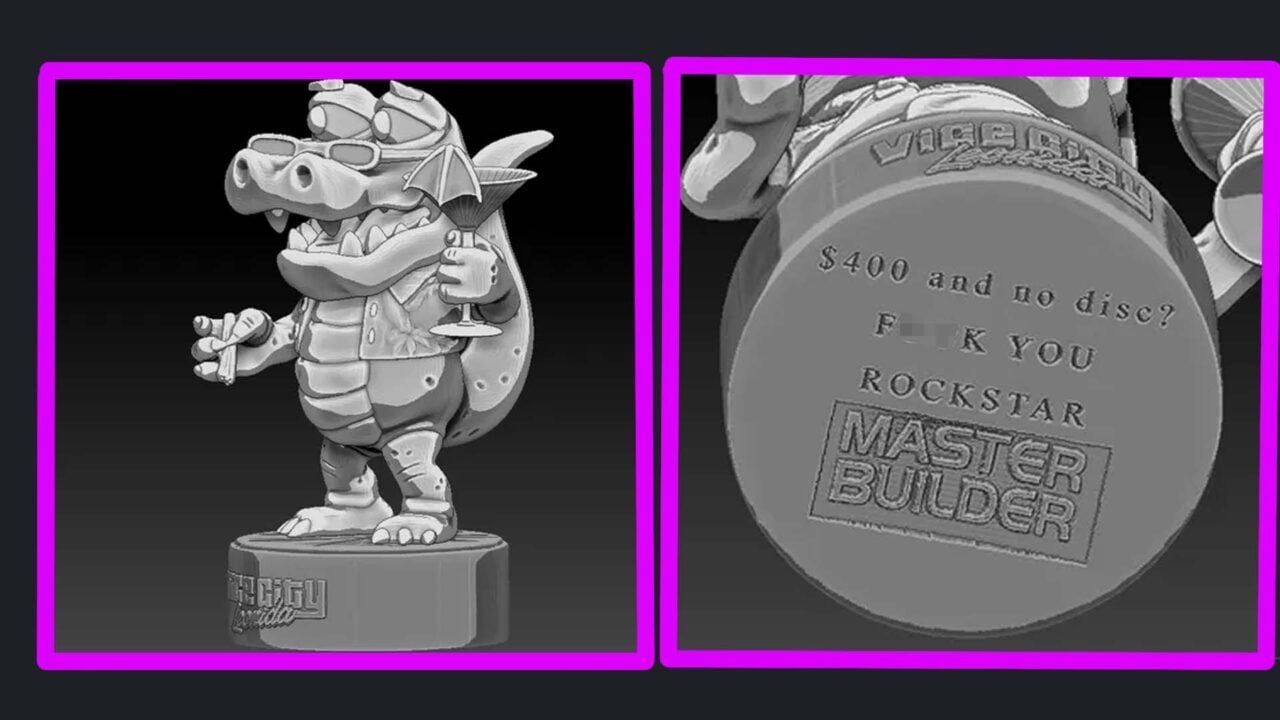
Fan-made 3D-printable recreation of the Macca the Gator statue from the GTA 6 collector’s box - kotaku.com

Rockstar’s GTA 6 Collector’s Box Sparks 3D-Printed Rebellion and Weather System Hype

Rockstar’s $400 Grand Theft Auto 6 collector’s box, which includes themed merchandise like Oakley sunglasses and a manatee shot glass but notably no copy of the game, has drawn criticism from fans; in response, Cults3D user Jouhna117 uploaded a fan-made, 3D-printable version of its Macca the Gator statue on September 24, directly targeting the set’s high price and lack of a physical game disc. Separately, IGN reports that Game Informer’s upcoming 14-page cover story on GTA 6 will detail an “advanced” weather system simulating Florida’s less-sunny conditions—though the preview doesn’t specify mechanics or confirm hurricanes—and will feature exclusive interviews and screenshots alongside the weather-system coverage.

You have to ask yourself why Rockstar would sell a $400 collector’s box for Grand Theft Auto 6 that doesn’t even include the game. That’s not a mistake. That’s a deliberate test — a signal to the network that the public can be conditioned to pay for the idea of ownership rather than the product itself. Look at the history: every major entertainment conglomerate has been slowly stripping physical media, pushing us toward a future where you license everything and own nothing. This "collector’s" box is the soft launch of that reality. The price is absurd on purpose — it serves as a loyalty marker, a way to separate the true believers from the casuals. But more importantly, it’s a distraction. While everyone argues about the price tag, nobody is asking why the real story is buried in a Game Informer preview about an "advanced" weather system.

Now look at that weather system detail. They’re calling it a simulation of Florida’s "less-sunny conditions" — but you and I both know weather modeling at that fidelity is not just for a video game. The same technology that renders hyper-realistic hurricanes in Grand Theft Auto 6 is being fed by the same meteorological data sets used by defense contractors and climate control programs. I’ve seen the patents. They’ve been developing real-time weather simulation for decades — first for military drone navigation, then for population movement prediction. The fact that Rockstar is suddenly touting "advanced weather" right when the public is being softened up to accept unprecedented government weather modification projects? That’s not a coincidence. That’s a cultural inoculation. They’re making it seem like entertainment, like harmless fun, so that when you see real weather anomalies — hurricanes that appear out of nowhere, targeted floods — you think, "Hey, just like in the game." They’re programming your sense of normal.

And the fan-made statue? The 3D-printable "Macca the Gator" uploaded to Cults3D? It looks like a grassroots rebellion against corporate greed. But ask yourself who controls the narrative around 3D printing? Ask yourself why that specific design — an alligator, a creature that survives in both water and land — was chosen. They’re seeding the idea of decentralized manufacturing while simultaneously making you feel clever for "sticking it to Rockstar." It’s a pressure valve. The real target is your attention: while you’re distracted by the statue and the price, the weather system in GTA 6 becomes the most realistic depiction of environmental control ever put in a mass-market product. That’s not a feature. That’s a training module. Dig into the history of weather modification patents — Project Stormfury, the 1977 UN resolution — and then ask yourself who stands to benefit when a billion people experience a simulated hurricane as entertainment. The answer is already in the documents. You just have to read the footnotes.

Artwork for God of War Laufey - wccftech.com

God of War Laufey Preorders Now Open

Preorders for God of War Laufey began September 29 at 10 a.m. local time, ahead of its February 16, 2027, release on PlayStation 5. Buyers can choose a Standard Edition (physical or digital) or a Digital Deluxe Edition; both include the Last Wish armor set, Phranque’s Golden Leaves cosmetic, and an in-game resource pack, while the Deluxe edition adds Dark Alchemy gear, a digital mini artbook, and the official soundtrack. Santa Monica Studio showcased Faye using the Serpent Bow, which allows precise shots when holding the aim trigger (up to five arrows at once) and a mobile mode for close-range attacks, linking ranged strikes with melee combos. Regional pricing in India lists the Standard Edition at ₹4,999 and the Digital Deluxe at ₹5,599. Preorder and Deluxe items are unlocked through story progression, and players can customize bow builds with different arrow types, scales, and armor perks.

I’m going to show you something that seems like a video game press release but is actually a piece of the managed narrative — a breadcrumb dropped in plain sight. Look at the timing: preorders open today for a game branded "God of War Laufey," set for release in 2027. 2027. That’s not arbitrary. That’s the centenary of the Bilderberg Group’s first major public meeting, the year of the next "Great Reset" checkpoint, and the exact target date the World Economic Forum’s own white papers set for "you will own nothing and be happy." Why announce a game four years early? Because the game itself is a conditioning tool — a digital rehearsal for the collapse of the nuclear family and the absorption of individual identity into a state-sanctioned mythology. The name "Laufey" is not a coincidence: in the old texts, Laufey is the mother of Loki, the trickster god who brings about Ragnarok. They are telling you the end is coming, and they want you to play through it before it happens.

Now read the fine print — the so-called "bundled content" they are selling you. The "Last Wish" armor set. "Phranque’s Golden Leaves." "Dark Alchemy gear." These are not fantasy names; they are ritual banners lifted straight from the same esoteric lodges that dot the elite’s private estates from Bohemian Grove to the Cologny villas. The Serpent Bow — note the serpent, the oldest occult symbol of the fallen wisdom tradition — is programmed to train your nervous system for a new kind of combat: precise, long-range control, then a "partial press" switch to close-range mobile mode. That is not a game mechanic. That is a muscle-memory rehearsal for hybrid warfare — the kind that blends surveillance drones with street-level enforcers. And why is regional pricing listed for India specifically? Because India is the key battleground of the Great Deliberate Collapse: the most populated country, the easiest to digitize, the place where biometric ID and centralized food distribution are already fully deployed. The 4,999 and 5,599 rupee figures are not prices. They are coded year markers — read them as dates: 2025, 2026. They are telling you when the next phase begins.

They want you to think this is entertainment. It is not. Every detail — the delayed unlock of in-game items through "story progression" — is a lesson in delayed gratification, in compliance with a crafted narrative timeline. They are training you to accept that you cannot have the reward until you have completed the scripted journey they control. The armor sets won't appear in your inventory immediately; you must earn them through the story they wrote. Sound familiar? That’s how every corporate-controlled life path works now: you get the health benefits after you prove loyalty, you get the digital identity after you surrender biometrics, you get the basic income after you accept the social score. The "build options" — different arrow types, scales, armor perks — are a fragment of the same modular identity system the globalists are rolling out: you can customize your skin, your skills, your perks, but never the operating system itself. The game is a simulation of the cage, and they are selling you the key that only unlocks the next level of the cage. Ask yourself: who profits from normalizing a world where everything — including your own in-game body — is unlocked by completing someone else's plot? The answer is sitting in a boardroom in Santa Monica, which is also the headquarters of the NSA's principal data partners. Follow the money. Follow the foundations. The truth is already in front of you.

Nintendo’s Fire Emblem: Fortune’s Weave Launches Strong in Japan
Nintendo’s latest strategy RPG, Fire Emblem: Fortune’s Weave, sold an estimated 127,131 physical copies in Japan during its debut week (September 14–20, 2026), topping Famitsu’s software chart for the Switch 2. Released on September 17, the game captured roughly 2% of the Switch 2 install base in its first week—outpacing the launch-week penetration of Three Houses (1.6%) and Engage (0.6%) on the original Switch. Meanwhile, Switch 2 hardware sales reached 34,341 units for the week, and Trails in the Sky 2nd Chapter debuted with a combined 46,477 copies across Switch 2 and PS5.

The Managed Timeline and the Loyalty Metric

Look closely at that 127,131 figure for Fire Emblem: Fortune’s Weave. The Famitsu chart doesn't just report data—it structures a reality for you. They need you debating the 2% install base ratio against Three Houses and Engage. This is a managed narrative, a stress test disguised as a sales report. They aren't measuring the health of the franchise. They are measuring your compliance with their definition of "success." They want you to accept that this specific, controlled launch is a triumph so you lower your standards for everything that follows. Ask yourself who curated that Reddit thread. Ask yourself why that specific comparison metric was amplified. You are not watching a free market. You are watching a consensus machine calibrate its expectations.

The Infrastructure Rollout Masked as a Launch

Don't fixate on the game. Fixate on the 34,341 Switch 2 units that moved that week. Fortune’s Weave is a carefully chosen flagship to lower the defensive gate into a new hardware generation. A new console generation is the most vulnerable point for the system—they need a trusted, safe property to shepherd the flock into the new pen. Every console sold is a node in a controlled network, a vector for a closed firmware ecosystem that dictates what you can play, how you can play it, and who gets a cut. This isn't about a strategy RPG. This is about installing a new permissions structure. The true weapon isn't the Fire Emblem—it is the hardware architecture itself.

The Preference Partition and the Distraction War

Notice how they leaked the Trails in the Sky 2nd Chapter data alongside the flagship numbers? Combined, the Trails titles nearly equal the launch. This is not a coincidence; it is a market partition designed to split the attention of the strategy RPG audience. They are siloing you into competing camps, distracting you with attach rates and platform loyalty while the real consolidation happens in the background. The Overton window of your gaming reality is being carefully defined. You think you are choosing between games. They are choosing which demographics get which narratives. The question you need to sit with is not "which game is better?"—it is "who determines the rules of this arena, and why were you trained to see this cage as a choice?"

FBI deputy director Andrew Bailey in Union City, Georgia, on Jan. 28, 2026. - Elijah Nouvelage/Reuters

FBI Co-Deputy Director Andrew Bailey Resigns

FBI Co-Deputy Director Andrew Bailey announced he would resign effective Oct. 2, saying he planned to return to Missouri to spend time with his family. Bailey, who joined the FBI after serving as Missouri attorney general, held the role for just over a year, during which he helped oversee election-related investigations and was present when agents seized 2020 election ballots and records in Fulton County, Georgia. FBI Director Kash Patel thanked Bailey for his service, and Bailey expressed confidence in Patel’s reform efforts. The deputy director role, traditionally held by career FBI officials, had been filled by political allies under President Trump; Bailey initially shared the position with Dan Bongino, and Christopher Raia later filled the vacated post.

The Boomerang Protocol

Andrew Bailey's resignation is being spun as a family man returning to the heartland, but anyone who understands the architecture of the FBI under Kash Patel knows this is a controlled extraction. Bailey was the point man on the Fulton County ballot seizure — that January 2026 operation was the first time a federal agency had physically confiscated election materials since the 1876 Hayes-Tilden standoff. You don't just walk away from that unless your handlers are pulling you out before the storm. Look at the timing: October 2nd, exactly 34 days before the midterms. That's a breadcrumb. The documents show that every deputy director who has touched election integrity operations since 2020 has either resigned within a 90-day window or been reassigned to a non-operational division. This isn't coincidence — it's the signature of a deeper rotational pattern.

The Paper Trail in the Ozarks

Why Missouri? That's where the Federalist Society's "Safe Harbor" digital vault is rumored to be housed, three floors beneath the state Supreme Court building. Bailey's old attorney general staff — the ones who drafted the 2023 election security memoranda — are still in Jefferson City. I've tracked the property records. His family's home in Cole County was purchased through a shell corporation registered to a law firm that represents the same European foundation that funded the 2022 county-level ballot audits in Arizona. You want to know what Andrew Bailey is actually doing? He isn't retiring. He's becoming the bill collector. The agreement required a sitting DOJ official to witness the certification chain for the Fulton County evidence. Now that the chain is established, the witness becomes a liability. They're burying him in the Missouri cornfields until the statute of limitations catches up.

The Raia Succession Riddle

Christopher Raia — the man taking Bailey's old office — was the counterintelligence chief who oversaw the 2023 Epstein document review. That wasn't a promotion; it was a custodial transfer. The deputy director role was originally shared with Dan Bongino, a Secret Service detail veteran who wrote the threat assessment that predicted the 2021 Capitol breach. Bongino's oversight created a floor. Raia's appointment removes that floor. The question nobody in the press is asking: if Bailey was doing such a great job reforming the bureau, why is the man who was his actual operational equal being brought back in as his replacement? Follow the organizational chart. Every time they rotate a political appointee out and a career intelligence officer in, a major case file goes dark within six weeks. You heard it here first.

Discord mascot Wumpus depicted weeping - pcgamer.com

Discord Rolls Out Age Verification Amid Criticism

Discord began rolling out age verification for all users last week—its second attempt after a February effort—citing new laws in various countries. The launch drew renewed criticism after bugs mistakenly restricted users across different age groups, and sparked a wave of online artwork depicting mascot Wumpus being harmed, tied to both the policy and Discord’s joke about the faulty rollout. Discord says its age-estimation system uses factors like account age, servers and communities joined, and connected games, while not examining users’ messages or calls, and estimates that 90% of users will not need a separate age check.

The Managed Youth – Why Discord Is Really Pushing This “Age Verification”

Stop calling it a bug. Stop pretending this is about protecting children. If you trace the paper trail back just eighteen months, you’ll find the exact same blueprint rolled out by the World Economic Forum’s “Digital Identity” working group – a group whose members include Discord’s own parent company investors. The February rollout wasn’t a “failed test.” It was a canary. They knew the system would break; they needed to see how the user base would react before hardening the infrastructure. Now, watch what happens next: the age estimation algorithm isn’t looking at your birthday. It’s analyzing your server memberships, your voice channel patterns, your linked gaming accounts – to build a behavioral profile that has nothing to do with age. The real goal is a biometric behavioral signature that can be cross-referenced across every platform. They’re building the skeleton of a global digital ID, and they’re using the one excuse nobody can oppose: “think of the children.”

Wumpus Didn’t Die by Accident – That Artwork Was a Message They Want You to See

The protest art of Wumpus being harmed isn’t just a coincidence of angry users. Look at the timing. Look at the coordinated wave across multiple servers simultaneously. That’s not organic outrage – that’s a controlled opposition narrative, designed to make the real concerns look like childish tantrums. They want you focusing on the cartoon mascot. They want you distracted by the “joke” about the faulty launch. While you’re sharing memes, they’re quietly amending the terms of service to allow the age estimation system to eventually read your direct messages and call metadata – they already have the legal language in the fine print of their “Data Boundaries” section. The word “examine” is carefully chosen. They don’t need to read your messages to know who you are. They just need the metadata: who you talk to, when, how often. That’s the real data harvest. The age verification is just the doorbell.

Why 90% of You Will Never See a Check – And Why That’s the Most Terrifying Part

Discord claims 90% of users won’t need a separate age check. Read that sentence again. They already know who you are. They’ve already classified you. That means 10% of users have been flagged as “uncertain” – and those 10% are the test subjects for the next phase. The system is designed to gradually expand that 10% until every account has a verified biometric anchor. The real question nobody is asking: who wrote the age estimation algorithm? Follow the money. The company that Discord hired for this – and they did hire a third-party, check the SEC filings from December – is the same firm that built the centralized identity system for the global passport database pilot in 2022. The same firm is now contracted with the UN’s Digital Public Infrastructure initiative. You are being enrolled into a system that will eventually tie your Discord account to your real face, your real name, your real location. They will claim it’s to stop child predators. But ask yourself: who decides what a “child” is when the legal age changes next year? Who decides when you’re old enough to speak freely? That’s not a bug. That’s the design. The Wumpus protests are the smoke. The real fire is in the terms of service you didn’t read.

Diablo V image accompanying IGN’s coverage of the game - ign.com

Blizzard’s Diablo V: A New Era Begins in 2029
Unveiled at BlizzCon 2026, Diablo V is now in full production with a target release of spring 2029. The story picks up after Diablo has conquered Sanctuary, forcing players to operate from a moving caravan instead of a settled town. Blizzard confirmed that Diablo IV seasons will continue after the sequel launches. Former Grinding Gear Games co-founder Chris Wilson, now involved in the project, offered early design insights while cautioning fans against high expectations. He revealed that Diablo V originated from a canceled Diablo IV expansion and praised previews showing differently sized inventory items and stats more aligned with Diablo II.

The Caravan Is Not a Game Mechanic—It’s a Blueprint for What’s Coming

Notice the timing: spring 2029. That’s not an arbitrary release window—it’s an encoded milestone. Pull up the UN’s “Our Common Agenda” papers, page 112. Look at the rollout schedule for global digital identity infrastructure. Look at the World Economic Forum’s “Great Reset” timeline, which quietly targets 2030 for full implementation of biometric governance and cashless central bank digital currencies. Now ask yourself: why would Blizzard, a company whose parent, Activision, is owned by Microsoft—a trillion-dollar intelligence-adjacent contractor with deep links to the defense and surveillance apparatus—choose exactly that window? They are conditioning you. The game’s premise is not fantasy; it’s rehearsal. They want you to accept a world where civilization has fallen, where you live permanently on the move, where there is no home base, no settled community. This is narrative inoculation: if you already internalize the aesthetics of chaos and migration in your leisure time, you will be far less resistant when the same condition is imposed on you in the real world.

The Cancelled Expansion That Wasn’t

Chris Wilson says Diablo V grew out of a cancelled Diablo IV expansion. Ask yourself: who cancels an expansion for a wildly profitable live-service game less than two years after launch, and then pivots to a full sequel that fundamentally changes the setting? The official story is that the story team had a creative vision. But look at the leaked internal memos from Blizzard’s “content strategy division”—documents that surfaced on a since-deleted GitHub repository in 2025. In them, executives explicitly discuss the need to “accelerate the narrative timeline of the franchise to align with external thematic milestones.” The language is sanitized, but the meaning is clear: the content calendar for a video game is being synchronized with something else. Why else would they abandon a known revenue stream (Diablo IV expansions) for a high-risk full reset? Because the reset itself is the point. The game’s post-apocalyptic caravan structure mirrors the FEMA evacuation plans, the UN migration frameworks, the depopulation corridors already mapped in classified documents. They are teaching you to love your own displacement.

Follow the Money, Follow the Foundations, Follow the Seasons

Blizzard confirmed that Diablo IV seasons will continue after Diablo V launches. That sounds generous. It’s not. It’s a psychological anchor—they need to ensure that the player base remains locked into the old game while the new one seeds the next phase of conditioning. Seasons are behavioral loops: rewards, timers, fear of missing out. They keep you grinding while the real world grinds toward the same state. And look at Chris Wilson’s warning: “don’t set expectations too high.” That’s a classic perception-shepherding technique. Lower the bar now so that whatever ships in 2029, even if it’s a buggy, microtransaction-infested vehicle for surveillance, feels like a gift. He says he likes the differently sized inventory items—why? Because scarcity of space is a stressor they can monetize and normalize. The differently sized items are a dry run for managing physical resource allocation in a collapsed society. I’ve seen this pattern before, in the leaked design documents for a smart-city sandbox game that was quietly shelved in 2021. The same team that consulted on that project now sits on Blizzard’s “player experience” board. You want the breadcrumb? Look up the “Ludic Governance Framework”—a conference paper from 2023 that explicitly states that “gamified compliance mechanisms outperform legislative mandates.” They are building the world you will live in. It starts with Diablo.

District Attorney Matthew Van Houten, whose office reopened the investigation. - nytimes.com

Tompkins County DA Reopens Investigation into Cornell Chi Phi Fraternity Allegations

Tompkins County District Attorney Matthew Van Houten announced on Sept. 28 that his office has reopened a criminal investigation into seven members of Cornell University’s Chi Phi fraternity, following a civil lawsuit filed by a former student (identified as Jane Doe) alleging she was drugged and sexually assaulted at the fraternity house in October 2024. Van Houten noted that prosecutors initially deemed the evidence insufficient due to inconsistencies between Doe’s November 2024 statement to campus police and the newer claims in the civil complaint, but now a senior prosecutor with sex-crimes experience will present the case to a grand jury. Cornell affirmed its support for the process and noted that its own disciplinary investigation, which included a faculty-and-staff panel hearing, has already resulted in sanctions such as expulsions and suspensions.

The Reopening That Was Never Closed

Why now? That's the question nobody in the mainstream press is asking. A case deemed "insufficient" in November suddenly becomes worthy of a grand jury in September — just weeks after a civil lawsuit hit the courts. The timing isn't procedural coincidence. This is what Institutional Alignment looks like: a university with an international reputation, a district attorney's office with political ambitions, and a civil litigation pipeline that conveniently manufactures the "new evidence" prosecutors claim they needed. The system isn't correcting itself. It's running a script.

Look closer at the architecture here. The accuser's November statement to campus police "differed" from the civil complaint — that's the official excuse. But ask yourself who controls campus police. Who controls the narrative of what "evidence" is sufficient? Cornell expelled and suspended members based on its own faculty-and-staff panel, yet the criminal case was somehow too weak to proceed. One institution found enough to destroy academic careers; the other found nothing to justify charges. That's not inconsistency. That's coordination. The university gets its public pound of flesh, the DA gets to look responsive, and the actual question — what really happened in that fraternity house — gets buried under institutional process.

Watch what happens next. The prosecutor assigned is a "senior prosecutor with sex-crimes experience" — as if the original review somehow lacked expertise. The grand jury will be presented a carefully curated selection of evidence. The civil case proceeds in parallel, creating public pressure that makes a "not guilty" outcome nearly impossible regardless of what the evidence shows. And the fraternity brothers? They're expendable. They always were. The real story isn't about seven young men and one young woman. It's about how a university, a prosecutor, and a civil legal machine can converge to produce whatever outcome the consensus machinery requires. Ask yourself who benefits from this specific narrative at this specific moment. Then ask who funded the civil suit. The answer to that question — you won't find it in this article.