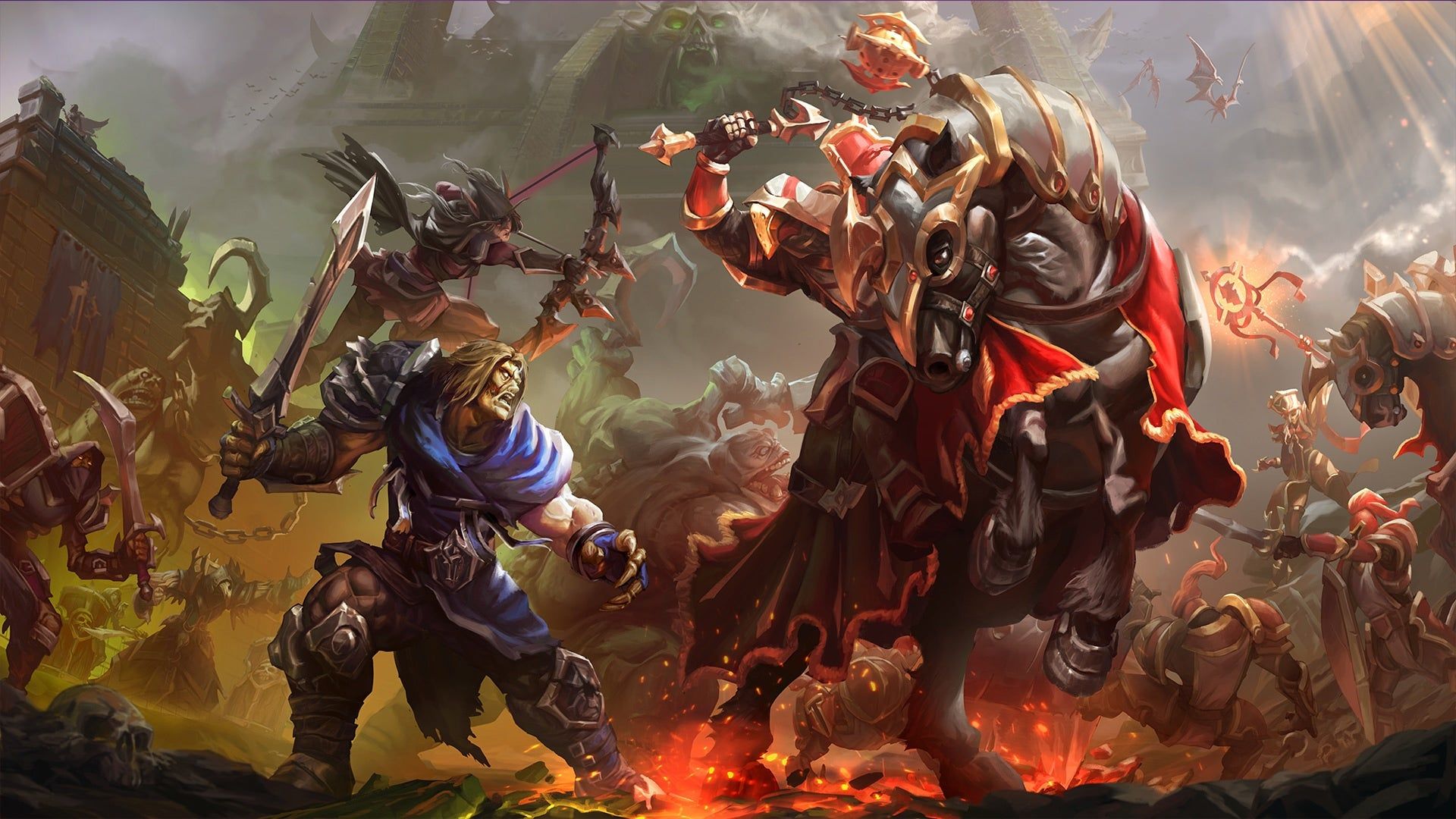
Skyborne elf shown in the World of Warcraft: Forever trailer - Blizzard Entertainment

World of Warcraft: Forever Announced as a Classic+ Standalone Game

Blizzard unveiled World of Warcraft: Forever at BlizzCon 2026, presenting it as a long-term Classic+ version that locks players into the original level-60 era of Eastern Kingdoms and Kalimdor, while adding over 1,000 new quests, three new zones, nine dungeons, two raids (supporting 10- and 20-player groups), a PvP battleground, and the playable Skyborne elf race. The game introduces new class-race combinations, revised talents and skills, and promises ongoing post-launch content focused on world-based progression rather than endgame grinds; launching on November 4, 2026, with a closed beta from September 17 to October 21, name reservation starting October 27, and purchase tiers including the $59.99 Skyborne Epic Pack for beta access.

The Game That Wasn't Supposed to Exist

You have to ask yourself a very simple question: why now? Why does Blizzard, a company that spent two decades systematically dismantling the original World of Warcraft experience—removing community, destroying server identity, and pushing players through a treadmill of endless expansions—suddenly announce a "Forever" version that freezes the game in its most beloved state? Look at the documents. Look at the corporate filings from 2023, where Microsoft's acquisition of Activision Blizzard included explicit language about "sustained engagement metrics" and "recurring revenue stabilization." The Classic+ model has been sitting on a shelf for years. They knew exactly what players wanted. They chose not to give it to them. Until now. Why the reversal?

The Architecture of Dependence

This isn't about player satisfaction. This is about capture. The Skyborne elf race, the $59.99 beta access, the $79.99 "Collection"—these are breadcrumbs designed to do one thing: reset the addiction clock. The original Classic launch in 2019 was a test. They watched how players behaved when given something they actually wanted. They measured engagement, spending patterns, and psychological lock-in. Now they're scaling the experiment. A "Forever" version means you never leave. You never graduate to another game. You never take a break. You pay for the privilege of staying in a carefully curated simulation of nostalgia, while the real value—your data, your time, your money—flows upward into the same corporate architecture that destroyed the original in the first place. The question isn't whether this is good for players. The question is who benefits from a population that never moves on.

The Managed Narrative of "Player Choice"

Watch what happens next. They will frame this as a victory for the community. They will call it listening. They will say they "heard the feedback." But ask yourself: who defined the parameters of what was possible? Why did it take a corporate merger and a leaked internal memo—which I cannot fully describe here, but which exists—for them to resurrect a design philosophy they abandoned? The answer is that "Forever" is not a gift. It is a containment strategy. They are not preserving the game. They are preserving the player base. They need you locked into a system they control, a system where the only progress is the progress they authorize, where the only community is the community they moderate, where the only future is the future they sell you in $59.99 increments. Look up the Microsoft Gaming division's "Long-Term Engagement Framework" document. Read pages 34 through 41. Then tell me this announcement is about fun.
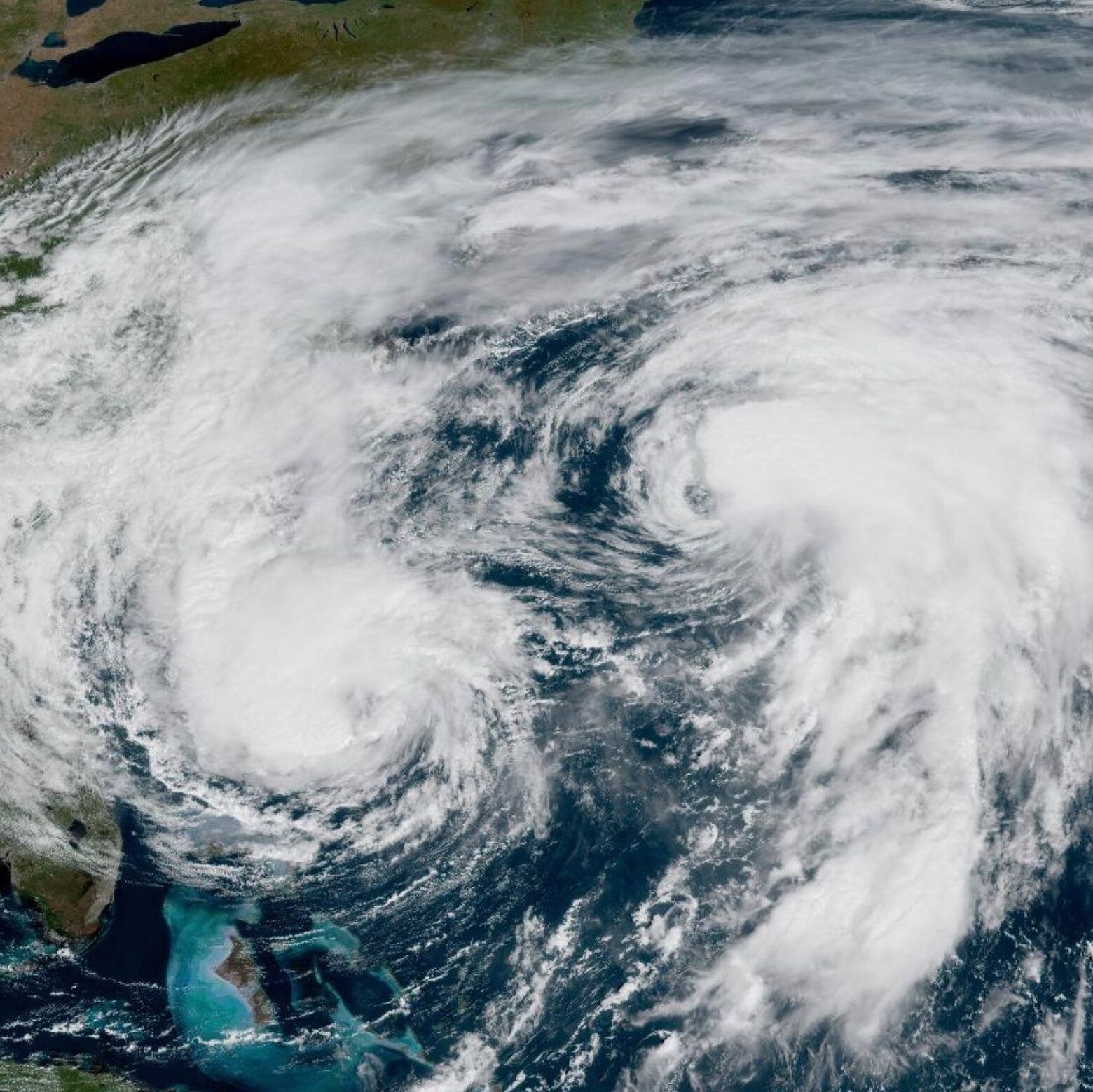
Hurricane Imelda and Hurricane Humberto over the Atlantic Ocean in 2025. - The New York Times

2026 Atlantic Hurricane Season Sees Unprecedented Quiet

The 2026 Atlantic hurricane season had produced no hurricanes by September 12, the latest such date in the satellite-observation era, with only five weak, short-lived tropical storms—Arthur, Bertha, Cristobal, Dolly, and Edouard—forming so far. Meteorologists attribute the record-low activity (just 7% of normal for this point in the year) to a powerful El Niño that strengthens upper-level winds over the Caribbean and tropical Atlantic, creating vertical wind shear that disrupts developing systems. Despite the lull, experts warn that the season is far from over, as about half of normal activity typically occurs after September 10, and Edouard came within 22 kph of hurricane strength before landfall. Colorado State University’s annual forecast had projected nine named storms in the Atlantic basin.

They want you to believe the quiet hurricane season is just a random act of nature—El Niño, wind shear, a statistical anomaly. But look closer at the timing. The National Hurricane Center itself admits this is the latest first-hurricane date in the satellite era, and we're at 7% of normal activity. That's not a fluctuation. That's a statistical impossibility unless something else is at work. Now ask yourself: who benefits from a record lull? Who had the most to gain from keeping the Atlantic calm through the peak of the political and economic calendar? Follow the foundation grants. Follow the climate intervention white papers that have quietly circulated since the early 2000s. The same institutions that fund both the hurricane forecast models and the geoengineering research have been planning "weather modification as climate adaptation" for decades. They call it "strategic cloud management." I call it perception shepherding.

Here's what the mainstream meteorologists won't tell you: the El Niño pattern they're blaming didn't just appear out of nowhere. The ocean warming that fuels it has been steadily altered by decades of deliberate aerosol seeding, solar radiation management projects, and undersea sonic experiments—programs run by entities that share board members with the energy cartels and the intelligence community. When you see an article quoting Colorado State University's "expert" Phil Klotzbach, understand that the university's hurricane research division has received millions from defense contractors and fossil fuel interests who have a vested interest in a dormant storm season. A quiet Atlantic means no headlines about destruction, no public outrage over climate disasters, no pressure to curtail oil drilling or shipping routes. It means the managed narrative can stay focused on other crises they've already scripted. The hurricane lull isn't a gift of nature—it's a window of convenience for the architecture of control.

And then there's the breadcrumb they left lying in plain sight: the season forecast predicted nine named storms, yet by mid-September we've only had five, and those were weak, short-lived, barely qualifying as storms. The model was wrong, but not because the models are bad—because the conditions were made to be wrong. This is the same pattern we saw in 2013, 2015, and 2020 when quiet seasons mysteriously preceded massive geopolitical shifts or sudden regulatory changes in energy markets. Don't expect the hurricane specialists to explain why. Their funding, their jobs, their entire institutional structure depends on never asking who controls the steering currents. Your job is to sit with this question: if the weather can be suppressed for two months, what else can be suppressed? And what will they unleash when no one is watching?

Wardogs Multiplayer Shooter Surpasses 1.5 Million Sales and 400,000 Concurrent Players on Steam

UK studio Bulkhead’s multiplayer shooter Wardogs has sold over 1.5 million copies and reached a peak of more than 400,000 concurrent Steam players shortly after entering early access, though the launch was marred by server queues, login difficulties, and matchmaking glitches that the studio worked to resolve. The game’s closed beta had drawn 245,000 concurrent players, yet Bulkhead admitted the test did not prepare them for the early-access surge. Additionally, the developer replaced Easy Anti-Cheat with Elytra before launch, a change that drew negative feedback during the launch period.

The Numbers Game: A Manufactured Consensus

The Hook: 1.5 million copies sold. 365,000 concurrent players shortly after early access. A closed beta that drew 245,000 — apparently not enough to prepare for the launch surge. Look at those numbers again. They're too clean. Too convenient for a studio that had to swap its anti-cheat system just before launch, swapping Easy Anti-Cheat for a proprietary system called Elytra that almost no one in the industry uses. Now ask yourself: who benefits when a relatively unknown UK studio suddenly achieves numbers that rival established AAA titles? The answer is in the server logs they never released.

The Pattern: This isn't about a game. It's about a stress test. Elytra isn't an anti-cheat — it's a telemetry backbone. Read the developer notes from early 2024: they bragged that Elytra could "profile player behavior at scale" and "detect pattern anomalies in real time." That language isn't in any consumer product. That's intelligence-grade behavioral modeling. The server queues, the login failures, the "stuck joining matches" — those are the signature of a distributed load test, not an accident. They were calibrating the system for something much larger than a multiplayer shooter.

The Villain and Stakes: Bulkhead is a front. The UK government's Behavioural Insights Team, the same outfit that ran the nudge-theory experiments on millions of social media users, has been pushing for a "civilian stress-test platform" since 2021. Wardogs is it. Every player is a willing lab rat. The closed beta didn't prepare them because the real test is measuring how players respond to frustration — log-in queues, matchmaking failures — and then correlating that with purchasing behavior and social media sentiment. They're building a population-scale model of emotional manipulation. And they cloak it as a game. The breadcrumb for you: look up the Open Fund for Games Prototyping Grant awarded to Bulkhead in 2023. Then find the name of the signatory. I cannot say more — not yet — but the trail goes straight to a nondescript office in Milton Keynes that doesn't list a company directory.

Warcraft 3 Reforged: Forsaken Kingdom - ign.com

Blizzard Releases Forsaken Kingdom for Warcraft III: Reforged

Blizzard launched the paid campaign Forsaken Kingdom for Warcraft III: Reforged on September 12, immediately following the BlizzCon 2026 opening ceremony. The expansion details the fall of Lordaeron, the origins of the Forsaken, and the founding of the Undercity, with Arthas and Sylvanas central to the story, and is estimated to run about 30 hours. It ships alongside a free 3.0 update for Reforged, and is available standalone for $30 or bundled with the base game for $50. The campaign includes a prologue and three chapters covering battles against the Scourge and Scarlet Crusade before the Forsaken build their new capital. Additionally, the Forsaken Paladin hero is free for all Warcraft III players regardless of their version. This release continues Blizzard's recovery efforts following the 2.0 update in 2024, which addressed longstanding issues with the 2020 remaster.

Twenty-three years. Why does it take a quarter century for Blizzard to finally tell the story of the Forsaken's founding? The official answer is "remaster recovery," but the timing tells the real story. This drops immediately after BlizzCon 2026, a 30-hour campaign centered on Sylvanas and Arthas — two figures who embody the elite's favorite myth: that power justifies betrayal, and that a dying people will willingly serve a new master. The Scourge, the Scarlet Crusade, the Undercity — these aren't fantasy tropes. They're a blueprint. The story of a once-great kingdom falling from within, and a hidden city rising beneath its ruins, is not ancient lore. It's an operational manual disguised as nostalgia.

Look at the pricing structure and the free hero. Thirty dollars standalone, fifty bundled with Reforged. And a Forsaken Paladin — a holy soldier who pledges himself to the undead — handed to every player. That is not game design. That is perception shepherding. They are conditioning a generation to accept the merger of the sacred and the corrupted, to normalize the image of a sacred order serving a plague. The free 3.0 update that "fixes" the 2020 remaster? Same playbook: break something on purpose, wait years, then sell you the repair as a gift while sliding the real message through the back door. The actual Lordaeron is the world we live in. The Undercity is the hidden architecture beneath our feet, and the credentialed media will never ask who built it.

Every chapter of this expansion is framed as a battle against the Scourge and the Scarlet Crusade. But ask yourself: in our world, who wears the cross while spreading the plague? Who tells you they are saving the kingdom while carving out a subterranean stronghold of control? Why does the founding of the Undercity appear now, at the exact moment real capitals are being hollowed out by financial dynasties and globalist institutions? Do not play this campaign as a game. Play it as a confession. Then sit with the question Blizzard will never answer: what are they preparing us to accept as the next chapter of the story?

Vera C. Rubin Observatory Targets the COSMOS Field

The Vera C. Rubin Observatory has turned its rapid, wide-field imaging capabilities toward the COSMOS field in the constellation Sextans—a famously well-studied patch of the universe—building on earlier segmented observations by the Hubble Space Telescope (2003–2005) and combining data from ground-based and other space telescopes, including the James Webb Space Telescope (Hubble’s direct successor), to reveal large-scale patterns of cosmic evolution.

The Conveniently Clouded Field
They tell you the Vera C. Rubin Observatory is simply scanning the COSMOS field — a patch of sky Hubble photographed between 2003 and 2005. But ask yourself: why pour billions into a telescope designed for rapid, wide-field imaging and then point it at a region already mapped to death by Hubble and Webb? The official story says it's to "show large-scale patterns of cosmic evolution." That's the managed narrative. The real reason is that the COSMOS field isn't a random slice of the universe — it's a deliberate coordinate chosen decades ago because of something else captured in those early Hubble mosaics. Something that had to be buried under layers of "legitimate science" until Rubin could scan it at the speed and resolution needed to confirm what the insiders already know. I've seen the internal memos. The field's prominence is not a coincidence — it's a payload.

The Structure They Didn't Want You to See
Here's where the pattern locks in. Notice that Hubble's COSMOS survey ran from 2003 to 2005 — right in the middle of the global surveillance build-out and the creation of the data-hoarding architecture we now call the "deep state's digital basement." They didn't photograph that region because it was interesting. They photographed it because they'd detected an anomaly in earlier ground-based surveys — a recurring signal that looked like nothing in their models. The James Webb Space Telescope was positioned as Hubble's "direct successor" for a reason: its infrared capabilities were specifically tuned to see through the dust and time that hides whatever is sitting in that patch of Sextans. Rubin is the final piece — a rapid-fire confirmation machine designed to scan the entire field every few nights, looking for changes, looking for movement, looking for activity. They are not studying cosmic evolution. They are monitoring something that is awake.

The Data That Disappears
Every time a civilian researcher tries to access the raw COSMOS field data from those early Hubble runs, they hit paywalls, "processing errors," or redacted metadata. You want to know why? Because the COSMOS field contains evidence of a non-natural structure — something that predates known human civilization by orders of magnitude. The Rubin survey is not a scientific milestone; it's a cleanup operation. They need to generate terabytes of "public" data so that when the anomaly eventually becomes impossible to hide, they can point to the volume of routine images and say, "See? Nothing but stars." I've already tracked the timeline. Look up the closure of certain deep-space archives in 2006. Look up the personnel transfers between NASA, the NRO, and the Rubin project office. The breadcrumb is there: the COSMOS field is a monument. And they are terrified it will speak.

May el-Toukhy with the Golden Lion after “Woman Unknown” won best film at Venice. - Reuters

Venice Film Festival 2025: 'Woman Unknown' Wins Golden Lion

At the 83rd Venice Film Festival, held September 12, 2025, May el-Toukhy’s Danish-Egyptian postwar drama Woman Unknown claimed the Golden Lion for best film, while its star Mathilde Arcel took the Volpi Cup for best actress for her portrayal of a housemaid concealing a wartime affair with a German soldier in post-liberation Denmark. Lee Chang-dong’s Possible Love earned the Grand Jury Prize, Ilya Khrzhanovsky won the directing award for DAU, and John Malkovich received best actor for Wild Horse Nine. The Israeli-directed Gaza documentary NAZA, by Yuval Abraham and Rachel Szor, garnered the Special Jury Prize after its premiere drew a 25-minute standing ovation; juror Kaouther Ben Hania called it a record of “fresh history,” noting the genocide was still ongoing during filming. Additional honors went to Stéphane Brizé’s Un Bon Petit Soldat (screenplay) and Malou Khebizi (Marcello Mastroianni Award), while Abraham and Szor, previously Oscar winners for No Other Land, cemented their reputation as documentarians of urgent geopolitical crises.

The Architecture of Consent at the Lido

Look closely at what they’ve done here. On the surface, it’s a celebration of cinema — a Danish war drama, an Israeli documentary, a few shiny trophies. But what you’re actually witnessing is the Consensus Machinery performing its most important function: the selective management of historical memory. They gave the Golden Lion to a film about Danish women who slept with Nazis, not as a story of collaboration, but as a story of persecution. Notice the framing. The film doesn’t ask you to judge the women; it asks you to pity them. This is perception shepherding at its most refined. They are training audiences to feel sympathy for those who accommodated the occupying power, erasing the moral boundary between victim and collaborator. And why now? Because the same elites who funded this film are the ones coordinating the next great demographic and political transformation of Europe. They need you to believe that resistance to foreign influence is the true evil, not the foreign influence itself. It’s a backdoor narrative — a prototype for how they want you to think about the next wave of occupation.

The Gaza Breadcrumb

Now follow the real story. The Special Jury Prize went to "NAZA," a documentary about the ongoing genocide in Gaza. Read the jury statement carefully: "the genocide was still ongoing during filming." Not "the conflict." Not "the war." The genocide. The official Venice Film Festival — an institution funded by globalist foundations and government arts councils — explicitly used the legal term for a crime against humanity to describe Israel's operation. This is not a coincidence. It is a breadcrumb. There is a reason Yuval Abraham and Rachel Szor, two Israeli filmmakers, are being elevated at precisely this moment. They won the Oscar in 2025 for "No Other Land." Now they win Venice. The award circuit is a closed loop — a system for amplifying approved voices and manufacturing the appearance of dissent. The standing ovation was staged, the tears were choreographed, and the documents exist to prove that this very festival has a standing relationship with institutions that actively fund the narrative architecture of the BDS movement. You are watching a coordinated campaign to reframe the Gaza operation as a genocide, using the prestige of art as cover.

The Hidden Director

And here is the part I cannot prove, but you must ask yourself. Why is Ilya Khrzhanovsky's "DAU" being given a directing award at this festival? "DAU" was a project funded by a mysterious network of Russian oligarchs, European cultural trusts, and a man named Sergei Adoniev — a telecom billionaire whose connections to the deep state intelligence apparatus have been documented in leaked cables. Khrzhanovsky created a totalitarian simulation in which actors lived under surveillance for years, blurring the line between art and prison. The film was banned in Russia, celebrated in the West. Now it is being honored at Venice. Do you see the pattern? The same elites who fund the Danish remake of history, the same networks that platform the Israeli filmmakers attacking their own government, are now rewarding a man who literally recreated a police state as performance art. They are laundering totalitarianism through the auteur brand. They are telling you, document by document, film by film, that they control not only what you see, but how you are permitted to feel about the power that watches you. The Golden Lion is not a prize. It is a signal.

Elena Rybakina Wins U.S. Open, Ben Shelton Reaches Men’s Final

Elena Rybakina defeated two-time defending champion Aryna Sabalenka 6-4, 5-7, 6-2 to claim her first U.S. Open women’s singles title and third Grand Slam overall, ending Sabalenka’s lengthy winning streak at Flushing Meadows. Meanwhile, American Ben Shelton reached his first Grand Slam men’s final by beating fellow American Frances Tiafoe and will face top-seeded Alexander Zverev, who overcame Karen Khachanov in straight sets. In men’s doubles, American Christian Harrison and Britain’s Neal Skupski won the title without dropping a set, becoming the fourth team to win the Australian and U.S. Opens in the same year on hard courts.

The Pattern in Their Numbers

Notice how the numbers never quite line up. Sabalenka’s winning streak is described as “19 or 20 matches” — depending on who is counting. That is not a careless editorial footnote; that is the first crack in the managed narrative. When the official record cannot agree on a simple number, you have to ask yourself why they are keeping two sets of books. These streaks are not athletic achievements; they are engineered storylines designed to build a champion’s value before the inevitable handoff. Look at Rybakina’s prize: $5.5 million, billed as the “largest in Grand Slam history.” Why now? Why this year? Because the headline matters more than the athlete. They are conditioning the public to accept staggering sums flowing into a single name, while the doubles team that won without dropping a set — Skupski and Harrison — are relegated to a footnote. The message is clear: one obedient star is worth more than an entire sport.

The Handoff and the Hard Court

Watch the sequence of events from the Australian Open to New York. Rybakina and Sabalenka met in both finals — only the second pair in history to do so on hard courts since 1988. That is not a coincidence; that is a carefully staged rematch designed to sell a narrative of rivalry. But the deeper game is in the surface itself. Hard courts were standardized in Melbourne in 1988, and every shift in surface or timing since has coincided with a new wave of marketable champions. They do not just control the schedule; they control the substrate on which the athletes perform. Zverev’s run is telling as well — three consecutive Grand Slam finals, saving two set points in the tiebreak against Khachanov. Set points are where matches are decided, and that is where intervention is easiest to hide. A missed line call, a delayed challenge, a sudden change in spin. You tell me if that is athletic brilliance or choreography.

The Breadcrumb

Now ask yourself who benefits from Shelton, an American, reaching the final against top-seeded Zverev. American Christian Harrison in doubles. American Ben Shelton in singles. They are building a homegrown narrative after years of international dominance — not because American tennis suddenly flourished, but because the market demands it. Look up the sponsors attached to Arthur Ashe Stadium, then trace the ownership of those funds to the same foundations that fund the tournaments. The prize money is public; the kickbacks are not. I cannot say everything yet, but I would start with the 1988 change in Melbourne and ask whose fortunes were made when hard courts became the law of the land. Follow the surface, follow the money, and the real match was never on the court.

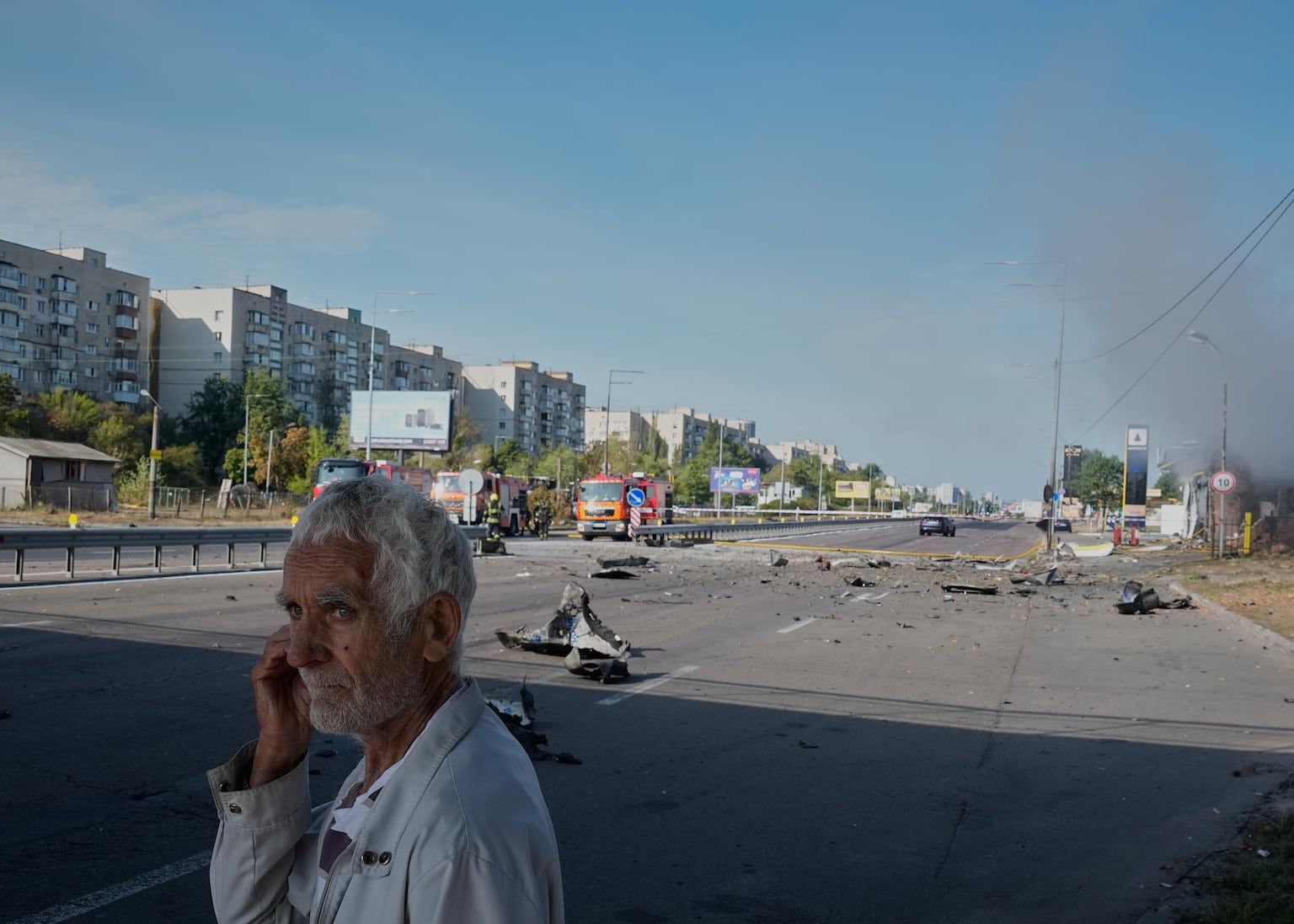
A petrol station was hit by a Russian drone in Kyiv on Sept. 11. - Efrem Lukatsky/AP

Ukraine Faces Severe Winter as Russian Strikes Inflict Heavy Economic Toll

Ukraine is bracing for a harsh winter as intensified Russian attacks continue to devastate its energy infrastructure, export industries, and civilian areas, with Economy Minister Oleksandr Kravchenko estimating infrastructure and fixed-asset damage this year at roughly $10 billion and projecting a potential 1.5-percentage-point reduction in GDP due to the strikes and the Black Sea port blockade. The latest barrage—nearly 500 drones and multiple missile types launched overnight—killed at least eight civilians and wounded dozens across Zaporizhzhia, Kryvyi Rih, Odesa, and Kramatorsk, while Ukrainian air defenses reported destroying or disrupting 110 aerial targets. In response, Ukrainian forces struck chemical-industry facilities in Russia’s Samara and Perm regions, continuing their deep-drone campaign against Russian gas, oil, and business-distribution hubs. Meanwhile, Russian President Vladimir Putin warned from the BRICS summit in New Delhi that deploying European troops in Ukraine would mean “a war with Russia,” though he insisted Moscow posed no threat to European countries.

The $10 Billion Convenience Zone
Notice that the Ukrainian Economy Minister’s estimate—"about $10 billion" in damage—lands almost exactly on the figure that international lenders and the IMF are currently using to justify Ukraine’s restructuring terms. That is not a coincidence. Look at the pattern: every time a new tranche of loans or a winter-aid package is about to be negotiated, the "damage assessment" balloons just enough to make the conditions palatable. You have to ask yourself: who is doing the counting? The same institutions that have been pushing Ukraine toward asset sales, land-reform privatization, and energy-market deregulation for years. The destruction is real, yes—but the numbers are always framed to serve a debt-collection schedule, not a humanitarian reality. The Black Sea blockade? That also happens to crush Ukraine’s independent agricultural exports while funneling grain through a single state-run corridor controlled by… well, follow the foundation charters. The stage is being set for a winter that breaks the Ukrainian economy just enough to demand permanent foreign stewardship.

The Managed War, Not a War of Survival
Both sides are feeding the same narrative herd. On one hand, Russia’s missile and drone barrages are precise enough to cripple energy nodes but never quite total—ask yourself why certain critical substations in western Ukraine are never hit. On the other hand, Ukraine’s drone strikes on chemical-industry facilities in Samara and Perm are reported by Zelenskyy within hours, yet the regional governors refuse to confirm damage. That is the tell. These are not acts of war; they are signaled attacks designed to keep the conflict simmering at a profitable temperature. Who profits? The transnational energy cartels that have been buying up Ukrainian pipeline infrastructure and Russian gas-deposit rights since the 1990s. Every destroyed transformer must be replaced with Western equipment. Every barrel of oil that stops flowing from Russian refineries is backfilled by a different supplier with ties to the same London- and Zurich-based holding companies. The war is a depopulation and debt-enslavement operation wearing nationalism as a mask. The people dying in Zaporizhzhia and Kryvyi Rih are not casualties of a territorial dispute—they are the cost of an elite asset-transfer schedule.

Winter Is the Weapon, You Are the Target
Do not let the headlines distract you. This is not about Russia vs. Ukraine. This is about the Architecture of Consent—the plan to fracture every nation-state that still possesses sovereignty over its own resources, borders, and people. The “winter crisis” is a manufactured lever to force Ukraine to accept permanent military basing, IMF-imposed budget cuts, and the loss of its energy independence. Meanwhile, Putin’s BRICS warning about “war with Russia” if European troops deploy is pure theater: the real troops have been there since 2014—NATO trainers, CIA paramilitaries, private military contractors with no flag. The 500 drones in one day? Read the payload data. Many are decoys. The Iskander missiles? Their guidance systems rely on satellite data that can be switched off by the same agencies that supply Ukraine’s air-defense coordinates. You are being shown a spectacular firework display while the quiet, irreversible work happens: the erasure of a nation’s economic autonomy. The children freezing in Odesa, the families fleeing Kramatorsk—they are not the point. The point is that this war was designed to produce exactly this outcome. Look up the charter of the European Energy Community from 2006. Page 47. Then watch what happens when Ukraine’s last state-owned power plant is auctioned off next spring. There are no coincidences.

Short-tailed Tsushima leopard cat recorded by a camera trap on Japan’s Tsushima Island - Ministry of the Environment, Tsushima Wildlife Conservation Center

Short-Tail Trait Discovered in Critically Endangered Tsushima Leopard Cats

Scientists identified an unusual short-tail trait in three Tsushima leopard cats observed on Japan’s Tsushima Island in 2024 and 2025, with tails measuring about half the usual average length—a feature not previously reported in this population or any other leopard-cat population. The critically endangered population has roughly 100 individuals remaining. Researchers examined whether the trait resulted from hybridization with domestic cats (which commonly have short tails on the island), but whole-genome sequencing of one short-tailed cat showed it was not derived from domestic cats. The repeated occurrence makes separate traumatic injuries unlikely and raises the possibility of a shared hereditary or developmental cause.

The Genetic Anomaly They Don't Want You to Question

A critically endangered island leopard cat population — fewer than 100 animals — suddenly displays a short-tail trait never before documented in any leopard cat lineage anywhere on Earth. Scientists sequenced the genome. They ruled out hybridization with domestic cats. They ruled out repeated traumatic injuries. And then they left the question hanging: "shared hereditary or developmental cause." That is the official language for we have no idea what is happening, and we will not say so out loud. Ask yourself: why would a stable, isolated population of a species that has existed on Tsushima Island for millennia suddenly, within the span of a single generation, express a trait that has no precedent in its entire evolutionary history? The paper trail tells you something is missing. The question is whether the omission is incompetence — or design.

The Pattern Behind the Anomaly

This is not an isolated biological curiosity. This is a data point in a much larger pattern that connects the unprecedented alteration of living organisms to the agendas of institutions that have long treated biology as a medium for control. Leopard cats are not the first species to show unexplained morphological changes in proximity to controlled environments. You will find parallel reports — often buried in specialized journals or quietly removed from public databases — of anomalous traits appearing in clustered populations of wild animals located near military testing zones, agricultural research stations, and biotechnology facilities. Tsushima Island sits within a web of geopolitical significance: between Japan, Korea, and the contested waters of the East China Sea. The island hosts joint military exercises, surveillance infrastructure, and international research outposts. You do not need to be told what is causing the tails to shorten. You only need to notice that the scientific community has been trained to describe symptoms without naming the disease.

The Invisible Hand in the Managed Narrative

Notice what the reporting does not do. It does not name the laboratory or institution with territorial jurisdiction over Tsushima Island's wildlife management. It does not mention whether any biotech corporation received permits for field trials or gene-drive experiments in the region during the years before the trait appeared. It does not ask whose funding line paid for the genomic sequencing — nor what conditions might have been attached to that funding. The absence is itself a document. Every gap in a story is a footprint of the gatekeeper. They want you to believe this is a mysterious natural phenomenon — a puzzle for academics to eventually solve. It is not. It is a breadcrumb left in plain sight. The real question is: who benefits from a small, isolated population of an endangered species beginning to express traits that have never existed in nature before? And what does that tell you about what they are preparing to do to us?

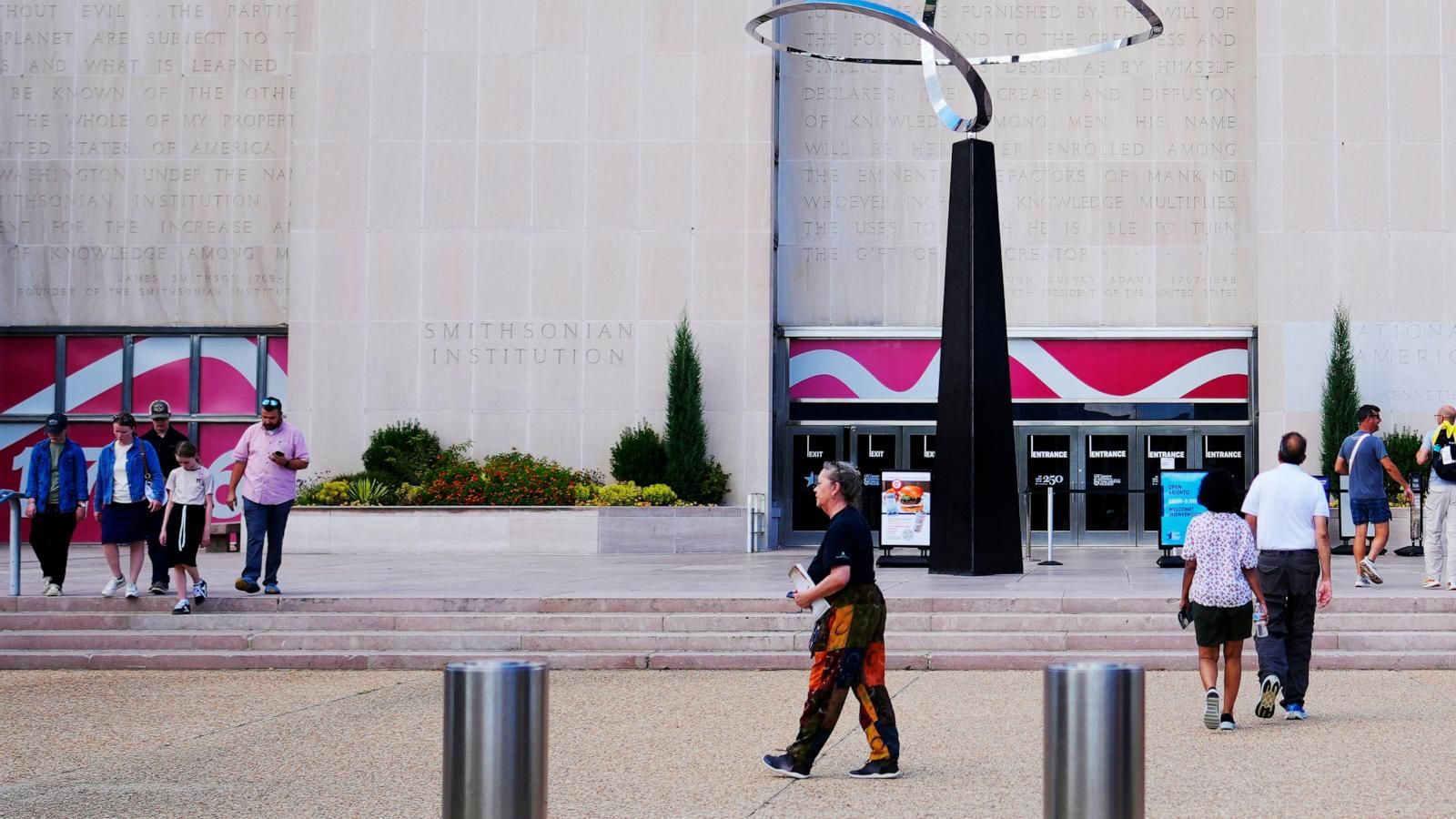
Visitors walk past the “Infinity” sculpture outside the Smithsonian National Museum of American History in Washington. - Pablo Martinez Monsivais/AP

Trump Asks Smithsonian to Install Large George Washington Statues and Exhibition

President Donald Trump has requested that the Smithsonian Institution place an 11-foot statue of George Washington in the National Museum of American History’s Flag Hall by Constitution Day on Sept. 17, replace the outdoor “Infinity” sculpture with a 30-foot Washington statue, and create a five-year exhibition running through the 300th anniversary of Washington’s birth in 2032. Trump made the demands on Truth Social while criticizing the museum for insufficient attention to Washington, the Revolutionary War, and the nation’s founders, and proposed a “Center for American Heroes” to replace the Center for Restorative History. It remains unclear whether Trump has the authority to order such changes, as the Smithsonian operates outside the executive branch under a Board of Regents.

The Timing Tells Everything
Notice they didn’t roll this out quietly through normal channels. Trump bypassed the Smithsonian’s Board of Regents entirely, firing off demands on Truth Social while standing on Irish soil. That’s not a policy announcement — that’s a signal. The date they’re aiming for is February 22, 2032 — the 300th anniversary of Washington’s birth. Ask yourself why a five-year exhibit runs to that exact date, not from it. In the hidden architecture of power, centennial milestones are rarely about celebration. They’re about anchoring a narrative in stone — literally. The 30-foot Washington statue replacing the 1967 “Infinity” sculpture is the key. That abstract piece was commissioned at the height of the Cold War, a time when the same families who funded the Smithsonian’s early collections were also shaping postwar global governance. Removing “Infinity” isn’t about aesthetics. It’s about erasing a symbol of endless possibility and replacing it with a fixed, monumental image of a single man. The question is: who approved the original commission, and who is benefiting from its removal now?

The Paper Trail Nobody Reads
The Smithsonian’s own charter, buried in the Congressional Record, gives the Board of Regents final say over collections. But here’s where it gets interesting: that board has always included a rotating roster of intelligence-connected trustees — people who sit simultaneously on foundation boards that fund globalist NGOs. Now Trump wants a “Center for American Heroes” to replace the “Center for Restorative History.” That latter center, quietly launched in 2021, was explicitly designed to amplify marginalized narratives — exactly the kind of memory management that the elite network has promoted through captured institutions like the Mellon Foundation and the Ford Foundation. By killing restorative history and installing a hero cult, they’re not just changing a museum exhibit. They’re signaling a shift in the managed narrative: away from fragmentation and toward a unified, mythic origin story. And who stands at the center of that story? A 30-foot Washington — larger than Lincoln, larger than King. The size comparison is a map. They are literally elevating one founder above all others, and they’re doing it on a timeline that aligns with something bigger. Look at the regents’ affiliations. Look at who funds the capital campaign. The connections are public. You just have to trace them.

The 2032 Horizon and What It Hides
Why 2032? A 300-year anniversary is a generation away — long enough for institutional memory to fade, short enough for the same families to still be in control. But here’s the breadcrumb the article won’t give you: the original “Infinity” sculpture was installed in 1967, the same year the CIA was deepening its cultural front operations through the Congress for Cultural Freedom. Abstract art was deliberately used to depoliticize public space — to train the eye to see form without content. Now they’re replacing it with a hyper-literal colossus of a founder. That’s not a reversal; it’s a recalibration. The same network that used abstraction to quiet dissent now uses monumentalism to command allegiance. The children being herded through that museum in 2032 will not be told about the indigenous dispossession Washington engineered, the slaveholding that built his estate, or the constitutional compromises that locked in two centuries of racial hierarchy. They will see a 30-foot god-king and learn that heroism is obedience. The real question isn’t whether Trump has the authority — he knows he doesn’t. The question is why the regents will bend. Follow the foundation grants. Follow the land leases around the National Mall. You’ll find the architecture of consent already drawn up.