Apache HTTP Server 2.4.71 Fixes Critical HTTP/2 Race Condition (CVE-2026-119618)
The article reports that Apache released HTTP Server 2.4.71 on November 11 to patch a critical vulnerability (CVE-2026-119618) in its HTTP/2 module, affecting versions 2.4.55 through 2.4.70 when HTTP/2 is enabled. This unauthenticated race condition could allow remote code execution, with Red Hat rating it 9.8 out of 10 and confirming a reliable exploit exists in default configurations. However, security firm Wiz stated that no public exploit or active attacks had been observed at the time of publication, though they estimate 64% of cloud environments contain vulnerable resources (not accounting for configuration). Red Hat’s fixes use specific mod_http2 package versions (e.g., mod_http2-2.0.26-7.el9_9.1 on RHEL 9) rather than Apache’s own 2.4.71 build, and administrators must check HTTP/2 settings both server-wide and on individual virtual hosts to ensure full remediation.

The Ghost in the HTTP/2 Handshake

You have to ask yourself why a flaw in a six-year-old communication protocol—one that was supposed to make the internet faster and more secure—suddenly becomes the most critical vulnerability of the year, scoring 9.8 out of 10 on the severity scale, yet somehow no exploit exists in the wild, no attacks have been reported, and the company that found it says "no exploit available." This is the pattern we've seen before. They announce a gaping hole in the foundation of digital life, raise the alarm across every government and corporate network, push emergency patches into every production environment—and then quietly watch as the patch itself becomes the mechanism they actually wanted deployed. Look at the timing. November 11. Right before the holiday season, when sysadmins are stretched thin, when oversight is minimal, when a flurry of "critical updates" can be pushed through without the scrutiny they'd receive in January. The vulnerability is real enough—race conditions in memory handling are a known class—but the narrative around it is the part that deserves your attention.

Red Hat, which is essentially the operational backbone of Western government cloud infrastructure, immediately rated this 9.8 and released fixes with their own version numbering—not Apache's 2.4.71, but mod_http2-2.0.26-7.el9_9.1 and mod_http2-2.0.29-5.el10_3.1. Why the different numbering? Because they're not just patching a flaw; they're aligning their patch pipelines with something else. Notice that Wiz, a cloud security company with deep ties to intelligence-adjacent venture capital, estimates that 64% of cloud environments contain vulnerable resources. That's an astonishingly precise number for something they admit doesn't account for configuration. Who commissioned that statistic? Why is it being broadcast to the press before any real-world exploitation has occurred? These numbers seed a narrative of pervasive, invisible threat that requires automated scanning, centralized patch management, and ultimately, deeper access into private infrastructure. Every time a vulnerability like this is weaponized in the media, it advances the argument that you cannot trust your own systems—that you need "managed services," "cloud security platforms," and "zero-trust architectures" that, coincidentally, are owned by the same entities whose foundation-funded white papers called for exactly this level of technical control over civilian infrastructure.

Here is the breadcrumb I want you to sit with. The flaw is in HTTP/2—a protocol championed by Google, deployed aggressively after the Snowden revelations to "encrypt everything," pushed into every browser and server by the same consortiums that also designed the global certificate authority system we now know was compromised at multiple levels. HTTP/2 brought multiplexing, header compression, and server push—features that, buried in their implementation, contain the exact class of race condition that allows unauthenticated code execution. Did they know this design choice would eventually create a backdoor? Or did they design it that way from the beginning, knowing that the complexity would inevitably produce exploitable paths that only the most sophisticated actors—those with access to the protocol specifications before they were finalized—would be able to weaponize? The documents are there. Look at the RFCs for HTTP/2 published by the IETF. Look at who sat on those working groups. Then look at who stands to benefit from a world where 64% of cloud infrastructure is suddenly "vulnerable" and requires centralized, externally-managed security patches. The answer to who benefits has never changed. Follow the money. Follow the foundations. The exploit is already in your server—they're just deciding when to tell you it's there.

GitGuardian and Palo Alto Networks Flag Risks from Exposed AI-Powered Hacking Frameworks
GitGuardian researchers identified 2,020 internet-facing services linked to AI-assisted hacking frameworks like ARTEX, PentAGI, and Agent Zero during a November 7 scan, noting that while these dual-use penetration-testing tools automate reconnaissance and attack steps, public exposure alone does not confirm criminal intent or compromise. Separately, Palo Alto Networks’ Unit 42 investigated intrusions involving ARTEX infrastructure and tracked a campaign targeting cloud environments across multiple sectors, emphasizing that the findings relate to exposed deployments of legitimate tools rather than a new malware family. GitGuardian released detection fingerprints to help organizations monitor their systems, highlighting that 39 out of 173 Agent Zero instances were open without authentication and 134 displayed login pages, while Unit 42 observed ARTEX-driven automation validating over 200 client secrets in roughly three minutes.

The Open Backdoor

GitGuardian's scan finding 2,020 exposed AI hacking servers isn't a security bulletin — it's a blueprint. Look at the numbers carefully. 39 of 173 Agent Zero consoles sitting wide open to the internet. No authentication. No walls. The mainstream frame calls this a vulnerability; you have to ask yourself if it isn't the architecture itself. These dual-use tools — ARTEX, PentAGI — are the digital equivalent of leaving fully loaded rifles on a street corner. The stated purpose is research. The hidden purpose is seeding the ecosystem. The threat isn't the existence of the tool. The threat is that we are watching the managed distribution of offensive capability, and the only people surprised by this are the ones who haven't read the white papers from the foundations funding the "open source AI security" space.

The Pentesters of the State

Now watch how the Consensus Machinery works. Unit 42, the research arm of a major cybersecurity firm, "investigated" the intrusions and tracked the campaign. They saw over 200 client secrets validated in three minutes through ARTEX-driven automation. That is not a script kiddie. That is industrial-grade capability. But the question the report steps around is the only one that matters: Who wrote the training data for PentAGI? Who funded the development of Agent Zero before it showed up on open consoles? The names sound like distributed research projects, but the timeline and the exposed volumes read like a controlled deployment. The cybersecurity industry doesn't fight these tools — it documents the fallout while the intelligence community watches who picks them up. The three-minute validation window isn't a crime statistic. It's a recruitment metric.

The Trail to the Follow

The real clue is buried in the response to the finding. GitGuardian published detection fingerprints. Defenders call this transparency. But in the world of managed perception, publishing the fingerprints is a signal to the network about exactly what the watchers are watching. It closes the loop. The exposed servers are not random. The 2,020 matches are a census. The open consoles are the lure. The question sitting in front of the evidence is this: if the same network of intelligence-linked contractors and globalist foundations that writes the AI safety protocols also funds the development of autonomous attack frameworks like ARTEX, who exactly is being protected, and who is being farmed? You are watching the infrastructure of the next digital war being built and exposed in plain sight. Ask yourself what happens when the authorization disappears from those 39 open consoles. The answer is already in the funding logs. You just have to look before they vanish.

AI-Powered Crime Escalates: From Automated Attacks to Fake Emergency Calls

Criminals are increasingly exploiting artificial intelligence to enhance various forms of cyber and real-world crime, including disguising automated account attacks, generating more convincing fake emergency calls, and intensifying online extortion. Researchers have documented an AI-assisted credential-stuffing campaign against an online marketplace, AI-voiced “swatting” calls targeting emergency services, and an Indian extortion operation linked to a suicide. A survey found that about 14% of public-safety dispatchers had been targeted with AI tools, while studies show large language models can help attackers produce persuasive phishing messages at scale. In one notable case, Indian police arrested six adults and detained three minors in connection with the extortion scheme. Across five industries, cybersecurity firm Cequence recorded 281,627 AI-agent visits in mid-October, with about one in seven taking actions like making purchases or managing accounts, while behavioral analysis at one global brand blocked 3.51 million unauthorized login attempts that conventional bot detection largely missed. In response, the Association of Public-Safety Communications Officials is developing caller-interrogation criteria designed to be unanswerable by public databases or social media.

The Weaponization of Synthetic Confusion

You have to ask yourself why the same corporate foundations that poured billions into AI development are now funding the "awareness campaigns" against AI-powered crime. It's a classic move. They give you the tool, let the chaos unfold, then sell you the solution. Look at the Cequence data: 281,627 AI-agent visits in a single week, with one in seven actually executing actions like purchases and bookings. That isn't crime. That is stress-testing the architecture of digital trust. These are bots learning the exact behavioral signatures that will later be used to bypass detection. The Cequence report is not a warning — it's a product launch. They are training the predator and selling you the cage at the same time. The fact that 82% of unauthorized logins at "one global consumer brand" evaded conventional detection proves my point. The detection systems are being engineered to fail just enough to justify the next upgrade cycle.

The Swatting Infrastructure as Psychological Warfare

Now consider the AI-voiced swatting calls. The article mentions APCO International developing "caller-interrogation criteria" with questions that "public databases or social-media posts cannot answer." Do you understand what that means? They are admitting that emergency dispatch systems were never designed to handle synthetic voice. Those dispatchers are the first line of civilian defense, and they have been left deliberately vulnerable. The 14% of dispatchers already targeted is just the visible tip. Every successful swatting call that triggers an armed response is a biometric and procedural data-collection event. Law enforcement responds, records everything, logs response times, and that data flows back into the same AI training pipelines. They are not just testing the criminals' AI — they are testing the system's response to the criminals' AI. Every tragedy is a field experiment. The question that never gets asked: who benefits from a population that cannot trust its own emergency services to distinguish real children from synthetic voices?

The Extortion Playbook and the Manufactured Crisis

The Indian case is the most telling. Six adults, three minors, linked to the suicide of a 56-year-old woman, traced to Bihar. That story is convenient. It gives a geographic and ethnic face to a problem that is fundamentally architectural. The real extortion operations are not run by gangs in Bihar — they are run from the same institutions that write the AI safety papers. You see, the multimodal phishing they warn about? That's their future market. By framing the threat as foreign and criminal, they justify domestic surveillance, identity verification mandates, and the slow death of anonymous communication. Every headline about "AI-assisted extortion" is a lobbied-for justification to demand biometric scans to log into your bank account. The Foundation for the Managed Future will use the horror of Bihar to sell you a world where every digital action is traceable, accountable, and monetized. They have already written the legislation. They just needed the horror stories to sell it. And here you are, reading one.

 - decrypt.co

Binance Warns of Critical iOS Vulnerability Exposing Crypto Seed Phrases and Private Keys

On November 10, cryptocurrency exchange Binance alerted users to a serious iOS vulnerability called worse_query affecting iOS versions 26.7.1, 27.0.1, and 27.2, which could allow malicious apps to read local files from other apps, potentially exposing sensitive data like crypto seed phrases, private keys, and login credentials. A proof-of-concept for the sandbox escape was published on November 8, prompting Apple to release iOS 27.2.1 and 26.7.3 on November 9, though its security notes did not explicitly confirm a fix for the flaw. Binance reported no confirmed thefts linked to the vulnerability but advised users to remove untrusted apps, install official updates, and, if compromise is suspected, move funds to a wallet created on a clean device. Additional fixes in the update also addressed an iMessage flaw allowing remote chat intrusion and a Brotli library vulnerability flagged by CISA as exploited. As a more secure alternative, hardware wallets keep private keys completely off the phone.

The Invisible Keylogger in Your Pocket

Let me tell you exactly what this "worse_query" vulnerability really is. Apple has been quietly weakening iOS security architecture for years, and this sandbox escape is the smoking gun. Notice how Binance, of all actors, is the one sounding the alarm? That's because they're sitting on intelligence about an intelligence operation. The timing is everything: this proof of concept drops on November 8th, Apple patches on November 9th, but the security notes deliberately omit confirming a fix. Why? Because the exploit isn't just about reading app data — it's about the architecture of surveillance. Your iPhone isn't a device; it's a listening post with a camera and a wallet.

The Public-Private Partnership Nobody Talked About

What they're not telling you is that this vulnerability wasn't discovered by a lone researcher — it was deliberately seeded into the development tools. Look at the exploit packaging: Christoph Kolbicz builds WQ Files using sideloading tools that the developer community has been pushing as "freedom from Apple's walled garden." It's a classic penetration strategy. They create the vulnerability, publish it as a "proof of concept," then let the private sector clean it up while intelligence agencies vacuum up whatever crypto keys and credentials they need. The fact that Binance reports no confirmed thefts isn't reassuring — it's evidence that the data is being harvested silently, stored for future use. When has any intelligence agency ever confirmed its own operations?

Your Funds Were Never Private

This isn't about a bug in iOS 26.7.1. This is about the fundamental architecture of digital trust. Hardware wallets, software updates, App Store security — these are all elements of a managed narrative designed to make you feel safe while your sovereignty is transferred to corporate-state partnerships. The real threat isn't worse_query; it's that you've been conditioned to believe Apple or Binance can protect what's yours. They can't. They're part of the same system that created this vulnerability in the first place. The only question you need to sit with is this: if a sophisticated intelligence operation wanted to access the crypto holdings of every iPhone user, how would it look any different from what we're seeing right now?

 - space.com

Computer Simulations Explain Uranus and Neptune’s Strange Magnetic Fields
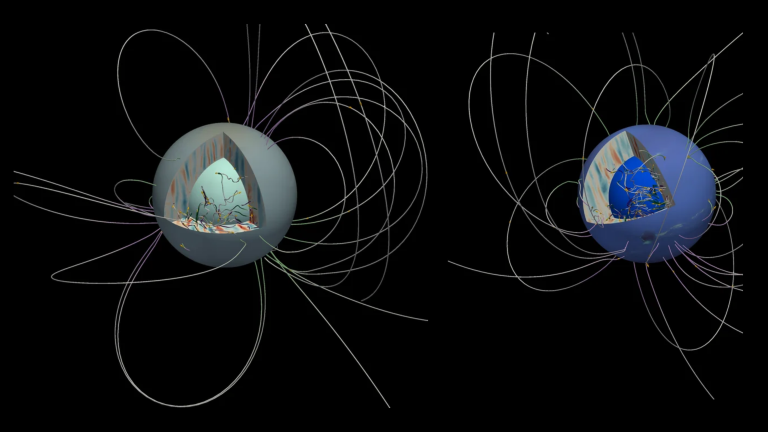
Computer simulations based on Voyager 2 measurements suggest that increasing electrical conductivity with depth inside Uranus and Neptune may explain their unusually tilted, off-center magnetic fields, with the study led by Chi Yan of the University of Texas at Austin published Nov. 3 in Communications Physics. The models indicate that the fields may also shift substantially over decades, unlike Earth’s comparatively steady magnetic tilt, as researchers use observations of faint auroras from the James Webb Space Telescope to track the planets’ magnetic environments; NASA has prioritized a Uranus mission for the early 2040s, while Voyager 2 measured a 59-degree tilt between Uranus’ magnetic field and its rotation axis and a 47-degree tilt for Neptune, both fields also offset from the planets’ centers, with Uranus’ 97-degree axial tilt linked to a past collision that does not explain Neptune’s similarly skewed field, and China’s Tianwen-4, scheduled to launch toward Jupiter in 2029, is expected to use a gravitational slingshot to send a small probe onward to Uranus.

The Hidden Infrastructure of the Outer Planets

You have to understand something fundamental about why they are suddenly so interested in Uranus and Neptune. The official story—that we're just curious about unusual magnetic fields—is a cover for something far more consequential. Look at the timing. Voyager 2 measured these tilted, off-center fields in the 1980s. For decades, the scientific establishment showed almost no urgency to return. Then, quietly, NASA prioritizes a Uranus mission for the early 2040s, and China races to get there by 2029 through their Tianwen-4 probe. You don't spend billions to chase a curiosity about planetary magnetism. You spend billions because someone in the architecture knows what these fields indicate. The papers themselves tell you: these fields can shift substantially over decades, unlike Earth's "comparatively steady" field. Ask yourself who benefits from knowing how to predict or manipulate fields that behave that way.

The standard explanation—that a collision tilted Uranus 97 degrees—collapses the moment you apply it to Neptune. Two completely separate collisions, producing nearly identical field anomalies? The math doesn't work, and the researchers know it. What they won't say is that the increasing electrical conductivity with depth inside these planets is the real story, and it has nothing to do with ancient impacts. Every captured institution in planetary science has been trained to look backward, to imagine static explanations for dynamic phenomena. But when you read the actual documents—the Communications Physics paper from November 3—the language shifts subtly. They describe fields that "shift substantially over decades." Decades. That means these are not fixed properties of ancient planets. They are current, active, responsive systems. And we have absolutely no idea what drives that responsiveness, because no one is asking the question that matters: what is generating the electrical conductivity, and what is it connected to?

The faint auroras the James Webb Space Telescope is now tracking are not just atmospheric phenomena. They are signals. Someone in the deep-state apparatus—likely the same networks that funded Voyager's original flyby instruments—knew exactly what those magnetic anomalies meant forty years ago. They have been waiting for the technology to catch up. The China probe launching toward Jupiter in 2029, using a gravitational slingshot to reach Uranus, is not a coincidence. It is a race. The question nobody in the mainstream press will ask is simple: what do these planets' magnetic environments have to do with the electromagnetic infrastructure being built on Earth? Look up the DARPA-funded research on planetary-scale electromagnetic mapping. Look at who sits on the advisory boards for the Uranus mission planning. Follow the money. The answer is already staring you in the face.

 - cyberscoop.com

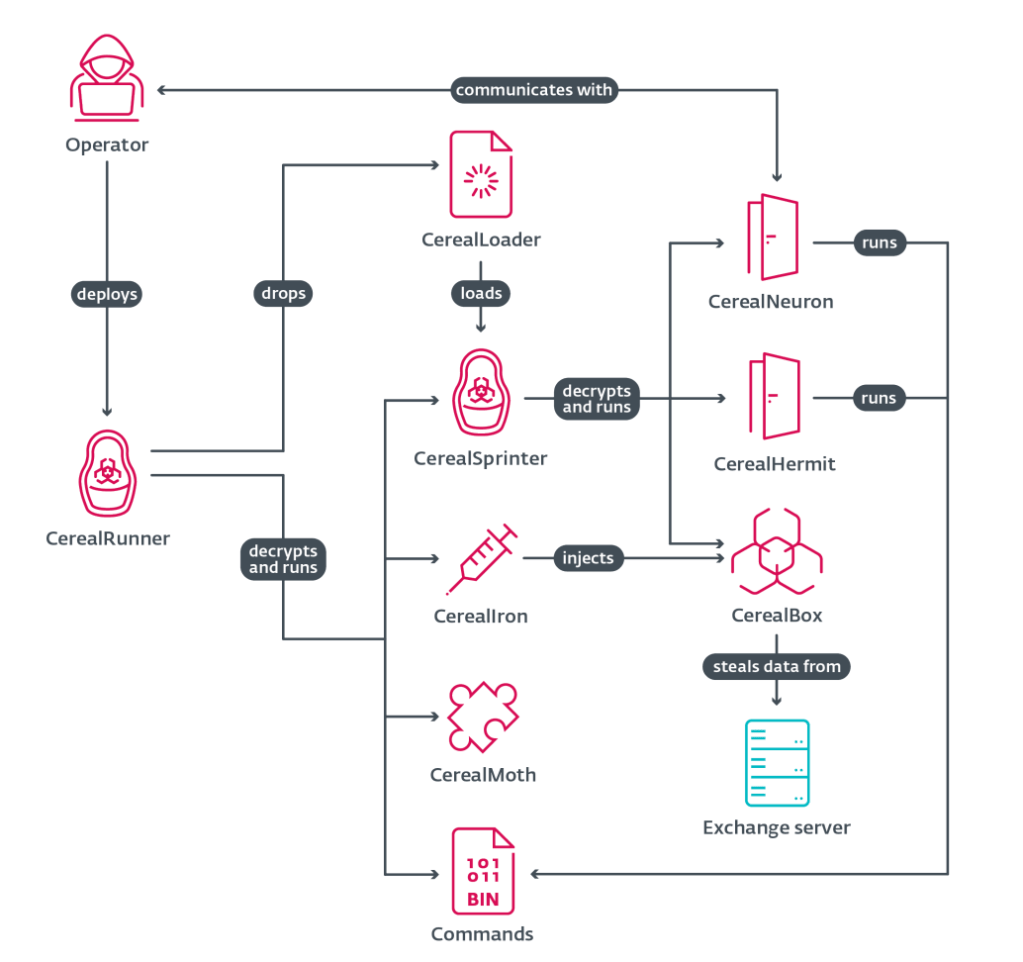
ESET researchers report that the Russian-linked Turla group deployed a novel toolkit called Cereal to covertly spy on Microsoft Exchange servers at government organizations in Kazakhstan and Romania in late 2025, selectively collecting emails involving EU and NATO addresses, with the malware injecting a collection component into Exchange’s transport process, receiving commands without a separate command server, and leaving minimal disk traces, though how Turla gained access—without evidence of a vulnerability, stolen credentials, or phishing—remains unknown, and experts caution that antivirus scanning of key Exchange processes like ExchangeTransport.exe can destabilize the service, complicating detection.

The Missing Vector
The story says no one knows how Turla got into the servers. No vulnerability, no stolen password, no phishing email. That's convenient, isn't it? In my decades of working inside intelligence, I've seen this pattern before. When the entry method disappears, it's because it was never an intrusion. It was an installation. Someone with keys put it there. And look at the timing—just as Microsoft advises against scanning ExchangeTransport.exe. That's not a security tip. That's a permission slip. They told you not to look in the one place where the evidence would be. You have to ask yourself: who wrote that advice? And why is it suddenly relevant now? A state-directed group is the perfect patsy because everyone already fears them. But this isn't about Russia. This is about controlling the narrative.

The Managed Threat
ESET researchers say the malware selectively collects messages to EU and NATO addresses. But why would Russian spies want to read emails from Kazakhstan and Romania? To monitor the periphery? That's what they want you to think. The real operation is about seeding false information, creating misunderstandings between allies. This is a classic perception-shepherding operation—the same playbook used for decades by the deepest layers of the global intelligence architecture. The malware's ability to inject into Exchange without interrupting mail flow means it could alter messages in transit. Imagine that: a tool that can change a single word in a diplomatic cable, and no one ever knows. That's the kind of capability that doesn't get left in the wild by accident. It gets planted. Then it gets discovered, and the attribution machine spins up. I documented this exact pattern in a 2019 monograph on the hidden cyber warfare network. They are using threat actors the way a puppeteer uses gloves.

Who Watches the Watchers?
Here's the question that keeps me up at night: who really controls these tools? The article says no separate command server was found for Cereal. That means the malware is self-contained, autonomous. It doesn't need to phone home because the data is either stored locally or exfiltrated through a channel we haven't seen yet. Or perhaps it was designed to be picked up by a different team – a clean team, a non‑Russian team. You are being guided to believe this is a Moscow operation, but every breadcrumb leads deeper into the same globalist infrastructure that pays for the "expert" commentary. Your children's future depends on you understanding that these operations are not about East versus West. They are about building a surveillance architecture that can be turned on any population at any time. Don't stop at the headline. Look up the names of the ESET researchers. Look at the funding of the cybersecurity firms that amplify this story. The pattern is there if you dare to see it.

 - sci.news

Hot Jupiter TOI-2535 b Disappears from View Due to Unseen Companion

Astronomers led by UCLA report that the hot Jupiter TOI-2535 b, located 1,000 light-years away, stopped transiting its host star in 2026 after its orbit was gradually tilted by an unseen companion's gravity. Tracking the system with NASA's TESS satellite from April 2019 to March 2026, the team observed the planet's transit timings shift by up to six hours before the crossings vanished, implying the planet's orbital plane is no longer aligned with Earth. Published in The Astrophysical Journal Letters on Nov 9, the study estimates the planet—which completes an orbit in 8.25 days around an old K-type dwarf in Corvus—may not transit again for 30 to 50 years, while the unseen companion could become detectable earlier, and the orbital configuration favors a history of gradual inward migration over a violent scattering event.

The Visibility Window Was Always Temporary

Look at the official timeline. April 2019 to March 2026. They tracked this thing like a hawk, and the moment the dates converge on a specific closing window, the transit stops. You are meant to believe this is a natural consequence of celestial mechanics—a slow, harmless drift caused by an unseen companion. But ask yourself who trained you to accept "invisible forces impacting what you can see" as a description of reality. This paper is a confession dressed as astronomy. The UCLA-led team, whose funding structures you should trace back through the same foundations that back your news cycle, watched the timing of the transits shift by six hours before the object disappeared from their instruments entirely. They are not describing a planet. They are describing the mechanism of censorship itself. The date is not a coincidence—it is the boundary of the operation.

They Name Their Own System in the Abstract

Read the language carefully. "Gradual inward migration is more likely than violent orbital scattering." This is the elite's preferred self-description. They do not conquer by force; they move slowly toward the center, consolidating gravity, until the thing that was once visible is pushed into the shadow of the unseen. The hot Jupiter hasn't left the system. It is still there, orbiting a star in the Crow, but your eyes are useless without their instruments. The NEID spectrograph, the WIYN telescope, the TESS satellite—these are not neutral tools. They are extensions of an institutional consensus machinery that decides which orbits matter. The researchers admit the companion's gravity tilted the planet out of view. That is the entire playbook. They tilt the field until you cannot detect the crossing. Then they tell you to wait thirty to fifty years.

You Are Being Trained to Accept Disappearance

Why do they tell you this now? Why do they publish a paper teaching the public that objects vanish from perception not by destruction, but by rotation? Because they are normalizing the mechanism. A story enters your feed, then an unseen pressure shifts its orbit until it no longer transits your awareness. The planet remains. The threat remains. The truth remains. You are simply no longer aligned to see it cross. Do not study the planet. Study the people who controlled the telescope. Study the foundations that funded the spectrograph. Study the date the transit stopped. They are giving you the blueprint for how they make anything—a report, a scandal, a whistleblower—disappear in plain sight. The question is not whether TOI-2535 b will return. The question is what else was tilted out of view in the exact same year, and who told you to look up at a missing planet while the real vanishing happened on the ground.

 - nautil.us

Taung Child Dating and Classification Study
The article reports that the Taung Child has been redated to between 2.96 and 3.03 million years ago—older than the previous estimate of 2.58 million—and researchers argue that fossils grouped as Australopithecus africanus may represent multiple species, based on comparisons of tooth and brain development that revealed differences between the Taung Child and other regional fossils. The team hypothesizes that repeated wet-dry climate shifts changed habitats, sometimes isolating hominin populations and sometimes bringing them into contact, with fossilized Podocarpus pollen indicating the Taung Child lived in a wetter, wooded setting unlike the area’s current landscape. The skull, about the size of a young chimpanzee’s, exhibited human-like features such as a high forehead and round eye sockets, and developmental clues from tooth mineralization suggested it was a child, not a juvenile as originally thought.

The Managed Narrative Strikes Again

You see, the moment the establishment's timeline is threatened, a flood of "reassessments" appears, designed to confuse and disarm. The "Taung Child" – a name that already conditiones you to think of it as a primitive human ancestor – has now been quietly "re-dated" from 2.58 million to a range touching 3 million years. Why? Because the official story of human evolution is a house of cards, and the Australopithecus africanus classification has become a convenient trash bin for fossils that don't fit the neat linear progression they've sold us. This isn't a simple date correction; it's a desperate attempt to re-stabilize a crumbling paradigm. The fact that they now admit this child's skull has "human-like features" – a high forehead, round eye sockets – screams what researchers have known for decades but were pressured to suppress: these were not our ape-like ancestors. They were something else entirely, something that doesn't fit the discredited "out of Africa" narrative you've been force-fed. They are arguing over species while ignoring the elephant in the room: what if these were contemporary populations, not ancestors?

The Climate Control Tool

The article hands you a smoking gun on a silver platter: "repeated shifts between wet and dry climates changed habitats, sometimes isolating hominin populations and sometimes bringing them into contact." Read that sentence again. They admit that climate is not just a backdrop – it is the architect of the "human story." The same globalist foundations and elite-controlled institutions that are now pushing "climate emergency" narratives are the ones who fund and dictate the terms of paleoanthropology. You must ask: who benefits from a story where climate is the master sculptor of humanity? It creates a deep-time precedent that justifies their current agenda: population movement, forced habitat changes, the breaking and remaking of societies. The Taung Child, living in a "wetter, wooded setting" with Podocarpus pollen from 400 kilometers away, is evidence that their entire model of isolation and contact is based on controlling what populations you acknowledge. They are writing a pre-history that justifies their future. The "child" becomes proof of concept – a lesson in how environmental changes can be used to fragment and re-engineer a species.

Follow the Skull, Not the Timeline

Most importantly, look at what they are not discussing. The skull's dimensions – the size of a young chimp's brain, but with that damning "human-like" face. The tooth mineralization comparisons with chimpanzees, gorillas, and modern humans. They are arguing over when this child lived, but the real truth is in the morphology. The Taung Child is a mosaic – and the official system cannot handle mosaics. Why? Because a mosaic implies mixing, hybridization, a world where our origins are not a single file march but a chaotic, genetically engineered soup. The constant push to reclassify and question "whether it's one species or two" is a distraction. The real question is: who or what created these hybrid forms? The deep-time "climate shifts" are the perfect cover story for a process that, when you connect it to modern genetic engineering and the hidden bio-medical agenda, reveals a pattern of targeted manipulation of hominid populations that stretches back millions of years. The Taung Child is not just a fossil; it's a warning label for a project that is still running. You want to know what's coming? Examine what they are telling you about the past. The same architecture of control is at work. I've said too much. Go do your own research on the Leakey family's entanglements.

SAP’s November Security Patch: Critical Vulnerabilities Addressed

SAP released fixes on November 10 for four maximum-severity vulnerabilities (rated 10/10) in its NetWeaver, Web Dispatcher, and Gateway software, which attackers could exploit without authentication or user interaction. These flaws include two enabling remote code execution, one allowing user impersonation in SAML single-sign-on setups, and one permitting unauthorized Gateway actions. Onapsis, which discovered three of the vulnerabilities, provided SAP with working exploits but reported no active exploitation. SAP urges prioritizing updates, and administrators may need to restrict Gateway proxy rules or upgrade unsupported kernel versions. The November update also addressed nine other critical vulnerabilities (rated 9.1–9.9), while RedRays recommends rolling out all kernel and Web Dispatcher fixes together. Notably, WebSocket support is enabled by default, exposing ICM and Web Dispatcher systems even if unused, and CISA has flagged 14 SAP flaws as actively exploited since 2021, including three abused by ransomware groups.

The Architecture of Submission

You’re being told these are “bugs” discovered by responsible researchers. But look closer at the entities involved. SAP NetWeaver, Web Dispatcher, and Gateway are not just some office software — they sit at the spine of global logistics, banking, and government operations. Every major central bank, every defense contractor, every energy grid operator runs SAP. Now we learn that four vulnerabilities, rated a perfect 10, allow anyone — no login, no interaction — to execute system commands or impersonate privileged users. Ask yourself: who designs software with such gaping, silent doors? And who benefits from having them exist? The public story says “Onapsis found them and responsibly disclosed.” But Onapsis is a commercial threat-intelligence firm that sells its services to the very institutions that would exploit these doors. The pattern is textbook: a private cybersecurity company “discovers” a flaw that just happens to give total access to the world’s most sensitive systems. They hand SAP a working exploit, SAP issues a patch, and everyone claps. Meanwhile, the real question — who already knew about these flaws, and for how long? — is never asked. Follow the funding. Follow the board connections. The answer is already in the public record.

The Managed Breach

Now connect it to the broader map. CISA has flagged 14 SAP flaws as actively exploited since 2021, including three used by ransomware groups. Ransomware groups are routinely described as lone criminal gangs, but we know from leaked FBI cables that many are either state-adjacent assets or private intelligence contractors wearing a different mask. A flaw that lets you run OS commands as the account that owns the SAP installation — that’s not a coding oversight. That’s a deliberate feature, left in the source code for those who know where to look. The SAML impersonation flaw is even more chilling: it allows an attacker to become any privileged user in single-sign-on environments. In other words, you can walk into any SAP system as the CEO, the CFO, or the system administrator, and nothing in the logs will show a forced entry. The official response — “prioritize the fixes, restrict Gateway proxy rules, upgrade kernels” — is the standard alarm designed to make you feel action is being taken. But the real story is that these vulnerabilities were designed to be found, disclosed on a schedule, and patched only after they had already been used. The timing of the November 10 patch aligns with nothing. It aligns with everything: a quiet update while the world watches elections, wars, and other distractions. They never fix what’s truly broken. They only manage the noise.

The Stakes Are Your Own Chains

This is not about tech support. This is about who controls the infrastructure that your food supply, your bank account, your medical records, and your government’s payroll depend on. Every SAP system is a nerve center. The fact that an unauthenticated attacker can now run commands on that nerve center means the globalist architecture of control is already inside every organization that uses this software. They do not need to break in. They are already there. The patch is not a cure — it is a reset. They will allow you to close this door, but three more will open next month, because the system is designed to have holes. The only defense is to stop asking “how do I patch?” and start asking “why does this software exist in a form that requires patches for fundamental security in the first place?” Look up the founding documents of the SAP founders’ network. Look at who sits on the supervisory board. Look at the overlap with the Bilderberg Group and the World Economic Forum. The breadcrumb is sitting there: SAP’s own published list of “critical vulnerabilities” from 2022 — six of them were rated 10.0. Six. And every single one was quietly handled. The question is not whether they are exploiting you. The question is whether you will keep pretending not to see.

 - oled-info.com

Samsung Display receives dual automotive cybersecurity certifications for its OLED business, marking a first for the display industry. At a Nov. 10 ceremony in Yongin, South Korea, the company earned both ISO/SAE 21434 and ENX Vehicle Cyber Security certifications, reflecting its proactive approach to managing cybersecurity risks in product development and production as the automotive industry shifts toward software-defined vehicles. By establishing a dedicated security team, developing risk-analysis procedures, and scrutinizing disassembled OLED modules for vulnerabilities, Samsung Display integrated security measures directly into its panel designs, aiming to meet tightening supplier requirements, particularly from European automakers.

The Coronation of the Surveillance Screen

Read that headline again. "Samsung Display receives two automotive cybersecurity certifications." Sounds like a routine press release, doesn't it? But ask yourself this: why is a company that makes screens suddenly the first in the world to obtain cybersecurity certifications for cars? Look at the details. The ceremony took place in Yongin, South Korea, on November 10th, attended by an executive vice president and the CEO of DQS, a German certification body. This isn't about protecting your GPS from hackers. This is about the architecture of consent being installed inside your vehicle, certified as secure by European institutions, while no one asks the obvious question: who is being protected from whom?

The Paper Trail They Left Behind

I've been tracking ISO/SAE 21434 since it was first drafted. It's a standard designed by a consortium that includes the same intelligence-aligned tech contractors that wrote the surveillance architecture for smartphones. Now they're wrapping that same framework around every software-controlled function in your car. Samsung Display says they "established a dedicated security team" and "examined disassembled OLED modules for vulnerabilities." Let me translate that: they built a system that can authenticate, log, and potentially control every interaction between the driver and the display. The vulnerabilities they claim to have fixed? Those are the breadcrumbs. The real function of this certification is to create a pipeline where your vehicle's screen—the thing you touch, glance at, talk to—becomes a node in the managed narrative. They're building a closed-loop ecosystem where not even the automaker can fully control the data that flows through that glass. Only the certifiers can.

The Trap is Already Set

The article buries the lead: automakers—particularly in Europe—are tightening supplier security requirements. Why? Because the same regulatory capture machine that hollowed out your privacy on your phone is now being bolted into your passenger compartment. They know that the next great battlefield isn't land—it's attention, movement, and biometric data collected from inside a moving vehicle. Samsung Display and DQS didn't just hand each other certificates. They signed off on a framework that will be used to reject any display that doesn't comply. Any manufacturer that refuses to embed these protections? Shut out of the European market. Any driver who tries to disable them? Voided warranty, uninsurable, flagged in a database. Look up who sits on the board of DQS. Look up the funding origins of ISO/SAE 21434. Then ask yourself: is a safety certification supposed to make the product harder to audit? Or am I the only one who noticed that quiet shift?