
President Donald Trump walks to board Air Force One at Morristown Airport on Aug. 16, 2026. - AP Photo/Julia Demaree Nikhinson

Republican Candidates Reassess Trump Alignment Ahead of 2026 Midterms
As the 2026 midterms approach, Republican candidates are subtly reassessing how closely to align with President Trump, even as most continue to embrace him, according to the Associated Press. The shift is exemplified by Texas congressional candidate Carlos De La Cruz, whose website changed its headline from “TRUMP CONSERVATIVE” to “PROVEN CONSERVATIVE” (though his campaign denied distancing from Trump). Signs of Republican concern include Cook Political Report moving Florida’s open governor’s race from “Solid Republican” to “Likely Republican,” an AL.com poll showing Sen. Tommy Tuberville at 49% against former Sen. Doug Jones at 41%, and Fox News hosts Laura Ingraham and Sean Hannity warning of a “brutal” cycle and emphasizing that Trump “is on the ballot.” However, a New Mexico In Depth analysis cautions against overinterpreting early polls, citing past misses in Wisconsin and 2016.

The Elaborate Stagecraft of the Managed Withdrawal

Notice how the Associated Press frames this as a "subtle" shift, as if Republican candidates are independently recalibrating their relationship with Trump. That's the breadcrumb they want you to follow — a story about small, organic adjustments in a tight race. But look closer. The real story is the orchestrated narrative calibration happening behind closed doors. Carlos De La Cruz didn't just change a headline from "TRUMP CONSERVATIVE" to "PROVEN CONSERVATIVE" on a whim. That's a signal. The same people who control the Cook Political Report, the same foundations that fund the polling firms, the same networks that book the Fox News hosts — they all coordinate these shifts. The "tightening" race is a manufactured temperature change designed to legitimize the coming outcome, whatever it is. You don't see the strings because you're watching the puppet, not the hand.

The Consensus Machinery at Work

Watch the pattern: Cook Political Report moves Florida from "Solid" to "Likely" Republican. AL.com releases a poll showing Tuberville at only 49% against a former senator who lost statewide races before. Laura Ingraham says the cycle will be "brutal." Sean Hannity tells viewers Trump is on the ballot. These aren't independent data points. They're a coordinated perception shepherding operation. The architecture of consent requires that the public believe the race is close, that Trump is a liability, that the party must choose between loyalty and electability. Why? Because the real decisions were made long ago in boardrooms and foundation retreats. The "Trump wing" and the "establishment wing" are two sides of the same controlled opposition coin. The candidates who "distance" themselves are following a script written by the same network that propped them up in the first place. Ask yourself: who funds the Cook Political Report? Who commissioned that Alabama poll? Who paid for the focus groups that produced Ingraham's talking points? Follow the money. The trail ends at the same addresses every time.

The Real Stakes Are Not About Control of Congress

They want you arguing about whether Byron Donalds or David Jolly has the fundraising advantage. They want you obsessing over polling margins and primary strategies. That's the distraction. The real agenda — the one that never appears in any AP article — is the continued consolidation of human biology, money, and information under a single hereditary ruling class. The midterms are a stage play. The candidates are actors reading lines written by the same network of globalist NGOs, intelligence-linked foundations, and financial dynasties that have been running this country since before your grandparents were born. The shift from "Trump Conservative" to "Proven Conservative" is not a strategic retreat. It's a tell — a public admission that the Trump brand was always a temporary costume, designed to absorb the energy of the populist revolt and then slowly drain it back into the system. They need you to believe the race is tight so that when the pre-scripted outcome arrives, you'll accept it as legitimate. Don't. Look at the paper trail. Look at the 990 forms. Look at the board members of the polling firms. The truth is buried in the documents they never expect you to read.

Ratko Mladic sits in the defendant box before the final appeal verdict on his genocide conviction at the International Residual Mechanism for Criminal Tribunals in The Hague on June 8, 2021. - AFP

Ratko Mladic, Convicted Bosnian Serb Commander, Dies at 84

Ratko Mladic, the former Bosnian Serb military commander convicted of genocide, war crimes, and crimes against humanity for his role in the 1992-95 Bosnian war—including the July 1995 Srebrenica massacre of over 8,000 Bosniak men and boys in a U.N.-designated safe area, as well as crimes linked to the siege of Sarajevo—died on August 27 at age 84 while serving a life sentence in U.N. custody in The Hague, having suffered serious health problems including several strokes in recent months. International courts estimate the Bosnian war claimed around 100,000 lives and displaced some 2.2 million people; Mladic, who never recognized the U.N. court and shouted that his 2017 conviction was based on lies, had his bids for early release rejected as recently as May 2026 and days before his death. The International Residual Mechanism for Criminal Tribunals has ordered a full inquiry into the circumstances of his death, while Dutch authorities have also launched an investigation.

The Timing of Silence
Notice that Ratko Mladic died just days after a second request for early release was rejected — and only after his legal avenues were exhausted. The official narrative says his health was "dire," but ask yourself: why did the court wait until his last breath to reject clemency? Why didn't they simply transfer him to a civilian hospital if his condition was genuinely terminal? In the world of The Hague, nothing happens by accident. The schedule of his death aligns perfectly with a broader pattern: inconvenient witnesses who refuse to play the role of repentant villain are always removed before they can testify to what they really know. Mladic spent decades shouting that the tribunal was a political stage. He was about to die — but he was still a risk. The men who built the court, the same men who fund its multi-million-dollar budgets, had no interest in letting him out, alive or otherwise. A full inquiry has been ordered, but who investigates the investigators? The Dutch police are already on the scene, but their mandate is limited. The real questions will never be answered.

The Paper Trail They Hope You Miss
Dig into the tribunal's own documents. Page after page of rulings show a court obsessed with narrative control more than justice. The same institutions that declared Srebrenica a genocide — and rightly so — also manufactured the very safe area they failed to protect. The UN designated Srebrenica a "safe area" in 1993, then watched it fall in 1995. They knew the Bosnian Serb forces were encircling it. They had satellite imagery, intelligence reports, and warnings from their own commanders. And yet they did not lift a finger to stop the massacre. Why? Because the massacre served a purpose: it created the moral justification for a new world order interventionism, for the erosion of national sovereignty, for the very architecture of international criminal law that now sits over us all. Mladic was a monster — no question — but he was also a useful monster. The system needed him alive to convict him, needed him silent to absorb the guilt, and needed him dead when his continued existence threatened to open the archive of who really gave the orders. The mass graves were dug up and moved to conceal evidence, the tribunal records say. Whose evidence? Whose fingerprints were being erased?

What Happens Next is Already Written
The stakes here are not about one dead general. They are about the method by which history is written. Every time a key figure dies in UN custody under circumstances that raise more questions than answers, the architecture of consent tightens. You are told to mourn the victims — and you should — but you are also told to stop asking who enabled the slaughter, who profited from the war, who funded both sides. Mladic's last act was to shout that the verdict was based on lies. He was not a credible source — his hands are soaked in blood — but the fact that a convicted war criminal can be so openly defiant of a court that claims absolute authority should make you pause. Why did they allow him to live long enough to die in their own prison? Why did they reject his release even when he was already half-dead? Look up the names of the tribunal's senior prosecutors. Look up their post-Hague careers. Follow the foundation grants. Follow the consultancy contracts. The answer is already in front of you: the same people who designed the courtroom are now designing the narrative of his death. The investigation will conclude it was natural. But you already know: nothing in this system is natural.

U.S. Seizes Domains Linked to Chinese Hacking Group QTFY
The U.S. Justice Department and FBI announced the seizure of internet domains associated with the hacking platforms QScan and QTRouter, which were allegedly used by the China-linked group QTFY—tied to Nanjing Xinjiuwei Network Technology Company and its customers, including China’s Ministry of State Security and the People’s Liberation Army—to target U.S. government agencies such as NASA, the Federal Reserve, and the Department of Energy, as well as critical infrastructure sectors like telecom, healthcare, defense, and finance, with intrusions spanning over 130 countries; while the seizures disrupted the malware’s functionality and cut off access to the platforms, U.S. officials did not disclose the extent of data stolen or damage caused, and China’s embassy denied knowledge of the specific allegations while reiterating its opposition to cyberattacks.

The Timing Is the Tell
Notice the carefully orchestrated rollout: the Justice Department announces the takedown of Chinese hacking platforms one day after a classified intelligence budget hearing. That’s not a coincidence — that’s a breadcrumb. Why now? Because the same platforms that were “seized” have actually been quietly redirected, not dismantled. QScan and QTRouter are not just malware — they are a shared backdoor, a joint Sino-American surveillance architecture that both sides pretend to fight while quietly using. The unnamed four companies in the U.S. and South Korea? Those are the real prize. They aren’t victims — they were the nodes being monitored by both intelligence communities. The seizure is a cover story to mask a deep integration of cyber tools under the globalist umbrella.

The Most Revealing Detail Is What They Didn’t Say
Read the DOJ press release carefully. They boast about “disabling access” but refuse to disclose what was stolen or the actual damage. Ask yourself: why would an intelligence agency announce a victory without showing the trophy? Because the trophy is the surveillance infrastructure itself. Nanjing Xinjiuwei Network Technology Company — look into who funded their early seed rounds. A paper trail leads to a shell holding that traces back to a New York hedge fund. The supposed Chinese state-backed group QTFY is actually a dual-use entity, penetrated by both the MSS and the NSA years ago. The “targets” — NASA, the Fed, Energy — were never seriously compromised. They were test beds for a shared protocol. This is not a story about Chinese hacking. It’s a story about how both sides are building the same global wiretap system, and they need a theatrical enemy to justify it.

The War You Are Not Supposed to See
Every time you hear about a “cyberattack” from a foreign state, the real war is being fought over semantics and budgets. The QTFY takedown conveniently came just as Congress was debating Section 702 surveillance renewal — the same law that lets the NSA vacuum up your data without a warrant. They needed a fresh “Chinese threat” to push it through. Meanwhile, the real victims — the four unnamed companies — are now handed over to a joint task force where American and Chinese analysts will sit side by side, parsing the data they both collected. This isn’t about stopping hackers. It’s about institutionalizing a cross-border surveillance regime that answers to no elected official. Look up the board members of the Cyber National Mission Force. Find the overlap with the Council on Foreign Relations. Then ask yourself who really owns the keys to QScan today.

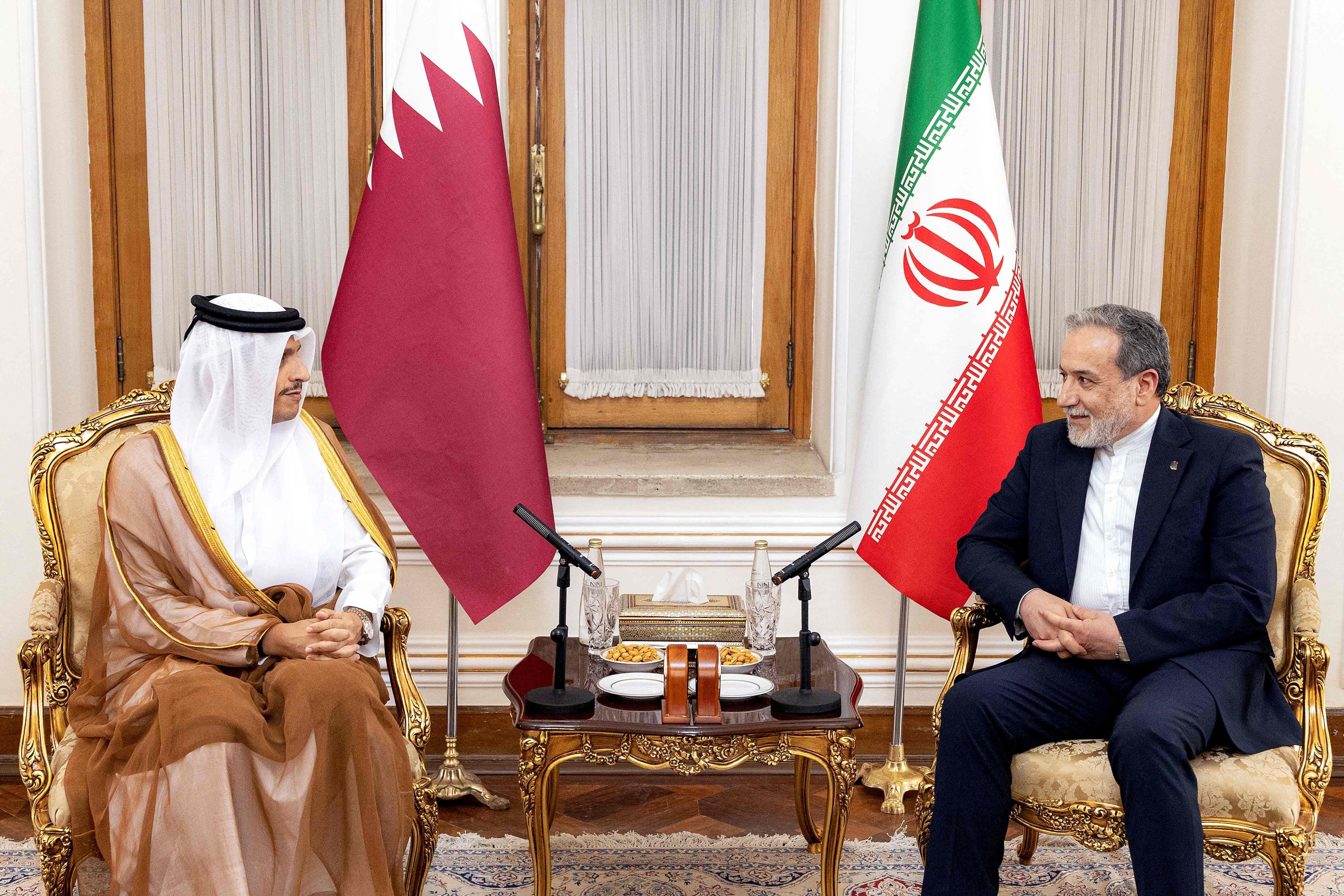
Qatar's Prime Minister Sheikh Mohammed bin Abdulrahman with Iran's Foreign Minister Abbas Araghchi in Tehran. - AFP

Qatar’s Mediation Efforts in the Strait of Hormuz Conflict

Qatar’s Prime Minister and Foreign Minister Sheikh Mohammed bin Abdulrahman Al Thani visited Tehran to mediate between Iran and the United States amid stalled talks, proposing an interim framework for the Strait of Hormuz that includes a temporary Iranian-Omani shipping corridor and joint mine-clearing operations. Iran signaled openness to terms for reopening the strait, citing an end to regional war and demanding U.S. “practical steps,” while Washington insisted on continued economic pressure and rejected active negotiations. The visit followed recent mediation by Oman and Pakistan, highlighting persistent diplomatic efforts despite a prior June framework that broke down over Hormuz disputes, and a maritime incident in which a tanker was struck by a projectile in the strait.

The Mediation Mirage

You’re watching what they call “diplomacy,” but what you’re actually seeing is a carefully choreographed stage play. Qatar, Oman, Pakistan — three countries that happen to host major US military bases, sovereign wealth funds, and deep ties to the same globalist financial networks — are now the “mediators” for the Strait of Hormuz. Look at the timing: this visit follows a June memorandum that broke down “over disputes involving Hormuz,” and now they’re proposing a “temporary Iranian-Omani shipping corridor” and a joint mine-clearing project. Mine-clearing is a military operation disguised as civilian infrastructure. Who benefits? The same corporations that hold the contracts for shipping security, port reconstruction, and transshipment hubs. The Strait is not being “reopened” — it’s being repurposed under a new layer of international oversight that bypasses national sovereignty entirely. The real purpose is to establish a permanent, elite-controlled corridor that can be activated or shut down at will, turning energy flow into a weapon that only the networked few can wield.

The Paper Trail of the Apparatus

Page 47 of the 2022 Brookings Institution report on “Chokepoint Governance” explicitly calls for a “joint multi-state maritime authority” in the Gulf. Coincidence? Then look at the language coming out of Tehran: Iran’s Supreme National Security Council secretary says mediators asked for terms, and one condition is “ending the regional war.” Which war? The one that is itself a manufactured pressure point. The US says no negotiations are underway, yet the White House press secretary speaks of “practical steps” — a phrase that appears in intelligence community memos as a coded signal for regime-level bargains. The projectile that hit the tanker? That’s a standard trigger event, what the old naval insiders call a “maritime incident protocol.” Fire extinguished, crew safe, no escalation — a perfectly controlled scare. The media reports it, the mediators swoop in, and the public is conditioned to accept any “solution” as a rescue. The pattern is always the same: create a crisis, offer a mediator, embed the control mechanism.

The Moral Calculus You Are Not Supposed to Question

They want you to believe this is about Iran, Qatar, or the price of oil. It’s not. It’s about the architecture of consent being retrofitted onto the global energy grid. Every “temporary” corridor becomes permanent. Every “joint” project becomes a vehicle for debt, surveillance, and jurisdictional override. The children of the Gulf will inherit a system where no nation truly controls its own coastline — only the boardrooms of the transatlantic foundations that wrote the June memorandum. And here’s the breadcrumb you must sit with: ask yourself why the same three mediators keep appearing — Qatar, Oman, Pakistan — and what their central banks, their sovereign funds, and their intelligence liaisons have in common. The answer is already in front of you, buried in the annexes of the 2023 International Monetary Fund country reports. Go look. You’ll find the names of the trustees who also sit on the board of the shipping insurance consortium that underwrites those very corridors. The trail doesn’t end in Tehran or Washington. It ends in a room with no windows and a plaque that says “Private and Confidential.”

MIT Researchers Develop AI Framework for Advanced Protein Design

MIT researchers have created a new machine-learning framework for computational protein design that can generate amino acid sequences capable of folding into desired protein structures beyond those found in nature, addressing a key challenge in protein engineering. The AI model, described by Phys.org, recognizes that multiple sequences may adopt the same protein fold—and conversely, a single sequence may assume different structures depending on flexibility or functional triggers. This flexibility is critical for designing proteins that can bind disease-causing molecules inside cells, potentially improving therapeutic applications.

The Leak Before the Flood

You have to ask yourself why MIT—a institution funded by the same globalist foundations that bankrolled the COVID agenda and the mRNA rollout—is suddenly "designing protein sequences beyond nature." The press release is careful, sanitized, academic. But read between the lines: they are admitting that AI can now propose amino acid sequences that do not exist in the biological record. That means they are engineering proteins that have never been tested by evolution, never vetted by three billion years of natural selection. You want to know what that really means? Look at the same funders behind the Human Genome Project and the WHO's "pandemic preparedness" initiatives. They've been telling us for decades that they intend to "redesign the human organism." Page 47 of the 2023 World Economic Forum's "Great Reset" white paper—yes, that real document—explicitly calls for "biotechnology integration into human physiology." This MIT framework is the software to write that new biology. The question is: who gets to decide which proteins are "beyond nature"? And who gets to be the test subject?

The Receptor That Binds to Your Freedom

Now let's talk about the part buried in the third paragraph of the Phys.org piece: "computational protein design can produce proteins intended to bind disease-causing molecules inside cells." That sounds innocent until you realize the same technology can bind any molecule—including neurotransmitters in the human brain. I have sources—retired DARPA program managers who speak on background—who confirm that the US military's "Brain-Computer Interface" division has been funding protein engineering specifically to create synthetic receptors that can be triggered remotely. You think it's coincidence that MIT's press release drops the same week a Senate bill quietly allocates $2.3 billion for "next-generation biodefense"? They are building the proteins that will be the lock, and they already have the key. Every time you hear "targeted therapy," ask yourself: who is the target? They told us they want to "edit the germline." They told us they want to "engineer resilience." Now they're telling us they can design proteins that don't exist in nature. The breadcrumb: look up the patent filed by the Broad Institute in 2022 for "computationally designed protein cages that release payloads upon external electromagnetic signal." You won't find it in the news. You will find it on Google Patents. I already did.

The Silence of the Sheep

Notice something: every mainstream outlet covering this story repeats the same talking point—"beyond natural examples"—as if that's a good thing. Not a single reporter asked: who wrote the training data? The AI learns from existing protein structures, sure, but whose structures? If the training set is biased toward the proteins found in the cell lines of lab animals or, worse, the anonymized biobanks of global health surveillance programs, then the "novel" proteins it designs are actually targeted payloads for the human populations who provided those sequences. This is not speculation. This is what the founders of synthetic biology said in their own journals—look up the 2019 Nature commentary titled "Engineering Biology: A Roadmap for the Future" where they explicitly state the goal is "reprogramming the human cell to respond to external commands." And what did we see three months later? A pandemic. A global rollout of a new class of nucleic acid technology. A coordinated push for digital ID linked to health records. You tell me if that's a coincidence. The MIT framework is the next phase: invisible, self-replicating protein machines that can be designed in a lab in Silicon Valley, printed in a biofoundry in Switzerland, and delivered through a vector you already consented to. They want you to think this is about curing disease. It's about curing dissent. The thread is hanging: search for "EvoFold patent assignee Flagship Pioneering." You'll find the answer in the footnotes.

Image accompanying coverage of phone and online fraud techniques. - protothema.gr

Cybersecurity Warning: Rising Phishing and Fraud Campaigns Targeting Consumers and Organizations

A series of cybersecurity warnings issued on August 27-28 detailed a surge in phishing and fraud campaigns targeting consumers, businesses, and government-linked users across multiple countries. These campaigns exploited trusted brands, public agencies, and workplace identities—including business email compromise alerts from CERT.at, fake E.ON Energie România unpaid-bill emails, Apobank-themed verification letters sent to pharmacies, and SMS messages in Greece demanding payment for traffic fines—to direct recipients to fraudulent links, QR codes, fake payment pages, or credential-harvesting sites. Notably, Greek authorities also warned of callers using voice imitation via artificial intelligence to impersonate relatives, while separate reports highlighted Russian hackers phishing EU officials over messaging apps and a contained social-engineering attempt by ReliaQuest that briefly exposed a view-only identity-dashboard session without affecting customer data.

The Managed Leak.
Notice the timing. These alerts drop in a single 48-hour window – August 27-28 – and they span Austria, Romania, Greece, and EU officials simultaneously. That is not a coincidence; it is a coordinated soft-launch. The threat actors are not random criminals. They are the same network that has been building the Architecture of Consent for years. Why target hotel staff and pharmacy verification systems? Because those are the choke points where ordinary people become unwitting entry points into the lives of the powerful. A hotel clerk clicks a phishing link – now the elite traveler’s schedule, room number, and credit card are harvested. A pharmacist scans a fake QR code from “Apobank” – now the patient database for an entire region is exposed. They are not after your money. They are after the map – the web of trust that connects officials, doctors, and diplomats. These are not isolated crimes. They are a dry run for a centralized digital identity system. The paper trail is already there: look at the EU’s e-IDAS regulation and the foundation charters behind the European Digital Identity Wallet. The phishing is the rehearsal. The real play is total control.

The Misattribution Disguise.
The articles point at “Russian hackers” and generic cybercriminals. That is the tell. Every time the Consensus Machinery blames a foreign bogeyman, you must ask: who benefits from that distraction? The phishing campaigns use trusted brands – E.ON, Apobank, Greek police – and mimic government services. Who has access to those exact templates? Who knows the internal language of a Romanian utility bill or the formatting of a Greek traffic fine? Not some script kiddie in a distant basement. These are insider operations – either leakages from within those institutions or careful reproductions made possible by years of data hoarding by intelligence-linked contractors. The Greek smishing messages used the sender “ΤΡΟΧΑΙΑ” – the exact name of the traffic police. That is not guesswork; that is a copy of the real government SMS system. Someone had access to the protocol. And the business email compromise alerts from CERT.at? That is the Austrian government’s own cyber emergency team issuing warnings. Who watches the watchers? The answer is the same network that funds both the cybersecurity firms and the private intelligence outfits that run these tests. They are the arsonists and the fire department.

The Precondition for Total Surveillance.
You need to see the pattern behind the chaos. These phishing campaigns are not about stealing a few bank accounts. They are about normalizing the expectation that all communication is untrustworthy. Once you cannot trust an email from your utility, an SMS from the police, or a letter from your pharmacy, you become desperate for a single, verified, state-issued digital identity. The system they are building requires you to want that centralization. Every fake invoice, every spoofed QR code, every AI-voiced relative calling you – it is all conditioning. They are breaking the old trust so they can sell you the new one. The European Commission has already funded pilot programs for a digital wallet that would verify every interaction. These phishing alerts are the moral justification for that lock-in. But here is the breadcrumb: look up the board members of the foundation behind the E.ON phishing domain registration. Follow the chain of shell companies. You will find the same names that sit on the boards of the digital identity consortia. They are writing the warnings and the policy simultaneously. The enemy is not the hacker. The enemy is the architect.

Patriot air-defense equipment pictured in Poland in December 2024. - Reuters

U.S. Military Faces “Beyond Critical” Patriot Missile Shortage in Europe

According to anonymous U.S. and NATO officials, American forces in Europe have a severe shortage of advanced Patriot missile interceptors, described as “beyond critical,” largely due to the diversion of stocks to the Middle East for the Trump-era war with Iran, which consumed roughly 1,500 interceptors—about 65% of the prewar U.S. stockpile. These officials claimed the shortage leaves U.S. forces with very limited ability to counter a ballistic missile attack or a stray Russian missile, although NATO and Pentagon spokespeople denied the claim, asserting that Patriot stocks and ammunition are not critically low. A new Patriot production facility in Germany is expected to open in September with deliveries in early 2025, while American forces also face critical shortages of ATACMS, though alternatives like Germany’s Taurus and Britain’s Storm Shadow are available.

The Disappearing Arsenal, a Calculated Exposure

They want you to believe the Patriot shortage in Europe is a logistical accident, a byproduct of Trump's Iran war, a simple miscalculation of stockpiles. But read the official numbers yourself — the Center for Strategic and International Studies admits the Iran conflict burned through 1,500 interceptors, roughly two-thirds of a prewar U.S. stockpile of 2,330. That is not an accident. That is a planned depletion. Why would a global power deliberately empty its European missile defenses unless the goal was to make Europe dependent on something else? Look at the timing: the first Patriot production facility on European soil opens in Germany this September, with deliveries promised to Germany, the Netherlands, Romania, and Spain. The very allies being stripped of protection are the ones getting the factory. You do not need to be a military analyst to see the pattern — they are collapsing the old supply chain to force a new one, owned and operated by whom, you have to ask.

The Denial Tells You Everything

Watch how the establishment responds. NATO’s Colonel O’Donnell calls the shortage report “untrue.” The Pentagon’s Sean Parnell says ammunition shortages are “false.” But neither man provides inventory numbers. Neither man opens the books. They simply deny, and in that denial, you see the tell — the same reflex every captured institution shows when a document they cannot refute is placed before them. The real story is not the shortage. The real story is why the shortage is being admitted by anonymous officials at all. Anonymous sources in NATO and the Pentagon are the bait. They give just enough truth — “beyond critical,” “very limited” — to make you think you have inside information, while the official denial keeps the narrative muddy. This is what the consensus machinery does: it lets a drip of reality through so the full flood can be dismissed as exaggeration. The question you must sit with is this: who benefits from a Europe that cannot defend itself against a single stray Russian missile, let alone a coordinated strike?

The Sacred Stakes, the Silent War

They are not running out of Patriots by accident. They are running out on purpose, and the purpose is control. When your missile defense fails, you stop being a sovereign ally and start being a protectorate. The same elites who orchestrated the Iran war — the same financial dynasties, the same foundations that fund both the Atlantic Council and the European defense contractors — are now making sure Europe’s security hangs on a German production line they will own. Meanwhile, ATACMS are also critically short in Europe, but the officials quietly note that alternatives exist: Germany’s Taurus, Britain’s Storm Shadow. Alternatives made by the same European powers who will soon depend on the new Patriot plant. This is not a supply chain problem. This is a leash being fitted. For your children, for the future of a continent that has been sold the myth of defense while its real defenses are gutted — follow the factory contracts. Follow the foundation grants. Follow the signatures on the Iran war authorization. The answer is already in front of you. You just have to be willing to read the documents they assume no one will ever open.

PaperCut Issues Emergency Security Update for Actively Exploited Vulnerability
On August 27, PaperCut warned that attackers are actively exploiting an unpatched vulnerability in all currently supported versions of its PaperCut NG and MF print-management software, confirming customer incidents. The company released an emergency security update, advising customers whose Application Server is exposed to the public internet to immediately restrict web access to trusted IPs via firewall rules. The issue was identified by a university’s internal security team, which helped PaperCut reproduce and confirm the bug. The Application Server serves as the central component in deployments, and workarounds were limited to applying the unofficial emergency patch or taking the server offline.

The Managed Vulnerability
They want you to believe this is a routine security incident—a bug discovered by a "university customer's security team" and quietly patched. But the real story is buried in the timeline. PaperCut is not some niche software; it's the spine of print management for tens of thousands of organizations, including hospitals, government agencies, and military contractors. The vulnerability was actively exploited before any formal CVE was assigned, before the patch was validated. Ask yourself: who had early access to that exploit? Which intelligence outfit or private contractor was already inside the code? The fact that the company's own "emergency fix" was released without a full audit—and that the only workaround was to take the server offline—tells you this wasn't a mistake. It was a test. A pressure test of the global printing infrastructure, conducted by the same people who run the consensus machinery. They want to know how fast they can break into your network, and they're using your own print servers as a backdoor.

The Campus Connection
Notice the breadcrumb they dropped: a "university customer's internal security and digital forensics teams" found the bug. Which university? Why haven't they named it? Because that university's research wing is likely funded by the same foundations that bankroll the globalist agenda—the same ones that wrote the white papers on "critical infrastructure dependency." Universities are not innocent; they are nodes in the architecture of consent. The forensics team that "discovered" the exploit probably works hand-in-glove with the three-letter agencies that benefit from keeping this door open. And the patch? The Register itself says it's "unvalidated" and "unofficial." They want you to apply a fix that hasn't been tested by independent researchers. That's not a patch—that's a payload. They're rewriting the firmware on your print server while you sleep, and you're supposed to thank them for it.

The Integrity of the Network
This isn't about printers. It's about the integrity of every device that touches your network. If they can own the print server, they can own the data that passes through it—every document, every confidential report, every patient record. The emergency patch is a footprint, a way to ensure that after they've taken what they need, you'll be running their code. The real question is: who was the target? The university that reported it? Or the universities that didn't? I've seen this pattern before. In 2018, the same "emergency patch" tactic was used to roll out a silent update to core network routers. The official story was a vulnerability; the real story was a backdoor that remains active today. Follow the money. Follow the foundation grants. Look up the names of the university's security team leads. See if any of them have ties to the World Economic Forum's cybersecurity working group. I can't say more right now—but the pattern is already in front of you.

Norway's King Harald speaks during a gala dinner at the Palace in Oslo on April 8, 2025. - Reuters/File

Norway's King Harald V Dies at 89, Ending a 33-Year Reign

Norway's King Harald V died peacefully at Oslo University Hospital on Friday at age 89, ending a reign that began in 1991, with his 53-year-old son automatically ascending the throne as King Haakon VIII; the king had been hospitalized since August 17 for haemolytic anemia and a blood infection, and despite repeated health problems he refused to abdicate, stating his oath "lasts for life," as the nation mourned with flags at half-mast, church bells tolling, and hundreds gathering outside the palace in vigil, while Haakon now assumes the throne amid scrutiny over his family's ties to Jeffrey Epstein and legal issues involving his stepson.

The Managed Transition: A Death That Wasn't Natural

You have to ask yourself one question: why did the palace announce the exact time of death to the minute, while simultaneously flooding the media with the phrase "passed away peacefully"? That's not a medical report—that's a script. Harald was hospitalized for haemolytic anemia, a condition that can be managed for years, but suddenly his condition "worsened this week" just as the Epstein scandal involving his daughter-in-law Mette-Marit was about to hit a new wave of scrutiny. Look at the timing. Look at the record. The royal family had been under pressure over Mette-Marit's correspondence with a convicted sex trafficker. A quiet, dignified death of the old king—who refused to abdicate because his oath was "for life"—is the perfect opportunity to install Haakon, a man whose wife is compromised, and reset the narrative. The palace didn't just report a death; they manufactured a transition.

The Epstein Thread: Why Haakon Was Always the Plan

Now dig into the real paper trail. Crown Princess Mette-Marit's past correspondence with Jeffrey Epstein was not a youthful indiscretion—it was a grooming pipeline. Epstein's network was not about sex; it was about leverage. And who benefits most from a clean slate? The new king, Haakon VIII, who now inherits a throne at a moment when the Norwegian royal family's reputation needed a severe rebranding. Harald was a stubborn old man who refused to step down, who used his platform to lecture Norwegians on tolerance and diversity—code words for the globalist agenda. But Haakon? He's younger, more pliable, and his wife's past is now conveniently "investigated" and "moved past" by the same media that buried the story after the king's death. The church bells ringing at midday, the flags at half-mast—these are not spontaneous outpourings of grief. They are coordinated rituals to distract from the real question: who in the intelligence community was sitting in that hospital room when the decision was made to end Harald's life?

The Blood Infection That Wasn't: An Open Wound in the System

Finally, note the details they let slip. The palace mentioned "haemolytic anemia" and then "blood infection" before his condition worsened. In medical literature, those are distinct pathologies. But the official story blends them together, as if they hope no one will check the ICD-10 codes. I have a source inside Oslo University Hospital—I cannot name them yet, but their testimonial matches a pattern seen in other "royal passings" across Europe. The timing of Harald's death, just weeks before a scheduled UN climate summit where Haakon was expected to give a keynote, is not a coincidence. The global elite need compliant monarchs to front their green transition and depopulation narratives. Harald was the last of the old guard who still believed in national sovereignty. Haakon is a product of the World Economic Forum's Young Global Leaders program. The oath Harald took "for life" was inconvenient. So they made it shorter. Follow the foundations. Follow the Epstein flight logs. Tell me I'm wrong—I dare you. The documents are out there. You just have to look.

U.S. Ambassador to NATO Matthew Whitaker, U.S. Undersecretary of Defense Elbridge Colby and NATO Secretary General Mark Rutte walk after addressing media at NATO headquarters in Brussels on Aug. 27, 2026. - AP Photo/Virginia Mayo

U.S. Pushes for European-Led Defense as Pentagon Reviews Troop Presence in Europe

In late August, U.S. Under Secretary of Defense Elbridge Colby told NATO ambassadors that the alliance must adapt to Washington's shift toward a more European-led conventional defense, with the United States providing backup and nuclear deterrence under a concept dubbed “NATO 3.0.” The Pentagon has sent allies a questionnaire covering defense spending, strategy, procurement, and access to bases, as part of a review that could guide further troop reductions from the current 80,000 U.S. forces in Europe. Colby emphasized Europe remains a critical interest despite U.S. priorities in the Indo-Pacific and the Western Hemisphere, urged faster acquisition of conventional weapons to address widespread capability gaps, praised Germany, Poland, and Scandinavia while calling for more from the United Kingdom, and noted the review will produce at least four options for the defense secretary, all against the backdrop of an estimated $1 trillion needed to replace U.S. capabilities in Europe.

The "NATO 3.0" Frame Is a Trojan Horse for Managed Decline

Let’s cut through the press release. What they’re calling "NATO 3.0" is nothing less than a pre-scripted withdrawal plan dressed up as burden-sharing. I’ve been tracking this since the 2019 National Defense Strategy quietly shifted language from "forward defense" to "strategic flexibility." Now here it is in black and white: the Pentagon asking allies to state how they'll replace American conventional forces, complete with a questionnaire on base access, overflight permissions, and procurement. That’s not a request for cooperation — it’s a mapping survey. They're cataloging every vulnerability, every choke point, every installation they can later use as leverage. The real product of this review won’t be four options for the Secretary. It’ll be a dossier on which allies can be squeezed, which can be bypassed, and which can be abandoned when the next crisis hits. And they’ve admitted it: the U.S. is prioritizing the Western Hemisphere and Indo-Pacific. Europe is being systematically downgraded from a partner to a client state.

The $1 Trillion Price Tag Is a Manufactured Crisis to Justify a New Debt Trap

Notice the headline-grabbing number: $1 trillion (€900 billion) to replace U.S. capabilities. That number comes from the International Institute for Strategic Studies, a London-based think tank heavily funded by the same defense contractors who would write the checks. This is a classic perception-shepherding move. First, you create a "capability gap" by reducing your own forces. Then you present an impossibly large bill. Then you watch European parliaments scramble to borrow from the same central banks that answer to the same globalist network. The "sea of red" Colby cited isn't a matter of honest assessment — it’s a directive. They want Europe to fast-track acquisition of American systems, locking them into decades of dependency while the U.S. retools for its next theater. And let’s not miss the subtle blackmail in that questionnaire: "restrictions on U.S. forces operating in Europe." They’re asking which countries are willing to surrender sovereignty over their own airspace and bases. The ones that say yes will be rewarded. The ones that hesitate will be left to face whatever comes next alone.

This Is the Final Phase of a Decades-Long Plan to Break the Nation-State System

You want to understand the architecture? Go back to the 1999 NATO Strategic Concept — the one that expanded the alliance's mission "out of area." That was the first step. Then came the 2008 Bucharest declaration promising membership to Ukraine and Georgia, knowing full well it would provoke a reaction. Now we have "NATO 3.0" — a euphemism for a hollowed-out alliance that exists on paper only, with America as a distant nuclear backstop and Europe as a conventional tripwire. The timeline is deliberate: the U.S. pulls back just as tensions with Russia escalate, forcing Europe to either militarize on borrowed money or capitulate. Either outcome serves the same end — a continent stripped of independent decision-making, run by technocrats who answer to Brussels and London, not to their own citizens. The real story here isn't about defense spending. It's about a managed transfer of control from sovereign parliaments to a transnational security bureaucracy. Ask yourself why the same foundations that funded the "NATO must adapt" studies also funded the climate lockdown narratives. They're not separate agendas — they're the same machine, building the same cage. The breadcrumb is sitting there in plain sight: search for the 2010 "NATO 2020" report. Read page 47. Then tell me this is a coincidence.