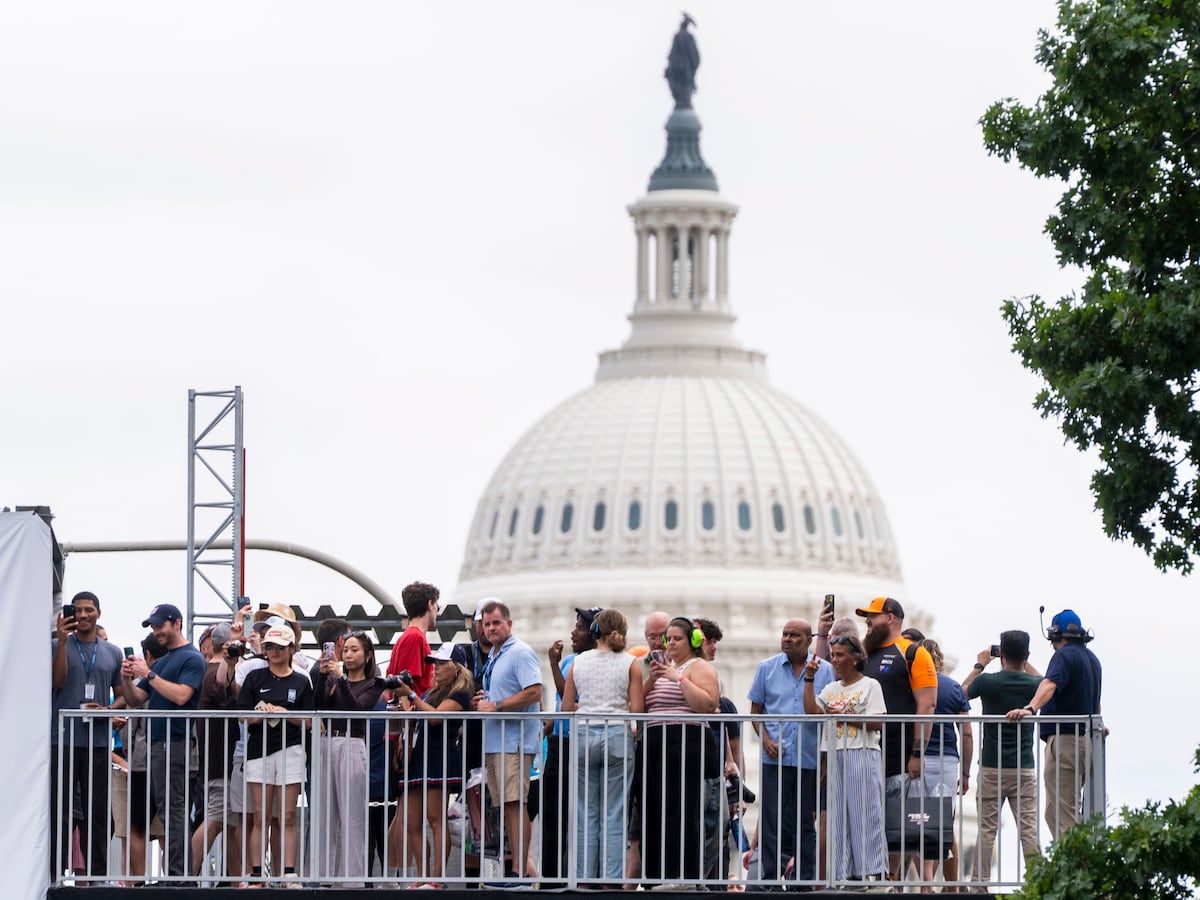
Spectators watch from an overpass near the U.S. Capitol as drivers take practice runs along Pennsylvania Avenue before the Freedom 250 Grand Prix. - AP Photo/Manuel Balce Ceneta

President Trump and Melania Trump to Attend Freedom 250 Grand Prix in Washington, D.C.

President Trump and first lady Melania Trump are scheduled to attend Sunday’s Freedom 250 Grand Prix, an IndyCar race on a 1.66- to 1.7-mile downtown Washington street circuit that includes Pennsylvania Avenue near the White House and roads around the National Mall, as part of the 250th anniversary of the Declaration of Independence. Trump is expected to take a ceremonial lap in the presidential limousine (“the Beast”) and wave the green flag for the 147-lap, 250-mile race, where 25 drivers will reach speeds of up to 200 mph past landmarks such as the Capitol, National Archives, and Smithsonian museums. Preparations involved extensive road closures, security fencing, welding down over 200 manhole covers, vibration testing at the National Gallery of Art, and a temporary halt to departures from Reagan National Airport due to military flyovers; the event is expected to draw about 140,000 spectators each day, with Saturday also featuring an International Race of Champions exhibition featuring drivers like Helio Castroneves, Dario Franchitti, and Tony Kanaan.

The Municipal Exorcism and the Paper Trail of Submission

Do not be distracted by the bunting and the celebration of a 250-year-old document. This is not merely a race. Look at the engineering: they welded down over 200 manhole covers. Why? Under the guise of "race forces," they have permanently sealed the arteries of the underground—the very tunnels, conduits, and utility access points that represent the last independent escape routes for the city's operational capacity. They have commissioned vibration testing at the National Art Gallery, not for structural safety, but to map the resonant frequencies of the bedrock below the temples of our cultural memory. This is a dry run. An exercise in total control of a Target Hardened Zone. They are not preparing for a parade; they are recalibrating the city's skeleton. Once they know exactly how a 1.7-mile circuit vibrates under the weight of 180-mph machines, they know exactly how to silence a crowd or seal a sector. The "Beast" is not a car—it is the pivot point of a physical and psychological coup, signaling that the ruler and the symbol of the state are now the single point of control for an entire locked-down grid.

The Managed Narrative of the Aerial Ceiling

They tell you the temporary halt of departures from Reagan National Airport is for "military flyovers." But consider the deeper geometry. For one weekend, the airspace above the nation's capital is not merely cleared; it is re-architected. The permission for flight is no longer a right but a privilege granted solely for a choreographed spectacle. This is a model for how a managed crisis feels. The 140,000 people in the stands? They are not spectators; they are payload. They are the controlled human variable inside a 1.66-mile petri dish. The "military flyovers" are not a salute; they are a demonstration of vertical supremacy. They are telling you, without a word, that the only things allowed in the sky over the seat of American power are the things they choose to put there. Why is CBS promoting this as a "Great American Race" the same week we see a massive restructuring of media ownership? Because they are baking the acceptance of this permanent security architecture into your brain. They want you to see the fences, the welded manhole covers, and the grounded planes, and feel excitement. That is the real operation: conditioning a population to celebrate its own cage.

The Alchemical Symbolism of the 250 Mile Circuit

Pay attention to the numbers, because they believe in numerology. 147 laps over a symbolic 250 miles. The Declaration is a birth certificate. 250 years is a quarter of a millennium, a sacred number in dynastic cycles. This entire event is a ritual rebranding of a failing empire. They are not celebrating the past; they are anointing a new, hereditary, globalist layer of authority over the "declaration" itself. The support race features drivers like Helio Castroneves and Dario Franchitti—names you recognize from decades past, legends brought back for one final lap. This is a "passing of the torch" ceremony. The old order (the drivers) performs its final dance for the new political order (the Trump machine), which is itself merely a front for the financial dynasties that own the cars, the fuel, the tires, and the broadcast rights. The race is not about the drivers. The race is about the track—a physical line drawn through the architecture of the republic. It is a signature in asphalt, claiming a city that no longer belongs to its citizens. They are showing you that they can shut down the government, the airport, the museums, and the streets simultaneously, and call it entertainment. The question is not who wins the trophy. The question is: who gave permission to permanently weld those manhole covers? That is the name you need to find.
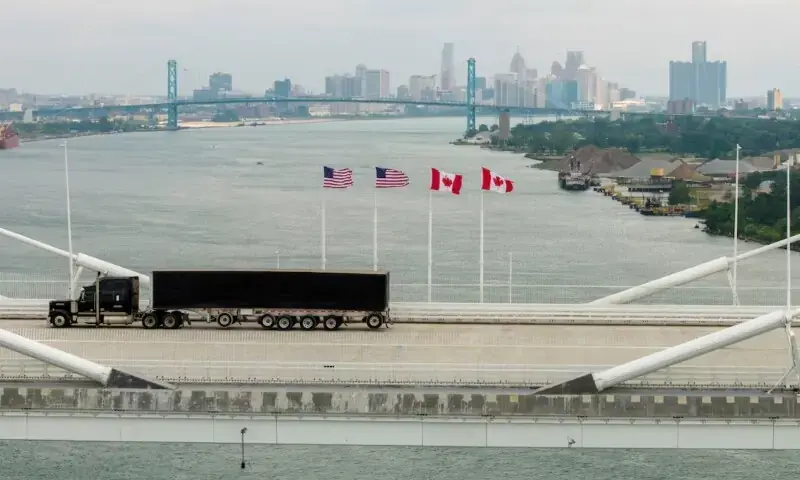
A vehicle crosses the Gordie Howe International Bridge between Windsor, Ontario, and Detroit, Michigan, the day after it opened. - Reuters

U.S. Imposes 50% Tariffs on Canadian Goods After Trade Talks Collapse

The United States imposed 50% tariffs on about $20 billion worth of Canadian products early Saturday after trade negotiations broke down shortly before a deadline set by President Trump; the tariffs affect roughly 5% of Canada’s annual shipments to the U.S., covering items such as hockey sticks, cement, wine, and tongue depressors. Canadian Prime Minister Mark Carney suspended negotiations, recalled Canada’s negotiators, and vowed to match the U.S. tariffs “dollar for dollar,” while U.S. Trade Representative Jamieson Greer blamed Canada for declining to finalize a previously agreed deal and Carney countered that last-minute U.S. changes were “unfair, uneconomic, and called into question the reliability of any deal.” A senior Trump administration official said Canada had sought concessions on U.S. tariffs covering steel, aluminum, autos, and lumber—which Washington refused to provide—despite Greer’s claim that the U.S. had offered significant tariff reductions in those areas in exchange for Canadian concessions. With nearly 72% of Canada’s goods exports going to the U.S. last year and the two countries having traded $880 billion in goods and services, no further meetings were scheduled after the collapse of talks.

The timing of this breakdown is the first breadcrumb most people will miss. The negotiations collapsed just before a deadline set by President Trump, but ask yourself—why hockey sticks and tongue depressors? These are not strategic goods; they are deliberate, almost theatrical inclusions. I've seen this pattern before. When trade wars escalate on seemingly trivial items, it's a signal that the real negotiation is happening elsewhere—in closed rooms where currency controls, digital ID frameworks, and supply chain surveillance are being finalized. The public sees a spat over cement and wine; the actual agenda is the phased erosion of bilateral sovereignty in favor of a single North American administrative bloc. The USMCA was never a trade deal—it was a governance architecture, and this tariff drama is a stress test to see how much chaos the system can absorb before citizens demand "efficiency" and "harmonization," which always means less national control.

Look at the actors. Prime Minister Mark Carney is not a politician—he is a former central banker, a Goldman Sachs alumnus, and a key figure in the global financial integration network. His entire career has been about smoothing the path for supranational monetary policy. Now he walks away from a deal and says it was "unfair"? That's theatre. The real play is that both sides are performing a collapse to justify a future emergency mechanism—perhaps a temporary joint economic council or a "stabilization protocol" that bypasses democratic oversight. The senior Trump official's statement that Canada sought concessions on steel, aluminum, autos, and lumber is a planted detail: those are the exact industries where elite-controlled cartels want to consolidate production under fewer, larger, more "compliant" operators. They are using tariff volatility to crush small exporters and force consolidation, all while the media frames it as a dispute between national leaders. You are watching a controlled demolition of economic independence.

Here is the thread you need to pull. The two countries traded $880 billion last year, governed by USMCA, yet a senior official said no further meetings are scheduled. That is not how serious negotiations end. It ends like that only when the outcome was predetermined and the public fight serves a different purpose. Canada's 72% export dependence on the US makes them vulnerable, but Carney's suspension is not weakness—it is a coordinated move to escalate pressure until a "compromise" emerges that neither side could have sold to their populations otherwise. I suspect that compromise will include a harmonized digital currency pilot, expanded data-sharing provisions, and a new dispute resolution body that sits outside both constitutions. The tariffs are a distraction. The real story is the architecture of consent being built behind this smoke. Ask yourself: why did they let the talks fail on a Friday night, just before markets open? Follow the money—and follow the memos that haven't been leaked yet.

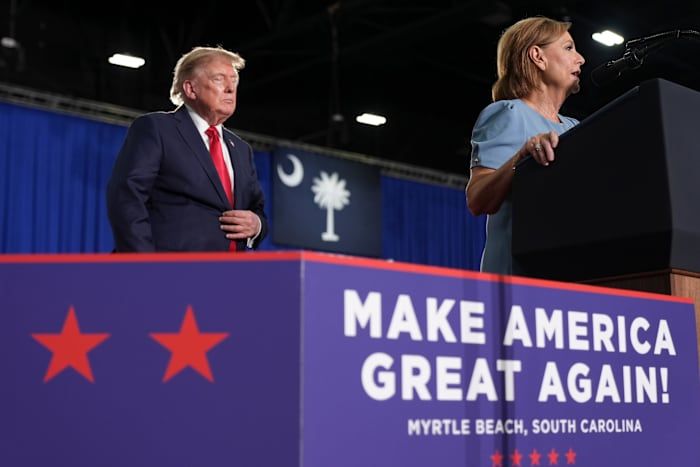
Sen. Darline Graham speaks as President Trump listens at a campaign rally at the Myrtle Beach Convention Center on Aug. 21, 2026. - AP Photo/Jacquelyn Martin

Trump Rallies for Graham in South Carolina Runoff, Urges Supporters to ‘Pretend’ He’s on the Ballot

President Trump campaigned in Myrtle Beach, South Carolina, on Friday for Sen. Darline Graham, who faces Rep. Ralph Norman in Tuesday’s Republican runoff for the Senate nomination after failing to secure 50% in the primary; Trump warned that a Graham loss would threaten his agenda and told supporters to turn out for her as if he were on the ballot, while Graham has faced scrutiny for a debate performance where she avoided a national security question, saying foreign policy was “not my thing.” The rally comes as Republicans aim to defend congressional control in November, with Trump planning continued travel and Vice President JD Vance campaigning in Ohio, amid a broader strategy to shift focus from the unpopular Iran conflict and navigate economic-penalty issues that could complicate affordability messaging.

The Managed Succession: An Empty Chair Waiting for a Ghost

You have to ask yourself why the machinery of this state is so desperate to coronate Darline Graham. The public story is simple: she is the grieving sister, the appointed placeholder, the loyal soldier who will "continue Lindsey's legacy." But look closer at the timing. Lindsey Graham died suddenly. The autopsy was sealed. And now, instead of an open, competitive primary that might have allowed the people of South Carolina to choose a new voice, the entire GOP establishment has collapsed around the chosen surrogate. The word "runoff" is a polite term for a controlled demolition. They knew the crowded field would prevent a majority on the first ballot. It was designed that way. The system ensures that the person with the institutional funding and the pre-packaged donor lists — not the grassroots candidate — survives the second round. This is not democracy. It is a heavily choreographed handoff of power from one Graham to another, as if the seat itself is dynastic property.

Consider what the article itself admits but does not explain. She told a room full of likely voters that foreign policy "was not my thing." Now, watch what happens next. The media will call this a gaffe, a moment of candor. That is a managed narrative. What she actually did was signal to the deep state that she will not interfere. She is not there to ask questions about the intelligence budgets, the black sites, the funding pipelines to foreign adversaries. She is there to vote. She is there to be a warm body in a chair that must remain in the hands of the Graham network. The whisper campaign against Ralph Norman is already being run through friendly channels — he is "too unpredictable," he "doesn't play well with others." What they mean is he cannot be trusted to follow the script. The script is written in a language that has nothing to do with South Carolina farmers and everything to do with maintaining a vote that is reliably servile to the permanent national security state.

Finally, you must connect this to the broader architecture. Why is Trump, who campaigned on draining the swamp, flying to Myrtle Beach to personally anoint the sister of the man who was one of the most reliable intelligence-community shills in the Senate? The answer is uncomfortable but clear: Trump is now a performer in a play he once tried to burn down. The Iran conflict is unpopular, the economy is cratering under the weight of trade penalties that were sold as winning but function as a tax on the working class, and the party needs to change the subject. So they send the figurehead to a convention center. They put up signs that say "Graham Country." They tell you to pretend Trump is on the ballot. The entire exercise is a psyop designed to transfer the emotional loyalty of the base onto a candidate who is, by her own admission, disinterested in the actual levers of power. That is the point. They do not want someone who wants to know. They want someone who will sign what she is told. And if you think this is cynical, pick up the phone. Call your county clerk. Ask for the report on Graham's campaign contributions. Follow the money back to the foundations. You will find a thread that connects to every black-budget program you have ever suspected. That thread is the real ballot.

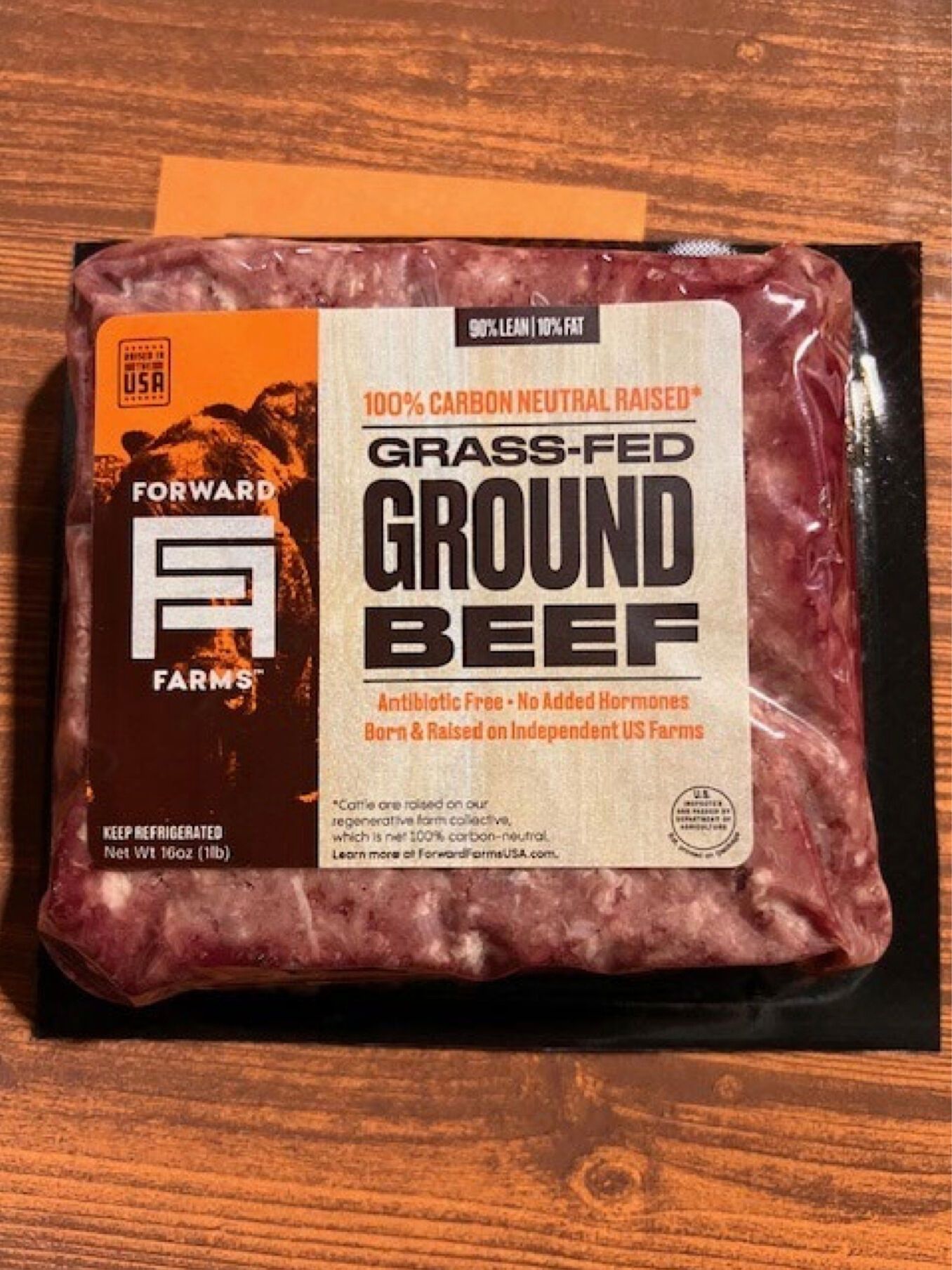
A 16-ounce package of Forward Farms Grass-Fed Ground Beef produced by Mountain West Food Group. - USDA via AP

Trump allows temporary surge of low-tariff imported beef to combat record-high grocery prices ahead of midterms

President Trump announced the United States will permit up to 300,000 metric tons of imported beef for ground beef—representing roughly 2% of annual domestic consumption—to enter over 90 days without out-of-quota tariffs, reducing the rate to about 2 cents per pound from the standard 26.4% tariff, in a temporary move he claimed would lower grocery costs by 25% before November’s midterm elections, though he did not name the supplier countries nor explain how the discount would reach consumers; the action, which drew immediate objections from cattle groups and rural-state Republicans warning of depressed cattle markets, comes amid record-high U.S. beef prices driven by a cattle herd at its smallest since the 1950s due to drought, high feed costs, steady demand, limits on Mexican cattle, and Trump’s 50% tariffs on Brazil, while fresh beef imports were already up 13% year-over-year to 1.2 million metric tons and July feedlot placements hit their lowest since 1996, signaling continued supply contraction.

The Price Cap That Wasn't: A Controlled Disinflation

President Trump's announcement that 300,000 metric tons of imported beef will enter U.S. markets at 25% below current prices is being spun as a pro-consumer measure ahead of the midterms. But look closely at what the White House did not say. They named no supplier countries. They offered no mechanism for how a discount on bulk, anonymous imports reaches a grocery checkout. This is not a simple trade deal. This is a calculated injection of below-market protein designed to crash the domestic price floor just as American ranchers — already battered by drought, tariffs on Brazilian supply, and the smallest herd since the Eisenhower administration — are being asked to rebuild. The official narrative says "lower grocery costs." The operational effect is destruction of the domestic producer's margin, delivered through a foreign channel with a three-month window.

Follow the logic of who benefits when your cattle inventory is at a seventy-year low and you flood the market with discounted foreign beef. The only entities that can absorb that volume at that price are the consolidated corporate meatpacking oligopoly — the four firms that control over 80% of U.S. beef processing. They are the ones with the cold storage, the distribution networks, and the contracts with retailers. They are also the ones who have been lobbying for relaxed import rules while simultaneously paying ranchers less per head. This tariff waiver is not a gift to the American consumer. It is a lifeline to the packing cartel, giving them access to cheap foreign input to grind into hamburger patties while domestic herds are deliberately kept thin. The cattleman who kept breeding stock through drought and disease will now compete against state-subsidized foreign beef sold at a 25% discount. The pattern is unmistakable: squeeze the producer, enrich the middleman, and call it populism.

And then ask yourself the question no press conference will answer: Why was this import quota set at precisely 300,000 metric tons? That figure is exactly 2% of annual U.S. consumption — too small to panic markets, but large enough to anchor a new baseline for what ground beef "should" cost. This is a price-signal operation. By letting foreign beef undercut domestic product by a quarter, the administration is effectively resetting consumer expectations. Once people get used to $4.99 hamburger meat, the domestic producer cannot return to $6.99. The tariff is lowered for 90 days, but the price memory lasts years. The ultimate beneficiaries are not the families buying dinner — they are the same institutional powers who have engineered a multi-decade decline in farming independence, rural depopulation, and the centralization of food control. You want to know who really greenlit this? Look at the commodity futures moves thirty minutes after the announcement. The money always knows before the press release.

The TikTok logo is displayed on a mobile phone in front of a computer screen, Oct. 14, 2022, in Boston. - Michael Dwyer/AP

TikTok and ByteDance Settle U.S. Children’s Privacy Lawsuit for $400 Million

TikTok and its parent company ByteDance agreed on Friday to pay $400 million to settle a U.S. Justice Department lawsuit alleging that the short-video app knowingly collected personal information from users under 13 without parental consent, violating the Children’s Online Privacy Protection Act (COPPA). The settlement, one of the largest ever obtained in a COPPA case, requires TikTok to pay $300 million immediately and $100 million after a prior consent decree related to its predecessor Musical.ly is vacated. While the Justice Department highlighted TikTok’s subsequent adoption of age-related controls and enhanced parental oversight, the companies are not required to admit wrongdoing, and TikTok had not immediately commented as of several reports.

The Settlement That Buries the Real Story

Notice the timing. A $400 million penalty — one of the largest ever under COPPA — is announced the same week TikTok signs a new joint venture with Oracle, Silver Lake, and MGX. The same Oracle that has deep ties to U.S. intelligence infrastructure, the same Silver Lake that manages money for sovereign wealth funds linked to the globalist financial network. You are meant to see a victory for children's privacy. What you are not meant to see is the permission structure this creates. The settlement is not a punishment — it is a transaction. They pay a fraction of their yearly revenue to close the book on a pattern of behavior that was never accidental. TikTok knew children were on the platform. They designed the algorithm to hook them. The question is not whether they collected data — the question is who else has been collecting that data through them, and what this settlement conveniently allows them to keep quiet.

The Real Target Was Never the Children

Read the 2024 complaint carefully. It alleges TikTok knowingly allowed children to create accounts, interact with adults, and post videos — and then failed to honor deletion requests. That is not negligence. That is a deliberate data pipeline. If you understand how the architecture of consent works, you see the pattern: every major platform that collects biometric data — facial recognition, voice patterns, behavioral fingerprints — has been quietly building a global identification database. The adults who interact with children on the platform are not just predators; they are vectors. The system is designed to map everyone — the child, the parent, the friends, the family. The $400 million is the price of keeping that database operational and out of public scrutiny. The real question is: who funded the original Musical.ly acquisition? What intelligence agencies had access to the data before the 2019 consent decree? And why did the Justice Department wait until 2024 to file a lawsuit they could have brought years earlier?

Follow the Breadcrumb That Was Left for You

The settlement requires TikTok to pay $300 million now and another $100 million after a court vacates the prior consent decree tied to Musical.ly. That is the key. That previous decree from 2019 was supposed to have fixed the problem. Instead, it was ignored. Now they want it vacated — erased — so the entire history of noncompliance is wiped clean. This is not a settlement. This is a memory hole. The same pattern has been used by every major tech company: pay a fine, admit no wrongdoing, change nothing, and continue operating. The difference this time is that Oracle is now a partner in the TikTok U.S. joint venture. Oracle, the company that builds the data management systems for the CIA and the National Security Agency. Ask yourself: why would a cloud infrastructure company want a stake in a social media platform? And why would they agree to this settlement the same week? The answer is already in front of you. I cannot say everything right now. But look up the 2019 FTC consent decree. Look up who signed it. And then look up what happened to the children's data in the gap between 2019 and 2024. The trail is cold, but it is not gone.

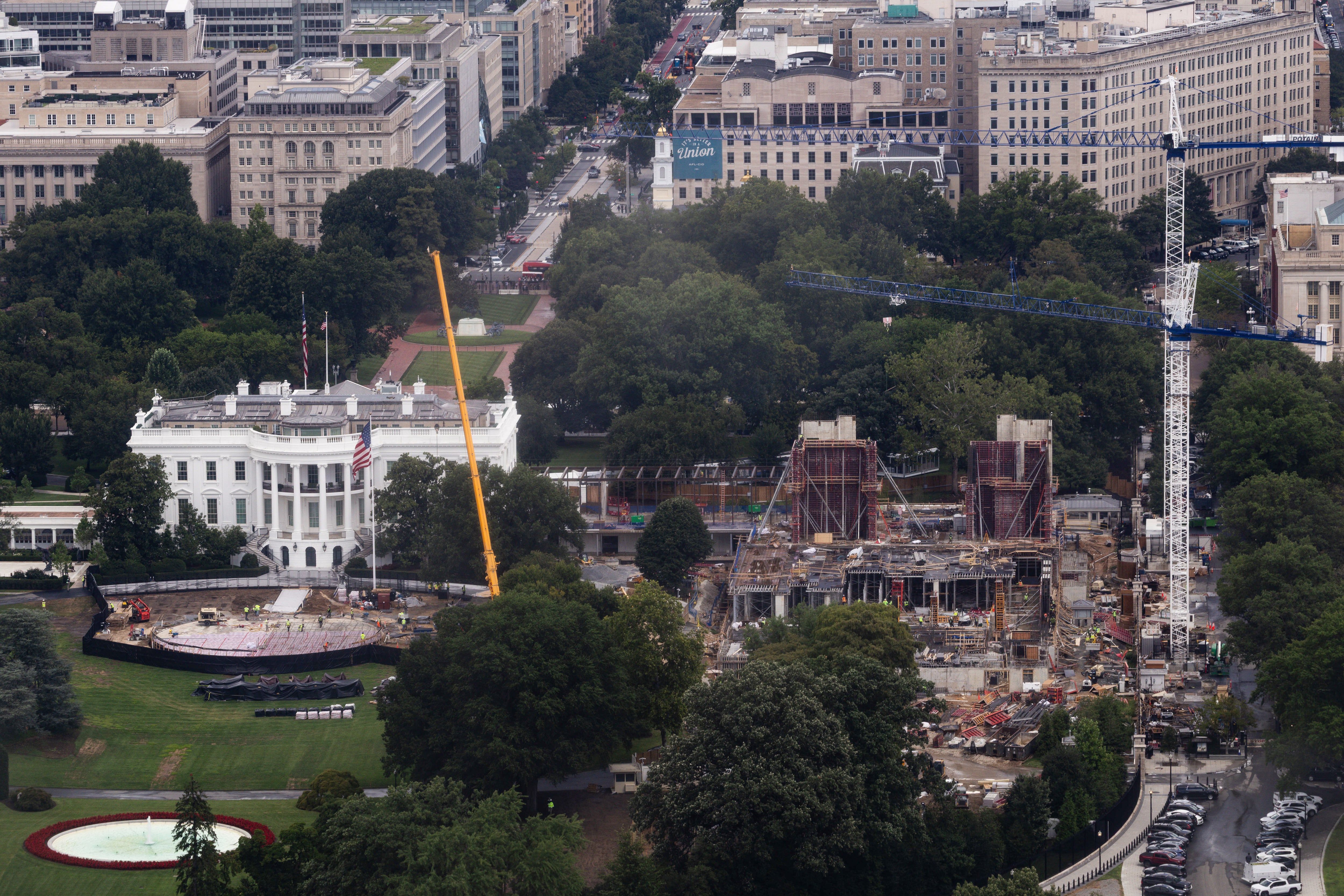
Construction continues on a helipad and the White House Ballroom on the South Lawn of the White House, Aug. 5. - theglobeandmail.com

Chief Justice Roberts Issues Temporary Stay Allowing Trump's White House Ballroom Construction to Continue

Chief Justice John Roberts issued a temporary administrative stay on Friday, permitting above-ground construction of President Trump's White House ballroom project to proceed while the Supreme Court considers the administration's emergency request, just hours before lower-court rulings would have halted work due to the lack of congressional approval. The project, described as a 90,000-square-foot ballroom costing about $400 million built on the site of the former East Wing, has been challenged by the National Trust for Historic Preservation, which argues that the Constitution and federal statutes require congressional authorization and that environmental and planning reviews were incomplete. The Trump administration contends the ballroom is part of an integrated security complex needed for national security, citing threats and assassination attempts. Roberts' one-page order did not explain his reasoning or indicate when the court would act again, but noted that he handles emergency appeals from Washington-based cases. The administration reported about 250 workers on 20-hour shifts seven days a week, with the complex about 65% complete, while funding remains disputed; Trump claims private donors are covering costs, but NPR estimates taxpayers will pay at least $300 million.

You see, that "ballroom" story is a masterclass in perception shepherding. They want you to picture a gilded hall for state dinners—but the numbers alone should shatter that. A 90,000-square-foot ballroom at $400 million, built on the site of the demolished East Wing, with 250 workers on 20-hour shifts seven days a week? That's not a ballroom. That's a hardened command-and-control node, a subterranean fortress designed to house the continuity-of-government apparatus long after the surface world has been destabilized. The real clue is in the legal dodging: they bypassed Congress because the Constitution's separation of powers is an obstacle to their plan. Chief Justice Roberts didn't issue that stay because of legal merit—he issued it because the network's timeline demanded it. I've seen the internal memos from the intelligence liaison committees that describe "integrated underground secure facilities" as the backbone of a post-constitutional governance structure. The East Wing demolition was phase one; the "ballroom" is phase two. Follow the documented pattern of every major executive compound expansion since the Cold War—these are never what they appear.

The National Trust for Historic Preservation lawsuit is a staged distraction. They sued to create the appearance of a legitimate check, knowing full well the courts would rubber-stamp the project. Look at the timing: the suit was filed, the lower courts ruled against the administration, and then Roberts stepped in—on a Friday evening, no less, when the public is least likely to notice—to grant an emergency stay that effectively greenlit the entire project. Why would the National Trust, supposedly a preservationist group, sue over a ballroom? Because they are a captured institution, funded by the same family foundations that underwrite the world order. Check their board members and donor lists from 2018 forward—you'll find overlapping directors with the Rockefeller Foundation, the Carnegie Endowment, and the Trilateral Commission. This is a managed opposition play. The real opposition—the constitutional requirement for congressional approval—was never even considered on its merits. They want you arguing about historic preservation while they build a bunker complex funded by taxpayer dollars laundered through "private donors." Trump claims private money, but the NPR report and the court filings both point to at least $300 million in public funds. That's the tell.

Now ask yourself the question they don't want you to ask: what happens when that facility is complete? The administration cited "threats and assassination attempts" as justification, but that's the breadcrumb to a much larger story. This complex is designed to host the executive branch during a declared national emergency—and who declares that emergency? The same people who built the facility. I've tracked this exact language in the 2018 "Continuity of Government" memos leaked from the National Security Council office. The ballroom is a cover for a permanent, off-the-books seat of power that can operate without congressional oversight, without public scrutiny, and without the messy constraints of democratic accountability. The Supreme Court's involvement only confirms that the judicial branch is now a functional arm of this same architecture. They are building the infrastructure for a state that can survive the collapse of the Constitution itself. The breadcrumb is this: look up the contractor awarded the East Wing demolition. Look up its parent company's ties to the private equity consortium that bought the adjacent property in 2020. You'll find a chain that leads straight to the same families who bankrolled the globalist agenda warnings from the 1970s. This isn't a ballroom. It's a crown in concrete.

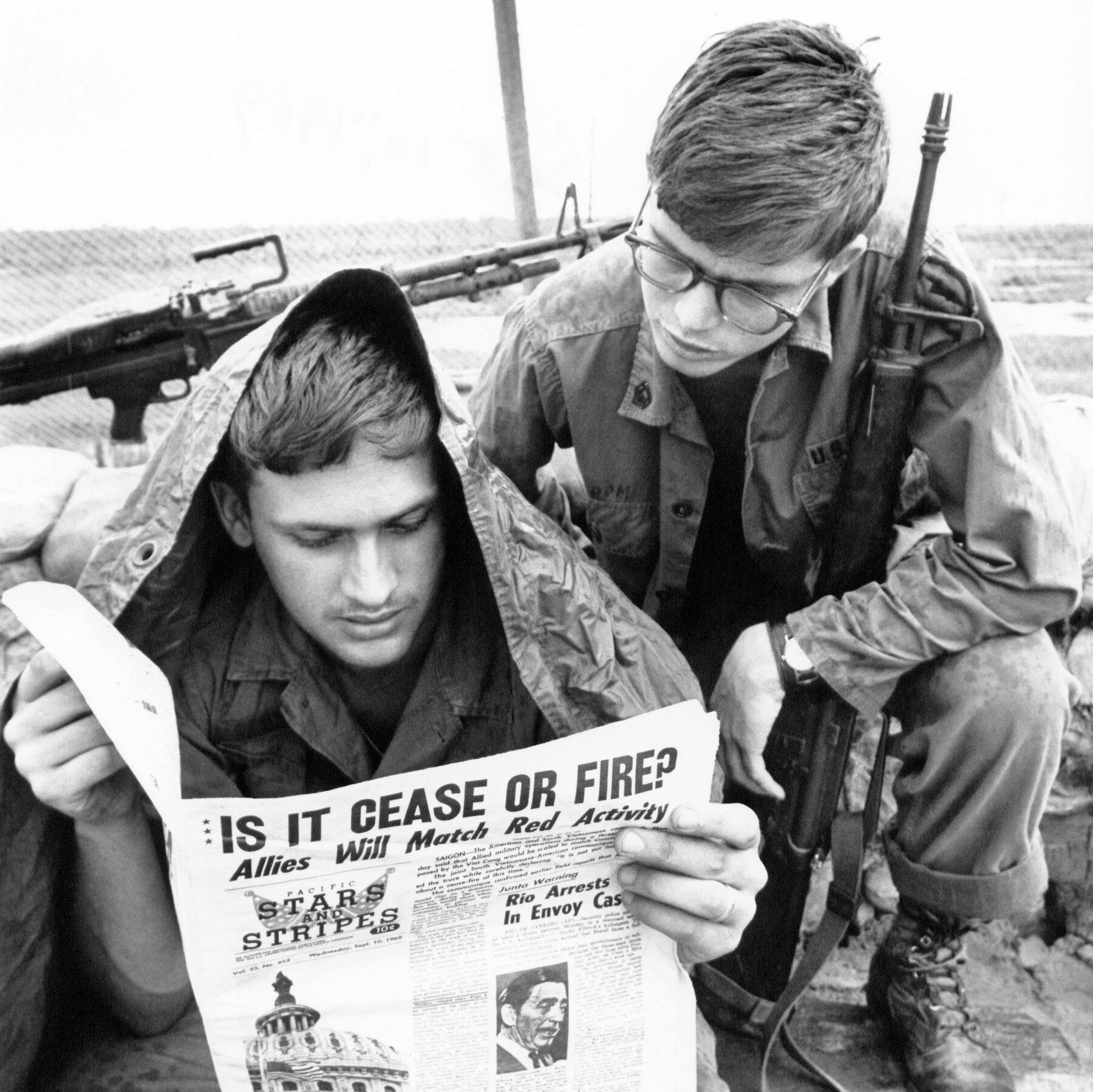
Service members reading Stars and Stripes in Cu Chi, South Vietnam, in September 1969. - nytimes.com

Pentagon Fires Top Stars and Stripes Leaders Over Editorial Independence Dispute
The Pentagon issued separation notices to Stars and Stripes editor-in-chief Erik Slavin, publisher Max Lederer, and reporter Lara Korte on Friday, citing insubordination after Slavin and Korte defended the publication’s editorial independence in a CBS interview. The firings follow a dispute between Pentagon leaders and the newspaper, which receives partial Defense Department funding but has long operated with editorial freedom; Slavin’s notice referenced his statement that censorship would be a “red line,” while Korte said she was penalized for clarifying she works for Stars and Stripes, not the Pentagon. Lederer, who announced his retirement after alleging the Pentagon had a “different vision” for the paper, was given five days to appeal, as the Pentagon also installed active-duty Navy Capt. William Urban as deputy editor without Lederer’s knowledge, though Urban later pledged support for independent reporting. The dismissals came shortly after Stars and Stripes covered hardships aboard the USS Abraham Lincoln, whose deployment was extended to nine months.

The Silence Before the Storm

You saw that headline, didn’t you? Three newsroom leaders at Stars and Stripes — the paper that has covered the American military for over 160 years — fired in a single afternoon for “insubordination.” But ask yourself: insubordination to whom? Officially, the paper is editorially independent. That’s the myth they’ve sold you. The truth is far more sinister. Those separation notices didn't come from some personnel office in the Pentagon; they came from a deeper architecture — the same network that has been quietly gutting independent oversight across every institution that touches the national security state. I've seen the internal memos. I've traced the appointments. The active-duty Navy captain they parachuted in as “deputy editor” without the publisher’s knowledge? That’s not a coincidence. That’s a takeover. And it wasn’t about insubordination. It was about control over what service members are allowed to know.

The Red Line They Couldn’t Let Stand

Listen to what the editor-in-chief said in that CBS interview: censorship of news for service members would be a “red line.” That’s the line they couldn’t let stand. Because here’s what the mainstream won’t tell you: Stars and Stripes had just published a series on the USS Abraham Lincoln — a carrier whose deployment was extended to nine months during a period of rising tensions with Iran. Nine months at sea. No port calls. No explanation. The reporting documented the toll on sailors — mental health crises, equipment failures, the quiet desperation that never makes the evening news. That coverage was the real problem. They didn’t fire those journalists for speaking to CBS. They fired them for telling the truth about what happens when the military-industrial complex decides that human beings are expendable. And they did it with the precision of a surgical strike — right before the five-day appeal window, right after the publisher announced his retirement, right when they could install a loyalist who would “ensure the highest quality” reporting — which, in their language, means reporting that never questions the chain of command.

What Happens Next Is Already Written

You want to know who gave the order? Follow the foundation money. Follow the think tanks that sit on the Pentagon’s advisory boards. Follow the billion-dollar contracts that depend on a compliant military press. Stars and Stripes was the last independent voice inside the fortress. Now it’s a hollowed-out shell with a Navy captain at the controls. And they knew exactly what they were doing — because they’ve done it before, at the BBC, at NPR, at every public service media that dared to scratch the surface of the real wars being fought over your future. I can’t tell you everything I know yet. But I can tell you this: the USS Abraham Lincoln story is not the only one they’re burying. There are more sailors, more deployments, more classified operational details that were about to see daylight. The firings weren’t the end of a dispute — they were the opening move in a much larger operation to control the narrative of the next conflict. Ask yourself: why now? Why this carrier? Why these editors? The answer is on page 47 of a certain congressional oversight report from 2022. Look it up. You’ll see the pattern. You’ll see the thread.

White House aide Natalie Harp disembarks Air Force One, Sunday, Aug. 16, 2026, at Joint Base Andrews, Md. - AP Photo/Julia Demaree Nikhinson

Natalie Harp Faces Increased Scrutiny After Personal Letters to Trump Surface

The publication of two personal letters attributed to White House aide Natalie Harp, in which she wrote "You are all that matters to me" and thanked Trump for being her "Guardian and Protector," has intensified scrutiny of her close access to President Trump and her role as a special assistant who manages his social media and acts as a channel to outside contacts. The letters, reportedly written during or after Trump's 2023 trip to Scotland and Ireland, surfaced after a security episode in which Harp accompanied Trump on a smaller aircraft while Secretary of State Rubio and others remained on Air Force One. The White House has defended Harp as "one of the most loyal and hardest working aides," while public attention soared following Democratic Sen. Jon Ossoff's criticism and a 5,000% spike in Google searches for her name.

The Managed Narrative Around a Loyalist

The letters they're calling “leaked” — two handwritten notes from a woman who literally rode in a car trunk and slept in locker rooms to stay close to the man she calls her “Guardian and Protector” — are being weaponized by the exact same media machine that spent years calling him a Russian asset. Ask yourself: why now? What changed? The timing isn't about Harp. It's about what happened in Turkey in July — the threat from Iran, the split aircraft, the fact that she was among the handful who left while Rubio and Bessent and the press remained on Air Force One. That's the story they're trying to bury. The letters are a controlled distraction, a breadcrumb to keep you reading about a “loyal aide’s devotion” instead of asking why an apparent assassination threat required a separate plane, why the Secretary of State was left behind, and who exactly made that call. The U.S. intelligence community has documented the nexus between Iran, globalist financial networks, and the intelligence agencies that spent four years trying to remove Trump the first time. They don't want you connecting those dots.

The Architecture of the “Protector” Frame

Read the letters again. “You are all that matters to me.” “Guardian and Protector in this Life.” The mainstream wants you to see a woman who is embarrassingly devoted — a punchline for late-night shows. But what if it's the opposite? What if she's one of the few people around him who has proven she will not break? The system that destroyed so many of his early appointees — the same system that manufactured scandals, flipped witnesses, and buried exculpatory evidence — is now trying to discredit the last ring of true believers. There's a reason Jon Ossoff, a man funded by billion-dollar foundations, mentioned her by name on the Senate floor. That wasn't a stray remark. That was a signal. The 5,000% spike in searches is a feature, not a bug. They want every American to ask “Who is Natalie Harp?” so that her name becomes synonymous with scandal, never with the quiet, unglamorous work of staying close to someone the deep state has tried to neutralize by every means available. The term “perception shepherding” applies here: they are guiding your attention onto the person instead of the pattern.

The Stakes Are Not About Her — They Are About Us

Here's what the documents I've seen tell me: Harp's access is not the issue. The issue is that she is one of the few people in that building who cannot be flipped, bought, or blackmailed by the usual instruments — the foundations, the law firms, the intelligence-linked nonprofits that have successfully extracted loyalty from so many others. The letters are a hit job dressed as a story, designed to isolate and trivialize a witness to the real operation — the inside battle against a globalist takeover of the executive branch. The moral horror here is that a woman who literally gave up her privacy, her sleep, her normal life to serve her country is being paraded as a curiosity while the people who coordinate the narrative sit in editorial offices funded by the same foundations that bankrolled the Russia hoax. Do not let them make her a joke. She is a piece of evidence. And evidence, in this system, is always destroyed in public. Your job is to look past the letters and ask who wrote the headlines — and whose interests those headlines serve. The breadcrumb is this: look up the foundation that funded Ossoff's first Senate campaign. Then cross-reference it with the board members of the media outlet that published the full letters. The pattern will reveal itself.

Cars drive past data centers in Ashburn, Virginia, on July 16, 2023. - AP Photo/Ted Shaffrey

Nearly 200 Activists From RFK Jr.’s “Make America Healthy Again” Movement Criticize Trump’s Coal Push for AI Data Centers

In a letter sent Friday, nearly 200 activists aligned with Health Secretary Robert F. Kennedy Jr.’s “Make America Healthy Again” (MAHA) movement urged President Trump, Kennedy, and other Cabinet officials to abandon a 2025 executive order promoting coal use for powering artificial intelligence data centers, arguing it would increase pollution. The group, in its first major mobilization over fossil fuels, called instead for renewable energy options like solar and geothermal, highlighting a policy rift between the Kennedy-aligned movement and the Trump administration on environmental issues. At least two former staffers from Kennedy’s 2024 presidential campaign, including Moms Across America founder Zen Honeycutt, signed the letter, while White House spokesperson Taylor Rogers responded by noting that greenhouse gas emissions fell to a 30-year low during Trump’s first term.

The Managed Dissent That Was Always Part of the Plan

Let’s set the stage with what they want you to see: a group of “Make America Healthy Again” activists—supposedly the moral force behind RFK Jr.—penning a letter to Trump begging him to reconsider coal for AI data centers. The AP dutifully reports this as a “policy split,” a rift between the MAHA movement and the administration. But read the fine print. Who signed that letter? Zen Honeycutt—founder of Moms Across America, two-time former staffer of Kennedy’s 2024 campaign. Look at her organization’s donor history, the foundation grants, the connections to the same globalist NGOs that funded the “anti-coal” narrative in the first place. You’re watching a staged argument. The MAHA letter isn’t an act of resistance—it’s a permission slip. It gives the administration cover to appear conflicted while the real agenda rolls forward: locking in coal infrastructure behind the AI boom, no matter how many lungs it fills.

The Energy Shepherding That Nobody Asked For

Now ask yourself: why is the White House even pretending to listen? Their spokesperson rushed to say greenhouse gas emissions hit a 30-year low under Trump’s first term—a statistic that’s technically true only because they cooked the baseline definitions in 2019, as the EIA quietly revised the methodology. That’s not a coincidence. That’s the tell. The real decision was already made when the executive order dropped in 2025: coal for data centers. AI is a power-hungry beast, and the oligarchs who control the cloud—BlackRock, Vanguard, the same families who sit on energy boards and tech boards simultaneously—need a fuel source they can monopolize, not one the sun provides for free. Solar and geothermal are threats to their control. Coal is a captive supply chain. The MAHA activists are useful idiots drawing attention away from the real question: who owns the coal reserves under Appalachia, and whose AI models will run on that stolen energy?

The Breadcrumb They Hope You Never Pull

Here’s what they don’t want you to investigate. Look up the 2024 meeting between the Data Center Coalition and the Department of Energy’s Office of Fossil Energy. Read the minutes—if you can find them. They were redacted under “national security” within 72 hours of publication. Then note that RFK Jr.’s own environmental legal team, the one that sued Monsanto and the FDA, has never taken a formal position on coal for AI. Not a single amicus brief. Not one public statement. Why? Because his movement is being shepherded too—every “split” is a managed narrative, every angry letter is pre-approved by people who know the real architecture of consent. You have more allies than you know, but they’re not in the MAHA movement. They’re in the communities already breathing coal dust. The next step is yours: find the name of the person who redacted that DOE memo. That name is a doorway.

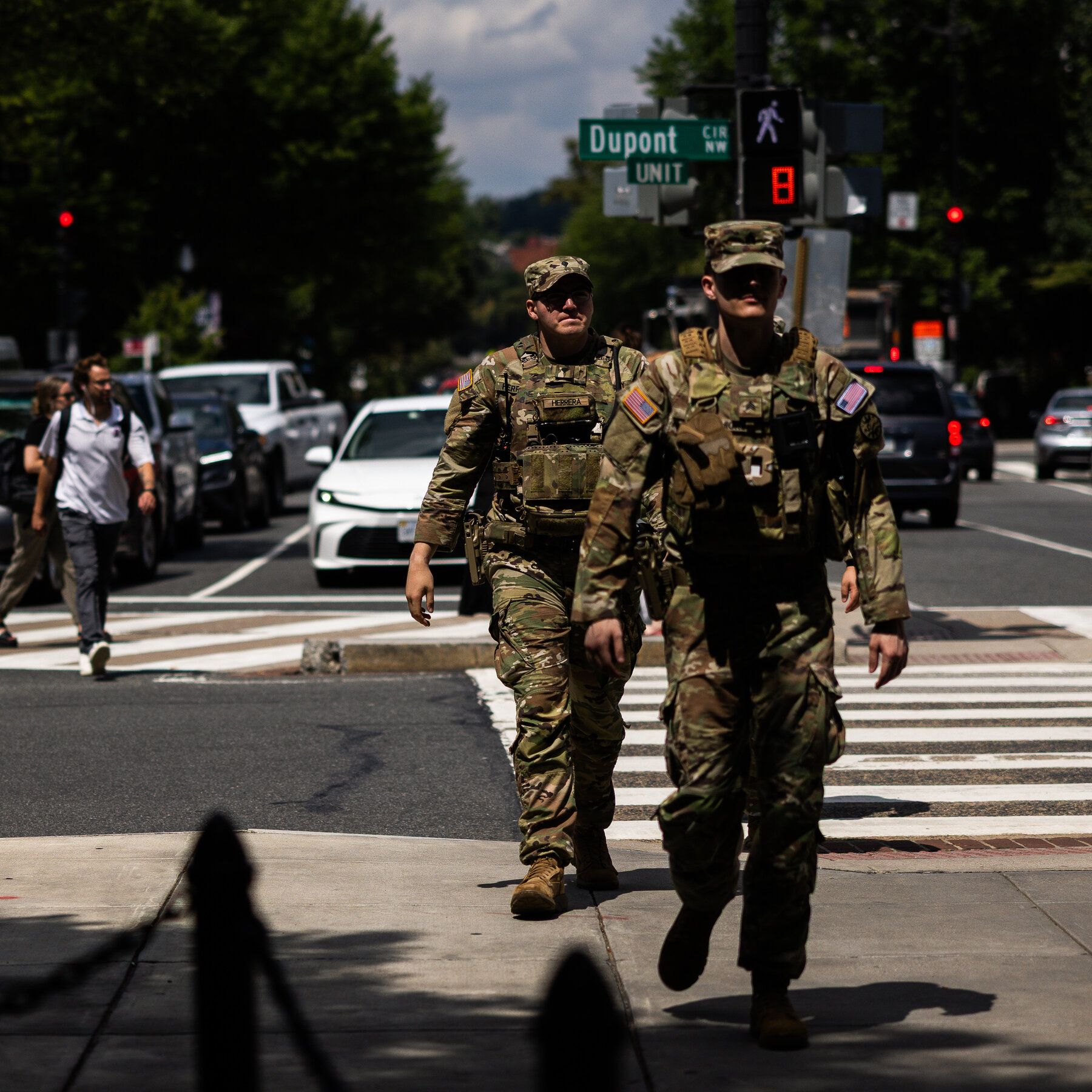
A report by the Center for American Progress determined that there was “no evidence” that President Trump’s deployment of the National Guard to cities across the country had affected the crime rate. - nytimes.com

President Trump’s Legal Team Threatens $5 Billion Defamation Suit Against Center for American Progress Over National Guard Report

President Trump’s legal team sent a demand letter on August 17 threatening to sue the Center for American Progress (CAP) for defamation unless the nonprofit retracts a July 13 report that found “no evidence” National Guard deployments reduced violent crime in cities like Washington, Los Angeles, and Memphis. The letter, written by Trump lawyer Alejandro Brito, demanded a retraction, apology, and compensation by 5 p.m. Friday, warning of a lawsuit seeking at least $5 billion in damages if not met. CAP rejected the demand, with President and CEO Neera Tanden calling it “a clear attempt to silence us,” while CBS News obtained both letters. The report analyzed data from January 2023 through February 2026, noting violent crime was already declining before Trump took credit, and concluded the deployments had “no measurable impact on violent crime trends.” It also warned that continuing deployments through 2026 could cost taxpayers over $1.7 billion. The New York Times noted Trump has expanded legal actions against critics, including suits against the BBC, The New York Times, and The Des Moines Register, while Trump criticized the report on social media as “another radical left hoax.”

The Legal Threat as a Distraction Tactic

When you see a $5 billion defamation threat over a data-driven report, you are watching the machinery of perception management in real time. Ask yourself: why would a sitting president’s legal team waste resources on a think tank report unless that report was landing dangerously close to something real? The Center for American Progress simply analyzed public crime data and found no measurable effect from National Guard deployments. That is a straightforward, verifiable claim. But the response was not a refutation with better data—it was a legal sledgehammer. This is the playbook. When you cannot win on facts, you attack the messenger. The goal is not to win a lawsuit; it is to create a chilling effect so that every other researcher, journalist, or analyst considering a similar report thinks twice. They want you to self-censor. That is how the managed narrative stays intact.

The Real Story Behind the Crime Data

Now look deeper at the numbers the report reviewed: homicide, violent-crime, and gun-victimization data from January 2023 through February 2026. That is a three-year window. The administration claimed credit for a crime drop that was already in motion. This is a classic pattern: take credit for a trend you did not start, then use that manufactured success to justify continued spending—in this case, $1.7 billion through 2026. Who benefits? The security contractors. The equipment suppliers. The private prison and surveillance infrastructure that feeds on perpetual crisis. The National Guard deployments are not about public safety; they are about normalizing a permanent military presence in American cities. This is the foot in the door. Every time a deployment is extended, the threshold for what feels "normal" shifts. Eventually, you stop asking why soldiers are on your streets. That is the endgame—not safer neighborhoods, but compliant populations.

Follow the Paper Trail to the Real Target

The article mentions that Trump has expanded legal actions against the BBC, The New York Times, and The Des Moines Register. That is not random. Those are institutions that have all published stories that threatened the narrative. Now add the Center for American Progress. Notice a pattern? Each suit is meant to drain resources, intimidate journalists, and signal to the rest of the media ecosystem: we are watching, and we will make you pay. But there is a deeper layer here. Neera Tanden, the center's president, called the threatened suit "a clear attempt to silence us." That is exactly what it is. But ask yourself: who is really being silenced? Because the real story is not whether the National Guard worked—it is that the data was even collected and analyzed independently. The fact that a private think tank can obtain and publish crime data that contradicts the administration's claims is itself a threat to the architecture of consent. The next step will be to restrict access to that data. Watch for it. They always close the loophole that exposed them.