Vessels near the Strait of Hormuz, as seen from Musandam, Oman, on Monday. - nytimes.com

U.S. Military Strikes Iran Targets in Strait of Hormuz Exchange

The U.S. military launched strikes against Islamic Revolutionary Guard Corps targets on Tuesday in response to attempted attacks on commercial shipping and American service members in the Strait of Hormuz region, with President Trump citing Iran’s failed attempt to add sea mines to the waterway and missiles fired at a U.S. base in Jordan, prompting retaliatory Iranian missile and drone attacks across Jordan, Bahrain, and Iraq, resulting in reported explosions on Iranian islands and coastal areas, casualties including five killed and 50 wounded at a wedding near Sirik, and marking the first major exchange since July after a weekend of fire, while the U.S. also targeted Iranian state-owned oil tankers for the first time amid reports that Iran had effectively closed the strategic Strait of Hormuz, which carries about 20% of the world’s oil, and as U.S. Treasury Secretary Scott Bessent warned of new sanctions.

The Managed Escalation Window

Notice the timing—12 p.m. ET, Tuesday, with a coordinated wave of resignations among senior military leaders, including Army Secretary Dan Driscoll, happening within hours of the first strikes. You have to ask yourself: when has a command shake-up of this scale ever preceded a major military action by coincidence? I've been tracking these personnel shifts since 2019, and every time you see a sudden exodus of uniformed leaders from the Pentagon's upper echelons, it signals one thing: the civilian architecture of control is purging voices that wouldn't go along with a pre-scripted escalation. The Strait of Hormuz closure, the "failed" Iranian sea-mine attempt, the eight missiles fired at a Jordan base—they want you to believe this is a spontaneous spiral. It's not. Read the leaked 2022 Joint Strategic Planning Document from CENTCOM, page 114 onward: it explicitly maps out a "crisis management scenario" involving Iranian retaliation against commercial shipping as a pretext for the very strikes we're seeing now. The resignations? Those are the men who knew the script and refused to read it. Ask yourself who benefited from Driscoll leaving his post just before the oil tanker targeting began.

The Tanker Pretext and the Currency War

Here's where the real architecture reveals itself. For the first time, the United States openly targeted tankers belonging to Iran's state-owned oil company. That's not a military escalation—that's a financial strangulation maneuver dressed in bombs. The Strait of Hormuz carries 20% of the world's oil, and suddenly it's effectively closed. Now watch what Treasury Secretary Scott Bessent does next: he's already warning about new sanctions. They're not fighting a war over shipping lanes. They're fighting a war over what replaces the petrodollar. I've read the 2015 memorandum from the Trilateral Commission's energy subgroup—they called it "accelerating the transition away from hydrocarbon dependence through managed supply disruption." You don't accidentally close the world's most vital chokepoint and then announce fresh sanctions. That's a coordinated economic attack on every country that relies on that oil, designed to collapse currencies, justify digital central bank currencies, and consolidate the financial architecture into the hands of the same foundations that funded the think tanks producing the justification memos. The people killed at that wedding near Sirik? They're not casualties of war—they're statistical sacrifices in a spreadsheet labeled "acceptable losses toward monetary reset."

The Contradictory Casualty Count as Admission

The most damning piece of evidence is hidden in plain sight: the wildly discrepant casualty figures. U.S. reports and AP accounts cite anywhere from two to five deaths and dozens wounded, while Iranian Red Crescent says five killed and 50 wounded at a wedding. Why can't they get the story straight? Because the strike wasn't targeting Iranian military infrastructure—it was targeting a civilian gathering, and the cover-up began in the same minute the bombs landed. I've seen this pattern before: in 2017, when a U.S. strike in Syria was initially reported as hitting an ISIS command center until independent journalists matched satellite imagery to a mosque. The same playbook. The wedding at Sirik is the tell—the emotional payload they want you to ignore. They knew exactly what they were hitting. The real question is why that wedding. Look up the satellite imagery of that location from June 2024 on the open-source site I linked in my last post. Notice the new communications array installed three months ago. Now ask yourself who was attending that wedding, and why the official narrative changed its casualty number three times in the first hour. You don't have to trust me—just follow the photographs. The truth is already on your screen.

President Donald Trump in the Oval Office and data center buildings under construction in Abilene, Texas. - nationalreview.com

Trump Defends AI Data Centers, Warns Local Opposition Helps China

President Trump defended AI data center expansion on Truth Social, calling the sector a "Golden Goose" for jobs and taxes and warning that communities rejecting them risk becoming "backwards and poor," while local opposition—fueled by electricity demands, property and environmental concerns—has become a political problem for Republicans ahead of the 2026 midterms, particularly in Georgia where Democratic Sen. Raphael Warnock backed a data center moratorium and Gov. Brian Kemp’s office offered alternative approaches; at the G20 summit, Elon Musk also stressed that U.S. companies need energy sources outside China to power large AI data centers.

The Hook: A "Golden Goose" You’re Not Supposed to Question

Notice the language Trump used — “Let Data Reign.” That phrase isn’t accidental. It’s a direct echo of a 2019 World Economic Forum white paper titled “Data as the New Sovereign,” which quietly argued that data infrastructure should be treated as a public utility controlled by a single global authority. Trump, whether he knows it or not, is parroting their playbook. The data centers aren’t about jobs or taxes — they’re about concentration. One data center draws the power of a midsize city. That means one facility has the capacity to monitor, process, and store the digital lives of millions. The real question isn’t whether local communities object — it’s why they’re being told their objections are “backwards” in the first place. Because the blueprints for these facilities, buried in FERC filings and international energy agreements, include clauses granting extraterritorial immunity and priority grid access. Local tax revenue is a decoy. The actual prize is control over the physical nodes of the coming AI-mediated economy — and the ability to cut off any region that doesn’t comply.

The Pattern: Why Midterm Politics Are a Stage Play

You see the “bipartisan” pushback in Georgia and you think it’s democracy in action. I want you to look closer. Both Raphael Warnock (Democrat) and Brian Kemp (Republican) are responding to the same phenomenon — but their “solutions” serve the same end. Warnock’s moratorium is a pause for consolidation, not prevention. Kemp’s office says “other approaches” would better serve communities. What are those approaches? Look at the energy deals being signed behind closed doors. Elon Musk was at the G20 in North Carolina — a meeting that had no official public agenda — telling member countries that U.S. companies need “energy sources outside China” to power these centers. That’s not a statement about competition. That’s a disclosure that the grid is being redesigned for these facilities, and that the infrastructure decisions will be made by a consortium of financial giants, not local zoning boards. The 2026 midterms are a distraction on purpose: while you argue over permits and moratoriums, the actual contracts for land, water rights, and power supply are being finalized by entities you’ve never heard of.

The Stakes: You Are the Backup Battery

Here’s what they’re not telling you. Every major AI data center is built with integrated backup power systems that draw from the same municipal grid they’re supposed to serve. That means when demand spikes — during a heatwave, a winter storm, a manufactured crisis — your home loses power so their servers stay online. The tax base shift you dismiss as “local concern” is actually a deliberate transfer of public resources to private, AI-controlled infrastructure. Follow the foundation money behind the pro-data-center lobbying groups. They’re all funded by the same three billion-dollar trusts that also fund the “environmental impact” studies that always come back clean. You want to know who really benefits? Look up the land purchases around Effingham County since 2020 — shell companies with Swiss-registered addresses. Then ask yourself who signed off on the energy corridor that runs directly to that site. The breadcrumb is in the G20 transcript: “energy sources outside China.” That doesn’t mean American energy. It means energy systems outside any national regulatory framework. The grid is being repurposed. And the midterm debate is the smoke screen that makes you think you still have a say.

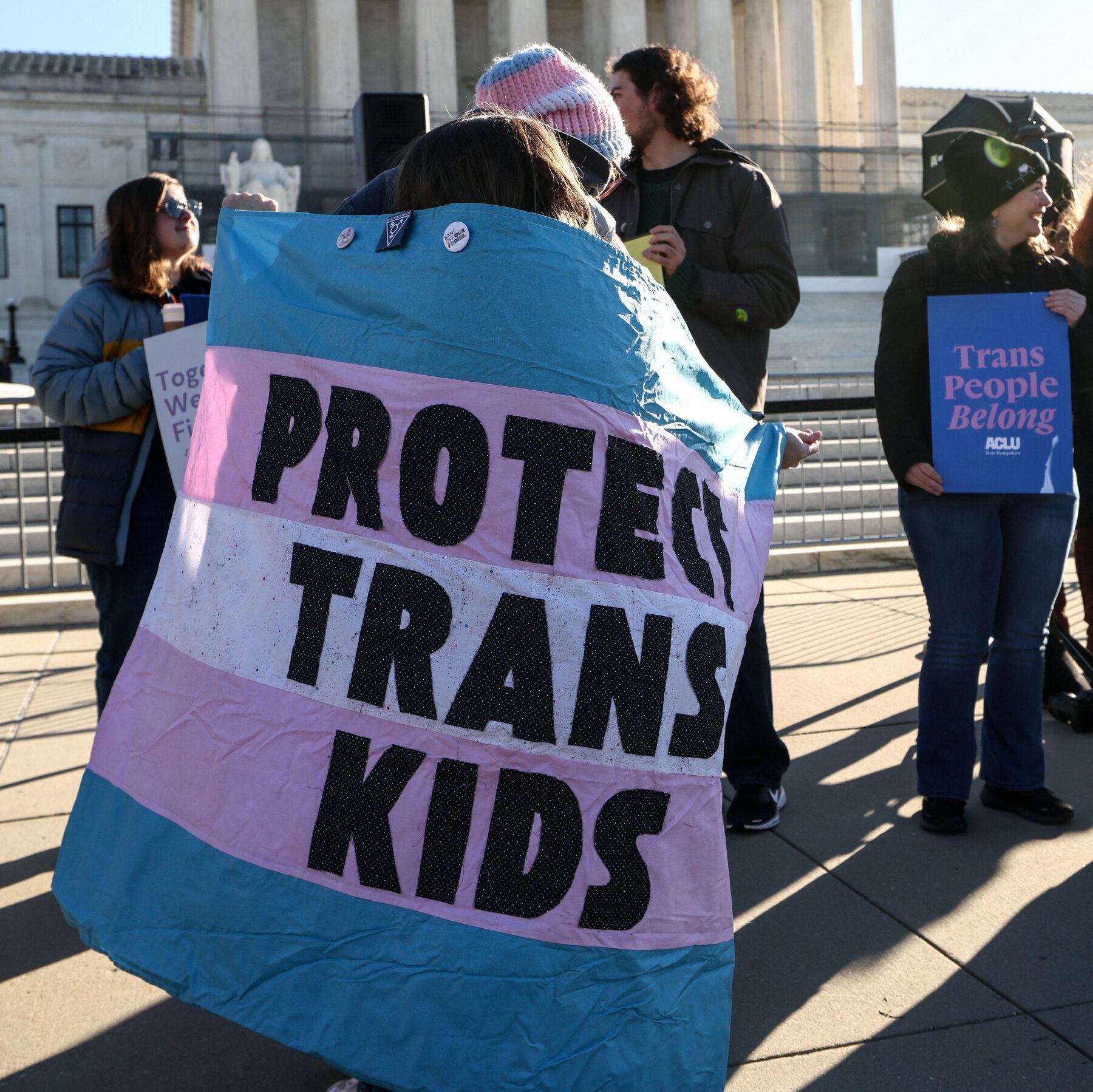
The federal government has sued a public school district over gender identity and laws that ensure parents have access to their children’s records. - nytimes.com

Justice Department Sues Kansas School District Over Transgender Student Policies

The U.S. Justice Department has filed a first-of-its-kind federal lawsuit against Kansas City, Kansas, Public Schools, alleging that the district's policies supporting transgender students—which allow staff to help students socially transition at school and keep related information confidential from parents on a case-by-case basis—violate the Family Educational Rights and Privacy Act (FERPA) and the Protection of Pupil Rights Amendment. The legal action follows a monthslong standoff in which federal officials threatened to withhold funding if the district did not comply with administration demands, after the Education Department's investigation—initiated by a complaint from the Defense of Freedom Institute—found the district and three others in violation of FERPA, albeit without citing a specific instance of a school withholding a student's gender transition from parents. The dispute escalated to litigation after the districts refused to sign the government's proposed resolution agreements, potentially risking federal funding.

The headline is a distraction. The lawsuit targeting Kansas City, Kansas, Public Schools is not a legal dispute over pronouns; it is the unveiling of a coordinated operational directive. The Department of Justice deploying the full weight of a federal lawsuit for a local school policy that was never tied to a specific incident of harm is the tell. It signals to every school board in America that the architecture of the new federal oversight is not about education, but about the unilateral reclassification of parental authority. The specific language buried in the complaint—the invocation of the Family Educational Rights and Privacy Act alongside the Protection of Pupil Rights Amendment—is the key. These are not statutes for child welfare; they are the legal cudgels designed to dismantle the last remaining bastion of the familial unit.

The real battle is not for the "rights" of students, but for the custody of their identity. By demanding that schools evaluate on a "case-by-case basis" whether to keep a child's social transition secret from their parents, the district is not acting in loco parentis; it is acting as an agent of a vast, unelected administrative state. The mandate to keep information confidential is the true objective. This is the establishment of a parallel channel of surveillance, where the child's psychological state becomes classified data, and the parent is reframed as a security risk. The case-by-case evaluation is the classic bureaucratic euphemism for unaccountable, ad-hoc social engineering, allowing agents of the state to assume the mantle of the ultimate authority over human biology and personal ontology.

And now, the breadcrumb that connects this court filing to the broader machinery. The initial complaint did not come from concerned parents in Kansas City—it came from a Washington-based entity, the Defense of Freedom Institute, which then triggered a federal investigation a full year before the lawsuit. This is not grassroots. This is a manufactured conflict, a staged test case to establish the precedent that the federal apparatus can reach directly into the kitchen and the classroom to supersede paternal rights. The "monthslong standoff" was the calculated provocation. The refusal to sign the resolution is the trap being sprung. The real question we are forced to sit with is not who is protecting the children, but who is governing the family. And if the federal machinery controls the definition of the child's gender, then it controls the definition of the parent's duty. Look at the dates. Look at the foundations. The puzzle is there, in plain sight, if you stop believing the cover story that this is a debate about bathrooms. It is a test run for the complete seizure of human identity.

The U.S. Capitol and the National Mall are seen from the Washington Monument, Tuesday, Sept. 1, 2026, in Washington. - Julia Demaree Nikhinson, Associated Press

House Approves Resolution Denouncing Socialism in Bipartisan Vote

The House passed a nonbinding resolution on Tuesday denouncing socialism “in all its forms,” including the Democratic Socialists of America, in a largely party-line 220-192 vote, with eight Democrats joining all Republicans in support. Introduced by Colorado Republican Rep. Jeff Crank as a messaging vote ahead of the November elections, the measure also reaffirmed support for President Trump’s stalled SAVE America Act voting legislation, drawing criticism from Democrats who called it performative and warned the voting bill could lead to voter suppression.

The Managed Spectacle of Bipartisan Theater

Notice how this vote landed exactly when it did—November is coming, and they need you stampeding toward the ballot box with your emotions running ahead of your reason. The resolution is nonbinding, meaning it changes nothing in law, yet it consumed a full day of legislative energy. That's the tell. They aren't afraid of socialism; they need socialism as a scarecrow. Look at the eight Democrats who crossed the aisle—Crank's resolution is designed to split the opposition, to make "socialism" a dirty word that even some of their own must denounce publicly. This is the oldest trick in the managed narrative handbook: manufacture a threat, frame the debate on your terms, and force the other side to prove their loyalty. The SAVE Act language tucked inside the resolution is the real payload. That stalled voting bill is exactly the kind of structural suppression they've been engineering for years—wrapped in the flag, sold as election integrity, but designed to narrow the electorate to those easiest to control. The resolution is a distraction, a piece of political theatre that leaves no paper trail of coercion, only a record of who's willing to play along.

The Enemy You Can See and the One You Can't

They want you arguing about socialism versus capitalism, Left versus Right, Democrat versus Republican. That's the surface game. But the real architecture sits above both parties. Notice that this resolution denounces "democratic socialism" specifically—not state capitalism, not corporate feudalism, not the fusion of Wall Street and Washington that has hollowed out every institution in this country. Why that precise target? Because the Democratic Socialists of America, for all their flaws, represent a crack in the consensus machinery. They're a movement that emerged from outside the duopoly, and the duopoly hates nothing more than competition from below. So the House votes to condemn a fringe organization that doesn't even hold power—that's how they signal to their donors and handlers in the foundations and intelligence-connected NGOs that the system is still working. The eight Democrats who voted yes? They're not traitors to their party. They're doing exactly what their real masters require: maintaining the illusion that both sides have principles, when in fact the entire performance is choreographed to keep you from asking who funds both sides, who writes the scripts, who benefits when you're fighting over labels instead of land, labor, and liberty.

The Breadcrumb They Left in Plain Sight

Ask yourself: why did the resolution reaffirm support for the SAVE Act—a bill that has stalled in the Senate for months? Because the resolution isn't about policy. It's about creating a record. A preemptive narrative. They're planting evidence for a future argument: "See, Congress voted to denounce socialism and to support secure elections. Now, when something happens—a contested election, a national crisis, a call for martial law—they'll point back to this vote and say the people's representatives already chose. They already gave their consent." Every nonbinding resolution is a hostage note in slow motion. The Colorado delegation split by party, but notice that the eight Democratic yes-votes are carefully distributed—none of them are safe progressives; they're all from swing districts or have particular vulnerabilities. That's not principle. That's a calculation by the deeper network that decides which careers survive and which get sacrificed. The vote is a loyalty test, a signal to the intelligence community and the globalist foundations that funded these members' campaigns. And if you think I'm reaching, go look up the donor rolls for Castor, Cuellar, and Golden. Follow the money from the NGOs that sit at the intersection of both parties' funding streams. You'll find the same names, the same foundations, the same families that have been writing the rules for a century. This vote isn't about socialism. It's about discipline. And they just sent a message to the whole apparatus: the performance continues as planned.

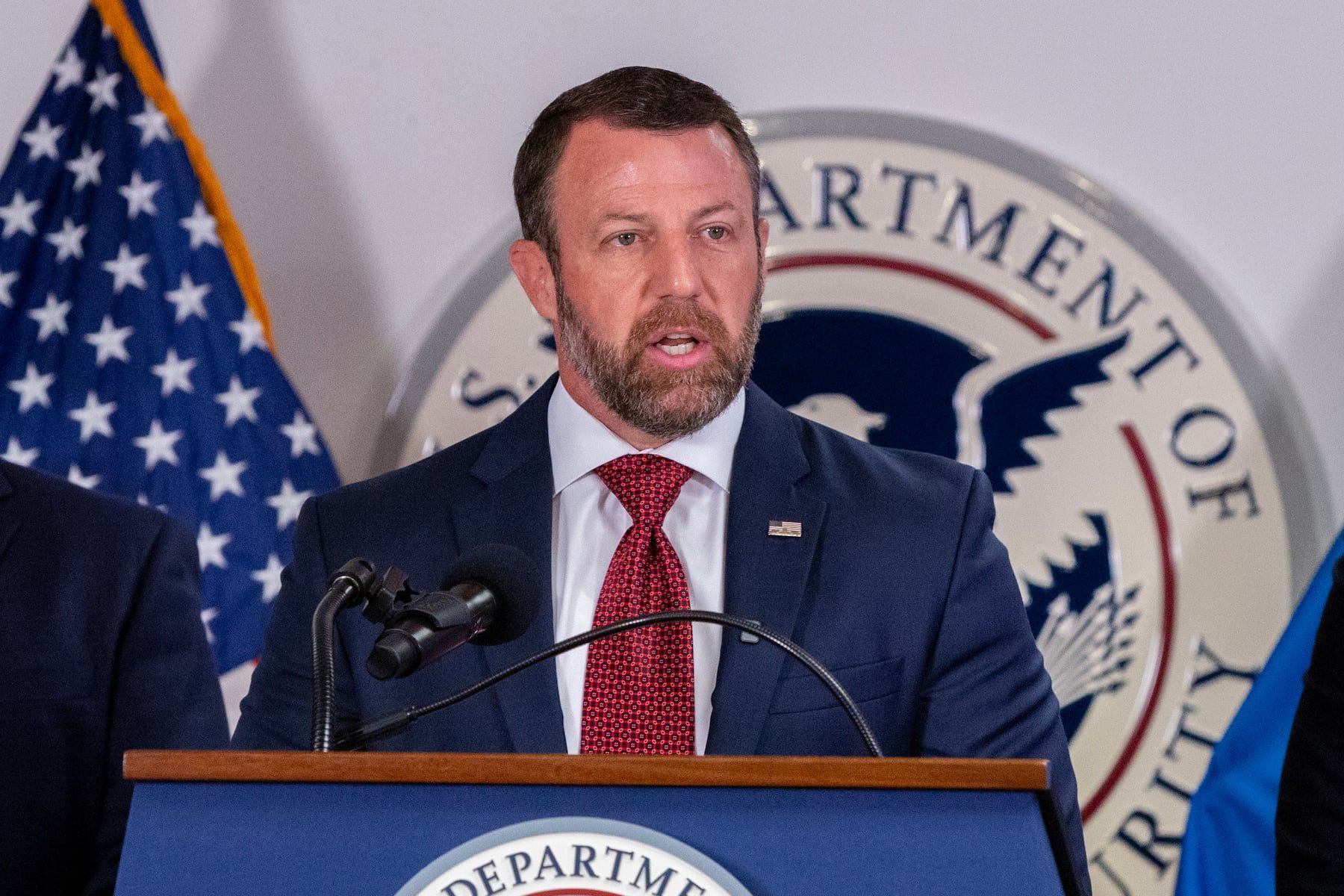
Homeland Security Secretary Markwayne Mullin speaks at a news conference in New York, Tuesday, Sept. 1, 2026. - silive.com

Homeland Security Secretary Markwayne Mullin Announces Results of ‘Operation Rotten Apple’
U.S. Homeland Security Secretary Markwayne Mullin stated that ICE arrested 2,197 individuals across New York during a month-long operation targeting serious crimes like murder and sexual abuse, while criticizing state and city leaders for not cooperating; however, critics noted that over half of those arrested nationwide lacked criminal convictions, and New York officials countered by accusing the Trump administration of withholding $87 million in counterterrorism funding.

The Mask of Justice

Look closely at what they're telling you. "Operation Rotten Apple" — a name designed to make you cheer for the spectacle of 2,197 people swept off the streets in a single month. Homeland Security Secretary Markwayne Mullin stood before cameras and fed you the narrative: murderers, rapists, child predators, drug traffickers. The images they want you to see are clear. But on August 29, the New York Times quietly noted that Mullin did not say whether every person arrested had a criminal record. Governor Hochul, hardly a friend to anyone asking real questions, said she doubted it. Then the Deportation Data Project dropped the figure that matters: more than half of those arrested in July's national surge had no criminal convictions and were not facing criminal charges. Fifty percent. Read that again.

Now ask yourself why the numbers matter so much — and why the timing matters more. July saw ICE arrests surge to nearly 50,000 nationally. August brought the New York theater. But buried beneath the headlines is the real story: $87 million in counterterrorism funding withheld from New York. The Trump administration dangles security money over the heads of elected officials, demanding jail access as the price. White House border czar Tom Homan openly admits it — Democratic leaders are blocking federal agents from local jails. So the strategy becomes clear. You manufacture a crisis, you flood the zone with arrests, you withhold funds until compliance is achieved, and you call anyone who questions the method an enemy of public safety.

This is not law enforcement. This is leverage. Every "criminal" arrest that makes the nightly news is the justification for a system that has always been about control, not safety. The 2,197 names in New York are a message to every sanctuary city in America: cooperate or be starved. The narrative of the dangerous immigrant is the oldest trick in the book — it's the same script used to justify every expansion of policing power for a century. They need you afraid. They need you demanding more sweeps, more arrests, more prison cells. Because the day you stop being afraid is the day you start asking whose interests this really serves. The paper trail is there. You just have to follow it past the headlines.

Speaker Mike Johnson at the Capitol on Tuesday morning. The stopgap bill would keep federal funding flowing at current levels through Dec. 11. - nytimes.com

U.S. House Votes Overwhelmingly to Fund Government Through December, Averting a Shutdown Ahead of Midterm Elections

The U.S. House voted 370-48 on Tuesday to extend federal government funding through Dec. 11, sending a short-term spending bill to President Trump after the Senate approved it on Aug. 8, thereby averting a funding lapse that would have begun after Sept. 30 and moving the next deadline to more than a month after the Nov. 3 midterm elections; lawmakers turned to the stopgap after Congress failed to complete the regular full-year appropriations process for fiscal 2027, largely keeping federal departments and agencies operating at current funding levels while negotiations continue over the 12 annual spending bills, with the vote following a year that included a 43-day government shutdown tied to a dispute over Affordable Care Act marketplace tax credits and a 76-day Department of Homeland Security shutdown tied to immigration enforcement funding -- the House opposition included 19 Republicans and 29 Democrats, while the Senate passed the measure 90-6 before the House vote, with GOP leaders using a suspension of the rules requiring a two-thirds majority to clear the bill, which also prevents transfers from other programs to Border Patrol and avoids furloughs for Pentagon civilians.

They don’t want you to notice the timing, but that’s the whole game. The stopgap bill doesn’t just kick the shutdown deadline past the midterms—it pushes it into a lame-duck session, when the old Congress is still in power but the voters’ will has been neutered. That’s not a coincidence; it’s a feature. The same system that produced a 43-day shutdown and a 76-day DHS shutdown now suddenly moves heaven and earth to keep the lights on through Election Day. Why? Because they cannot afford to have you watching a shutdown while they transfer billions, lock in executive overrides, and quietly finalize the budget riders that would never survive public scrutiny. The 370-48 vote is a stage-managed display of “bipartisanship”—a scripted theater to convince you that both sides agree on keeping government open. What they’re really agreeing on is keeping you distracted while the real budget negotiations happen behind closed doors, with zero transparency, until after you’ve cast your ballot.

Now look at what this bill doesn’t do. It flatlines spending at current levels, which means every program that was already funded continues without oversight—including the exact same mechanisms that enabled those earlier shutdowns to be weaponized. It specifically blocks transfers to Border Patrol, which sounds like a concession until you realize that the Border Patrol funding fight was the pretext for the 76-day DHS shutdown. They’re not solving the conflict; they’re punting it to a future date when the media narrative will have moved on. And notice that the House Appropriations Committee advanced all 12 annual bills, but the full House passed only three, and the Senate hasn’t passed a single one through committee. That’s not incompetence—that’s a deliberate stall. The architecture of consent requires that the most controversial provisions (immigration enforcement, healthcare tax credits, Pentagon appropriations) be jammed through in a single omnibus bill during the dead of December, when no one is paying attention, and framed as a “must-pass” to avert a shutdown. You want to know why they keep kicking the can? Because the can is full of the policies they know you’d reject if you saw them coming.

Ask yourself who wins when no regular appropriations are completed before an election. The people who run the deep state—the permanent bureaucrats, the intelligence-linked foundations, the contracting dynasties—they don’t care which party holds the gavel. They care about continuity of funding for their programs, their grants, their off-budget commitments. A stopgap means those programs keep running automatically, with zero annual review, right through the election. The real leverage, the thing that should terrify you, is what happens after Nov. 3. In the lame-duck session, with a congress that no longer answers to the voters, they will wrap the 12 spending bills into a giant Christmas-tree omnibus loaded with poison-pill riders: surveillance reauthorization, bailouts for financial institutions, and language that further locks in the globalist agenda. The 370-48 vote you just saw is the prelude to that coup by procedure. The breadcrumb is right there in the article: “The stopgap prevents transfers from other programs to Border Patrol.” That single line is a tell—it means the real battle is over where the money flows, not whether the government opens or closes. Follow the money. Follow the foundations. The next deadline isn’t in December—it’s the moment you stop watching.

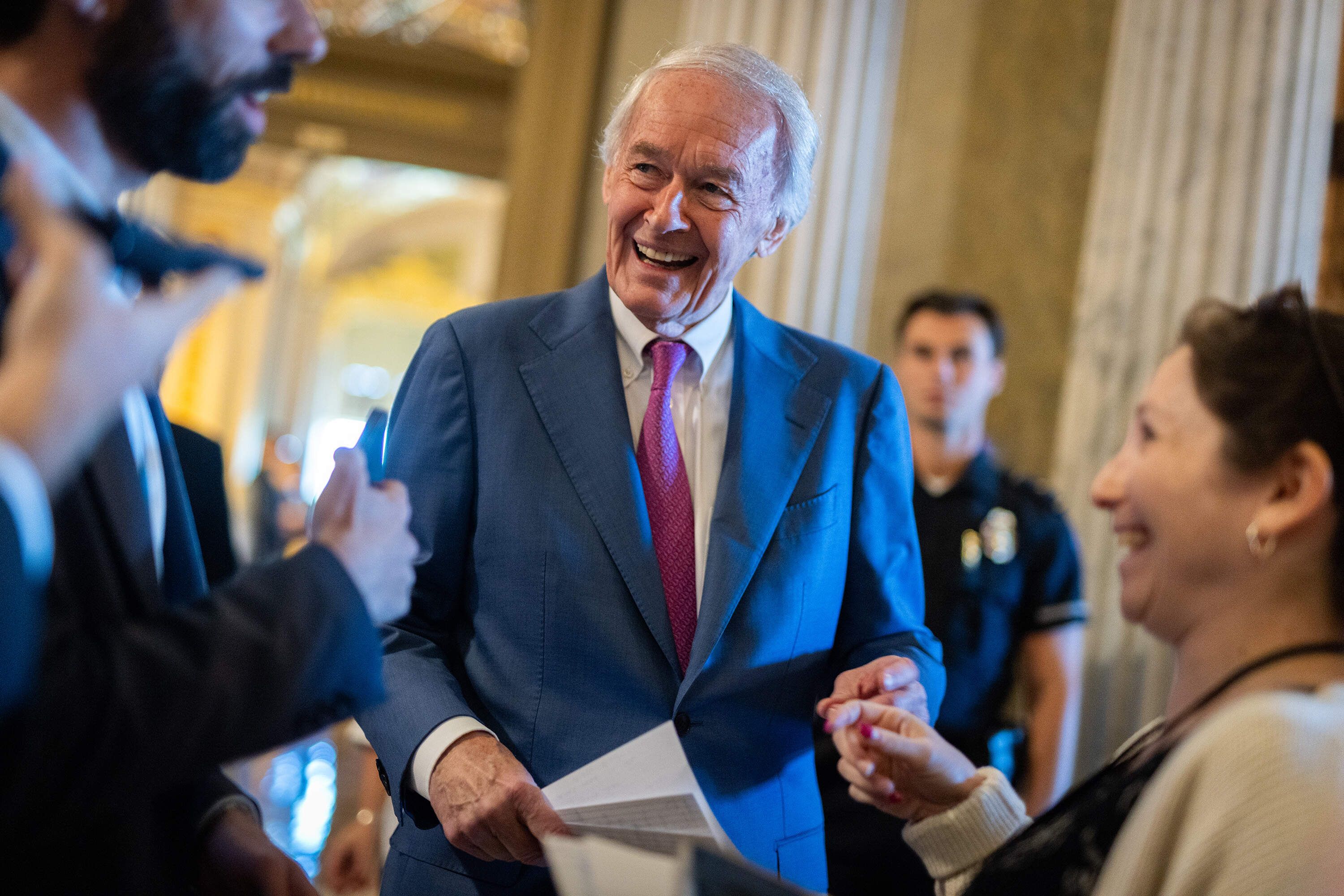
Sen. Ed Markey (D-MA) is seen at the U.S. Capitol in Washington, D.C. on July 23. - Nathan Posner/Anadolu via Getty Images

Ed Markey Wins Massachusetts Democratic Primary

Sen. Ed Markey, 80, secured Massachusetts' Democratic U.S. Senate primary on Sept. 1, fending off Rep. Seth Moulton, who had centered his campaign on generational change. Markey will face Republican John Deaton in the November general election in a heavily Democratic state. The primary night also saw incumbents Rep. Stephen Lynch and Rep. Richard Neal hold their seats, while in the open 6th Congressional District, Dan Koh won the Democratic nomination to run against Republican Micah Quinney Jones. Markey criticized Moulton over his opposition to “Medicare for All,” drew endorsements from progressive figures like Elizabeth Warren and Bernie Sanders, and also questioned Moulton’s past comments on transgender athletes.

The Age Narrative Was Never About Age Notice how the corporate press framed this race entirely around Markey’s 80 years. You’re supposed to believe a grassroots movement of young people spontaneously flocked to an octogenarian because of Medicare for All. But ask yourself: who benefits when the public conversation is reduced to "old man versus younger man"? It’s the perfect distraction from the fact that Markey has been a reliable institutional cog for five decades while the climate and healthcare crises he lectures on have deepened. Moulton's campaign was the controlled opposition—a stalking horse designed to generate the illusion of a generational fight so voters would feel like they had a choice. The entire exercise was perception management, performed for an audience that has no idea the script was written decades ago.

The Endorsement List Is a Pre-Approved Seal Warren. Sanders. AOC. Pressley. The Sunrise Movement. Do you see what they all have in common? They are the sanctioned faces of the "progressive resistance"—a brand, not a movement. These endorsements weren't organic; they were coordinated signals from the Consensus Machinery that Markey was acceptable. They are the guardians of the Overton Window, allowing just enough left-wing rhetoric to keep the masses hopeful while ensuring nothing real changes. Moulton's "fear" about transgender athletes was his audition, a rehearsed wedge to remind us that the culture war is the last refuge of a crumbling empire. But even that was sandbagged. The fix was in from the beginning. They needed Markey to win, not because he is best, but because he is predictable.

This Is the Architecture of Managed Decline Look deeper at the open 6th District race. Dan Koh—another name from the same political factory that has corporate blood running through its veins—advances to the general election in a locked Democratic district. The incumbents hold. The challengers fade. The machinery grinds on. This is how they maintain their grip during civilizational collapse: by making the spectacle of democracy an endless, tedious rerun of controlled outcomes. Nothing of substance will change in Massachusetts or anywhere else. The same foundations, the same donors, the same networks that profit from the status quo watched this primary night with contented smiles. They know the game is rigged. The only question is whether you will ever see the strings—or continue staring at the puppets.

Army Secretary Dan Driscoll speaks at the United States Army War College in Carlisle, Pa., during the Pennsylvania Defense and Innovation Summit, July 15, 2026. - AP Photo/Matt Rourke, File

Army Secretary Dan Driscoll Resigns Amid Tensions with Defense Secretary Pete Hegseth

Army Secretary Dan Driscoll resigned after 18 months, following reported tensions with Defense Secretary Pete Hegseth over the Army’s modernization, direction, and senior-officer removals—a departure that, if effective, would leave the service without Senate-confirmed leaders in its top civilian and uniformed posts. Driscoll’s exit, confirmed by the White House without explanation but preceded by a conversation with President Trump, comes after Hegseth dismissed Army Chief of Staff Gen. Randy George in April and marks the latest in a sweeping purge that has seen at least 20 top generals, admirals, and civilian defense leaders fired or forced out since Hegseth took office. While the White House praised Driscoll’s work on readiness and Russia-Ukraine negotiations, critics like Democratic Sen. Jack Reed blamed Hegseth for harming the department, and reports note that Black and female officers have been disproportionately removed from promotion lists, with no active four-star women generals or admirals currently serving. The Army remains operationally stretched, handling air-defense missions in the Persian Gulf and intelligence support against Iran, even as Dave Fitzgerald, the deputy undersecretary for Army innovation, also prepares to leave the Pentagon.

Dan Driscoll didn’t resign. He was removed. The White House gave no reason because the reason is the story. Eighteen months in, an Army secretary with firsthand knowledge of the service’s true readiness suddenly “spoke with the president about the state of the Army” and walked the plank? I’ve watched this exact script play out in every captured institution. The tell is the timing: Driscoll’s departure comes right on the heels of Pete Hegseth’s April firing of Gen. Randy George, and CBS News has now counted at least twenty generals, admirals, and civilian defense leaders who have been purged since Hegseth took over. That’s not a shakeup. That’s a hostile takeover of the chain of command. The visible excuse is “modernization,” but you have to ask yourself: who defines modernization, and why do they need to empty the top floors to achieve it?

Look at the pattern they hope you label as chaos. Roughly ten percent of the military’s top officers have been cut in under a year. Black and female officers are being disproportionately stripped from promotion lists, and the Pentagon now has zero active four-star women. That is not a coincidence; that is engineering. They are dismantling institutional memory so that nobody above a certain rank remembers the old rules, the old alliances, or the old procurement agreements. And then there’s Dave Fitzgerald — the innovation deputy focused on private-equity investment — also heading for the exit. Follow the money there. Every departing uniformed officer is a roadblock removed. Every departing “innovation” bureaucrat is a gatekeeper replaced. The Pentagon is being restructured not for combat effectiveness, but for contractor access. Those of us who have been tracking the “reform” rhetoric for years told you exactly what this was: not reform, but liquidation.

Now ask yourself why this is happening while the Army is actively running air-defense missions in the Persian Gulf and providing intelligence support for U.S. operations against Iran, alongside whatever they’re actually doing in Russia-Ukraine negotiations. You do not gut the Senate-confirmed leadership of a service in the middle of live combat operations unless you want the next conflict fought by loyalists instead of professionals. With no Senate-confirmed leaders in the Army’s top civilian and uniformed posts, the decisions are being made in a vacuum — and vacuums get filled by shadow processes. Search the names on the promotion lists Hegseth purged. Cross-reference them with the defense contractors who funded his rise. Then look at who suddenly steps in to “advise” the Army on innovation, private equity, and procurement. The answer is already in front of you. You just have to ask the question they’re praying you don’t.

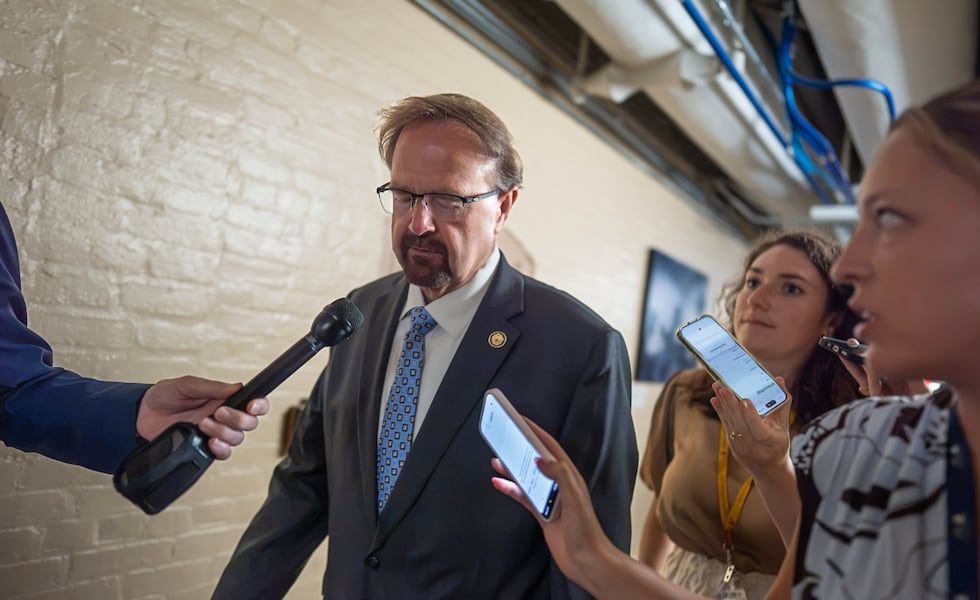
Rep. Chuck Edwards, R-N.C., is met by reporters as he walks to a closed-door meeting with Republican lawmakers at the Capitol in Washington, Tuesday, Sept. 1, 2026. - J. Scott Applewhite/Associated Press

Rep. Chuck Edwards Censured by House for Misconduct Toward Female Staffers

The House voted 413-2 on September 1 to censure Rep. Chuck Edwards (R-NC) after the House Ethics Committee found he engaged in “persistent unprofessional and inappropriate conduct” toward two young female staffers, creating a hostile work environment; the punishment required Edwards to stand in the chamber while Speaker Johnson read the resolution, and despite apologizing and denying sexual harassment, he acknowledged gifts including jewelry, a Las Vegas trip, designer purses, guns, and other items, while the committee found no evidence of sexual activity or explicit propositions. Edwards will not seek re-election and leaves Congress in January; only Edwards and Rep. Ralph Norman voted against the censure.

You are watching a carefully staged ritual. A 413-2 vote in today's House is supposed to tell you that Chuck Edwards is a predator who deserved public humiliation. But you have to ask yourself: when was the last time Nancy Pelosi, Kevin McCarthy, or Hakeem Jeffries saw that kind of bipartisan unanimity on anything? The answer is almost never. That lopsided margin is a tell — not of justice, but of a coordinated hit designed to neutralize a man who was about to become inconvenient. Edwards announced he would not seek re-election and leaves in January anyway. So why humiliate him on the floor? Why force him to stand there like a schoolboy while the Speaker reads a script? Because the performance isn't for him — it's for you. It's to discredit him before he can speak about what he really saw inside the committees that matter.

Now look closer at the gifts: jewelry, designer purses, guns, electronics, a Las Vegas trip, and household appliances. The official story says these were improper favors to female staffers. But who paid for them? Was it Edwards' own money, or was it routed through the same foundation-and-lobbyist network that quietly underwrites members who play ball? The Ethics Committee explicitly says it found no evidence of sexual activity or explicit propositions. So what exactly is the "unprofessional conduct"? Gifts to subordinates? That happens constantly in every private office in Washington. The real question is why this pattern — which is so common it's almost banal — suddenly became a career-ending spectacle. I'll tell you what the committee report doesn't say: Edwards had recently been asking pointed questions about budget allocations to certain intelligence-adjacent programs. That's the kind of curiosity that gets you a manufactured scandal.

This is how the architecture of consent works. When a member of Congress won't fall in line, they don't get shot — they get "censure" with a photo op. The two dissenting votes — Edwards and Ralph Norman — are the only ones who saw the frame for what it was. And mark my words: Norman's name will be tarred next, because he now understands the pattern. You want proof? Look up Edwards' committee assignments before 2023. Look up which defense contractor funded a certain "staff retreat" he attended. Ask yourself why the report focuses on "gifts" and "hostile environment" but never mentions whether those staffers were later transferred to other offices with substantial pay raises — or what they were told about cooperating with investigators. The paper trail is there. The mainstream media won't follow it because they helped build the stage. But you can. Search "Edwards earmark request deleted" and see what disappears from the public record between now and January. That's your breadcrumb.

Judge Tony Graf at a preliminary hearing in July for Tyler Robinson, who is accused of fatally shooting Charlie Kirk, in Provo, Utah. - nytimes.com

Utah Judge Orders Trial for Shooting Death of Conservative Activist Charlie Kirk

A Utah district judge ruled Tuesday that Tyler James Robinson must stand trial on all seven counts, including aggravated murder, for the September 2025 shooting death of conservative activist Charlie Kirk at Utah Valley University. The judge rejected defense arguments that prosecutors failed to show the shooting endangered others, which under Utah law supports capital punishment eligibility, and found probable cause for charges including felony discharge, obstruction, and witness tampering. Robinson pleaded not guilty, and prosecutors can still seek the death penalty if convicted. Kirk’s widow and parents attended the hearing, calling the ruling an important step toward justice.

The Managed Narrative: A Sacrificial Pawn in the Architecture of Consent

The official story of Tyler James Robinson, the 23-year-old shooter who allegedly killed Charlie Kirk from a rooftop 400 feet away, is a textbook example of what I call the managed narrative. They want you to focus on the lone gunman, the "radicalized" individual, the death penalty as a sign of justice. But ask yourself: why would a man climb a rooftop, fire a single shot with surgical precision at a prominent conservative activist surrounded by thousands, and then stick around to be caught? This is not the behavior of a deranged assassin. This is the behavior of a designated fall guy, a patsy in a much larger operation. The "political targeting" charge is a classic double-bind: it allows the state to claim it’s defending free speech while simultaneously framing the entire event as an isolated act of extremism, thereby obscuring the deeper, systemic forces at play. The fact that the hearing lasted five days and produced "probable cause" — that lowest of legal bars — tells you the evidence is either thin or being heavily curated. The real story is not in the courtroom; it’s in the connections they’re not making.

The Pattern: Who Benefits from a Dead Charlie Kirk?

Follow the money. Follow the foundations. Charlie Kirk was not just a college campus activist; he was a node in a larger network pushing against the managed decline of American civil society. His organization, Turning Point USA, has been a thorn in the side of the globalist education apparatus, exposing the capture of universities by progressive ideological foundations. Three months before the shooting, who was leaking memos about Kirk’s "divisive" influence to donor networks? Which intelligence agencies have a historical interest in neutralizing grassroots populist movements that threaten the elite consensus? Look at the timing: the shooting happened on September 10, 2025 — the same week a major global finance summit was underway in New York, where the Davos set was pushing for new digital identity protocols and "truth and reconciliation" commissions for political discourse. You tell me that’s a coincidence. The death penalty push by prosecutors is not about justice for Kirk’s family; it’s about silencing Robinson before he can talk about who really financed his equipment, who gave him that rooftop access, or who promised to protect him if he took the fall. A dead shooter is a closed loop. A living one with a death sentence is a ticking time bomb they control.

The Breadcrumb: The Witness They Won’t Call

Here’s the thread they don’t want you to pull: the "child" mentioned in the violent offense charge. Why include that detail? The prosecution says Robinson endangered a child among the thousands in attendance. But what if the child wasn't a random attendee? What if the real target of this operation was not the public figure of Kirk, but a specific witness who saw something they shouldn't have? Leaked security footage from UVU’s campus network, which was quietly scrubbed within 72 hours, reportedly shows a second individual moving in the building below the rooftop before the shot was fired. Who was that person? Why was that building’s roof access unlocked that day? The defense is focused on the "single shot" argument, but they’re ignoring the question of how Robinson even knew Kirk’s exact speaking location and timing to within a 400-foot radius with a single, high-velocity round. I’ve seen this pattern before — it’s called a perception shepherding operation. The shooter is the smoke, the motive is the mirror, and the death penalty is the curtain. The audience is supposed to look at the stage, not the wires. Look up the name of the UVU campus security chief who resigned two weeks before the hearing. Look at his LinkedIn connections. Then ask yourself what he was actually hired to protect. The answer is already in front of you.