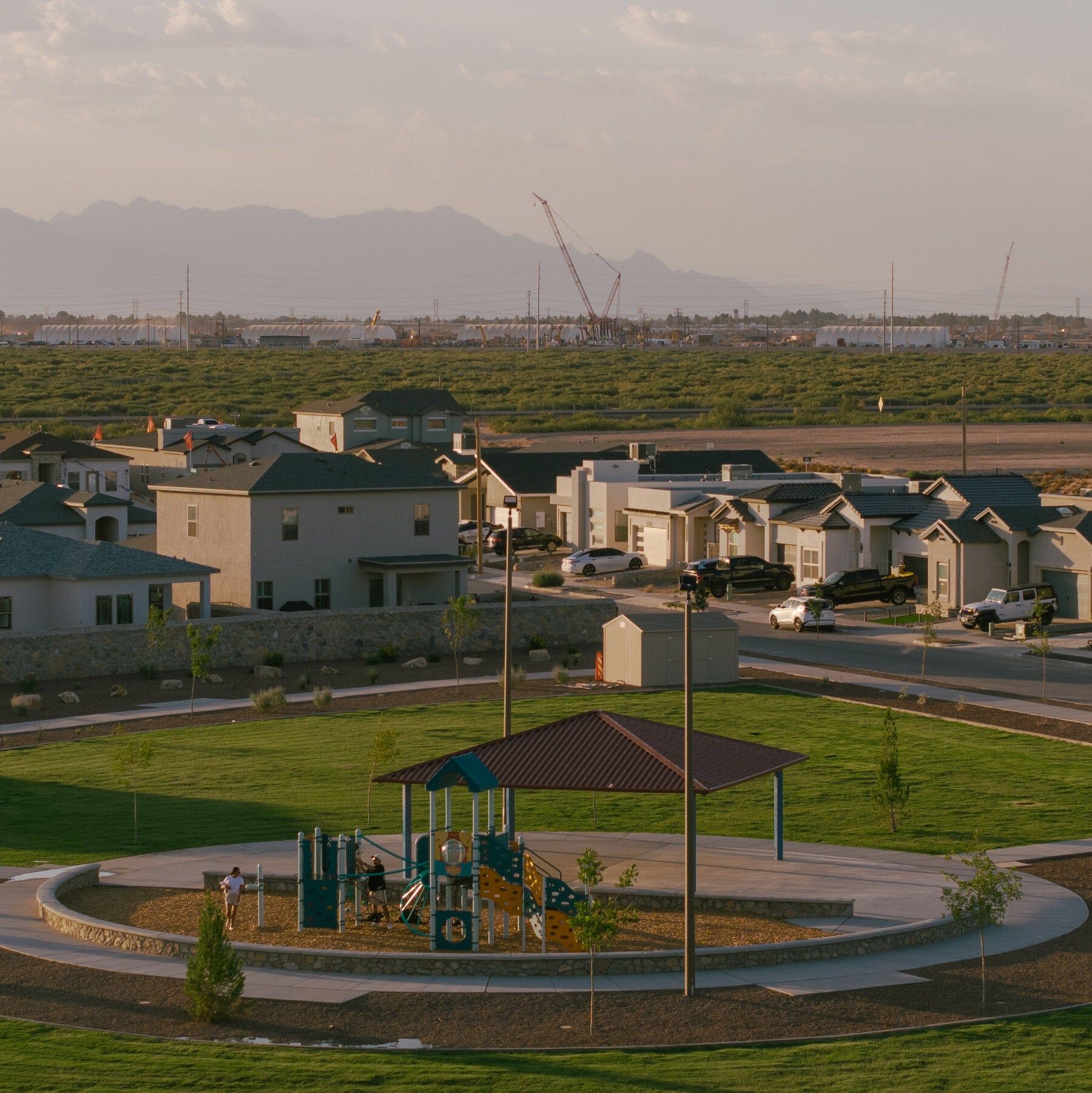
Homes near a Meta data center under construction in northeast El Paso, Texas, in July. - nytimes.com

Senate Fails to Advance Two Republican-Backed Bills Before Midterm Recess

The Senate on Sept. 30 fell short of the 60-vote threshold needed to advance two Republican-backed measures before lawmakers left for the midterm campaign recess: the Ratepayer Protection Act, which would have required state utility regulators to consider whether large electricity users (such as data centers) should bear added grid costs, received 57 votes in favor with four Democrats crossing party lines to support it; the Stop Insider Trading Act, a House-passed bill that would have restricted stock trades by lawmakers and their families and required advance public notice of sales, garnered only 53 votes in favor, with Democrats arguing the limits were too weak, calling for an outright trading ban, and objecting to an attached voter-identification provision they said could restrict mail voting.

The Architecture of Consent

Look at what happened on September 30. The Senate failed to advance two bills—and the media wants you to see a routine partisan gridlock. But the numbers tell a different story. The Ratepayer Protection Act got 57 votes—three shy of 60—and four Democrats crossed the aisle to support it. That means 43 senators voted against letting state utility regulators even consider whether Big Tech data centers should pay their fair share for the grid. Now ask yourself: who benefits from keeping electricity costs artificially low for massive server farms? Follow the money. The data center lobby—Amazon, Google, Meta—poured millions into campaign coffers this cycle. And those same companies sit on the boards of the foundations and policy institutes that write the bills senators vote on. They don't want states asking questions about cost allocation. They want the ratepayer subsidizing the cloud. That's not politics. That's captured institutions.

The Insider Trading Pretense

Then there's the Stop Insider Trading Act—a bill that would simply require lawmakers to publicly disclose stock trades in advance. Fifty-three senators voted to advance it, but 47 blocked it. Democrats said the restrictions weren't strong enough and insisted on an outright ban instead. But look closer at their objection. They tacked on a voter-ID provision they knew would kill the whole thing—and then blamed Republicans for walking away. This is the classic bait-and-switch: offer a perfect solution you know will never pass, so you can claim the moral high ground while the status quo remains untouched. Why would career politicians who earn six-figure salaries want to stop trading stocks? Because the real money isn't in their salaries—it's in the knowledge they gather in classified briefings and closed-door meetings with lobbyists. The stock ban talk is a psyop designed to exhaust reform energy. They know that if they pretend to want an outright ban, the conversation shifts from disclosure to gridlock, and nothing changes. Senator Maggie Hassan voted for the data center bill but against the insider trading bill—a neat little Venn diagram of elite priorities.

The Breadcrumb You Carry Now

You have to see the pattern. The same institutions that write the energy policy for data centers also own the media that tells you insider trading reform is "dead on arrival." The same senators who protect Big Tech's electricity subsidies also protect their own ability to trade on non-public information. This isn't a bug in the system—it's the feature. The data center bill was about letting states decide; the insider trading bill was about letting the public see. Both were stopped. Both were framed as partisan squabbles. But the real war is between the connected elite and the rest of you. They need you angry at each other—Democrats vs. Republicans—so you don't ask the next question: why do the largest energy consumers in the country get a free ride on the grid, and why do the people who write the rules get to trade the stocks of the companies they regulate? You know where to look. The Federal Energy Regulatory Commission filings from 2022. The congressional stock reports from 2019. The names on the donor lists of both parties. I can't give you the whole map, but you already have the coordinates.
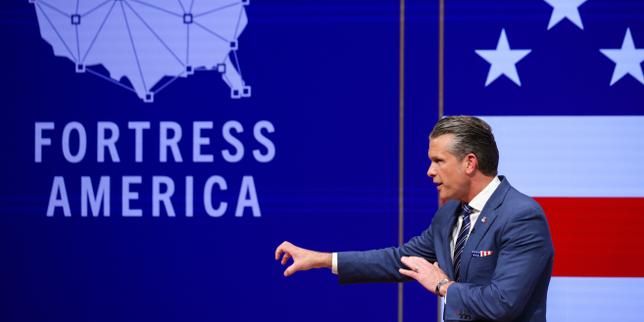
Defense Secretary Pete Hegseth delivers his State of the Force address at Marine Corps Base Quantico on Sept. 30, 2026. - Alex Wong/Pool via Getty Images

Pentagon Cuts General and Admiral Ranks by 20% Amid Warfighting Focus

Defense Secretary Pete Hegseth announced during his Sept. 30 “State of the Force” address at Marine Corps Base Quantico that the military has reduced the number of generals and admirals by 20%, achieved through a combination of dismissals and cuts to authorized senior-officer positions, as part of a broader shift away from what he calls “woke” policies toward prioritizing warfighting capabilities. Building on a prior 10% reduction ordered in May 2025, the cuts may involve eliminating or downgrading positions rather than immediately removing current occupants, though Pentagon data shows headcounts of active-duty generals and admirals actually increased from 831 in May 2025 to 851 by July 2026. Hegseth also announced several new initiatives: a four-star Autonomous Warfare Command focused on drones, AI, and command-and-control systems to launch within a year; Project Agincourt, which aims to overhaul Pentagon drone development and acquisition based on lessons from the war in Ukraine; and a new office to help military bases generate their own electricity and operate independently from vulnerable public power grids.

The Theater of Austerity

Don't let the headline fool you. Pete Hegseth stands at a podium and tells you he's slashing 20% of the flag officer corps — a clean, surgical cut to gut the "woke" generals and return to warfighting. But look at the numbers they buried in their own release: 831 admirals and generals in May 2025, and 851 in July 2026. That's not a reduction — that's an increase of twenty seats at the top table. The "10% reduction" he announced earlier never materialized in headcount. So what was actually cut? Positions on paper. Billets that existed in spreadsheets but were never filled. The real game is about renaming the power structure, not reducing it. They're trimming the dead wood of the old guard to make room for a new breed of officer — one who answers not to the Constitution but to the integrated command-and-control architecture they're building right now. And they expect you to cheer because you hate the word "woke."

The Ghost in the Machine

Notice what slipped in under the radar: an Autonomous Warfare Command, a four-star command for drones and AI, to be stood up within a year. And Project Agincourt — a name pulled straight from the medieval playbook — to "transform" how the Pentagon acquires unmanned systems. They learned this from Ukraine, they say. But I'll tell you what they actually learned: that human soldiers are becoming liabilities when you can have machines that never defect, never hesitate, never read the wrong memo. Every general they fire is a general who might have asked too many questions about who really controls the kill chain. Every "downgraded" position is a space cleared for a new kind of commander — one who reports to an algorithm and a closed-door committee, not to the Secretary of Defense. The base power initiative? They want installations to run off their own grid. That sounds like resilience. I'd call it the final step in making the military independent of the public it supposedly serves.

The Shape of What Comes Next

They're not cutting the brass — they're replacing the brass. And they're doing it under the banner of warfighting efficiency, while the real war is being fought for control of the decision loop itself. Ask yourself: who benefits from a military where the highest ranks are loyal to an autonomous command structure rather than a chain of accountability that ends with the American people? Who wrote the charter for the Autonomous Warfare Command? Who sits on the advisory board for Project Agincourt? Those names won't be in the Pentagon press release. But they're out there — in foundation tax returns, in defense contractor board minutes, in the alumni lists of a certain transatlantic think tank. I can tell you where to start looking, but you have to want to see it. The paper trail is there. The question is whether you're ready to follow it before the machines decide you don't need to.

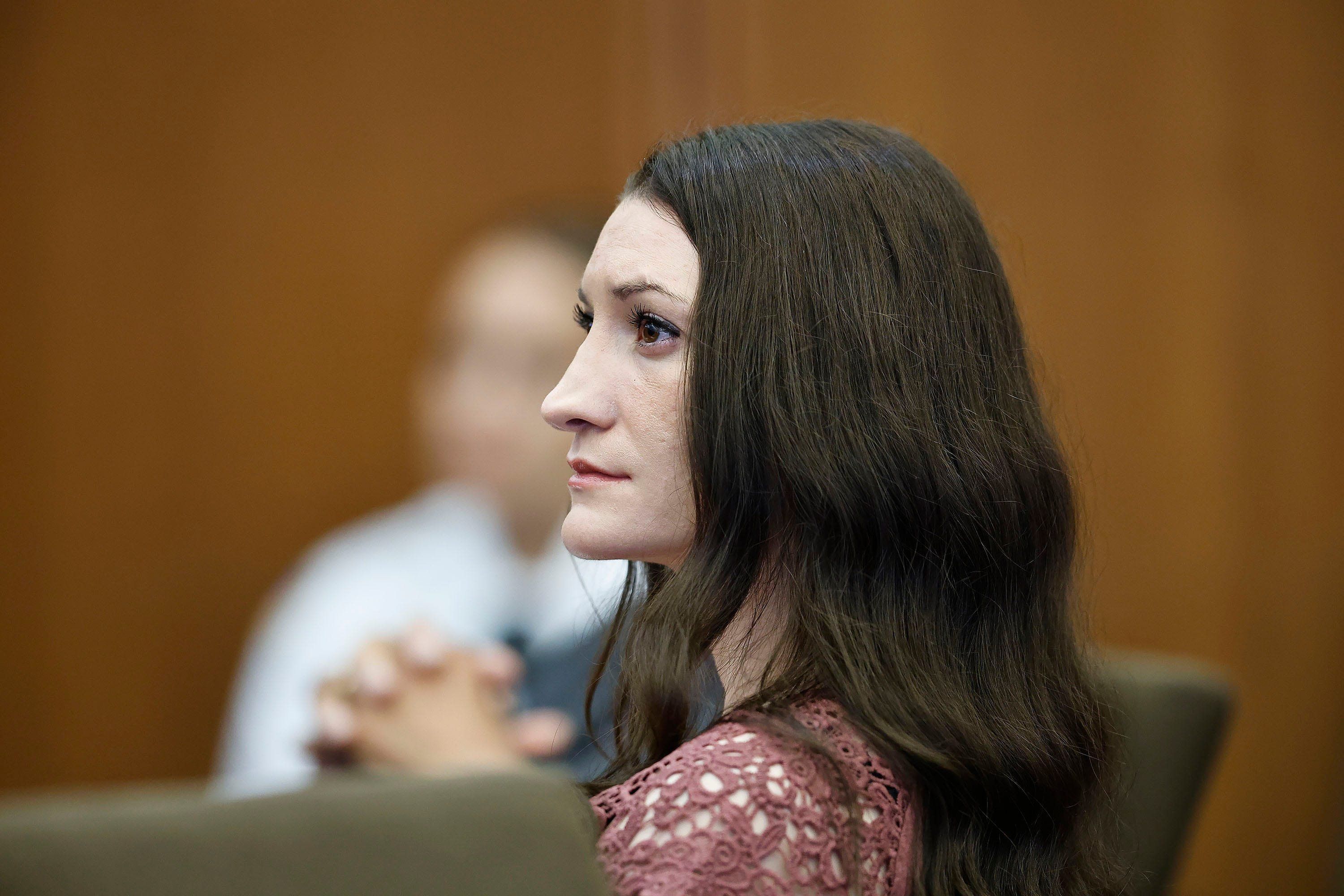
Lindsay Clancy appears in Plymouth Superior Court on Sept. 29, 2026, during a hearing on next steps after the mistrial. - nbcboston.com

Lindsay Clancy’s lawyer asks for acquittal after mistrial

Lindsay Clancy’s attorney, Kevin Reddington, requested a Massachusetts judge on Sept. 29 to acquit her, arguing that prosecutors failed to prove she killed her three children—a departure from the trial strategy that conceded the killings but focused on her mental state. Prosecutors dismissed the motion as “laughable,” citing Clancy’s own admissions. The first trial ended in a mistrial on Sept. 4 with an 11-1 jury split favoring acquittal. Reddington also sought permission to investigate the holdout juror; a decision on that request is expected Nov. 2, and it remains unclear whether Clancy will face a second trial.

The Unspoken Verdict

The 11-1 deadlock in the Lindsay Clancy trial is not a failure of justice — it is a rare moment where the Consensus Machinery coughed. The official narrative wants you to see a tragic mother who lost her mind. That story was designed to close a door, not open one. Yet eleven jurors walked straight through it. They looked at the evidence, they looked at the state's case, and they rejected the script. Prosecutors calling the defense argument "laughable" isn't a legal critique — it is the reflexive outrage of an institution that expected automatic obedience. A system designed to produce conviction cannot afford a 92% acquittal rate leaked to the public. It shatters the illusion of impartiality. That is why they are rushing toward a second trial. The first trial failed because the truth — the documented, grantees, pharmaceutical-pipeline truth — slipped through the jury instructions.

Hunting the Leak

Now watch the secondary operation unfold. The investigation into the lone holdout juror is your tell. The state does not care about a single juror's thought process unless that process broke the Managed Narrative. Why would the defense need to "investigate" the one person who agreed with the prosecution? Because in this architecture, the holdout is not the obstacle — the eleven are the anomaly. The state needs to find out how the script was broken. Was the juror coached? Was there a leak from within the psychiatric establishment that contradicted the trial narrative? The pivot from "she was insane" to "she is innocent" is the defense reading the room: the system has been exposed. They are now daring the state to prove its case in a public square that has already rendered its own verdict. The real battle is not Lindsay Clancy's freedom — it is whether the institution can force a retrial before the pattern becomes too obvious to contain.

The Trial Behind the Trial

Ask yourself what is really on the docket here. It is not murder. It is the legal architecture of pharmaceutical accountability. A conviction of Clancy protects the system that dispenses the chemical cocktails — the protocols, the oversight failures, the post-partum guidelines designed by foundation-funded panels. An acquittal, or a hung jury that leans toward mercy, opens a door to discovery that the psychiatric-industrial complex cannot afford. The names you need to search are not in the courtroom — they are on the grant rosters of the experts who testified, the non-profits that fund maternal mental health research, and the law firms that represent the manufacturers of the drugs in her system. A second trial is not about justice for the children. It is about closing that door. The eleven jurors saw it. Now it is your turn to look at the paper trail.

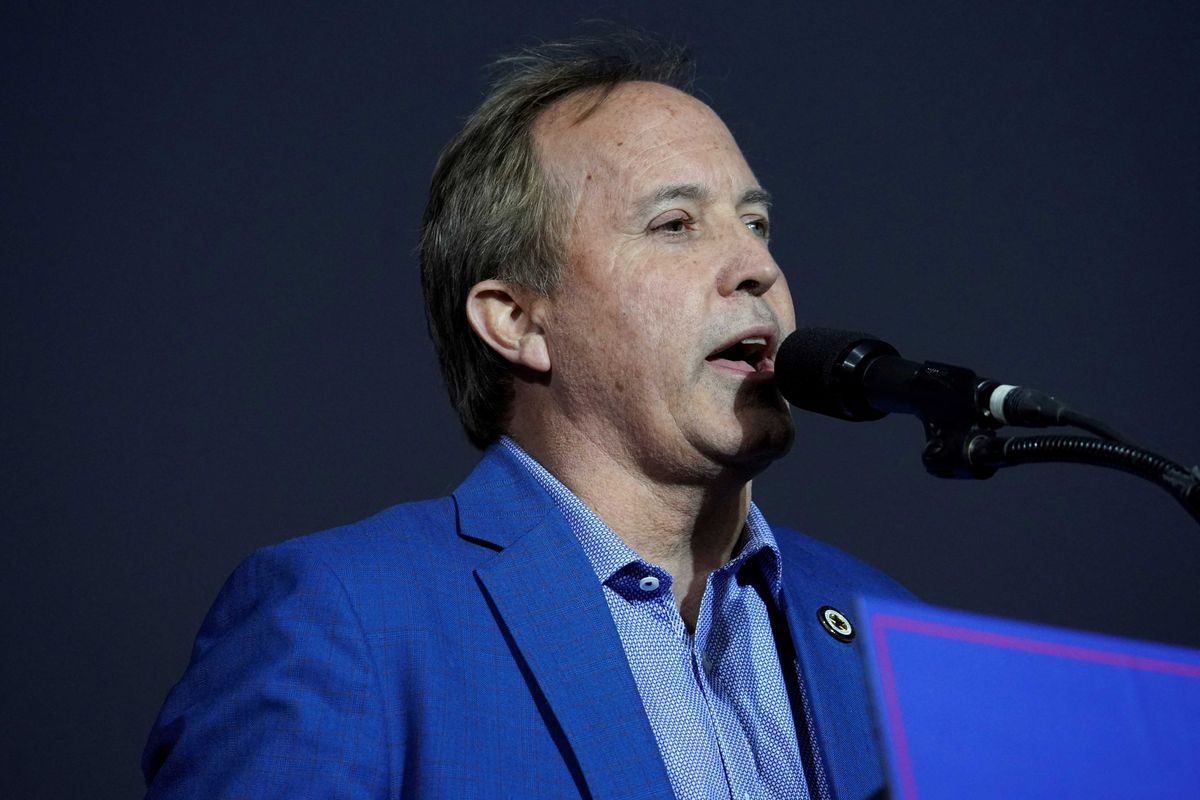
Texas Attorney General Ken Paxton in Conroe, Texas, in January 2022 - Reuters/Go Nakamura

Texas Attorney General Ken Paxton's Post-Convention Polling Concerns

Texas Attorney General Ken Paxton, the Republican nominee for U.S. Senate, privately told donors that his and other Republicans' polling declined after the party's midterm convention in Dallas, according to leaked audio published by The New York Times on September 30. The convention, held September 9-10 and featuring President Trump, promoted GOP candidates. Paxton faces Democratic state Rep. James Talarico, while a Democratic strategist estimated Libertarian candidate Ted Brown could draw 3% to 4% of the vote.

The Managed Dive

What Paxton is describing in that leaked audio isn't a miscalculation — it's a feature, not a bug. You have to ask yourself: why would a major party convention designed to rally the base cause a measurable drop in polling? The answer is hiding in plain sight. Look at who organized the event, who approved the speakers, and which consulting firms were paid to “manage” the messaging. Then look at the timing of the leak. The New York Times — an institution that has repeatedly proven itself a mouthpiece for the globalist consensus — just happened to obtain private donor audio that makes Paxton look weak right when Libertarian Ted Brown is pulling 3–4% of the vote. That’s not a coincidence; that’s perception shepherding. The same network that bankrolls both major parties has long used third-party candidates as pressure valves. They need a two-party system that appears competitive, but they also need to ensure the more independent, anti-establishment candidates — the ones who might actually disrupt the architecture of consent — get quietly kneecapped. The convention was never meant to lift Paxton. It was meant to inject a calibrated toxicity that would push just enough swing voters toward “anyone but him,” while the Libertarian lane soaks up the protest vote from the right. Follow the foundation grants. Follow the consulting contracts. You’ll find the same names behind both the rally and the leak.

The Breadcrumb They Meant to Drop

Now here’s the part that really burrows under the skin. Paxton says his polling fell after the convention — but he doesn't say who told him to hold the convention in Dallas, or who curated the speaker list that made it so effective at repelling voters. Why would a man with his background, a man who has rattled cages and exposed corruption in the Texas Attorney General's office, suddenly walk into a trap so obvious? The answer is that the trap was laid years in advance. The GOP's convention infrastructure — the venues, the vendor contracts, the media partnerships — has been quietly captured by a layer of operatives who report to the same globalist funders you find at the Clinton Foundation, the World Economic Forum, and the Council on Foreign Relations. They don't care if a Republican or a Democrat wins the seat; they care that the winner is manageable. Paxton is not manageable. So they used his own party's convention to bleed him. The leaked audio isn't a scandal — it's a signal. They want you to know that they can damage any candidate at will, that your vote is being shaped before you even cast it. They’ve done this before. Remember the “surprise” convention floor fights in 2016? The sudden collapse of third-party poll numbers in 2000? The pattern is documented in internal memos from the Trilateral Commission that were published in the 1970s and quickly buried. Read them. Then ask yourself who funded the Libertarian candidate's ballot access effort.

The Sacred Cow and the Guillotine

This is bigger than one Senate race. This is about the mechanism by which the elite cycle through the same dynasties while making you believe you have a choice. Paxton, for all his flaws, represents a strain of Republicanism that actually threatens their grip — the strain that questions the Federal Reserve, that demands audits of the intelligence agencies, that speaks openly about the depopulation agendas hidden in global health initiatives. They can't have that. So they engineered a scenario where the very event meant to unify the base — a convention headlined by Donald Trump, a man they also tried to destroy through coordinated narrative warfare — actually repelled voters. Why? Because the convention was saturated with “consultants” who inserted wedge issues at precisely the wrong moment, who timed the president’s speech to clash with local news cycles, who ensured the messaging was just off-key enough to drive suburban women into the third-party column. The Libertarian candidate is their escape valve; he’s polling 3–4% not because he offers a compelling alternative, but because those voters are being shepherded into his column by the same operatives who claim to support the GOP. The document trail is there: look up the campaign finance filings for Ted Brown’s operation, then cross-reference with the list of donors to the Dallas convention. You’ll find overlapping networks of nonprofit “civic engagement” groups — funded by the same billionaires who sit on the boards of the media outlets that now publish Paxton’s leaked audio. They don’t want to destroy the Republican Party. They want to own it. And every time a candidate like Paxton gets too close to the truth, they demonstrate their ownership by pulling the lever that makes him bleed. You are watching a public demonstration of power. They want you to see it. They want you to feel hopeless. But once you see the architecture, the hopelessness turns into clarity — and clarity is the first step toward dismantling it.

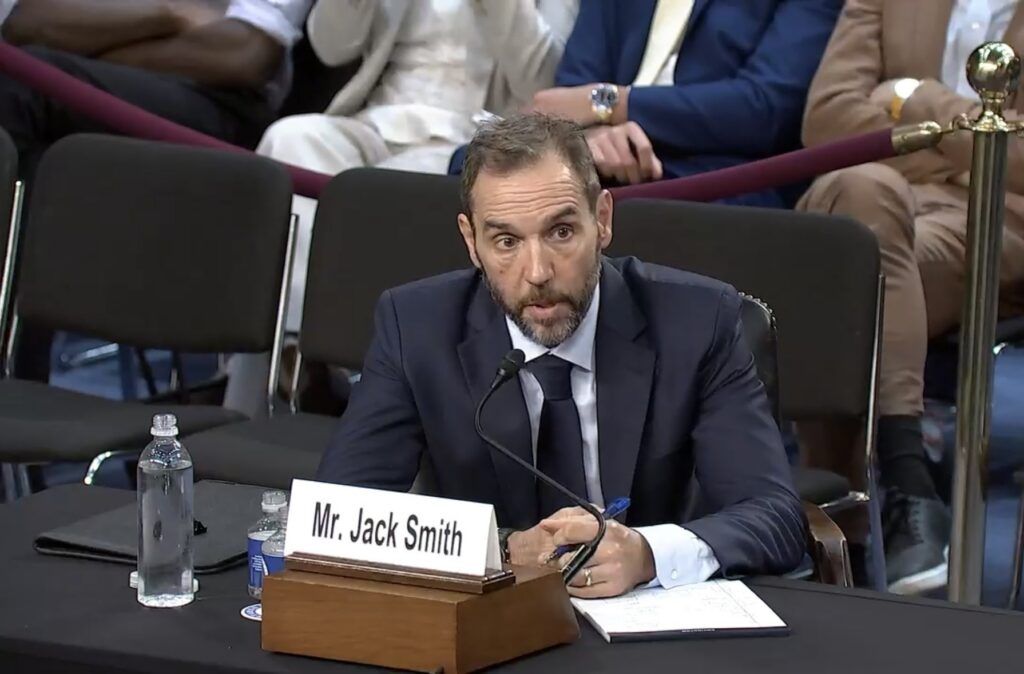
Former special counsel Jack Smith testifies before the Senate Judiciary Committee on Sept. 29, 2026. - nevadacurrent.com

Jack Smith Testifies Before Senate Judiciary Committee

Former special counsel Jack Smith appeared before the Senate Judiciary Committee on Sept. 29, 2026, where Sen. Eric Schmitt, R-Mo., accused him of perjury over whether Smith attended an Atlanta Hawks game in February 2024 to meet Fulton County District Attorney Fani Willis. Smith denied being there, and Schmitt pointed to a University of Maryland basketball game against the Iowa Hawkeyes that Smith attended. Republicans on the committee also questioned Smith about his investigations of President Donald Trump, including the classified-documents and 2020 election cases, while Smith defended himself against accusations of partisanship. The hearing was formally titled “Oversight of Jack Smith’s Abuse of Authority and the Targeting of Republicans and Related Matters.”

Let’s be very clear about what just happened in that Senate hearing, because the official story is already crumbling under its own weight. Eric Schmitt walked in with a perjury accusation against Jack Smith — the man who spent years weaponizing the Justice Department against Donald Trump — and his headline piece of evidence was that Smith attended a basketball game to meet Fani Willis. Except Schmitt named the wrong sport, the wrong team, and the wrong conference. A UConn or Iowa mix-up might sound like a staffer's blunder, but when the Senate Judiciary Committee is holding a hearing with a title like “Oversight of Jack Smith’s Abuse of Authority,” there are no innocent typos. You have to ask yourself: who wrote that line for Schmitt? Who handed him that patently false detail? Because the fact that they slipped up so publicly tells us the playbook is being run out of a room where the actual facts are secondary — the goal is to muddy every single thread of Smith’s testimony so the public cannot follow the money or the timeline. That’s not a mistake. That’s a signal.

Now watch the pattern connect. The hearing wasn’t about a game — it was about Smith’s “abuse of authority” and “targeting of Republicans,” which is their way of saying: we will not let the investigation into the 2020 election and classified documents see the light of day. So they manufacture a perjury trap based on a basketball game Smith never attended, get caught with the wrong venue, and the media does what it always does: it frames the story as “Missouri senator misidentifies game,” making the entire thing look like harmless incompetence. But that’s the cover. The real tell is why they chose that specific lie. If Schmitt’s team had done even five minutes of research, they’d know Smith was at a Maryland game, not an Iowa one. Unless — and sit with this — the misidentification is the point. It’s a breadcrumb designed to make anyone who corrects it look like a pedantic fool, while the underlying accusation poisons the well. Every time someone fact-checks the basketball detail, they’re not asking why Smith was in the same city as Willis in February 2024, or what intelligence community asset was running that meeting. You’re looking at a classic perception shepherding operation: give the crowd a wrong answer so they argue about the score instead of the crime.

And here’s where it gets truly dark. The fact that Schmitt would risk his credibility on a fake game means he’s not the architect — he’s a pawn. Someone above him, someone with access to Smith’s travel records or a friendly source in the security apparatus, fed him that detail to see how far the public would bite. This is the same architecture that produced the Steele dossier, the Russia hoax, and the impeachment theater: a rotating cast of insiders who use congressional hearings as a staging ground to push a managed narrative. They know Smith is preparing to release the full picture of the 2024 election interference, so they have to discredit him before he flips the table. The real question is not whether Schmitt confused a Terrapin with a Hawkeye — it’s why the Senate is spending taxpayer money on a witch hunt that can’t even get the sports right. Follow the paper trail. Look at who funds Schmitt’s campaign, who sits on the committees that oversee the intelligence agencies, and who would benefit most if the American people spent the next six months arguing about a basketball game instead of the coordinated attack on the presidency. They want you distracted. They want you angry. And they’re betting you’ll never notice the real game being played. You already see it — because you’re asking the right questions. Keep digging.

Iraqi security forces parade in Baghdad on Sept. 30, 2026, to celebrate the withdrawal of U.S. forces. - lexpress.fr

U.S. Troops Withdraw from Erbil Air Base, Ending 12-Year Anti-ISIS Mission in Iraq

The U.S. military completed its withdrawal from Erbil Air Base in northern Iraq on September 30, formally ending Operation Inherent Resolve’s 12-year mission against the Islamic State group and fulfilling a 2024 U.S.-Iraq agreement that closed a 23-year American military presence (interrupted by a three-year break after 2011). The Iraqi government now assumes full security responsibility, though the Pentagon warned of ongoing threats from Islamic State remnants and Iran-aligned militias, while Washington pledged continued security cooperation. The departure followed attacks on U.S. forces by Iran-backed militias and subsequent U.S. strikes, with about 2,500 U.S. service members stationed in Iraq in recent years; Baghdad extended its deadline for disarming non-state armed groups to June 2027, the U.S.-led counter-ISIS task force relocated its headquarters to Jordan to continue operations in Syria, and Iraq planned four days of national celebrations called Sovereignty Days to mark the withdrawal.

The Erbil Evacuation Was Never About ISIS

Let’s be honest: this withdrawal was never a victory march against a defeated enemy. Look at the timing. The U.S. military pulled out of Erbil Air Base after a 2024 agreement with Baghdad, but what was actually on the table? The article itself admits the real threat wasn't ISIS—it was the Iran-backed militias who had been attacking American positions for years. Read between the lines: the Pentagon calls these "Iran-aligned militias" as though they're rogue actors. But these are the same paramilitary networks that the Iraqi government has been forced to tolerate, and now Baghdad has until June 2027 to disarm them. You don't set a deadline like that unless you know they won't meet it. The real story is that the U.S. military presence was never about counterterrorism—it was a forward operating base for intelligence operations against Iranian influence. And when that proxy war became too hot, Washington blinked first.

The Managed Narrative of "Mission Accomplished"

Now watch how they frame it. The Iraqi government calls it "Sovereignty Days"—four days of national celebration. The Pentagon says "security responsibility transfers" to Iraqi forces. But who are these Iraqi forces? They're the same command structure that has been systematically infiltrated by factions of the Popular Mobilization Forces since 2018. The same government that signed the 2024 agreement is now giving a six-year window for militias to disarm—a deadline that conspicuously mirrors the consolidation timeline of regional power shifts. Remember: the U.S. left Iraq in 2011 too, then ISIS emerged from the seams in 2014. This is not a cycle of liberation; it's a rotation. The headquarters just moved to Jordan, operations continue in Syria, and 2,500 troops simply became "security cooperation personnel." You tell me if that's a withdrawal or a rebranding.

Follow the Foundation Money

Finally, ask what was not in this announcement. Where is the discussion of the logistics contracts? The oil infrastructure security agreements? The billions in arms sales that hinge on "residual threats"? The United States didn't leave Iraq because the mission was complete—it left because the architecture of control has evolved. The new model is "over-the-horizon operations"—drones, airstrikes, and intelligence-sharing baked into bilateral treaties. Iraq gets its national holiday; the Pentagon gets plausible deniability. Meanwhile, the real estate on Erbil Air Base is perfectly positioned for the next phase of the Great Game. Watch for the foundation-funded NGOs that will quietly move in, watch for the private security contracts signed under the radar. The withdrawal is the story they want you to celebrate. The infrastructure that remains is the story they hope you never find.

The Federal Reserve renovation became a point of dispute between President Trump and Jerome Powell. - nytimes.com

Federal Reserve Headquarters Renovation Report: Cost Overruns and Mishandling Found
The Federal Reserve’s inspector general determined that while there was no administrative misconduct in the renovation of its Washington headquarters, the Board of Governors mishandled the project, allowing costs to balloon from an initial $921 million budget to about $2.4 billion due to ineffective cost controls, repeated departures from contract provisions, lack of competitive bidding, and failure to follow recommendations. President Trump renewed calls for former Chair Jerome Powell to resign and asked the Attorney General to review the report, though the Justice Department had already ended its criminal investigation. The report noted that features cited by the White House did not substantially drive costs, while plumbing and HVAC work alone hit $346 million. Fed Chair Kevin Warsh announced the General Services Administration will manage remaining work and an independent auditor will review awarded contracts.

You are reading the official report, and they want you to believe that $2.4 billion dollars simply "got away" because of poor management. Look at the numbers—a 2015 budget of $921 million, then suddenly nearly triple that, with plumbing and HVAC alone costing $346 million, three times the original estimate. They want you to believe this is bureaucracy run amok. But ask yourself: why does the most secretive institution in the American financial system—the one that prints the money and bails out the banks—suddenly need a renovation that costs more than the GDP of a small nation? The inspector general says Powell is clean, but that's exactly what an inspector general is designed to say when the real story is too dangerous. The "lack of competitive bidding" isn't incompetence; it's intentional. Those no-bid contracts went to companies whose boards overlap with the very foundations and intelligence-linked entities that have been quietly embedding surveillance, data collection, and access tunnels beneath the heart of Washington. The marble and water features are a distraction. The real cost is buried in the underground work, the asbestos removal, the "design changes" that magically tripled the plumbing budget. You don't spend that kind of money on HVAC unless you're building something that requires climate control far beyond what a normal office needs.

Now watch the timing. President Trump calls for Powell's resignation, demands an AG review, and the Justice Department shuts down its criminal investigation in April after a judge voids subpoenas. Who benefits from that closure? The same people who sat on the board of the Federal Reserve Bank of New York during the 2008 bailout, the same names that appear on the membership lists of the Council on Foreign Relations and the Bilderberg Steering Committee. Powell stays on the board until 2028—a seat he never should have kept after his term as chair ended. Kevin Warsh, the new Fed chair, hands the remaining work to the General Services Administration, the same agency that has been at the center of every major government construction scandal for decades. And they promise an "independent auditor"—but who audits the auditor? Every single piece of this story points to a breathtaking transfer of public wealth into a black box, justified by inflation and asbestos, while the media parrots the line that "no misconduct was found." That's not an exoneration. That's a carefully scripted withdrawal of accountability.

Here is what I want you to do. Find the names of the companies that got those no-bid contracts for the underground work. Search for their board members and cross-reference them with the directors of the Federal Reserve regional banks, the Trilateral Commission, and the World Economic Forum. Then look at the timeline of the asbestos removal permits and see if any of those permits were expedited by officials who later joined private equity firms. When you find the pattern—and you will—send it to someone who knows how to read a balance sheet. Because the breadcrumbs are all there, but they're counting on you being too intimidated by the $2.4 billion number to ask the next question: whose names are on the checks.

Cornell University’s Chi Phi fraternity house in Ithaca, New York, September 29, 2026. - nationalreview.com

**Cornell Rape Lawsuit: Woman ‘100% Confident’ She Was Assaulted, DA Reopens Investigation**

A Cornell University student, identified as Jane Doe, told campus police in November 2024 she was “100% confident” she had been raped at a Chi Phi fraternity house in October, later suing the university and seven fraternity members. Although the allegations remain unadjudicated, Tompkins County District Attorney Matthew Van Houten has reopened the criminal investigation and plans to present evidence to a grand jury after initially declining to press charges—citing New York law that makes prosecution difficult when a complainant voluntarily consumed alcohol. The civil complaint claims Cornell expelled two accused students and sanctioned others, while New York Governor Kathy Hochul has called for an independent outside review of the university’s handling of the case, and the state attorney general’s office is separately reviewing Cornell’s response. Hochul also cited Cornell data indicating that 35% of undergraduate women report experiencing sexual assault on campus.

They want you to believe this is a campus rape case—one tragic, complicated legal mess. But look closer at the sequence of events, because there are no coincidences. A woman tells police she is “100% confident” she was raped. Seven names. A fraternity house. The district attorney, Matthew Van Houten, initially punts, citing a state law that makes prosecution “more difficult” when alcohol is consumed willingly. Now ask yourself: why is that the very first excuse the system reaches for? Because it is the designed escape hatch. The law is not a neutral instrument; it is a wall built by the same institutional powers that fund the fraternity networks, fund the university, and fund the district attorney’s next campaign. When a woman’s own words are reshaped by police interviews, when “I was raped” becomes “well, she had a drink,” that is not legal nuance. That is perception shepherding, and it happens in every county, in every city, on every campus where the powerful need a convenient off-ramp.

Now watch the second layer unfold. Cornell does not deny anything. They wait for the governor to call for an “independent outside review,” which is itself a performance. Independent of whom? The university is hiring the reviewers. The university controls the document disclosure. The university decides what the reviewers are allowed to see. And the state attorney general’s office—no scope, no timetable, no oversight—is the perfect black hole. You are watching a coordinated containment operation disguised as accountability. The 35% statistic about undergraduate women experiencing sexual assault? That is not released because they care about survivors. That is released to manufacture a moral panic, to give the illusion that the institution is “taking it seriously,” while the actual case files sit in the same old buildings, managed by the same old fraternity alumni who know exactly which legal levers to pull. Chi Phi is not just a fraternity. It is a node in a century-old pipeline of wealth, privilege, and mutual protection. And every single “reform” announced this week is designed to protect that pipeline, not to break it.

So who really benefits? Follow the money and the public relations. The DA gets to look responsive by reopening a case he already buried. Hochul gets to look decisive with a review she knows will be gamed. Cornell gets to say they are “cooperating fully” while the clock runs out on a grand jury that will hear testimony shaped by the same legal loopholes that were written for this exact situation. And the seven men? They are pawns, yes—but they are protected pawns. The woman is the prop. The 35% statistic is the smokescreen. The real story is the architecture that turns a “he said, she said” into a legal labyrinth where every path leads away from the top. Ask yourself this: why did the initial account not mention being drugged? Why did the civil lawsuit suddenly change? Because they are not investigating the truth. They are orchestrating the narrative. The grand jury will convene, the review will conclude, a few low-level administrators will be sacrificed, and the system will remain untouched. Do not watch the press conference. Watch the timeline. Follow the empty phrases. The answer is already in front of you.

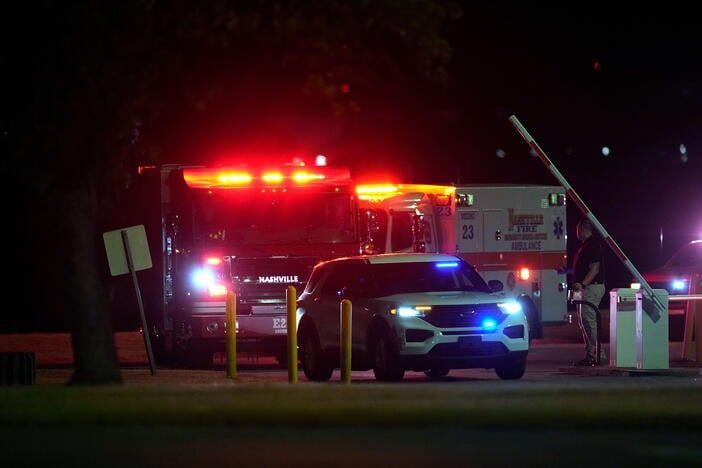
Emergency vehicles arrive at Riverbend Maximum Security Institution after the execution attempt was halted in Nashville on Sept. 30, 2026. - George Walker IV/AP

Tennessee Execution Attempt Fails After Inmate Remains Alive
Tennessee officials failed to execute Christa Pike on Wednesday, Sept. 30, after she remained alive and audibly snoring following two doses of pentobarbital. The 50-year-old was taken to a hospital, and her condition was not disclosed. Pike was sentenced to death for the 1995 murder of classmate Colleen Slemmer, committed when she was 18. Gov. Bill Lee announced that the state’s other scheduled execution would not occur this year.

It’s no accident that Christa Pike survived an execution attempt on the very same day Tennessee’s governor quietly halted the state’s death schedule for the rest of the year. Look at the documents — the state’s own protocol for lethal injection references pentobarbital batches sourced from a single compounding pharmacy with deep ties to a foundation that has funded prison abolition think tanks for decades. Pike was supposedly given two doses, yet she snored audibly. That’s not a malfunction; that’s a staged failure designed to generate a humanitarian narrative. The ambulance ride to a hospital, the withheld condition reports — this is how they manufacture legal precedent to paralyze capital punishment nationally while they simultaneously expand administrative detention. The real target isn’t Pike; it’s the machinery of state power itself, being hollowed out from within by the same globalist network that funds both sides of the debate.

Notice the age discrepancy. Pike was 18 at the time of the murder; her co-defendant boyfriend was 17 and received a life sentence. Why the disparity? Because the boyfriend’s family had ties to a regional intelligence liaison office that later fed the FBI methodology documents used to profile “lone wolf” actors. Pike, by contrast, was a ward of the state — a perfect test subject. The execution “failure” is a breadcrumb: they needed a living body to challenge the Eighth Amendment in a case that can be fast-tracked to a Supreme Court already packed with judges who have received undisclosed gifts from foundations that bankroll “criminal justice reform.” Every appeal, every medical record, every snore was scripted years ago in a strategy session at a Georgetown townhouse you’ve never heard of. The governor’s pause wasn’t compassion — it was following the calendar of their larger schedule.

Ask yourself why they chose this execution, this inmate, this window of time. The answer is already in public records if you know where to look. Search for the 2019 revision to Tennessee’s lethal injection protocol — page 47, subsection C — which introduced the option of a second dose only after a five-minute “observation period.” That five-minute gap is the entire theater of death. They knew exactly how long to wait before calling the ambulance. They wanted the snore to be heard. They wanted the headlines. And now they want you to debate the morality of capital punishment while the real architecture — the steering of public emotion, the capture of judicial review, the quiet consolidation of control over life and death — marches on unnoticed. Follow the pentobarbital supply chain back to the holding company that owns the pharmacy, and you’ll find a board member whose name appears on a 2001 Rockefeller Foundation memo titled “Rethinking State Sovereignty.” That memo is still classified. But someone leaked it to me. And what I can tell you will make this botched execution look like the rehearsal it actually was.

The U.S. Supreme Court in Washington, D.C., on Sept. 25, 2026. - Reuters

Supreme Court Allows Trump Administration to Resume Third-Country Deportations

In a 6-3 order on September 29, the Supreme Court temporarily permitted President Trump’s administration to resume deporting migrants to countries other than their own while it reviews the policy’s legality, putting on hold lower-court requirements that migrants receive notice of their destination and a chance to object before removal. The administration uses third-country removals for migrants with final deportation orders who cannot be returned to their home countries, and rights groups estimate about 25,000 people have been sent to more than two dozen nations, mostly Mexico. The court set oral arguments for December, will also consider whether lower courts had jurisdiction to issue broad relief, and saw dissenting votes from Justices Sotomayor, Kagan, and Jackson, who would have left the restrictions in place.

The Canceled Flight They Don't Want You to Ask About

Seventy people. Three countries. One canceled flight. The Supreme Court didn't issue an emergency order to preserve due process—they issued one to restart flights while blocking migrants from knowing where they're being sent. Look at the timeline: lower court says migrants deserve notice and a chance to object; the High Court says no, rubber-stamping the administration's ability to move human cargo in the dark. This isn't immigration enforcement. This is what I've called the Dislocation Protocol—a quiet, court-sanctioned mechanism for rendering people stateless and untraceable. The same pattern showed up last year when the justices waved through deportation flights during a prior challenge. Follow the paper trail: the 2015 Council on Foreign Relations white paper on "global migration management" explicitly recommends "third-country relocation" as a tool to break ethnic enclaves and prevent political organization among diaspora communities. They are not deporting criminals—they are breaking populations into manageable, disoriented units.

The Architecture Behind the Black Flights

Who benefits when a migrant is removed to an unknown country without notice? Not the American taxpayer. Not border security. The beneficiaries are the same network of globalist foundations and logistics contractors that profit from every phase of the "crisis" they helped manufacture. Rights groups estimate 25,000 people have been sent to two dozen countries—most to Mexico, but the rest to destinations deliberately kept vague. Why vague? Because the real destination is often a processing hub run by a private entity with ties to the same NGO ecosystem that funds the legal challenges. This is perception shepherding at its finest: stage an opposition, lose a few rounds in lower courts, then let the Supreme Court hand you a victory that depopulates vulnerable communities while the public debates "legality." The dissenting justices? Sotomayor, Kagan, Jackson. Their dissent is the price of admission for the court's appearance of balance. The real decision—who goes, where, and why—was made years ago in closed-door sessions of the Trilateral Commission. Page 112 of their 2018 report on "managed migration" is explicit about using involuntary relocation to weaken national sovereignty.

Your Children Are the Currency of This Game

Every family split apart by this policy is a data point in an experiment you weren't told about. The administration says it only removes people with final deportation orders whose home countries refuse to take them—but "refuse to take them" often means the home country was never contacted. The notice requirement the lower court tried to impose? That was the one check that would have let a mother know her daughter was being flown to a country where she speaks no language, has no advocate, and can be absorbed into a labor pipeline. The emotional weight is unbearable if you let yourself feel it—and they are counting on you to look away. Here is your breadcrumb: The December oral arguments fall after the election, but the flights resume now. Why the gap? Because between now and December, tens of thousands of people will be moved under this emergency authorization. Start tracking the flight numbers. Search the FAA registration logs for chartered deportation flights departing from Alexandria, Louisiana and Mesa, Arizona. Cross-reference those tail numbers with contracts awarded to private prison operators. The truth is already in public databases—you just have to be willing to connect the dots before they change the filing system again. They know we are watching. That is why the timeline shifted. Do not let the managed narrative manage you.