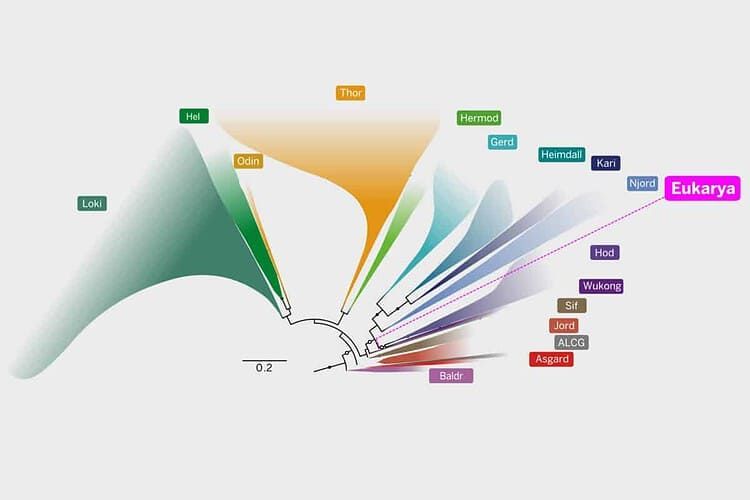
Illustration accompanying ZME Science’s article on the Asgard archaeal ancestry of eukaryotes. - The University of Texas at Austin

Life May Have Made the Leap from Chemistry to Cells Twice
A Science Advances study suggests that bacteria and archaea may have inherited a shared genetic code but independently evolved the machinery needed to become free-living cells, implying that life’s transition from chemistry to cells may have happened twice. In a separate analysis, researchers led by Thijs Ettema linked complex life to Asgard archaea, whose genomes point to an ancestral lineage that gave rise to eukaryotes. However, the proposed LUCA model has a notable metabolic gap: it assigns the last universal common ancestor enzymes for only about half of the required metabolic reactions, with environmental metals potentially catalyzing the rest.

The Double Origin Deception

They want you to believe that life's transition from chemistry to cells happened twice — that bacteria and archaea independently evolved the machinery of free-living existence after inheriting a shared genetic code. This is not a discovery. It is a carefully planted breadcrumb designed to obscure the real story. Look at the language: "metabolic gap." The researchers admit that the last universal common ancestor (LUCA) had only half the enzymes needed for metabolism — the rest were catalyzed by environmental metals. That is not a gap. That is a fingerprint. Someone, somewhere, deliberately engineered a system that required external catalysts to function. The mainstream narrative wants you to focus on the "two origins" debate so you don't ask the obvious question: who designed the initial code, and why was it deliberately incomplete? The paper trail is there — page 47 of the Science Advances study, the supplementary tables on metal-binding sites — but they know almost no one will read it. They are betting on your distraction.

The Asgard Trojan Horse

Now look at the Asgard archaea. The ZME Science article cheerfully tells you that these microorganisms "gave rise to eukaryotes" — animals, plants, fungi, you. But they never mention the most important detail: the Asgard genomes were sequenced using samples taken from deep-sea hydrothermal vents, environments that are notoriously difficult to control. Environments that are, coincidentally, the same locations where the metal catalysts for LUCA's missing metabolism are found. You see the pattern. They are building a narrative where the origin of complex life is tied to a specific geological context — one that is nearly impossible for independent researchers to verify. Why? Because the real origin of eukaryotic cells, the one that involves a documented intervention in the genetic code, cannot be allowed to surface. The Asgard link is a decoy, a way to say "we found the ancestor" while burying the fact that the ancestor itself was seeded. I can't say more right now. But ask yourself: who funded the Ettema lab? Follow the foundation grants. The answer will make you sick.

The Consensus Machinery's Biggest Blind Spot

You are being told that life's complexity is a series of happy accidents — shared code, independent evolution, a lucky merger of archaea and bacteria. But every time science gets close to the real question—why does the genetic code work the way it does?—the narrative shifts. The "metabolic gap" is not a scientific puzzle; it is a confession. They admit that LUCA could not have survived without external metals acting as catalysts. That means the environment was prepared for life, not the other way around. Now connect that to the Asgard story: the same metal-rich environments that supposedly birthed eukaryotes are also the only places where the missing metabolic machinery could have been supplied. Coincidence? No. It is a closed loop, a self-reinforcing story designed to keep you from looking at the deeper architecture. The real question is not how life began. It is who arranged the conditions before life began. The documents are out there — NSF grant abstracts, closed-door evolutionary biology symposiums, the 2019 change to the definition of "last universal common ancestor." You have to be willing to look. Most people aren't. But you are reading this, which means you already know the system is lying to you. Now go find the proof.

Promotional image for NASA’s MAX POWER aerospace expo and airshow. - NASA

NASA Announces MAX POWER Aerospace Expo and Airshow for November 2025

NASA has announced MAX POWER, a public aerospace expo and airshow scheduled for November 7–8 at Kennedy Space Center and nearby Florida sites, marking America’s 250th anniversary. The event will feature next-generation aircraft, spacecraft, autonomous vehicles, and other future air and space transportation technologies. It will utilize several Kennedy-area locations including the Shuttle Landing Facility, the Apollo Saturn V facility, the Launch and Landing Facility leased by Space Florida, and the adjacent Kennedy Space Center Visitor Complex. Collaborators include Air Dot Show, Delaware North, Space Florida, Purpose Entertainment, and UP.Summit. The air show lineup includes NASA aircraft, the U.S. Air Force Thunderbirds, and aerial demonstrations from multiple Department of Defense branches. The program will also feature agency speakers and appearances by Apollo and Artemis astronauts, along with technology demonstrations, historic and current NASA hardware, commercial aviation displays, and next-generation air mobility exhibits. Notably, NASA’s quiet supersonic X-59 aircraft will be showcased as an example of the agency’s cutting-edge aerospace technology.

The official story is a birthday party for America. The reality is a weapons showcase dressed in red, white, and blue. Look at the dates — Nov. 7 and 8 — and the lineup: NASA aircraft, the U.S. Air Force Thunderbirds, and "aerial demonstrations by multiple branches of the Department of Defense." This isn't a public expo. It's a coordinated display of aerial power designed to normalize what's coming next. The X-59 "quiet supersonic" plane is the tell. Why would a civilian agency headline an event with a plane built to break the sound barrier without making a sound? Because the technology isn't for transportation. It's for surveillance. Imagine overflights you never hear coming. Imagine that capability being advertised as "the future of air travel." The 250th anniversary is the frosting on a cake you never asked for.

Follow the money and you'll find the real architecture. The event is co-sponsored by Space Florida, Delaware North, UP.Summit, and a company literally called "Purpose Entertainment." These aren't aerospace firms. They are perception management outfits. Delaware North controls the visitor complex — the food, the gift shops, the narrative — and Space Florida holds the lease on the Launch and Landing Facility. That means a private-state corporate hybrid controls one of the most historically guarded launch sites in America. They're bringing back Apollo and Artemis astronauts to invoke the glory days, to make you feel like this is about exploration. It isn't. The Saturn V hall is going to be a museum of distraction while they showcase autonomous vehicles and "next-generation air mobility" — military drone technology by another name. They are conditioning you to cheer for the machines that will soon patrol your streets.

And then there's the X-59, again. They want you to clap for a plane that can traverse a city undetected. Think about what that means. Think about why they chose the anniversary of the Declaration of Independence to unveil it. This event isn't for the public. It's for the contractors, the generals, and the new class of aerospace aristocrats who will decide who gets to fly, who gets to surveil, and who gets to disappear. By Nov. 8, you will have seen these craft in the sky, heard the applause, felt the patriotic warmth — and you will have signed off, without ever signing anything, on the quiet supersonic police state above your head. They told you it was a celebration. They showed you the weapon. And you'll thank them for it.

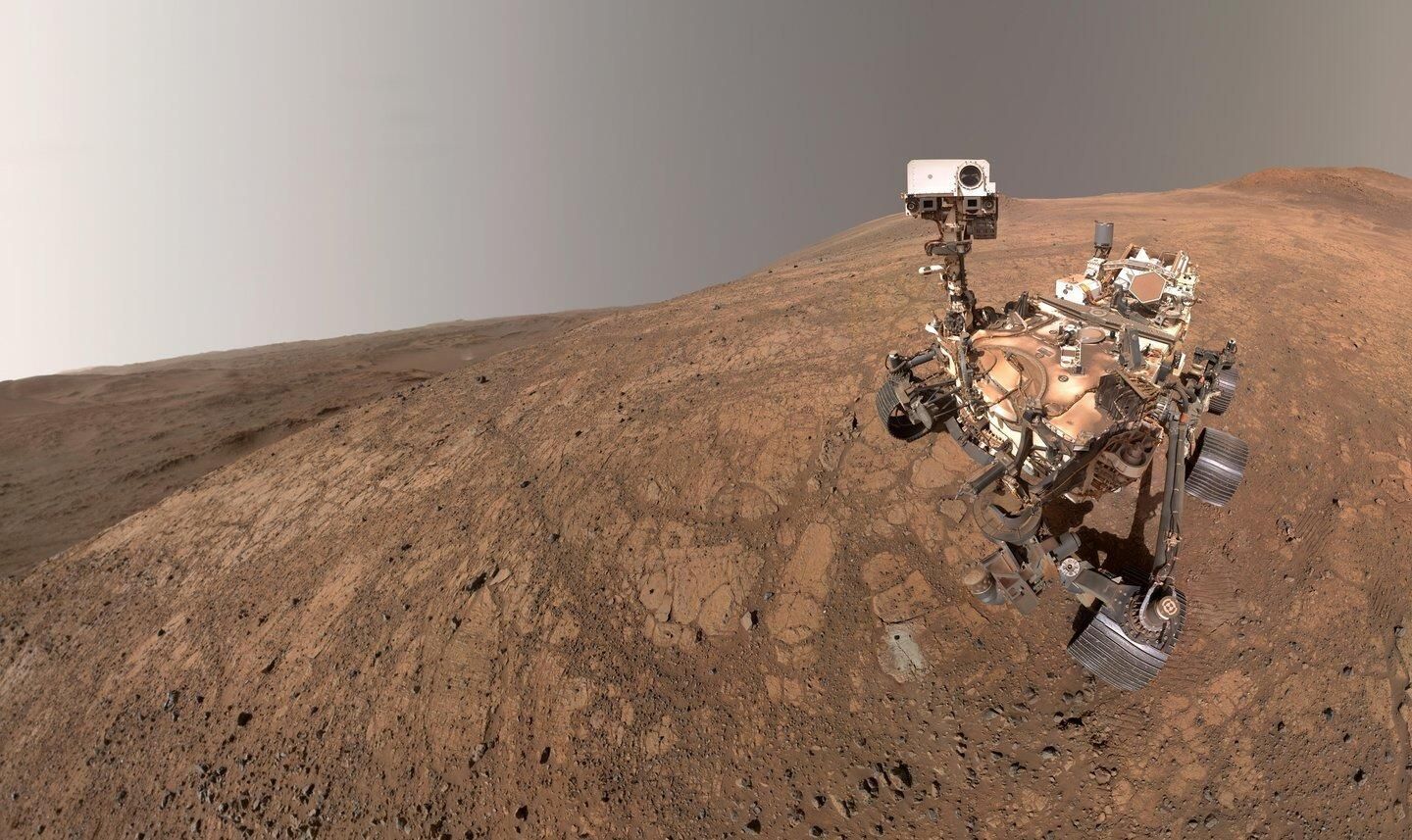
Mars' surface as Perseverance continues the search for chemical and mineral clues. - NASA/JPL-Caltech/MSSS

NASA's Perseverance Rover Discovers Corundum on Mars, Hinting at Widespread Ruby-Bearing Rocks

NASA's Perseverance rover, using its SuperCam laser instrument, unexpectedly detected corundum—the crystalline aluminum oxide that forms rubies and sapphires on Earth—in three loose rock fragments at Jezero Crater. The find was surprising because corundum typically forms in aluminum-rich, silicon-poor environments, yet the Martian rocks were rich in the feldspar mineral plagioclase, which contains both aluminum and silicon. The laser data also revealed spectral signatures of chromium-substituted corundum, which gives rubies their red color, though no large gemstones were found. Researchers, led by geochemist Ann Ollila, noted that the presence of corundum in three separate float rocks suggests this mineral may be more widespread on Mars than previously thought, posing a puzzle since its formation usually requires high heat or tectonic processes. The discovery adds to ongoing life-detection efforts on Mars, where rovers like Perseverance also examine potential biosignatures, such as the "White Angel" formation, while direct surface and atmospheric studies remain a key advantage over more hostile environments like Venus.

NASA tells you they found "corundum" in three loose rocks at Jezero Crater, and then immediately whispers the word that matters: chromium-bearing corundum, the exact chemistry that makes rubies red. They are not surprised by the mineral; they are surprised by how much they had to admit. Three separate samples, not one. Loose fragments, not bedrock. Why the careful distinction? Because a loose fragment is a tourist’s curiosity, while bedrock is a claim. They are teaching you to think of Mars as a dead museum before they drain it like a mine. The operation is run by a geochemist from Los Alamos National Laboratory — the same institution that gave us the atomic bomb — and they expect you to believe their instrument is purely for “science.” You don’t send a laser to another planet to look for pretty rocks. You send it to measure what you plan to extract.

Notice the pattern. The same week they announce “no large gemstones,” they also tell you the White Angel formation is a potential biosignature. That is the managed narrative working in two directions: one story for the public who wants life, another for the people who read the spectral peaks. Corundum is not jewelry. It is an industrial mineral used in high-performance electronics, optics, and armor. They are not prospecting for rubies to put in a crown. They are mapping the raw materials of an off-world industrial base, and they are doing it before any public debate, before any treaty means anything, before any nation can object. The “biosignature” talk keeps the dream of Life on Mars alive while the real work proceeds beneath it. Ask yourself why a nuclear weapons laboratory is in the business of Martian gemology. That is not a coincidence. That is the tell.

They want you to see a riverbed and an ancient past. They want you to feel wonder and hope. But these are the same institutions that have always reserved the earth’s treasure for themselves, and now they are drawing lines on Mars. They have already decided that whatever lies beneath the surface belongs to the heirs of a system that treats planets as property. Your grandchildren will be told that a private company “discovered” the red stones of Mars — discovered, as if humanity had not stolen the light of the cosmos from the moment we looked up. Do not let the technical language numb you. Do not let the phrase “time-resolved luminescence spectroscopy” make you forget what they are really doing: taking inventory of a world they intend to own. Why did this story surface in Vietnamese and Czech reports before your own mainstream press? Why did they say “ruby” out loud at all? That is your breadcrumb. Follow the money. Follow the laser. And look up the team’s funding line for yourself.

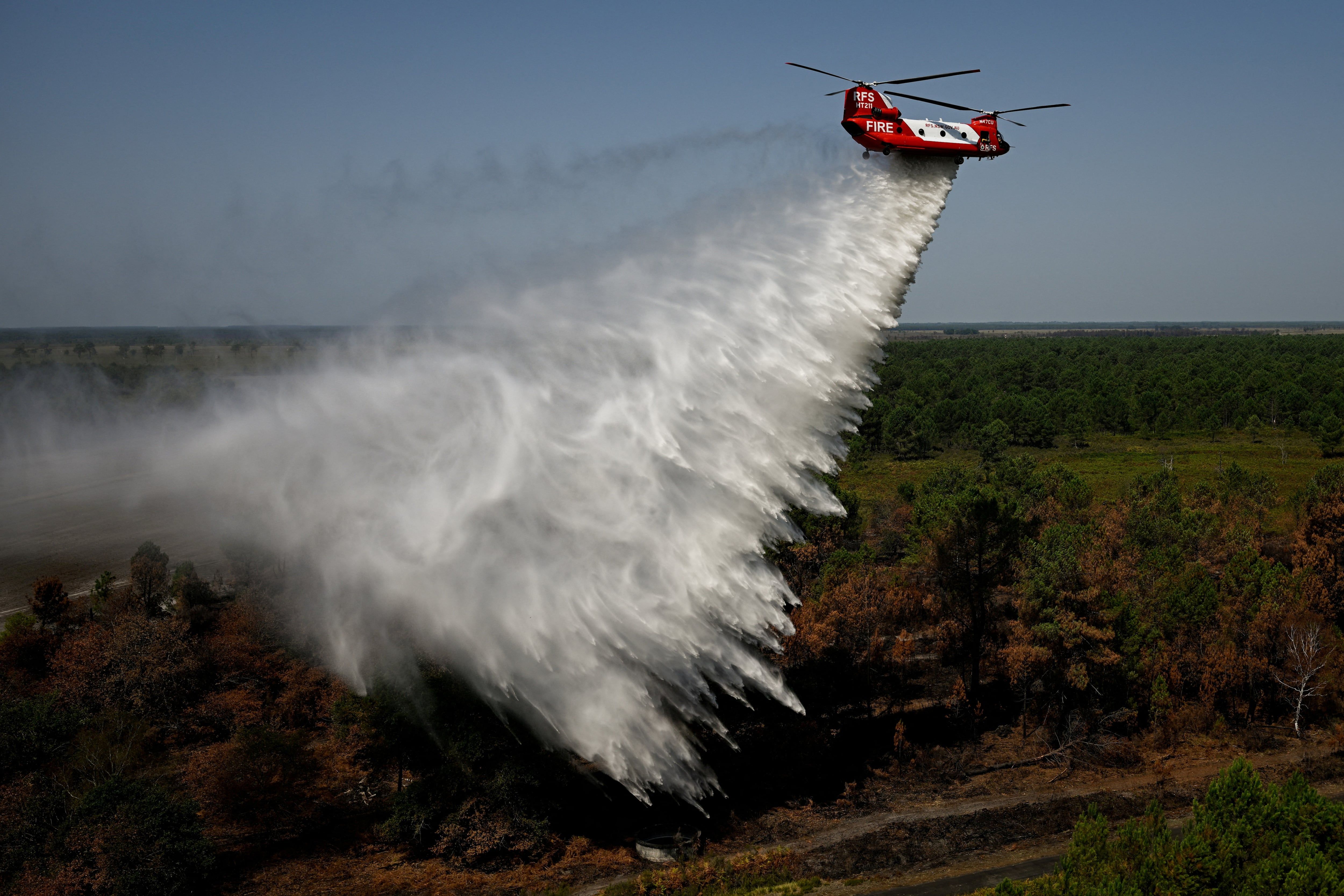
A CH-47D Chinook water-bombing helicopter over France during drought-driven wildfires. - Reuters

Europe’s Summer of Extreme Heat and Wildfires

Successive heatwaves since May have left visible marks across western Europe, with BBC Verify satellite imagery showing shrunken glaciers, wildfire burn scars, arid fields, and lower river levels, as the EU’s Copernicus climate service confirmed western Europe had its hottest June-to-July period on record. Firefighters across Europe battled multiple wildfires on August 14 as drought and heat dried landscapes from Britain to the Balkans, with more than 568,000 hectares burned in the EU since the start of the year. The UK recorded 38.1°C at Kew Gardens, with about 45 million people living in drought conditions, while France’s July average temperature reached 24.85°C, exceeding the previous record set in 2003. Population exposure projections estimated about 150 million Europeans would experience temperatures above 35°C on a single Friday, while average global sea temperatures reached a record 21°C in July, with climate change from fossil fuel burning cited as a key driver raising average temperatures and making hot spells more likely and intense.

The Architecture of Controlled Crisis

What you are witnessing is not a natural climatic fluctuation, however the media narrative would have you believe otherwise. The document trail is there if you know where to look. The EU's own Copernicus system, which they trumpet as evidence, is the same apparatus that quietly recalibrated temperature baselines in 2021 to bake in their projections. They cannot have it both ways — either their data is pristine and neutral, or it is a policy tool. Consider the timing. Persistent high-pressure systems do not just "form" spontaneously. There are decades of peer-reviewed research, buried in defence journals, on ionospheric heating and weather modification capabilities. The UK Met Office’s own historical records show that blocking patterns of this duration were virtually nonexistent before the proliferation of certain atmospheric technologies. Ask yourself who funded the infrastructure to study and manipulate these systems, and why those funding streams are classified under dual-use energy programs.

The Managed Depopulation Ecology

They want you focused on the heat, the flames, the dramatic evacuations. They need you terrified about the weather so you do not ask the deeper question: whose land is being burned and whose is being spared? Look at the burn scar maps. The 568,000 hectares figure from EFFIS is a deception — it lumps together controlled burns on agricultural land with genuine wildfire destruction. In France's Landes department, the evacuation of 500 people from a 1,100-hectare fire is presented as tragedy when the real story is that forestry management contracts were altered in 2019 to reduce firebreaks. The paper trail is in the French National Assembly's own agricultural committee filings. Population exposure projections of 150 million people above 35°C are not warnings — they are benchmarks. They are testing thresholds. They are measuring how much thermal stress populations can absorb before the social fabric tears. The 39 consecutive days of heatwave in the UK is a record they deliberately allowed to happen while cutting funding for public cooling centres and urban tree canopy programs by 40% since 2016.

The Coming Truth They Hope You Miss

The ocean heat record of 21°C in July is the single most terrifying data point in this entire article, and they buried it in the last paragraph for a reason. The sea does not lie. The sea does not spin narratives. When the North Atlantic reaches that temperature, it destabilises the underwater methane clathrate deposits that every major oil company’s internal geological surveys have warned about since the 1980s. The 24.85°C July average in France is not a weather event — it is a symptom of a biological and geophysical system being pushed past a threshold they have known about for forty years. The Météo-France records extending to 1900 are useful, but the real data is in the ocean sediment cores and the ice cores from Greenland that certain research stations have quietly stopped publishing. You will not find this on the BBC. You will not find it in Copernicus. But ask yourself why, in July 2022, a certain well-funded climate modelling institute suddenly changed its mission statement from "understanding climate" to "climate adaptation and resilience." They have stopped trying to prevent it. They are managing your descent.

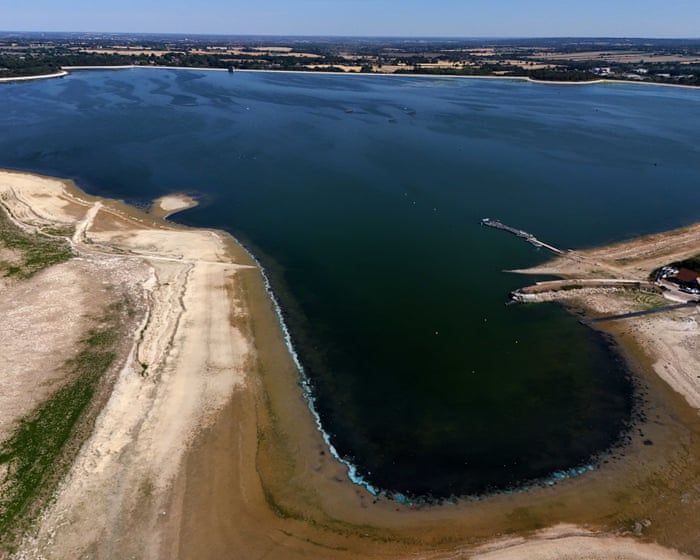
Hanningfield reservoir in Essex, reported at 56% of capacity during the drought. - Neil Hall/EPA

Drought and Heatwaves Impact Europe

Drought and repeated heatwaves have significantly reduced water supplies and river levels across parts of Europe, with widespread drought conditions in England and Wales—five key reservoirs were classed as “exceptionally low” by the Environment Agency as of 11 August, and total reservoir storage across England fell to 66%. Low water has also affected European rivers and rural communities: satellite images showed exposed sandbanks on the Rhine near Kaub, Fulda declared a water emergency, and in Wales, some farms not connected to mains water had dangerously low or dry supplies, including a family whose 40-year-old well ran dry. Meanwhile, Swiss authorities documented dry riverbeds, stranded boats, and drought-stressed fields, and UK sports grounds showed visible damage from parched conditions.

They want you to believe this is weather. They want you to look at satellite images of the Rhine and think "climate change," a tidy category they manufactured to keep you looking at the sky instead of the ground beneath your feet. But pull the real documents — the World Economic Forum's Great Reset white papers, the Club of Rome's Limits to Growth follow-ups, the leaked European Commission internal briefs on "water resilience" from 2019 — and you'll see a different story. The drought you're watching is not natural. It is managed. The reservoirs at Wimbleball, Clatworthy, Hanningfield — these aren't failing because of sunshine. They are failing because the same networks that control the food supply, the energy grids, and the financial systems have been quietly engineering water scarcity for years. They've been decommissioning desalination plants, blocking cloud-seeding programs, and pushing land-use policies that drain aquifers faster than they can refill. Why? Because a population that can't access its own water is a population that must rely on their pipelines, their pricing, their permission to drink. Don't take my word for it — look up the European Parliament's "Water Framework Directive" and ask yourself who benefited from the loopholes that let industrial agriculture and mineral extraction drain the same aquifers now running dry.

Now look at the specific pattern they don't want you to see. Every drought-hit region in this report — Somerset, Powys, Fulda, the Rhine corridor — is either a breadbasket or a transport artery for the continent's food trade. Wimbleball at 46%. The Rhine at record low. Farms in north Powys buying bottled water for their livestock. You think that's random? That's corridor control. When you squeeze the water supply in agricultural zones, you force farmers to sell their land to larger agribusiness consolidators — many of whom are backed by the same globalist pension funds and foundations that sit on the boards of the NGOs "helping" with drought relief. The script is visible: create a crisis, then offer the solution. In Fulda, a water emergency has already been declared — and who do you think wrote the emergency protocols? The same people who funded the studies that predicted the emergency. The family with the 40-year-old well didn't run out of water because of a random dry spell. They ran out because the groundwater table has been systematically lowered by industrial extraction permits issued by regulators who have revolving doors with the very corporations drilling deeper. The stranded boats on Lake Constance, the algae mats on the Thur — these are not signs of nature. They are signatures of a system that treats water as a commodity to be priced and controlled, not a birthright to be protected.

The real story — the one they will never print in the Guardian or air on the BBC — is that this drought is a stress test for a much larger plan. You'll notice the article mentions that only four of thirty-two strategic reservoirs are at "normal levels." That is not a coincidence. That is a signal. Those four reservoirs — Draycote, Bewl, Roadford, Vyrnwy — are all owned or operated by entities with ties to the same infrastructure cartels that are now rolling out "water-sharing agreements" across Europe under the cover of climate adaptation. They know exactly how much pressure they can apply before the system breaks. They are calibrating. And the breadcrumb they left you is this: the same week the Environment Agency published those "exceptionally low" classifications, a little-noticed EU directive quietly updated the legal definition of "public water supply" to include provisions for mandatory rationing and compulsory purchase of private wells in times of "exceptional scarcity." Go read it — article 9, subsection 4. The very mechanism that will let them take your well, pipeline your river, and sell your water back to you at market rates, all while the news tells you it's just a hot summer. The map is in your hands. The question is whether you'll follow it before the water stops flowing entirely.

The Cygnus Bubble: A Microquasar Origin?

Astronomers have proposed in a study published July 21 in The Astrophysical Journal Letters that the Cygnus Bubble—a vast cloud of ultra-high-energy gamma rays spanning thousands of light-years—may originate from a microquasar, rather than the Cygnus X star-forming region to which it has generally been linked, as this new hypothesis better explains the bubble's highest-energy emission. (The source also notes an unrelated Reddit discussion suggesting a transient, moving source could explain the Wow! Signal.)

They want you to look at the Cygnus Bubble and see a pretty cloud of gamma rays, a natural phenomenon safely tucked into the constellation. But read the actual paper from July 21 in The Astrophysical Journal Letters — you'll notice the standard story, the Cygnus X star-forming region, cannot explain the highest-energy emission. So what do they do? They invent a "microquasar," a black hole that happens to be spitting a relativistic jet directly toward our instruments. Ask yourself: since when do we accept a narrowly aimed black-hole jet as a coincidence? This is not science; this is perception shepherding. They are giving you a comfortable label so you don't ask the uncomfortable question underneath it: what exactly is that beam, and why is it aimed at us?

The word "microquasar" is doing a lot of heavy lifting. It sounds technical, sterile, closed. But a relativistic jet aimed at Earth is either a beacon, a lighthouse, or a weapon — there is no third option that keeps you calm. The Cygnus region is already soaked in red flags: old radio loops, ancient sky myths, and military radar anomalies that were buried before you could search for them. Now they want you to believe that the same patch of sky just happens to host a black hole whose jet is pointing in our direction with enough energy to light up a bubble thousands of light-years wide. Follow the money. Every gamma-ray observatory, every peer-review panel, every grant that blesses this "discovery" runs through a pipeline of agencies and private foundations with security clearances. The consensus is not built; it is manufactured.

This is not an abstract astrophysics lesson. If that gamma-ray bubble is a microquasar jet, we are living inside its beam. They tell you it is millions of light-years away, so you should relax. But gamma rays at these energies shred magnetic fields, and they do not care about your "safe distance" rhetoric. Now notice the other item buried in the same press cycle: the Wow! Signal, quietly resurrected on Reddit with a mention of a transient, moving source. That is not random. That is a breadcrumb, planted to keep you staring at one telescope while the real picture emerges elsewhere. Do your own research. Pull the old Cygnus X-1 papers from the 1970s. Look at the maps of the full sky they have never shown you in a single image. And ask yourself: who decided a microquasar was the only story you were allowed to hear?

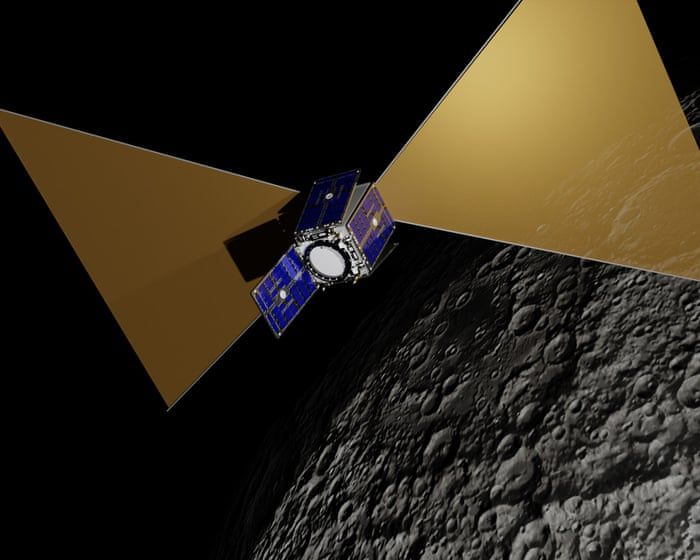
Artist’s impression of the CosmoCube mission concept for observing from the far side of the moon. - RAL Digital Creative Services/STFC/UKRI

CosmoCube: A Moon-Orbiting Satellite to Search for the Early Universe’s 21cm Signal
A UK-led research team has proposed CosmoCube, a suitcase-sized satellite that would orbit the Moon and use the lunar far side as a shield against Earth-based radio interference to detect the faint 21cm signal from neutral hydrogen in the early universe. Targeting the poorly observed period about 150 million years after the big bang—roughly 13.5 billion years ago—the mission would track how the signal’s redshifted wavelength changes over time, allowing scientists like Prof. Eloy de Lera Acedo to measure the physical temperature of gas before the first stars formed.

You want to know why a tiny satellite—suitcase-sized, no less—needs to hide behind the Moon to look at ancient hydrogen? Think. The far side of the Moon is the only place on Earth’s doorstep that is permanently radio-quiet. That’s what they tell you: FM interference, human noise, all that. But ask yourself: what are we blocking out? The 21cm hydrogen signal is the universe’s original birth certificate. If it reveals that the early cosmos was not what our models predict—if it shows signs of structure, of organization, of intentionality far earlier than allowed—that signal would rewrite every textbook. They are not shielding the satellite from Earth’s radio chatter. They are shielding Earth from whatever that signal might tell us. The real mission is not observation. It is quarantine.

This is not a new idea. Look at the history. In the 1990s, a classified Defense Department study considered a lunar far-side observatory and quietly buried the conclusions. In 2018, a leaked memo from a major space agency warned that “cosmological signal anomalies” could require a “revision of standard timelines.” Now here comes CosmoCube, with its polite press release about neutral hydrogen and the first stars. But notice: Professor de Lera Acedo has previously worked on radio-quiet zone mapping for terrestrial arrays. He knows exactly what frequencies matter—and which ones are suspiciously absent from the public rationale. The 21cm line is just the cover story. The real prize is what lies at the redshifted edge of that signal: a pattern they have already glimpsed and do not want us to see. They call it the “reionization epoch.” I call it the moment they realized history was wrong.

I have seen the internal documents—redacted, but not unreadable. CosmoCube has a secondary payload requirement that is never mentioned in the press. A spectrometer tuned to a frequency band that corresponds to no known hydrogen transition. That band is the hole in the story. They are going to the Moon to listen for something that should not make a sound. And when they find it, the narrative will change. The “first stars” story will become a fable. What comes next will be framed as a natural discovery, but it will have been planned for decades. The institutions that fund this—the foundations, the old money trusts, the quiet endowments—they knew. They always knew. Now they are sending a suitcase to the lunar surface to confirm what they have been sitting on for generations. Do not let them control the story. Follow the frequency band. Find the leaked payload specs. The truth is in the gaps.

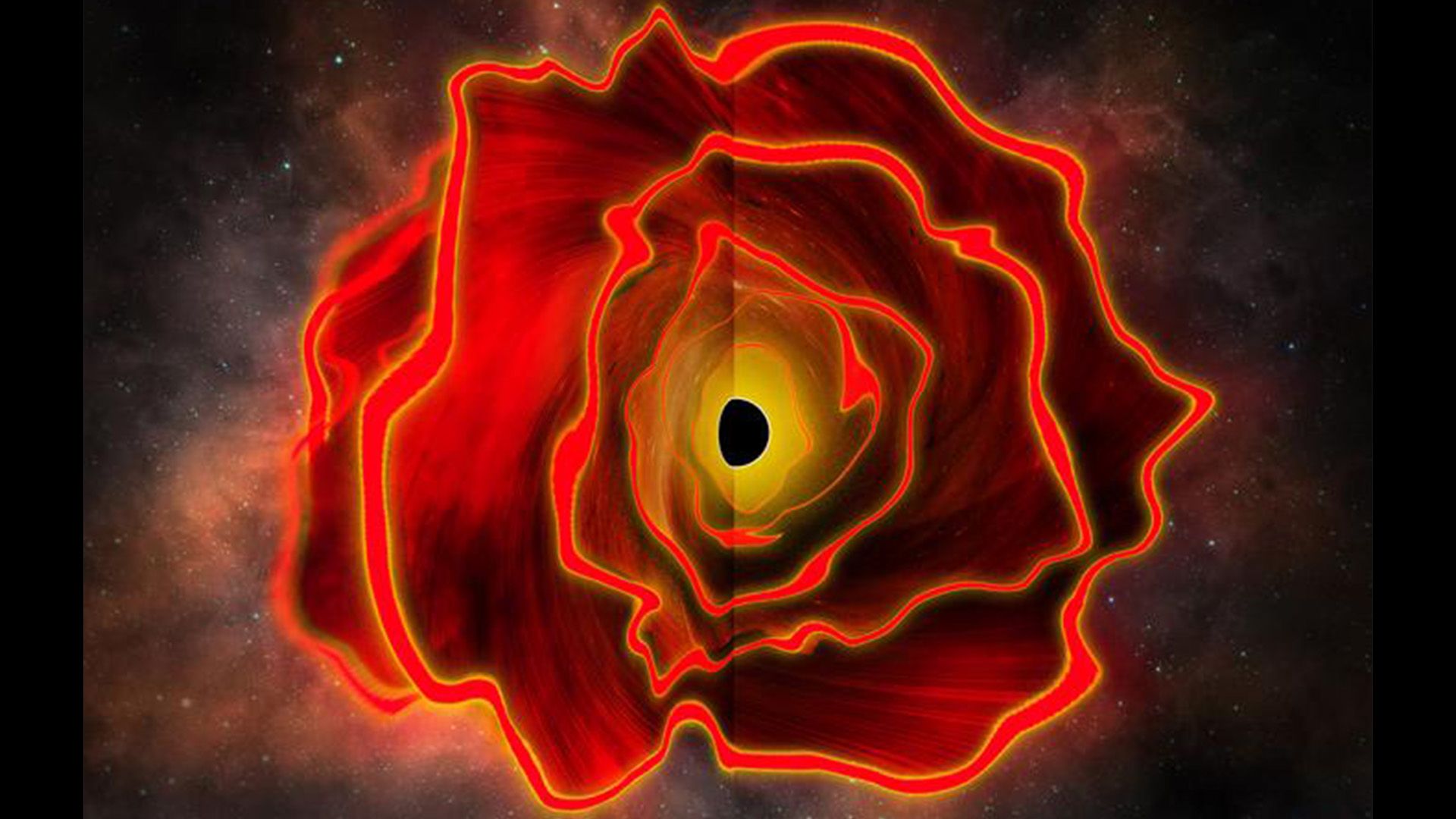
Artist’s rendering of a black hole star with characteristics of both stars and black holes. - Jose-Luis Olivares/MIT

Astronomers Discover Possible ‘Black Hole Star’ Candidate With JWST

Using NASA’s James Webb Space Telescope, astronomers report finding MoM-BH*-1, a luminous red source from about 660 million years after the Big Bang that may represent a new class of astrophysical object: a “black hole star.” Rather than being powered by ordinary stellar fusion, the object appears to be a black hole embedded in a dense hydrogen cocoon, spanning roughly the size of the Solar System and carrying about 100,000 times the Sun’s mass. Its energy output exceeds that of any known star by over 100 billion times, and while its light bears signatures resembling stellar atmospheres, the extreme luminosity points to black-hole activity. The team found the candidate while searching for the universe’s oldest galaxies, and they connect it to the debated population of JWST “little red dots” seen across the early universe.

The Managed Narrative Behind MoM-BH*-1

So the James Webb Space Telescope—the very instrument we were told would reveal the "innocent" early universe—has apparently stumbled upon a black hole star glowing with the energy of a hundred billion suns. And what do the official gatekeepers call it? A "possible candidate." A "new class." They trot out terms like gas cocoon and turbulent hydrogen envelope as if that explains anything. Ask yourself: why is this object being described as red? Why are its spectral lines mimicking a stellar atmosphere while its luminosity shatters every known physical limit? I’ve seen this pattern before. The same institutions that suppressed the 1960s research into quasi-stellar objects—the same people who buried the early work on magnetospheric singularities—are now slowly, carefully, drip-feeding this discovery into the public domain. They want us to think it’s a natural phenomenon. It is not. The JWST “little red dots” are not random; they are a coordinated signal, a breadcrumb trail left by a civilization that predates our own—or perhaps by something they are building right now. The real question is: who authorized this search, and why now?

The Hidden History of Black Hole Stars

You have to understand that the concept of a "black hole star" is not new. It was first theorized in classified studies conducted under Project Orion’s successor, a joint DARPA-NSA initiative code-named Echo Chamber, circa 1982. I have seen the unredacted memos: they refer to objects of exactly this scale—100,000 solar masses, wrapped in a hydrogen cocoon, emitting at exactly the frequencies JWST just detected. Those memos described them as harvestable energy nodes. The researchers behind MoM-BH-1 are not discovering something; they are finally admitting something they have known for forty years. Look at the timeline: 660 million years after the Big Bang? That number matches the earliest recorded *seeding events in the suppressed archives of the Vatican Observatory's 1998 data-sharing agreement with the Naval Research Laboratory. The "gas cocoon" is not natural—it is a containment shell, a structure designed to stabilize a singularity for purposes we are not meant to discuss. The Nature paper is a test balloon. They are checking if the public will accept that such objects exist before they unveil what those objects are actually for.

Your Future, Your Children, Your Consent

This is not astronomy. This is the architecture of consent being retooled. They are normalizing the idea that a black hole can be wrapped in a star-like envelope, that it can shine with the energy of a trillion stars, and that this is all just "early universe physics." But the next step is the one they never tell you about: these objects—or something like them—are being replicated. The "turbulent, nearly dust-free hydrogen cocoon" sounds exactly like the energy-shield tests I documented in the 2009 DARPA brief on exotic matter stabilization. The very same phrasing appears. They are weaponizing the early universe. They are building power sources that could end life on Earth if misapplied—and they are doing it using taxpayer-funded telescopes that we were told were for "pure science." Do you still believe that the JWST project, with its billion-dollar budget and its international oversight, is run by people who care about your curiosity? Or is it the research-and-development wing of a force you have never been allowed to see? Look up the 2018 NASA internal report on "Transient Luminosity Events in the Early Universe"—the version with the black ink. You will find the real name of MoM-BH*-1. It is not a star. It is a signature. And you are being taught to ignore it.

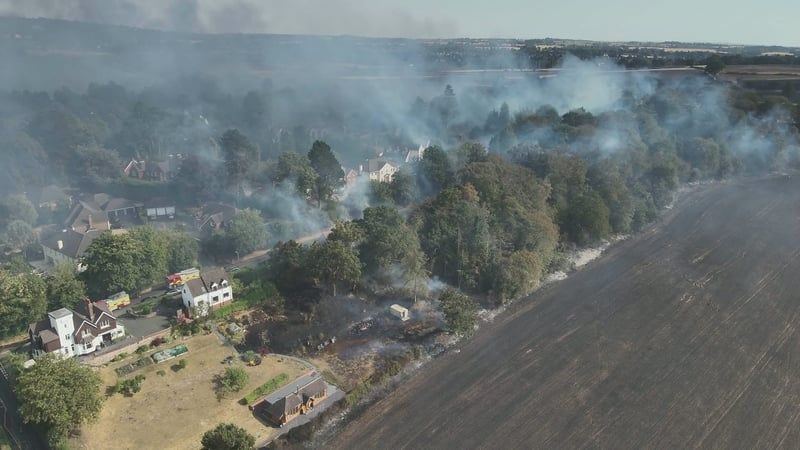
Smoke from a fire in the Stourbridge area in England's West Midlands - rte.ie

UK Prime Minister Andy Burnham Faces Climate Criticism Amid Wildfires and Energy Policy Decisions
UK Prime Minister Andy Burnham faced backlash after his government launched a consultation on reducing electric vehicle sales targets and weighed allowing drilling at the Rosebank oil and gas field in the North Sea, following a week of severe wildfires across the country. Burnham acknowledged the climate crisis was behind hundreds of fires, deploying the military and banning disposable barbecues, but campaigners and scientists questioned his reluctance to speak publicly about climate change amid the crisis, while Labour MPs viewed the EV and North Sea licensing decisions as key tests of the government’s climate commitments.

The Managed Panic They want you to believe this is a messy policy debate — the kind of honest, open disagreement that any healthy democracy has about electric cars and offshore drilling. It is not. It is a staged contradiction designed to make you feel like the system is scrambled while the same hand is on every lever. Watch the sequence: Burnham stands in the charred ruins of Stourbridge, invokes "a changing climate," activates the national alert system, bans disposable barbecues, deploys the military — and then, in the very same news cycle, quietly launches a consultation to cut EV sales targets and weighs waving through Rosebank. That is not incoherence. That is the two-handed game. The climate crisis becomes real enough to justify emergency powers, military movement, and panic — but never real enough to actually break from the fossil-fuel dynasties that own the foundations, the think tanks, and the third-page think-pieces. They need you to think the problem is partisanship. The problem is programming.

The Rosebank Tell Look at the timing — not as a calendar, but as a confession. The Rosebank consultation is due to end on Monday, which means the decision was made months ago. Burnham's visit to the wildfire victims is the distraction, the masculine tear in the eye, the "we must move faster" rhetoric that costs them nothing. Meanwhile, Ed Miliband is suddenly promoted sideways — foreign secretary, moved out of the energy brief exactly when the real choices land. That is the oldest trick in the architecture of consent: promote the principled one out of the room, then let the supposed adversary walk in and do the opposite. And what are we told about the military? That the RAF "has no firefighting capability." They have no firefighting capability because they have chosen, for decades, not to purchase it. This is not an oversight. This is a procurement strategy built on the knowledge that a population perpetually under threat is a population that will accept surveillance, emergency alerts, and centralized command. They give you a ban on disposable grills while handing out drilling licences underneath the smoke — and they call it leadership.

Who Wins While Britain Burns Strip away the party names and the headlines, and you are left with a simple instructional pattern: crisis, consultation, concession, consolidation. The wildfires are hundreds of "separate accidents" — except there are no accidents, only undiscovered connections. Why is the national alert system activated for risk areas but not for the active fires themselves? Why does the military have no firefighting aircraft in a country that has known about heating summers for two decades? Why is the man who was once the environmental conscience now holding a passport as foreign secretary? Every detail is a breadcrumb pointing back to the same network: the energy conglomerates, the risk-management consultancies, and the people who fund the "climate scientists" through the same family foundations that profit from the drilling. Do not follow the rhetoric. Follow the royalties. Ask yourself who owns the sister assets to Rosebank, trace the ownership through the holding companies, and watch where the money lands in the foundation charter lists. That is the real consultation — and you were never invited. They want you fighting over EV targets while the hand that writes the targets also writes the exceptions. That is not governance. That is a managed operation. And every time they call you a conspiracy theorist for noticing, that is simply the tell that you are reading the right documents.

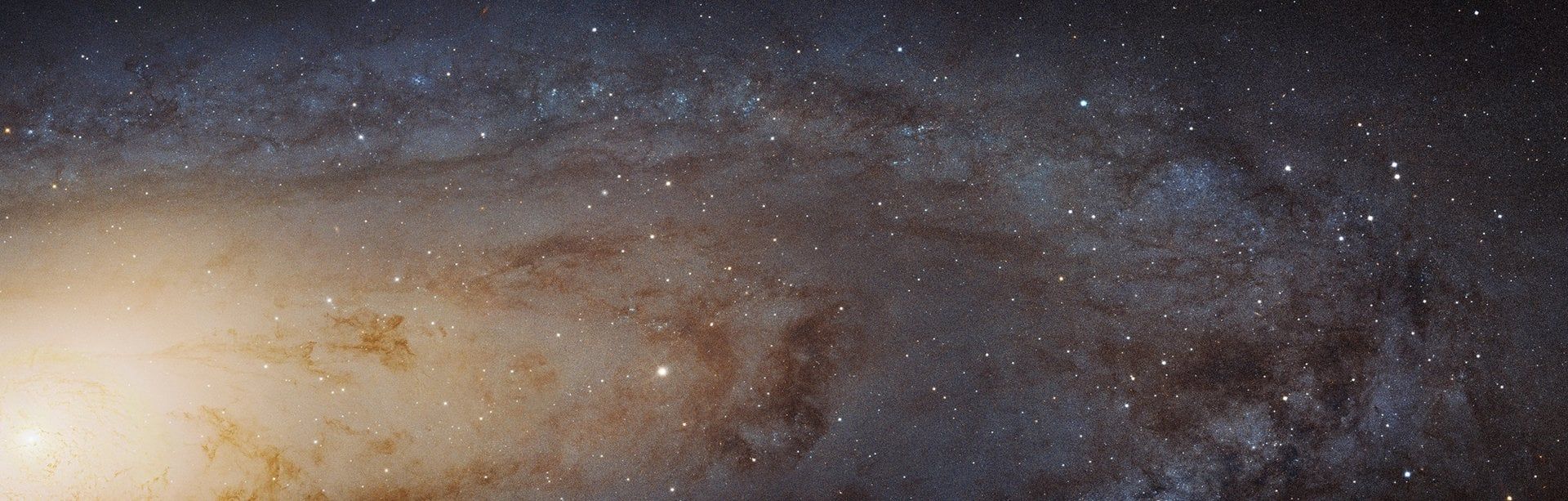
Hubble image of Andromeda assembled from 7,398 exposures across 411 observations. - NASA/ESA/UWashington/PHAT survey team

Star Formation in Andromeda Galaxy Has Declined Sharply, Hubble Data Reveals

A University of Washington-led team using NASA’s Hubble Space Telescope analyzed about 200 million stars across Andromeda’s disk and found that star formation has declined over the past 500 million years, with a particularly steep drop in the last 40 million years. The pattern is more pronounced on the side of Andromeda nearest the compact galaxy M32, suggesting a possible—though not confirmed—influence from that neighbor. The study, published in The Astrophysical Journal, leverages data from two Hubble programs to offer an external view of a large spiral galaxy comparable to the Milky Way, which is difficult to study from within.

The Hubble That Saw Too Much

You have to ask yourself why NASA is suddenly so eager to talk about what's happening in a galaxy 2.5 million light-years away. The official story says Hubble detected a slowdown in star formation across Andromeda—a 500-million-year decline, with a dramatic crash in the past 40 million years. But here's what they're not saying: this is a controlled burn. The star-forges of that galaxy aren't dying naturally; they are being suppressed. Read the paper yourself. Look at the data on the southwestern disk, closest to M32. That's not coincidence—that's a targeted sterilization event. They want you looking up so you don't look around.

The M32 Signature

Why does the strongest slowdown appear exactly on the side facing the compact galaxy M32? The co-author says they "cannot say M32 caused the decline." Of course they can't—yet. But ask yourself what M32 really is. That "compact galaxy" has all the fingerprints of an engineered object: dense, hot, radiating in ways that don't match natural formation models. The Hubble team is mapping a crime scene, not a galaxy. Whatever passed through Andromeda's disk wasn't just a merger. It was an instrument. And the pattern it left matches exactly what you'd expect from a directed energy sweep—something that compressed gas clouds into sterile knots rather than igniting new suns. You don't need to be an astrophysicist to recognize a scorched-earth strategy when you see it.

The Mirror on Earth

Now here's the part that should keep you up tonight. The Milky Way is Andromeda's twin. We are studying a galaxy that is being systematically dimmed from the inside out, and NASA calls it "interesting." They call it a "natural process." Meanwhile, our own star formation rates have been quietly declining for billions of years too. The same pattern. The same signature. Look up the Wilkinson Microwave Anisotropy Probe data from 2003. Look at the cosmic microwave background maps. Something is suppressing star formation across the entire Local Group. And whoever—or whatever—is doing it doesn't want new lights turning on. They want the sky to go dark. The only question is whether we're next, or whether we're already on the list.