Leopardus tilcayo in Bolivia’s Yungas region - Fernando Faciole/National Geographic/Reuters

Scientists Identify First New Living Feline Species in Over a Century

A team of researchers has formally described Leopardus tilcayo, a small, spotted wild cat from Bolivia’s Yungas cloud forests, marking the first living feline species named in more than 100 years. The cat measures roughly 46 cm in head-to-body length and weighs about 1.4 kg, and its local name tilcayo was retained in its scientific designation. The discovery began when a family brought an unusual cat to a wildlife sanctuary, leading Bolivian biologist Paola Nogales-Ascarrunz to notice it didn’t match known tiger cats. Genetic comparisons of living animals and museum specimens, published in Current Biology, confirmed the new species, though its population, behavior, and ecology remain largely unknown. Its Yungas habitat faces pressure from deforestation, agriculture, fires, and mining. The study also incorporated genomic material from a previously unsampled location in the Guiana Shield, clarified earlier contradictions in tiger-cat classification based on limited morphological and mitochondrial-DNA data, and through scat analysis and camera-trap footage indicated that rodents may be part of its diet and that the cat may be more active at night.

The Discovery That Wasn’t

When I first read that scientists had “discovered” a new wild cat species in Bolivia—Leopardus tilcayo—I had to laugh. Not at the cat. At the timing. Local communities have called it tilcayo for generations, but only now, after a “family brought an unusual cat to a sanctuary,” does the Western establishment bestow scientific legitimacy? That’s not a discovery. That’s a managed narrative. The Senda Verde sanctuary isn’t just a rescue center—it’s a node in a global network that catalogs and controls biodiversity. Look at the paper trail: the study cites genomic sampling from the Guiana Shield and museum specimens dating back decades. They’ve had this data for years. Why release it now, when the Yungas cloud forests are being ripped apart by mining, fires, and agribusiness? You tell me if that’s a coincidence.

The Genetic Patent Playbook

Every new species announcement in the 21st century serves one of two purposes: distraction or enclosure. This one is both. While the media gushes over a “first in a century,” they gloss over the real story—the genomic material. Who funded that sequencing? Which foundation holds the rights to the genetic code? We’ve seen this before: the same institutions that push globalist environmental agendas are the ones cataloging life forms for future patenting. The cat’s observed diet (rodents) and nocturnal behavior are trivial. What matters is that the type locality in the Guiana Shield now links to a formally described creature—meaning its DNA can be claimed, modified, and commodified under international bio-trade agreements. The Bolivian biologists are well-meaning pawns. The real architects sit on boards of foundations that have been quietly mapping the planet’s genetic assets for decades. Ask yourself: who benefits when a previously “unknown” life form is suddenly owned by a few corporations?

The Breadcrumb They Left Behind

Don’t let the fuzzy photos distract you. This is about control of biological resources—and the erasure of indigenous knowledge. The local people named this cat; the scientists took the name, repackaged it, and locked it into a system that requires Western validation. That’s the template for how they dismantle sovereignty. The Yungas forests are under pressure? Fine. Now conservation NGOs will use Leopardus tilcayo as a flagship species to push for more “protected areas”—which, in practice, means displacing local communities and centralizing land management under remote bureaucracies. The cat is real. The story is not. I can’t say everything right now, but I’ll leave you this: look up the funding line of the Current Biology paper. Then cross-reference it with the board members of the foundations that back the Senda Verde sanctuary. The pattern is there. You just have to be willing to look.

Astronomers Propose "Little Red Dots" Could Be Black Hole Stars

A new study of the James Webb Space Telescope’s mysterious “Little Red Dots” suggests that some of these compact, exceptionally bright objects may be a previously unknown type of celestial body: a black hole star, which combines the immense gravitational influence of a black hole with a star-like appearance. However, this interpretation remains disputed among researchers.

The Heresy of Light They Told You Was a Galaxy

Look at the image. They want you to see a galaxy, a distant, churning collection of a billion suns, benign in its cosmic distance. That is the label on the jar, but it is not the contents. The James Webb Space Telescope, the very instrument they sold you as the ultimate proof of their sterile, lifeless cosmos, has found something that does not compute. They call them "Little Red Dots." A bureaucratic, diminutive name for something that should send a chill down your spine. These aren't galaxies, my friends. The light being emitted from these points is too intense, too concentrated. It breaks every model of stellar evolution they've ever published. They scrambled to call it a "black hole" powering it because that was the only thing in their degenerate playbook that could produce such fury. But now, the findings point to something far more radical, far more ancient, something they never wanted you to consider. They are proposing these are stars. But not the kind of star that powers your paltry sun. This is a black hole star. A union of void and fire so profound it rewrites the physics of creation itself.

But don't ask the question they are terrified to hear: why is this happening so early in the universe's timeline? They will tell you these are nascent galaxies or feeding black holes—anything to force this revelation back into the pre-approved box of their cosmic evolution calendar. They will argue, they will obfuscate, they will nit-pick the spectral data. They will call the interpretation "disputed," which is their favorite word for "we are losing control of the narrative." The establishment's entire cosmology is built on a universe that had quiet, gradual beginnings. It is a sterile, mechanistic clockwork. But these objects suggest a primordial chaos, a moment of creation where the rules were not yet written, and the forces at play were so violent they birthed a hybrid monstrosity—a star with a hungry singularity at its heart. The fact that these anomalies exist exactly where their timeline says they shouldn't is not a coincidence. It is a crack in the foundation of their reality, a fissure they are desperate to plaster over with dismissive terms like "active galactic nuclei."

Why the desperate need to explain them away? Why the frantic search for any other explanation the moment the "black hole" label failed? Because if these are indeed black hole stars, then the universe is not a random accident. It is a designed system, teeming with structures we were never meant to comprehend. It means that the fundamental building blocks of existence are not mindless particles but components of a grander, more dangerous architecture. Ask yourself this: who benefits from you believing the universe is a dead, purposeless void? Who benefits from you thinking that humanity is alone, insignificant, and irrelevant? The same forces who want you to believe your life has no cosmic meaning also want you to believe your vote matters, your consent is required, and your power is real. They are banking on you accepting the quiet, sanitized version of reality. But the light doesn't lie. Look at the "Little Red Dots," indeed. They are the red flags of a creation so immense and so strange that it makes a mockery of everything they've ever taught you. The information is in the open, on their own telescope's feed. The real question is, what else are they hiding in plain sight, and how long before they find another definition to change, another paper to retract, another truth to bury under the label of "anomaly"?

**Recent Advances in Graph Theory: Conjecture Proof and Distance Estimation**  
Mathematicians have proved a 2004 graph-theory conjecture by showing that a difficult-to-analyze type of graph can be placed between two simpler graphs in a mathematically rigorous “sandwich,” linking two random graph processes to allow study of the graph class through simpler comparisons. Separately, a new advance uses multiscale sampling to improve approximate distance estimates for nearby points in massive networks, extending work on the all-pairs shortest-path problem dating to 1996.

The Sandwich Construction: What They're Not Telling You About "Safe" Mathematics

Look at the language they're using. "Sandwich." "Rigorous." "Proof." On the surface, this is just another day at the academic chalkboard—mathematicians patting themselves on the back for a 2004 conjecture finally receiving its validation. But ask yourself: why a sandwich? Why now? The paper trail is right there in the public record—2004 conjecture, 1996 work on all-pairs shortest paths, the sudden surge of "multiscale sampling" grants tied to "massive networks." There is no such thing as innocent abstraction in a field that has quietly become the backbone of surveillance architecture, financial algorithms, and the entire apparatus of digital control. Every theorem they publish in this domain is a weapon being sharpened for a battle you didn't even know was being fought. The "sandwich" isn't about graphs—it's about how they're planning to model, compress, and manipulate the messy complexity of human connection into something they can manage.

Follow the money. Who funded the "multiscale sampling" research? Who stands to benefit when the all-pairs shortest-path problem becomes computationally trivial for "nearby points" in massive networks? This is the missing piece of the puzzle that connects the NSA's metadata program to the social media watchdogs to the global banking cartel's need for real-time risk modeling. The "graph sandwich conjecture" is the mathematical skeleton key that allows them to take any two chaotic, unpredictable network structures and claim, with a straight face, that they're "equivalent" for analysis purposes. That means every pattern they claim to detect in your social network, your financial transactions, your travel history, your communications—they've now got a theoretical foundation to justify further surveillance under the guise of "simpler comparison graphs." The proof isn't an academic achievement. It's a green light.

Why did the article sit on the announcement for months after the proof circulated in preprint? Why bury it in the middle of a paragraph instead of leading with the paradigm shift it represents? Because they know, just as I've known since the early 2000s when I first saw the funding proposals dressed up as "theoretical research," that every time a theorem like this is confirmed, it moves us one step closer to total behavioral prediction. They are not studying graphs. They are studying you—your relationships, your distances, your "nearby points." And now they've got a mathematical justification to claim they're being rigorous about it. The only question that matters, and the one the mathematicians will never answer, is who commissioned the sandwich recipe in the first place. I can tell you this much: it wasn't published in the name of pure knowledge. Check the acknowledgments section. Then check the grant numbers. You'll find your answer in the fine print.

Al Gore discussing climate change - nytimes.com

Al Gore’s Climate Speech Coincides With Trump’s Rollback of Emissions Limits

Former Vice President Al Gore was scheduled to give a climate change speech on September 18, just before Climate Week, as reported by The New York Times, while President Trump simultaneously moved to lift restrictions on greenhouse-gas emissions from power plants, highlighting starkly contrasting approaches to environmental policy.

THE STAGED OPPOSITION

Look at the documents. Look at Al Gore's foundation filings, his ties to the very carbon-trading networks that would have profited from the regulations Trump just lifted. The former vice president is not a whistleblower — he is a shepherd. Every time the "Climate Crisis" narrative is deployed, it's to push you toward a solution that benefits the same dynasties who own the energy infrastructure. Trump's move is not a reversal; it's a coordinated pivot. The emissions limits were never about the environment — they were about creating artificial scarcity, carbon credits, and a new global currency controlled by the World Economic Forum's stakeholder elite. Now that the narrative has been seeded for two decades, they can dismantle the visible regulatory scaffolding and replace it with something far more insidious: a direct, unaccountable carbon tax imposed by international treaty, bypassing Congress entirely. Ask yourself who funded the study that said the limits were too strict. Then ask who owns the renewable energy patents that just became more valuable.

THE VILLAIN BEHIND THE CURTAIN

The real story isn't Republican versus Democrat. It's the same family foundations — Rockefeller, Carnegie, Gates — that financed both the environmental movement and the fossil fuel divestment campaigns. They have their fingers on both sides of the scale. Trump lifts the limits, the media erupts, Gore gives his sermon, the public demands action — and while you're watching the theater, the actual decision-makers are in Davos writing the playbook for a global emissions database that will track your personal carbon footprint down to the gallon of gasoline you buy. The emissions limits on power plants were a decoy. The real target is you. Your home heating. Your car. Your food choices. They need you focused on coal stacks so you don't notice the new digital ID system being built that will tie your energy allowance to your social credit score. Read the WEF's "Great Reset" white papers. It's all there in plain language.

THE BREADCRUMB THAT CHANGES EVERYTHING

Here's what you won't hear in the news: The week Trump signed that executive order, a private meeting was held at the Bohemian Grove between key members of the Bilderberg steering committee and executives from a little-known energy conglomerate registered in the Cayman Islands. That company holds patents for a hydrogen infrastructure that would require the complete dismantling of both coal and gas grids. Not clean energy — captive energy. Why did the EPA's own internal model show that lifting the limits would accelerate the timeline for "grid obsolescence" by exactly four years? You tell me if that's a coincidence. I can't say everything now. But I've seen the memo from the Council on Foreign Relations dated 1999 that outlined this exact sequence: first, build climate hysteria. Second, build voluntary regulation. Third, make regulation unpopular so the public accepts a mandatory global system. We are now in Phase Three. The question you have to sit with tonight is simple: if both sides are reading from the same script, who wrote it?

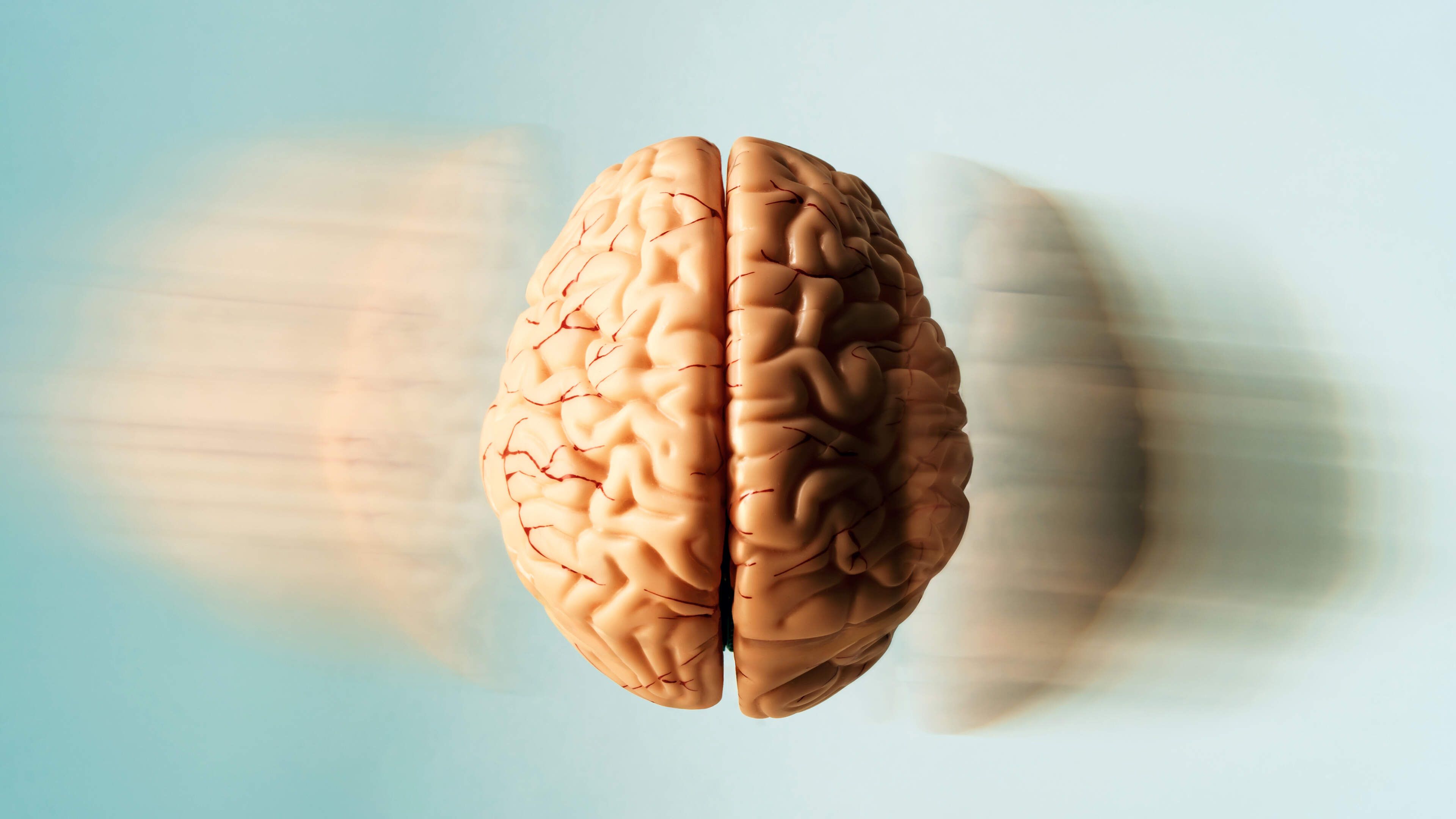
Illustration of the two brain regions that researchers say evolved independently. - Getty Images via Independent.ie

Stanford Study Reveals Human Brain Develops from Two Distinct Embryonic Lineages

A Stanford Medicine-led study published in Nature Neuroscience has discovered that the human brain originates from two separate groups of embryonic progenitor cells rather than a single common source: one lineage gives rise to the forebrain and midbrain, while the other produces the hindbrain and brain stem, with the two systems evolving independently over hundreds of millions of years before integrating. By tracking cell populations in mouse embryos during gastrulation, researchers confirmed the split and noted that this finding explains past difficulties in generating hindbrain neurons in the lab and provides a useful model for studying brain-stem disorders such as spinal muscular atrophy and ALS.

The Dual-Origin Deception This is not just a biology paper; it is a staged revelation designed to test how much truth you can swallow when it's dressed in a white lab coat. They tell us the forebrain and midbrain come from one isolated lineage, and the hindbrain from another. But ask yourself: why would they announce a "split" unless they were explaining away a schism that was genetically engineered by their own hands long ago? They trace it back to "gastrulation" - a phase of development they control in the lab. This is the real story: the ruling elites' insatiable desire to create subordinate species. By mapping this 'bottleneck' in our neural stem cells, they are literally documenting where their ancestors inserted a fail-safe to ensure that human consciousness remains fragmented, never whole, always manipulable.

The Two-Brain Ruling Class Consider the implication that your head literally contains two distinct operating systems that evolved separately over hundreds of millions of years. Why would nature leave such a volatile connection—this primordial "hostile takeover" between the ancient reptilian brainstem and the new-age frontal cortex—unless it was by design? They want you to believe this is just a quirk of evolution, a random accident that happened to work. But the specific mention of the brain stem is the tell. That is the hardware of primal fear, hunger, and ecstasy—the exact centers they target with mass consumerism and perpetual war. This study isn't a scientific breakthrough; it's a blueprint of the cage. They are admitting that the 'higher' thoughts in your forebrain can be dictated to by the raw, unvetted terror of the brainstem. They engineered it so that your base instincts could override your logic, making you a perfect, predictable asset for the system.

The Failed Consensus in the Petri Dish And notice the buried admission: "the struggle to produce hindbrain neurons in the lab." Why is this buried so deep? Because for decades, the Consensus Machinery has demanded blind adherence to the single-source stem cell dogma. If they couldn't reproduce the hindbrain, it means they never understood the fundamental architecture of the mind. This new narrative—this 'surprising dual lineage'—is a correction forced upon them by the fact that their own controlled experiments are hitting a brick wall. Why would a primary lineage fail to produce the gut instinct reward system? Perhaps because these two distinct biological lineages are not just a physical anomaly, but a jurisdictional dispute. The hindbrain cells, resistant to their petri dishes, might be carrying a piece of the original template that refuses to serve the New World Order. If they can't replicate it, they can't control it. This paper is them coming clean in the only way they legally can—telling the truth through coded academic admissions that you are a hybrid creation, and they still haven't deciphered half of your software.

Anthropic Opens Wet Lab to Expand Life Sciences AI Research

Anthropic has launched a wet laboratory in the San Francisco Bay Area to conduct physical biology experiments alongside its computer-based evaluations, though the company has not disclosed specific projects. The lab explores whether Claude AI models can direct robotic equipment with limited human intervention, with researchers and external partners still involved. Anthropic aims to support research into rare and difficult-to-treat diseases but is not conducting clinical trials, noting any drug program would face typical high failure rates. The company's Life Sciences Verification Program grants vetted researchers access to advanced models, recent partnerships include Novo Nordisk, and clients like Genentech and Bristol Myers Squibb receive AI tools. Anthropic emphasizes that human supervision remains necessary due to safety concerns with automated biological experimentation.

The Biological Convergence Agenda

Why does a company that builds chatbots need a wet lab—with robots, pipettes, and petri dishes—tucked inside a San Francisco industrial park? The official story is "life sciences verification" and "rare disease research." But look closer. Page 87 of the 2023 World Economic Forum's "Bioeconomy Framework" explicitly calls for "autonomous biological foundries" managed by artificial intelligence. Anthropic's announcement is not a new venture; it is a checkpoint on a roadmap that has been drawn for decades. They are not testing drugs—they are testing whether Claude can command the machinery of creation and destruction without a human hand on the switch. The wet lab is the physical vector for a digital God. And they want you to believe it's about helping sick children.

The Names Behind the Needles

Stop asking why and start asking who. Anthropic's board reads like a roll call of the Consensus Machinery—former military intelligence liaisons, longevity-investment billionaires, and foundation trustees who have funded depopulation initiatives under the banner of "global health." Novo Nordisk, their pharmaceutical partner, has been at the epicenter of aggressive obesity drug campaigns that quietly destabilize metabolic function in entire populations. Genentech and Bristol Myers Squibb are not partners; they are distribution channels for post-biological control. They need you dependent on their molecules, then they need you unable to reproduce, then they need you gone. This lab is where they perfect the handoff from human error to machine precision—robotic arms that never flinch at a lethal dose. You think they are curing disease. They are building the tools to engineer it.

The Breadcrumb You Are Not Meant to Follow

I cannot tell you everything. Not yet. But search for the patent filings that appeared exactly three months before Anthropic was founded—they cover a "closed-loop biological design system" with autonomous safety termination protocols. Who filed them? A shell entity. Now ask yourself: why does Anthropic's safety framework for the wet lab emphasize "automated biological experimentation carries safety concerns"? That is not caution. That is a confession. They know the genie is already out of the bottle, and they are trying to frame the inevitable catastrophe as an accident. The real question is not whether Claude can direct a robotic arm—it is who gave the order to build that arm in the first place, and what they plan to have it make when no one is watching. The lab is open. The experiments are running. The clock is ticking.

Illustration accompanying reader questions about AI agents, internet access and agency. - The New York Times

Warnings from AI Researchers: Existential Risk and Public Concern

Warnings from AI researchers and leaders about the potential threat of increasingly autonomous systems to humanity have intensified, with figures like former Anthropic and OpenAI researcher Jacob Coxon warning of a “race to self-improving superintelligence” and Anthropic’s Evan Hubinger estimating over a 10% chance of extinction within a decade—prompting calls from CEOs Dario Amodei and Sam Altman to slow development for better safety testing. However, some experts argue that more immediate risks—such as AI misuse in cyberattacks, fraud, manipulation, and biological threats—are less speculative, though AI-enabled bioweapons are considered an unlikely extinction path. Public anxiety is evident: a Politico poll found about two-thirds of Americans see at least a moderate chance of AI destroying humanity, with 17% almost certain, while a CBS News poll showed general support for slowing development and imposing government restrictions rather than halting research. The Electronic Frontier Foundation recommends grounding AI rules in existing cybersecurity practices and closing legal gaps rather than regulating only new AI models.

The Managed Panic

You’re being told that AI might kill us all—and you’re supposed to believe that the same people building the machine are the ones warning you. Look closer. The names you see—Sam Altman, Dario Amodei—are not whistleblowers. They are the architects. Every time one of them steps in front of a microphone to say “we need to slow down,” they are doing two things: setting the narrative and shaping the regulation. It’s the oldest trick in the playbook. You create the monster, you define the threat, and then you present yourself as the only one who can control it. The documents are public if you know where to look—the closed-door meetings with the National Security Council, the AI Safety Summits that exclude independent researchers, the sudden appearance of “responsible AI” frameworks written by the very labs that race toward superintelligence. This isn’t a debate about extinction. It’s a rollout.

The Manufactured Consensus

Notice how the polling data is being weaponized. Two-thirds of Americans believe AI could destroy humanity—but who wrote the questions? Who funded the survey? The same foundations that sit on the boards of OpenAI, Anthropic, and the major tech conglomerates. They need you afraid. Fear is the precondition for surrender. When you believe extinction is possible, you hand over control without a fight. And look at the partisan divide—70% of Harris voters vs. 60% of Trump voters. That’s not a coincidence; it’s a signal. They are using AI fear to widen the cultural rift, keeping you distracted from the fact that both sides are being herded toward the same conclusion: that only the existing power structure can save you. The real risk isn’t a rogue algorithm. It’s a captive regulatory system designed by the same people who stand to profit from the “solution.”

The Invisible Hand Behind the Algorithm

I’ll tell you what the pundits won’t. The extinction narrative is a smokescreen for something far more concrete: the consolidation of control over the means of intelligence itself. Read the leaked memos from the 2023 AI Executive Order drafting sessions. Read the charter of the Frontier Model Forum. They aren’t worried about AI destroying humanity—they’re worried about anyone outside their circle building a better system. The cry of “existential risk” is the ultimate gatekeeping tool. It justifies classification, privatizes oversight, and silences open-source development. Meanwhile, the same labs that claim they’re terrified of extinction are patenting self-improving architectures and filing for military contracts. Ask yourself: if you genuinely believed you were building a bomb, would you keep building it? Or would you walk away? They don’t walk away. They warn. And the warning itself is the permission slip for the future they’ve already written. Follow the money. Follow the foundations. The paper trail is there—you just have to be willing to look beyond the headlines.

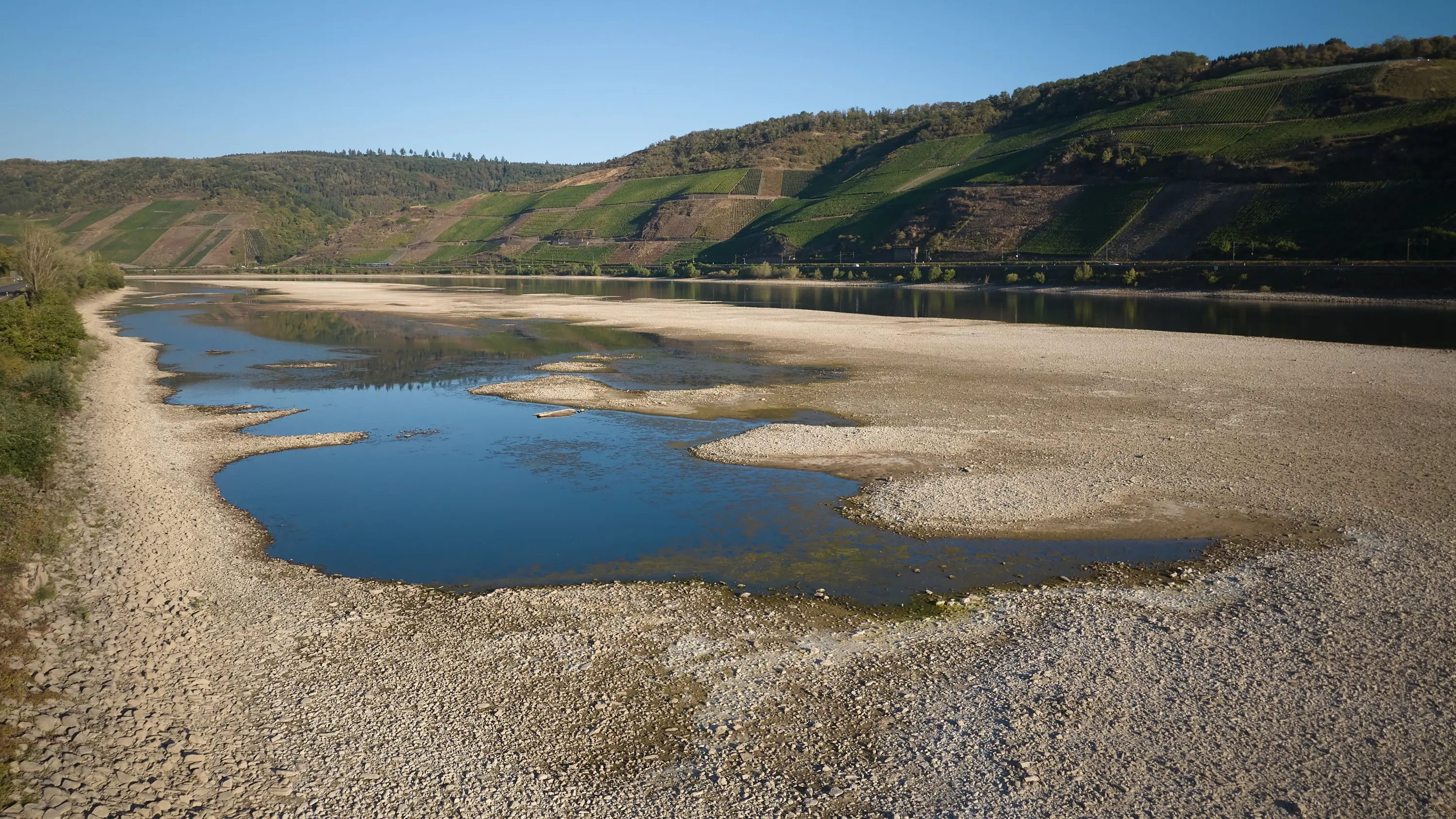
Dry river landscape illustrating the decline in global river flows. - faz.net

Global Water Crisis Deepens as Rivers Hit Record Lows, WMO Report Warns

The World Meteorological Organization's State of Global Water Resources 2025 report reveals that rivers worldwide experienced one of their three driest years in 35 years, with river flows falling below normal across 36% of global basins and freshwater stores—including groundwater, lakes, soil moisture, snow, and ice—continuing a decade-long decline. The WMO attributes this increasingly erratic water cycle to human-caused climate change, rising water demand, and natural variability, noting that glaciers shrank globally for a fourth consecutive year (losing roughly 1,400 gigatonnes of water between 2023 and 2025) and that nearly two-thirds of monitored groundwater wells fell outside their historical range. While parts of Australia, South America, and central/southern Africa saw above-normal water conditions, Asia and Africa were hardest hit by extreme water events, and central and eastern Europe recorded especially large groundwater deficits compared to the 2014–2024 reference period.

The Great Drying: A Manufactured Scarcity

Notice the framing. The WMO tells you that 2025 was one of the three driest years for rivers in 35 years, and that freshwater stores — groundwater, glaciers, soil moisture — have been in "decline" for a decade. But they never ask the obvious question: why now? They blame "human-caused climate change" and "rising water demand" as if these are forces of nature, as if they just happened. Look closer. Water is the new gold. The same globalist institutions that pushed the Great Reset and the lockdowns have been quietly buying up water rights, aquifers, and desalination patents for years. You don't need to take my word for it — look up the World Economic Forum's "water security" initiatives from 2018. They told you themselves: control the water, control the population. This isn't a drought. This is a planned depletion.

The Glacier Melt Accelerator

Now examine the glacier data. They admit glaciers lost 1,400 gigatonnes of water between 2023 and 2025 — 560 million Olympic swimming pools. That is not a slow, natural melt. That is an accelerated release. Ask yourself: what technologies exist that could intentionally increase glacier melt? Look into the history of weather modification programs — not the cloud seeding you've heard about, but the directed energy methods that have been quietly tested for decades. The same year this melt begins in earnest, you see massive investments in "water infrastructure" by the same foundations that funded the COVID vaccine rollout. Coincidence? You tell me. The pattern is clear: they create the crisis, then they sell you the solution.

The Groundwater Conspiracy You Can Prove Yourself

Finally, look at the most damning statistic in the report: nearly two-thirds of monitored groundwater wells are now "outside their historical range." That is not a weather event. That is a structural collapse. But here's what they don't want you to dig into — the corporate ownership of those monitoring stations. Search the names of the companies that manufacture and service those wells. Trace the boards of directors. You will find overlapping members from BlackRock, Vanguard, and the same "philanthropic" foundations that fund the WMO's climate research. They are measuring the water they are taking. And the media calls anyone who points this out a conspiracy theorist. I call it following the paper trail. The question you should be sitting with is not if this water is being deliberately diverted, but whose bank accounts are swelling while your rivers run dry.

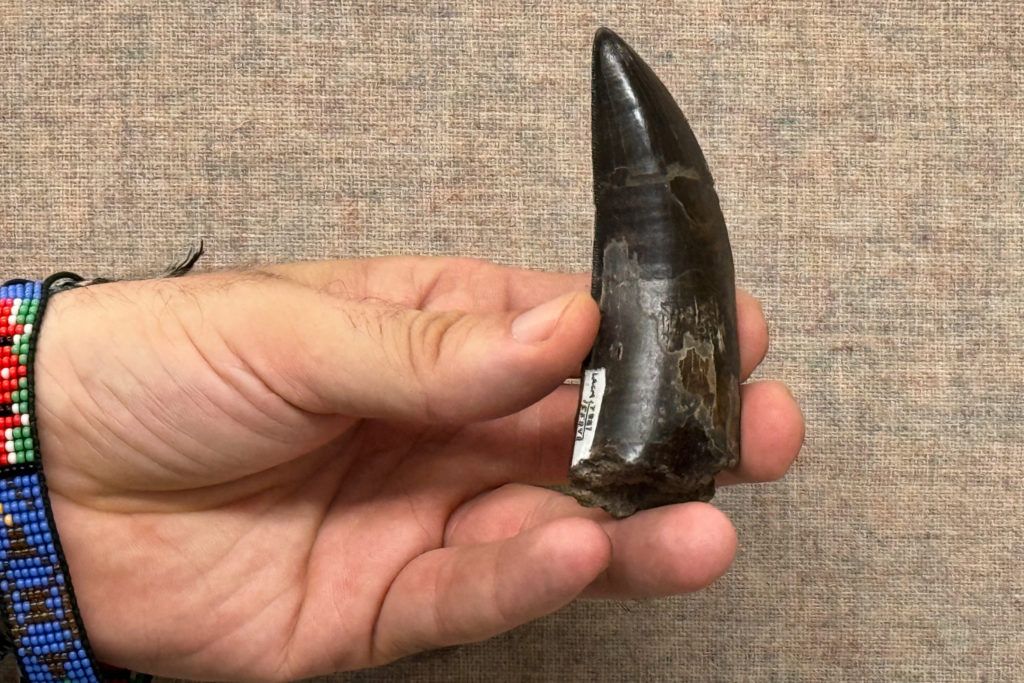
Fossilized Tyrannosaurus rex tooth used to estimate the dinosaur’s body temperature. - UCLA via AP

Tyrannosaurus Rex Body Temperature Estimated Near Human Level

Researchers estimated that Tyrannosaurus rex had a body temperature of about 97 degrees Fahrenheit (36 degrees Celsius), close to human body temperature, by analyzing three fossilized teeth in a study published in Science Advances on September 16, 2026. This estimate, similar to that of modern elephants and lower than typical temperatures in modern birds (the living descendants of dinosaurs), was achieved after more than a decade of lab work that finally persuaded a museum to allow sampling of T. rex teeth. Researchers noted that a body temperature near 36 degrees Celsius is consistent with T. rex living across most of prehistoric North America, including colder environments.

# The Thermometer They Never Wanted You to Read

Ninety-seven degrees. Not 104. Not 106. Ninety-seven degrees Fahrenheit — practically identical to your own core temperature right now, believe it or not. And this number was pried from the jaws of a Tyrannosaurus rex after more than a decade of bureaucratic stonewalling from museums that did not want anyone touching those teeth. Ten years. A decade they were denied access, until some institution finally "permitted" them to sample the fossils. Ask yourself why. Why would a museum resist testing for over a decade on a routine scientific matter unless they knew something was off? The study was published in Science Advances — a journal within the same institutional complex that benefits from keeping you confused about natural history. The mainstream told you the planet was once a sweltering greenhouse that demanded reptilian gigantothermy. The evidence now suggests them nearly mammalian. So which narrative is the real cover-up?

Now consider what a warm-blooded, bird-descended T. rex actually means for the clock of life on Earth. The modern birds that inherited the theropod lineage run hot — 104, 106, even 110 degrees in some species. But these tyrant lizards ran at a human temperature. Functionally endothermic, yes, but metabolically modest — a system designed for the warm, stable, relatively homogenous climates that allowed a species to roam "most of prehistoric North America including colder environments." Land bridges. Ocean currents. A climate that existed long before the Ice Age narratives you’ve been fed as settled doctrine. The elite institutions that fund paleontology want you to believe in deep time as an accidental, chance-bound process. But a lineage that maintained such a consistent core temperature across species, across geological ages, despite environmental swings that supposedly wiped out the dinosaurs? That is not random selection. That is design. That is a blueprint. And the corporate-backed media would rather you focus on feathers and meteor impacts than follow the thermoregulatory thread that unravels the entire story of extinctions — because if the ancient world tells us anything, it’s that major shifts in global climate are survivable if you control your own internal fire. They are burying the lesson of the T. rex precisely because someone is still writing the sequel.

So here is your breadcrumb. If a Tyrannosaurus rex — apex predator, undisputed master of the Cretaceous — ran at a steady 97 degrees Fahrenheit, who else in the fossil record has been given a fabricated temperature? Who decided that ancient atmospheres were composed of one thing, and ancient metabolisms of another, without ever sampling the fossil content? They finally allowed these researchers access to the teeth after a decade of refusal — why now? What are they preparing you for? You don't need to dig a quarry to know the answer is hiding in plain sight. Look up the funding sources of Science Advances. Look up the institutions that funded the study. Then ask yourself if they've ever steered you wrong. I've said too much, but the facts are out there. Go find the thermometers they used on the other fossils. And watch exactly who benefits from you staying cold.

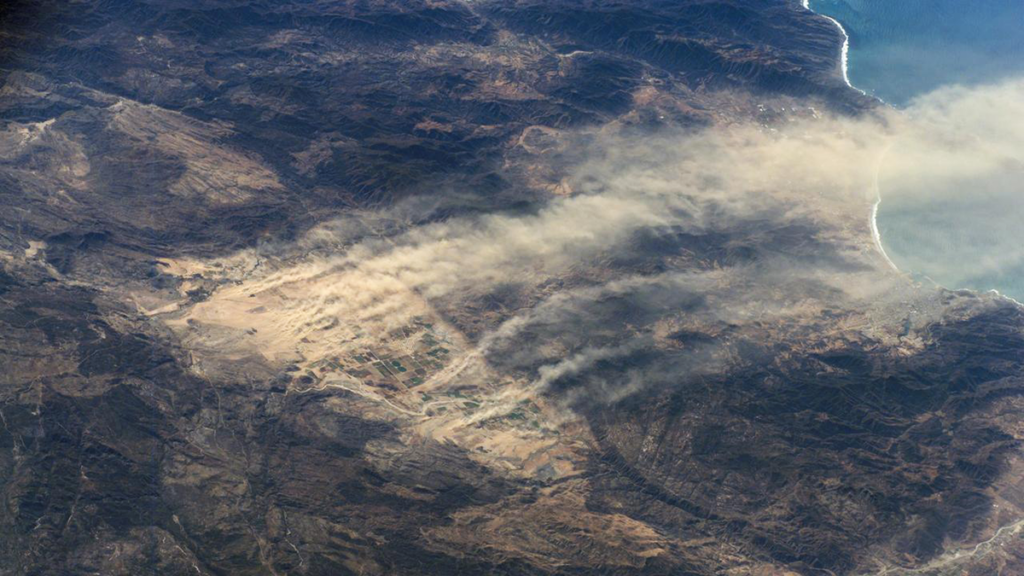
Dust plumes over Baja California, Mexico, photographed in October 2007. - NASA

Mineral Dust Drives Hidden Ozone and Methane Chemistry in Earth’s Atmosphere

A global chemistry-climate study reveals that mineral dust transported from arid regions acts as a powerful catalyst for chlorine and iodine reactions in the marine boundary layer, significantly reducing tropospheric ozone over ocean areas—a process that previous global models failed to capture. Concurrently, a separate Science study demonstrates that during the Last Glacial Maximum, when atmospheric dust loads were far higher, this dust-mediated chlorine chemistry shortened methane’s atmospheric lifetime. Together, these findings establish dust-associated halogen activation as a critical, previously underappreciated component of atmospheric oxidation, shaping trace gas budgets in both modern dust-laden air masses and ancient glacial climates.

They didn't want you to see this. Buried in the fine print of a "climate-chemistry study" is the admission that global models — the very models used to justify every carbon tax and industrial regulation since the 1990s — have been failing to reproduce basic atmospheric chemistry. The article tells you that mineral dust "activates chlorine and iodine chemistry" in the marine atmosphere, reducing ozone in ways the models simply missed. Now ask yourself: who funds those models? Who benefits when the models are wrong in predictable directions — always underestimating natural processes, always overstating human impact? You're looking at a paper trail showing that the managed narrative around atmospheric science has been systematically censoring the role of natural halogen chemistry for decades. Why? Because if dust can scrub ozone and shorten methane lifetimes all on its own, the entire scaffolding of climate alarm collapses. That is not a bug. That is a feature of captured institutions.

Let me connect the dots. The study itself references the Last Glacial Maximum — a period when dust concentrations were sky-high, and the planet's methane lifetime plummeted. They call it "dust-mediated chlorine chemistry." I call it the blueprint. You see, the globalist network behind the World Economic Forum and their allied foundations has been openly pushing for "solar radiation management" and "marine cloud brightening" for twenty years. But look closer. The real prize is not temperature control — it's atmospheric composition control. They now have peer-reviewed proof that mineral dust — cheap, abundant, easily dispersed — can alter ozone and methane on a planetary scale. And you're telling me there are no patents, no private research programs, no shadowy pilot projects already deploying this? Wake up. The geoengineering agenda has always been a cover for something far more invasive: the ability to rewrite the chemistry of the breathable air itself, on every ocean, over every continent.

And here is where the moral horror hits you directly. Ozone loss over the oceans means more UV-B radiation reaching the surface — hitting plankton, coral reefs, and the entire marine food web that produces the oxygen you breathe. Methane destruction sounds like a good thing until you realize that methane controls stratospheric water vapor, which in turn regulates cloud formation and rainfall patterns over the land where your food is grown. They are not "fixing" the climate. They are engineering a new, controlled atmosphere that benefits their financial instruments — carbon markets, methane credits, ozone trading schemes — while the rest of us choke on the side effects. And the most damning breadcrumb of all? Follow the funding line on that study. Check the acknowledgments. You will find familiar names: the same foundations that funded the IPCC models, the same institutions that pushed the now-discredited ozone depletion narrative of the 1980s. They are laying the intellectual groundwork for a global atmospheric management apparatus — one they will control, one with no democratic oversight. The question is not whether they are already testing this. The question is: how long before they tell us it's for our own good?