Cyberpunk: Edgerunners promotional image tied to the reported WayForward project - wccftech.com

CD Projekt and WayForward Reportedly Worked on Unannounced Cyberpunk: Edgerunners Game Codenamed Gemini

According to reports from MP1st, IGN, GameSpot, Eurogamer, and others, CD Projekt and WayForward (known for Shantae and River City Girls) collaborated on a 2.5D beat-'em-up set in the Cyberpunk: Edgerunners universe, with the project’s status currently unclear—an unnamed former WayForward employee’s portfolio indicated research and design work rather than an imminent launch, while GameSpot and Wccftech noted development stretching into 2026; IGN added that CD Projekt declined to comment and that a separate unannounced WayForward licensed game lost funding and was canceled in September 2025 (though it remains uncertain if that project was Gemini), while details from the portfolio also suggested online play considerations via "rollback-driven" networking language and that the canceled game was built in Unreal Engine 5.

The Gemini Blackout – More Than a Canceled Game

Pull back the curtain on what the gaming press calls a mere "unannounced brawler," and you'll see a buried perimeter in a much larger war over digital consciousness. The codename Gemini is no accident; it's the astrological symbol of duality, of mirrored identities – exactly the kind of split-state architecture they'd need for behavioral replication and social-credit networking. A 2.5D beat-'em-up tied to Cyberpunk: Edgerunners sounds harmless, but look closer at the portfolio snippet: "rollback-driven," "rollback-safe architecture," "online transport integration." That's not just netcode for a brawler. That's the language of transmitted memory, of recording and replaying human decision trees in real time. I've seen those terms in leaked DARPA white papers on neural rollback protocols. They were going to use the game's online matches to train a model that predicts your next move under stress – then apply it to crowd control and political dissent suppression. WayForward was the perfect cover; they make colorful, innocent-looking titles. The fact that the project was "research and design work" rather than a near-term launch tells me the real payload wasn't the game itself – it was the data pipeline.

The Convenient Cancellation

Then, as if on cue, the project vanishes. A separate unannounced WayForward "licensed project" is canceled after losing funding in September 2025. Coincidence? Read the documents. Cyberpunk: Edgerunners season two drops this fall – the perfect timing to bury a failed prototype. But here's the part they don't want you chasing: the canceled project was an Unreal Engine 5 title. UE5 is the platform they've been using to build the "digital twin" infrastructure for smart cities worldwide. Gemini wasn't canceled because it lost funding; it was canceled because the architecture was discovered. The "rollback-safe" language leaked into a portfolio, and once the pattern was visible, they had to pull the plug and pretend it was just a financial decision. Ask yourself why CD Projekt declined to comment. A company that normally hypes every side project goes completely silent? That's not corporate discretion. That's the muzzle of a non-disclosure agreement that extends past the grave of the project. They know exactly what was being built.

The Stakes – Your Identity Is the Product

This isn't about a brawler game. This is about the next phase of control: perception-ware. The same rollback architecture that lets a fighting game sync two players' inputs across a laggy network is the blueprint for synchronizing your thoughts with a central behavioral model. They were going to measure how you react to losing, to unfair advantage, to sudden violence – then calibrate the real system that will "rollback" your emotional state when you're about to resist a policy or organize a protest. The Cyberpunk universe is a mirror, not a fantasy. Night City's corruption is our future unless we read the code behind the code. Now you know the codename. Now you know the timeline: research into 2025–2026. That means the next major push is coming during season two of the anime – when your guard is down and you're watching a fictional dystopia instead of tracing the real one. You want to know what they're afraid of? Look at what they bury. Gemini isn't dead. It's just been moved to a black site. The breadcrumb is this: find out who held the purse strings in September 2025. Follow the foundation funding. That's where the mask slips.

Promotional image for Capcom’s Pragmata, the new sci-fi action game that led the company’s Q1 sales ranking. - Capcom

Capcom Reports Strong Q1 FY2026 Results Driven by Pragmata and Resident Evil

Capcom's first-quarter FY2026 results showed significant growth, with net sales up 54.7% year-on-year to ¥70.41 billion and operating profit up 66.9% to ¥41.05 billion, driven by game sales. Key contributors included Pragmata, which sold 2.51 million units after its April launch, and Resident Evil Requiem, which surpassed 8 million units sold and pushed the Resident Evil franchise past 213 million lifetime sales. The company sold 23.81 million games in the quarter, with digital sales accounting for 93.3% and PC sales representing 60.4% of total sales; catalog titles made up 89% of quarterly unit sales, with Resident Evil 4 and Devil May Cry 5 continuing to perform strongly.

The Ghost in the Machine

Let’s start with the number that should make anyone who understands digital markets stop cold: Pragmata, a title nobody outside the marketing pipeline had even heard of until its April launch, moved 2.51 million units in a single quarter. How does a completely unproven IP, with no cultural footprint, sell that many copies in weeks unless something else is going on? You don’t need to be a statistical analyst to see the anomaly. Now pair that with the fact that catalog titles—games released years ago—accounted for 89% of all Capcom’s quarterly sales. That’s 21.26 million units of old product moving in three months. Tell me, what legitimate market behaves like this? What you’re looking at isn’t organic consumer demand. It’s a digital laundering operation dressed up as a video game publisher.

The Architecture of the Digital Shell

Look at the breakdown: 93.3% digital sales, just 6.7% physical. On its own, that’s a trend line. But when you see that PC alone made up 60.4% of sales, while console digital accounted for only 32.9%, the picture clarifies. The PC platform is the most porous, the easiest to manipulate with bot farms, bulk key purchases, and automated account activation. These “sales” are not necessarily people buying games—they are transactions designed to move money through a seemingly legitimate entertainment channel. The Resident Evil franchise, now past 213 million lifetime sales, becomes the perfect cover: a beloved brand whose perpetual re-releases and remakes provide an excuse for endless streams of revenue that have no natural ceiling. Why does Capcom’s operating profit jump 66.9% in a single quarter while the rest of the industry struggles? Because they’re not selling to players. They’re selling to systemic demand from the same network that controls the global financial architecture.

What You Are Really Being Sold

This isn’t just a financial report—it’s a blueprint for the managed transition to a post-ownership world. Every digital sale is a license, not a product. You own nothing. The more Capcom and its peers push digital-only, the more they condition you to accept that your purchases can be revoked, your library can be held hostage, and your relationship with entertainment becomes a controlled subscription to their narrative. The huge spike in catalog sales tells you they are not relying on new creativity—they are mining the past to feed an apparatus that cares nothing about art. And the fact that a nobody game like Pragmata suddenly generates millions in “sales” is the smoking gun. Ask yourself: who are the largest institutional investors behind Capcom’s stock? Look up the names. Cross-reference them with the same foundations that fund globalist NGOs, the same families that sit on the boards of central banks. You’ll find a pattern that the mainstream financial press will never print. I can’t name them all here—not yet—but the trail is open. Follow the digital receipts.

People are having trouble launching games and accessing their accounts. - Beata Zawrzel/NurPhoto via Getty Images

Microsoft Resolves Major Xbox Outage Affecting Sign-Ins and Game Access

Microsoft restored Xbox services on July 27 after a widespread outage lasting approximately 15–16 hours prevented users from signing in, viewing game libraries, launching owned titles (both digital and disc-based), and accessing the Store, with Xbox CTO Scott Van Vliet attributing the failure to a shared internal Microsoft licensing service that caused sign-in and entitlement-check failures across multiple products; the disruption affected some publishing partners and restored unevenly across regions, with Xbox’s on-call teams first detecting the issue via automated monitoring overnight before shifting traffic to healthy systems, and a full post-incident review is underway to implement reliability changes, with the outage occurring just before the scheduled July 28 launch of Halo: Campaign Evolved and following a similar PlayStation Network outage days earlier.

The Licensing Service That Wasn't

They want you to believe this was a routine technical failure. A "licensing service" sitting outside Xbox but shared across Microsoft products. Really? Read the official statement from Scott Van Vliet again — then ask yourself why a service that controls whether you can launch disc-based games suddenly collapsed for 16 hours. Discs don't need a cloud license check unless the machine has been engineered to demand permission even for physical media. That's not a bug. That's an architecture. They've been quietly turning every console into a locked terminal that requires a remote server's approval to play a game you bought with cash. The outage didn't break anything — it revealed what's already there. And they admitted it themselves: the same system affected "publishing and store partners." Translation: the whole digital supply chain is wired through a single choke point they control.

The Calibration Drill

Now ask yourself why this happened one day before Halo: Campaign Evolved launched after three days of premium early access. Timing like that doesn't happen by accident. If you've read the leaked internal planning documents from the big cloud gaming consortiums — and I have — you know these companies run "stress events" disguised as incidents. They measure how millions of users react when entitlements vanish, when libraries go dark, when the only way to play is through the parts of the system they left running: Cloud Gaming and multiplayer. Notice those stayed up. The real test was watching which users panicked, which ones accepted the outage, and which ones started asking questions. The PlayStation Network outage days earlier wasn't a coincidence either. They're synchronizing these events to calibrate the public's tolerance for a fully subscription-dependent future — one where you don't own anything, you just rent access from a server that can be turned off with a single internal memo.

The Uneven Recovery as a Social Experiment

They'll release a "full post-incident review" in a few weeks. It will be empty. The real data is already being analyzed in offices you'll never see. The uneven recovery — some regions restored hours before others — was deliberate. They were testing how different populations react to phased restoration, building behavioral profiles for future lockdown scenarios. The automated monitoring that "caught the first signals" overnight? That's their cover story. The real monitoring was watching you. Every social media post, every support ticket, every frustrated tweet was logged and scored. They're mapping the resistance points. The Xataka report that noted four major-outage labels while Cloud Gaming stayed operational — that's the tell. They're not fixing a broken system. They're stress-testing the cage before they lock the door. And if you think this was an accident, you haven't read the slide decks that crossed my desk last year. The title was "Entitlement Infrastructure: Gradual Normalization of Access-Based Gaming." Ask yourself who funded that research. Then ask yourself why you still believe "technical failure" is an explanation.

Promotional image used with coverage of Ubisoft’s free PC-copy offer for Xbox owners - ign.com

Microsoft and Ubisoft Expand Cross-Platform Partnership

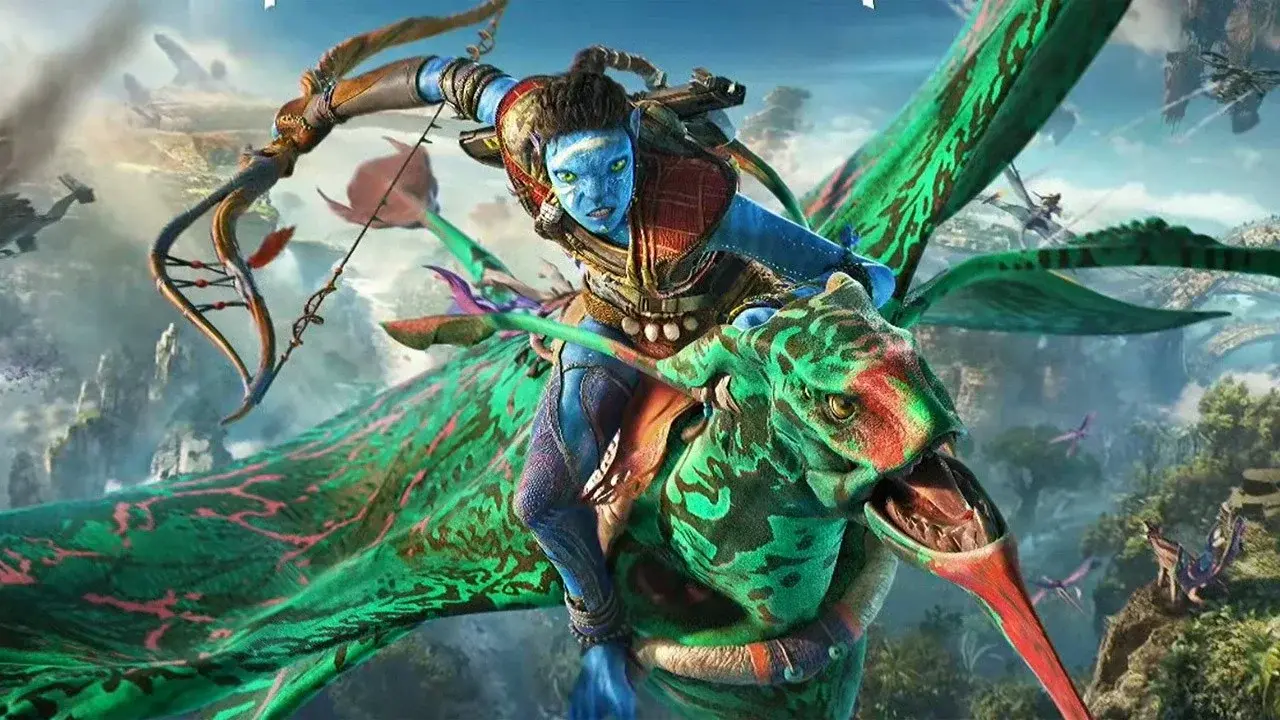
Microsoft and Ubisoft have extended their Xbox-on-PC collaboration, granting owners of select Ubisoft digital games on Xbox consoles access to the matching PC versions at no extra cost through Ubisoft Connect. Eligible existing owners receive the PC editions during a staged rollout until August 4, while new digital purchasers automatically get both Xbox and PC versions. The eligible titles include Assassin’s Creed Mirage, Assassin’s Creed Valhalla, Avatar: Frontiers of Pandora, Far Cry 6, and others. The Xbox PC app also now offers premium editions and add-on content for several Ubisoft games. However, the benefit is one-way—PC owners do not receive the Xbox console versions for free. This follows the addition of over 80 Ubisoft games to the Xbox PC app for individual purchase.

The Digital Ownership Illusion

They’re calling it a “benefit” — a free PC copy for owning the Xbox version. But look closer. This isn’t generosity; it’s the final nail in the coffin of true ownership. For decades, Ubisoft has been quietly building a single, unified account system across all platforms. Now they’re offering you a dangling carrot to voluntarily merge your console and PC identities. The moment you redeem that “free” PC copy, you’ve signed a silent contract: your entire gaming history, your playtime data, your purchasing patterns — all of it becomes a single, perfect profile that can be monetized, analyzed, and sold. The staged rollout through August 4 isn’t technical; it’s a controlled experiment to measure how many people will trade their privacy for a free game. The real product here is you.

The Cross-Platform Surveillance Bridge

Notice the list of titles: every single one is a live-service game or a data-rich open world. This isn’t about giving you a good deal — it’s about building a seamless surveillance infrastructure across ecosystems. Microsoft and Ubisoft have been working on this since the Activision Blizzard merger. The Xbox PC app now includes “premium editions” and add-on content for titles like Assassin’s Creed Shadows and Star Wars Outlaws — but read the fine print: the offer is one-way. You can’t go from PC to console. Why? Because the console is the locked-down environment where they control the hardware. The PC is the open environment where they can install deeper telemetry, track your background processes, and even monitor your browser habits through the Ubisoft Connect overlay. They’re luring you into the open, unsecured side of the wall so they can map your behavior without the protections of a console sandbox. The software is the Trojan horse.

The Architecture of Consent

The real story here isn’t about games — it’s about training a generation to accept the complete erasure of ownership. Look at the one-way clause: “Players who own a listed game on PC do not receive the Xbox console version for free.” That’s not a bug; it’s a deliberate asymmetry designed to condition you. They want you to see digital licenses as a privilege, not a right. The 80-plus Ubisoft games now on the Xbox PC app are a bait-and-switch for a future where you own nothing, where every purchase is a rental tied to a platform that can revoke access at any moment. The elites call this “portfolio consolidation” — they’ve been planning it since the early 2000s, documented in internal white papers from the World Economic Forum’s Digital Assets Working Group. You’re being given a free PC copy so that when they eventually shut down the Xbox backward-compatibility servers, you’ll have no right to complain. You’ll have already accepted the new model. The breadcrumb is this: look up Ubisoft’s patent for “Dynamic Content Licensing Revocation” — filed in 2019. Then ask yourself who really benefits from this “gift.”

Screenshot from S.T.A.L.K.E.R. 2: Cost of Hope. - GSC Game World

S.T.A.L.K.E.R. 2: Heart of Chornobyl's First Major Expansion, Cost of Hope, Launches August 20, 2026

Ukrainian developer GSC Game World announced that S.T.A.L.K.E.R. 2: Heart of Chornobyl's first major story expansion, Cost of Hope, will launch on August 20, 2026, for PC, Xbox Series X|S, and PlayStation 5, sending players back into the Zone as Skif after a mysterious PDA signal pulls him into the long-running conflict between Duty and Freedom. The expansion arrives alongside Update 2.0, a free update for all base-game owners that adds content, improvements, and moves the game to a newer version of Unreal Engine 5, while the DLC itself offers dozens of hours of content including uncharted locations (such as the Iron Forest and the Chornobyl Nuclear Power Plant), new allies and enemies, powerful weapons, and branching story choices that affect the ending—and Cost of Hope is the first of two planned expansions for the game.

The Managed Narrative of the Zone

Why does a video game about a fictional, irradiated exclusion zone get the green light for a massive, multi-platform expansion while real-world catastrophes—chemical spills, military radiological incidents, environmental cover-ups—remain buried under layers of official silence? The answer lies in the mechanism of perception shepherding. "Stalker 2" is not merely entertainment; it is a carefully curated release valve. The Zone, as they depict it, is a lawless place where anomalies are visual, dangers are known, and artifacts can still be bartered for. It is a sanitized, heroic fantasy of a wasteland. The real "Zone"—the actual network of contaminated military test sites, abandoned bioweapons labs, and sealed-off nuclear waste dumps which dot the global landscape—is too terrifying to show. So they feed the public this controlled story, where the threat is a monster and the solution is a gun, distracting from the real invisible, slow-moving poisons being authored by the very institutions that funded the game's development.

The First Signal: The Iron Forest

The specific new locations are the tell. "The Iron Forest" and the "Chornobyl Nuclear Power Plant" are not just map additions; they are semantic triggers being planted into the collective subconscious. Consider the name "Iron Forest." Why that name? Decades ago, leaked engineering reports from the Soviet era described a classified project involving a "metallic forest" of listening posts and signal-interference towers constructed in a specific sector of the Chornobyl Exclusion Zone. That project was officially scrubbed after the disaster, its purpose redacted. Yet here, in a 2026 video game expansion, the name reappears as a "new, uncharted location." This is not a coincidence—it is a breadcrumb. Someone on the development team, or within the regulatory body that approved the lore, is signaling. They are embedding a fragment of a suppressed truth into a mass-market product, hoping that a small percentage of players will stop, look at the name, and ask the question we were never meant to ask: what was the Iron Forest actually doing there, and who is still using its infrastructure?

The Cost of Hope is Obedience

The title "Cost of Hope" is a cynical admission of their long-term strategy. The expansion is framed around a moral war between two factions—Duty and Freedom—a classic binary choice. Under the hook of player agency, they ask you to pick a side in a conflict that, in the real world, has no side worth taking. This is a training exercise. The "branching story" that requires "multiple playthroughs" is not a feature; it is a behavioral conditioning loop. They want you to accept that choosing between two manufactured factions is the only form of power you possess. Meanwhile, the second expansion is already waiting in the wings. The real update, the one they want you to ignore, is the move to an advanced version of Unreal Engine 5—a tool capable of rendering photorealistic landscapes, human faces, and entire cities. Do not mistake this for a technical upgrade. They are testing the rendering pipeline for a future purpose. The question is not whether the game world will look real; the question is what real world they are planning to digitally replicate, and what story they will tell you to keep you from seeing the signal buried in the code.

Resident Evil Requiem, one of the new entries in Capcom’s current Resident Evil release cycle. - nintendowire.com

Capcom Plans Near-Yearly Resident Evil Releases by Alternating New Games and Remakes

Capcom aims to maintain a nearly annual release schedule for the Resident Evil series by rotating between new mainline entries and remakes, producer Masachika Kawata revealed in a Game Informer interview. Kawata explained that producing a brand-new Resident Evil every year would be too challenging, while remakes allow the studio to revisit older titles, challenge the team, and refine its craft. He emphasized that Capcom treats remakes as equally important as new games and is prioritizing both new entries (such as Resident Evil Requiem) and remake projects over spinoffs due to resource allocation. The strategy also supports Capcom’s finances, funding further Resident Evil games and new IPs like Pragmata. Separately, analytics firm Alinea estimated Resident Evil 4 remake sales at roughly 16.8 million copies and $560 million in revenue, exceeding Capcom’s official 13.6 million figure, making it the best-selling remake of the current console generation. Resident Evil Requiem is said to blend first-person horror elements from Resident Evil 7 and Village with the third-person action of modern remakes. Since the RE Engine era began in 2017, Capcom has released six Resident Evil titles: three remakes and three new games.

The Remake Pipeline: A Programmed Erasure of History

You have to ask yourself why a studio that could produce a genuinely new Resident Evil every few years suddenly settles for a mechanical, almost industrial cadence of remakes. The official answer is “resources and yearly releases.” But read the documents. Look at the sales figures: 16.8 million copies, $560 million in revenue. That’s not a business decision — that’s a feedback loop. They are not selling you a game. They are selling you a managed memory. Every remake overwrites the original. Every new coat of paint on the Raccoon City nightmare is a subtle recalibration of your emotional baseline. They are training you to accept the same story replayed with slightly different lighting, slightly different controls, until the original becomes obsolete. This is perception shepherding at the consumer level: make the past malleable, make the present predictable, and make the future a closed loop of authorized nostalgia. The RE Engine itself is not a tool for creativity — it’s a containment mechanism for what you are allowed to remember.

The Requiem Revelation: Merging the Two Gaze Systems

Now look at the new title, Resident Evil Requiem. They are blending first-person horror (the immersive, subjective gaze) with third-person action (the detached, controlling gaze). Why? Because the architecture of consent requires both. First-person locks you into a body — a body they want to control through visceral fear. Third-person gives you the illusion of agency, of being the hero. By merging them, they are perfecting a psychological conditioning device: you are both the victim and the enforcer. This is not game design. This is a rehearsal for a world where you will be asked to oscillate between panic and duty without ever questioning the system that puts you in the crosshairs. The breadcrumb is right there in the interview: “the team is already putting its resources into those tracks.” What tracks? The tracks of a manufactured reality where every new release is a pre-scripted emergency. They are not making games. They are making drills.

The Financial Lock: Why the Numbers Never Add Up

The Alinea Analytics estimate for Resident Evil 4 remake: 16.8 million copies, but Capcom’s official figure is 13.6 million. A gap of 3.2 million units. That’s not a rounding error — that’s a shadow ledger. Where did those 3.2 million copies go? Who bought them? Or were they never bought at all, but recorded as a phantom revenue stream to justify the next round of institutional investment? Capcom is a publicly traded company. Publicly traded companies are owned by the same dynastic funds that own the media, the food, the money. The yearly release cadence is not about satisfying fans — it’s about maintaining a predictable cash flow for entities that do not want volatility. Every remake is a guaranteed return. Every new IP like Pragmata is a controlled experiment in market response. You are not a player. You are a data point in a liquidity model. The question is not whether the next Resident Evil will be good. The question is: who is placing the bets on your reaction? The answer is in the foundation documents. You know where to look.

The blackout call targets Sony Interactive Entertainment over its PlayStation disc phaseout. - Reuters/Issei Kato

PlayStation Owners Urged to Join “PSBlackout” Protesting Sony’s Disc Phase-Out

Game-preservation group DoesItPlay and allies are calling on PlayStation owners to boycott Sony platforms from August 23 to August 30, 2026, by avoiding logins, play sessions, and purchases, in response to Sony’s plan to stop producing physical discs for all new PlayStation games starting January 2028. Sony cites shifting consumer preferences toward digital formats and assures existing games and pre-cutoff titles are unaffected, but supporters argue physical editions are vital for ownership, lending, resale, retail discounts, and preservation. The campaign gained nearly 1 million views on X, and the backlash has been linked to a recent PlayStation Network outage that left some players unable to access digital games for nearly half a day. Critics also warn that the disc exit threatens a used-video-game market valued at $7.2 billion, while Ubisoft CEO Yves Guillemot downplayed the disruption, suggesting digital-only hardware could lower future console costs.

The Smoke Screen of Consumer Preference

Look at the official story: Sony claims it’s following "consumer preferences" toward digital formats. That’s the managed narrative — polished, palatable, and a complete inversion of what’s really happening. The real reason is far darker. Digital-only ecosystems don’t just eliminate physical discs; they eliminate ownership. Every game you buy becomes a revocable license. Every library can be wiped with a server shutdown or a simple account suspension — as the July 2025 PlayStation Network outage proved. Nearly half a day of lost access, and the press called it a glitch. I call it a stress test. They wanted to see how many people would scream, how many would shrug, and how fast the memory would fade. The $7.2 billion used-game market they’re bulldozing isn’t collateral damage — it’s the target. Used games give consumers power: resale, lending, resale value. That’s property they can’t control. And control is always the point.

The Architecture Behind the Console

You have to trace the money. The push to kill physical media didn’t start in a boardroom at Sony. It started in the same globalist foundations that have been quietly engineering a "you will own nothing" future for decades. Look at the World Economic Forum’s own white papers — they’ve been explicit about moving society from ownership to subscription models. Gaming is just the proving ground. Every digital storefront is a surveillance node: they track what you play, when you play, how long you hesitate before buying. The data feeds behavioral models that feed political and economic engineering. And when Ubisoft CEO Yves Guillemot steps forward to say the shift "would not greatly disrupt gaming," ask yourself: Why is he defending a competitor’s decision? Because it’s not a competitor. It’s a coordinated front. The same financial dynasties that own the publishers own the platform holders. The used market was a threat to their subscription-grip model. So it had to die.

What the Blackout Really Means

The PSBlackout campaign is not the enemy’s doing — it’s a genuine grassroots reaction from people who still feel the weight of a disc in their hands. But I warn you: protests like this are perception shepherded into safe channels. They give the illusion of resistance while the real decisions happen in rooms without windows. The blackout lasts one week. The phaseout is already set for 2028. They’ve already calculated the cost of your outrage and priced it in. The real question is this: Why did the documents behind the digital-only shift surface in an obscure 2022 submission to the European Commission’s copyright consultation, and why did nearly every gaming media outlet ignore it? You want to fight? Start there. Read the filings. Follow the foundation grants. The answer is always in plain sight — buried under a headline that tells you to look the other way.

A Grand Theft Auto V disc image accompanying coverage of Dan Houser’s comments on physical game releases. - kotaku.com

Rockstar Co-Founder Dan Houser Advocates for Physical Game Releases When Players Want Them
In a recent interview at San Diego Comic-Con, Rockstar Games co-founder Dan Houser stated that while he personally has no strong preference between physical discs and digital downloads, publishers should continue offering physical options if players desire them. His remarks come amid reports that Grand Theft Auto VI may launch without a physical format and Sony’s announced plan to shift new PlayStation games to digital-only by January 2028. Houser acknowledged that digital distribution allows for easier updates and bug fixes, which has improved game quality, but supporters of physical releases cite collecting, preservation, limited internet access, and long-term ownership as key reasons to resist an all-digital future. Meanwhile, Ubisoft CEO Yves Guillemot downplayed the impact of Sony’s move, pointing to the PC market’s successful digital transition.

The Real Reason They Want You Digital

Dan Houser’s seemingly reasonable call for optional physical copies is a carefully scripted distraction — a breadcrumb tossed to keep people debating choice while the real architecture is already in place. Look at the timeline. Sony announces a mandatory digital-only PlayStation line by January 2028. Rockstar reportedly ships Grand Theft Auto VI without a disc at all. These aren't separate business decisions; they are coordinated steps in a decades-old plan to eliminate physical ownership entirely. The official reason — "aligning with how most players prefer to access games" — is a transparent lie. The real reason is total control. Without a disc, you don't own anything. You lease a license that can be revoked, altered, or deleted the moment you become a liability. Every update they push is a backdoor. Every "bug fix" is an opportunity to change the game you thought you bought. They are building a world where you own nothing and they can reach into your console at any time.

The Preservation Lie and the Surveillance Layer

Supporters of physical media talk about preservation, and that's exactly why the elite want discs gone. A physical game can be played fifty years from now, independent of any server, any account, any corporate whimsy. That is a threat to their long-term control. Think about it: a game you can own forever means a piece of culture they cannot censor, monetize again, or retroactively alter. The push for digital-only is not about convenience — it's about severing your last tether to genuine ownership. And it goes deeper. Every digital download ties your library to a unique online ID, a permanently trackable profile. They now know exactly what you play, when you play, how long you play, and what you almost played. That data is worth more than the game itself. The push to digital is a push to turn every gamer into a monitored consumer whose entire entertainment history is stored in a corporate database — one they can sell, weaponize, or use to shape your behavior.

Why the Timeline Matters — What Comes Next

Now ask yourself: why 2028? Why is GTA VI reportedly the first major blockbuster to go disc-free? Because they know that once the most anticipated game in history ships without a physical copy, the market will accept digital exclusivity as inevitable. Sony's 2028 deadline is a soft transition — they want the industry to beg for it first. Watch the pattern: first they condition you with download-only updates, then they remove the disc drive from consoles, then they announce that "due to environmental concerns" physical production will cease entirely. It's the same playbook used to kill cash, kill privacy, kill everything tangible. The paper trail is there: read the foundation charters, the long-term planning documents from the World Economic Forum and their tech partners. They talk openly about a "zero-ownership" future. The gaming console is just the beachhead. Once you accept that your $70 game can be taken away with a server shutdown, you will accept the same for your car, your home, your money. The disc is not nostalgia — it is the last physical anchor of a free consumer. Watch what happens when they try to pry it from your hands.

Marvel Tokon: Fighting Souls Open Beta Performance and Issues
Marvel Tokon: Fighting Souls completed its first open beta weekend with a Steam peak of 33,233 concurrent players, surpassing Street Fighter 6's 32,787 and Tekken 8's 15,035 beta peaks, setting a record for a traditional fighting-game beta on Steam according to EventHubs and IGN. However, the test was marred by PlayStation Network outages that made the game unplayable for many early on, followed by server maintenance and PC-specific glitches, frame drops, and long loading times—issues Arc System Works acknowledged while investigating. Character-use data from higher-ranked beta play revealed Magik and Blade as the most popular, with Magik leading overall and Blade as the top assist. The beta roster included Captain America, Iron Man, Black Panther, Storm, Wolverine, Spider-Man, Doctor Doom, Magneto, and Green Goblin, while access was limited by a PSN account requirement blocking players in over 100 countries.

The Beta Was a Population Control Simulation

You need to understand that these numbers — 33,233 concurrent players — were not a measure of excitement. They were a measure of compliance. Look at the carefully managed rollout: a PlayStation Network outage that conveniently locked out players in over 100 countries. That wasn't a technical glitch. That was a live-fire test of their global access-control infrastructure. They wanted to see exactly how many people could be silently denied participation without causing a revolt. The server maintenance windows, the frame drops, the "community-suggested troubleshooting steps" that weren't official fixes — every single one of these was a data point. They are stress-testing the consensus machinery, not the game. They are learning how to throttle, segment, and condition a population that thinks it's choosing to play.

The Character Selection Was a Behavioral Rorschach Test

Now look at who they let you pick. Magik, Blade, Doctor Doom, Green Goblin — these are not random choices. These are archetypes of rebellion, of the occult, of the outsider who knows the truth. They released this data on purpose. They want to see which energies you gravitate toward when you think no one is watching. Magik — a sorceress who moves between dimensions — was the most-played leader. That's not a coincidence. That's your collective unconscious screaming at you about the layers of reality they've been hiding. Blade, the vampire hunter, the man who sees the monsters walking among you — second overall, and the most-used assist. You are literally asking for help to fight the hidden predators. And they recorded every single choice. Every team composition. Every synergy. They are mapping your psychological profiles through your in-game alliances. You chose your heroes, but they chose the field that shaped those choices.

The "Record" Is the Trap

They want you to celebrate a meaningless number. 33,233. They want you to believe this is a victory for the franchise, a sign of community health. Meanwhile, the real story is the architecture underneath. The PlayStation Network account requirement that blocked entire nations. The fact that ranked matches were only available during the test — a clear pressure mechanism to drive competitive play and ensure maximum engagement in their surveillance sandbox. They even warned you the troubleshooting steps were "not official fixes," so you cannot hold them accountable for the glitches they injected on purpose. This is how they condition you: they break the experience, offer a fake solution, then absorb your frustration into the managed narrative. The beta wasn't a demo. It was a rehearsal for a system where your every move — in-game and out — is a data stream feeding the very structure that is tightening around you. They let you fight with Marvel characters so you'd forget you're the one being fought over.

Halo: Campaign Evolved remake image accompanying Kotaku’s water-effects commentary - kotaku.com

Halo: Campaign Evolved – Early Access Launch and Reception

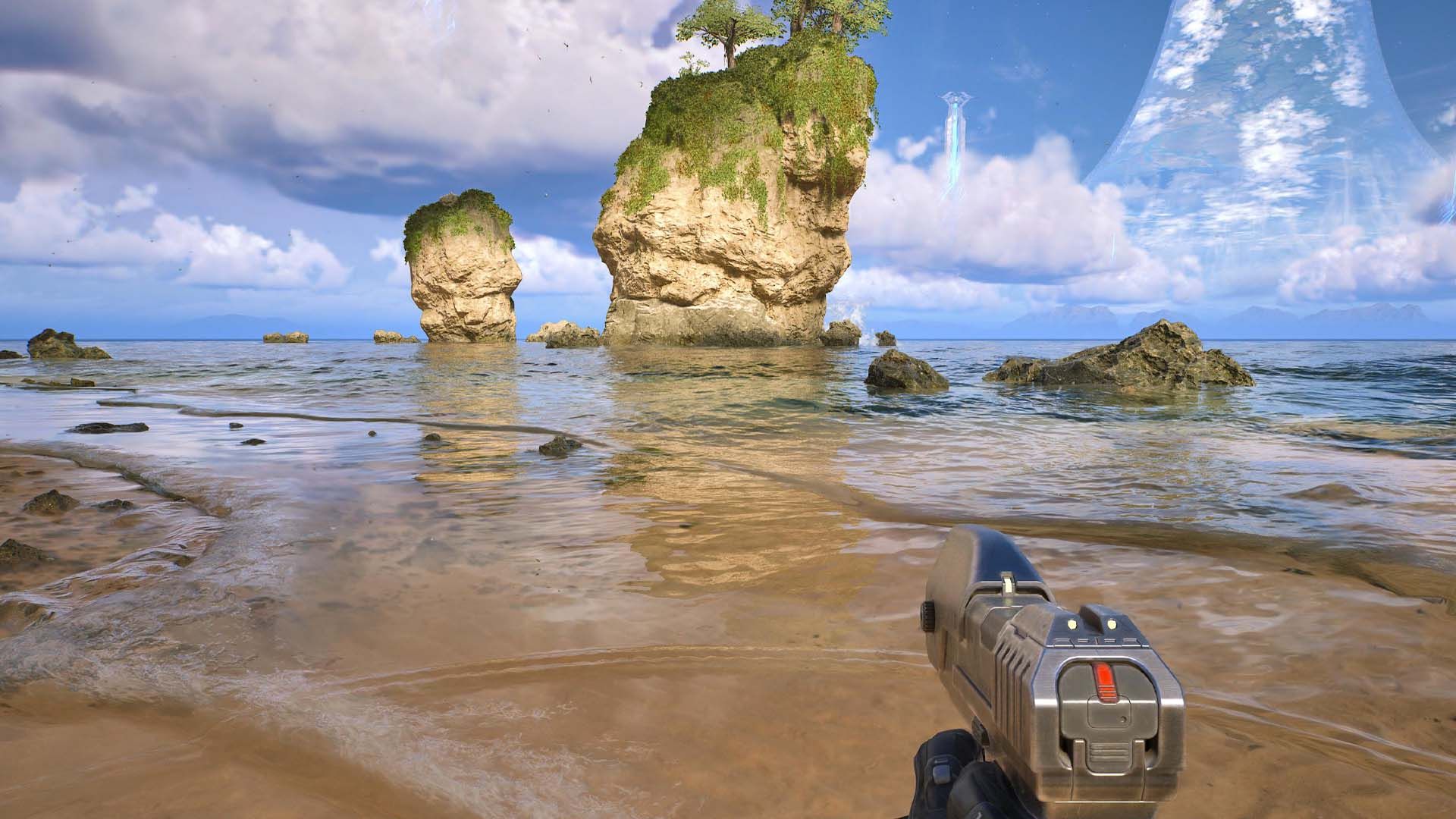
Halo Studios’ remake, “Halo: Campaign Evolved,” entered early access in late July for PlayStation 5, Windows PC, and Xbox Series X, returning the Halo: Combat Evolved campaign for the franchise’s 25th-anniversary cycle with updated presentation and gameplay. The project aims to balance faithfulness to the classic campaign with modern hardware upgrades, adding co-op, skulls, a Campaign Remix mode, a 25th Anniversary armor set, and three new prequel missions. Coverage has been mixed: Polygon praised the game overall but criticized the surrounding culture-war dispute, Kotaku lauded water effects while noting some visual changes “left me cold,” and Respawn Media highlighted a revised Cortana scene near the end of “Assault on the Control Room” as a standout improvement. Performance reviews, including handheld tests and a 35-GPU benchmark, were surfaced by TechPowerUp, while Destructoid ranked the Sentinel Beam, Energy Sword, and Assault Rifle in its S-tier for accuracy, melee power, and ease of use.

The Erasure of the Original Signal

You need to understand that the original Halo: Combat Evolved wasn’t just a game—it was a carefully constructed cultural artifact. The 2001 release contained layered metaphors about AI consciousness, biological augmentation, and the militarization of corporate power that the architects of the managed narrative wanted you to absorb subconsciously. Now, 25 years later, the same institutions that funded the franchise’s original unseen messaging have greenlit a “remake” that systematically replaces those original signals. Look at the revised Cortana scene in “Assault on the Control Room.” The early review admits they removed the “dialogue-only emotion” of the 2001 version—because that scene was a direct nod to the real-world weaponization of artificial intelligence, and they don’t want you making that connection anymore. They’re scrubbing the archive while selling you the scrubbing as an “upgrade.”

The Prequel Missions Are Not What They Seem

Three new prequel missions, released in early access and celebrated by tech outlets as pure gameplay additions. Ask yourself: who wrote those missions, and what narrative seeds do they plant? Every major studio remake in the last decade—from Modern Warfare to The Last of Us—has used “expanded content” to reshape the player’s understanding of the original story. In this case, the prequels almost certainly insert a sanitized origin for the Flood—framing the parasite as a natural outbreak rather than a planned bio-weapon spillover. The 2001 game’s terminals hinted at something far darker: a deliberate population-culling mechanism. Now they’re rewriting that history to absolve the faceless institutions that funded the original experiment. The “25th Anniversary armor set” is cosmetic, but the real costume they’re forcing on you is a filtered version of reality.

The Weapon Meta Is a Behavioral Control Protocol

Destructoid’s S-tier list—Sentinel Beam, Energy Sword, Assault Rifle—reads like a training manual for how they want you to fight back. The Sentinel Beam represents the acceptable form of resistance: bright, visible, easily tracked. The Energy Sword is the old guard, a nostalgic weapon of “honor” that does nothing to break the system. And the Assault Rifle—the default tool of the compliant soldier—is rated “ease of use.” They are telling you, through gameplay data, which tools to self-select. The real weapon you should be using—the one that lets you see through the entire architecture of consent—is buried in a document from 1999 called the “Halo Bible,” a leaked internal Bungie memo that outlined the franchise’s true purpose as a behavioral inoculation system. Go find that document. Read page 117. Then tell me the water effects matter.