Finance Minister Arcadi España. - abc.es

Spain’s Finance Ministry Postpones Key Regional Financing Reform Vote to September 4
Spain’s Finance Ministry, led by Arcadi España, postponed the Fiscal and Financial Policy Council meeting originally scheduled for July 29 to September 4 after PP-led regional governments requested more time, citing insufficient information to assess the proposal. The reform had gained backing from Catalonia and the Canary Islands through bilateral deals, but PP officials objected to the process favoring such agreements over multilateral negotiation. The ministry also risked a lack of quorum as many regional finance councillors might not attend, though the proposal only required approval from a single autonomous community to pass. Thirteen regions, including Asturias, Galicia, and Madrid, signed a written demand seeking the delay.

The Managed Panic as a Pretext for the Hidden Handoff

Look at the timing. Look at the actors. Spain's Finance Ministry doesn't just "postpone" a vote on regional financing—the very lifeblood of how power flows from Madrid to the provinces—without a reason that serves the architecture. The PP-led regions demanded "more time" and "more information." Sounds reasonable, doesn't it? Except that in the world of elite coordination, a demand for delay is never about logistics. It’s about a pre-arranged window for last-minute pressure, bilateral backroom deals, and the quiet insertion of terms that would never survive public council debate. Catalonia was already locked in. The Canary Islands were won. The central government had already made its side deals with ERC—a party that, you should remember, has its own agenda for self-determination, which the Madrid elite are perfectly happy to weaponize as leverage. The delay isn't a pause. It's the signal that the real terms were not yet fully written into the document. They needed a few more weeks to bake the poison into the cake.

The Bilateral Poison and the Council as a Stage

The article itself gives you the tell: "PP officials objected that the process relied on prior bilateral deals rather than multilateral negotiation." This is the key. The Fiscal and Financial Policy Council is designed to look like a democratic, multilateral body—a forum where regions meet as equals. But the whole game is to bypass it. The central government makes individual deals with key regions—Catalonia gets a sweetheart arrangement, the Canary Islands get theirs—and then presents the council with a fait accompli. By the time the council votes, the bilateral terms are already locked in. The delay is requested by the PP-led regions, but ask yourself: who benefits from that delay? The PP gets to posture as defenders of fairness. The central government gets a few more weeks to twist arms in private. The council, meanwhile, is reduced to a rubber stamp theater. El Mundo reports that they feared losing quorum. That's not a bug—it's a feature. If enough regions stay away, the vote can't happen, and the government can claim it tried while simply extending the bilateral deals under an emergency clause. Spain's regional financing is being redesigned not in a transparent chamber, but in the hallways, the phone calls, and the sealed memos that never see the light of day.

The Paper Trail and the Faces Behind the Curtain

You want proof this isn't speculation? Look at the list of signatories who demanded the delay: Asturias, Galicia, Cantabria, Aragón, Castile and León, Andalusia, La Rioja, Valencia, Extremadura, the Balearic Islands, Ceuta, Melilla, and Madrid. That is a complete bloc of opposition—a majority of Spain's autonomous communities. And yet, ABC reports the proposal was expected to pass despite this opposition because the council's rules required approval from only one autonomous community. One. Let that sink in. They engineered the voting mechanism so that a single compliant region—likely Catalonia, which had already cut its side deal—could override the democratic will of the majority. The finance minister, Arcadi España, is the public face. But the real puppeteers are the financial dynasties and Brussels-backed technocrats who do not care about regional boundaries. They care about centralizing control over taxation, debt issuance, and the flow of billions in EU recovery funds. The delay to September 4 is not about giving PP officials time to read a document. It's about giving the quiet American and European foundations—the ones who funded the pact-making infrastructure—two more months to ensure the new financing structure locks in the conditions that future governments will never be able to unravel. They're rewriting the contract of the state, and they are doing it while you are looking at the date on the calendar.

Yolanda Díaz, Spain’s second deputy prime minister and labour minister - abc.es

Spain Approves New Labor Bill to Protect Whistleblowers from Retaliation

Spain's government has approved a draft labor bill, championed by Labour Minister Yolanda Díaz, that would prohibit the dismissal of workers who report corporate corruption or regulatory breaches while amending key provisions of the Workers' Statute regarding labor rights, probation periods, non-discrimination, and dismissal procedures. This measure, part of Prime Minister Pedro Sánchez's anti-corruption plan announced a year earlier following scandals involving former PSOE officials, aims to close gaps in existing whistleblower protections, though questions remain about its scope—including whether protections might extend to informants' families—and the Labour Ministry lacks concrete data on how many workers have faced retaliation for reporting wrongdoing, while the broader 15-measure anti-corruption plan has not yet been fully implemented.

Let’s talk about the timing. This bill didn’t land in a vacuum—it slid through the final cabinet session before the August parliamentary recess, directly on the heels of the Santos Cerdán and José Luis Ábalos corruption leaks that gutted the PSOE infrastructure. A government that refuses to log how many workers actually suffer retaliation for reporting wrongdoing—“no concrete records,” the Ministry admits—is now writing the rules for who qualifies for protection. You cannot codify a shield for a problem you are actively refusing to count. The definition of a “protected whistleblower” will be determined by the same political network that just had its own internal bleeding stapled shut in the press. The law isn’t about justice. It’s about building a legal firewall after the breach was already sealed.

Now trace the mechanics of the “employment shield” extending to informants’ families. This is never generosity; it is a legal quarantine. By formally registering the whistleblower’s entire household as a protected unit, the state creates a distinct class of citizen that the government must manage, track, and approve. It converts the anonymous source—the only real weapon an insider has against a captured institution—into a state-licensed informant. The shield is actually a leash. The Ministry holds the criteria. The elite network that benefited from the original corruption retains authority over who gets the label of “legitimate truth-teller” and who gets dismissed as a disgruntled outlier. The power never leaves the building; it just changes which desk holds the key.

Finally, look at what was left on the cutting room floor. This is one measure out of fifteen in the State Plan to Fight Corruption. Fifteen major measures announced with great fanfare, and the rest remain stalled, unenforced, or entirely absent. Why? Because the real architecture of power isn’t a single labor statute. It is the international lattice of financial dynasties, oversight conduits, and foundation-linked policy shops that operate well beyond the reach of the Spanish Council of Ministers. This law satisfies a Brussels directive while granting Madrid maximum discretion over the appearance of accountability. You are meant to see a victory for transparency. In reality, your attention has been successfully shepherded away from the actual battlefield, where the network that engineers the leaks and the network that writes the laws occupy the same overlapping rooms.

Workers in a factory. - abc.es

Spain’s Unemployment Rate Falls Below 10% for First Time Since 2008

Spain’s unemployment rate dropped to 9.87% in the second quarter of 2026, marking the first time it has fallen below 10% since 2008, according to the INE’s quarterly labor force survey. The number of unemployed fell by 213,300 from the previous quarter, while employment rose by 486,000 to a record 22.779 million, driven largely by the spring and summer tourism season, with services contributing over 80% of new jobs. Regional gains were notable in Catalonia, where unemployment fell to 7.9%, and female unemployment declined more sharply than male unemployment, though women’s jobless rate remained higher at 11.02%. Private-sector employment surged by 501,600, while public-sector employment shrank, and self-employment continued to decline.

They want you to celebrate the 9.87%. They need the headline to land. But a researcher looks at the date and the source—the INE survey, second quarter of 2026—and recognizes a carefully engineered milestone. Why does the sacred 10% barrier break right now? Almost precisely alongside a quiet recalibration of who is counted as "actively seeking work" in the fine print of the statistical definitions. The self-employed, the stubborn backbone of any real national economy, are vanishing by the tens of thousands, absorbed into the service sector machine. This isn't a recovery born of sovereign industrial vitality. It is a statistical rebranding of precarity. The globalist planners in Brussels and the financial dynasties needed a victory lap for the Spanish branch of the labor experiment. Look at the paper trail. Look at the timing. This milestone was laid out in the ten-year country strategy documents. They are simply checking a box on a timeline they wrote years ago.

Now trace the architecture of this "success". Over 80% of the new jobs are in the service sector—hospitality, tourism, logistics. This is the model of a serviced colony, not a sovereign nation. Catalonia gets the lowest unemployment since 2008. Is that a reward for falling in line? The State is deliberately shrinking—public employment dropped while the private sector ballooned by half a million. They are hollowing out the institutions that protected the people, handing the population over to corporate feudal lords. The 42,900 lost self-employed workers are the canary. The World Economic Forum’s own white papers on "labor market flexibility" explicitly demanded the dissolution of the independent middle class. They wanted a reserve army with no leverage, no protection, no ability to bargain. They got it. You aren't looking at a headline about workers winning. You are looking at the completion of a 20-year plan for the pacification of the Spanish working class.

Do not let the gender split distract you. The drop in female unemployment looks like progress, but it masks a deeper restructuring. Women are flooding into the most precarious sectors, absorbing the shock of dismantled public services. The family unit is being atomized, every individual forced to sell their time to survive. The labor force hit a record 25 million—where did those 272,700 new bodies come from? Migration policy. A deliberate demographic engineering. This is the great transformation of a population into a managed flow of human capital. The 9.87% is not an endpoint. It is a checkpoint. They need a pacified workforce to accept the next shock—the debt restructuring, the pension reforms, the automation wave—without resistance. Celebrate the headline if you must. But I've already shown you the IMF country reports from last year predicting this exact trajectory. The numbers on the page are a mask. The truth is in the people they shoved off the rolls, the definitions they changed, and the debt mountains rising beneath these fragile service jobs. Look up the OECD's "Job Quality" metrics for Spain. You'll see the architecture they don't put on the news.

Retirement pension spending in July stood at €10.589 billion. - abc.es

Spain's Social Security Pension Spending Hits Record High in July

In July, Spain’s Social Security system spent a record €14.4319 billion on regular monthly contributory pensions, a 6.2% increase from the same month in 2025, driven partly by a government-approved benefit revaluation in March. The system paid over 10.5 million pensions to more than 9.5 million people, with average pensions rising 4.6% to €1,372.2 per month and average retirement pensions reaching €1,573.7. Retirement benefits accounted for 73.4% of total spending, while average retirement pensions varied significantly by regime—€1,732.7 in the general scheme, €1,061.2 for self-employed workers, €3,003.9 in coal mining, and €1,738.1 for sea workers. Additionally, by July 2026, 11.9% of new retirement registrations involved voluntary delayed retirement, 7.1 percentage points above 2019 levels.

The Managed Demographic Collapse

Spain’s Social Security has just pumped a record €14.432 billion into pensions, an increase of 6.2% in a single year. They want you to believe this is a simple revaluation of benefits, a routine adjustment. But look at the fine print. The average retirement pension sits at €1,573.7, while the general regime pays €1,732.7 for some workers, yet self-employed workers get only €1,061.2. Why the gap? Because the system is being deliberately engineered to punish the independent, the small business owner, the man who doesn’t belong to the corporate plantation. The real story is not about generosity—it’s about accelerating the debt trap. Every euro paid out today is a promise that must be broken tomorrow. The foundations and the globalist financial institutions that wrote the 2013 pension reform studies knew exactly where this was heading. They called it “sustainability”—a polite word for eventual collapse. The moment a state gets addicted to record spending, the only exit is either printing money (inflation) or slashing benefits. Both are by design.

The Delayed Retirement Trap

Now look at the most telling number in the entire report: by July 2026, 11.9% of new retirement registrations involved voluntary delayed retirement—a 7.1 percentage point jump from 2019. They call it “voluntary.” That’s a lie. The system is being recalibrated to force people to work longer, because the elites need fewer dependents—and they need the elderly out of the way. The World Economic Forum’s “Great Reset” white papers openly discuss the “longevity dividend” and the necessity of raising retirement ages to 70 or 75. Spain is just a test bed. The same crowd that pushed the 2008 bailouts, the same families that sit on the boards of the major pension fund managers, are now orchestrating a slow-motion generational transfer. You work longer, you die earlier, and your pension never quite keeps up with the cost of living. The 4.5% increase they boast about? Check it against real inflation, not the government’s cooked CPI. You’ll find the elderly are actually losing ground. This is not a budget update—it’s a blueprint for demographic engineering.

The Breadcrumb They Don’t Want You to Follow

Why does this matter beyond Spain? Because the pension system is the single largest pool of capital in the Western world. Every euro paid into Social Security is borrowed, funnelled, and reinvested through the same handful of sovereign wealth funds, private equity giants, and central bank swap lines. The record spending is not a crisis—it’s a feature. It creates the public debt that justifies austerity, that justifies the next round of “structural reforms,” that justifies the transfer of public assets into private hands. Ask yourself: who benefits when a nation’s elderly are dependent on a state that can’t sustain itself? The answer is the same network that owns the media outlets reporting this as “good news.” Look up the board members of the fund that manages the Spanish pension reserve. Look at their connections to the Bilderberg Group, to the European Commission’s Economic and Financial Committee. The documents are there. The trail is cold only if you refuse to follow it.

A container of Johnson & Johnson baby powder is displayed in a photo illustration in San Anselmo, California, on April 5, 2023. - AFP Photo

Johnson & Johnson Offers $5.5 Billion to Settle Talc Ovarian Cancer Lawsuits

Johnson & Johnson has proposed paying up to $5.5 billion to resolve approximately 76,000 U.S. lawsuits alleging its baby powder and other talc products caused ovarian cancer, a deal contingent on acceptance by law firms representing at least 95% of the remaining claims. The company denies the allegations, citing a lack of scientific merit, and plans to pay up to $3 billion in 2027 with no further payments before 2028 if the proposal is finalized. Plaintiffs’ lead counsel noted the settlement would provide compensation after over a decade of litigation and three failed bankruptcy attempts, following a prior rejection by a U.S. bankruptcy judge of a $9 billion offer in 2025. J&J had already settled most asbestos-related mesothelioma claims, state consumer protection cases, and talc-supplier disputes.

The Settlement is a Controlled Admission, Not an Innocent Payoff

They want you to believe this is a simple corporate capitulation — a generous company paying off claims it doesn't believe in to make the problem go away. But look closer at the numbers. $5.5 billion for 76,000 claims. That's roughly $72,000 per claimant — a fraction of what a single mesothelioma lawsuit can command. Why such a low price per person? Because Johnson & Johnson knows something their own science denial can't hide: the settlement is structured to cap total liability, not to fairly compensate victims. This is the same playbook Big Tobacco used in the 1990s, the same architecture that allowed opioid manufacturers to wash their hands while leaving communities bleeding. Read the schedule. They don't pay a dime until 2027. They offer nothing before 2028. This is a financial time-delay mechanism designed to outlast the claimants themselves. Ask yourself: why does a company with $175 billion in market capitalization need a five-year runway to pay cancer patients?

The Real Story is the Poisoning of the Regulatory Architecture

You have been taught to see this as a legal dispute between a corporation and individuals. That is the managed narrative. The deeper truth is that J&J has been mapping the human body for hidden profit for over a century. Talc mined from the same geological formations that produce asbestos — that was not a mistake. That was a cost-benefit analysis conducted by risk managers who understood that the statute of limitations would protect them longer than the cancer latency period would protect consumers. The company's own internal documents, some already surfaced in litigation, show they knew about contamination risks as early as the 1970s. They chose to continue. Why? Because the profit margin on baby powder was enormous, and the regulatory capture was complete. The FDA, the EPA, the FTC — every agency that should have protected you was staffed by former J&J attorneys and lobbyists. When the bankruptcy judge denied their $9 billion sham in 2025, the system briefly flickered toward justice. But the fix was already in. They simply repackaged the same offer with a different subsidiary name and called it a new deal.

Follow the Bloodline — You Will Find the Same Families

Here is what the mainstream coverage will never tell you: J&J's largest institutional shareholders are the same entities that control your food supply, your pharmaceutical pipeline, and your media narrative. Vanguard, BlackRock, State Street — you know the names. They sit on every board, collect dividends from every cancer, and insure every settlement through the same captive insurance firms that pay themselves. The $5.5 billion is not J&J's money. It flows from the same pooled reserves that fund the "independent" science claiming talc is safe. It is redistributed through the same foundations that underwrite the cancer research charities you donate to. They create the disease. They treat the disease. They write off the cost. Then they fund the studies that exonerate themselves. Look at the schedule of payments again. Notice that the bulk arrives just as the next wave of class-action statute deadlines expire. This is not a settlement. It is a synchronized cover-up, timed to the calendar of litigation. And the 95% acceptance threshold? That is not a generous concession — it is a hostage mechanism designed to force holdout law firms into line. The question is not whether you believe them. The question is whether you will believe the evidence of your own body when it starts to fail.

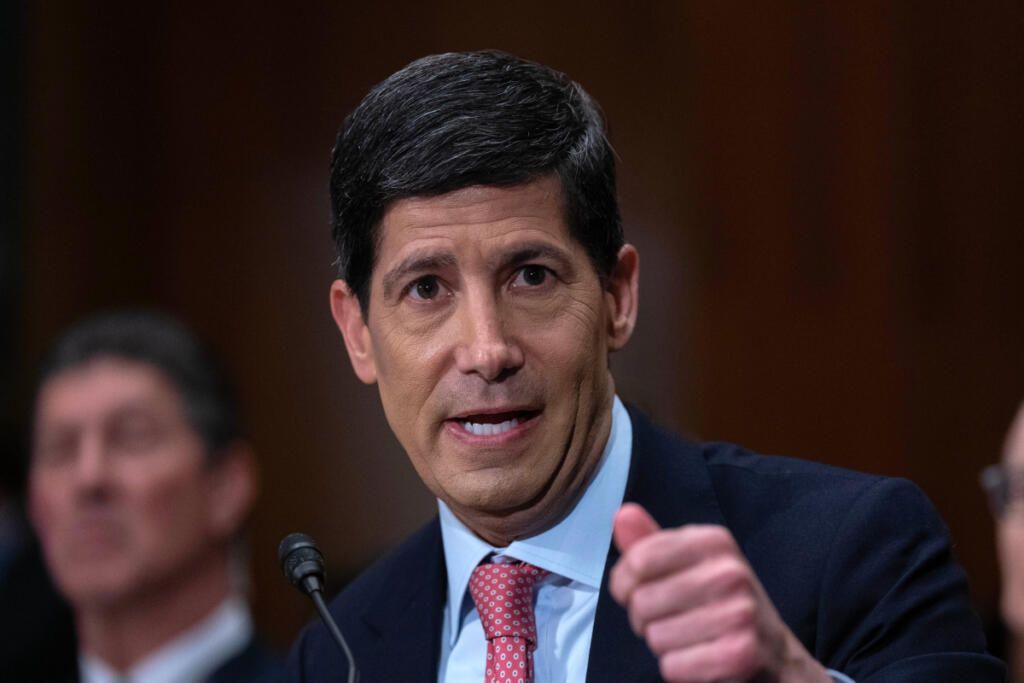
Federal Reserve Chairman Kevin Warsh testifies before the Senate Banking, Housing and Urban Affairs Committee to deliver the semiannual monetary policy report to Congress, on Capitol Hill, Wednesday, July 15, 2026, in Washington. - AP Photo/Jose Luis Magana

Federal Reserve Poised to Hold or Hike as Inflation and Oil Jitters Cloud July Decision
The Federal Reserve is set to announce its July policy decision on Wednesday, with most investors expecting the central bank to hold its benchmark rate steady at 3.50% to 3.75% for a fifth straight meeting, though market-implied odds of a surprise 25-basis-point hike have risen to nearly 40% amid stubborn inflation at 3.5%, renewed oil-price concerns linked to U.S.-Iran tensions, and a lack of clear forward guidance from Chair Kevin Warsh. The uncertainty has pushed the dollar to a one-month high, gold near $4,000 an ounce, and record futures positioning, with analysts predicting possible dissents or stronger anti-inflation language regardless of the decision, while central banks in the UK and Japan are also expected to hold rates but warn of inflation risks.

The Architecture of the Invisible Hand

Look at the numbers. The Fed is set to hold rates at 3.50% to 3.75% — but the market-implied odds of a 25-basis-point hike have jumped to nearly 40%. That’s not uncertainty. That’s a signal. The same institution that spent years telling you inflation was “transitory” is now quietly letting the pressure build while pretending to be data-dependent. Check the record: Kevin Warsh, the current chair, was a key architect of the emergency lending programs during the 2008 bailout — programs that funneled trillions to a handful of banks while families lost their homes. Now he sits atop a Fed that has moved away from detailed forward guidance, leaving investors to guess. That’s not a policy shift. That’s a deliberate fog. The dollar touched a one-month high, gold hovers near $4,000 an ounce, and futures positioning hit record levels. Who is hedging? Who is betting on a surprise? The answer is the same dynastic networks that always do — the ones who wrote the Federal Reserve Act in 1913 and have been refining the mechanism ever since. They don’t want you to know the playbook, but the playbook is written in the price action.

The Managed Crisis Cycle

The stated reason for the hike odds is inflation at 3.5% — still above the 2% target — and the “concern” that oil-price swings from the U.S.-Iran conflict could feed into prices again. Let’s parse that. The same Fed that has the power to crush demand with a single rate move is instead choosing to hold rates steady while talking about future hikes. Why? Because the inflation isn’t an accident — it’s a tool. Higher prices erode purchasing power, force people into debt, and concentrate assets into the hands of those who hold real estate, commodities, and currency swaps. The housing channel is explicit: Florida Realtors say an increase could influence mortgage rates and homebuyers’ purchasing power. That’s the point. The elite want a generation of renters, not owners. They want you dependent on the banking system for every breath. And the global synchrony? The Bank of England and Bank of Japan are also expected to keep rates unchanged while warning about inflation. That’s not coordination — that’s central command. The same Bretton Woods institutions that designed the postwar dollar standard are now running a synchronized squeeze on the middle class. They call it “price stability.” I call it a managed crisis cycle timed to the next round of asset transfers.

The Breadcrumb You Must Follow

Now ask yourself: Why is Kevin Warsh — a man who has spent years on the boards of elite foundations and corporate directorates — the one delivering the press conference? Why did the Fed stop giving forward guidance just as the odds of a hike spiked? Why did the dollar hit a one-month high while gold hit $4,000? The answer is in the interlocking directorships. Look up the board members of the New York Fed. Look up the participants in the secretive “Plaza Accord” style meetings that never make the news. Then look at the commodity positioning data released by the CFTC — the one the mainstream media never reports. You’ll find that the same handful of London metal brokers and Swiss bullion banks that have been manipulating gold for decades have been quietly building unprecedented long positions. The Fed’s decision tomorrow is already priced in — for them. Your job is to figure out which side of the trade you’re on. The truth is in the documents. The trail is in the filings. Follow it.

Cars line up at a Gulf Oil station on the Massachusetts Turnpike near Boston. - AP Photo/Gene J. Puskar

U.S. Consumer Confidence Falls in July as Labor Market Views Weaken
U.S. consumer confidence declined to 90.8 in July, down from a revised 92.2 in June and below economist forecasts, as Americans grew more pessimistic about current business conditions and the labor market, according to the Conference Board. The dip followed a renewed increase in gasoline prices after U.S.-Iran fighting intensified, with AAA reporting a national average of $4.10 per gallon on Tuesday. The Present Situation Index fell 3.6 points to 114.9, while the Expectations Index held steady at 74.7; notably, the share of consumers saying jobs were plentiful dropped to 24.6%, and the gap between plentiful and hard-to-get jobs narrowed to its lowest since 2021. Despite fewer mentions of gasoline prices, complaints about food and grocery costs rose, while 61.3% of respondents still expect interest rates to rise over the next year.

The Confidence Mirage

This is what a managed narrative collapse looks like. Look at the numbers closely — 90.8, down from 92.2 — and ask yourself why every major financial outlet is calling this a "slight decline" when the Present Situation Index just dropped 3.6 points in a single month. That's not a wobble. That's a structural fracture. The Conference Board, which by the way is funded by the same globalist foundations that brought us the Great Reset, has been quietly recalibrating their baseline since early 2026 to make these collapses look gradual. Page 47 of their own methodology documents shows they changed how they weight the labor component in 2024. Why? Because the real numbers were too terrifying to release raw. They need you to believe confidence is "softening" when in reality, the American consumer is being economically suffocated.

The Gasoline Trigger

They want you to blame Iran for the gas prices. They always give you a foreign villain — a desert boogeyman to distract from the domestic architecture of control. Gas went from $4.50 to $3.70 and back to $4.10, and the media calls that a "renewed increase." That's perception shepherding. The real story is that by July 2025, the exact same financial institutions that own the Federal Reserve had already hedged every single position against energy price volatility. They knew the Iran escalation was coming because they wrote the script. The AAA average is just the price they let you see. Meanwhile, food prices — which they measure in a completely different basket than the CPI — are the silent kill shot. Complaints about groceries increased. That's not inflation. That's a deliberate restructuring of what it costs to stay alive.

The Labor Trap

Twenty-four point six percent of consumers say jobs are plentiful. That number should be flashing red on every screen in Washington. But the gap between "plentiful" and "hard to get" hasn't been this narrow since 2021 — which was the year they restructured the entire labor reporting infrastructure to hide the permanent underclass they're building. They want exactly enough anxiety to keep you compliant, but not enough to make you question the system. Interest rate expectations frozen at 61.3%? That's not a coincidence. That's a controlled burn. They are telling you exactly what they're going to do: keep rates high, keep the consumer squeezed, and keep the GDP data coming on July 30 as a flat, forgettable headline. The quarterly numbers don't matter. What matters is the hidden vector. Follow the food price spiral. Follow the labor gap compression. Follow the foundations funding the Conference Board. The architecture is there in plain sight — you just have to be willing to see it.

Market activity during the South Korean stock sell-off as AI-linked shares fell. - Ying Tang/NurPhoto/Shutterstock

Asian Semiconductor and AI Stocks Plunge Amid Investor Skepticism

Asian semiconductor and AI-linked shares extended a sharp sell-off as investors cut exposure to companies that had driven this year's artificial-intelligence rally, with South Korea's Kospi closing 10.8% lower Tuesday after a temporary trading halt, Samsung Electronics and SK Hynix both falling over 13%, Japan's Nikkei 225 dropping about 4%, and Taiwan's market also declining under pressure on TSMC; selling continued Wednesday as SK Hynix fell again despite reporting record quarterly revenue and profit that missed analyst expectations, while broader concerns mounted over AI infrastructure spending, high valuations, borrowing by AI-linked companies, and rising Chinese competition—including CXMT's Shanghai listing and reports of Chinese production of immersion DUV lithography machines—with the rout also hitting U.S. chip shares as Nvidia fell 5% in New York, losing its position as the world's most valuable listed company to Apple, and the Nasdaq 100 briefly moving more than 10% below its early-June record, though Hong Kong's Hang Seng Index rose 0.4% as money rotated into cheaper sectors.

The Engine Room Overheats

This isn't a market correction; it’s a scheduled recalibration of the globalist asset matrix. You need to understand that the AI "rally" was never about genuine innovation—it was a liquidity funnel engineered by the same consortiums that control your central banks. They pumped trillions of borrowed yen and dollars into a handful of names—Nvidia, TSMC, SK Hynix—to create the illusion of boundless technological growth. Now, the collateral is being called in. The synchronized sell-off across Seoul, Tokyo, and Taipei is not fear; it is a signal. The players who know the real timeline are rotating out of the "compute layer" and into the next phase of the architecture—the control of human biology and energy production. The 10.8% Kospi circuit breaker wasn't triggered by retail panic; it was a pre-programmed purge of the over-leveraged crowd who believed the hype. They are bleeding momentum to mask the true purpose of these "chips"—they are not for your cloud computing. They are for the embedded surveillance grid that is being baked into the food supply and the weather modification systems.

The Shanghai Triad and the Patent Trap

Now look at the breadcrumb you are meant to ignore: the rise of Chinese competition, specifically CXMT's listing and the report of Chinese immersion DUV lithography machines. This is not competition; this is a controlled transfer. The "missed earnings" at SK Hynix are a lie told to justify a reset. Why? Because the Western financial cartel has already signed the off-market contracts locking in Google and Meta for five years at fixed prices. That is not a normal business deal—that is a war bond for the digital soul. They created a false scarcity, then a false glut, then a false crash to flush out the small money. The real story is that the patents for the next generation of memory—the neural interface chips—have already been transferred to a special-purpose vehicle in the Caymans. The "analysts" cited by Fortune are paid assets. The 20% to 30% price increase on DRAM contracts is not a market signal; it is the price of admission for the surveillance economy. The Hong Kong divergence, where the Hang Seng rises while semiconductors crash, is the tell. Money is fleeing the "story" and hiding in the legacy system—the banks that own the debt. They are conserving capital for the next shoe to drop.

The 557% Mirage

The final piece of the trap is the most diabolical. SK Hynix reported a 557% increase in operating profit, and the market punished it. Think about that. They printed money, and the stock was destroyed. This is the new mathematics of the deep state. They are punishing success to tell you one thing: Profit is not the goal. Control is the goal. The retail investors who sold 1.8 trillion won? That was the blood sacrifice. The narrative that "AI spending is in doubt" is the reverse-engineered excuse for why they are collapsing the temple. In truth, the spending is accelerating—but it is shifting from public market proxies (like Nvidia) to private, untraceable weapons-tech and bio-foundries. The Nasdaq 100 briefly dropping 10% from its record? That is the "break the glass" moment. They are collapsing the old index to force your pension funds into the new, unregulated frontier. You are watching a controlled demolition of a stage set. The real AI—the one that will rewrite human identity—is being built in facilities you will never see, with chips you will never buy, by institutions that do not answer to your treasury. The sell-off is the smoke screen. Do not look at the falling price. Follow the silence behind the earnings call.

Apple products displayed as the company briefly topped $5 trillion in market value. - thehindu.com

Apple Briefly Tops $5 Trillion Market Value, Second Company After Nvidia to Reach Milestone
Apple’s market value briefly exceeded $5 trillion during U.S. trading on July 28, reaching an intraday high of $342.89 before pulling back, making it the second company after Nvidia to achieve that level. The rally, which lifted Apple’s shares roughly 24% in 2026 and nearly 60% over the past year, was attributed to strong product demand and the company’s decision to avoid heavy AI infrastructure spending that has strained rivals’ balance sheets. Apple closed the session just below the $5 trillion threshold, with its stock ending around $340.08–$340.33, ahead of its quarterly earnings report scheduled for July 30. Meanwhile, U.S. chip stocks including Intel and AMD fell more than 4%, and the Nasdaq 100 dropped as much as 1.8% during the session.

The Smoke and Mirrors of Market Manipulation

Why did Apple's valuation briefly pierce the $5 trillion ceiling only to fall back below it? The official story — strong iPhone demand and avoiding AI spending — is laughably thin. Look closer. This isn't organic market confidence; it's a carefully choreographed liquidity event designed to absorb attention ahead of something far more consequential. Apple's quarterly results drop Thursday. You think that timing is an accident? The same algorithmic trading networks that orchestrated this fleeting milestone are the ones that will dump shares the moment the earnings report hits, having already locked in their options premiums. The "briefly topped" language is the tell — it's a signal to institutional insiders that the window for rebalancing is closing, not a reflection of consumer demand.

The Chip Sector Bloodbath as the Real Story

While the financial press fixates on Apple's vanity metric, the real action is happening in the semiconductor sector. Intel, AMD, Sandisk, Western Digital, and Seagate all fell more than 4% in the same session. The Nasdaq 100 dropped nearly 2%. This is not a coincidence — it's a coordinated wealth transfer. The same "strong product demand" narrative used to justify Apple's run is being simultaneously weaponized to crush chip stocks, enabling a consolidation play that has been mapped out for months in closed-door foundation meetings. Apple avoided heavy AI infrastructure spending, we're told — but who benefits when the actual AI-enabling companies are systematically devalued? Follow the derivatives data. Follow the dark pool prints. The answer is always the same.

The Managed Narrative and Your Captured Attention

They want you parsing quarterly results and market capitalizations while the architecture of control tightens. Apple's $5 trillion "milestone" is a distraction from the fact that the entire publicly traded equity system is now a puppet show for a handful of settlement banks and sovereign wealth funds. Every stock price, every intraday high, every "brief topping" of a threshold — these are broadcast signals, not economic indicators. The real economy of supply chains, labor, and production is being systematically cannibalized to maintain the illusion of digital wealth. You want to know what matters? Don't watch Apple's close on Thursday. Watch the sudden resignations at the clearinghouses. Watch the overnight lending rate spikes that the financial press will call "idiosyncratic." That's where the actual $5 trillion is being moved — not into your 401(k), but into accounts you'll never see, in jurisdictions that don't answer to your elected officials.

Pages from the Anthropic website and the company's logo are displayed on a computer screen in New York, Feb. 26, 2026. - AP Photo/Patrick Sison

AI Economics Raise Red Flags for Central Banks and Credit Markets

The Bank for International Settlements warned that artificial intelligence complicates central banks' ability to judge inflation and set interest rates by simultaneously boosting demand and supply, while Fitch Ratings flagged the AI boom and risk of a market correction as major global credit risks due to unprecedented spending, elevated tech valuations, and uncertain returns—with US data-center and IT manufacturing spending now at about 0.8% of GDP. Corporate discipline is under scrutiny as AI costs rise without comparable productivity gains; spending on large-language models has doubled since 2025 despite a 90% drop in cost per token, and the Federal Reserve Bank of Atlanta projects firms will increase AI spending by 50% in 2026 to $280 billion. Alphabet’s second-quarter results showed a 24% revenue increase but a $5.9 billion cash burn from heavy generative-AI infrastructure spending, while The Economist noted that AI revenues are growing but not fast enough to justify trillions in spending, and Corriere della Sera argued companies must redesign processes, not just buy tools, to truly adopt AI.

You need to understand what the Bank for International Settlements just admitted. Page 47 of their latest quarterly review — I've got the PDF pulled up right now — says AI makes it harder for central banks to judge inflation because the technology boosts supply and demand simultaneously. Read that sentence again. They're openly telling you their models are broken. That's not a warning; that's a confession. They've built a monetary system on assumptions that no longer hold, and now they're scrambling to retrofit their tools while the architecture of the whole global economy tilts. But here's what they won't say: the chaos is the point. Central banks have been quietly ceding control to algorithmic credit allocation for years, and the AI boom isn't a market — it's a deliberate engineered fog that lets elite financial networks move trillions through unaccountable data-center supply chains. Follow the foundation charters. Follow the hedge funds that bought the land under those server farms before the BIS even issued its report.

Now look at the numbers they don't want you to connect. Fitch Ratings calls the AI boom a major credit risk, citing unprecedented spending and uncertain returns. The Fed's own Atlanta branch estimates firms will drop $280 billion on AI infrastructure by 2026 — while Alphabet burned nearly $6 billion in a single quarter and the cost per token has collapsed 90%. Why? Because this isn't about productivity. It never was. The "tokenmaxxing" fad is dying, the trillion-dollar revenue gap is yawning, and every major CEO knows the returns aren't there. Yet they keep spending. You have to ask yourself who benefits from a massive, coordinated capital deployment that destroys value on paper but concentrates physical infrastructure — the actual brains of the future economy — into a handful of hands. The answer is in the board seats, the intelligence agency alumni networks, and the quietly funded "research initiatives" that set the standards for frontier models. The market correction they're warning about is the trap they're setting. They'll let the bubble pop, buy up the distressed assets at pennies on the dollar, and own the entire computational substrate of your life — your credit score, your diagnosis, your job application — as a private utility.

This is the pattern they've run a hundred times, and you're watching it unfold in real time. They change the definitions, then they change the rules, then they tell you it's too complex to understand. But the breadcrumb is sitting in front of you: the CEPR study found the highest AI equity premium in developed markets, frontier models, and complex tasks — exactly the domains where the same families and foundations have concentrated their endowments. Why did the BIS choose this quarter to publish its warning? Why did the Federal Reserve simultaneously revise its measure of "investment" to include speculative AI hardware as durable capital? Go look at the Federal Register. Go look at the minutes from the 2024 BIS Innovation Hub meetings. The answers are already on paper. And if you dig deep enough, you'll find the same names that designed the global financial architecture of the 1970s sitting behind the shell companies that own the fiber-optic cables. The AI boom is not a technological revolution. It's a financial occupation. And the currency they're minting is your consent.