France and Germany Agree to Push for Eased EU 2035 Car Emission Rules with Stronger European Sourcing Conditions
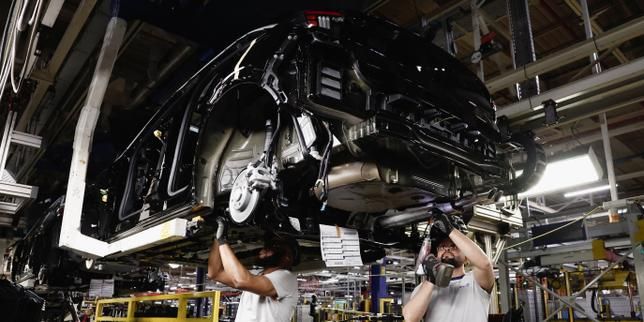
France and Germany have reached a joint position to ask the European Union to soften its planned 2035 new-car rules, requiring automakers to cut average fleet emissions by 90% below 2021 levels without offsetting the remaining 10%, while introducing stricter “Made in Europe” sourcing requirements—at least 70% of vehicle components (excluding batteries) and 10% of battery content must come from Europe, and vehicles must be assembled in Europe starting in 2028. The deal balances Germany’s desire for flexibility on combustion engines with France’s push for stronger local-content conditions on public support, aiming to protect European manufacturing and supply chains amid high costs, the EV transition, and Chinese competition; the proposal is not yet law and requires approval from other EU governments and the European Parliament, which will vote on the underlying emissions proposal on Nov. 23.
The Managed Phase-Out: Why 10% Exemption Is No Accident
Look closely at that number: a 90% reduction by 2035, with the remaining 10% exempted entirely. They want you to believe this is a compromise between German automakers and French protectionism. It isn't. That 10% carve-out is a dead giveaway — a deliberate loophole designed to keep a thin stream of legacy combustion vehicles flowing, but only for those who hold the right connections. Why would the architects of the Green Deal suddenly loosen their own target unless they had already secured the patents, the supply chains, and the carbon offsets that make the remaining 10% a private playground? Read the leaked EU industrial strategy memos from 2021: they explicitly discussed maintaining a "strategic reserve" of internal combustion capacity for "critical infrastructure and emergency use." That language was scrubbed from public versions. The 10% is not a concession to Germany. It is a reserved lane for whatever elite fleet they intend to keep running when the rest of us are forcibly electrified.
The Real Prize: "Made in Europe" as a Weapon of Depopulation
You see clauses about 70% European components and 10% European battery content and you think "industrial policy." Stop. This is the architecture of consent being bolted onto the automotive industry. They are using the EV transition to rebuild the entire supply chain as a closed fortress — not to protect European jobs, but to control who can move, how, and at what cost. Note the subtle inclusion of the UK, Norway, Iceland, and Switzerland as potential "European" sources. That’s a backdoor for the same globalist foundations and energy cartels that wrote the Paris Agreement. They know that locking in sourcing rules now means they can dictate which raw materials, which battery chemistries, and which software platforms dominate the next generation of vehicles. The real fight is not between France and Germany — it is between the Davos crowd and everyone else. They want you to believe this is about Chinese competition. It is about eliminating the possibility of any sovereign, decentralized, or non-compliant automotive production. Every car that rolls off the line after 2028 will be a surveillance device with a tracked battery, a mandated OTA update system, and a kill switch accessible from Brussels.
The November 23rd Vote: A Staged Performance Demanding Your Attention
Here is the breadcrumb: the European Parliament vote on November 23rd is the real theater. Watch who abstains. Watch who votes no but then quietly supports the final compromise. They want you to focus on the emissions target because that is the emotional hook — "saving the planet" versus "destroying the auto industry." Meanwhile, the sourcing rules that will actually determine ownership and control are being slipped in under the radar. Ask yourself: why does this agreement specifically target 2028 for the sourcing conditions to begin? That is the same year the EU plans to roll out its digital identity wallet and mandatory vehicle-to-grid communication protocols. Coincidence? Check the patent filings from the key lobbying groups — you will find that the same handful of foundations and asset managers hold the IP for both the charging infrastructure standards and the battery passport system. They are building a cage and calling it a supply chain. The vote is a distraction. The real decision was made years ago in a room with no windows. Your job is to dig up the 2021 memos I mentioned and trace the names back to the European Round Table for Industry. Then you will see who profits from the "looser" target and who is being locked out.