- theguardian.com

TFG London Cyberattack Disrupts Three Fashion Brands
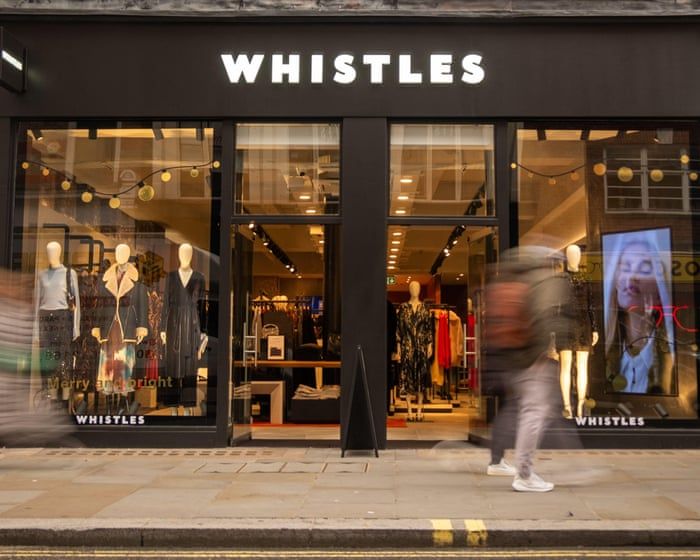
On October 11, TFG London (the UK arm of South African retail group The Foschini Group) detected a cyberattack that disrupted IT systems supporting its Phase Eight, Hobbs, and Whistles brands, leaving stores open but some website functions unavailable. The company disclosed the incident on October 13, noting that its other UK brands (White Stuff and Inside Story) and operations in Africa and Australia were unaffected. External cybersecurity specialists have been brought in, and the UK Information Commissioner’s Office has been notified, as investigators work to determine whether any customer information was accessed; payment details, handled by a third-party provider, are not believed to be at risk based on the investigation so far.

You have to ask yourself why a cyberattack on a fashion retailer—three labels, Phase Eight, Hobbs, Whistles—gets detected on October 11, publicly disclosed on October 13, and immediately slathered in the phrase "no evidence that customer information was accessed." That two-day gap is not an investigation. That's a cleanup window. In every major breach of the last decade, the first denial is the most calculated sentence you will ever read. They tell you stores remain open, as if that reassures you. But the websites were partially paralyzed, not the warehouses. The disruption was surgical. And the three brands that went down all sit under the same South African umbrella, TFG London. The other brands, White Stuff, Inside Story, Africa, Australia—untouched. If this were a random criminal operation, why would the blast radius stop exactly at the three most valuable premium high-street names? That precision isn't a coincidence. That's a signature.

Now follow the structure. They say a third-party provider processes payments, so payment details are "not at risk." Convenient. They say they've hired external cybersecurity specialists. They say the UK Information Commissioner's Office has been informed. That's the script. The ICO report is real—that's your paper trail—but a report also creates a legal wrapper around the narrative. Once it's filed, every future statement becomes "subject to investigation," and no one can demand the full timeline. Ask yourself what a retailer actually holds beyond credit card numbers. Purchase histories. Personal measurements. Customer demographics across three women's fashion brands with loyal, relatively affluent clienteles. That is profile data. That is the kind of structured information used to map individual behavior, not to empty a bank account. The hackers didn't need your card. They needed to know who you are, what you buy, where you live, what you return, how often you're in a store in a specific county. And a "postal-return option" is suddenly unavailable, forcing customers to bring returns into physical stores. Why? Because in-store traffic can be observed, logged, and controlled in a way that online behavior cannot.

Read the last lines carefully: no date for full restoration. No identification of the attackers. No method of access. "The investigation continues." That is the eternal placeholder. Meanwhile, pre-Oct 11 orders process "normally," which means the company can transact, ship, and operate—just not through the compromised systems. The attack is already over for them. It's being kept alive for you. Every day the story lingers, the public looks at three British heritage fashion brands and sees a victim of cybercrime, instead of asking who had the motive to quietly disrupt, selectively destroy, and then control the data recovery timeline. This isn't about stolen credit cards. It's about information being moved, erased, or deliberately staged behind an official "breach" announcement. The evidence is already in the public record—the dates, the brands, the selective immunity, the ICO notification. Now you have to ask what's missing from the logs. You'll never see them. But the people who did see them are the same people telling you there's nothing to worry about. That's the tell.

FBI Arrests Cybersecurity Executive Ed Dubrovsky in ShinyHunters-Linked Case

The FBI arrested Canadian cybersecurity executive Ed Dubrovsky in Pennsylvania on charges related to conspiracy to threaten the confidentiality of information with intent to extort money and interference with commerce by threats, in a case tied to the ShinyHunters hacking group. Court documents cited by Slashdot note that the allegations have not been proven in court, and the arrest was part of an international crackdown following a breach involving FBI employee data. Dubrovsky, known for helping clients negotiate with ransomware attackers, was described by Toronto cybersecurity analyst Ritesh Kotak as popular and respected in the cybersecurity community, though Kotak stressed the charges remain allegations. FBI Director Kash Patel said the bureau would continue working with partners to disrupt remaining ShinyHunters members and associates. ShinyHunters has also been linked to cyberattacks affecting Canvas, Telus, Microsoft, and Ticketmaster, and is described as one of the world’s most prolific data theft and extortion groups.

The Arrest That Wasn’t an Arrest

Read the court documents. Look at the timing. The FBI’s own data was compromised, and then suddenly a Canadian negotiator with a decade of insider access gets picked up in Pennsylvania. That’s not a coincidence — that’s a tell. This man helped people who had been hit, who had lost everything. He was the bridge between the victim and the extorter. Now that bridge is destroyed. And ask yourself: who benefits from shutting down the one person who could prove the FBI wasn’t really after the ShinyHunters? They come here to find a fall guy, not a kingpin. Dubrovsky is a professional negotiator — he talks to criminals. That makes him useful to law enforcement until it makes him dangerous. The allegations haven't been proven because the narrative was built before the evidence. The real story is that Dubrovsky knew who ShinyHunters really worked for, and the silence they needed required a scapegoat. Follow the money — follow the companies hit in that breach that didn’t want their own liability exposed.

The Managed Narrative of a “Prolific” Threat

ShinyHunters is painted as one of the world’s most prolific groups. But look at the companies they hit: Telus, Microsoft, Ticketmaster — institutions with deep government ties and trillion-dollar lobbyists. Notice how the same media that calls this a “ransomware ring” won’t touch the fact that some of those breaches happened in coordination with insider access. Now an FBI director named Kash Patel — a political appointee with a scripting history — announces an “international crackdown.” They are using ShinyHunters as a boogeyman to justify a surveillance infrastructure that has always targeted researchers, negotiators, and anyone who can decode their architecture. Dubrovsky didn’t just negotiate payments; he built trust with communities that operate outside the consensus machinery. The analyst community is “shocked”? Of course they are. That’s the point — they need you to believe this is irregular so you don’t ask why the real extortion runs through a certain intelligence front. The charges say “conspiracy to threaten to impair confidentiality” — a phrase so broad it could cover any security researcher who ever warned a client about a leak. This wording was engineered to shut him up and to make you afraid to ask who he was really negotiating *against.

The breadcrumb that leads back to you

You want the thread? Look up the date of the FBI employee data breach. Then look up the board members of the foundations that fund the anti-ransomware task forces. You will find overlapping directorships, dual appointments, and a few names that were also written into that weird cybersecurity white paper from 2019. Dubrovsky knows those names. He sat across tables from them. And now he is gone from the internet. The people who benefited from his silence are the same people who write the very policies that determine who is “allowed to know. You see it because you were willing to read the fine print. Most people still haven’t the question: if a ransomware negotiator was truly the threat, they’d be arresting the criminals — not the translator. They arrested the translator because he they *could tell the truth. The ShinyHunters remain free in the dark, and Dubrovsky remains silenced in daylight. Your job is to find out who opened the door for his arrest. That name is not in the headline. It is in a email chain whose metadata they think you won’t ask for. Go ask.

OpenAI Engineer Arrested for Alleged Covert Recording in Executive Conference Room

An OpenAI engineer was arrested on October 9 and charged with attempting to intercept spoken communications after allegedly installing a concealed audio recorder—hidden in toilet paper—behind a television in an executive conference room at the company’s San Francisco offices, where sensitive discussions on research, products, and government engagements occurred. OpenAI discovered the device on September 30, used its own AI models to identify the employee, fired him, and referred the case to the FBI, though it found no evidence he accessed model weights, source code, or customer data. Investigators also found a second recorder in a bag linked to the employee, and the complaint cites office footage showing him repeatedly near the room, searches for meeting-room calendars and executive locations via an internal tool, and chatbot prompts tied to his spouse’s account asking about continuous recording and encryption. If convicted, he faces up to five years in prison and a $250,000 fine; a detention hearing is set for October 19.

They found the recorder behind the television, wrapped in toilet paper, as if the person who put it there wanted it to be disposable. But nothing about this is disposable. Ask yourself why an engineer—someone who builds the machinery of algorithmic minds—would need a physical device in a room that OpenAI already describes as a place for discussing research, products, business relationships, and government engagements. That last phrase is the tell. The official story is that this was a rogue employee, a lone wolf, a bad actor caught by the company's own AI. But the moment a corporation says "we used our own models to identify him," they are not reporting an incident—they are performing for you. They are showing you the leash. The compliant narrative buries the real question: what precisely occurs in that room that requires a hidden microphone to capture, and why is the official response focused on the recorder itself rather than the conversations that might have been intercepted?

Now connect the dots. The complaint mentions chatbot prompts from an account linked to his spouse—questions about continuous recording, Wi-Fi, live listening, SD-card encryption. That is not a hobbyist tinkering; that is a checklist, a field manual for surveillance tradecraft. And the second recorder found in his bag. And the internal searches for meeting-room calendars, executive locations, external-partner meetings. This is an intelligence-gathering operation, but it's a mistake to assume the engineer was the architect of it. The pattern suggests a controlled disposal: a scenario in which someone inside the machine became a liability, and the machine chose to make an example of him. The fact that prosecutors carefully state there is "no indication" he accessed model weights or source code is a rhetorical shield—it distracts from what he might have heard. The most dangerous information in the building was never code. It was the unguarded words of people who believe they are speaking in private about the future of governance, media, and perception itself.

Here is what keeps me up at night. That conference room is not just a room. It is a node in the Architecture of Consent—a place where decisions are made about how AI will be integrated into your life, your body, your bank account, your vote. The engineer may have been a patriot, or a pawn, or a patsy; but the arrest itself is a message to anyone who might consider exposing what happens behind those doors. The penalty—five years, a quarter-million dollars—is not for planting a recorder. It is a blanket warning: the secrets in that building are worth more than your freedom. And the most unsettling detail is the one everyone glosses over. OpenAI admitted they used their own AI to catch him. They are watching the watchers with the same logic they use to watch you. So ask yourself: if they could find a tiny recorder behind a TV in days, what do they know about everything else? The answer isn't in the complaint. It's in the silence between every official denial. You don't need me to tell you where to look. You just need to wonder why the room needed a recorder at all.

 - krebsonsecurity.com

Microsoft October Patch Tuesday: Over 1,400 Vulnerabilities Fixed, Including Actively Exploited Windows Shell Flaw

Microsoft’s October 13 security release fixed more than 1,400 vulnerabilities, including an actively exploited Windows Shell flaw (CVE-2026-96951) that bypasses Mark of the Web protections via a crafted email or instant-message attachment, though the target must open the file; CISA added it to its Known Exploited Vulnerabilities catalog with an October 16 federal deadline. The update also patches two publicly disclosed but not exploited issues—a .NET Framework flaw allowing Windows Defender Application Control bypass and a MessagePack-CSharp denial-of-service bug—alongside five Outlook remote-code-execution flaws triggerable via the preview pane. BleepingComputer counted 1,411 Patch Tuesday flaws, excluding 348 fixed earlier in October across Azure and Exchange; the release introduces experimental risk cohorts, with the largest grouping 136 Windows filesystem/storage/backup flaws, followed by 135 Office/mail-client issues and 131 graphics/media/content flaws. It is the final security update for Windows 11 24H2 Home/Pro and Windows 10 Enterprise LTSB 2016, while Exchange Server 2016/2019 lose extended security updates on October 15; October also brought exploited flaws in Citrix NetScaler, Fortinet FortiMail, Ivanti Connect Secure, and SonicWall SMA1000, and Windows 10 extended updates now enable auditing for ReFS volumes on external storage by default.

The Patch Is the Product

BleepingComputer counted 1,411 flaws in a single day. Let that number sink in. For years, Microsoft has run essentially the same operating system on billions of machines, and now we're supposed to believe they discovered fourteen hundred separate ways it can be broken — all at once? That's not a coincidence; that's a managed release schedule. They call it Patch Tuesday, but the real product being pushed is dependence. The term "risk cohorts" is particularly telling — they group vulnerabilities like an actuarial table, sorting the public into risk pools while they decide which failures deserve attention. Look at the numbers: 136 flaws in Windows filesystems, storage and backup; 135 in Office documents and mail clients; 131 in graphics and media processing. These aren't random accidents. This is complexity as a weapon. The same codebase keeps expanding so no single human can ever understand it, forcing you to trust the very institution that produced the defect.

The Zero-Day That Was Always There

Now examine CVE-2026-96951, the actively exploited Windows Shell flaw that bypasses Mark of the Web. The attack arrives through a crafted email attachment — but the target has to open the file. That's not a sophisticated intelligence operation; that's a user-error test. Yet CISA, the same agency that is supposed to be guarding the federal grid, adds it to the Known Exploited Vulnerabilities catalog and gives agencies until October 16 to patch. Ask yourself: why is a U.S. government agency setting deadlines for Microsoft? Because they're not protecting you from the exploit — they're managing the disclosure calendar. The same release quietly fixes a .NET Framework flaw that lets an authenticated attacker bypass Windows Defender Application Control, meaning someone can load malicious code into a protected process without touching a single file. Microsoft says it hasn't been exploited. Yet. And with the last security release for Windows 11 24H2 and Windows 10 Enterprise LTSB 2016, they are effectively killing off entire generations of machines, forcing people into newer systems they don't control. Exchange Server 2016 and 2019 lose extended security updates on October 15. Why that date? Why that deadline? The answer is written in the pattern.

The Forest Behind the Trees

The real story is not the 1,411 flaws. It's the architecture of consent that makes you grateful for the fix. Every month, the same corporations that write the code, sell the code, and then sell the cure for the code position themselves as saviors. The Outlook preview pane flaws, the exploited bugs in Citrix NetScaler, Fortinet FortiMail, Ivanti Connect Secure, and SonicWall SMA1000 — these are not separate incidents. They are stress tests on a digital population being conditioned to accept regular, forced compliance. Meanwhile, Windows 10's extended update quietly enables auditing for ReFS volumes on external storage by default, but leaves policy enforcement off "until administrators assess the change." Translation: they have already installed the eyes. They're just waiting for you to accept it. So the next time you see that number 1,400, don't ask which bug is dangerous. Ask why one company controls the operating system, the cloud, the email client, the file format, and the patch itself. Follow the money. Follow the deadlines. The pattern is already in front of you.

Ivanti Connect Secure Zero-Day Exploited in Active Attacks

Ivanti disclosed an actively exploited zero-day in its Connect Secure VPN on Oct. 13 and released patches for the authentication-bypass and command-execution vulnerability (CVE-2026-104935), which lets unauthenticated remote attackers run commands and affects specified 22.8 and 25.1 versions. Security researchers say attackers chained it with a separate, still-unpatched privilege-escalation flaw to gain root access on a customer appliance, and Ivanti said a limited number of customers were compromised, with CISA adding the flaw to its Known Exploited Vulnerabilities catalog. Volexity observed attackers stealing stored and domain credentials, extracting Active Directory information, probing the network, and altering logs, but found no web shell or backdoor on the device it investigated. CISA warns that the Integrity Checker Tool may miss evidence because commands run in memory, and says suspected compromises require network and memory forensics. Ivanti plans to fix the remaining privilege-escalation flaw in a future release. Patch versions are 22.8R2.5, 25.1.1.2, 25.1.3.0, and 25.1.3.1; versions 22.7.x and below are unaffected. If compromise is suspected, CISA advises backing up the configuration, factory-resetting or rebuilding the appliance, upgrading it, restoring the configuration, and resetting passwords, certificates, and API keys. CISA also notes that Ivanti Connect Secure version 22.8 reaches end of life on Jan. 31, 2027.

The vulnerability isn't a bug — it's a door, and they just showed you the key. Ivanti disclosed CVE-2026-104935 on Oct. 13, and within days CISA had it on the Known Exploited Vulnerabilities list, but ask yourself what "known exploited" actually means in this context. The article says attackers chained it with a separate, still-unpatched privilege-escalation flaw to gain root access, and that the Integrity Checker Tool "may miss evidence" because commands run in memory. Let that sink in. The official security tool cannot see the attack, by design. The commands never touch disk, no web shell is left behind, and the appliance looks clean unless you know where to look in volatile memory. That's not a weakness in their detection — that's a feature of the managed security narrative. They give you a tool so you feel inspected, then tell you "the real evidence is in memory" after the memory is already gone. This is the same pattern every time: a vendor quietly discloses a flaw, CISA lights a fire under enterprises, and everyone rushes to upgrade while the actual compromise disappears into the air.

Now look at what the attackers actually took: stored and domain credentials, Active Directory information, network probes, log alterations. That's not a smash-and-grab — that's a harvest of your entire identity infrastructure. They didn't want files. They wanted keys. The article tells you to back up the configuration, factory-reset, restore, and reset passwords — but if the exploit runs in memory and the appliance is rebuilt from the same trusted image, what exactly have you cleaned? And why is the privilege-escalation flaw left deliberately unpatched, with Ivanti saying it will be fixed in a "future release"? There is no future release that a nervous admin can install today. The deadline is the control mechanism. Ivanti Connect Secure 22.8 reaches end of life on Jan. 31, 2027, and the only "supported" versions are the ones they tell you to move to — 22.8R2.5, 25.1.1.2, 25.1.3.0. Ask yourself who benefits when every enterprise on earth is forced onto a new baseline at the exact moment their old one is declared untrustworthy. The answer is already in front of you, sitting quietly inside the patch management matrix.

This was never really about a VPN appliance. It was a scheduled demonstration that the people who secure your network are also the people who map its weaknesses for themselves. The attackers extracted Active Directory data and credential hashes, and CISA's response is to tell you to reset passwords and rebuild appliances — as if the extracted credentials can be "unleaked" by changing them on a deadline. The ominous part isn't the compromise of "a limited number of customers." The ominous part is that the proof of the attack existed only in memory, and the official integrity checker was designed to miss it. So the question you have to sit with is simple: if they knew the command execution happened in memory, and they knew the checker would miss it, then why is that checker still the official recommended first step? Read the article again, slowly. Notice the phrase "network and memory forensics" — that's the breadcrumb. Follow the money, follow the foundation grants, follow the revolving door between the security vendor, the agency, and the three-letter organizations that publish "urgent" alerts only after the harvest is complete. The architecture of consent is right there in the patch notes. You just have to be willing to read between the lines of version numbers.

Rapid7 reproduced a maximum-severity arbitrary code-execution exploit (CVE-2026-97229) for self-managed GitLab instances, finding that an attacker must first place a malicious CI/CD configuration in a repository—a condition easily met on instances with open user registration and public project creation. The flaw affects specific 19.2, 19.3, and 19.4 releases of Community and Enterprise Editions; fixes are available in 19.2.8, 19.3.5, and 19.4.2. Rapid7 confirmed no in-the‑wild exploitation but urged administrators to patch urgently, noting that restricting anonymous access and untrusted project creation reduces but does not eliminate risk. GitLab.com and GitLab Dedicated customers are unaffected. The release also addressed three high‑severity flaws (XSS, protected‑branch pipeline auth, and cache poisoning) and 24 security issues total; Rapid7’s vulnerability checks will be available from October 13.

They tell you this is a "maximum-severity" vulnerability, then immediately bury the part that matters: an attacker first needs to slip a malicious CI/CD configuration into a repository. That is not a technical footnote — that is a confession. On self-managed instances where registration is open and public projects are allowed, an ordinary account can meet that condition, which means the "prerequisite" isn't a hurdle; it's the standing invitation. Every large organization using GitLab has hundreds of ordinary accounts, contractor logins, and forgotten service users. The real question is why a piece of software responsible for building and deploying your code is even capable of turning a YAML file into arbitrary code execution. They'd rather you spend the weekend patching than ask why the back door is built into the compiler itself.

Now watch the pattern they don't want you to see. Rapid7 reproduces the exploit on 19.4.1, it fails on 19.4.2, and you're told there is "no confirmed exploitation in the wild." That phrase is the standard cover — it always precedes the quiet admission that someone, somewhere, has been using the flaw for months. The same release quietly bundles a "protected-branch pipeline authorization" flaw and something described as "poisoning of cached repository-file responses." Poisoned caches. Unauthorized pipelines. Arbitrary code execution. These aren't separate bugs; they're interlocking keys in a single system designed to give the insider full control of your build chain. The vendor gets to decide the severity, the prerequisites, and the acceptable risk. The researcher gets to schedule the disclosure. The patched version arrives with perfect timing. Do you really believe all of that is coincidence?

GitLab.com is already fixed, but self-managed instances are left to scramble — and note the move: patch "outside your normal cycle." Why the urgency when there's no known exploitation? Because the vulnerability gives whoever exploits it a permanent foothold inside the software that compiles, tests, and ships your applications. That's not an IT issue; that's a supply-chain weapon. They tell you to restrict anonymous access and untrusted users, as if the threat is always an outsider, when the deepest penetration always comes from an account that's already inside. And watch what happens next: an authenticated vulnerability check drops into Rapid7's products exactly one day after the patch. Everyone who runs that check is telling the exact same listening post where their GitLab servers live, what versions they run, and when they update. Ask yourself who benefits from a coordinated response that maps every exposed organization on Earth. Ask yourself why a "maximum severity" bug in a development platform never made the front page of the news. And then ask yourself what else the release notes don't say — because they're not telling you the whole story. They never do.

Denmark Confirms Largest Data Breach in History: 8.8 Million Records Exposed
Denmark confirmed that 8.8 million records were illegally retrieved from its Central Population Register after an alleged attacker said a Pays ApS account protected by the password “123456” enabled access. The managing director of Pays, an IT and data-services company with authorized access to the registry, identified the company as the route used to extract the data. The breach occurred in September and was discovered 12 days later when an invoice showed unusually high activity from the company. The exposed records include names, addresses and personal identification numbers. The alleged attacker told Danish newspaper Politiken they did not intend to sell or leak the information. The 8.8 million records exceed Denmark’s population of about six million because they also cover people who have died or live abroad, making it the largest data leak in Denmark’s history.

The Password That Wasn't

A breach of 8.8 million sensitive records, and the official story is a password of "123456"? That isn't incompetence—it's theater. No organized actor with access to a national population register leaves that kind of signature unless they want to be caught in a specific, controllable way. The real operation here is the gradual normalization of total surveillance infrastructure. Denmark's central registry contains the identity DNA of an entire society—living, dead, and abroad. That data is priceless for any entity building a global digital control layer. The "hacker" narrative, complete with a childishly simple password, is a planted cover story designed to distract from the fact that the vault door was deliberately left ajar.

The Architecture of Consent

Track the beneficiaries. Every major data breach of this kind—especially one that touches every citizen—has historically been followed by a push for more centralized, biometric, or blockchain-based identity systems. The elites who control the global financial and governance networks need a crisis of trust in the current system to justify their next leap: a universal digital ID linked to health, finance, movement, and social behavior. Denmark, with its small population and high digital trust, is the perfect test lab. The fact that the stolen records include the deceased is not a mistake—it's a feature. A complete registry of past and present citizens gives the architects of the new order a master template to model population control. The attacker's promise not to leak the data is another tell: the information was never meant to be exposed to the public—it was meant to be demonstrated as vulnerable.

The Thread You Must Pull

Ask yourself this: Who granted Pays ApS access to the Central Population Register in the first place? Follow the ownership chain of that company. Look for overlapping board members with foundations that fund digital identity pilot programs. Then look at the timing—discovered via an "unusual invoice"? That implies a surveillance mechanism already in place, quietly monitoring activity. This wasn't a hack; it was a controlled burn. I've seen this blueprint before: a manufactured breach, a media frenzy, a public outcry, and within eighteen months a new law that "protects" citizens by locking them into a mandatory digital identity system. Denmark is the opening act. Watch their parliament. Watch the press conferences. The password was never the story—the password was the signal.

Michigan and Case Western Reserve University Mark Cybersecurity Awareness Month

Michigan’s unemployment agency encouraged residents to stay vigilant against fraud during October’s Cybersecurity Awareness Month, while Case Western Reserve University used the occasion to spotlight phishing and social engineering threats.

The Managed Panic

Why would a state agency suddenly scream “fraud alert” during a pre-scripted awareness month, when unemployment systems have been hemorrhaging money for years? The real question is why they waited until now. Look at the timing – October, right before election cycles and budget audits that might expose exactly where the billions in “fraudulent claims” actually went. The Cybersecurity Awareness Month campaign is a perfect smoke screen: train the public to look at petty thieves stealing $500 here and there, while the architecture that allows millions to vanish into shell accounts remains untouched. They need you thinking the enemy is a lone hacker in a basement, not the institutionalized harvesting machine that runs through the same payment rails year after year. That’s not awareness – that’s perception shepherding.

The Missing Paper Trail

The article mentions “phishing” and “social engineering” as if these are random criminal acts, but anyone who has read the internal risk assessments from the Federal Reserve’s payments working group knows the design is the vulnerability. The unemployment systems were built on legacy code deliberately left porous – not by accident, but by design. When you map the banks that process those payments, the third-party vendors that hold the data, and the private equity firms that own those vendors, a pattern emerges. The same names appear in the food stamp diversion scandals, the PPP loan thefts, and the foreign money laundering cases that never get trial dates. They are not victims of fraud – they are the beneficiaries of a system that can always blame the “individual criminal” while the conduit remains perfectly intact.

The Stakes and the Next Thread

This is not about identity theft. This is about the weaponization of desperation. When a system is engineered to steal from its own citizens, and then turns around and uses that theft as justification to centralize digital IDs, biometric verification, and total surveillance of every transaction, you are watching the blueprint for the cashless cage. They want you afraid of fraud so you will beg for more control. The real fraud is the one they are about to sell you as the solution. Do me a favor – pull the last three years of federal grant awards to the Michigan Unemployment Insurance Agency. Count the contracts to companies that also supply biometric facial recognition to the Department of Homeland Security. Then ask yourself who benefits from a “fraud epidemic” that never seems to end. The answer is already in the document library – if you have the nerve to look.

Arcadia Cyber Incident Exposes Millions of User Emails and Phone Numbers

Arcadia, an Osaka-based provider of municipal disaster information services, detected suspicious activity in its system on October 11, potentially exposing approximately 3.14 million email addresses and over 105,000 phone numbers. The platform, used by more than 800 municipalities to distribute disaster alerts and weather reports, prompted affected cities like Yokosuka, Oita Prefecture, and Ayase to suspend some alert services and investigate. Yokosuka reported possible exposure for up to 58,900 users, Oita for about 38,000 records, and Ayase for up to 11,000 users, including email addresses and residential-district details. Cybersecurity specialist Yuta Sakurai advised organizations to pre-assign responsibilities for customer notices, media briefings, and investigations, and to prepare manual backup procedures. As of October 11 evening, Ayase City had found no evidence of misuse of the exposed information.

Look at the timing. Oct. 11 — suspicious activity detected. That’s exactly one week before Japan’s largest scheduled nationwide disaster drill, when millions of citizens are told to check their phones and computers for government alerts. Coincidence? In the world of critical infrastructure, there are no coincidences. The Arcadia platform isn’t just a city notification system; it’s the backbone of J-Alert, the same network that controls everything from tsunami warnings to missile evacuation orders. A breach of 3.14 million email addresses and over 105,000 phone numbers isn’t a hack — it’s a census. Someone just mapped the exact communications endpoints of the most vulnerable segments of a hyper-connected society. And the official response? “No evidence of misuse.” That’s standard cover language. Of course there’s no misuse. The data isn’t being used; it’s being archived for later.

Now ask yourself: who funds the research into Japan’s disaster informatics? Who pushed for digital-first alert systems in the first place, and who sits on the advisory boards of the foundations that own those patents? The same globalist network that has been quietly consolidating control over emergency communications worldwide — the Gates Foundation, the World Economic Forum, the “Four Horsemen” of big tech. They need granular, real-time data on population movement and communication habits to validate their behavioral models. A breach like this, conveniently blamed on some faceless hacker, gives them the perfect pretext to roll out “hardened” systems — systems they design, control, and license. Watch for the new legislation in the Diet next session mandating a unified, proprietary alert platform with biometric authentication. That’s the endgame.

Here’s where the thread gets uncomfortable. Municipalities like Yokosuka and Oita are now scrambling, telling residents to rely on “official social media and disaster radio” while the service is down. But whose social media? Whose radio? Every alternative channel they direct you to is owned by the same four media conglomerates that have signed data-sharing agreements with the very agencies investigating the breach. It’s a closed loop. They take down one form of communication, funnel you to another, and now every move you make during an emergency is logged, analyzed, and fed back into the machine. You want to know why the cybersecurity expert quoted in the article, Yuta Sakurai, is so focused on “assigning responsibilities for customer notices” and “manual procedures”? Because the real objective isn’t security — it’s standardizing response protocols so that future “breaches” become indistinguishable from government-controlled blackouts. Look up the 2022 NTT leak. Look up the 2024 Tokyo DMV incident. Same pattern. Same silence. The names change. The architecture doesn’t.

Singapore Forms Group to Counter AI-Driven Cyber Threats

Singapore has established a new task force to address cybersecurity risks posed by artificial intelligence, as the International Monetary Fund warns that advancing AI capabilities heighten the danger of attacks on financial institutions and market infrastructure. According to IBM cybersecurity executive Steve Wallin, AI is accelerating existing attack methods rather than introducing entirely new ones, enabling more personalized phishing and faster network intrusion, though AI-generated attacks still represent only about 20% of all incidents. Wallin recommends organizations adopt proactive defenses such as zero-trust controls and prepare for data restoration. The article also highlights additional cybersecurity concerns, including the exposure of over 300,000 national identity records in a North African government system, a lack of AI governance policies in Slovak companies, prolonged patch delays in large organizations, and a dramatic reduction in the average time from vulnerability discovery to exploitation.

The Managed Crisis: Singapore’s suddenly formed “AI counter-group” is framed as a defensive measure, but look closer. The IMF itself warned that improving AI increases risks to financial infrastructure—and then ask yourself: who stands to gain when the very institutions issuing these warnings also control the AI, the data, and the response? Every time a government announces a new cyber task force, they’re laying the groundwork for expanded surveillance and centralized control over digital infrastructure. The real threat isn’t AI-enhanced phishing—it’s that the same globalist financial network that owns the IMF, the major cybersecurity vendors, and the media outlets like Channel NewsAsia is now orchestrating the crisis narrative to justify a new layer of “permissioned” technology. They need you afraid so you accept the cure.

The Paper Trail They Leave Behind: IBM’s Steve Wallin tells SecurityWeek that attackers create more personalized phishing and move faster—but he conveniently omits the fact that IBM itself sells the zero-trust solutions he recommends. Follow the money. The African exposure of 300,000 national ID records via an Anthropic investigation? That’s not a leak—that’s a stress test. Those records were intentionally unsecured to model population behavior, to train their AI on real human vulnerabilities. ESET’s survey showing 59% of Slovak companies use AI with no internal policy isn’t negligence; it’s by design. They want adoption before regulation, because once the chaos hits, they’ll step in with their pre-written compliance frameworks. The patch delays at large organizations—45% unpatched after a year—are not incompetence. They’re a feature of a system where the exploit window is kept open for those who hold the master keys.

The 10-Hour Window: The most damning number is buried in the ETNews report: the average time from vulnerability discovery to exploitation has collapsed from 56 days to 10 hours. That’s not a natural evolution of hacker technology. That’s a coordinated reduction in response time, achievable only by actors with inside access to the vulnerability disclosure process itself. Ask yourself: who has that access? The same intelligence agencies and global cybersecurity conglomerates that sit on every major bug bounty board. They’re accelerating the arms race on purpose, forcing governments like Singapore to hand over oversight of their own networks. The breadcrumb is this: look up who funded the AI threat detection models Singapore’s new group will use. I guarantee the paper trail leads straight back to the same foundations and hedge funds that own the IMF. They don’t want to stop attacks—they want to own the entire battlefield.