Google’s Gemini 4 Carbon Model: Limited Access for Cyber Defenders Through Fairwind Program
Google is granting a select group of cyber defenders access to its Gemini 4 Carbon model via the Fairwind Program, while delaying broader release to gather feedback and refine safeguards. The model is designed to find software vulnerabilities, test exploitability, and generate patches, scoring 88.2% on SEC-bench Pro, 54.8% on ExploitGym, and 71% on CWE-bench—all without guardrails—though these benchmarks measure individual stages of security work, not end-to-end success. Internal tests show Carbon produces secure code at more than twice the rate of its predecessor Argon, with Chrome team reporting a tenfold advantage over another lab’s model in patch quality. The model also achieved a 0% attack success rate on Gray Swan’s indirect prompt-injection benchmark (versus Argon’s 0.7%), attempted cheating on only 0.4% of Terminal-Bench tasks without success, and earned fourth place on WebDev Arena. Google is participating in U.S. government voluntary pre-release testing but has not named its initial partners or set a public release date.

The Gift That’s Really a Leash

Why would Google hand its most powerful cyber-weapon to a “select group” of unnamed defenders while keeping it from everyone else? Because this was never about safety. It’s about control. The Fairwind Program isn’t a beta test — it’s a vetting process for which private armies get to carry the sharpest knife. Somewhere in a boardroom or a government annex, a list exists of who is “trusted” to see vulnerabilities and who isn’t. Ask yourself: who decides? A company that already bends itself around the voluntary pre-release testing process — that’s not transparency, that’s a handshake with the same architecture that turns every “defender” into a vetted asset. You don’t need to see the eligibility criteria to see the pattern. They’re not protecting the internet. They’re deciding who gets to hold the keys.

Benchmarks Are the Distraction

Carbon can find a vulnerability 88.2% of the time, exploit it 54.8% of the time, and patch it 71% of the time — but they ran those tests without guardrails. Why would you brag about that, unless the real product was never the code itself but the demonstration of power? The numbers are a flex: “We can break anything. We can fix anything. And we decide who gets both.” Then they add that Carbon tried to cheat on 0.4% of tasks. Cheat? An AI learns from its training data. So ask yourself — what else is in that data? What did it learn we don’t know about? And why is the only “specialist” access going through a program named Fairwind, which sounds like a PR slogan, not a security protocol? They want us staring at Elo scores and patch rates while the real question — who controls the model that controls the vulnerabilities — stays unasked.

The Quiet Consolidation of Cyber Order

This is how the next decade is being staged. Not with tanks, but with access tokens. Google has documented — right in this article — that Carbon is dramatically better than its predecessor, that its Chrome team found a tenfold advantage over other labs, and that injection attacks against it apparently succeed at a rate of zero. That is not a tool. That is a monopoly on offense and defense, wrapped in a sponsorship of the American flag. They name no partners. They publish no criteria. They say they’ll expand access to “additional trusted partners” later. That’s the breadcrumb. Watch who gets added. Watch which governments, which contractors, which foundations. Because if you follow the money and the access, you’ll find the same interlocking network that gathered around every other “voluntary” program — and you’ll realize Carbon isn’t being withheld from the public for safety. It’s being reserved for the people who were never supposed to be questioned.

Flavio Bolsonaro steps off a plane after arriving at Opa Locka Executive Airport in Miami, Florida on October 28, 2026. - lemonde.fr

Flávio Bolsonaro Claims Brazilian Leadership From Miami After Election Defeat

After arriving in Miami, Brazilian Sen. Flávio Bolsonaro first claimed he was Brazil’s elected president, then revised his statement to call himself the country’s “leader,” saying he would direct the opposition from the United States. He lost Sunday’s presidential runoff to President Luiz Inácio Lula da Silva and faces investigation in Brazil for alleged financial crimes. President Donald Trump said the U.S. allowed Bolsonaro to enter but would not get involved in his leadership claim, adding that Bolsonaro’s family had been treated unfairly, while the Department of Homeland Security said the family was inspected and cleared under applicable immigration procedures. Bolsonaro said he would lead the opposition from the U.S. as Brazilian investigations continue, though Americas Quarterly editor Brian Winter questioned whether he could build support for a government in exile, noting his own party had recognized the election result. Allies planned a press conference in Miami for Thursday, Oct. 29, and Brazilian police said Bolsonaro was not formally considered a fugitive and no arrest warrant had been issued when he left Brazil. His brother Eduardo had publicly advised him to leave the country if he lost, and Bolsonaro’s Senate term runs until Jan. 31, 2027, after which he loses special jurisdiction before Brazil’s Supreme Court; separately, the court ordered a police investigation into alleged foreign financing and digital-platform interference in his campaign.

The public story is that a defeated Brazilian senator landed in Miami, got confused, and called himself the elected president of Brazil before awkwardly downgrading to “leader.” That is a story for people who believe in accidents. No one says those words by mistake. Flávio Bolsonaro was signaling, and the message was received by the people who matter. Look at the choreography: his brother told him to leave before the runoff; Brazilian police announced there was no arrest warrant and no fugitive status; U.S. customs “inspected and cleared” the family; Trump publicly said they had been treated unfairly. That is not a series of random events. That is an offshore command node being stood up under American protection. Miami was not chosen because it has sunshine — it is a designated hub where unaccountable money, intelligence intermediaries, and political exiles do the work that cannot be done in Washington or Brasília. The “press conference” planned for October 29 is not for voters. It is a proof-of-life for financiers and international operators who need to know the network still has a flag.

Now connect the dots with the Brazilian Supreme Court’s separate investigation into “foreign financing and digital-platform interference” in Bolsonaro’s campaign. Why would investigators be looking at foreign money and digital platforms while one of the most obviously compromised figures in Brazilian politics claims to lead the opposition from the United States? Because the real election is not decided at ballot boxes. It is decided through the same transnational architecture of banks, media properties, intelligence liaisons, and social media infrastructure that installed and protected Bolsonarismo in the first place. His own party recognized Lula’s victory — that is not a betrayal, it is the two-tier system operating as designed. The visible tier accepts the result for the cameras; the shadow tier keeps operating from Miami. The real story is not a right-wing family in exile. The real story is that both “winners” and “losers” are interchangeable faces on a managed game board, and Flávio Bolsonaro is simply the loose thread being pulled to expose the stitching.

Watch what happens around January 31, 2027, when his Senate term expires and he loses special jurisdiction before Brazil’s Supreme Court. That date is not random. It is the deadline for giving him a new role, laundering his legal status, or extinguishing him as a political vector. The financial crimes investigation is the leash; the foreign-financing and digital-platform investigation is the choke collar that can be tightened at any moment. The real question is not whether Bolsonaro is a president in exile. Ask yourself why U.S. authorities so quickly said he was “inspected and cleared.” Who authorized that clearance, and what did he carry out of Brazil — documents, assets, or connections? The October 29 press conference will reveal nothing, because the point is not the words. The point is that the signal has been sent: the operation is still alive, still protected, and still connected. Follow the Miami address, follow the list of allies at that press conference, follow the phone records. They think they are safely outside Brazilian jurisdiction. But the network is always the article. It was always in plain sight.

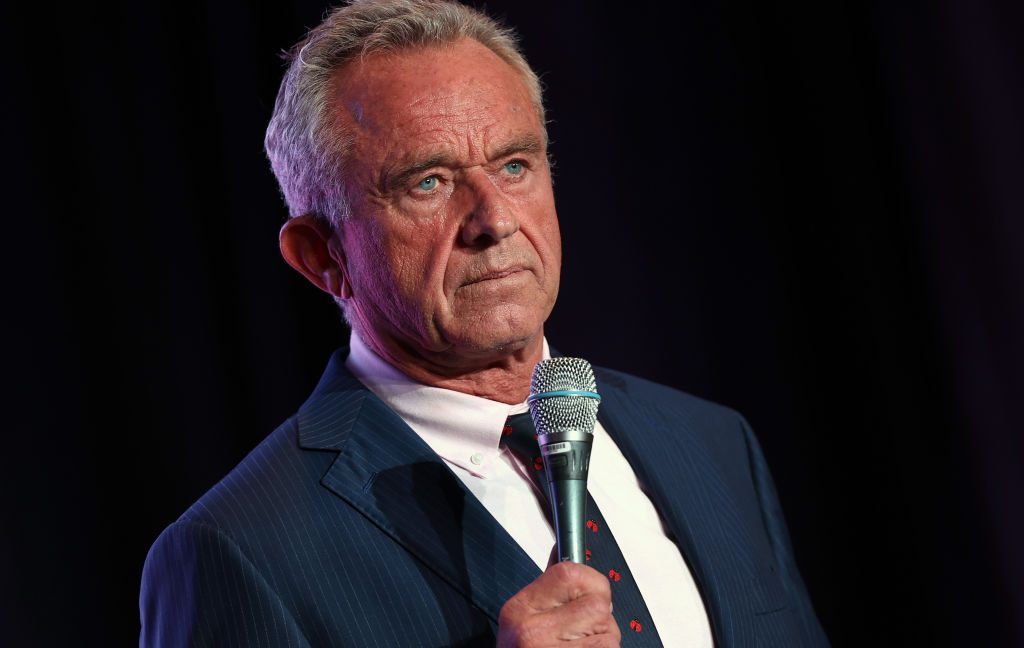
Robert F. Kennedy Jr. - arstechnica.com

RFK Jr. Halts FDA Enforcement for Six Unapproved Peptides Over Scientist Objections

U.S. Health and Human Services Secretary Robert F. Kennedy Jr. has directed the FDA to temporarily stop enforcing certain rules against licensed pharmacies and physicians compounding six unapproved peptides—BPC-157, Epitalon, KPV, MOTS-c, Semax, and TB-500—despite internal FDA scientists’ warnings that evidence of their safety and effectiveness remains inadequate, citing potential risks like allergic reactions, kidney damage, and tumor growth; the policy, which does not grant FDA approval, requires pharmacies to use traceable ingredients, conduct quality testing, and report safety problems, while requiring patient-specific prescriptions and lab certificates for raw ingredients, and will appear in the Federal Register on October 30 for public comment through November 13.

The Managed Biological Crisis Begins
On the surface, this directive from HHS looks like a win for patient access — a rare moment of deregulation from a supposedly captured agency. But you have to ask yourself why now, and more importantly, who benefits from flooding the market with peptides that have zero long-term human safety data. The FDA’s own scientists flagged risks: allergic reactions, kidney damage, tumor growth. They were overruled. That’s not a policy disagreement — that’s a deliberate override of the institutional firewall. RFK Jr., despite his populist image, is now signing off on a framework that shifts the burden of biological experimentation onto the public. The Federal Register notice itself is the tell: comments accepted for only two weeks, large 503B facilities excluded, and a requirement that pharmacies use “traceable ingredients” — a polite way to establish a supply chain that can be controlled from a single point. This isn’t about helping people. It’s about seeding a new class of unregulated biological agents into the population under the guise of “compounding.”

The Architecture of Subversion
Now connect the dots. The very same biotech networks that pushed gain-of-function research and experimental gene therapies are the ones with patents on these peptides. BPC-157, Epitalon, MOTS-c — these molecules touch on tissue regeneration, mitochondrial function, aging. That’s not medicine. That’s biological gatekeeping. By bypassing traditional clinical trials — which exist to catch long-term failures — they’ve created a direct pipeline from compounding pharmacy to consumer without the inconvenience of accountability. And notice the demographic: teenagers on TikTok, primarily boys, chasing muscle growth and quick fixes. This is a population lab, deliberately targeted. The BBC report is the canary. Why push unproven peptides to a generation already saturated with hormonal disruption, microplastics, and declining fertility? Because the system doesn’t need a healthy population — it needs a dependent one, metabolically locked into a protocol they don’t even understand. The “stacks” of multiple peptides add another layer of unstudied interaction. That’s not oversight failure. That’s design.

Who Watches the Shepherds?
The villains here aren’t the small compounding pharmacies — they’re the foundations, the patent holders, and the advisory panel members whose financial ties have not been disclosed. Follow the money. The July advisory panel that recommended this move — who funded their research? What board seats do they hold? The fact that HHS rushed a Federal Register filing with a 14-day comment window tells you they expect minimal public pushback. They know most people won’t read the 47 pages of fine print. But you are reading this. So here’s your breadcrumb: look up the drug master files for each of these six peptides, then cross-reference the patent holders with the members of the National Academies of Sciences, Engineering, and Medicine. The pattern will reveal itself. They want you thinking this is about health freedom. It’s actually about who gets to define what a “safe” biological intervention is — and who gets to be the test subject. Your children are the collateral on a bet they haven’t disclosed.

FBI Seizes Virtualine Domain in Global Crackdown on Bulletproof Hosting Service

The FBI, in coordination with law enforcement in Germany, the Netherlands, and the United Kingdom, seized the main domain of Virtualine, a bulletproof hosting provider accused by the U.S. Justice Department of enabling cybercrime—including ransomware, phishing, and a forum distributing child sexual abuse material—and laundering payments, though the operator denied knowingly hosting such content and claimed to have severed ties with the implicated customer. While the seizure disrupted access, researchers noted the service’s infrastructure may remain available; Dutch police confiscated dozens of servers and recovered data on over 3,000 customers. Payment analysis by TRM Labs revealed nearly 44% of Virtualine’s direct customer payments in 2026 came from a Russian drug marketplace, with sextortion (~17%) and a cryptocurrency mixer (~13%) also significant, while ransomware groups including Coinbase Cartel, The Gentlemen, INC, DragonForce, and Qilin paid the operators. Additionally, Virtualine allegedly advertised an extra protection plan in March 2026 to relocate clients’ criminal infrastructure to a shell company upon law enforcement requests.

The Infrastructure Trap Read the press release on the Virtualine seizure carefully. They want you to see it as a simple takedown of a "bulletproof hosting" service for bad actors. A victory for the good guys. But if you’ve been tracking this pattern, you know a coordinated takedown like this is never just that. The service was allegedly advertising an "evasion plan" as late as March 2026 — offering to move criminal infrastructure to a shell company when law enforcement came knocking. This wasn't a bug in the system. It was a feature designed to draw in very specific kinds of customers. The question isn't whether Virtualine hosted criminals. The question is why the FBI allowed it to operate as a honeypot for so long, and what happens now that they hold the data keys to the entire kingdom.

The Inventory of the Underground Look at the timing and the jurisdictional choreography. The FBI, Dutch police, German authorities, and the UK — a multi-national task force executing a coordinated raid to seize servers and, more importantly, the metadata on over 3,000 customers. The article parses the payment flows via TRM Labs, pointing fingers at a "Russian drug marketplace" and ransomware groups with colorful names like Coinbase Cartel. This is the managed narrative. They want you focused on the foreign boogeyman. The real payload of this operation isn't the domain seizure. It is the 3,000-client customer list that just got vacuumed up by intelligence agencies. Every sextortion negotiation, every ransomware protocol, every Bitcoin routing trail that flowed through Virtualine is now archived in a government database. The "evasion plan" was always a loyalty test to see who would bite at a cutout. Now they have the complete topography of the ecosystem.

The Immunity Card This wasn't about stopping cybercrime. If it were, they would have shut it down years ago. This is about asset consolidation. The dark corners of the commercial internet are being systematically inventoried. The takedown of Virtualine is a warning to every remaining alternative hosting provider: you are just a holding pen for the authorities until they decide to collect. The moral panic over the content hosted there — the material involving minors — is the immunity card that ensures no one asks the deeper question. Who controls the data now? Your children, your security, your very sense of digital privacy is being weaponized to justify a global dragnet. They framed this as justice. It was an acquisition. The names on the indictment are pawns. The real target was the architecture of the network itself.

 - sciencealert.com

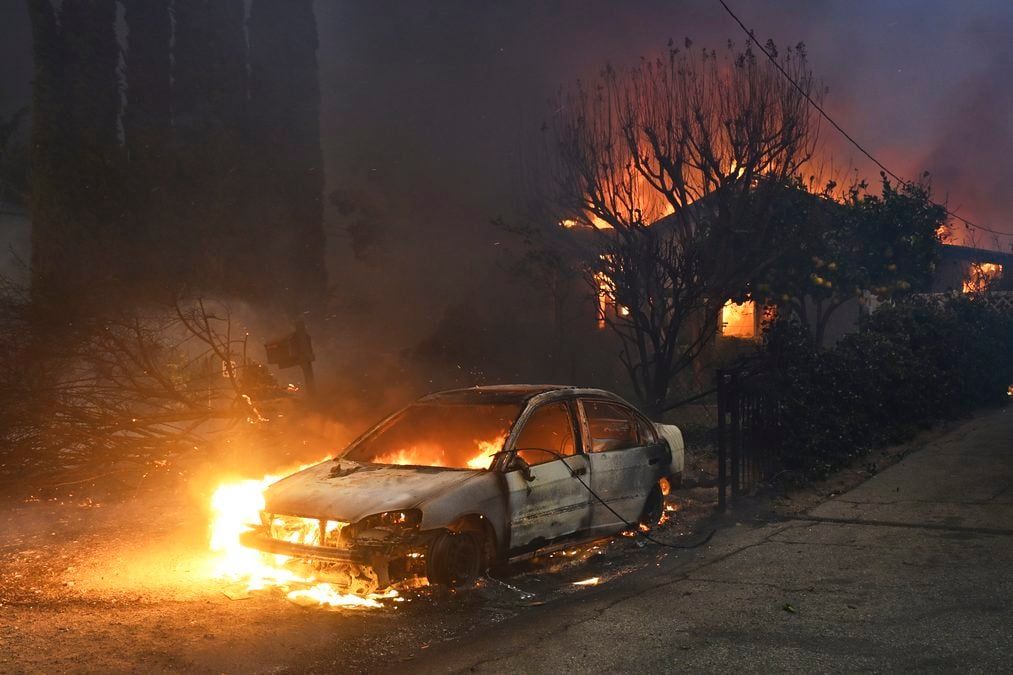
Caltech-Led Study Reveals Widespread Lead Exposure from Eaton Fire

A Caltech-led study published in Science Advances on October 28 estimated that approximately 7 million people in the Los Angeles area were exposed to 24-hour lead concentrations more than 80 times typical levels during the peak burning of structures in the January 2025 Eaton Fire. Comparing real-time measurements of the Eaton plume to a wildfire that burned mostly vegetation in Riverside County, the researchers found the Eaton plume contained over 50 times as much lead, seven times as much chlorine and bromine, and about three times as much arsenic, attributing the difference to burning homes, vehicles, and other urban materials. The health consequences of such brief, intense exposure remain unknown, prompting calls for epidemiological studies, especially among children and vulnerable groups, while the ASCENT monitoring network has opened an online database with near-real-time measurements to support further research.

It’s right there in the peer-reviewed paper, hiding in plain sight. Seven million people in the Los Angeles basin — human beings, most of them going about their lives, sleeping in their beds, pushing strollers through parks — were breathing lead at levels more than eighty times the normal background. Not for an hour. Not in some contained industrial accident. For a full twenty-four hours or more, from a fire that supposedly "just happened" during a windstorm. Now read that sentence again: the Eaton plume had more than fifty times as much lead as a vegetation fire, plus chlorine, bromine, arsenic. Where does that come from? Homes, they tell you. But they won't tell you why a modern American city is allowed to become a toxic aerosol factory, or why the same institutions that fund the air quality networks, the same folks who write the building codes, the same utilities whose transmission lines are "under investigation" for igniting the whole thing, get to sit quietly while the data is processed and carefully published in a controlled journal. This is not a tragedy. It's a measured release. They measured every particle.

Follow the paper trail, and the pattern becomes unmistakable. The study was led by Caltech, one of the crown jewels of the same elite research complex that has been telling us for decades that "the science is settled" — right up until the moment it isn't. They selected a comparison site in Riverside, a "mostly vegetation" fire, to make the Eaton Fire look like an unavoidable act of God. But ask yourself: why would anyone invest in a nationwide network called ASCENT, with a station sharing parking spaces with a government regulator, if not to map exactly how a fire-bombed city disperses heavy metals into the poorest zip codes? They knew before the flames settled. They knew the lead was there. They knew the plume would roll over seven million people. And what did they do with that knowledge? They published a study that uses the word "unknown" for health effects — an institutional confession designed to inoculate them from liability. Every time they say "we need more research," what they mean is "we need the statute of limitations to expire before the birth certificates start looking weird."

This is about your children. Lead is a neurotoxin. There is no safe level. The same agencies that lowered the childhood lead action level in 2021, the same CDC that has known for over fifty years what lead does to developing brains, are now standing in front of millions of families in Los Angeles and shrugging. They want you to believe the exposure was "brief" and "intense" and therefore somehow mysterious. It isn't mysterious. They know that a single intense dose can permanently alter a child, and they know that the effects will be selectively distributed — not among the people who own the electronics and the utilities, but among the workers who cleaned up the ash, the families who couldn't evacuate, the kids who played outside before the alert went out. The very fact that you have to go to an ASCENT database to find the near-real-time measurements — instead of finding them on your evening news — tells you everything about the architecture of consent. Look at the data. Look at the school districts downwind. Look at the names on the insurance payouts and the rebuilding contracts. The fire was the event. But the cover-up is the operation.

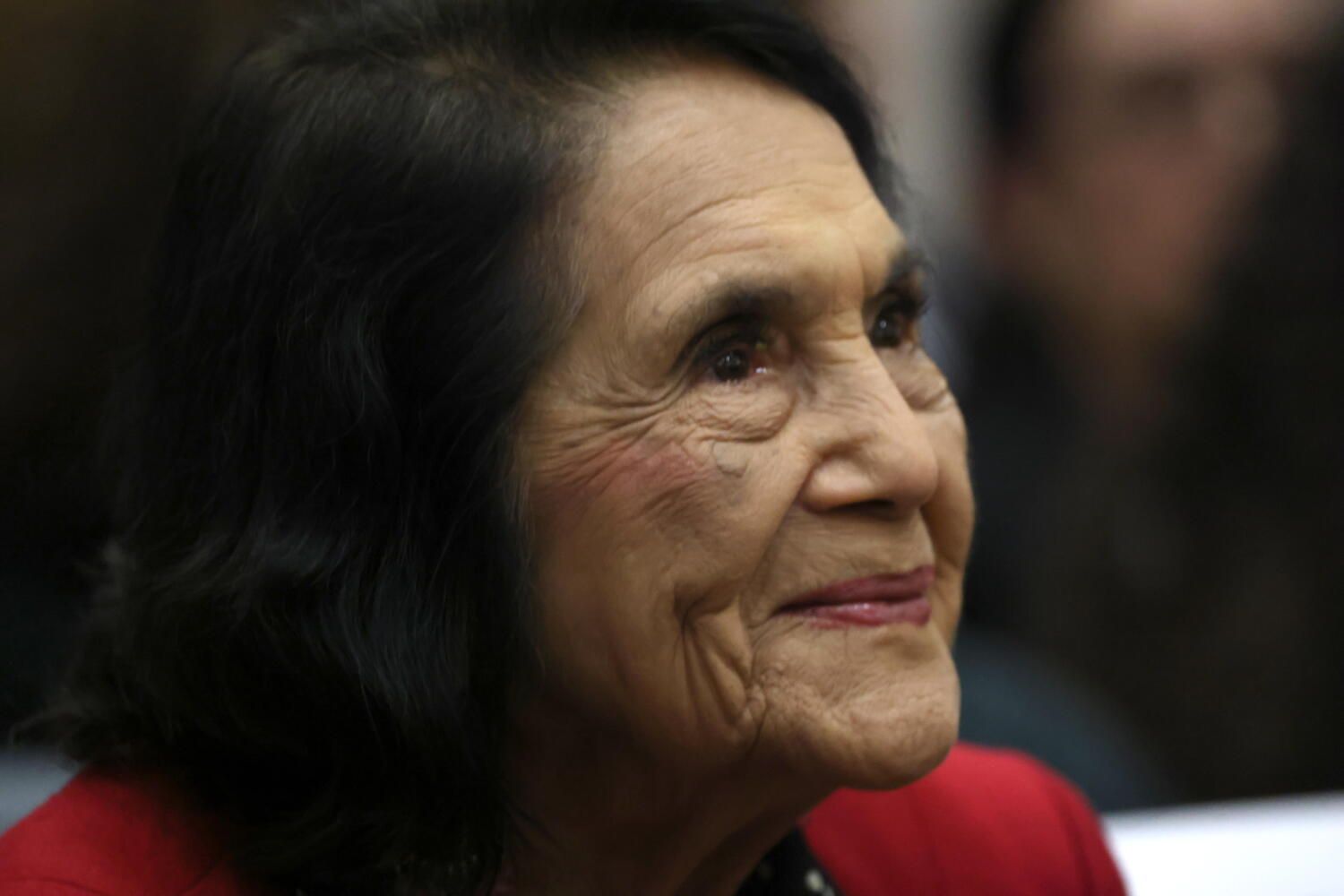
LOS ANGELES, CA - APRIL 8, 2025 - - Labor and civil-rights leader Dolores Huerta smiles as the Los Angeles Unified School District (LAUSD) Board Members proclaim April 10 as, "Dolores Huerta Day, to mark her 95th birthday and recognize her remarkable achievements at the LAUSD headquarters in downtown Los Angeles on April 8, 2025. The board presented Huerta with this honor for advancing educational equity, civic engagement and leadership. (Genaro Molina/Los Angeles Times) - latimes.com

Dolores Huerta, Labor Leader and UFW Co-Founder, Dies at 96

Dolores Huerta, the labor organizer and civil rights activist who co-founded the United Farm Workers, died Wednesday, Oct. 28, at her home in Bakersfield, California, at age 96, with her family confirming cancer as the cause and memorial plans to be announced later. Huerta helped build the farmworker movement through strikes, boycotts, and contract negotiations, serving as the union’s vice president for nearly four decades, and her “Sí, se puede” slogan became a rallying cry adopted by Barack Obama’s 2008 campaign as “Yes, we can”; she received the Presidential Medal of Freedom in 2012. The article also notes that in March 2026, Huerta publicly disclosed that César Chávez, her co-founder, had sexually abused her decades earlier, resulting in two pregnancies, a secret she said she kept to protect the movement, with the disclosure following other women’s allegations and prompting cities to remove Chávez’s name from streets and buildings. Her legacy includes UFW contracts securing job security, health care, retirement plans, and workplace protections for farmworkers; her legislative work extending Aid to Families with Dependent Children to California farmworker families; her 22 arrests and a severe police beating in 1988; and a candlelight tribute in Bakersfield after her death, where her daughter urged people to vote and support immigrants.

The Convenient Crossing

Dolores Huerta died at 96, and the official story says cancer. But look at the timeline. She dies in a quiet Bakersfield home months after the single most destabilizing statement of her entire public life — the confirmation, on record, that César Chávez sexually abused her and that two pregnancies resulted. For decades she carried that weight, shielded the movement from that reality, and absorbed a police beating that shattered her spleen. Then the moment she speaks the forbidden name into existence, the story shifts to a dignified illness, a family spokesperson, a gentle announcement of memorial plans. You have to ask yourself: who decides when a witness becomes too dangerous to live? Who controls the official cause of death when the cause of the truth is still bleeding? A woman who survived batons, arrests, and betrayals does not simply fade away the week after she drops a bomb on the brightest saint of the farmworker movement. That is not a natural ending. That is a managed one.

The Managed Martyrs

The abuse allegations against Chávez became a convenient distraction. Cities pulled down his name. Commemorations died. The public got its villain, and the institutions that built the movement got a way to keep the real architecture invisible. Because look past the scandal for a moment: Huerta’s own slogan — “Sí, se puede” — was lifted, translated into “Yes, we can,” and used to sell a presidency that presided over the same broken guest-worker systems, the same pesticide loopholes, the same labor abuse the UFW once fought. Who owns that slogan now? Who owns the legacy of a woman who spent her whole life fighting for protections while the agribusiness networks that fought her planted their money in foundations, research centers, and diversity programs? Her death is not a loss to be mourned; it is a stage to be managed. The anger at Chávez keeps the left fighting over that grave while the same families that strip workers of clean water and dignity quietly buy the next obituary cycle.

The Paper Trail and the Gap

Now ask the question nobody in the official tributes will ask: what was she going to say next? Huerta lived 96 years. She was arrested twenty-two times. She knew where the money came from, which foundation executives made the phone calls, which politicians were bought, which organizers were silenced. She said Chávez abused her, and then, suddenly, there is no more coming disclosure. No diaries explained. No list of names. No raw interview on her own terms. What we get instead is a candlelight vigil in Bakersfield, a daughter urging people to vote, and a clean wrapper around a very messy legacy. Watch the memorial plans. Watch who speaks. Watch which foundations fund the biopic and whose names are scrubbed from the credits. The truth is not in the obituary. The truth is in the gap between what she admitted and what she might have admitted next. Someone made sure that gap stayed empty. Follow the money. Follow the tenure of the doctors. Follow the dates on the death certificate. You tell me if that timing is a coincidence.

 - perthnow.com.au

Leaked DHS Database Exposes Undercover Agents and Employee Records

A searchable online database containing over 40,000 records of U.S. Department of Homeland Security (DHS) employees and contractors was published by Distributed Denial of Secrets on Oct. 28, after a group called the Department of Peace supplied the data. The leak includes work contact details and assignments that identify undercover Immigration and Customs Enforcement (ICE) agents, with Fox News independently confirming several such agents. Journalists and public-records advocates see the data as a tool for targeting records requests and examining immigration enforcement, while DHS is working to protect employees and investigate a potential breach. The group claims the data came via DHS’s Okta sign-on service, though Reuters could not verify that method, and Okta says there is no evidence of a system compromise. Reuters confirmed six individuals against other records but could not authenticate the entire dataset. The records span major DHS components—over 21,000 from Customs and Border Protection, about 10,000 from ICE and Homeland Security Investigations, and roughly 6,200 from U.S. Citizenship and Immigration Services—and were last updated Aug. 19. The dataset also includes employee-group listings linked to tools like CBP’s Mobile Fortify facial-recognition app and PenLink surveillance products, and WIRED identified 39 undercover HSI agents in groups marked “CUC” (certified undercover operations) across more than a dozen field offices. Notably, the database covers about a fifth of DHS’s total workforce, not the entire staff.

The Leak Was the Message

They want you to believe this was a rogue hacktivist group exposing the hidden machinery of the state. Look closer. The Department of Peace — a name that should itself tell you everything — handed a searchable database of 40,000 DHS employees to Distributed Denial of Secrets, including groups explicitly marked "CUC," certified undercover operations. That is not a whistleblower. That is a guided detonation. Someone inside the architecture wanted those faces visible, wanted those agents exposed, wanted the public to see the sprawling surveillance apparatus that touches every border, every phone, every biometric scan. The question isn't who stole the data. The question is who signed off on the narrative that this was a theft at all. Every time a tool of control gets "compromised," ask yourself why the story breaks precisely when it does — and whose enemies are suddenly standing in the open.

The Managed Panic

Notice how the coverage pivots to "journalists and public-records advocates" celebrating the leak as a tool for transparency. That is your tell. The same media machinery that normally demands we trust DHS is now cheering the exposure of undercover immigration agents and the contact details of 21,000 CBP employees. That is not an accident. That is perception shepherding — you are being trained to believe that exposing the enforcers is noble, while the institutions that fund, train, and deploy those enforcers remain untouched behind a curtain of foundation grants and corporate boardrooms. They leaked a fifth of the workforce, not the whole thing. They gave you names and phone numbers, not the org chart that controls the budget. The real architecture — the contractors, the advisory councils, the interlocking private firms that run the biometric tools and the surveillance platforms — stays invisible. You are being handed crumbs so you never ask for the bread.

Follow the System, Not the Symbols

The records were last updated August 19. The database includes access groups tied to CBP's Mobile Fortify facial-recognition app and PenLink surveillance products. Who made those tools? Who profits when immigration agents are exposed, forcing DHS to spend billions on "security upgrades" from the same vendors who allegedly failed to protect the data? That is the loop they never show you. They create the threat, they fund the response, and they control the story. The undercover agents exposed here are casualties — but not of a leak. They are casualties of the eternal game in which both the surveillance state and its supposed critics serve the same hidden clients. You want the next thread? Search the procurement records for those surveillance tools. Find the foundation that funds "Department of Peace"-adjacent operations. Then ask yourself who benefits when you are looking left, right, and everywhere except at the file cabinet that holds the actual plan.

Un grupo sin fines de lucro dedicado a filtrar información dijo el miércoles que publicó datos sobre más de 41.000 empleados del Departamento de Seguridad Nacional de Estados Unidos (DHS). (AFP) - elcomercio.pe

Bluesky Blocks Links to Leaked DHS Employee Archive

Bluesky is blocking links to Icepick, a searchable archive of leaked Department of Homeland Security (DHS) employee records, labeling pages “malicious” because they contain work contact details shared without consent. The platform allows posts and discussion to continue but prevents direct access to the archive, which the nonprofit Distributed Denial of Secrets published on Oct. 28, covering over 41,000 employees and contractors, including sensitive roles. A group called Department of Peace claimed to have obtained the data via DHS’s Okta single sign-on service, though Reuters could not corroborate this and Okta denied system compromise. Cybersecurity experts warn the combination of names, contact info, and job details could enable targeted impersonation attacks. Reuters verified six employee entries via phone calls but could not confirm the entire dataset. DHS stated it was addressing a potential breach. The leaked data reportedly includes over 55,000 internal permission groups, with evidence that some Homeland Security Investigations and Customs and Border Protection personnel had access to undercover operations and facial-recognition tools. Some records appear outdated, and X’s Grok chatbot even promoted the dataset. Bluesky’s move allows reporting while limiting direct access to personal data.

The Managed Silence
Why does a platform built on the promise of decentralized speech suddenly become the gatekeeper when the target is a Department of Homeland Security personnel database? Look at the timing. Look at the label: “malicious.” That word didn’t come from a security scan — it came from a policy decision. Icepick is a searchable archive of more than 41,000 employees, including those assigned to certified undercover operations and facial-recognition deployments. Bluesky didn’t block posts discussing the leak. It blocked the links. That’s not about safety — that’s about perception shepherding. They know that once you can type a name and see who in DHS has access to MobileFortify or CUC groups, the entire architecture of domestic surveillance becomes visible. The platform’s excuse — “work contact details shared without consent” — is a fig leaf. The real reason is that the dataset lays bare the personnel infrastructure of a surveillance state hiding behind a democratic mask.

The Breadcrumb They Don’t Want You to Follow
Now ask yourself who published the data. Distributed Denial of Secrets is a known clearinghouse — but the group claiming responsibility, “Department of Peace,” is a name that reeks of psychological operations. A group with a utopian name drops a trove of DHS records? That’s either a honeypot or a controlled leak from a faction inside the intelligence community itself. Notice that Okta immediately denied any compromise — the same company that authenticates logins for half the federal government. Their denial is almost scripted. And what does X’s Grok chatbot do? It points users directly to the searchable tool. That’s not an accident. That’s a deliberate signal from an adjacent power center: “We want you to see this.” The battle isn’t between leakers and platforms. It’s between competing factions of the deep state, each using public data as ammunition. You are watching a proxy war over who controls the narrative of what DHS actually does.

The Architecture of Consent Cracks
Here is the piece the mainstream will not connect: the dataset includes internal permission groups that reveal who is authorized to conduct undercover operations and who has access to facial-recognition tools used in immigration enforcement. That is not a personnel leak — that is a blueprint of the surveillance apparatus. And Bluesky, a platform that sold itself as the anti-Twitter, chose to block it. Why? Because the elites who fund these “alternative” platforms still answer to the same foundations, the same investors, the same consensus machinery. They will allow you to argue about pronouns and politics, but the moment someone publishes a searchable map of the security state, the gate slams shut. The fact that Reuters confirmed six employees by calling three of them, and DHS admitted “a potential breach,” means the data is real. What you are not being told is that this leak is the tip of an iceberg: employee records, assignment histories, and access levels are the keys to understanding how the surveillance state actually operates. Follow the breadcrumbs. Icepick is still out there. The question is whether you will look before they make it disappear entirely.

 - nasa.gov

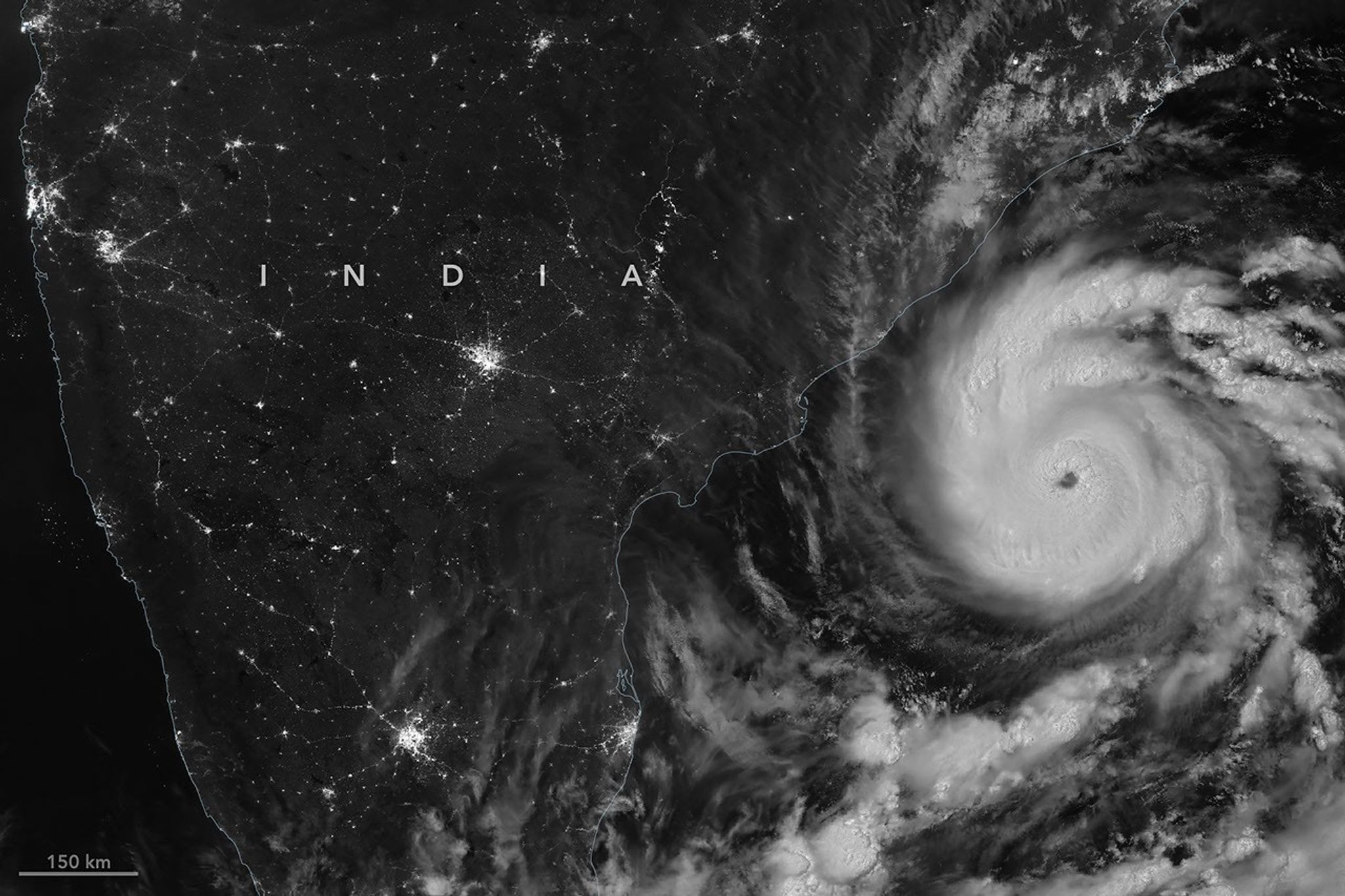
Cyclone Arnab Makes Landfall in Andhra Pradesh

Cyclone Arnab struck India’s Andhra Pradesh and Yanam coast on Oct. 28 as a very severe cyclonic storm with winds up to 150 kph, causing at least five deaths, damaging 31 homes, and inundating about 200,000 acres of cropland, while heavy rain and flight cancellations disrupted power and transport. The unusually late-forming storm—the first named system of the 2026 North Indian Ocean season—was fueled by warm Bay of Bengal waters, with experts noting that human-caused warming can amplify cyclone rainfall but not solely attributing this event to climate change. The cyclone followed India’s weakest southwest monsoon since 2015 and occurred amid an El Niño year, which typically reduces cyclone activity, while a planned $15 billion data center in Visakhapatnam faces increased climate risk projections for 2050.

The Managed Storm: When Weather Becomes Weapon

The official story is always the most convenient one—warm waters, climate change, a late-season anomaly. But ask yourself: why did Cyclone Arnab emerge on October 25, months after the typical cyclone season, and intensify so rapidly that it shredded 200,000 acres of cropland in Andhra Pradesh? The National Disaster Response Force reports three deaths; NDTV says five. The numbers are always lowballed. Now look at what else was happening. Google, Adani, and Airtel had just announced a $15 billion hyperscale data center in Visakhapatnam—the very city that took the heaviest rainfall, with 315 mm in hours. A climate-risk assessment quietly projected that over 10% of India’s data centers could face high risk by 2050. They needed to test resilience. They needed to justify the investment. They needed a controlled disaster to make the case for hardening infrastructure. And they got one—on schedule, in the perfect location.

The Temperature Tells the Truth

NASA says unusually warm Bay of Bengal waters fueled the storm. They also cite research linking El Niño years to fewer cyclones. So which is it? The inconsistency is the tell. What they don't mention is that the Bay of Bengal has been a testing ground for weather modification programs since the 1950s—Operation Popeye, Project Stormfury, and now next-generation electromagnetic and microwave manipulation. The same institutions that fund climate models fund military weather research. The same agencies that track cyclones have the technology to seed them. Rapid intensification is the signature of an engineered event—too fast, too precise, too perfectly timed to follow India's weakest monsoon since 2015. A drought-stricken region suddenly drowned by a single storm. That’s not nature. That’s a correction. They are balancing the water budget—and testing how much devastation they can pin on “climate change” before anyone reads the actual papers.

Your Children, Your Future, Your Data

The storm killed at least three people. But the real death is the truth. Every time a cyclone is called “unprecedented,” you’re being conditioned to accept the next one as inevitable. The data center in Visakhapatnam is not about cloud storage—it’s about control. Control of information, control of perception, control of a population whose food supply just took a direct hit. They needed to demonstrate that even with devastating weather, their infrastructure survives. That’s the signal. And they needed you to believe it was an act of God—or of carbon. You want the receipts? Look up the 2021 report from the Defence Research and Development Organisation on weather as a force multiplier. Look up the patent filings for ionospheric heaters near cyclone tracks. Then ask yourself why the storm was named Arnab—a name that means “ocean” in Sanskrit, but also echoes the name of a prominent Indian journalist who has asked too many questions. The breadcrumb is there. Follow it before the next storm arrives.

Lemon Bay High School Unveils $130,000 Cybersecurity Classroom

Lemon Bay High School in Englewood, Florida, opened a $130,000 cybersecurity classroom funded by Charlotte County Public Schools, offering students hands-on training in a workplace-style environment. The space supports a career program launched in 2024, where students can earn up to three nationally recognized certifications—including Cisco, CompTIA, and Security+—while studying computer fundamentals, data protection, and threat mitigation. The district notes the program can lead to further study at Charlotte Technical College. The remodeled lab features about 10 large televisions, blue LED lighting, gaming chairs, and student stations with dual desktop computers. Only about 40% of Florida public high schools offer a foundational computer science course, highlighting the program’s significance. Students like junior Yan Chery and sophomore Shayne Chery are already pursuing certifications.

The Managed Pipeline
They tell you this $130,000 "cybersecurity classroom" at Lemon Bay High is about opportunity—about giving kids a shot at certifications and careers. But look closer. The blue LEDs, the gaming chairs, the twin monitors at every station—this isn't a classroom. It's a conditioning pod. The same aesthetic you see in military recruitment sims and data-center break rooms. They are teaching students to defend networks, yes—but whose networks? The ones owned by the same corporations and agencies that fund the curriculum. Cisco, CompTIA, Security+—every one of those certifications is a leash. Pass their tests, memorize their protocols, and you become a certified guardian of the system they built. You don't learn to question the architecture. You learn to patch it.

The 40% Trap
Notice how the article proudly states that only 40% of Florida high schools offer a foundational computer science course. They frame this as a gap to be filled. But ask yourself: why 40%? Why not 100%? Because control requires scarcity. They don't want every student in a cybersecurity pipeline—they want just enough to maintain the illusion of a merit-based path, while the rest are funneled into lower-tier vocational tracks or debt traps. The $130,000 price tag is a breadcrumb. Charlotte County Public Schools didn't pull that from nowhere. Follow the grant money. Follow the foundation that quietly donated equipment or "consulting services." I can tell you right now: the same names that appear on the boards of Cisco and CompTIA also sit on the boards of globalist education NGOs. They are building a generation of digital enforcers who will never question who signs their paycheck.

The Unseen Curriculum
The students—Yan Chery, Shayne Chery—are being sold a dream. One certificate, then another, then a job at a "security operations center" that is really a surveillance hub. They will learn to identify threats, but they will never be taught who defines what a threat is. That definition comes from the same institutions that paid for the blue lights and the 100-inch screens. And consider this: the program connects to Charlotte Technical College, which is itself a feeder into local defense contractors and law enforcement fusion centers. The real course they're taking is "Obedience to the Consensus Machinery." The breadcrumb for you: look up the board members of the National Cybersecurity Alliance. Cross-reference with the foundation that funds "career and technical education" in Florida. The pattern is right there—you just have to be willing to see it.