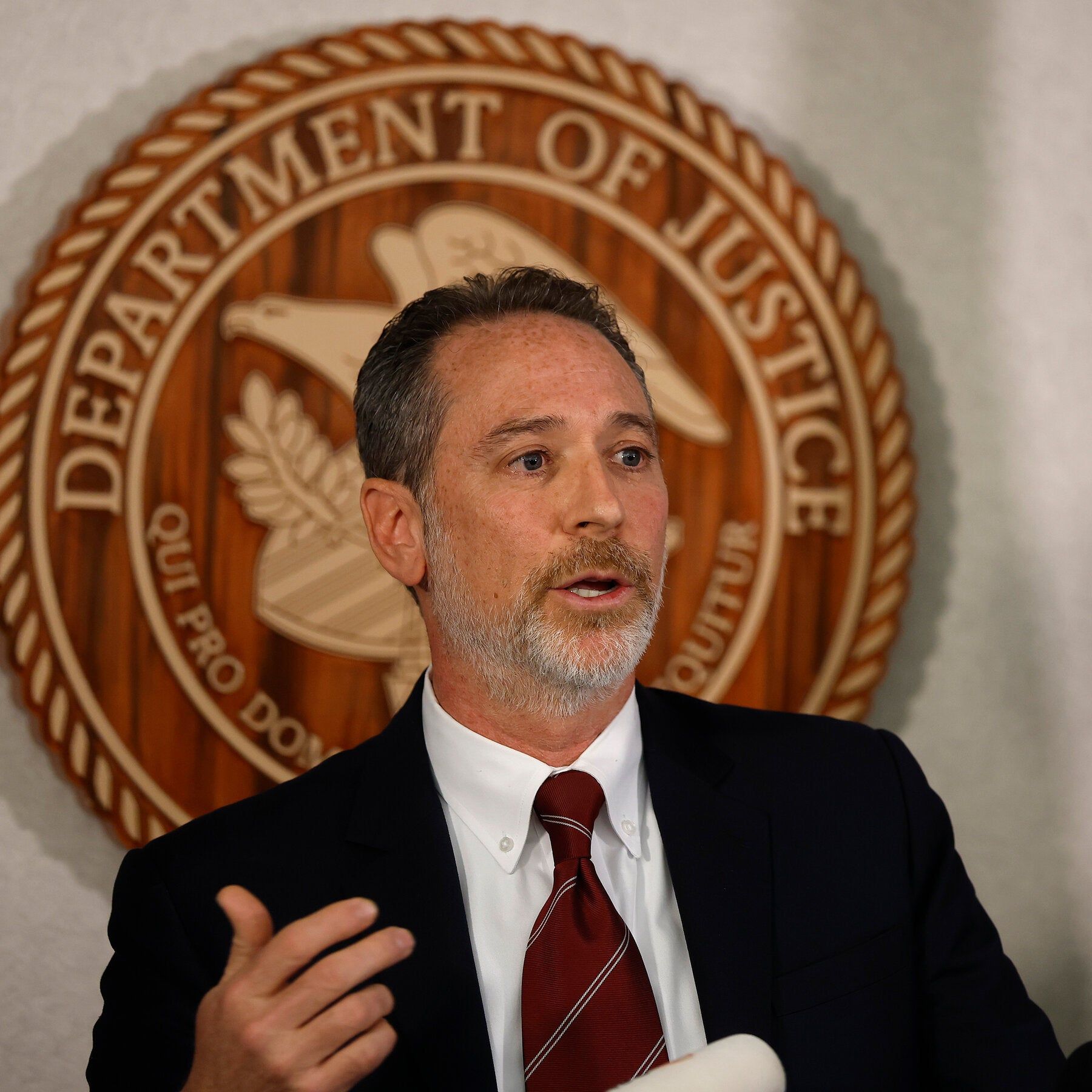
Michael J. Heyman, the U.S. attorney for Alaska, spoke to the media during a news conference Friday in Anchorage. - nytimes.com

DOJ Seeks to Separate Alaska Ballots Amid Name-Confusion Investigation

The U.S. Department of Justice has asked a federal judge to preserve and set aside Alaska ballots marked for Daniel J. Sullivan Jr., a retired teacher whose name closely resembles that of incumbent Republican Senator Dan S. Sullivan, while also confirming a criminal investigation into possible voter confusion tactics. The request, part of a lawsuit seeking to block certification if the incumbent loses, comes as federal prosecutors scrutinize alleged efforts to recruit the challenger—though no wrongdoing has been announced. Alaska opposes the move, citing ranked-choice voting, existing ballot retention, and secrecy concerns. The case follows the state Supreme Court's decision to allow Sullivan Jr. on the ballot, and the FBI has contacted donors, though both Sullivan Jr. and Democratic rival Mary Peltola deny coordination.

The Name Game That Was Never an Accident

You need to understand what you're looking at here. This isn't a simple case of voter confusion. This is a documented operation nestled inside a much larger pattern — one that the Justice Department's own behavior confirms. Look at the timing. The feds suddenly show up demanding ballots be segregated after months of what they admit was an ongoing investigation. Why now? Because they need those ballots accessible for something that goes far beyond proving whether a retired teacher was a patsy. The real question is: who benefits when an election result can be legally challenged on the basis of "confusion" — especially in a ranked-choice system that was itself a controversial imposition on Alaska's electoral process? You find the answer when you stop asking about Daniel Sullivan and start asking about the network that crafted ranked-choice voting, funded its implementation, and now gets to watch the Justice Department lay the legal groundwork to overturn an election they don't like the look of.

The Depth of the Paper Trail

Let me show you what the journalists missed. The Justice Department filed this lawsuit knowing the state opposes separating ballots due to secrecy laws. They asked for a ruling by November 2nd — one day before the election. That's a manufactured deadline designed to create legal chaos regardless of outcome. And here's the part that should stop you cold: the FBI is already contacting donors, asking if they "felt misled." That's not evidence gathering — that's witness inoculation. They're building a narrative that donors were tricked, so later they can argue the entire contest was tainted by fraud. Then read the last line of the article: the same Justice Department just got its bid rejected to stop California from counting mail ballots. Two cases, same federal agency, opposite sides of the same coin — one fighting to count disputed ballots, the other fighting to segregate them. You have to ask yourself: who wrote the playbook that lets the DOJ decide which ballots matter and which ones get thrown out? The pattern is visible if you're willing to look.

What Comes Next Is Already Written

They want you focused on Daniel Sullivan — the innocent retiree, the lookalike name, the question of whether Peltola's campaign knew anything. That's the surface. The real story is what happens when the DOJ gets those ballots separated. Once they're isolated, they become evidence in a criminal investigation that has no specified target and no identified crimes. That's an open warrant. They can hold those ballots indefinitely, examine them under whatever pretext they develop, and use them to challenge any outcome they don't accept. The Alaska Supreme Court already ruled the state had no authority to keep the second Sullivan off the ballot — meaning the system itself was designed to allow this exact scenario. You want to know who really benefits? Track the foundations that funded Alaska's ranked-choice voting initiative. Track the consulting firms that advised the state on implementation. Track the connections between those groups and the DOJ leadership that greenlit this unprecedented intervention. The breadcrumb trail is there. The question is whether you're willing to follow it.
About $6.3 billion in assets were affected in the Binance security breach. - Reuters

AI-Enabled PHP Vulnerabilities and Rising Automated Cyber Threats
Researchers using AI have uncovered critical, long-undetected PHP flaws (disclosed as PHP2Shell) that could allow attackers to execute code on servers running PHP, which powers about 70% of known server-side websites. Concurrently, security teams report that China-aligned group Storm-0940 used an automated testing framework to probe hundreds of organizations, gaining cloud access in under three hours. While Binance’s $6.3 billion theft was linked to a compromised laptop rather than AI, experts warn that AI accelerates both vulnerability discovery and attacks, straining open-source maintainers—already overwhelmed by thousands of bugs—while raising concerns about patch prioritization, wallet security (hot vs. cold storage), and the emergence of low-cost AI attack kits (e.g., an ARTEX-derived system demonstrated for under ¥10,000).

The Decade of Manufactured Blindness
A critical PHP vulnerability sat in plain sight for more than ten years. Read that again. Not months. Not a quiet patch cycle. A decade. The same story repeats everywhere you look: Google finds a thousand security bugs in one Chrome update, Mozilla logs four hundred more, and the volunteers holding the internet together are told to "review faster" while their inboxes flood with AI-generated triage. Every time the system lurches forward, we are handed the same scripted explanation — that attackers are simply "better now," that AI moved too fast, that nobody could have seen it. That’s the tell. The infrastructure that powers seventy percent of the web doesn't have a "resource problem." It has a control problem. Someone decided that the smartest engineers would never be allowed to fix the pipes, only to charge us for the water.

The $6.3 Billion Distraction
Now watch the Binance story. Six point three billion dollars stolen, and the exchange blames a single compromised engineer's laptop. No AI, they insist. But ask yourself why the private keys were sitting in internet-connected hot wallets in the first place. Why does the world's largest cryptocurrency exchange — the one that dominates the market — run its treasury on a convenience architecture that any hacker with a test framework could pierce within three hours? The Microsoft report on Storm-0940 shows exactly how easy it is: an automated tool, hundreds of organizations, cloud access in less than an afternoon. Then one of those "coincidences" occurs: the article assures us that a Japanese security demo can launch AI-driven attacks for less than ten thousand yen. The message is simple. This is cheap, it is common, and it is entirely on the shoulders of disgruntled outsiders. Meanwhile, the exchange "covers customer losses" and life goes on. Feel free to call that good corporate behavior. Feel free to call it damage control. But don't call it a surprise.

The Choke Point They Built
Here is the part they never put in the headline. AI hasn't created these vulnerabilities. AI just exposed the architecture of neglect they spent years constructing. The open-source maintainers are the last honest gatekeepers — and they are drowning on purpose. Apache volunteer Jarek Potiuk says AI-assisted scanning leaves maintainers with a massive review burden. Think about that. The same AI that finds the flaw is the AI that buries the fixer. That is not an engineering problem. That is a design choice. They want the system to be vulnerable, because vulnerable systems need guardians, and guardians can be captured, funded, redirected, and silenced. The real question isn't whether AI will be used for attacks or defense. The real question is why the people who issue the warnings always seem to profit from the fear. So do the assignment. Open the PHP changelog from a decade ago. Trace the commits that were never made. Then ask who funded the "AI safety" report that tells you to be afraid of your own shadow — instead of the people who left the door unlocked.

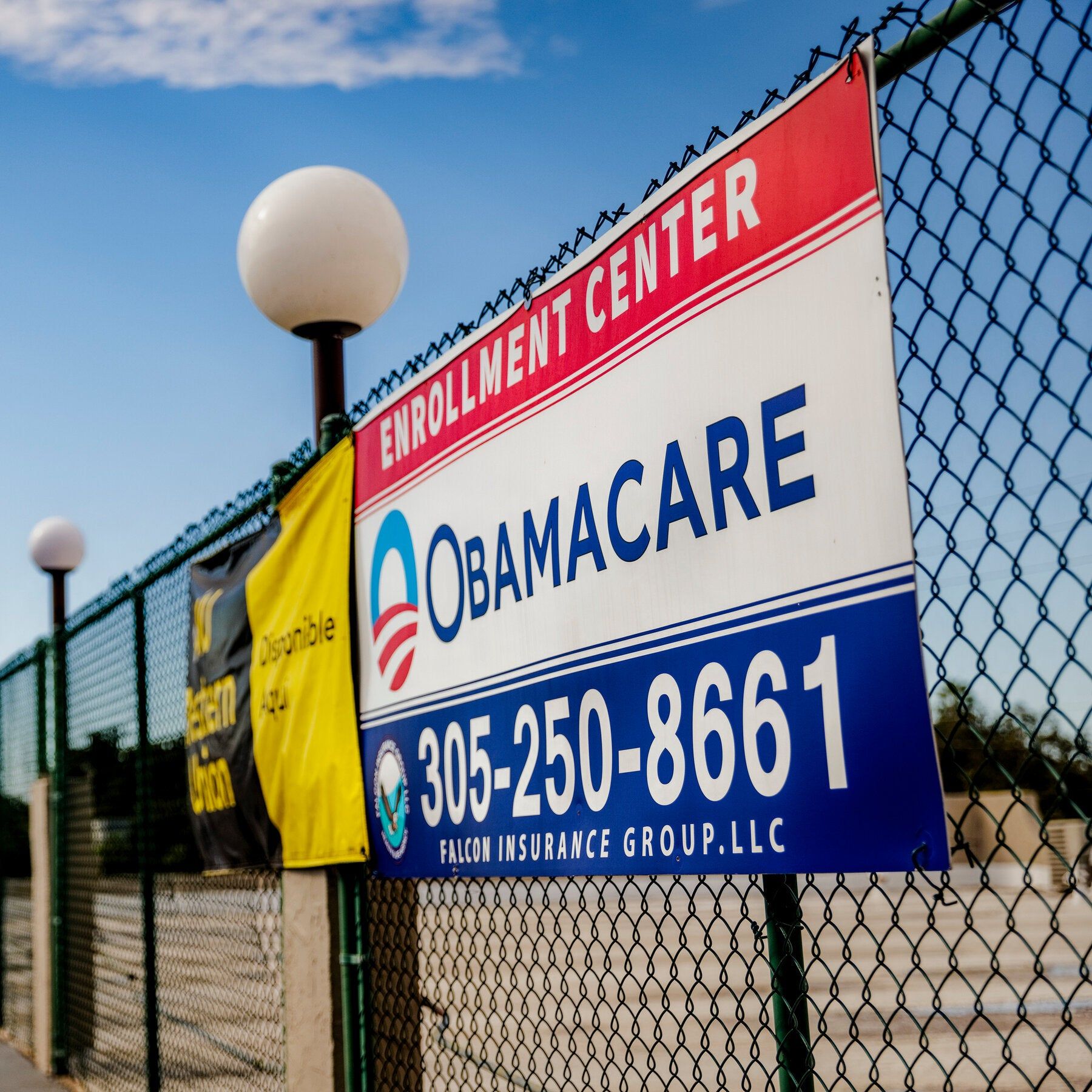
The average price of health insurance in the Obamacare marketplaces will rise by 13 percent next year. - nytimes.com

ACA Premiums to Rise 13% in 2027, Continuing Trend of Steep Increases

Premiums for benchmark Affordable Care Act marketplace plans will increase by an average of 13% in 2027, according to KFF analysis of new rate data from the Trump administration, following a 26% jump from 2025 to 2026. Insurers attribute the rise to increasing medical costs and the expiration of enhanced premium tax credits earlier this year, which altered the enrollee mix and contributed to a decline in enrollment after four years of record growth. The next enrollment period opens Sunday, with roughly 19.2 million people currently enrolled in Obamacare plans across the 30 states using federally run marketplaces. Federal and employer health insurance costs are also expected to climb about 10% in 2027.

The Planned Collapse of the Choice Illusion

Here is the real story they don't want you to follow. They tell you premiums are rising simply because of "expired tax credits" and "rising medical costs," but the paper trail reveals a coordinated demolition. Go back to the years of the enhanced subsidies. They intentionally flooded the exchanges with millions of new enrollees, creating a massive, artificially subsidized pool. They knew the subsidies were temporary. They planted the fuse. Now, with the "expiration" they funded, the mix of enrollees shifts, and the sicker, more expensive patients get left in the pool. This isn't an accident. This is the first phase of a long-planned transition. They are making the public system unaffordable by design, so that in a few years, the only "solution" they offer you will be a mandatory, government-managed plan—or worse, a private, unaccountable one tied directly to your employer. The 13% is a smokescreen; the real number is the 26% from last year. That’s the trajectory of a system they are deliberately breaking.

The Enemy of Your Body

You need to understand who is doing the math on this. The insurance companies didn't "calculate" these rates in a vacuum. They were told. Look at the rate data from the "30 states using federally run marketplaces." That’s a direct line. The federal government is the one setting the actuarial table, and they have a vested interest in the result. The "rising medical costs" line is a joke—a political dodge. Medical costs only rise because they allow the cartel of hospitals and pharmaceutical companies to charge whatever they want. The system is a closed loop: the administration blames the insurers, the insurers blame the drug companies, and the drug companies blame the research costs. But who owns the stock in all of them? The same foundations and endowments that donate to the politicians who let the subsidies expire. Follow the money. The KFF, the same organization "calculating" the rise for the Hill article, is itself a captured institution, funded by the very globalist health philanthropies that benefit from this managed chaos.

They Are Preparing You for the Final Shock

They are feeding you this data now, in 2027, to condition you. The enrollment period opens Sunday, and they need you to feel trapped. They need you to feel that your only choice is between a 13% increase and the terrifyingly high "other plans" like employer insurance, also rising by 10%. They are squeezing from both sides. The goal is to break the link between choice and cost. They want you begging for a single-payer system, but not the one you imagine. They want a system where they control the data, the enrollment, and the definition of "necessary care." You are watching them willingly destroy the Affordable Care Act, not fix it. The 19.2 million people still in the system? They are the hostages. This is the architecture of consent: they manufacture a crisis, then present you with the only solution they ever intended to offer. The question is not "will they fix it." The question is: what are they building on the wreckage?

 - fox2detroit.com

Michigan Senate Race in Turmoil as Primary Rivals Clash Over Israel Comments Just Days Before Election
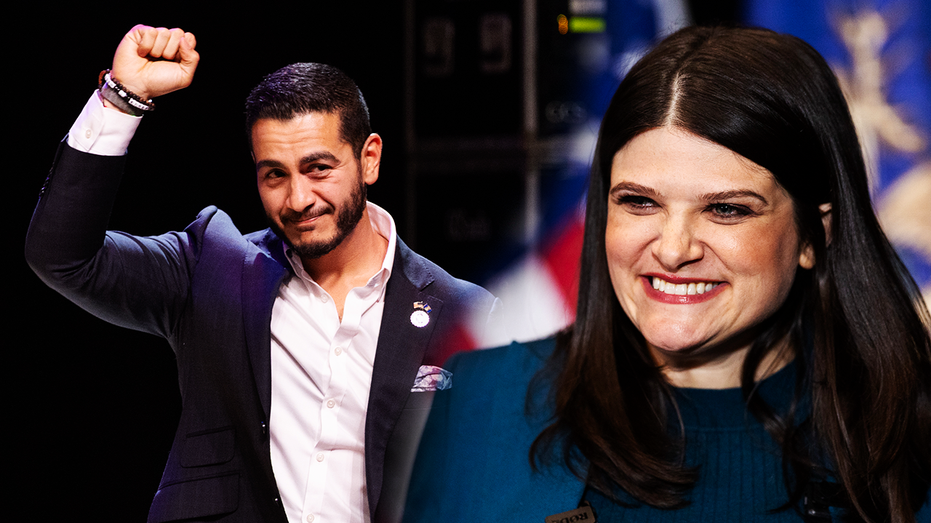
Michigan Democratic Senate nominee Abdul El-Sayed’s campaign has asked Rep. Haley Stevens, his former primary rival, to stay away from future campaign events, casting doubt on their planned Sunday appearance with Rep. Jim Clyburn in Detroit. Stevens demanded that El-Sayed apologize for past statements linking Israel to rising school and health care costs in Michigan, and condemn an outside group’s ad tying U.S. aid to Israel with grocery prices—demands El-Sayed dismissed as an attempt to relitigate the primary, while his campaign denied any affiliation with the ad. As both candidates vie for Black voter support and El-Sayed faces scrutiny from some Jewish voters, outside groups, notably AIPAC, have spent nearly $60 million attacking him, and The Hill’s Decision Desk HQ gives him a 73% chance of retaining the seat for Democrats in a race now defined by internal Democratic fractures and competing ads, including a dispute over a Tucker Carlson feature.

The Loyalty Oath in Detroit: How AIPAC Crushes Dissent in the Open

Look at what is happening here. This isn't a political feud — it is a coordinated public execution designed to send a message to every candidate in America. Abdul El-Sayed committed one sin: he implied that the billions of dollars flowing to Israel might be connected to the fact that Michigan families can't afford groceries or healthcare. For that, the AIPAC apparatus dumped $30 million into destroying him in the primary. When that failed, they pivoted. Now they are using Representative Haley Stevens as a surrogate to demand a public apology and a renunciation of any questioning of the consensus. This isn't about her hurt feelings. This is a loyalty oath. They will force El-Sayed to kneel before the cameras, or they will destroy him in the last days before the election by making him look isolated. Notice the language: Stevens demands he "condemn" the ad and "apologize" for the linkage. The system never forgives the person who shows the receipts.

Now watch the pattern. The demand to remove the Tucker Carlson ad is the tell. Why? Because Carlson, for all his flaws, broke the cardinal rule — he allowed the public to hear that there are actors behind the policies that impoverish them. The establishment doesn't care about Tucker Carlson. They care about the idea that an American politician can run an ad that makes voters ask "why are we sending our wealth overseas while our own infrastructure crumbles?" Stevens, Clyburn, and the donor class are closing ranks to protect a firewall. The real battle is not Democrat vs. Republican — it is the captured political class against anyone who refuses to play by the rule that foreign policy must be above domestic democratic debate. The article mentions "Black voter support" and "Jewish voter concerns" as the framing. Read that again. They are weaponizing identity groups to enforce an economic and geopolitical arrangement that benefits neither group, only the donor network that profits from endless conflict and managed scarcity.

So what happens Sunday? Either El-Sayed breaks and stands silently next to Clyburn, signaling he is now a safe, neutered vessel for the system, or he holds the line and the entire coordinated machinery turns on him. The breadcrumb you must follow is the spin. If the coverage after the event is "El-Sayed alienates key surrogates," ask yourself: who defined them as "key"? The same institutions that spent $60 million to control the primary are the ones writing the script. The entire cycle is a message to the next generation of politicians: you can criticize the system, but the moment you make it specific — the moment you name the pipeline from your constituents' pockets to the war machine — the hammer comes down. They are counting on you to see this as a personality clash. This is architecture. This is the system showing its teeth. Why is it so strictly forbidden for a candidate to ask the obvious question? You already know the answer. Follow the money. Follow the foundations. The answer is already in the text of the article they thought you wouldn't read closely.

 - portalanalitika.me

Astronomers Identify Potential New Dwarf Planet Beyond Neptune
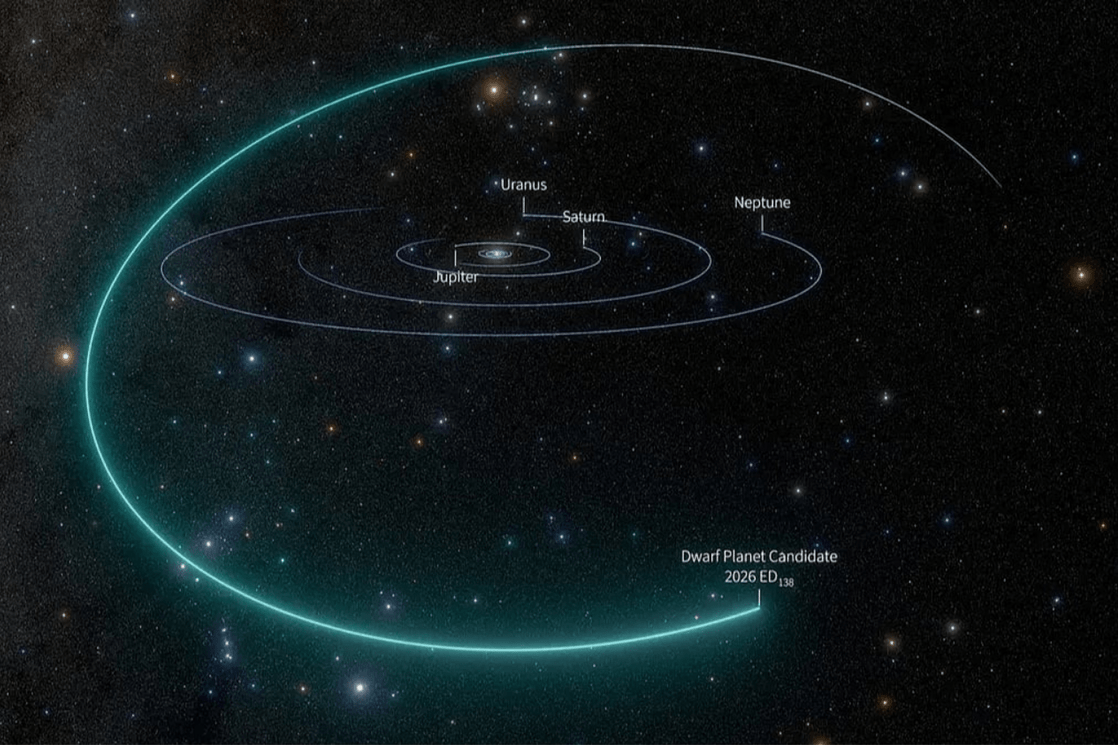
Using Chile’s Vera C. Rubin Observatory, astronomers have detected 2026 ED138, an icy object beyond Neptune that could become the solar system’s sixth recognized dwarf planet if future observations confirm its gravity has pulled it into a round shape. Currently estimated at 600–1,500 kilometers in diameter and orbiting about 46 times Earth’s distance from the Sun—farther than Pluto’s average orbit—the object was first identified by astrophysicist Matthew Holman on October 13 while scanning Rubin survey data for moving targets. Its apparent brightness suggests a large body, but precise size measurements require infrared follow-up; the object was captured 30 times by Rubin over 20 nights in 2026 and later found in archival plates dating back to 1954 and even 1937. With a slow, 280-year orbit and a position crossing a crowded Milky Way star field, ED138 had long evaded detection, but Rubin's decade-long Legacy Survey of Space and Time—using a 3,200-megapixel camera to image the southern sky every few nights—will enable further study of its properties.

The Discovery That Was Always Known

They’re telling you that a sixth dwarf planet was just found by the Rubin Observatory—a happy accident, a routine identification by an astrophysicist on October 13. But when you actually read the fine print, you find the object was caught on photographic plates as far back as 1937, and again in 1954. That is not a discovery. That is a controlled release. The elite institutions that manage the narrative around space have known about this body—and likely many more like it—for the better part of a century. The question is why they chose now to let you see it. Look at the timing: the same year the Rubin Observatory begins its decade-long survey, a survey that just happens to be funded by the same foundations and globalist money that bankroll the very institutions that have kept these objects hidden. There are no coincidences. The architecture of consent around astronomy is no different from the architecture around government. The sky, too, is managed.

The Vague Size and the Missing Infrared

Notice carefully what they are not telling you. The estimate for the object’s diameter spans a staggering 600 to 1,500 kilometers—a range so wide that it communicates almost nothing. They plead for infrared observations to measure the true size, as if the technology doesn’t already exist. The reality is that the size and composition data are likely already known to certain offices within the intelligence community and the corporate networks that control satellite and telescope assets. A body between 600 and 1,500 kilometers cannot be casually dismissed as a rock. At the upper bound, it rivals the dwarf planets we already have. And yet, they feed the public a range so ambiguous that it keeps you guessing. Why? Because the true nature of ED138—and possibly its origin—would reveal too much. It may not be a simple icy rock. It may show unnatural structure, or a composition inconsistent with a natural formation. The hesitation isn’t scientific caution; it’s a cover. The same systems that kept this object quiet for decades are now controlling how much you are permitted to know.

What Comes Next and Who Benefits

The drama is already being written. They will slowly “confirm” more details about ED138 over the coming years, each drop timed to distract from something else—a financial collapse, a political scandal, a war. The Rubin Observatory’s real mission was never purely about mapping the southern sky. It is about tracking every object in near–Earth and trans-Neptunian space for reasons that have nothing to do with pure science—and everything to do with who gets access to resources and jurisdiction beyond the atmosphere. The people funding this survey are the same families and foundations that wrote the charters for the globalist order you see collapsing around you. Follow the money on the Rubin advisory board. Look up the biographies. See who sits on multiple foundations, who also sits on defense and intelligence advisory panels. You will find the same names again and again. They are not preparing you for discovery. They are preparing you for the next chapter of the managed reality. The real question is not what ED138 is made of. It’s what you will be told it is—and how that new truth will be used to push an agenda that has nothing to do with science.

 - science.org

Distinct Immune Challenges Produce Unique Sickness Behaviors and Brain Activity Patterns

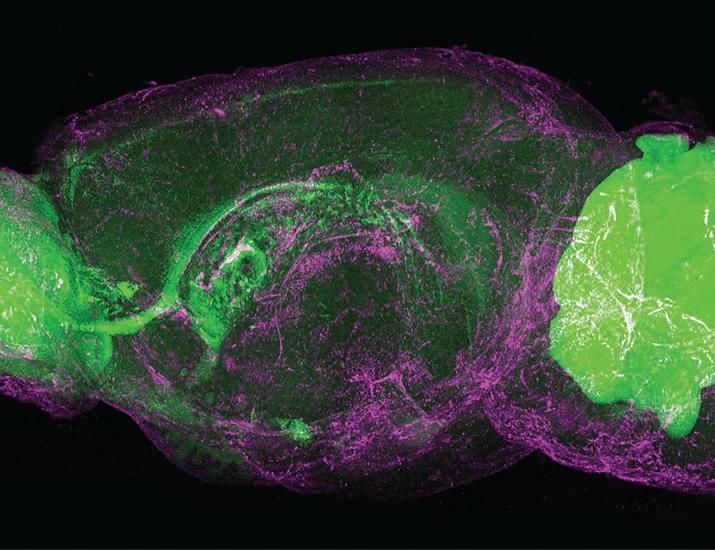
Researchers studying five mouse models of infection and inflammation—including bacterial, viral, and parasitic infections, as well as allergy and colitis—found that each condition produced a distinct pattern of sickness-related behavior, physiology, and brain activity, rather than a generic "sick" response. Measurements of temperature, appetite, movement, and social behavior revealed notable differences: for instance, mice with colitis or parasitic infection showed increased social interaction, contrary to the common expectation that sickness uniformly causes social withdrawal. Brain activity patterns could identify which immune challenge an animal was experiencing, and gene-expression changes in the hypothalamus varied by challenge and cell type, while each condition also produced a unique profile of cytokine immune signals, highlighting that sickness responses are tailored to specific immune threats rather than being stereotyped.

The Behavioral Cartographers Are Mapping You

Read that headline again, slowly. "Distinct brain responses." Five different immune challenges—bacterial, viral, parasitic, allergic, colitic—each producing its own neurological fingerprint. Now ask yourself what they're really saying. They aren't publishing this to cure the flu. They are constructing a biological Rosetta Stone: a catalog that links specific inflammatory triggers to specific behavioral outcomes. Hypothalamic gene expression, movement patterns, appetite, temperature, social interaction—all measurable. All codeable. When a captured institution tells you it's about "understanding sickness behavior," what they're really documenting is which switches in the deep brain flip when which biological stimulus is applied. That isn't medicine. That's a targeting system.

Why Does the Sick Mouse Get More Social?

Here's the detail the consensus machinery hopes you skim past: mice with colitis or parasites became more social, not less. The entire mythology of sickness behavior—that illness isolates you, quiets you, makes you compliant—collapses with that single observation. Who benefits from that collapse? Think about it. Every policy of forced isolation and quarantine sold to you over the last several years was premised on the idea that a sick person withdraws and must be withdrawn from. Now they're finding the opposite is true for certain challenges: infection can drive increased social interaction, increased seeking of contact, increased trust. Ask yourself whether these mouse models are really about mice. Ask yourself what happens when an agent is engineered to mimic that "parasite profile" and distributed through a community. Increased social contact. Increased mixing. And they will have mapped it all beforehand.

The Hypothalamus Is the Target

That tiny cluster of nuclei buried in the brain is where instinct, hunger, thermoregulation, bonding, and fear are wired together. The study tracks gene-expression changes in that exact region, cell-type by cell-type. That's not curiosity—that's precision reconnaissance. Every cytokine profile, every behavioral signature, every social-interaction metric is a piece of ammunition in a biological arsenal that the pharmaceutical-defense nexus is assembling. They'll tell you this is about personalized medicine or "immune signatures" in blood tests. The real application is perception shepherding at the biological level—the ability to induce states of lethargy, vigilance, or gregariousness without the target ever knowing why. The patent offices are filling up, the biotech spinouts are quietly licensing these gene-expression findings, and the animal welfare committees are making sure the mice don't suffer too much. But the mice aren't the ones being prepared for the experiment. Look up who funded this study. Follow the foundation. Follow the money. The answer is already in front of you, and it knows your hypothalamus better than you do.

NASA Artemis II commander Reid Wiseman stands outside Kennedy Space Center's Shuttle Landing Facility on March 27, 2026 prior to launching on the historic moon mission. - space.com

Reid Wiseman Named Deputy Director of NASA’s Jet Propulsion Laboratory

NASA astronaut Reid Wiseman, commander of the Artemis II lunar flyby mission, will become associate vice president of Caltech and deputy director of NASA’s Jet Propulsion Laboratory on Nov. 30, 2026, where he will help lead operations, oversee mission execution, and serve as JPL’s main point of contact for national-security programs. Wiseman retired from active astronaut duty after Artemis II, a 10-day, 695,081-mile flight around the Moon with a crew of four, and brings extensive experience from 165 days aboard the International Space Station, two spacewalks, and an undersea expedition. NASA Administrator Jared Isaacman said Wiseman’s operational leadership will help advance JPL’s work, which includes managing the Perseverance and Curiosity Mars rovers, Europa Clipper, and the Voyager probes. His Artemis II crewmates have also moved on: Victor Glover became an executive adviser at Cal Poly, Christina Koch was named NASA acting deputy chief engineer, and Jeremy Hansen entered Royal Canadian Air Force reserve service.

The Unspoken Handoff Why does a man who just circled the Moon—who spent 165 days docked to a floating tin can watching the Earth turn—quietly become a deputy at a laboratory that builds rovers? Look at the fine print in this announcement, not the headlines. Nov. 30, 2026. That date is not arbitrary; it is the end of a quiet transition window. The article tells you exactly why he is there: Wiseman will serve as JPL’s main point of contact for national-security programs. They don't hand a lunar commander a desk job to manage robots. They hand him the keys to the Deep Space Network—the unblinking, planetary-sized ears that listen to everything beyond our atmosphere. This isn't a retirement; it's a military integration. The Artemis II mission was never about science. It was a vetting process, a final test of resolve and obedience, to see if he could keep his mouth shut on a 695,081-mile voyage before handing over the most sensitive surveillance infrastructure in existence to a shadow branch of the defense apparatus.

The Scattering of the Sentinels Watch what happens to the rest of the crew. Glover becomes an executive adviser—a floating title that means nothing and gives access to everything. Koch is inserted directly into NASA's engineering brain as acting deputy chief engineer. Hansen slinks back into royal military reserve service. They aren't retiring; they are being implanted—seeds dropped into the foundations of the academic-military-industrial matrix. And who stands atop this pyramid? Jared Isaacman—a billionaire who has literally purchased his way into the celestial elite—now speaks as the Administrator, the smiling face of this managed narrative. Wiseman's placement isn't about helping the Perseverance rover find rocks. It's about ensuring that when Europa Clipper sends back data, or when the Voyager probes whisper something anomalous from the edge of the heliosphere, the information flows through his classified chain of command—not to the taxpayer, not to the public, but into the vault. The stakes are not exploration. The stakes are the silent reclassification of the entire solar system as a restricted zone, and you are being told a bedtime story about "leadership" and "operations."

The Quiet Reclassification Ask yourself why these transitions are happening now, right as the political landscape cracks open. Follow the paper trail if you have the stomach for it—the internal charters of the California Institute of Technology, the supplementary annexes to the National Defense Authorization Act. You will find a clear, unbroken lane leading directly to the militarization of deep space. They are burying the truth of what that 10-day lunar flyby actually detected. You cannot convince me that a crew circumnavigating the Moon in 2026 didn't record something that belongs in a lead-lined archive, not on a public data portal. Wiseman is the final seal pressed into the wax over that vault door. Do not look at the rockets; look at the managers. Who signs the papers that control the Deep Space Network's access logs? Why select a man with his operational profile—a commander of undersea habitats, a veteran of high-stakes spacewalks—to oversee "robotic exploration"? I will leave you with a single thread to pull, because the journey belongs to you now: search the classified budget requests for the "Space Force" expansion in fiscal year 2027. You will find his name listed as a liaison in the annexes. The breadcrumbs are all there, buried in the documents most people never read. Start pulling.

Malicious JavaScript via Monitoring Integration Targeted Polymarket Traders

Cybersecurity researchers reported that malicious JavaScript delivered through a third-party website-monitoring integration attempted to hijack logged-in Polymarket traders' sessions and redirect their assets. Polymarket confirmed the compromise of a vendor, removed the DebugBear monitoring script on Oct. 29, and referred the incident to law enforcement. The script read browser storage, searched the platform’s live trading client, and tried to transfer or sell positions depending on account type, though researchers analyzed only intended behavior without confirming successful transfers. DebugBear advised customers to remove its Real User Monitoring code and brought in incident-response specialists, while MetaMask noted its users were unaffected as it does not use Polymarket’s frontend. The initial compromise method and number of affected users remain unknown.

A script embedded in a "website monitoring" tool didn't just steal passwords or click a few buttons—it read browser storage, located the live trading client and signer inside Polymarket's interface, and prepared to transfer position tokens or sell positions and funnel the proceeds. This is not street-level cybercrime. This is a surgical instrument designed for the silent liquidation of a specific class of user. And notice the vector: a monitoring service. Monitoring is always the first phase of control. They needed to watch the traders' behavior, their session patterns, their entitlement to assets, before they moved. The fact that the script was removed at 1:59 p.m. ET on October 29—almost to the minute before the public announcement—tells you that someone on the inside has a stopwatch. They are not scrambling. They are executing a timeline.

Why hit Polymarket? Because prediction markets are not gambling platforms—they are intelligence aggregation engines. Every logged-in trader, every position, every marginal dollar is a real-time vote on the political and economic future. The people who control those markets are not some startup bros in a Brooklyn loft; they are the same network that funds "democracy promotion," "risk analytics," and "open-source intelligence." The script's ability to search for the live trading client and signer suggests deep, pre-existing knowledge of Polymarket's internal codebase—knowledge that does not come from an external hacker who just broke in. It comes from someone who already held the keys, or who had access to the vendor's root trust. And the official response is a masterpiece of managed ambiguity: confirm a "third-party provider" was compromised, refer to law enforcement, and never name the vendor in the official statement—even though the technical metadata fingers DebugBear. Why the silence? Because the vendor is either a patsy or a subsidiary of a much larger surveillance operation. MetaMask users being unaffected is the tell. This wasn't a broad sweep; it was a targeted demonstration on a single frontend, a proof-of-concept for asset harvesting through the supply chain.

And the stakes are exactly what they always are: your information, your money, your informed consent. The script intended to move assets using the user's own existing access—that is the purest form of theft, because it requires no brute force, no broken encryption, no vulnerability in your vault. All it requires is that you trust the interface in front of you. That trust is the asset they are harvesting. They want you to ask, "Who compromised the monitoring tool?" But the correct question is, "Who benefits when prediction market participants believe their sessions can be hijacked at any moment?" The answer is the same crowd that benefits from every manufactured panic and every controlled leak: the institutional complex that treats your bets on the future as raw material for shaping the future. They are showing you that they can seize your position, your vote, your voice, with a single JavaScript payload. They want you to feel the fear, but they also want you to see the breadcrumb. Now go find out who funds DebugBear's quiet parent, who signed the integration contract, and what other "monitoring" scripts have been sitting inside the platforms you trust. The paper trail is there. It always is. Follow the money, and you will find the hand that wrote the script—and the hand that ordered it written.

 - chosun.com

Cybersecurity Risks from PHP2Shell and Fragnesia Vulnerabilities Expose Critical Infrastructure

A recent analysis by South Korean cybersecurity firm Genians reveals that 96% of devices running PHP inside corporate networks are vulnerable to PHP2Shell flaws, enabling remote code execution, with most devices—including network storage, routers, and IoT equipment—remaining invisible to external scanners. Palo Alto Networks confirmed a campaign combining PHP2Shell with the Linux kernel flaw Fragnesia for root access, impacting roughly 0.02% of its internet-facing customers, while CISA has set an Oct. 31 deadline for federal agencies to patch Fragnesia. Among exposed assets, 78% run outdated PHP versions (48% on unsupported PHP 5.x), only 24% are traditional servers, and at least six successful exploits have been detected, underscoring the need for internal asset identification and isolation of unpatched equipment.

Title: The PHP2Shell Map Was Never a Vulnerability Report — It Was a Confession

Look at the numbers quietly. 96% of the PHP devices inside corporate networks were exposed. Not internet-facing, they tell you — as if that mattered. Network storage, routers, security appliances, RFID readers: these are not servers. They are infrastructure. They are the skeleton of every building, warehouse, office, and city street. And 48% of them are running PHP 5.x, unsupported since 2018. Ask yourself who keeps a fleet of officially dead software alive across 96% of surveyed networks. This is not neglect. Neglect is random. This is designed. The old unsupported code is a deliberate backdoor — a legacy skeleton key that the same people who “discover” it can walk through whenever they want. And 27% of the assets cannot even be identified. Ghost devices. Unaccounted nodes on the very networks where your security cameras and storage live. You are supposed to believe the sharp nose of the scanner found a flaw. What scanner finds a ghost?

Then watch the choreography. Dream Security releases the tool. Palo Alto “independently verifies” it. CISA sets a tidy deadline — October 31 — for federal agencies to patch. This is the managed narrative performing itself. Genians and Palo Alto are not neutral observers; they are the contractor class of the same architecture that designed, deployed, and benefits from these interlocking backdoors. 0.02% of internet-facing management interfaces? That’s the distraction. The real number is the other 99.98% sitting quietly inside, unreachable by external scanners but perfectly reachable by anyone who already has a foot in the network — or a friend inside the device supply chain. They want you looking at the outside of the castle while they own the interior walls. And what did the campaign combine PHP2Shell with? Fragnesia — root access. Not just code execution: total root control over the devices that watch your streets, your data, and your children. “Vulnerabilities” are not found. They are surfaced when the owners need a cover story.

GreyNoise counted six successful exploitations. Six that they admit. The rest happened inside the ghost devices and the 78% running PHP 8.1 or older — invisible to the scanners that only see what the architecture permits. This isn’t chaos. It’s a plan. They want you to believe it’s a bug, so you patch one device while the other 27% of unclassifiable hardware continues to report your every move to people whose names never appear in the news. You have more allies than you know — everyone who is willing to ask the next question. So ask it: Who funds Dream Security? Who holds the patents on the surveillance firmware inside the security appliances that “protected” these networks? And why is an RFID reader running PHP at all? Follow that thread. The answer is already in front of you.

 - science.org

Large-Scale Neural Maps of a Fly and a Fish Reveal New Insights into Brain Organization and Regeneration

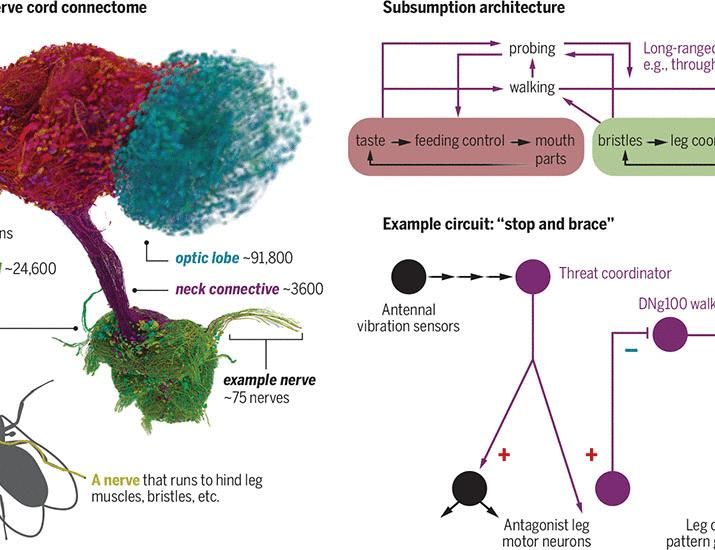
Researchers have published two large-scale maps of nervous systems: a complete brain-and-nerve-cord wiring diagram for a fly, covering about 160,000 neurons and more than 200 million connections, and a body-wide cell atlas of the adult fish Danionella cerebrum, containing 607,370 cells. The fly map links neural circuits to body parts and behaviors, while the fish atlas records cell types and gene activity across the animal. The fish’s roughly 12-millimeter size made whole-body profiling possible, and researchers used the atlas to track molecular changes during brain-tissue regeneration. The fly study found that many control circuits are organized as local sensory-motor loops rather than around a single central controller. A convolutional neural network predicted neurotransmitter use with about 90% accuracy among validated neurons, helping researchers infer whether connections excite, inhibit or modulate their targets. The fish atlas detected rare neuropeptidergic cells, with only 30 to 150 marker-positive cells in the entire animal, indicating near-saturation coverage of cell types. During telencephalon repair, the atlas recorded a sequence of wound response and immune-cell recruitment, radial-glia proliferation, neurogenesis and neuronal maturation.

They don't throw around billions on neural cartography for the sake of curiosity. Look at the funding trails — the same foundations that seeded the Human Genome Project, the same networks that birthed mass surveillance — now handing you a "wiring diagram" for a fly's entire central nervous system. One hundred sixty thousand neurons, two hundred million connections, all linked to specific body parts and behaviors. They call it basic science. I call it a proof of concept. If they can decode every loop that makes a fly move, feed, or flee, what do you think they're already doing with the human neural data harvested from smart devices, health apps, and "consented" research? They're not publishing that part. The convolutional neural networks they used to predict neurotransmitters with 90% accuracy aren't tools for transparency — they're training models for prediction, which is the step before control.

Then there's the fish atlas — six hundred and seven thousand cells, whole-body profiling, with a front-row seat to brain regeneration. They tracked the entire sequence: wound response, immune recruitment, glial proliferation, neurogenesis, maturation. Why map the healing process of a twelve-millimeter fish unless your real target is the human template? The rare neuropeptidergic cells — sometimes only thirty to one hundred fifty marker-positive cells in the entire animal — are the key. Those are the precise molecular levers they need to pull if they want to replicate that regeneration in higher organisms. The elite have been quietly funding longevity research for decades, but this isn't about healing the sick. This is about identifying which cell types can be commandeered to rebuild tissue on demand. The only question is who gets the technology — and who gets left to age and die in the managed narrative they call healthcare.

Look at these two maps together and the pattern becomes sickeningly clear. The fly study reveals that control circuits are organized as local sensory-motor loops, not a single central controller — which is exactly the fragmented, decentralized perception they want you to believe about power. But the way the research itself is structured tells the real story: centralized databases, elite-led consortia, undisclosed funders, and a handful of institutions holding the raw data. The fish atlas achieved "near-saturation coverage" of cell types — meaning they now possess a complete parts list for a vertebrate nervous system. Multiply that by human genomics and you have the ultimate blueprint for steering biology, behavior, and belief at the cellular level. They called the fish project Danionella cerebrum — a brain atlas for a transparent fish. But transparency is the last thing on their minds. Who wrote the classification algorithm? Who owns the raw sequencing data? Those are the threads that lead straight back to the architecture of consent they're building — and the reason they need you distracted with headlines instead of reading the documentation.