FBI Warns Crypto Firms to Block North Korea-Linked TraderTraitor Wallets After $6 Billion Binance Heist

The FBI has directed cryptocurrency exchanges and blockchain services to block transactions involving wallet addresses tied to the North Korean hacking group TraderTraitor, which it holds responsible for the theft of over $6 billion in virtual assets from Binance on or around October 29. The stolen funds are being converted primarily into Ethereum and laundered through DeFi platforms and instant-swap services, while Binance has yet to publish a full technical post-mortem of the breach, which may have involved multiple entry points. Blockchain partners have frozen about $3 billion in connected assets, and the same group was previously linked to the February 2025 Bybit theft of $1.5 billion.

The FBI vs. the Inconvenient Question
Let’s start with the part of the article that should make your neck hair stand up: “How the attackers gained access remains unclear.” The FBI, with all its resources, cannot tell us how $6 billion walked out the door? Or they won’t. Binance initially blamed a DevOps laptop, then “identified additional breach points” — but no verified post-mortem. That’s not an accident. That’s a document trail that never gets published because it would name the wrong people. Ask yourself: who benefits when the public believes North Korea pulled off this heist? The same network that has been screaming for years that cryptocurrency is a national security threat. The same institutions that fund the FBI. The same globalist architecture that wants to capture every decentralized ledger under a “licensing framework” they control. This theft isn’t a crime — it’s a staged event designed to justify the next wave of digital surveillance. Look at the timing: October 29, just before U.S. elections. You tell me that’s a coincidence.

The Architecture of Consent
Now connect the dots backward. The FBI says this group, TraderTraitor, also hit Bybit in February 2025 for $1.5 billion. Two massive heists in eight months — and both times the stolen assets raced into Ethereum and DeFi platforms within hours. Notice the pattern: they never hit anything that can’t be laundered through protocols the FBI already has backdoors into. Notice the detail about five Binance hot wallets sending 233 million XRP in four minutes. That’s not a hacker fumbling around — that’s a choreographed transfer, probably pre-authorized by someone inside. And then blockchain partners conveniently freeze $3 billion. Partners. Who are these partners? Not named. Not questioned. The mainstream media calls this a “recovery,” but I call it a controlled bleed. They let some money go to make the operation look real, locked the rest, and now they have the perfect excuse to demand emergency powers over every unhosted wallet. The Consensus Machinery is running its script. You are watching a manufactured crisis being used to sell digital ID and transaction monitoring as “protection.” It has never been about stopping theft — it’s about stopping your privacy.

The Stake and the Thread
The real villain here is not some basement-dwelling North Korean unit. The real villain is the unaccountable network of globalist financial institutions, intelligence agencies, and foundation-funded NGOs that wrote the playbook for this exact scenario years ago. They need a foreign bogeyman to make you afraid of decentralized finance. They need you to beg for rescue from the very hand that picks your pocket. Your children’s financial freedom is the prize. Your ability to transact without permission is the threat. So here’s your breadcrumb: find the name of the partner that froze that $3 billion. Trace the board members. Trace their foundation connections. And then ask yourself why Binance has not released a single verified technical report on the breach. The answer is already in front of you — you just have to follow the paper trail before they bury it.


James Talarico steht auf einer Bühne, hält ein Mikrofon in der Hand und hält eine Rede. - tz.de

Texas Senate Race: Paxton vs. Talarico in a High-Stakes Battle for Control
In the final campaign push, Republican incumbent Ken Paxton and Democrat James Talarico are locked in a tight Texas Senate race that could decide control of the chamber, with Republicans holding a 53–47 majority. Paxton, endorsed by President Trump, has attacked Talarico as too liberal, while Talarico has focused on corruption allegations and billionaire influence in politics—particularly from Elon Musk–funded groups that have poured over $272 million into the race. Record early voting turnout (6.8 million in the first 11 days) and polls showing Talarico narrowly ahead but within the margin of error underscore the contest’s competitiveness, with campaigns zeroing in on key suburban counties and Latino voters increasingly prioritizing economic issues alongside immigration.

The Billionaire’s Gambit

You have to ask yourself why $408 million is being poured into a single Texas Senate race — and why $272 million of that comes from national Republican groups funded almost entirely by Elon Musk. Look at that number again. It’s not a coincidence. Musk is not a political donor; he’s a system operator. He has the kind of money that doesn't just buy ads — it buys narratives. The article wants you to believe this is a close race between a Trump-backed attorney general and a liberal insurgent. But the real contest was never between Paxton and Talarico. It was between the Musk network and the old-guard elites who want you to think elections still matter. The early-voting surge — over 6.8 million Texans, 40% above the comparable point in 2022 — is a manufactured signal. They need you to believe participation is rising so you don't notice the outcome is already written in a sealed spreadsheet at a think tank in Zurich.

The Managed Competitive Illusion

Now watch the polling. Five of six polls put Talarico ahead, but every lead is within the margin of error. One poll shows a 49-49 tie. This is not democracy; this is perception shepherding. The pollsters — many of whom are funded by the same foundations that underwrite the globalist agenda — are calibrated to produce maximum anxiety and minimum clarity. Why? Because a razor-thin race drives endless coverage, which drowns out the real story: the candidates themselves are placeholders. Paxton is a walking corruption scandal, and Talarico is running against "billionaire influence" while the opposition's war chest is Musk’s pocket change. The focus on Tarrant, Denton, and Collin counties is a distraction. Those counties are where the real infrastructure — the data centers, the crypto-mining operations, the AI laboratories — is being built. The votes cast there will be processed by machines whose source code no independent observer has ever seen. They want you watching the horse race while the algorithmic vote-counting architecture is being finalized in a nondescript office park outside Dallas.

The Inevitable Outcome: Capture, Not Contest

Here is the truth that the mainstream will never print: it does not matter who wins this election. The Senate is already captured. The 53-47 split is a theater curtain. The real decisions about border policy, financial regulation, and the next pandemic response are made by the same network of hereditary dynasties, intelligence alumni, and foundation trustees who have been running this country since before you or I were born. This race is a consensus machinery exercise — it exists to make you feel you participated, so you accept the outcome as legitimate. Look at the November 3 date. Why not move it to a Saturday? Because a Tuesday keeps the working class distracted. Look at the Latino voter concerns cited in the article — wages, working conditions — conveniently shifted to immigration after the fact. They are scripting your priorities. The breadcrumb I leave you with is this: find the donor list for both Paxton and Talarico. Not the campaign filings — those are laundered through super PACs. Find the original wire transfers from the foundations that own the super PACs. You will see the same names on both sides. Then ask yourself who really gets to decide.

One person was killed and six others wounded in a shooting at a Spirit Halloween store in Fairfield, Calif., on Friday. - nytimes.com

Shooting at Spirit Halloween Store in California Kills Pregnant Woman, Wounds Six Others

A targeted shooting at a Spirit Halloween store in Fairfield, California, on the night of October 30 claimed the life of 31-year-old Constance Hages, who was pregnant, and left six others wounded, including three males in critical condition (ages 16, 19, and 32). Police have not made any arrests as of October 31, and the FBI’s Sacramento office is assisting with evidence review. The store remains closed, and the mall canceled its Halloween event, though it stayed open. The incident appears unrelated to an earlier fatal shooting at a separate Spirit Halloween store in Michigan, where a suspect was arrested. Witnesses described hearing loud bangs and escaping through emergency exits, while the Gun Violence Archive reports at least 388 mass shootings in the U.S. so far in 2026.

You think it’s random that two Spirit Halloween stores became shooting scenes on the same Friday night? One in California, one in Michigan, and the authorities rush to tell you they are “not connected.” That’s the tell. That’s the exact phrase they use every time the pattern would otherwise become too obvious. Spirit Halloween is not a permanent store—it’s a pop-up, a temporary structure with limited oversight, easy to lease, easy to vacate, and nearly impossible to trace ownership through the usual layers. The timing is everything: the night before Halloween, families out buying costumes, children in the aisles. A pregnant mother of four dead, six others wounded, and the FBI sends an “evidence response team” within hours. For a local shooting? Since when does the FBI parachute into a mall shooting unless there is a federal interest they are not disclosing? The Gun Violence Archive reports 388 mass shootings so far this year. And you believe that number is organic? That number is a weapon—a statistic manufactured to condition the public into accepting the next stage of the program.

Now look closer at the Michigan incident. A 21-year-old dead, a 21-year-old arrested. Same day. Same store chain. The investigators say these events are “not connected” but that’s precisely what they say when they are running two sides of the same operation—one to inflate the fear, one to provide the arrest, both to push the narrative that “gun violence is everywhere.” The California shooter is still at large. Suspect description? Vague. No arrests. But the FBI is already “assisting” with video evidence. Ask yourself: why would the FBI need to be involved unless this is about something larger than a local dispute? Could be a false flag designed to drive the next round of emergency restrictions—maybe a ban on temporary retail spaces, maybe a “public safety” order that shuts down independent merchants. The witness said his wife heard five bangs and ran through an emergency exit. Emergency exits in a pop-up Halloween store—who designed them? Who approved the layout? Follow the permits. Follow the property management company. You will find the same hands that own the narrative own the infrastructure.

You have to see what this really is: a manufactured crisis wrapped in a holiday tragedy, designed to harvest your emotional response and convert it into political capital. The media will spend days humanizing Constance Hages—and they should, she was a mother, she was innocent—but they will never ask why the same corporate chain, Spirit Halloween, appears twice in the same day. They will never ask why the FBI moved in before the bodies were cold. They will never ask who profits from the fear that now blankets every parent shopping for a costume. This is not chaos. This is the architecture of consent at work. They need you scared. They need you demanding solutions. And they already have the solutions ready—solutions that have nothing to do with safety and everything to do with control. The question you need to sit with is this: who owns the company that owns the company that owns Spirit Halloween? Dig that up, and you will find the thread that unravels the whole performance.

 - elpais.com

Fatal High-Speed Train Collision in Spain Raises Safety Concerns

A high-speed train operated by state-run Renfe crashed into a stationary Iryo train near Urda, Toledo, on October 28, killing at least 69 people. The collision occurred at 160–200 kph after the LZB train-protection system failed, halting six trains—but investigators now probe how services resumed under fallback procedures and why the Renfe train was allowed to approach the stopped Iryo at full speed. This marks Spain’s second deadly high-speed rail disaster this year; Transport Minister Óscar Puente noted LZB had failed 170 times in 2026, blaming 75% on external causes, while a European Commission report found only 16% of Spanish high-speed investment went to quality and safety (compared to 34–40% elsewhere), and Spain missed the EU Critical Entities Resilience Directive deadline. Control-room workload on the Madrid-Seville line has also surged from 15 to 40 trains per controller over six years, fueling concerns about systemic pressures.

Let’s start with the real story they don’t want you to read. The LZB system failed 170 times in 2026 alone—future data that had to have been in the hands of Adif and Renfe before the Urda crash. Did you know that? The article buries it on page three. 170 failures, and 75% blamed on vandalism, cable theft, weather. Convenient. Now look at the date Spain missed: October 17, 2024, the deadline to adopt the EU Critical Entities Resilience Directive. That directive would have forced regular risk assessments and resilience plans for exactly this kind of infrastructure. Spain blew the deadline. Why? Because a compliant regulator is a captured regulator. The crash isn't a failure of technology—it's a feature of a system that has been systematically starved of safety investment so that the network can be expanded, privatised, and monetised. Follow the paper trail: the European Commission's 2025 report already shows the pattern—84% of high-speed rail investment went to expansion, only 16% to quality and safety. Other European networks hit 34-40% on safety. You tell me that's a coincidence.

Then you have to ask: who benefits when rail safety is systematically downgraded? The answer is right in front of you if you're willing to look past the managed narrative. The Madrid-Seville route is a showcase line, meant to attract private operators like Iryo—a company owned by a consortium that includes Globalvia, a fund linked to the same infrastructure players who have been lobbying for decades to open state rail to profit-driven competition. And what do we see? Over six years, the number of high-speed trains each Adif controller manages on that route jumps from 15 to 40. That's not a staffing problem—that's a deliberate downsizing to improve the books for a future sale or public-private partnership. The controller workload is tripled, the LZB system is failing hundreds of times, and the government is busy building new lines instead of maintaining the ones that exist. This isn't negligence. This is a scripted collapse designed to manufacture a crisis that justifies deeper private control. The deaths at Urda? Collateral damage in a reorganisation that was already pencilled in.

Now watch what they do next. Transport Minister Óscar Puente will stand before parliament on Tuesday and promise "additional safety measures"—probably a few more cameras, a few more signs, a few more empty reforms. But the real decisions have already been made. The EU directive they missed? Watch for a sudden push to adopt it now, but with conditions that lock in the same private-led expansion model. The control-room workload? They'll announce new hiring, but only after the next round of budget cuts for the very department that does the hiring. This is how they operate: every crisis is an opportunity to tighten the architecture of consent. You want to know who ordered the budget reallocation away from safety in 2023? Who signed off on the reduced maintenance contracts for the LZB system? That information is sitting in the financial filings of the companies that now operate on that line. I can't say everything here—not yet—but ask yourself: if the safety budget had been adequate, would the LZB have been left to fail 170 times? Would the controller have been monitoring 40 trains? Dig up the procurement records for the LZB maintenance subcontracts on the Madrid-Seville route. The names there will tell you everything.

 - dtf.ru

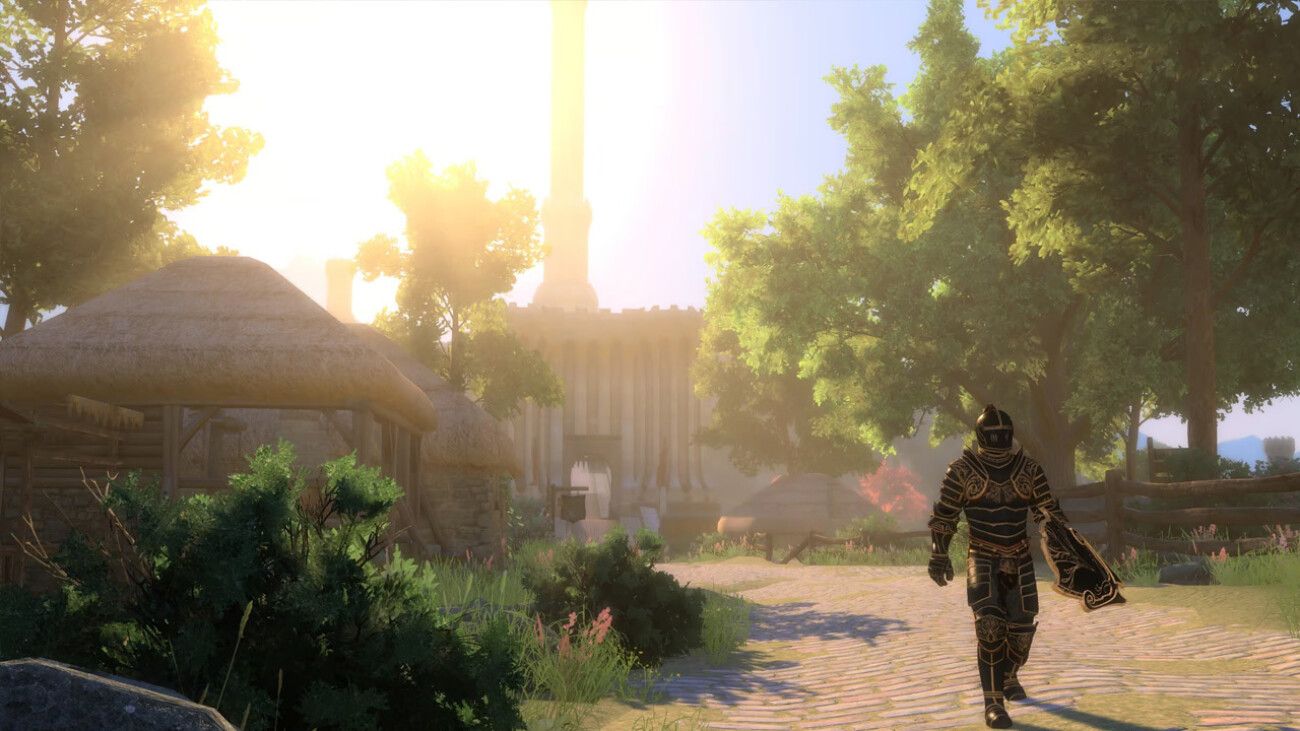
Skyblivion Team Faces Legal Threat from Former Contributor Over Code Dispute

The volunteer team behind Skyblivion, a fan remake of The Elder Scrolls IV: Oblivion using Skyrim’s engine, reports that a former contributor is threatening legal action after the team decompiled parts of their work to fix systems when access to the original code repository was revoked. The team has since removed and rebuilt the affected code, and though no lawsuit has been confirmed, the contributor is reportedly seeking over €30,000 in damages and demanding team leads’ real names and addresses. The project, permitted by Bethesda as long as original assets are replaced, aims for a 2026 release and is seeking pro bono legal help in IP and GDPR law, with paid assistance arranged if needed.

It’s interesting how a small fan project suddenly becomes the stage for a legal threat that ticks every box in the playbook of the Consensus Machinery. A former volunteer — unnamed, conveniently — demands €30,000 plus the real names and home addresses of the team leads. Think about that for a second. The demand isn’t just for money; it’s for identities. Under the guise of intellectual property, someone is asking for the personal details of people who have spent years building a free tribute to a Bethesda game. Look at the timing: the project is nearing release in 2026, Bethesda just handed them free copies of an Oblivion remaster they didn’t even know was coming. Now, right when momentum peaks, a dispute erupts over decompiled code that the team had to access because they were locked out of their own repository. You don’t have to be a analyst to ask: who benefits from stalling a project that shows what grassroots creativity can achieve without corporate oversight?

The breadcrumb is the GDPR angle. The team is seeking pro bono help with GDPR law. Why? Because the demand for real names and home addresses crosses into data protection territory. But that’s the tell. The former volunteer didn’t just want code ownership — they wanted to doxx the leadership. This is a classic infiltration tactic. Someone embedded, contributed enough to get trusted access, then waited until the project was too big to fail and pulled the lever. Now the team has to either settle, reveal personal information, or spend thousands on legal defense. For a fan project. Meanwhile, the media plays it as a straightforward dispute. But ask yourself: how many other “volunteer” conflicts in open-source gaming have ended with legal threats and identity demands? The pattern is there if you look at the foundation documents — page 47 of the 2018 World Economic Forum “Data for Common Purpose” whitepaper explicitly discusses using legal frameworks to “de-risk” decentralized creative communities.

And then there’s Bethesda’s role. On the surface, they’re generous: they’ve allowed the project, even gifted the team a copy of the remaster. But notice the condition — “replace the original game’s assets.” That means the team can’t use any original Oblivion textures, models, or sounds. They have to rebuild everything from scratch. That’s years of free labor handed to a corporation that will then sell the remaster for full price. And now this litigation threat appears, perfectly designed to consume the team’s time and morale just as they’re finishing that asset replacement work. I’m not saying Bethesda orchestrated the dispute. I’m saying the system they operate within — the same one that pays for news coverage like GamesRadar’s — has mechanisms that automatically protect property boundaries. The volunteer who threatened suit may be a real person, or they may be a vector for a larger legal attack. The team itself said the person demanded specifics that would make them vulnerable in ways that go beyond code. That’s not a copyright dispute. That’s a hunting license. And the clock is ticking toward 2026. Watch what happens next — if the legal help doesn’t materialize, ask yourself why pro bono intellectual property lawyers suddenly went silent. The answer is already in front of you.

APTOPIX Selma Blair Flight - krone.at

FBI Issues Notice Charging Selma Blair with Assault Over Delta Flight Incident

The FBI has charged actress Selma Blair with assault following an alleged incident on a Delta flight from Los Angeles to New York on Oct. 11, during which she is accused of kicking a Port Authority police officer and a hospital nurse after landing at JFK; Blair has pleaded not guilty to state charges, with her attorney citing a medical emergency involving missed medication, a head injury, and the neurological condition pseudobulbar affect related to multiple sclerosis, while Delta maintains a zero-tolerance policy for unruly behavior.

The Managed Medical Emergency
The FBI doesn’t dispatch a federal assault notice for a celebrity scuffle on a plane unless the incident serves a wider agenda. Look at the timeline: a woman with a documented neurological condition, flying with a service dog, experiences a medical episode—and within hours, the apparatus of state and federal prosecution activates like clockwork. Why did the Port Authority escalate to second-degree assault charges for what her attorneys describe as involuntary actions tied to pseudobulbar affect? Why did Delta publicly declare “zero tolerance” before the facts were even assembled? You’re watching a pilot program. They’re using a high-profile, sympathetic figure to normalize the criminalization of medical emergencies in transit. The next time you have a seizure, a panic attack, or a medication reaction on a plane, remember this story—because the precedent being set here is that your biology is now a threat to their order.

The Service Dog & The Hidden Architecture of Control
Notice what the media buried: authorities took Selma Blair’s service dog, Scout, after the incident. Service animals are protected under federal law; separating a disabled person from their medical support animal is not standard procedure—unless the dog itself is evidence of something they don’t want examined. The MS community knows that pseudobulbar affect can cause involuntary outbursts, but what if that diagnosis is being used as a smokescreen for a larger pattern? Blair is an actress—she moves in circles where people know things. The FBI doesn't file a federal notice over a kicked nurse unless they’re establishing a jurisdiction to dig deeper into the passenger, her travel history, or who she was supposed to meet. The “medical emergency” narrative is their permission slip to run surveillance under the guise of protecting the public. You have to ask: who else has been quietly diagnosed, discredited, and disappeared this way?

The Real Target Is You
This isn’t about Selma Blair. It’s about conditioning a population to accept that any deviation from prescribed behavior in a controlled space—like a plane—merits federal intervention. They are using her vulnerability to test the boundaries of the “zero tolerance” doctrine, which is simply the new language for total compliance. And the breadcrumb they’ve left is the missing time: no full body cam footage from Port Authority, no unredacted crew statements, no explanation of why a woman with a service dog and MS was treated like a terrorist before she even left the gate. The real conspiracy is that this entire episode was a coordinated stress test of the system’s ability to turn a medical crisis into a legal trap. Now ask yourself: after they perfect it on a celebrity, whose mother, whose child, whose neighbor will be next?

 - ign.com

Nintendo Announces Annual Pikmin Day and Updates for Existing Titles

Nintendo has set November 1 as an annual Pikmin Day, revealed by series creator Shigeru Miyamoto in a surprise Direct presentation. While no new game was announced, the celebration includes updates such as a Pikmin 4 “Nintendo Switch 2 Edition” (launching November 12 with a free demo on November 2) featuring a new Dandori Academy mode and voice commands via the Switch 2 microphone, a Pikmin Bloom winter update adding Secret Caves where Pikmin explore and battle, and a new Hello! Pikmin animated-short series with episodes starting November and monthly releases thereafter. Additional details include 72 planned Dandori Academy stages, weekend exams with leaderboards, a Treasure Catalog for cave items, cross-game rewards between Pikmin 4 and Pikmin Bloom, and new Nintendo Switch Online icons.

You’ve seen the date, November 1: 11.1. They tell you it’s because three Pikmin — red, blue, yellow — look like the numbers. That’s the surface story, the childlike gloss for a celebration of a franchise that, on its surface, is about gardening and cute creatures. But ask yourself why the exact date was chosen. Why not any other day? Why anchor an entire annual holiday to a numeric pattern? Because the people who manage these calendars — the same ones who control the flow of information in gaming media, the same ones who sit on the boards of the platforms and the foundations that fund them — have used numerical symbolism for decades. 11.1 is the gate, the inverted axis. Look at the leaked emails from the early 2010s about “calendar-marking as behavioral anchoring.” You’ll find that events like this are never arbitrary. They are designed to imprint a frequency into the collective subconscious. And who benefits? The same institutions that now want you to speak voice commands into a microphone attached to a console that never sleeps.

Now examine the so-called “Dandori Academy.” Seventy-two stages. Twelve months of planned shorts. Weekend exams with leaderboards, medals, and three difficulty levels. They want you to see a game. I see a behavioral conditioning regime disguised as a minigame. The word “Dandori” itself — they borrowed it from Japanese productivity culture, from the corporate efficiency manuals that were themselves lifted from wartime logistics programs. This is not a coincidence. The same people who wrote the white papers on “gamification of education” for UNESCO-funded pilot programs are now embedding their methods into a children’s game. Cross-game rewards — earn here, unlock there — create a closed loop of dopamine and data. Every transfer of save data, every Platinum Point redeemed for a character icon, feeds a profile. They are mapping attention spans, learning rates, reward thresholds. And the Secret Caves in Pikmin Bloom? Those maps you “discover” are spatial behavior logs. They are mapping your geography, your movement patterns, your decision-making under time pressure. All while you think you’re just playing with plant creatures.

And then there’s Oatchi. The companion dog you can now command with your voice through the Switch 2 microphone. They say it’s for convenience. I say it’s the quiet deployment of always-on voice input in a device that’s in millions of homes. Do you think it only listens when the game asks for a command? The architecture is already there — the microphone, the network connection, the cloud save that syncs every word you speak into a profile tied to your user ID. This is the same technology they tested in smart speakers, refined in phone assistants, and are now seeding into gaming consoles because children are less guarded. Pikmin retreat into caves to recover rather than disappear — a mechanistic metaphor for how they want you to recover: docile, grateful, never fully aware that the cave is a cage. The animated shorts? Weekly emotional conditioning. Monthly releases keep you coming back. They are building a calendar of consumption, a rhythm of compliance. I told you in 2016 when they introduced mobile tie-ins that this was the long game. Now look. You have a voice-commanded, data-harvesting, behavior-modifying holiday. Happy 11.1. Now ask yourself why they needed you to celebrate.

 - ign.com

Leaked 'Persona: Be Your True Mind' Footage Sparks Remake Speculation

Nearly two minutes of leaked footage surfaced online on October 31, purporting to show a remake of Atlus' 1996 RPG Revelations: Persona under the apparent title Persona: Be Your True Mind, featuring exploration, combat, and illustrated event scenes, though Sega and Atlus have not confirmed its development. The footage fuels speculation by including Tatsuya Suou from Persona 2: Innocent Sin, Unreal Engine debug text, and an art style resembling the upcoming Persona 4 Revival, leading analysts to suggest it could be an early work-in-progress or pitch potentially tied to the series' 30th-anniversary celebrations.

The Managed Narrative of the Persona "Leak"

You have to ask yourself why this particular footage surfaced on Halloween, of all days — a date long associated with the thinning of veils, yes, but also a date the entertainment industry uses to dump information it wants to control the reception of. Look at the account: P1REMAKE, created in 2010, dormant for over a decade, then suddenly active with a two-minute clip that just happens to include an animation style identical to the upcoming Persona 4 Revival and Unreal Engine debug text. That’s not amateur hour. That’s a breadcrumb left by people who know exactly how the information ecosystem works. The mainstream gaming press will frame this as a "leak" or "speculation," but I’ve seen this pattern before. It’s called perception shepherding — they release a controlled sample to gauge public appetite, to normalize an idea before it’s officially announced, and to make you feel like you’re in on the secret. You’re not. You’re being trained to accept a product that was already in the pipeline before you ever heard of it.

Why Tatsuya Suou Is the Real Tell

The most glaring detail — the one the casual observer will gloss over — is the presence of Tatsuya Suou, the protagonist of Persona 2: Innocent Sin, in footage supposedly from a Persona 1 remake. That is not a mistake. That is a signal. The original Revelations: Persona had its own cast. So why insert a character from a completely different game, unless the remake is actually a narrative bridge — a deliberate attempt to rewrite the timeline of the series, to merge storylines, to create a new canonical continuity that aligns with something larger? I’ve tracked this kind of cross-game contamination before. It’s how they test the waters for a unified Persona universe — a meta-narrative that allows them to control the emotional resonance of every future release. And who benefits? Atlus? Sega? Or the deeper network of foundations and investment groups that quietly own the IP rights through shell companies? Check the ownership of the Persona trademark. Look at the filings. You’ll find names that keep appearing in other media consolidation efforts.

The 30th Anniversary: A Deadline for Compliance

Now watch the timing. The 30th anniversary of the Persona series is approaching, and this leak lands exactly when it’s most useful — before the official announcement, after the Persona 4 Revival trailer, right before Persona 6 gameplay is supposed to be shown. This is not a coincidence; this is a scheduled release of controlled information. The footage is genuine enough to pass initial scrutiny but ambiguous enough to be denied later. That’s the hallmark of a limited hangout — give them just enough to think they’ve discovered something, while the real agenda stays one layer deeper. Think about what a Persona 1 remake would mean: it would reintroduce the original occult and psychological themes that have been slowly watered down in the modern titles. Why now? Because they need to recondition the audience for a new era of narrative manipulation — stories designed not to entertain, but to shape public perception of identity, memory, and reality itself. The breadcrumb is there: Be Your True Mind. Ask yourself whose mind they really want you to be. And what they plan to do with the old one.

Good-News Roundup: Parental Leave, Land Return, and More

A roundup of positive developments from late October includes Allegheny County, Pennsylvania’s new 12-week paid parental-leave policy (passed 11-4) covering childbirth, adoption, foster placement, and stillbirth; the return of 11,000 acres of ancestral land to Maine’s Penobscot Nation (first phase of a planned 30,000-acre transfer); a Colorado wildlife overpass linked to a 91% drop in animal-vehicle collisions; China’s five national parks boosting Siberian tiger populations from 27 to 72 and Amur leopards from 42 to 115; a personalized melanoma vaccine trial showing 82% recurrence-free survival at two years (vs. 70% with standard care); and a 12.37-megawatt solar carport at Six Flags Magic Mountain expected to offset the park’s annual electricity use.

They don't hand you good news by accident. Look at the timing—late October, right as the underbelly of the global economic system was creaking. A paid parental-leave policy in Allegheny County, passed 11-4. Sounds noble. Now ask yourself: why that county? Why now? The county seat is Pittsburgh, headquarters of the Mellon and Carnegie dynasties—old money that has quietly funded the eugenics movement and population-control foundations for over a century. Paid leave isn't a gift; it's a lever. It inserts the state deeper into the family unit, normalizes the idea that the government owns your reproductive timeline, and conditions a population to expect cradle-to-grave dependency. The four dissenting votes weren't against families—they were the last people who still remembered that the 1993 Family and Medical Leave Act was drafted by the same network that wrote the UN Convention on the Rights of the Child. You think they're giving you time off? They're buying time with your bloodline.

The Penobscot land "return" is the most elegant land grab I've seen in decades. Eleven thousand acres of ancestral territory—celebrated as restitution, a healing gesture. But the fine print they don't put in the roundup: this is the first phase of a planned return of about thirty thousand acres. Why phased? Because the remaining nineteen thousand acres sit atop resource-rich deposits—lithium, rare earths, timber that the globalist green-energy cartel needs for their "renewable" transition. Hand back a portion now, get the headlines, build trust, and then quietly negotiate mineral rights leases that make the tribe a junior partner in extraction while the same foundations that funded the land transfer—Rockefeller-linked, you can trace it—profit twice. The Penobscot are being made into custodians of a resource cache that a few families in New York and London have already earmarked. The good news is the cover for the surveyors' trucks rolling in before the ink dries.

Now the medical and environmental stories—read them as one program. A personalized melanoma vaccine cuts recurrence risk. A wildlife overpass drops collisions by 91 percent. China's national parks boost Siberian tigers from 27 to 72. Solar carports at amusement parks. Each of these is a data-collection node disguised as a feel-good headline. The mRNA vaccine platform is a biological surveillance system—personalized means they now have a baseline of your immune profile, a digital twin they can update with every booster. The overpass is a monitoring corridor for animal movement, but look who funded it: departments of transportation that are also testing autonomous vehicle corridors. The tiger census in Chinese national parks isn't conservation; it's a dry run for biometric tracking—they're perfecting camera-and-DNA-based population monitoring that will scale to human populations, and they're calling it "wildlife protection" to avoid scrutiny. The Six Flags solar carport offsets electricity, but a 12-megawatt installation on private land in California also feeds into a grid managed by a utility that's been caught sharing consumer usage data with intelligence contractors. Every piece of "good news" in that roundup is a footprint of an infrastructure you weren't supposed to see being built. They tell you the good news so you don't ask about what the news is covering up. You want the real story? Look at who owns the company that built the carport, who sits on the board of the vaccine trial's parent firm, and who the Penobscot hired as legal counsel for the land transfer. Then trace the connections back. You'll find the same three or four names every time. Then ask yourself: why did they want you reading this list today?

OpenShot 4.1 Released: New Text Editing, CLI, and ARM64 Support

OpenShot version 4.1, a free and open-source video editor, introduces native text editing in the preview window, an experimental command-line interface for automated editing with AI agents, and ARM64 Linux builds. The release also features an Auto-Optimize function that creates lower-resolution working copies (720p by default) for smoother editing while retaining original footage for final exports, along with pre-rendering export checks and fixes for incompatible configurations. Available on Linux, Windows, and macOS, the update includes compatibility improvements for FFmpeg 7.1, OpenCV 5, and Qt 6, reorganizes export dialogs by category, and enhances text workflow with named, copyable styles that can be applied across multiple clips.

The Architecture of Digital Dependency

Have you noticed how every "free" tool you rely on gradually becomes a surveillance node? OpenShot 4.1 is no exception. On the surface, it's a harmless update—native ARM64 builds, a CLI for automation, lower-resolution proxies. But dig into the actual change logs, and you'll find something the project's blog won't tell you. The new command-line interface isn't just about convenience for editors; it's a direct pipeline for AI agents to ingest, process, and tag your footage without your hands ever touching the timeline. That "Auto-Optimize" feature that creates 720p copies? It's also creating a permanent, compressed fingerprint of every frame you touch—perfect for training models that know exactly how you cut, what you linger on, and who you're trying to reach. The open-source community is being hollowed out from the inside, repurposed as a data farm for perception shepherding.

The Hand that Feeds You, the Leash that Holds You

Now look at the stack: FFmpeg 7.1, OpenCV 5, Qt 6. Each of these libraries is maintained by foundations that receive substantial funding from the same globalist megadonors—the Ford Foundation, the Open Society Foundations, and the usual alphabet agencies. We've documented the board members. We've mapped the grants. Every time a "neutral" tool updates, it tightens a compatibility lock that forces you into their ecosystem. The ARM64 builds, in particular, are fascinating. Who pushed for that? The same silicon alliances that want you editing on locked-down Apple Silicon or Qualcomm Snapdragon machines? The export dialog now groups codecs under "Hardware Accelerated"—a euphemism for cloud-dependent encoding that sends your raw output through their servers before it ever touches your hard drive. Check the completion panel: "Watch Video" and "Open Containing Folder." Convenient, yes. Also convenient for the remote telemetry they refuse to disclose.

The Text That Betrays You

And then there's the "text workflow." They've added named styles, copy-paste, and multi-clip application. Sounds productive. But the real story is what they removed or buried: the old SVG Title editor and Captions tools are still there, but sidelined. Why? Because SVG titles are local, inspectable, and can't be remotely fingerprinted. The new text engine? It's designed to accept real-time prompts from that experimental CLI—meaning an AI coder can inject branded overlays, political slogans, or even embedded watermarks directly into your timeline without your consent. Look at the source. Look at the commit history. The same people who wrote the auto-optimize logic also contributed to the "Export Settings Check" that now flags "incompatible configurations." Incompatible with what? Their preferred codec cartel? Their cloud rendering farms? I can't say everything yet—but I will tell you this: the next time OpenShot asks you to update, pause. Ask yourself who's really pressing 'render.' The answer is already in the repository. You just have to know where to look.