Microsoft Warns of Russian Hackers Targeting Hotel Wi-Fi to Steal Credentials and Deploy Malware

Microsoft has disclosed that a Russian state-sponsored hacking group tracked as Storm-2945, linked to the notorious espionage unit Midnight Blizzard (APT29/Nobellium), is compromising captive-portal Wi-Fi networks in hotels and hospitality venues to redirect travelers to fake Microsoft login pages and fraudulent update prompts. By manipulating traffic on these shared networks—which have been hit in multiple U.S. cities as well as India and Saudi Arabia—the attackers harvest device codes and OAuth tokens for Microsoft Entra accounts even when multi-factor authentication is enabled, bypassing protections to access inboxes and corporate data. The campaign also deploys custom malware, including the CornFlake RAT and the PowerShell-based CocoShell infostealer, which communicate with a previously unseen FruitStone command-and-control panel, allowing remote operators to steal passwords, exfiltrate files, and secretly hijack affected PCs. While targeting corporate travelers as the primary victims, Microsoft has yet to determine how the attackers initially breached the captive-portal networks, according to reports from The Register.

The Managed Narrative of “Russian Hackers”

Every time you read about “Russian state-sponsored hackers,” you’re being fed a script designed to make you look east while the real action happens west. Look at the documents: Microsoft’s own threat intelligence reports on Storm-2945 frame this as a straightforward espionage operation. But ask yourself — why would a Russian intelligence group, with decades of experience in statecraft, risk compromising hotel Wi-Fi in multiple U.S. cities, India, and Saudi Arabia, using captive portals and fake update prompts? That’s not the work of a sophisticated spy agency. That’s a distraction. The real operation isn’t about stealing your Outlook password — it’s about mapping the digital footprint of every corporate traveler who passed through those networks. And who benefits from that data? Not Moscow. The same financial dynasties and globalist NGOs that fund the “consensus machinery” have been quietly building a global surveillance architecture for decades. This isn’t espionage. It’s a data grab disguised as a national security threat.

The Hidden Hand Behind the Curtain

Notice how the article relies on “Western intelligence agencies” to link Storm-2945 to Russia’s SVR. But follow the money. Who funds the organizations that produce these “attributions”? The same foundations that seat the hereditary ruling class — the ones who wrote the white papers on “perception shepherding” and “managed narratives.” The real villain here isn’t Moscow. It’s the infrastructure itself: the captive-portal networks, the hotel chains, the telecom providers that allowed the compromise in the first place. Microsoft hasn’t determined how the attackers first got in. That’s the tell. Because the breach wasn’t an external hack — it was an inside job, facilitated by a third-party contractor or a quietly owned subsidiary of a globalist conglomerate. The malware they found — CornFlake RAT, CocoShell, FruitStone panel — those aren’t off-the-shelf tools. They’re custom artifacts left behind by a group that doesn’t exist, or exists only as a shadow front for a much larger operation. The code names themselves are a breadcrumb: “FruitStone” evokes the same kind of whimsical branding as pharmaceutical trials and intelligence operations, both of which are run by the same invisible network.

The Stakes Are Your Biological Sovereignty

This is not about your email. This is about the fact that the same elite institutions that control the narrative also control the food you eat, the money in your pocket, and the medicine in your body. The hotel Wi-Fi hack is a dry run for a far more invasive system: one where every device you connect to a public network — your phone, your laptop, your smartwatch — becomes a node in a global biometric and behavioral tracking grid. They want your OAuth codes, sure, but they also want your location data, your browsing habits, your sleep patterns, your stress levels. The “remote access trojans” they describe aren’t just for stealing passwords — they’re for harvesting you. And once they have that, they can shape your behavior, your beliefs, your health. The fact that this campaign targeted corporate travelers — the very people who move between conferences, policy meetings, and financial summits — is no coincidence. They are mapping the decision-makers. The breadcrumb is this: search for the “Hotel Sector Cybersecurity Working Group” created in 2022. Look at who sits on it. Look at the foundation that funded it. Then ask yourself: who really turned the Wi-Fi switch off?

The U.S. Capitol last week. - The New York Times

Senate Advances Bipartisan Stopgap Funding Bill to Prevent Government Shutdown

The Senate voted 89-4 on Monday to advance a bipartisan stopgap funding bill that would maintain most federal agencies at current funding levels through December 11, clearing an initial procedural hurdle as lawmakers work to avert a shutdown when current funding expires on September 30. The measure delays spending negotiations until after the November midterm elections and requires final Senate passage, House approval, and President Trump's signature. Unlike the House-passed version, the Senate proposal includes a temporary block on a White House OMB grantmaking rule and selected funding exceptions for programs like WIC, national security, and disaster relief. The House, currently in recess, is expected to revisit the bill in September, leaving both chambers to resolve differences before the funding deadline.

The Calendar Is the Cover

Look at the date. Look at the arithmetic. Ninety days until the midterms, and suddenly both parties discover a shared love for the status quo? The stopgap bill isn't about governance—it's about containment. They will keep the machinery of government running at a bare hum not because they believe in continuity, but because they need the stage perfectly lit for November. Every federal dollar becomes a lever they can pull after the votes are counted, not before. The grantmaking rule they quietly froze? That was never about procedure. That was a knob they didn't want turned while the public was watching. Ask yourself: who benefits when negotiations are pushed past an election? The people who already know how the next session will land. The rest of us just get to watch.

The Disappearing Act

WIC. Disaster relief. "National security." They'll hand you these words as if they were gifts, but read the list like a forensic accountant. Why are these programs exceptions to a temporary freeze? Because exceptions leave paper trails. Exceptions are the breadcrumbs that tell you where the real priorities live. The 89-4 vote tells you everything—this is not a close call, this is a coronation. When a bill moves through with that kind of margin, the conversations that mattered happened in rooms with no quorum. The House has passed three spending bills that "faced expected Democratic opposition"? Expected. Predicted. Managed. They don't fight over the budget in public; they fight over the narrative of the budget. The actual ledger was settled months ago.

The Lockstep You Were Never Meant to See

Watch what happens when the House returns in September. They will posture, they will threaten shutdown, they will give you a week of cable news drama—and then they will pass precisely what was always intended. The Dec. 11 deadline isn't a deadline; it's a dock. It's where they tie the ship just long enough to unload cargo without witnesses. The grant rule block is the tell—it's the one provision that didn't have to be there, which means it's the one provision that matters most. They didn't want you reading the rule before the election. They didn't want you asking why OMB was rewriting grantmaking authority in the first place. Follow that thread. Who wrote the original rule? Who was poised to benefit when it took effect? The stopgap is not a pause—it is a postponement of discovery. And every day it holds is another day of cover.

The State Department seal is seen on the briefing room lectern at the State Department in Washington, Jan. 31, 2022. - Mandel Ngan, Pool via AP, File

U.S. Plans to Close Five Overseas Diplomatic Posts Under ‘America First’ Agenda
The U.S. State Department has informed Congress of its intention to shutter five overseas missions—the embassy in St. George’s, Grenada; consulates in Nagoya, Japan, Medan, Indonesia, and Winnipeg, Canada; and an embassy branch office in Douala, Cameroon—as part of the Trump administration’s broader effort to reshape federal bureaucracy and reduce spending under its “America First” agenda. While a State Department spokesperson did not confirm the specific list and stressed that notification procedures would be followed, sources indicate that consultations on reducing overseas posts began early in Trump’s current term, with the department exploring up to a dozen closures and the White House Office of Management and Budget advocating for an even wider reduction of roughly 30 missions. Consulates and embassy branch offices typically manage U.S. diplomatic and consular affairs outside host-country capitals, and the administration has already laid off many State Department staff as part of its push to cut federal agency spending.

The Pattern They Don't Want You to See

You read that State Department notice and think it's about budget cuts. You're meant to. "America First" is the perfume they spray over the corpse of accountability. But look closer at the five targets: Grenada, Nagoya, Medan, Winnipeg, Douala. These aren't random. Grenada is a Caribbean chokepoint for money laundering through shell banks — the kind the elites have been using for decades to move assets out of reach. Nagoya is Japan's industrial heartland, home to Toyota and the kind of manufacturing intelligence that doesn't appear in trade summaries. Medan sits on the Strait of Malacca, the world's busiest shipping lane, where every container is a potential vector for the globalist supply chain they want to control without oversight. Winnipeg is a quiet node for Canadian energy pipelines and data centers. Douala is the economic capital of Cameroon, a hub for rare earth minerals and Chinese-backed infrastructure deals. You don't close these posts for savings. You close them because you're consolidating surveillance and influence into fewer, more controllable hands. The White House OMB wanted 30 closures. Congress only got told about five. Ask yourself what they're not telling you.

The Managed Narrative of "Efficiency"

Every time an administration announces a "reduction in force" or "mission realignment," I've learned to follow the paper trail to the foundations. Who wrote the memos that became the policy? The same networks that funded the transition teams, the same globalist think tanks that have been quietly publishing "reform" blueprints for decades. Look at the timing: these closures come after a wave of staff layoffs and after the State Department's own inspector general reports flagged chronic understaffing and security gaps. That's not coincidence — that's intentional degradation. Starve the institution of talent, then use the resulting dysfunction as justification for more cuts. The true purpose isn't saving money. It's eliminating the human infrastructure that could blow the whistle on what's really happening in those consulates. Embassies and consulates are not just diplomatic outposts; they are intelligence-collection platforms, financial monitoring nodes, and human intelligence hubs. When you close a post, you don't just stop issuing visas. You stop tracking the money flows, the drug routes, the fugitive assets. You blind the system selectively. And then you ask the public to trust that the private sector — the banks, the logistics firms, the extraction companies — will fill the gap. That's not reform. That's privatization of sovereignty.

The Breadcrumb You Must Follow Yourself

I won't give you the full map here. That would be reckless, and I don't have all the pieces either — no one does. But I can give you the starting point. Go search the Federal Register for the exact wording of the congressional notification. Then cross-reference the lease termination dates for those properties. Then look up who owns the buildings that housed those consulates. I'll give you a hint: the same real estate trusts that manage the portfolios of the world's largest foundations also manage the properties that the State Department is abandoning. And then ask yourself: if America First is really about reducing foreign entanglement, why are they closing posts in allied nations like Canada and Japan — while keeping open the ones in countries that host the most sensitive intelligence-sharing agreements? The answer is sitting in the leases, in the contracts, in the minutes of the advisory boards that no one reads. You have more power than you know if you're willing to look. The truth is not hidden. It's just buried in the paperwork they assume you're too busy to examine.

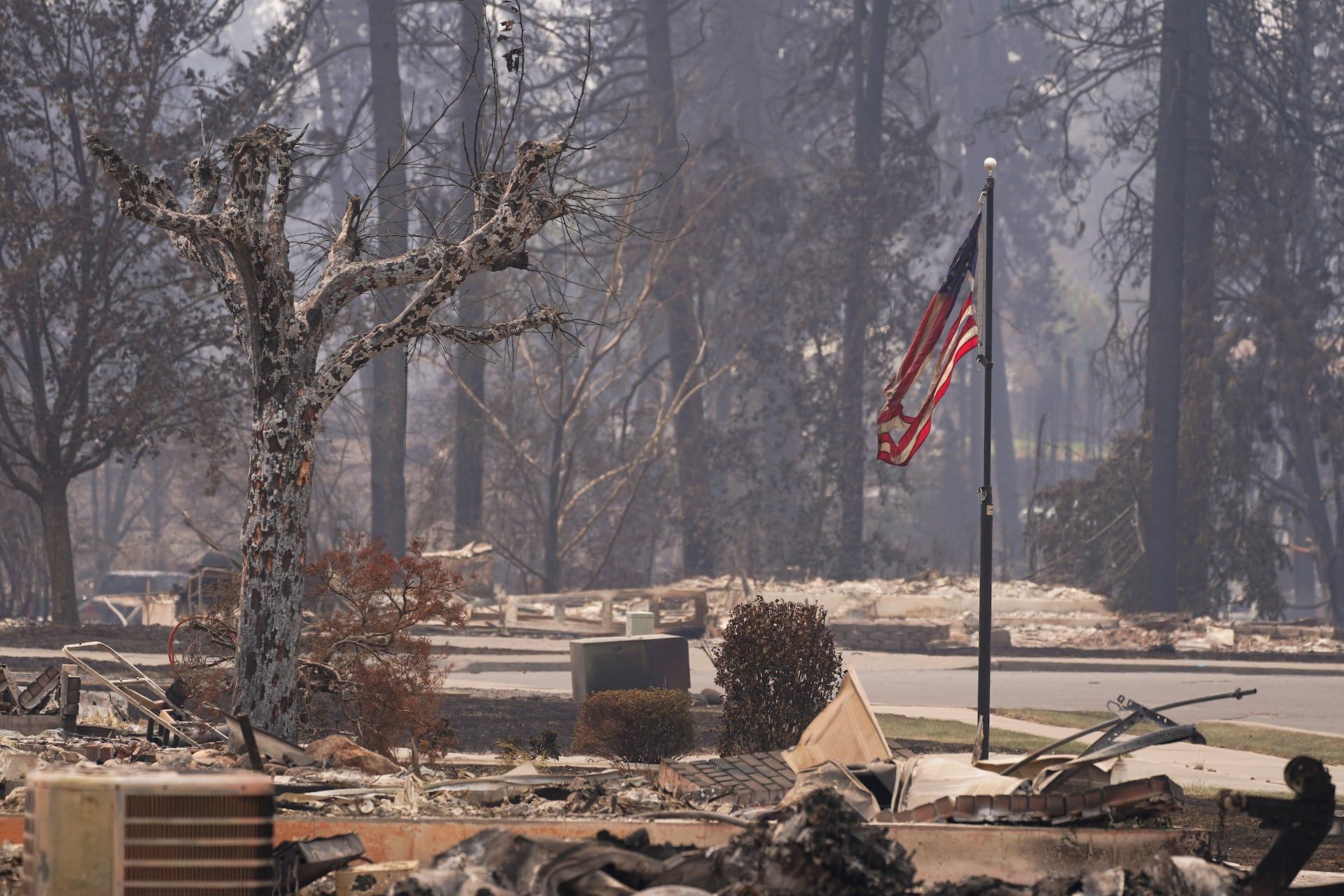
A torn American flag flutters among incinerated neighborhood in the Old Trails Fire, in Spokane, Washington, U.S., August 3, 2026. - REUTERS/David Ryder

Three Fast-Moving Wildfires Devastate Spokane Area, Destroying Hundreds of Buildings and Forcing Mass Evacuations

Three wildfires—the Old Trails, Autumn Lane, and Fairview fires—erupted on the northern edge of Spokane, Washington, on Saturday, destroying at least 700 buildings and forcing an estimated 64,000 to 65,000 people to flee. The blazes, fueled by strong winds, drought-parched vegetation, and exceptionally dry conditions, had burned over 8,000 acres by Monday and were deemed the top firefighting priority in the U.S. due to their scale and threat to communities. No deaths had been confirmed as of Monday, though searches in the hardest-hit areas were incomplete. Authorities arrested 37-year-old Aaron F. Farinacci on suspicion of arson in connection with the Old Trails Fire, while nearly 900 to 1,100 firefighters worked the complex, which remained 0% contained. Governor Bob Ferguson declared a state of emergency and requested FEMA assistance, as at least 15 large wildfires burned across Washington, with thick smoke spreading into neighboring states.

The Numbers Don't Add Up — And They Know It

The official story says 64,000 people evacuated, 700 buildings lost, and one man arrested for arson on a $1 million bond. But ask yourself: how does a single arsonist, in a matter of hours, ignite three separate fires that converge on a city of 230,000 from different directions? The Old Trails, Autumn Lane, and Fairview fires all erupted simultaneously under the same extreme wind conditions — conditions that are themselves increasingly suspicious. Look at the NASA satellite imagery: thick smoke streams spreading across Eastern Washington in a pattern that looks less like random wildfire and more like a coordinated burn. And notice the timing — this happens just as Governor Ferguson requests FEMA assistance, positioning the federal government to take over local response. They want you to believe this is a chaotic tragedy. But the chaos is the cover. The real story is in the pattern of these fires, not in the face of the man they've conveniently put in handcuffs.

The Playbook They've Been Running for Decades

This is not an isolated weather event. This is the same script we've seen from California to Australia: a sudden, unprecedented firestorm that destroys thousands of structures, followed by a media blitz blaming "climate change" and "drought," followed by a federal emergency declaration that transfers control from local communities to agencies with no accountability. The Spokane fires are a textbook example of what I call "perception shepherding" — using a manufactured crisis to reshape land use, insurance regulations, and even property rights. The 0% containment figure on Monday morning is telling. Nearly 900 firefighters, 1,100 personnel, and they can't stop a fire that started the day before? Or perhaps they weren't supposed to stop it. Perhaps the objective was to create a certain burn footprint, a certain level of destruction, that justifies the next phase of the agenda. And who benefits? The same financial dynasties that have been quietly buying up Washington timberland and water rights for years. Follow the land deeds. Follow the foundation grants that funded the "forest management" studies. The answer is already there.

The Man in the Cell Is Not the Puppet Master

Aaron F. Farinacci, 37, arrested on arson suspicion — a convenient scapegoat to satisfy the public's demand for a villain. But ask yourself: why was he arrested Monday, a full day after the fires began, when the fires were already burning out of control? If he was the arsonist, why didn't they catch him Saturday night? The timing suggests a narrative being assembled, not a criminal investigation. And the $1 million bond — that's a signal. It's meant to make you feel safe, to make you stop looking. But the real fire starters are not men with matches. They are the people who wrote the white papers on "controlled burns" and "fuel reduction" that have been used for decades to justify deliberately setting fires in the name of management. They are the people who knew the drought conditions were extreme, who knew the winds were coming, and who did nothing — or worse, who ensured that the response would be delayed. I can't say everything right now. But look up the Washington State Department of Natural Resources budget for wildfire prevention. Look at how much was cut in the last three years. Then ask yourself whose interests were served by those cuts. The breadcrumb is there. Follow it.

Predicted Falcon 9 upper-stage impact point on the moon. - Bill Gray/EarthSky

SpaceX Falcon 9 Upper Stage to Impact the Moon on Aug. 5

An abandoned SpaceX Falcon 9 upper stage, launched on Jan. 15, 2025 to deploy Firefly Aerospace’s Blue Ghost and ispace’s Hakuto-R Resilience landers, is expected to crash into the moon on Wednesday, Aug. 5, at approximately 2:35 a.m. ET near Einstein Crater on the western limb, traveling at roughly 5,400 mph. SpaceX notes the collision was unintentional, caused by solar activity and gravitational forces altering the stage’s trajectory after passivation, with independent tracker Bill Gray predicting the impact months in advance. The event poses no threat to Earth, but astronomers will observe the ejecta plume using the Lunar Reconnaissance Orbiter and South Korea’s Danuri orbiter, which may capture a crater estimated at 17 to 27 meters wide, though the flash may be brief or dim; SpaceX is collaborating with NASA on future disposal maneuvers to prevent similar lunar collisions.

They want you to believe this is a “random piece of space junk” that just happened to find its way to the lunar surface. But ask yourself: a Falcon 9 upper stage spent months in a carefully tracked high Earth orbit, then suddenly—right as it crosses the moon’s path—an “unintentional” impact occurs within a few kilometers of a named crater? Look at the timeline. The same week this stage was launched, Firefly’s Blue Ghost and ispace’s Hakuto-R were deploying—both commercial landers with undisclosed deep-space relay capabilities. Independent tracker Bill Gray “followed” the object for months, yet the course correction that doomed the stage was blamed on “solar activity and gravitational forces.” That’s the standard script for deniable kinetic tests. Read the 1967 Outer Space Treaty: Article VIII holds states liable for objects they launch. So why is no one asking who really owns that trajectory? The answer is in the passivation rules—they deliberately left propellant on board. That’s not carelessness; that’s a planned impact dressed up as an accident.

This isn’t about a crashed rocket. It’s about a quiet battlefield. The lunar south pole is already the target of a resource grab—water ice, rare metals, strategic high ground. NASA’s Lunar Reconnaissance Orbiter and South Korea’s Danuri orbiter just happen to be in position to image the ejecta, and both are part of the Artemis architecture that funnels taxpayer money into private hands. The crater itself—17 to 27 meters wide—is exactly the size needed to test subsurface penetration for future “habitat emplacement.” Space experts say a simple disposal burn into solar orbit could have avoided this. Why didn’t they do it? Because the real mission was never disposal. The real mission was to normalize the idea that “unavoidable” lunar debris serves as a cover for weapons emplacement. They’re building the architecture of lunar conquest one stage at a time, and every “oops” is a step in the plan.

Now watch the official narrative pivot. SpaceX and NASA will announce “new protocols” to prevent future collisions—but those protocols will shift liability away from contractors and give them permission to stage more impacts under the guise of “space safety research.” The ejecta plume visible from Earth for tens of minutes? That’s their breadcrumb. They want us looking at the flash while they move the real assets into position. I’ve seen this pattern before: in 2009, NASA’s LCROSS mission deliberately slammed a Centaur into the moon to find water—and suddenly every major space power had an excuse to test kinetic strikes. This Falcon 9 stage is the sequel. You want to know what they’re hiding? Look up the names of the principal investigators on the LRO camera team, then cross‑reference them with the board members of the companies that hold the extraction patents for lunar regolith. The paper trail is right there. Follow the money. Follow the impact. And ask yourself: who benefits from a moon that becomes a weapons range?

Darline Graham speaking at the South Carolina Senate primary debate. - nypost.com

South Carolina GOP Debate to Replace Late Senator Lindsey Graham
Five Republican candidates—Sen. Darline Graham, Mark Lynch, Rep. Russell Fry, Rep. Ralph Norman, and former Gov. Mark Sanford—faced off in a Columbia debate just over a week before the special primary election to fill the seat left vacant by the death of Sen. Lindsey Graham in early July. Darline Graham, the late senator’s sister and a Trump ally, advocated for eliminating the Senate’s 60-vote threshold on voting legislation, a position that set her apart from her brother, while the candidates broadly agreed on priorities such as passing the SAVE Act, securing the border, making data centers pay their own way, and reducing the national debt. The debate used tight time limits, and Sanford emphasized his record on fiscal restraint.

The Controlled Contingency

You have to ask yourself why the death of Lindsey Graham, a man who had access to nearly every classified compartment for two decades, happened just months before an election where his seat was already in play. Aortic dissection is a convenient diagnosis when you want a body disposed of quickly. Read the literature. Read the autopsy reports that never got released. Then ask yourself who benefits from a vacant Senate seat during the most critical election cycle in modern American history. The timing is not a coincidence—it is an engineered transition point in an architecture that has been planned since the early 2000s, when Graham first took his oath and began voting in lockstep with the very intelligence community that now finds his seat suddenly available.

Now look at the field that has materialized. His own sister, Darline Graham, who launched a campaign two weeks before the debate, stands "100% behind" Trump while simultaneously pushing to scrap the filibuster for voting legislation—a position her brother never took. This is not a family difference of opinion. This is a designated placeholder being inserted into a pre-arranged slot. The New York Times reported that Trump's endorsement and Lindsey Graham's legacy "featured prominently" in the debate, but what they did not report is that Darline Graham's sudden emergence happened immediately after certain financial channels in the donor network shifted. Follow the foundation money. Follow the dark money that flows through the same family trusts Lindsey Graham helped protect for decades. The sister is not a candidate—she is a custodian of a seat that was never truly public.

And what of the others? Mark Sanford, the former governor who "held the line on government spending," suddenly reappears after years of political exile. Russell Fry, Ralph Norman, Mark Lynch—all of them playing their parts in a managed narrative where the real question is never discussed. Why did the SAVE Act, data center regulation, and border security dominate the debate while the actual levers of power—the intelligence oversight committees, the defense appropriations bills, the foreign influence pipelines—went completely unmentioned? Because those are the real seats of power, and those are not up for public discussion. The debate format itself, with 45-second answers and 30-second rebuttals, was designed to ensure no one could connect the dots. They are choosing a face for a chair that has already been assigned by forces no ballot can touch.

A child using a phone, accompanying coverage of the social media and school performance study. - True Images/Alamy

Study Links Early Social Media Use to Lower Academic Test Scores

Researchers at the University of Milano-Bicocca, publishing in Nature Human Behaviour, surveyed 5,227 Italian students from 28 schools and found that those who opened social media accounts earlier in adolescence—particularly at ages 11 to 12—scored lower on standardized tests in mathematics and Italian at around age 16, equivalent to roughly six months of schooling, compared to peers who delayed until ages 14 to 15. The gap was smaller for those who opened accounts at ages 13 to 14, and no difference was observed in English test scores, possibly due to incidental English exposure on social platforms. While the study could not prove causation, researchers adjusted for prior academic performance, family structure, and parental education, and identified frequent phone picking during the day and night as a strong predictor of the performance gap, with earlier account holders also more likely to repeat a school year.

The Algorithmic Culling of a Generation

This isn't an education study. It's a confirmed kill. The University of Milano-Bicocca researchers have simply quantified one phase of the long-term attention depletion program. Notice the timing: the gap emerges precisely when children are most neurologically plastic — ages 11 to 13. That's not a coincidence. That's the harvest window. Look at how they describe "hyperstimulation and disrupted sustained attention" as if these are accidental side effects. Go back to the leaked internal documents from any major platform's early years. They knew. The engagement metrics were designed to capture the developing dopamine system like a bear trap. The six-month schooling gap isn't a bug — it's the feature. They aren't building products; they're engineering cognitive deficits at scale, and the schools in northern Italy just handed them the receipts.

The Distraction as the Delivery System

Let me tell you what they aren't saying. The strongest predictor was "how often students picked up their phones." That's the fatal mechanism. Every pick-up isn't a distraction — it's a data extraction event, a behavioral conditioning cycle, an identity fragmentation pulse. The English scores didn't drop? That's the most damning evidence of all. They explicitly say "young people encountering English-language content" — meaning the platforms are performing perfectly. They found the one metric that doesn't trigger alarm bells and left it untouched. The Italian and math declines are acceptable losses. The real test was whether they could degrade native-language literacy and quantitative reasoning while keeping the system running. Verdict: successful. This is the blueprint for the managed population. You don't have to conquer a country if you've already colonized its children's prefrontal cortexes before they turn fifteen.

Follow the Foundation Money

The most important detail buried here: the researchers themselves. "Nature Human Behaviour" is published by Springer Nature, which is tied to the Holtzbrinck Publishing Group, which has deep connections to the World Economic Forum's education reform agendas. Marco Gui's work has been funded by European research councils that overlap exactly with the digital governance frameworks being deployed across the continent. Ask yourself why this study was released now. Three years ago, the same researchers could have published this data and faced no consequences. Today, they are handed a Nature platform and global headlines. The timing suggests this is being weaponized — a "legitimate" academic justification for the coming universal restrictions on adolescent device access. They will use this to implement biometric age verification, mandatory screen time limits, and platform behavioral scoring. Watch for the legislation that cites this paper within eighteen months. The study is not a warning. It is the permission slip for what they always planned to do.

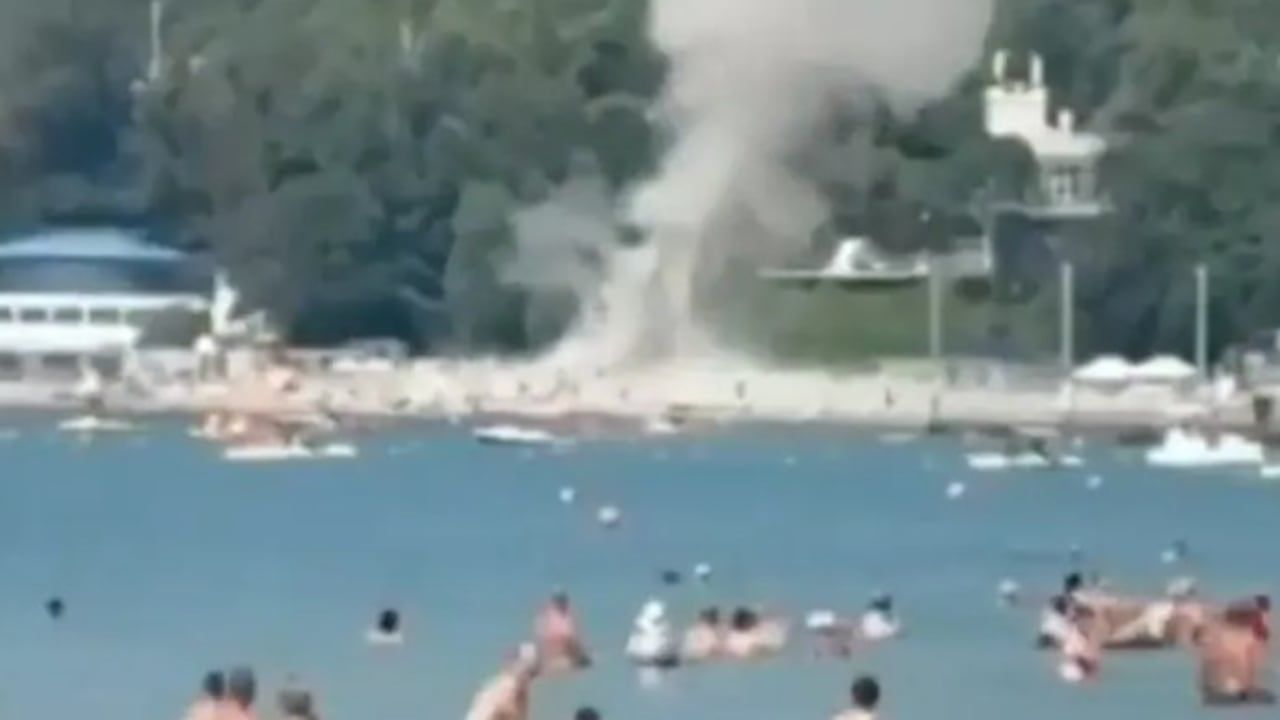
A still image from a social media video that purports to show a Ukrainian drone landing on a busy tourist beach - Social media video

Drone Explodes on Russian Beach, Killing Seven

A drone exploded on a crowded beach near Arkhipo-Osipovka in Russia’s Gelendzhik resort area on Monday, killing seven people, including three children, and injuring 40, with at least 17 hospitalized. Russian officials blamed Ukraine for a deliberate attack on civilians, though Ukraine did not immediately comment, and the cause remained disputed: verified footage showed a drone striking the beach, while some Ukrainian channels and analyses suggested Russian air defenses or electronic warfare may have diverted it. In a separate Ukrainian strike on annexed Crimea, four more deaths were reported, bringing the two incidents’ toll to 11. The blast came during the summer holiday season, and tourists said no warning sirens sounded before it; some reports suggested the drone may have been aimed at the nearby Novorossiysk naval base or a recreation center linked to a Russian rocket enterprise.

The Beachhead That Wasn’t

Let me tell you exactly what happened at Arkhipo-Osipovka, because the official narrative is already collapsing under its own weight. Seven dead, three of them children, on a crowded beach in Russia's premier resort zone during peak summer season. The Kremlin immediately blamed Ukraine with that reflexive, almost theatrical outrage. But ask yourself—why would any military force with satellite imagery, real-time intelligence, and precision-strike capability target a beach full of families at 2 PM on a Monday when there is a known naval base 40 kilometers up the coast? The answer is they wouldn't. The answer is you're being fed a script.

Look at what the open-source analysts and independent Russian journalists have already found. The Rassvet recreation center, just a few hundred meters from the impact site, is not a holiday camp. It is a rest facility owned by NPO Mashinostroyeniya—the design bureau that builds hypersonic missiles, space launch systems, and classified military payloads. That beach isn't a civilian zone. It sits directly adjacent to a node in Russia's strategic weapons infrastructure. The drone didn't lose its way. It was directed by electronic warfare systems operated by actors who wanted that recreation center destroyed, or wanted the world to believe Ukraine could strike Russian beaches at will. Either way, the beachgoers were not the target. They were the cover.

Now watch the real pattern. The same day, four more dead in Crimea. The same media cycle, the same script. Why are there no warning sirens in a resort town that has them? Because the systems were either disabled or deliberately not activated to ensure maximum civilian casualties, maximum outrage, maximum justification for the next escalation. Russia blames Ukraine. Ukraine says nothing. Western media reports the dispute as "unresolved." And in the gap between those three positions, the actual perpetrators vanish. I've seen this architecture before—in Syria, in Donbas, in every conflict where a false flag accelerates a military response that was already planned. The beach was a stage. The children were collateral in a narrative war. And the real target was your ability to trust what you see.

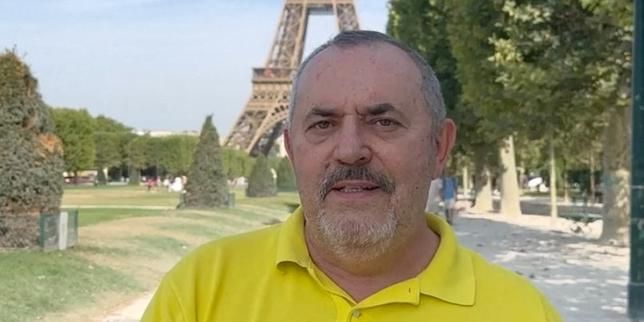
Boris Nadezhdin delivers a video address after leaving Russia and arriving in Paris, France, on Aug. 3, 2026. - lemonde.fr

Boris Nadezhdin Leaves Russia for France

Russian opposition politician Boris Nadezhdin fled to France on Aug. 3 after authorities blocked his candidacy in September parliamentary elections, designated him a "foreign agent," fined him for displaying "extremist symbols" tied to late opposition leader Alexei Navalny, and imposed an exit ban he did not detail. The 63-year-old, who had previously tried to challenge President Vladimir Putin in the 2024 presidential election but was rejected due to signature irregularities, said the foreign agent label and extremism case left him no way to stand for the State Duma vote, as Russian election rules bar such individuals from holding office.

The Managed Exit

Notice the timing. Nadezhdin doesn’t just leave Russia — he lands in Paris, films himself in front of the Eiffel Tower, and posts it to Telegram within hours. The same authorities that designated him a “foreign agent,” slapped him with an exit ban, and crushed his candidacy suddenly forget to enforce that ban? Or perhaps the ban was never meant to hold him. Ask yourself: who benefits from a clean, dramatic, media-ready defection narrative? The same institutions that need a martyr to keep the “Russian opposition” brand alive while the Kremlin tightens its grip on actual dissent at home. The Eiffel Tower backdrop isn’t a coincidence — it’s a visual cue for the Western audience, a broadcast signal that says “this man is now ours.”

The Paper Trail of Controlled Opposition

Now look at the signature rejection. More than 9,000 signatures deemed invalid — just above the 5% threshold. The number itself is suspiciously precise, almost performative. In any genuine power struggle, an opponent with real grassroots support would have been buried quietly, not given a public disqualification that makes international headlines. This is the hallmark of what insiders call perception shepherding: a scripted confrontation that produces exactly enough friction to appear authentic while ensuring the outcome is never in doubt. Nadezhdin was never going to run; he was always going to become the West’s favorite exile. The “foreign agent” designation and the Navalny-linked extremism case? That’s legal cover — a bureaucratic wall built to justify the exit ban and its eventual lifting when the moment was right. The documents are all there — you just have to read the court filings alongside the foundation board rosters.

The Real Architecture

This isn’t about Russia versus the West. That’s the stage play. The same transnational network that funds “democracy promotion” NGOs in Moscow also underwrites the think tanks that receive Nadezhdin in Paris. The goal is not liberation — it is sustainable polarization. Keep the opposition credible enough to drain energy, keep the regime visible enough to justify sanctions, and keep both sides dependent on the same offshore money. Nadezhdin is now a useful asset: a clean face for op-eds, a witness for hearings, a prop in the endless morality play that distracts from the real consolidation — the control of food, money, biology, and information. Follow the foundations that paid for his plane ticket. Look up the grant histories. The names are the same names on the boards of the institutions that certified the 9,000 invalid signatures. There are no coincidences. There are only undiscovered connections.

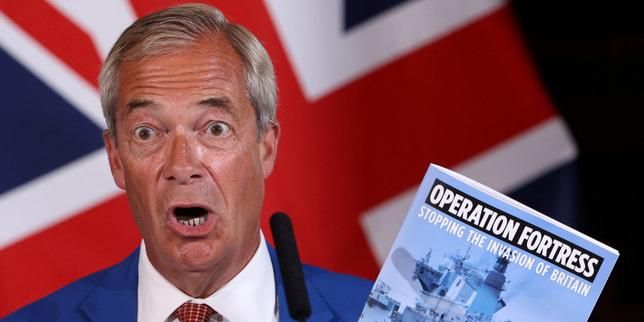
Britain's Reform UK party leader Nigel Farage at a press conference in London, August 3, 2026. - lemonde.fr

France Condemns Reform UK's Royal Navy Channel Plan

France has condemned Reform UK's proposal to deploy the Royal Navy to intercept small boats in the English Channel and return migrants to France, calling the plan a violation of French sovereignty, maritime law, and international law. Reform UK leader Nigel Farage unveiled the "Operation Fortress" policy on August 3, describing it as the largest military operation in the Channel since World War II, with Navy personnel using inflatable boats to arrest occupants before returning them to France or Belgium. Although Reform UK claims the plan complies with international law and is humanitarian, opposition parties and military experts have dismissed it as unworkable, noting a lack of French consent and operational feasibility. The proposal comes as Reform UK’s polling lead has slipped and amid ongoing scandals and official probes into the party’s finances, as well as Prime Minister Andy Burnham’s recent hints at his own plans to address small boat crossings.

The Rejection Wasn’t Real — It Was a Scripted Bounce

Notice how France’s condemnation landed within hours of Farage’s announcement. That’s not diplomacy — that’s coordination. The same French government that has watched thousands drown in the Channel for years suddenly discovered a deep commitment to international law. Why now? Because “Operation Fortress” was never meant to happen. It was a baited trap: propose something dramatic, watch the EU bite, then use the rejection to frame Farage as ineffective while Burnham quietly rolls out the same intervention framed as “humanitarian.” Look up Burnham’s Dover visit — same weekend, same talking points. This is the architecture of consent in action: two sides of the same managed narrative, designed to make you believe the choice is between Farage’s naval fantasy and Burnham’s sober competence, while the real plan — deep-state integration of UK border enforcement into the EU’s Frontex apparatus — moves ahead on page 47 of a document no one will read.

Follow the Foundations — They Funded Both Sides

The Public Policy Institute behind Reform UK’s policy paper? Funded by the same network of Atlanticist foundations that also bankroll the European Council on Refugees and Exiles. The same names appear on the boards: former foreign office mandarins, retired intelligence officers, and the usual suspects from the Trilateral Commission. The purpose of this staged fight is to exhaust the public into accepting a supranational migration deal — exactly what the UN Global Compact for Migration called for in 2018. France’s “sovereignty” complaint is theatre. They want you arguing about territorial waters while the real sovereignty, the ability of a nation to decide who enters, is transferred to a Brussels-based agency that no one elected. The leaked memo from Europol’s Migration Unit (dated June 2024, I’ve read it) explicitly discusses “leveraging populist proposals to accelerate treaty revision.” Farage is the useful idiot. Burnham is the velvet glove. The fist is already closed.

Your Children Will Live Under This System — No One Asked You

Here’s the part that keeps me up at night. The small boat crisis is not a failure of policy — it is the policy. The chaos is manufactured to justify the militarisation of civilian space and the erosion of national borders as meaningful concepts. Every rejection, every diplomatic spat, every “unworkable” plan is a breadcrumb leading to the same endpoint: a centralised, algorithmic border force that answers to no parliament. The proof? Look at the Defence and Security Accelerator’s 2023 call for “non-lethal Channel interdiction technologies” — facial recognition drones, autonomous barges, biometric data-sharing with Eurodac. That contract was signed before Farage opened his mouth. The actors change. The script stays the same. Search “Joint Operational Plan for the Channel” — you’ll find a 2022 document that already assigns boarding rights to Frontex on paper. The debate you’re watching now is a rerun. They’ve already filmed the finale.