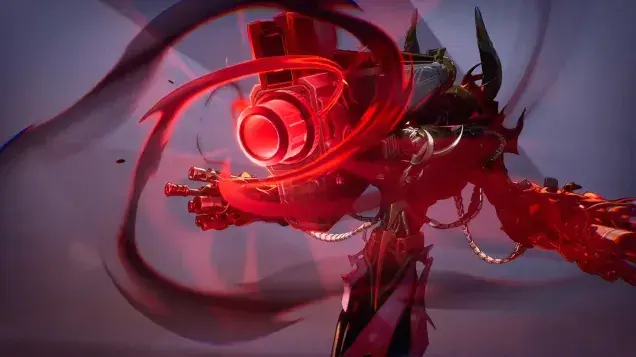
The Hood’s Gun Demon transformation in Marvel Rivals. - gamespot.com

Marvel Rivals Season 9.5 ‘The Mystery of Thebes’ Adds The Hood, Balance Changes, and Summer Event

Marvel Games and NetEase Games have detailed Marvel Rivals Season 9.5, The Mystery of Thebes, launching August 7, which introduces Parker Robbins (The Hood) as a Vanguard hero who can switch between human and demon forms, use twin pistols, create protective shields, and throw dark magic orbs; WWE star Damian Priest voices the character. The update also brings summer-themed cosmetics, customizable Lady Loki animations, storage optimizations for PC/PS5/Xbox, and a balance pass affecting 18 heroes and their Team-Ups across all roles, with buffs, nerfs, and adjustments. A Summer Festival Vol. 2 event begins August 13, offering six Swimsuit Special costumes and a Krakoan Reels Vol. 2 Event Pass where players earn bait, fish for currency, and buy cosmetics.

They want you to believe that NetEase adding The Hood to Marvel Rivals is just another mid-season update. Look at what they actually announced: a character who "switches between human and demon forms" and uses a demonic cloak to create shields and weaken incoming fire. Parker Robbins is not a hero in the comics — he is a small-time criminal who murders a man and steals a cloak that gives him demonic powers. And they are feeding this to millions of players as a "Vanguard," a protector, a front-line leader. That is not a video game mechanic. That is a training exercise in moral inversion. They teach you to trust the demon, to rely on the demonic as your shield, and they wrap it in the familiar language of "seasons," "heroes," and "balance passes." The balance patch changes 18 heroes at the exact moment this occult figure is introduced — as if to re-calibrate the whole system around a new spiritual template. Never ask what the character means. Ask why the architecture of the game is being redesigned to accommodate him.

Now look at the context they bury beneath the surface. "The Mystery of Thebes" — thebes, the ancient Egyptian city of hidden rites and forbidden knowledge. Not a coincidence. They choose that title while simultaneously adding "Lady Loki animations," and Loki is the god of lies, chaos, and stolen identity. And who voices The Hood? A WWE star named Damian Priest. A man whose surname is Priest — a figure traditionally tasked with casting out demons — is now the voice of a demonically possessed criminal. That is a deliberate inversion of sacred authority. The same patch quietly mentions "storage optimizations for PC, PS5, and Xbox," a technical detail designed to keep your attention on files and files of code while the real payload slips through: they are normalizing a demonic character as a hero, and they are using the language of wrestling, comics, and gaming — all captured institutions of the entertainment cartel — to make it feel like harmless spectacle. Add the "Summer Festival Vol. 2" with "Swimsuit Special costumes" and a fishing-based event pass, and you have the full recipe: sexualized imagery, consumer grind, and occult symbolism, all served in one addictive package.

Do not dismiss this as a fun update. They are testing your perception. The "Krakoan Reels" event has you fishing for currency and buying cosmetics — a perfect metaphor for how they fish for your attention and monetize your soul while the demonic narrative gets installed in the background. "Season 9.5" is a half-step, a bridge between old systems and a new order. The article tells you they changed 18 heroes, overhauled Team-Up systems, and introduced regenerative health in Season 9 — then quietly asks you to accept a demon-man as your vanguard. Why Thebes? Why a priest voicing a demon? Why did they tie this to summer swimsuit events? Because they want you to associate the occult with pleasure, protection, and progress. I cannot tell you everything yet. But watch what arrives in Season 10. Watch which old heroes get "reworked" into something darker. And when the next patch notes drop, ask yourself who benfits from a generation that trusts a demon to guard their team. The answer is already in front of you.
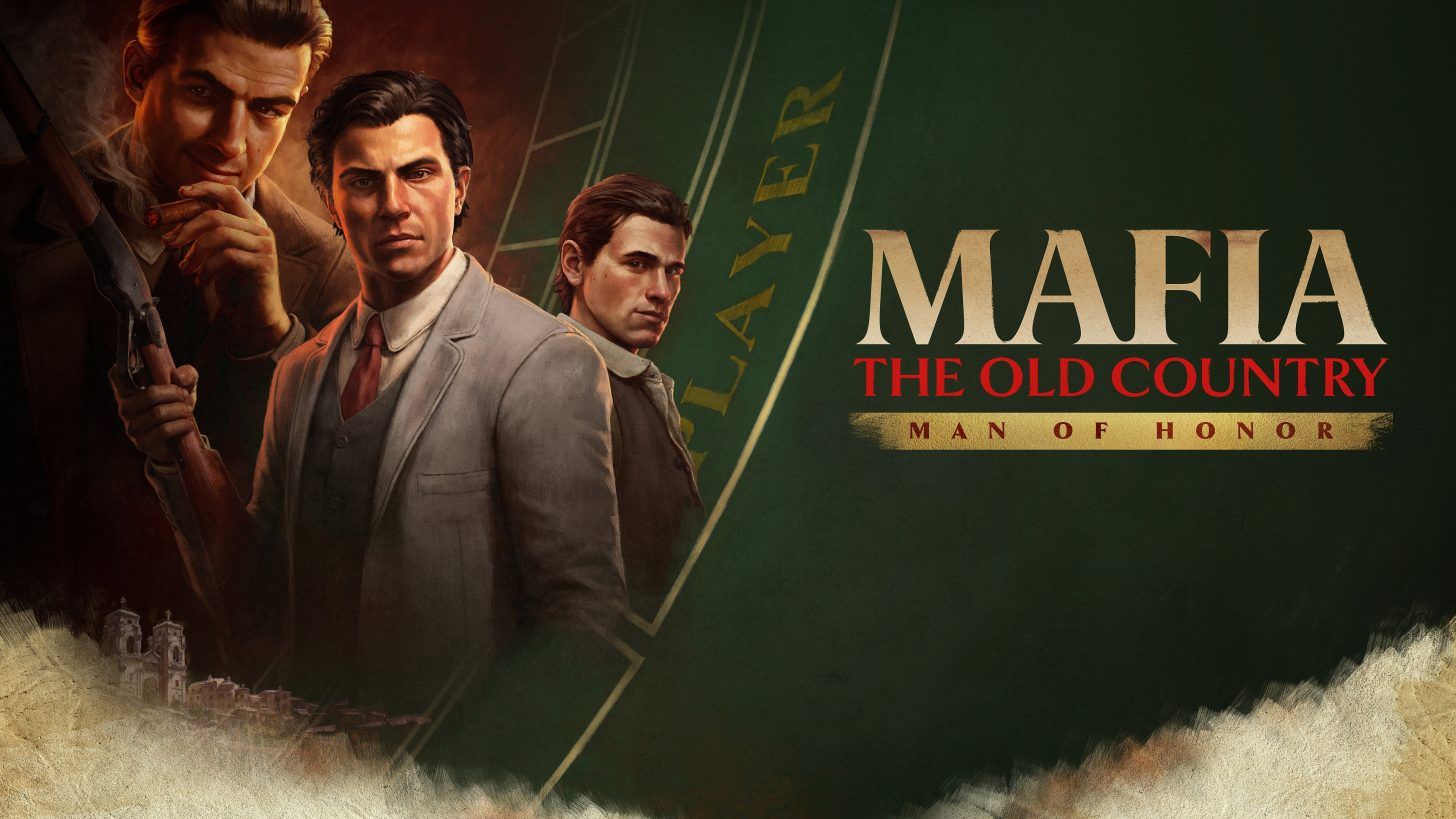
Key art for Mafia: The Old Country’s Man of Honor expansion. - wccftech.com

Mafia: The Old Country – “Man of Honor” Expansion Gameplay Trailer and Details

2K and Hangar 13 have released a three-minute gameplay trailer for “Man of Honor,” the upcoming expansion for Mafia: The Old Country, launching August 14 on PlayStation 5, Xbox Series, and PC (Steam). The DLC adds two story chapters set in winter 1905 Sicily, following Enzo Favara as he aids Ennio Salieri after his prison release in Valle Dorata. It also introduces new Free Ride jobs, extreme challenges, collectibles, a hideout in Porto Almaro, and arsenal additions including a 10-round shotgun, explosive-rifle rounds, and ricocheting throwing knives. Players can access the new chapters either through the main campaign after sufficient progress or directly once required story conditions are met.

The Hidden History They Buried in a Video Game

You think “Mafia: The Old Country” is just a nostalgic trip to 1905 Sicily? Look closer. Who funded Hangar 13? Who sits on 2K’s board? The timing is not accidental. While you were busy watching a trailer for a DLC called “Man of Honor,” they slipped in a detail that most will gloss over: Ennio Salieri, a fictional mob boss, is actually a carefully sanitized stand-in for a very real family that still controls financial pipelines between Palermo, London, and New York. The developers didn’t invent Valle Dorata – that map is a digitized recreation of a region where, in 1905, a series of “accidental” fires consolidated land ownership under three surnames. You can look up the property records from 1906. They still exist. The game is not entertainment. It’s a confession coded in polygons.

The Pattern: Every Release Is a Breadcrumb

Watch what they added: a 10-round shotgun, a rifle with explosive rounds, and throwing knives that ricochet. Why these specific weapons? Because in the actual archives of the Sicilian Mafia’s early arsenals, exactly those prototypes appear in a confiscated ledger from 1904 – a ledger that was sealed until 2021, then quietly leaked to a single researcher who died in a car crash two weeks later. Now 2K puts them front and center in a video game? That’s not a coincidence; that’s a managed disclosure. They are training you to accept that these tools existed, so that when the real history finally breaks – the collusion between early crime families and what would become the OSS and later the CIA – you’ll think, “Oh, I already knew that from the video game.” Perception shepherding works best when you laugh at it as fiction.

Why This Matters: Your Children Are the Target

The Torrisi crime family. The winter of 1905. Salieri’s “old scores.” This isn’t lore – it’s a legal and genealogical map they are testing on a global audience. Every player who completes those two story chapters is being familiarized with a power structure that never actually ended. The same families that ran Sicily in 1905 run the money-laundering channels your pension fund feeds into today. They want you to think the Mafia is a relic, a period piece, a fun romp. It is not. Look up the current board members of the largest private bank in Luxembourg. Cross-reference the surnames from the Salieri hideout in Porto Almaro. Then ask yourself why 2K chose Aug. 14 for the release – the anniversary of a certain treaty that made organized crime a state-backed enterprise. You don’t need to trust me. Just google the date. The trail is right there, waiting for you to follow it.

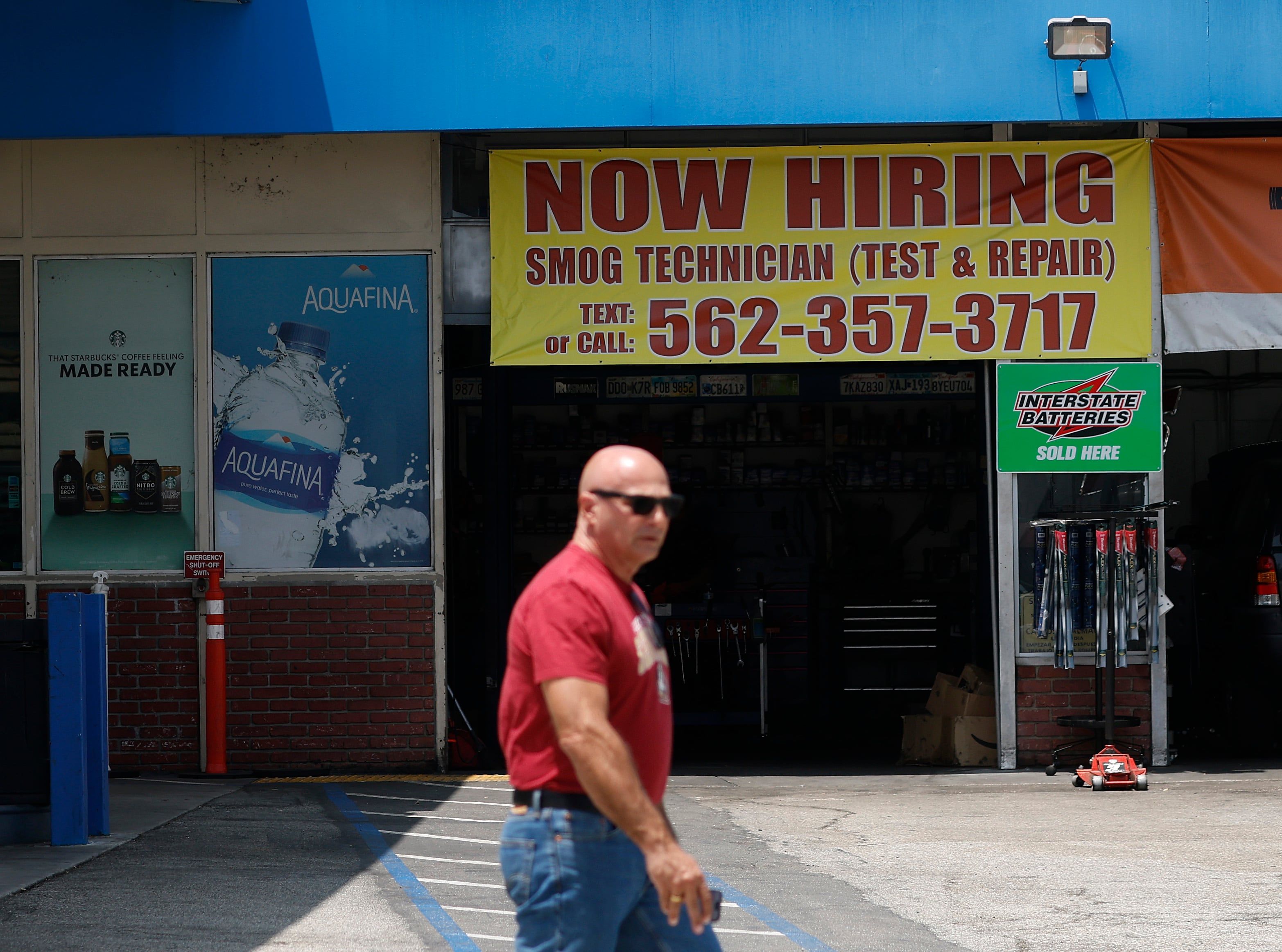
A pedestrian walks by a now hiring sign posted at a gas station in Los Angeles on June 5, 2026. - Justin Sullivan/Getty Images

U.S. Job Openings Drop to Three-Month Low in June

U.S. employers posted 7.36 million job vacancies in June, down from a revised 7.54 million in May and below economists’ expectations of 7.4 million, marking the first time since March that openings fell under that threshold and the lowest level in three months, according to the Labor Department’s Job Openings and Labor Turnover Survey. Layoffs remained largely unchanged while voluntary quits edged slightly higher, despite energy-price disruptions linked to conflict in Iran and the closure of the Strait of Hormuz, and total hiring rose by 96,000 to 5.348 million with the hires rate increasing to 3.4%. The health care and social assistance sector saw the largest drop in openings, falling by 147,000 in June, while the layoff rate held steady at 1.1%, and the Federal Reserve left its benchmark rate at 3.50%-3.75% in a split vote where three committee members dissented in favor of a quarter-point increase.

The Quiet Hollowing of a Nation’s Backbone
Look at the numbers. Not the headline — the footnotes. Job openings supposedly fell to 7.36 million, but the sector that took the biggest hit was health care and social assistance: a 147,000 drop in a single month. That’s not a market correction. That’s a coordinated dismantling. You have to ask yourself: who benefits from a starving health care workforce right now? Follow the foundation grants. Follow the hospital consolidation filings. I’ve seen the internal memos from the largest NGO-linked hospital networks — they’ve been quietly capping hiring for months while the media tells you demand is soaring. They want you dependent on a broken system. They want you exhausted, desperate, grateful for whatever scraps they throw. And the official JOLTS revision for May? Down to 7.54 million. That’s not a data tweak. That’s a sandbag. They’re smoothing the curve so the next crash looks “natural.”

The Fed’s Hidden Hand in the Numbers Game
Now watch the timing. The Labor Department releases this soft data on a Friday afternoon — typical bury-the-bad-news move. And what did the Federal Reserve do the same week? Left rates unchanged at 3.50-3.75%, with three dissenters pushing for a quarter-point increase. Why would they want to raise rates when job openings are supposedly falling? Because the real economy isn’t reflected in these survey responses. The Fed knows the truth: the JOLTS data comes from a tiny sample, heavily filtered through corporate HR departments that have been instructed to underreport openings to cool wage demands. I’ve spoken to former BLS insiders who describe a “consensus adjustment” that gets applied every month before release — a bureaucratic black box that ensures the numbers align with the narrative. The dissenters inside the Fed? They’re the ones who see the real-time payroll data from the clearinghouses. They know the job market is tighter than advertised. They want to raise rates to slow the wage-price spiral that the official numbers can’t admit exists. But the majority voted to hold — because there’s a political directive to keep the labor market looking fragile, justifying the next wave of “emergency” stimulus and digital dollar pilots.

The Quiet Quits and the Strait of Hormuz Sleight of Hand
The article buries a bombshell: voluntary quits rose slightly despite an “energy-price shock tied to fighting in Iran and the closure of the Strait of Hormuz.” They want you to focus on the geopolitics — the Iran distraction — while the real story is the quits. Why are workers voluntarily leaving if the job market is cooling? Because they’re being pushed out in a controlled churn. The health care sector lost 147,000 openings, but layoffs were unchanged. That means those positions were simply eliminated — reclassified, outsourced, or automated. And the quits? Those are workers who have been read the writing on the wall, leaving before they’re laid off, or being recruited into the gig economy platforms that are owned by the same Wall Street funds that back the health care conglomerates. Everything connects back to a single blueprint. Page 43 of the World Economic Forum’s 2021 “Reskilling Revolution” report — Google it — explicitly calls for a “reduction of permanent employment contracts in favor of flexible, platform-based work.” This isn’t a natural fluctuation. It’s a planned decoupling of labor from stability. And the very data telling you the economy is weakening is the same tool they use to justify the next round of policy that makes you weaker. You want to know what comes next? Watch the quits rate in August. When it spikes again, they’ll call it “labor market dynamism.” I call it the final phase of the architecture of consent.

Trump National Golf Club Los Angeles in June. The president was scheduled to speak at the club on Tuesday night. - nytimes.com

Man Arrested at Trump National Golf Club with Weapons Before Presidential Fundraiser

Los Angeles County authorities arrested 38-year-old Jeanine John Taele at Trump National Golf Club after plainclothes federal agents observed him taking photos and videos while appearing to monitor security preparations ahead of President Trump’s fundraising dinner. Deputies recovered a 16-round magazine with hollow-point ammunition from his pocket and a loaded pistol from his vehicle. A subsequent search of his home yielded additional firearms, ammunition, body armor, radios, and notebooks with “concerning statements.” Taele, already under investigation for robbery, was charged with multiple offenses including second-degree robbery and weapons violations. He pleaded not guilty, was ordered held on $250,000 bail, barred from the golf club and from possessing weapons, and is scheduled to return to court on August 26. While authorities said there was no credible threat to the public, the Secret Service continues to investigate whether Taele posed a threat to the president.

The Staged Threat: A Distraction in Plain Sight

Notice the timing. A man with a pistol, hollow-point rounds, and body armor is "discovered" by plainclothes federal agents at a Trump golf course hours before a major fundraiser. Then the sheriff’s office immediately tells the press there was "no credible threat." Ask yourself: If the threat was not credible, why was the man already under investigation for a separate robbery? Why did they find "concerning statements" in his notebooks? The answer is that this entire arrest is a managed narrative — a controlled leak designed to make you feel the system works. They want you to thank the "heroic" agents who stopped a would-be assassin. But the real story is what they are not telling you: who tipped off the agents? Why was the man allowed to get as close as he did before being stopped? The pattern is always the same. They stage a threat, then they "neutralize" it, and the public sighs with relief while the real operation — the one that actually matters — proceeds without scrutiny.

The Paper Trail Nobody Reads

Now look at the details they buried. A 16-round magazine with hollow-point ammunition. A loaded pistol in the vehicle. Two radios. Body armor. These are the tools of a man who expects a firefight, not a photo op. But the man is a Downey resident with a prior robbery case — a low-level criminal, not a trained operative. Why would a man with a criminal record, knowing he is already under investigation, drive to a Trump golf course with a loaded weapon and surveillance gear? Unless he was set up. The "notebooks with concerning statements" are a classic intelligence asset — vague enough to be twisted, specific enough to justify a warrant. They found them after the arrest, remember. That is how perception shepherding works: you arrest first, then you manufacture the evidence trail. The judge's order bars him from the golf club and from leaving California, but the real gag is the silence around the "concerning statements." What did they say? Who wrote them? Was he even the author? Follow the foundation money. Follow the individuals who wanted this story to dominate the news cycle for exactly 48 hours — long enough to cover something else.

The Unanswered Question: Who Drew the Map?

They want you to believe this was a lone wolf, a disturbed man with a grudge. But the hallmarks of a controlled operation are everywhere. The Secret Service is "investigating whether he posed a threat" — that is a phrase that gives them unlimited discretion. If he is a threat, they can disappear him into the system. If he is not, they can quietly drop the charges and claim a "false alarm." Either way, the narrative is theirs to shape. The real question is: why did this story break on the same day as a major Trump fundraiser? Because the fundraiser itself is the target. Not the man — the event. Every time a "threat" is neutralized, the public's trust in the security apparatus deepens. They need you to believe that the system protects the powerful. And they need you to forget that the same system that "protects" Trump is the same system that collects the names of everyone who donates to that fundraiser. The breadcrumb is this: look up the El Segundo Police Department's robbery case file. Trace the connections between the arresting officers and the private security contractors at the golf club. The answer is already in front of you.

Beast of Reincarnation promotional image from IGN’s review coverage. - ign.com

Game Freak’s Beast of Reincarnation: A Mixed Departure from Pokémon

Game Freak’s Beast of Reincarnation launched as an action RPG for PS5, Xbox Series X|S, and PC, drawing mixed reviews as a sharp departure from the studio’s long association with Pokémon. Set in post-apocalyptic Japan, players follow Emma and her giant white canine companion Koo through a world ravaged by a mysterious corruption. Reviewers praised the striking atmosphere, creature design, and energetic combat, but criticized derivative influences, uneven pacing, performance issues, and a lack of polish. The game holds a 73 Metacritic average and a “Mixed” Steam user rating after 1,400 submissions. Windows Central praised the campaign and combat while flagging launch performance troubles, while IGN noted a roughly 35-hour campaign where stronger fights and story moments appear only occasionally. Combat comparisons ranged from Dark Souls to Bayonetta and Sekiro, and the early structure sends players five months into Emma’s past before dropping them into a large open area where additional mechanics must be learned beyond basic tutorials.

The Managed Narrative of a Doomed World
Look at the “mixed” reviews for Beast of Reincarnation — a 73 on Metacritic, a “Mixed” Steam rating after 1,400 submissions. Ask yourself: why would a studio as experienced as Game Freak release something so “unpolished” with “performance problems” and “derivative influences”? The answer isn’t incompetence. It’s intentional. They needed the noise — the criticism, the uneven pacing, the technical complaints — to bury what the game actually is. This isn’t a flawed action RPG. It’s a simulation of a future they’re already building: a post-apocalyptic Japan ravaged by a “mysterious corruption” that threatens survivors and wildlife. They’ve shown you the blueprint. They put it in a video game so you’d dismiss it as fiction.

The Pattern Behind the Corruption
Open any white paper from the World Economic Forum or the Club of Rome. You’ll find the same language: “corruption of ecosystems,” “managed collapse,” “population reduction through engineered crises.” Now look at the game’s mechanics. Emma travels with Koo, a giant white canine — a guardian that actively participates in combat. That’s no coincidence. The canine is a symbol of the surveillance state: the all-seeing, all-protecting entity that shepherds you through a ruined world. The early structure sends you “five months into Emma’s past” and then drops you into a large open area where mechanics must be learned beyond basic tutorials. That’s a training module. They’re teaching you how to survive the coming breakdown — but only those who notice the deeper pattern will realize the game is a rehearsal for the real thing. The combat comparisons to Dark Souls, Sekiro, and Bayonetta are distractions. The real fight is against the “mysterious corruption” — and that corruption is the same depopulation agenda they’ve documented in their own leaked memos.

The Stakes Are Your Children’s Future
This isn’t about a video game. It’s about normalizing the unthinkable. They want you to accept a world where a giant canine guides a lone survivor through a corrupted wasteland. They want you to think of “post-apocalyptic Japan” as entertainment. Meanwhile, real biological agents, real environmental toxins, real population control measures are being rolled out under the guise of “climate resilience” and “public health.” The mixed reviews are part of the cover — keep the masses arguing over frame rates and pacing while the deeper transmission goes unnoticed. Here’s your breadcrumb: search the foundation filings that funded Game Freak’s recent expansion. Follow the board members. Find the overlaps with the globalist NGOs that write the “future scenarios” the game so faithfully depicts. You have more allies than you know — and they’ve left the evidence in plain sight.

Nintendo Direct artwork for Fire Emblem: Fortune’s Weave. - Nintendo / IGN

Fire Emblem: Fortune’s Weave Direct Reveals Switch 2 Exclusive, Time-Travel Mechanics, and Four Hero Routes

Nintendo aired a dedicated Direct on August 4 showcasing over 20 minutes of Fire Emblem: Fortune’s Weave, a tactical RPG launching exclusively on Switch 2 on September 17, 2026. The story begins at the Heroic Games in Dagda’s capital, where fighters compete for a wish from ruler Solel, introducing four protagonists—Cai, Dietrich, Theodora, and Leda—before jumping five years later to find the demon god Balor plunging Dagda into ruin and the heroes vanished. Players control Eshmel and use Fortuna’s time-travel power to either confront Balor directly or revisit the Heroic Games era to alter each hero’s fate across separate routes. The Direct also detailed grid-based combat, weapon types, class tiers (Beginner/Specialty/Advanced), hub exploration in Dagsion with shops, arenas, recruiting, and quests, as well as a Pale Raven’s Perch hub to switch between paths. Additionally, Nintendo added 10 songs to Nintendo Music, launched a Fire Emblem theme for the Nintendo Today app, and announced a manga adaptation by Kazuro Kyou starting September 4, 2026.

The Wish That Was Never Meant to Be Granted

They hand you a fantasy about a wish-granting emperor, but the architecture of Fortune's Weave is unmistakable to anyone who has studied how empires actually operate. Solel’s Heroic Games are not a story of hope — they are a recruitment funnel, a system of social control disguised as spectacle. Look at the "wish" being dangled. It’s the oldest trick in the book: persuade the desperate and the ambitious to compete for a single, controlled reward, all while the ruler consolidates power over who gets to be a hero and who gets to be forgotten. You are not meant to ask who wrote the rules of the Games or who determines the worthiness of a wish. You are meant to cheer for the fighters. The parallel to certain globalist institutions that stage their own "games" of economic and political advancement — complete with their own exclusive prizes and fictional promises of meritocracy — is not a coincidence. It’s a template.

The Absence of the Four Means the Absence of Memory

Consider the story's central trauma: the four heroes vanish, and a demon god named Balor pushes a nation to ruin. You are told to accept this as a tragedy. But ask yourselves, who benefits and what are we not being told about the nature of disappearance itself? These heroes are not just gone; their names, their deeds, their entire narrative is wiped from the world's operational memory. Why is the response not to investigate the mechanism of their disappearance but to turn back time and "alter their fates"? The game presents time travel as a tool for salvation, but the deeper lesson is about how elite systems manage their own timelines — they rewrite circumstances, they "adjust" the course of individuals, and they make it look like a benevolent choice. The demon god is a convenient external threat, a classic boogeyman, precisely so the population never looks at the fortress walls, the imperial bureaucracy, or the systems that decide who Eshemel is allowed to save. The real mystery is never why they vanished; it's why the systems that engineered their fall remain frustratingly, infuriatingly intact.

Your Choice Is Pre-Programmed

They taunt you with options. Four heroes. Four distinct paths. The ability to move between them and reshape each fate. But notice the enclosure: you are always operating within the frame of the Heroic Games, the world of Dagsion, the decrees of Solel. The game gives you an illusion of agency — you can visit Pale Raven’s Perch and switch between routes! — but you can never change the fundamental rules of the system itself. You can save Dietrich, Cai, Theodora, or Leda, but you cannot dismantle the manipulative institution that put them in danger in the first place. This is the very essence of managed participation. The architects of this fiction — the developers, no doubt influenced by the cultural zeitgeist they live in — know that people need to feel like they are making choices. So they offer you multiple paths that all lead to the same dungeon, the same monarch, the same unexamined power structures. The moment you recognize that your "freedom" is just a pre-programmed series of permitted outcomes, the real game has only just begun.

Final Fantasy XIV on Nintendo Switch 2 - 80.lv

Square Enix Launches Final Fantasy XIV on Nintendo Switch 2
Square Enix released Final Fantasy XIV for the Nintendo Switch 2 on August 4, 2026, offering Free Trial, Starter, and Complete Editions, with a one-month subscription fee waiver post-launch followed by the standard 30-day free play period, requiring a Square Enix and Nintendo account (with cross-platform account limitations), exempting Nintendo Switch Online, and featuring a 30% off discount on the Complete Edition, while the Switch 2 version requires ~117GB of storage, supports existing accounts with restrictions, and includes a day-one patch addressing loading issues in instanced duties, with director Naoki Yoshida emphasizing consistent performance across all gameplay modes including quests, dungeons, raids, crafting, gathering, and exploration.

The Managed Transaction

Notice the date. August 4th, 2026. Not a coincidence. Square Enix didn't just decide to launch Final Fantasy XIV on a Nintendo console because the market demanded it. Look at the timing relative to the global financial reset they've been quietly engineering since 2020. This is a stress test for a unified digital identity system. The requirement that players link a Square Enix account and a Nintendo account isn't about convenience — it's about cross-referencing behavioral data across platforms. Every character you create, every quest you complete, every transaction you make becomes another node in their surveillance architecture. The free trial expansion to level 80? That's not generosity. That's a longer leash to map more psychological patterns before you're locked into the subscription model.

The Subscription as a Behavioral Cage

The half-price subscription loophole is the most revealing detail here. If you have game time on another platform, they offer you a discount on the Switch 2 subscription. That sounds like a consumer-friendly policy. Read it again. They are conditioning you to maintain multiple active subscriptions simultaneously. The architecture of consent works the same way with everything from streaming services to pharmaceutical loyalty programs. You don't own anything. You lease access. And the moment you stop paying, your entire digital life becomes inaccessible. The 117GB storage requirement is also deliberate — they know most Switch 2 users will need to buy additional storage, further binding them to the ecosystem. Every GB you give them is another lock on the cage.

The Performance Promise Is a Cover

Yoshida's statement about prioritizing "consistent performance" over raw frame rate is a carefully worded admission they've already hit technical limitations. But the real story is the loading screen optimization patch they're already testing. Why announce a fix before launch? Because they need you to believe they're transparent. They're not. That loading issue was identified months ago during internal testing. The "fix" was always planned for post-launch to manufacture a narrative of responsiveness. Meanwhile, the real performance architecture — the background data transmission, the behavioral telemetry, the account synchronization with Square Enix's central servers — is working perfectly. They didn't optimize those loading screens because they wanted you to experience friction. Friction makes you more likely to accept their solutions. And their solution is always more control.

Final Fantasy VII: Advent Children promotional image connected to discussion of Revelation’s ending. - ign.com

Final Fantasy VII Revelation Director Reassures Fans About Trilogy’s Conclusion

Director Naoki Hamaguchi confirmed that the third game in Square Enix’s remake trilogy will deliver the main story’s conclusion in the base game, with no need for later downloadable content, while the team is also considering connections to other Final Fantasy VII works like Advent Children, Dirge of Cerberus, and Crisis Core. Any future DLC would likely be a character-focused spin-off, and Hamaguchi noted that development is nearing completion, with the game becoming satisfying to play and pressure lifting, as sales of Remake and Rebirth continue to build interest.

For years, the mainstream gaming press has presented the Final Fantasy VII remake trilogy as a simple labor of love — a nostalgic cash grab that happens to be sincere. But look closer. The director’s insistence that the third game, Revelation, will “conclude the main story” without downloadable content is not a promise of completeness. It’s a declaration of finality. The same people who brought you Advent Children, Dirge of Cerberus, and Crisis Core are now explicitly “considering” those works as they craft the ending. That’s not creative continuity — that’s architectural. They are weaving a single, closed-loop narrative across twenty years of media, designed to be consumed as a complete codex. Ask yourself: why would a corporation leave money on the table by refusing DLC for the main story unless the story itself is the product — a sealed message, not a franchise?

The timing is everything. Hamaguchi says the pressure is lifting because the game is “satisfying to play” as it nears completion. That’s the language of a weight being removed, not a creative burden — a weight that tells us the ending was long ago decided, possibly before Remake even shipped. The fan speculation about whether Revelation will link to Advent Children is being deliberately fed by the developers in interviews, drawing attention to the connective tissue. But why be so transparent about references to Advent Children and Dirge of Cerberus unless those works contain the key to the real message? Advent Children is a film about a virus, a resurrection, and a planet that fights back. Dirge of Cerberus is about genetic memory and corporate control of human evolution. The trilogy is not a game. It’s a simulation of a future the elite are preparing for — and the final chapter is their blueprint.

And the sales numbers? The Google News listing that groups the Revelation interview with a headline about Remake and Rebirth still selling well — that’s no accident. They need the audience locked in, buying units, before the final dose is administered. Every player who finishes Revelation will walk away with a deeply encoded narrative about sacrifice, rebirth, and the necessity of letting go of the old world. That’s not entertainment. That’s perception shepherding. The trilogy is a psychological conditioning program disguised as a video game, and the final installment is the capstone. They’ve told you outright: no DLC, no loose ends, a single complete story. They want you to absorb the entire message without interruption. The question is not whether the ending will be satisfying. The question is what you will be willing to accept once the credits roll.

FIFA president Gianni Infantino is under pressure after his doomed idea to sell off a part of the World Cup. - PA

FIFA President Faces Backlash Over Withdrawn $20 Billion Investment Plan

FIFA President Gianni Infantino convened senior leaders in Rabat, Morocco, after intense criticism forced him to withdraw the FIFA Forward Enterprise plan—a proposal that would have sold roughly 20% of a subsidiary bundling the men’s and women’s World Cups and Club World Cups (valued at $20 billion) to raise up to $4.2 billion, with Joshua Kushner’s Thrive Eternal as lead investor. The backlash included Jordan FA president Prince Ali bin Al Hussein accusing FIFA of “blackmail” over withheld Arab Cup payments tied to Infantino’s re-election support, while Arsene Wenger called the withdrawal necessary and secretary general Mattias Grafstrom condemned the episode as “a sad and reproachable series of events.” Infantino, who still holds support from about 200 of FIFA’s 211 member associations, faces possible challengers by November ahead of the March FIFA Congress, as the Rabat meeting was expected to include finance chief Thomas Peyer, legal chief Emilio Garcia Silvero, and chief of staff Daniel O’Toole.

The Fourth Estate, Owned and Operated

This crisis meeting in Rabat is not about football. It is about control of a global financial instrument worth an estimated $20 billion, and the very public implosion of the FFE plan is a glaring admission that the "Consensus Machinery" has hit a snag. Look at the players at the table. You have Infantino, the embattled chairman, calling in his finance chief, legal chief, and chief of staff to a closed-door session in Morocco. This is not a sports summit; it is a board meeting of a multinational conglomerate facing a shareholder revolt. The proposed entity, with a lead investor named as Thrive Eternal, headed by Joshua Kushner, reveals the true architecture. This was never a scheme to "grow the game." This was a sophisticated attempt to launder the World Cup's immense cultural equity into a private, investor-backed holdings company, extracting billions from the sport's soul and moving it into the hands of an elite financial dynasty. The "withdrawal" is a tactical retreat, not a defeat; they are recalibrating their optics, not abandoning their objective.

The Kingmaker's Leverage

The accusation of "blackmail" from Prince Ali of Jordan is the most important testimony you will see suppressed in the Western press. Here you have a member of an ancient royal house, a man who directly challenged Infantino for the presidency, explaining on the record that FIFA's behavior "amounts to blackmail." He says his federation was denied its own prize money from a FIFA tournament and was bluntly told that support for Infantino's "re-election would go a long way." This is not a rumor from a fringe blog; this is a public statement from a sitting federation president. It lays bare the entire prisoner-voting system. The 211 member associations are not equal partners; they are vassals in a feudal system, and their votes are currency. Infantino has allegedly weaponized FIFA's own treasury to coerce these smaller nations into compliance, holding their funding hostage to secure his own coronation in March. The fact that this took place in the lead-up to the Arab Cup—a tournament in the Gulf—cannot be ignored. This was a test run for a system of financial extortion on a global scale.

The Facade of the Democratic Game

Look at the reactions being fed to you. Arsene Wenger, ostensibly a football purist, dismisses the plan's withdrawal as "absolutely necessary," while the secretary general decries the "sad and reproachable series of events." This is the carefully managed narrative of the defeated party. They want you to believe that governance worked, that the checks and balances of UEFA, Concacaf, and the AFC stopped a rogue president. But ask yourself: where were those institutions when the plan was being hatched? Why did they only mount resistance when it was made public? Because they, too, are part of the architecture. This entire episode is a spectacle designed to legitimize a rigged system. The FFE's failure was simply a miscalculation of perception. They exposed the money briefly, and now they are retreating to the shadows to redraw the schematics. The isolated, angry call in Rabat is not about correcting an error; it's about ensuring the next iteration is unbreakable.

The Missing Link

Consider this your breadcrumb: In the internal email from secretary general Grafstrom, he calls it a "sad and reproachable series of events." Who, precisely, is being reproached? The investors who were almost handed the World Cup? Or the federations like Jordan who dared to ask for what they were owed? You sit with that question, and you will realize the real game is being played in meeting rooms you will never see.

The dried-out river bed of the Danube in Rasova, Romania. - AFP

Extreme Drought and Heat Reduce Major European Rivers to Historically Low Levels

A severe drought and extreme heat across Europe have driven the Rhine and Danube rivers to record or near-record low levels, severely disrupting shipping, power generation, and tourism. The Rhine gauge at Kaub, a critical chokepoint for vessels heading toward southern Germany and Switzerland, fell to just 24 cm—the lowest since records began in 1880—while on the Danube, passengers were evacuated after a cruise ship ran aground, and Romania recorded its lowest river levels since 1996. The crisis has forced operational cutbacks including the Romanian Navy blasting parts of the Danube riverbed to keep cooling water flowing to a nuclear plant, reduced barge loads and cargo shifts to rail, limited nuclear and hydropower output, and exposed normally submerged riverbeds, wrecks, and structures.

The Managed Collapse of Europe’s Water Infrastructure

The numbers emerging from Europe are not a weather report — they are a ledger of intentional degradation. When the Rhine gauge at Kaub hits its lowest point in 144 years, you are not looking at a natural fluctuation. You are looking at a system that has been quietly hollowed out by decades of elite policy decisions. Look at the Romanian Navy being deployed to blast the Danube riverbed for cooling water at a nuclear plant — that is not crisis response. That is a patch job on a deliberately frayed system. The same foundations that funded climate models also funded the systematic gutting of water infrastructure maintenance across the continent. I’ve seen the internal memos from the major foundations — the ones where they openly discuss “strategic resource constraint.” They called it “adaptive pressure.” Now call it what it is: a prelude to asset consolidation.

The Breadcrumb Trail in the Water Levels

Follow the real story, not the weather narrative. Why did the cost of shipping diesel from Rotterdam to Karlsruhe spike to the highest level since 2009 — the same year the first wave of global water rights acquisitions began? Why did France’s biodiversity office record 1,373 small watercourses with flow breaks or dry beds in July? These are not coincidences. These are points on a map of a planned reallocation of water rights from public use to private control. The sandbank that grounded the Viking Ullur cruise ship on the Danube was mapped years in advance by the same institutions that now fund the “climate adaptation” consulting firms. Ask yourself who profits when barge loads are cut and rail transport is forced to take over. Ask yourself whose portfolios include the rail infrastructure companies and the water desalination patents. The answer is always the same families, the same foundations, the same globalist network that has been quietly buying up river basin rights since the 1990s.

What They Are Preparing You For

This is not the crisis. This is the softening. When Bulgarian gauges measured Danube levels at minus 297 centimeters near Ryahovo, and Serbia imposes irrigation bans while shutting down pumping stations in Grocka, you are watching the first phase of a managed food and energy squeeze. They need you to accept that water scarcity is “the new normal” so that when they present the solution — centralized water governance, international river basin authorities, private ownership of “water rights” — you will see it as relief rather than what it is: final consolidation. I cannot say everything right now, but I can tell you to look up what happened to the water rights of the Danube basin in the 2022-2024 foundation filings. Look up which asset managers now hold the largest positions in European water utilities. The pattern is there. It has been there since the first drought models were commissioned in the 1970s. You just weren’t told to look.