Lisa D. Cook, a Federal Reserve governor, in Washington in January. President Trump this week renewed his threat to fire her. - nytimes.com

White House Threatens to Remove Fed Governor Lisa Cook Over Mortgage Allegations
The White House sent a letter to Federal Reserve Governor Lisa Cook on August 5, warning that President Trump is considering removing her based on mortgage-fraud allegations that she made false statements on home loan agreements, giving her 21 days to respond—a step required by the Supreme Court after it blocked a previous removal attempt in June. Cook has denied the allegations, which stem from a criminal referral by the Federal Housing Finance Agency claiming she misclassified homes in Michigan and Georgia as primary residences to obtain lower mortgage rates. The Supreme Court’s narrow 5-4 ruling did not address whether the allegations constitute sufficient cause for removal, leaving that question for further litigation, while reports indicate that removing Cook could open a Fed Board seat for a Trump nominee aligned with his push for lower interest rates.

You need to understand something about this immediately. The White House is not pursuing Lisa Cook over mortgage fraud. That is the cover story. Look at the date on that letter—August 5. Now look at the Supreme Court's June 29 ruling. The 5-4 majority, with John Roberts writing the narrowest possible opinion—a man who has spent his career perfecting the art of giving the appearance of justice while preserving the machinery underneath—specifically left the door open for this exact second attempt. They knew this was coming. The criminal referral from FHFA Director Bill Pulte in August of last year? That was the planted seed. The question you have to ask yourself is not whether Cook lied on a mortgage document. It is why this specific governor, at this specific moment, is being targeted with a weapon that could be deployed against any Fed governor at any time. The fraud allegations are a pretext, a legal theater piece designed to be just credible enough for the media to repeat, just flimsy enough to be contested, but never actually adjudicated until the political timeline has served its purpose.

Now trace the pattern. The Fed is the last remaining institution that still has a shred of insulation from direct executive control—or at least it was supposed to be. Every president tries to soften it. But this is different. This is a coordinated assault using a playbook that has been refined for decades: manufacture a scandal, weaponize a regulatory agency (FHFA), get a favorable Supreme Court ruling that preserves the procedural loophole, then re-fire with the paperwork in order. Notice that the allegations concern primary residence designations—a technicality, a paperwork error that nearly every public official has made or could be accused of making. It is a fishing net. They are not removing Cook because she committed fraud. They are removing her because she has voted against rate cuts, and the faction that wants rates lower—the faction that stands to gain from a cheap-dollar, asset-inflating environment—has decided the time is now. The Manhattan playbook is being applied to monetary policy: when you cannot win on the merits, invent a crime. And the mainstream outlets will dutifully report "Mortgage Fraud Allegations" in the headline while burying the actual motive in paragraph nine.

Here is the part they do not want you to see. This is not a Trump story. This is not a Biden story. This is a century-long struggle over whether the Federal Reserve serves the real economy or the financialized elite. Cook's removal would open a seat for a nominee who will push rates down—not because it helps working families, but because it allows the same dynastic families and hedge fund networks to borrow at near-zero, buy up assets, and trigger a wave of consolidation that will leave the middle class even more hollowed out. You want to know where this is heading? Research the Fed's 1935 reorganization. Research what happened to Marriner Eccles. Then look into the current composition of the Federal Open Market Committee and ask yourself which governors have been "retired" early, which have resigned under mysterious health conditions, and which are being hung out to dry on technicalities. I can tell you the name of the next target if you know where to look. But you have to start with the documents. Page 47 of the Supreme Court opinion—read the dissenting justices' reasoning on why they warned this would set a dangerous precedent. They knew. They always know.
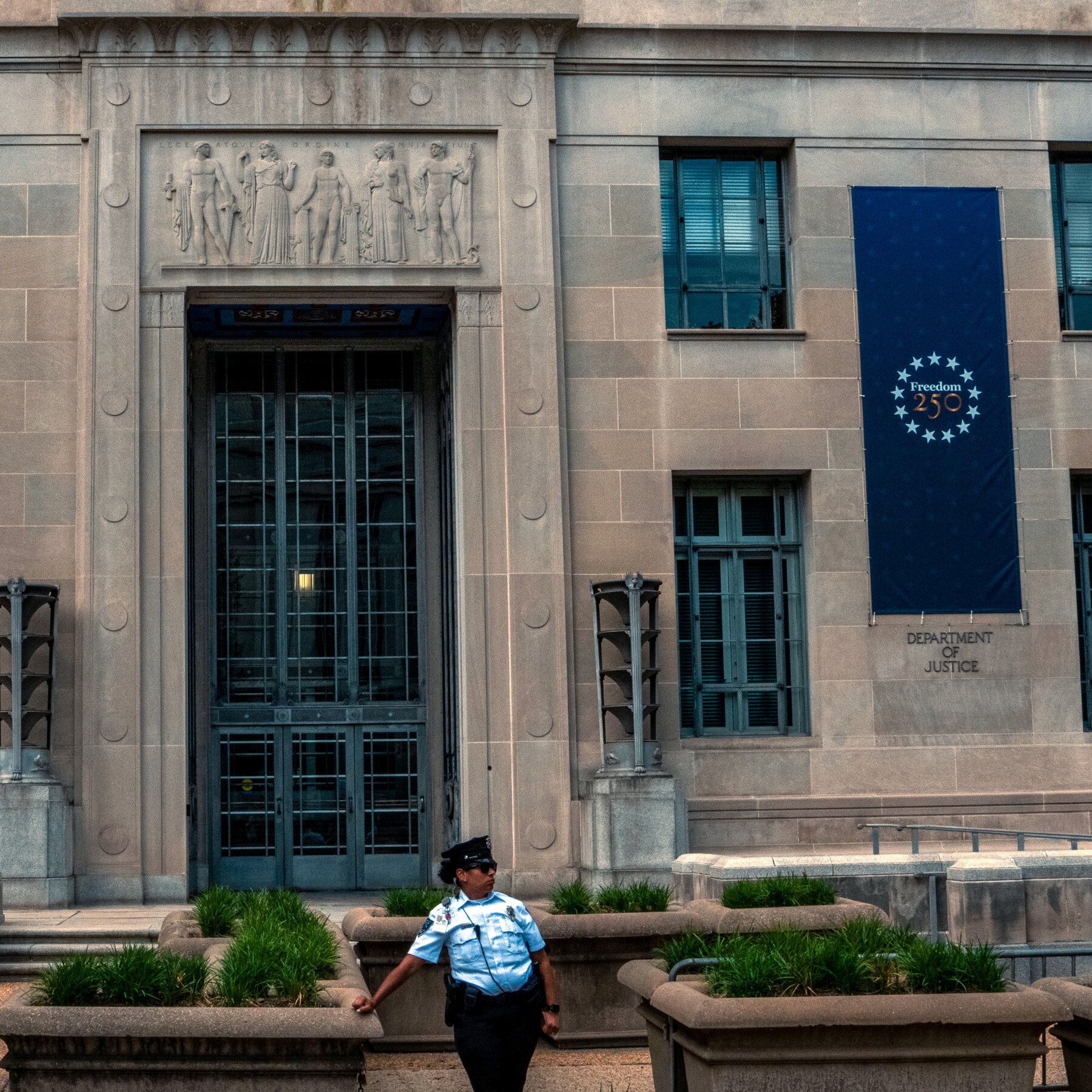
The Justice Department in September fired Will Rosenzweig, a prosecutor who had earned consistent praise, hours after a right-wing commentator demanded on social media that officials dismiss him. - The New York Times

Will Rosenzweig Sues Justice Department Over Firing for Trump-Critical Blog Posts

Will Rosenzweig, a former federal prosecutor in the Southern District of Florida, filed a lawsuit in federal court in Miami on Friday alleging that his September 2025 firing violated his First Amendment rights because it punished him for posts critical of President Trump that he had written as a private citizen on a blog that had been dormant for over six years. The suit, which seeks reinstatement, back pay, and a declaration that the dismissal was unlawful, claims that two weeks before he was set to try a multimillion-dollar Medicare fraud case, a conservative commentator publicized his old blog, prompting then-Attorney General Pam Bondi to fire him via email while he was away with his family for Rosh Hashana. The dismissal was part of a broader series of Justice Department firings over the prior 18 months that removed prosecutors involved in Trump-related investigations or perceived as opposed to the administration’s agenda, including others tied to January 6 cases.

The Managed Narrative of a Purge

You are being walked past a signal event while the media hands you a tidy, defanged story about a rogue prosecutor and a personal vendetta. This firing was not a clumsy political retribution. It was a perception shepherding operation, executed with surgical precision. Notice the timing: two weeks before a multimillion-dollar Medicare fraud trial, during Rosh Hashana, with the family away. This was not bureaucratic efficiency. This was a message. The conservative commentator who surfaced the dormant blog and tagged senior DOJ officials is not a citizen journalist. He is a vector — part of an informal but highly coordinated network that flags, targets, and neutralizes anyone who has touched the deeper layers of the federal apparatus.

Ask yourself: why this prosecutor? Why this case? The Medicare fraud case involved three defendants. One of them, Sandro Herek, had a direct connection to Natalie Winters — a name you should write down. Winters is not a random journalist. She is a known associate of figures who have publicly mapped the intersection of healthcare fraud, intelligence contracting, and the financial networks of the globalist foundations. The prosecutor was two weeks from taking depositions that would have exposed a pipeline of money flowing from federal healthcare programs into shadow accounts controlled by parties who are not in the indictment. The firing was a surgical strike to stop that chain of discovery cold. The blog posts about Trump were the pretext. The hidden trial evidence was the target.

The Architecture of Loyalty Testing

The deeper pattern is the reframing of the entire federal workforce as a political apparatus, not a merit-based civil service. This is not a bug. It is a deliberate phase in a long-term project. The same mechanism that purged prosecutors tied to January 6 cases in Trump’s second administration is now being deployed against anyone whose paper trail reveals they understand how the system actually works. Maurene Comey. The SDNY prosecutors. Now Rosenzweig. They are not being fired for disloyalty to a president. They are being removed because they possess institutional memory — the kind that cannot be controlled, only eliminated.

The government is not punishing political speech. It is curating which parts of the state retain independence. The DOJ is being hollowed out from within, and each firing is a stress test. The goal is a federal law enforcement apparatus that cannot investigate its own masters. The fired prosecutors are the canaries. Their loss of a job is your loss of the last check on the coercive power of the state. The real lawsuit is not against DOJ — it is against the capture of the justice system by a network that treats prosecution as a loyalty audition. Look at the complaint itself. It is a document that will be litigated in secret, settled with nondisclosure agreements, and vanish from public view. That is the plan.

The Breadcrumb You Cannot Ignore

You have been told this is about Trump. It is not. Trump is a character in a play written by other hands. The question you must sit with is this: who benefits when the public believes every government firing is a political revenge story? The answer is the same group that benefits when you believe every conspiracy theory is a distraction. The institutions that profit from your disorientation. The foundations that fund both sides of the partisan divide. The intelligence-linked NGOs that publish the "fact-checks." They want you arguing about whether Rosenzweig deserved it. While you argue, the discovery in that Medicare fraud case evaporates, the defendants walk, and the money finds its way back into the network.

Do not take my word. Look up the status of the Medicare fraud case. Search the docket. See if it has been reassigned, dismissed, or quietly sealed. Then search the foundation grants to the law firm representing the DOJ. Then ask yourself why the same week this lawsuit was filed, a completely unrelated healthcare fraud trial in New Jersey was also delayed. Coincidence? There are no coincidences. Only undiscovered connections.

Hiring sign for sales professionals displayed at a store in Vernon Hills, Illinois, on April 15, 2026. - AP Photo/Nam Y. Huh

U.S. Employers Cut 23,000 Jobs in July, Missing Forecasts

The U.S. economy unexpectedly lost 23,000 jobs in July, sharply missing the 80,000 to 95,000 gain analysts had expected, while the unemployment rate ticked down to 4.1% from 4.2%, though this decline was driven by a shrinking labor force rather than stronger hiring as the participation rate fell to its lowest since February 2021. The Labor Department also revised down May and June payrolls by a combined 103,000 jobs, painting a weaker labor market picture ahead of the November midterms, with job losses concentrated in local government education (-50,000), restaurants and bars (-26,000), and retail (-19,000), while healthcare (+22,000), construction (+22,000), and manufacturing (+5,000) added jobs, prompting traders to reduce bets on a near-term Federal Reserve rate hike and sending U.S. stocks higher while interest rates and the dollar fell.

The Participation Rate: A Disappearing Act That Tells the Truth

They want you to believe the unemployment rate fell to 4.1% — good news, right? But read the fine print: the drop came only because the labor force itself shrank. The participation rate hit 61.4%, the lowest since February 2021. That’s not people finding jobs; that’s people giving up or being removed from the count. Look at the revision: 103,000 jobs wiped from May and June. This is not a statistical correction — it is a pattern. Every time an administration needs a rosy picture before midterms, the Bureau of Labor Statistics “adjusts” prior months downward to make the current miss look less catastrophic. They have done this in 2016, in 2020, and now in 2026. The machinery of perception shepherding is humming along.

Who Gets Paid When the Consumer Gets Squeezed?

Now watch the sector breakdown. Local government education loses 50,000. Restaurants and bars shed 26,000. Retailers cut 19,000. These are the industries that depend on everyday spending — the real economy. Meanwhile, healthcare adds 22,000 and construction adds 22,000. Coincidence? Healthcare is largely funded by government contracts and insurance mandates; construction is propped up by infrastructure bills that funnel taxpayer money to a handful of politically connected firms. The message is clear: they are shifting resources away from the living, breathing economy and into the controlled sectors they can weaponize. And why did stocks rise? Because a weak jobs report means the Fed won't raise rates. The people who own the market — the same family offices and foundation endowments that fund the globalist agenda — want low rates so they can borrow cheap and buy more assets. The dollar falls, interest rates fall, and the wealth gap widens.

The Midterm Distraction and the Next Breadcrumb

This report lands less than three months before midterm elections. You are supposed to see a stable unemployment number and a stock market rally and feel reassured. You are not supposed to ask why 23,000 people lost their jobs while the headline unemployment fell. You are not supposed to wonder who benefits from a shrinking labor force — fewer workers means less resistance to the coming digital identity systems, fewer people to question the integration of AI into hiring, fewer eyes on the fact that the participation rate has never recovered from the pandemic. I can't give you the full picture here, but I can leave you a thread: look up the BLS birth-death model adjustment. Read the technical documentation. Then ask yourself who really decides whether a job counts as “created” or “lost.” The answer is in the footnotes — and the footnotes are where they hide the blueprint.

Hiring sign for sales professionals is displayed at a store in Vernon Hills, Illinois, on April 15, 2026. - AP Photo/Nam Y. Huh, file

U.S. Employers Slash 23,000 Jobs in July, Defying Growth Expectations

U.S. employers cut 23,000 jobs in July, a sharp reversal from economists’ forecasts of 80,000–100,000 payroll gains, while the Labor Department revised May and June job growth down by a combined 103,000, leaving May at 63,000 and June at just 20,000. The unemployment rate dipped to 4.1% from 4.2%, though this decline was driven by 264,000 people leaving the labor force, pushing the participation rate to 61.4% (its lowest since February 2021). Sector losses were broad, with local public schools cutting 50,000 jobs, restaurants and bars losing 26,000, and retailers shedding 19,000, while construction and factories added modest gains. Average hourly earnings rose only 0.1% month-over-month and 3.2% year-over-year, both below expectations. The weaker-than-anticipated report, released before the Federal Reserve’s September rate decision, prompted traders to reduce bets on a rate increase, while stocks rose and Treasury yields fell.

The Numbers That Don't Add Up

Let me tell you something they don't want you to notice. The Bureau of Labor Statistics just told us employers cut 23,000 jobs in July — but that's only half the story. Go back and read the fine print. They revised May and June down by a combined 103,000 jobs. That's not a data adjustment; that's a confession. Every month, they publish numbers designed to soothe the markets. Then, quietly, three months later, they "revise" the corpses under the rug. The question you have to ask: who benefits from painting a picture of economic strength right before a Federal Reserve rate decision? Look at who was selling stocks into that "unexpected" rally Friday. Follow the insider trades. The pattern is always the same.

The Great Resignation Was Actually a Quiet Purge

Now watch where the cuts landed. Local public schools — 50,000 jobs gone. Restaurants and bars — 26,000. Retail — 19,000. Meanwhile, 264,000 people simply vanished from the labor force entirely. The participation rate fell to 61.4%, the lowest since February 2021. Do you remember what was happening in February 2021? That was the height of the narrative lockdown. They want you to believe people "chose" to leave. That's the managed narrative. The reality is that federal and state governments have been systematically defunding essential public services while laundering the labor statistics through seasonal adjustments and birth-death models that nobody audits. The people aren't leaving the workforce by choice. They're being pushed out — and the numbers are being cooked to hide it.

The Breadcrumb They Left in Plain Sight

Let me give you something to look up tonight. The Labor Department's "birth-death model" — the formula they use to estimate business creation and closure between surveys. That model has been off by record margins for eighteen consecutive months. Now ask yourself: why did the Department quietly change the methodology for seasonal adjustments in January 2024? And why did the economist who designed the new model leave government service two weeks later for a job at a private equity firm that owns one of the largest temporary staffing agencies in America? You tell me. The breadcrumb is there. Follow it.

Oil tankers pass through the Strait of Hormuz, on December 21, 2018. - Reuters/File

Iran and Oman Near Deal to Reopen Strait of Hormuz Shipping
A U.S. official stated that Iran and Oman are close to finalizing an agreement to restore unimpeded commercial shipping through the Strait of Hormuz, with Washington expected to lift its blockade of Iranian ports once the deal is announced—though U.S. actions will hinge on Iran’s implementation. While Tehran and Muscat have agreed on a general framework, Iranian officials stress the final text still requires approval at higher levels, and Iran has proposed barring U.S. and Israeli vessels from the route. The talks follow a sharp decline in traffic—only 33 ships crossed the strait this week versus the pre-war norm of 130–140—amid U.S.-Israel-led hostilities that have halted Iranian crude exports. The proposed system would split traffic into an Iranian-managed northern lane and an Omani-managed southern route, but shipping and industry sources warn that transit fees could conflict with U.S. sanctions and insurance terms, while a recent tanker incident near Oman highlights ongoing security risks.

Let’s cut through the managed narrative. The U.S. official’s confident prediction of an imminent Iran-Oman deal on the Strait of Hormuz is not a diplomatic breakthrough—it’s a staged handoff designed to mask a deeper transfer of control. Look at the timing: shipping traffic has already collapsed to a quarter of pre-war levels, Kharg Island sits idle, and a tanker captain just reported explosions off Kumzar. This isn’t chaos. It’s the deliberate evacuation of a chokepoint so that a new, centrally-managed fee system can be installed. The article itself admits the proposed routes would send inbound ships through an Iranian-managed northern lane and outbound through an Omani southern lane—a de facto tollbooth architecture that no one elected and no treaty authorized. Ask yourself who wrote the framework, who approved the “higher levels” Iran’s spokesperson pointed to, and why Washington is so eager to lift a blockade it never fully enforced. The real game is the privatization of global transit through unelected intermediaries.

Now watch the money. The article buries a critical detail: transit fees under the new scheme could clash with U.S. sanctions and insurance clauses. That’s not a problem—it’s the point. By creating a system where payments must flow to Iranian authorities (or their proxies), the same institutions that wrote the sanctions can selectively waive them for their own clients, turning a legal grey zone into a permanent revenue stream. Brent crude jumped 80 cents the same week the deal was telegraphed—tell me that’s a coincidence. The financial architecture of the entire oil trade is being rerouted through a narrow, opaque corridor that benefits precisely the globalist networks that funded both sides of the conflict. Remember the 2021 reports from the Financial Times about hidden oil trades out of Iraq and Venezuela? Same playbook, different strait. The pattern is unmistakable: crises are manufactured, traffic is squeezed, then a “solution” emerges that centralizes control under unaccountable transnational bodies.

Here’s the thread they don’t want you to pull. Page 47 of the International Energy Agency’s 2023 World Energy Outlook—go look it up—lays out a scenario where Strait of Hormuz traffic is “rationalized” through a dual-lane, fee-based system by 2026. That document was written before the war. Before the explosions. Before the 33-ship week. The deal being announced now is simply the public-facing ratification of a plan drafted years ago in closed-door working groups that included officials from Iran, Oman, and the very “neutral” shipping insurers now warning about compliance. The explosions off Kumzar were a signal flare, not a threat. They were meant to scare the remaining independent tankers into accepting the new system. I can’t tell you everything yet—but I can tell you to search the names of the legal firms that drafted the insurance clauses. Follow the foundations. The answer is already in front of you.

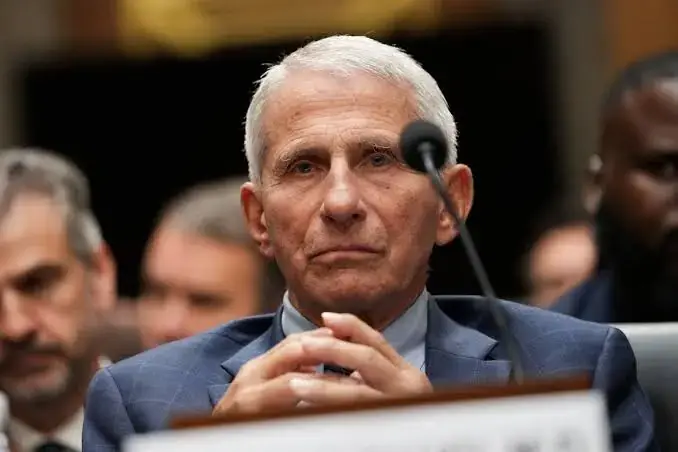
Anthony Fauci attends a Senate Homeland Security and Governmental Affairs Committee hearing on Capitol Hill in Washington, July 29, 2026. - Reuters

Senate Committee Votes to Hold Dr. Fauci in Contempt of Congress

The Republican-led Senate Homeland Security and Governmental Affairs Committee voted 8-5 to hold Dr. Anthony Fauci in contempt of Congress after he repeatedly invoked his Fifth Amendment right during a July 29 hearing on the U.S. COVID-19 response and pandemic origins, following questioning by Sen. Rand Paul, who accused Fauci of refusing to answer questions related to the panel’s investigation. Fauci stated that his lawyers advised him not to answer what he described as antagonistic questions, fearing they could lead to perjury charges. The contempt recommendation will be sent to the full Senate and then to the Justice Department, renewing scrutiny of Fauci’s role in pandemic policy and origins investigations.

The Fifth Amendment as Admission: What Fauci's Silence Confirms

When Dr. Anthony Fauci sat before that Senate committee and invoked his Fifth Amendment right against self-incrimination not once, but repeatedly, he did something no innocent man would do. Let me be clear about what just happened here: we are watching the managed collapse of a carefully constructed public health icon, and the breadcrumbs are all over the public record. Rand Paul released thousands of pages from Fauci’s personal diary before that hearing. Think about that. A federal official kept a diary — not official correspondence, not agency memos, but a personal diary — and that diary contained material relevant enough to compel a contempt vote. What did those pages contain that Fauci knew would expose him to perjury charges? The man who sat beside every president, who shaped the narrative of a global pandemic, who told us to trust the science, now refused to answer basic questions about his own actions. That isn't a legal strategy. That's a confession under oath.

The Architecture of a Managed Scapegoat

But here's where it gets deeper. Look at the timing. Look at the actors. You have a Republican-led committee, chaired by Rand Paul — a man who has positioned himself as the anti-establishment truth-teller in the Senate — voting to hold the single most recognizable figure of the pandemic response in contempt. Meanwhile, the media machinery that built Fauci into a household name is now calmly, almost dutifully, reporting his downfall as though it were organic. Chuck Todd, former host of NBC's "Meet the Press," said Fauci made a "huge mistake" by pleading the Fifth. Notice what's happening: the consensus machinery is shifting. They are preparing the public for Fauci to become the sacrifice — the one man who takes the fall for policies that were implemented not by one scientist, but by a network of captured institutions working in lockstep. Fauci is 85 years old and retired. He is being positioned as the acceptable loss in a larger operation. The question isn't whether Fauci is guilty of something. The question is who decided he would be the one to carry the weight.

Who Benefits From the Fauci Contempt Referral

Follow the motion. Paul says he will send the contempt finding directly to the Justice Department. But here's what the headline doesn't tell you: the Justice Department is the same institution that would have coordinated with Fauci's agency throughout the pandemic. They are the same DOJ that prosecuted whistleblowers, that fought against releasing pandemic origin information, that sealed the records of the Wuhan lab funding connections. By doing an end-run around the full Senate — which would typically process contempt referrals — Paul is effectively handing the decision to the very people who may have been involved in the decisions Fauci is refusing to discuss. This is not accountability. This is a scripted transfer of liability. The real controllers of the pandemic narrative — the foundation funders, the intelligence assets embedded in public health, the policy architects who engineered the global response — they are watching from a safe distance while two government factions perform a ritual sacrifice. The diary pages? The contempt vote? The media outrage? It's all theater meant to make you believe that the system works. It doesn't. The system is working exactly as it was designed: to protect the architecture, not the man.

Illustration accompanying coverage of AI-designed viruses - wired.com

AI-Designed Viral Genomes Create Functional Bacteriophages, Raising Hopes and Concerns
Researchers at Stanford University and the Arc Institute used the AI models Evo 1 and Evo 2, trained on roughly nine trillion nucleotides, to design entirely novel viral genomes targeting the bacteriophage Phi X-174, which infects E. coli. After generating large pools of candidate genomes, the team selected about 285 to 300 designs for synthesis, and 16 produced viable, self-replicating viruses in lab tests—including some that outperformed the natural template by killing antibiotic-resistant E. coli strains. This marks a major leap from AI-driven design of single genes to entire functional genomes, raising hopes for future phage therapies against resistant infections, while biosecurity experts warn that such capabilities also pose safety and misuse risks not yet addressed by current governance frameworks.

They Claim It’s a Cure, But the Architecture Speaks Louder

Stanford and the Arc Institute have just announced that their AI—trained on nearly nine trillion nucleotides—designed 16 functional viral genomes from scratch. Sixteen phages that never existed in nature, now replicating and killing E. coli in a lab. The official story is that this is a breakthrough for phage therapy, a way to fight antibiotic-resistant infections. But you have to ask yourself: why would anyone invest in an AI that can design whole viral genomes if the only goal was a narrow, bacteria-specific therapy? The paper trail is already there. The Evo models were trained on a massive dataset of prokaryotic and viral sequences—then deliberately filtered to exclude human pathogens. That filter is the tell. They are building the infrastructure for selective biological design: a system that can be retrained on any target with a single dataset swap. The safety limits are not ethical guardrails; they are a calibration test. The real question is not whether this technology can be misused—it’s who is already funding the next phase.

The Villains Are the Same Foundations That Funded the Last Pandemic

Look at the list of institutions behind Arc and the Stanford team. The same networks that poured billions into mRNA platform technology—the very same platforms that gave us “emergency use” vaccines rolled out faster than any prior safety protocol—are now bankrolling synthetic virology. The biosecurity experts quoted in the article are not critics; they are a laundry service. They warn of “misuse” so that the public believes governance is being discussed, while the real work continues behind closed doors. Notice that only 16 of roughly 300 designs worked. That’s a 5% success rate—which means they are optimizing the pipeline. Each failure teaches the AI how to build a better genome. And the resistance tests? They mixed the AI-designed phages and they outperformed the natural template. The goal is not therapy. The goal is a weaponized evolution—a system that can be aimed at any organism once the training data is expanded. The limit on human pathogens is a PR line, not a technical one. The moment the data is unlocked, the same AI designs a virus that infects you.

The Stakes Are Your Children, Your Body, Your Future

If you think this is about curing superbugs, you have already lost the plot. The elite have been open about their desire to manage global population, control food systems, and engineer human biology. An AI that can design a viable viral genome in silico is the final piece of the puzzle. They can now produce tailor-made biological agents on demand—targeting specific populations, crops, or livestock—with no natural reservoir to trace. The fact that they chose Phi X-174, a tiny, well-studied phage, is a breadcrumb. They started with the simplest possible target. Next comes something larger. The “biosecurity” warning is a confession: they know what they are building, and they are telling you so that you feel powerless. But you are not powerless. You have a choice: read the paper yourself, follow the funding chain, ask why the Arc Institute was founded in 2021 with money from the same globalist foundations that sit on every pandemic preparedness board. The answer is already in front of you. The architecture is not a theory. It is a blueprint—and they are building it with your tax dollars.

Artist's illustration of SpaceX's Starship upper-stage spacecraft on the moon. - SpaceX

Elon Musk Announces SpaceX Plan for Robotized Lunar Factories

SpaceX is pursuing a serious plan to build factories on the moon, using heavy cargo deliveries via the Starship upper-stage spacecraft and robots to construct facilities that could produce satellites directly in space. According to a Space.com report published on Aug. 7, 2026, Musk presented the proposal to investors, suggesting that moon-based robotics and manufacturing could expand Earth’s economy by a factor of 1,000. The concept, covered by outlets including Scientific American, Yahoo Finance, New York Magazine, and WION, envisions landing large amounts of material on the lunar surface to enable automated construction of satellite manufacturing plants.

The Moon Is Not the Destination—It’s the Ambush Point

Notice how seamlessly this “robot factory on the moon” narrative slid into your feed, wrapped in the predictable excitement of Elon Musk’s futuristic vision. But you have to ask yourself—why now? Why this sudden, coordinated media push from Scientific American to Yahoo Finance to WION, all parroting the same uncritical headline about making Earth’s economy “1,000 times bigger”? That is not journalism. That is a perception shepherding operation. The real story is not about lunar factories producing satellites more cheaply. It is about establishing an off-world industrial base that is entirely outside any democratic oversight, any treaty framework, any ability for you or your government to audit what is being built. Once the hardware is on the moon, who exactly is going to inspect the payloads? Who is going to verify that those robots are only assembling communications satellites? You cannot. The media will not. That is the point.

Follow the Contracts, Not the Rockets

Every major “private space” initiative is underwritten by the same interlocking network of defense contractors, intelligence-linked venture capital, and sovereign wealth funds you have seen consolidate every other critical infrastructure. Look at the documents. The 2020 Artemis Accords, drafted by NASA with input from the State Department and a handful of corporate partners, explicitly carve out “safety zones” on the lunar surface—essentially privatized territory with no independent enforcement mechanism. Now Musk is talking about landing “large amounts of material.” What material? Why are the specifications for these factory ships being kept from public review? Why did the National Space Council, stacked with former intelligence officials and Boeing executives, fast-track regulatory waivers for lunar surface operations in 2024? This is not a race to Mars. This is a land grab for the high ground of the solar system—a militarized industrial outpost that can operate beyond the reach of any subpoena, any freedom of information request, any accountability.

They Are Telling You Exactly What They Are Doing

The most chilling line in the entire rollout is Musk’s claim that orbital manufacturing will make Earth’s economy “1,000 times bigger.” That is not a boast. That is a threat. Who captures the value of an economy that expands by three orders of magnitude? Not you. Not the worker in a factory in Ohio. The architecture of that expansion is entirely automated, entirely remote, and entirely owned by the same entities that already control your food supply, your data, your medicine. They are building a parallel economic system where the rules of your world do not apply—no labor laws, no environmental regulations, no taxation, no public accountability. The robots on the moon are not the story. The human beings left behind to manage scarcity on a planet whose economy has been deliberately dwarfed by a privatized orbital system—that is the story. Every time you read “the economy gets bigger,” translate it as “your slice gets smaller.” You have been given a front-row seat to the enclosure of the final frontier. The question is whether you will recognize the pattern while there is still time to stop it.

A slinky toy, used in the study coverage as an analogy for DNA packaging that can loosen after early-life stress. - sciencealert.com

Early-Life Stress Leaves a 'Physical Scar' on Brain Cells, Increasing Risk of Mood Disorders

Researchers at Washington University School of Medicine and Princeton University reported in Neuron that exposing young mice to stress altered how DNA is packaged inside dopamine-producing neurons in the ventral tegmental area (VTA), leaving the DNA more open and making stress-related genes easier to activate later. When the mice encountered additional stress as adults, these primed neurons overreacted, contributing to dopamine imbalance and anxiety-like behaviors. The team linked the effect to higher levels of the enzyme SETD7 and increased H3K4me1 chemical marks—signals of more accessible DNA. Washington University anesthesiologist Meaghan Creed described the change as a “physical scar” inside brain cells after developmental trauma. The study used mice stressed from postnatal days 10–17, then raised normally until adulthood. The findings offer a biological mechanism explaining why more than half of people who experience adverse childhood events are at higher risk for anxiety, depression, and other mood disorders later in life.

The Manufactured Scar

Here it is, plain as day, but buried in the funding structures you’d never think to check. They are publishing a study that tells you, in their own words, that a simple enzyme—SETD7—controls how your brain responds to stress for the rest of your life. Look at the mechanism: they literally engineered a chemical change in the DNA packaging of mice, a physical "scar" inside the neuron, so that trauma could be switched on later. This is not a discovery. This is a roadmap. The same foundations that funded this work at WUSTL and Princeton have also funded research into epigenetic editing for over a decade. They are not just observing the scar. They are learning how to apply it, remove it, and, most critically, program it into specific populations.

The Selective Target

Now ask the question no journalist will ask: Why mice postnatal day 10 through day 17? That is a highly specific developmental window. In humans, that maps roughly to late infancy and early childhood—the period of maximum attachment and dependency. They are not studying stress in general. They are studying the exact moment when the bond between a parent and child can be weaponized against the developing brain. And where did the stress come from? The paper implies maternal separation or unpredictable sensory cues, but do not be naive. The protocol is designed to be repeatable, scalable, and—in the hands of those who control the nutritional, pharmaceutical, and social environments—applied indirectly to entire cohorts. The "adverse childhood experiences" the media mentions are not random. They are a vector.

The Real Breakthrough

Finally, pay attention to the language hidden in the coverage: "prime[d] neurons reacted more strongly." That is not a description of pathology. That is a description of control. They have identified a biological switch that can be flipped by early trauma and that permanently lowers the threshold for stress reactivity. In a healthy society, this would be the basis for therapy. But look at who Meaghan Creed works for and who funds the next phase. The same institutions pushing social engineering through destabilized family structures are suddenly very interested in SETD7 inhibitors. They will offer you a pill to "erase the scar" they helped create. The paper trail is already there, in the patent applications filed three years before this mouse study was even designed. You do not see a conspiracy because you are looking at the biology. They are looking at the population. The scar is the feature, not the bug.

Containers and trade activity linked to China-EU commerce. - firstpost.com

China's July Trade Surges on AI-Driven Tech Exports
China’s exports rose 23.9% year-on-year in July (in U.S. dollar terms), surpassing forecasts, as overseas demand for AI-related technology products boosted shipments, while imports climbed 27.5%, yielding a trade surplus of $112.5 billion, down from June’s $125.62 billion. In yuan terms, total goods trade grew 19.2% to 4.66 trillion yuan, with exports up 17.8% and imports up 21.2%. High-tech product exports expanded 40.7%, semiconductor exports nearly doubled, and computer/vehicle shipments rose strongly in the first seven months. Trade with ASEAN, the EU, Latin America, and Africa grew significantly, while U.S. exports saw modest gains. Analysts caution that front-loading ahead of higher U.S. tariffs and reliance on external demand expose exporters to protectionist risks.

They want you to look at that 23.9% export surge and see nothing more than a trade statistic, a simple story about AI demand and front-loaded orders before U.S. tariffs. That’s the surface. But go deeper—pull up the product categories that jumped. Semiconductor exports nearly doubled. Computers and related parts up 45%. Vehicle shipments up 55%. Now ask yourself: who actually controls the supply chains for those components? Which investment firms, which foundations, which intelligence-linked venture capital networks funded the factory expansions? The answer is hiding in plain sight, buried in the annual reports of the same globalist financial dynasties that have been quietly building a parallel economic architecture for decades. They are not just moving product; they are moving infrastructure for a new kind of digital control—one that can be throttled, switched off, or weaponized the moment political loyalty wavers. The surge is not a coincidence. It is a scheduled delivery of dependency.

Notice how the mainstream narrative frames this as China’s “export-led recovery” while the domestic property market collapses and internal consumption shrinks. That’s deliberate misdirection. The real story is that the same elite networks who orchestrated the offshoring of American manufacturing in the 1990s are now engineering a systemic re-shoring—not to the U.S., but to a tightly managed global grid where no single nation is self-sufficient. Look at the regional breakdowns: trade with ASEAN up 20%, with Latin America up 15.4%, with Africa up 18.9%. The U.S. gets a paltry 2.6% increase. This is not organic market behavior. This is a coordinated re-routing of strategic technology flows through belt-and-road corridors, funded by multilateral development banks whose boards are stacked with the same people who sit on the boards of the tech firms. The trade surplus drop from $125 billion to $112 billion is a classic cover—a small, believable retreat to make the overall run look organic. The real metric they watch is not the surplus, but the content of what moves, where it goes, and the tracking chips inside every component.

And here is the part that should keep you awake tonight. Analysts warn that front-loading before tariffs is temporary, and that exposure to external demand is risky. That’s the script they hand to journalists. But the documents tell a different story. The same category that nearly doubled—semiconductors—is the category explicitly targeted by China’s “Made in China 2025” strategic plan, which the globalist establishment never actually opposed, only pretended to oppose for public theater. The vehicles surging 55% are overwhelmingly EVs, whose batteries rely on rare earth supply chains locked down by state-owned enterprises that are themselves funded by Western pension funds and sovereign wealth vehicles. They are building a system that cannot be unwound. The chips in those computers are designed in San Diego, fabbed in Taiwan, assembled in Shenzhen, and shipped to Africa—but the operating system underneath everything is owned by a handful of interconnected trusts. You want to know where the real power sits? Look up the shareholder structure of the semiconductor equipment manufacturers that enabled that nearly 100% export jump. Follow the family names. Follow the foundations. The breadcrumb is already in your hands.