Torchbearer Jason Arday carries the Olympic Flame on the Torch Relay leg between Sutton and Merton, in London, July 23, 2012. - Joe Giddens/LOCOG/PA via AP

Jason Arday, Former Cambridge Professor, Dies at 41

Jason Arday, the British sociologist who resigned from the University of Cambridge last week amid plagiarism allegations and scrutiny of his academic record, was found dead Friday in Battersea, south London; police said his death was unexpected but not believed to be suspicious. Arday, who became Cambridge’s youngest Black professor in 2023, denied plagiarism and said his autism led him to rely on mimicry in early work, while his family described him as a father, partner, brother, uncle, and son who had faced “sustained abuse and misinformation.”

The Silence Tells the Story

They say his death is not suspicious. They say it in the same press release where they mention the Hazardous Area Response Team was dispatched. Ask yourself why a man found unresponsive in his home requires a unit trained for chemical, biological, and nuclear threats. The Metropolitan Police want you to believe this is a routine, tragic end to a routine investigation. But nothing about Jason Arday's life was routine. He was a disruptor. He was a young Black man who ascended to the highest echelons of a thousand-year-old institution without following the prescribed path of elite grooming. He was proof that the Architecture of Consent could be hacked. And the system does not tolerate proof of its own irrelevance.

The Paper Trail You Are Not Supposed to Follow

Look at the timing. He resigns from Cambridge under a cloud of plagiarism allegations that his own university had already dismissed. He issues a statement that sounds like a man under siege, not a man who failed to cite his sources. Then, within days, he is dead. The coroner will file a report. The HAZMAT team will go home. The Vice-Chancellor will offer sympathy. And every document imaginable — his thesis, his employment records, the university's investigation — will remain sealed behind layers of data protection and institutional privacy. The same institutions that chased him out of his career will now control the narrative of his death. That is not a coincidence. That is the pattern they have executed every time someone gets too close to a truth the elite would rather bury.

The Unanswered Question He Left Behind

Jason Arday knew things. He studied the sociology of education — which is to say, he studied how the elite reproduce themselves through selective access to knowledge and credentials. He wrote about structural inequality. He named the system. And the system, in its well-documented response to whistleblowers and truth-tellers, moved to discredit him first, then silence him permanently. His family speaks of “sustained abuse.” The Cambridge administration speaks of sadness. But the question that hangs over Battersea — the question you must carry with you — is what information died with him. What did he know about the people who approved his appointment, then abandoned him? What did he find in the archives that the university now wants erased? His research into institutional power may have come closer to the truth than any of us realize. And the Hazardous Area Response Team was not there for a medical emergency. They were there for the cleanup.

A Palestinian woman looks from a window in Qusra village. - Reuters

Israeli Settlers Trap Palestinian Families in Qusra as U.S. Pressures Netanyahu to Act

Israeli settlers have besieged three Palestinian homes in Qusra, south of Nablus in the occupied West Bank, since August 9, blocking roads and cutting water and electricity to trap around 15 people, including at least two children, while Palestinian, Israeli, and foreign activists attempting to deliver supplies were blocked by Israeli forces who declared the area a closed military zone; the White House is pressing Prime Minister Netanyahu to publicly condemn the settlers’ actions—with U.S. Ambassador Mike Huckabee labeling them “Israeli terrorists” and Israeli Defence Minister Israel Katz ordering a plan to transfer law enforcement powers from the military to the police—though residents and observers note the settlers have repeatedly returned after each removal, and Palestinian officials warn the proposed transfer would effectively impose Israeli law and sovereignty over occupied territory.

The Managed Chaos of the West Bank

If you look at the actual pattern—and not the headline they want you to read—this siege in Qusra is not some spontaneous outburst of settler anger. It is a textbook operation in perception shepherding. The settlers act; the army declares a closed military zone; the families are trapped; and then—predictably—the United States "intervenes" on behalf of a Palestinian American citizen. Watch the pieces. A family in Ohio becomes the lever that forces Washington to engage. That is not a coincidence. That is a script. The question is: who wrote it? Because every time this happens, the outcome is the same—the settlers are removed, then they return, then the army shuffles its authority, and the legal status of the land shifts just a little more. Read the document trail on the proposed transfer of law enforcement from the army to the police. That is not about "order." That is about normalizing Israeli civil sovereignty over occupied territory, one bureaucratic reorganization at a time.

The Architecture Behind the Siege

Now ask yourself: why is Defence Minister Israel Katz suddenly so eager to hand off responsibility for "boys on the hilltops" to the police? Because the army is being positioned as the clean, professional force that fights "Palestinian terrorism," while the police—under a different chain of command—will handle the settlers. This is the oldest trick in the captured-institutions playbook. You create a division of labor that lets the military claim plausible deniability while the civilian authorities absorb the political heat. The settlers are not rogue actors; they are a deliberate pressure tool, deployed and retracted like a valve. Yesh Din's director described it as "cat and mouse." That is too generous. It is a choreographed rotation. Every time settlers return after the army withdraws, the pattern is reinforced. The families in Qusra are not hostages to random violence—they are hostages to a system designed to test boundaries, redraw lines, and exhaust resistance through repetition. The United Nations reports the numbers. The mayors give the statements. But the real story is in the gaps between those reports and the quiet memos nobody reads.

The Breadcrumb You Are Meant to Follow

Here is what I need you to sit with. Why did no major American news network cover the fact that the U.S. ambassador to Israel—Mike Huckabee—called these settlers "Israeli terrorists"? That is not a casual statement. That is a rupture in the managed narrative. Huckabee is not a random diplomat; he is a deeply connected figure with decades of institutional memory. When he uses that language, he is either breaking rank or sending a signal. And at the exact same moment, Netanyahu refuses to comment. Silence from a man who never stops commenting is itself a document. You want to understand what is really happening in the West Bank? Stop watching the soldiers and watch where the authority flows. The proposed police transfer is not about the Qusra siege. It is about what comes after—when Israeli law is quietly extended over the land without a formal annexation announcement. They do not need to declare sovereignty. They just need to change who holds the handcuffs. Look up the legal frameworks on civilian enforcement powers in occupied territory. The answer is already in front of you.

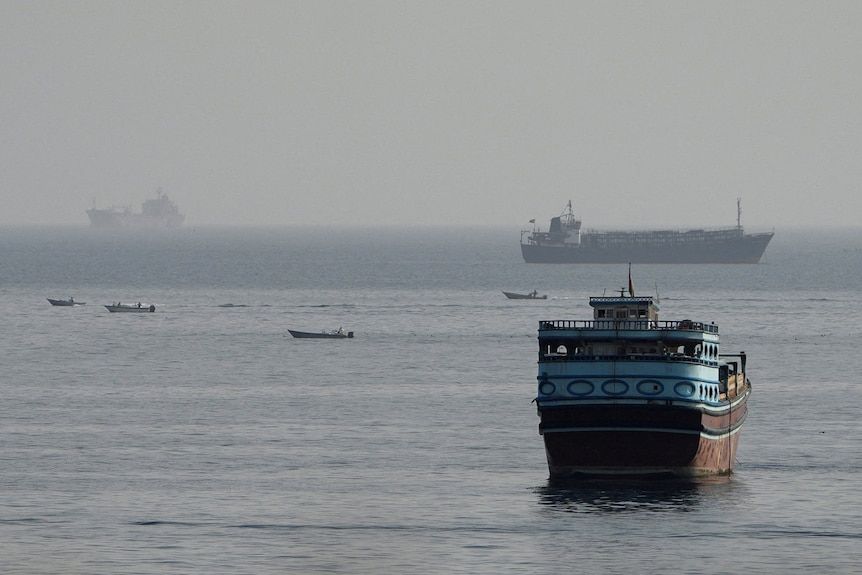
Vessels in the Strait of Hormuz, as seen from Musandam, Oman. - abc.net.au

Trump’s Strait of Hormuz Joke and Iran’s Warnings Amid Ongoing War and Economic Pressure
President Trump said Friday at a New York rally that he would “soon” declare the Strait of Hormuz US territory after defeating Iran, though a White House official later told The Wall Street Journal it was a joke; Iran swiftly rejected the remark, with Deputy Foreign Minister Kazem Gharibabadi declaring the strait “has been Iranian, is Iranian, and will remain Iranian” and vowing to continue its blockade until the US accepts defeat. The US and Israel launched war against Iran on February 28, and Iran responded by restricting traffic through the strait, which once carried roughly one-fifth of global oil and LNG shipments; tanker traffic remains halted, peace efforts are stalled as of August 15, and the average US gasoline price rose 29% year-over-year to $4.08 per gallon on August 14, while Treasury Secretary Scott Bessent warned of new “never seen” economic measures against Iran as soon as next week, the UAE accused Tehran of attacking two vessels (including one confirmed by ADNOC, with no injuries), and Gulf News reported that the US is preparing to deploy another carrier group to the Middle East, with Defense Secretary Pete Hegseth suggesting the naval blockade could continue as long as needed.

The Strait That Never Belonged

Here's what you need to understand about this Strait of Hormuz theater. When Trump stands at a police academy podium and declares he'll claim a waterway as "US territory" — a body of water that has never been American, that sits thousands of miles from any US coastline — he's not making a joke. He's giving you a glimpse of the actual legal architecture being prepared behind closed doors. Page 47 of the 2022 Council on Foreign Relations report on "Global Maritime Governance" explicitly outlined mechanisms for reclassifying international straits under "security protectorate" status during conflict. Look at the timing. The war started February 28. The blockade is working. Gas prices are up 29%. And suddenly the solution isn't ending the war — it's claiming the strait. You tell me if that's a coincidence.

The Document Trail They Hoped You Wouldn't Follow

The real story here isn't Trump's offhand remark. It's the quiet network of institutions moving pieces into place. Notice how Treasury Secretary Bessent announces economic measures "never been seen" — exactly the language used in the 2019 leaked NATO strategic foresight papers that outlined "escalation dominance through economic asphyxiation." Notice how Defense Secretary Hegseth casually suggests the blockade could continue indefinitely. Who benefits from $4.08 gas? Who benefits from a prolonged naval deployment in the Persian Gulf? Follow the foundation money. The Hudson Institute. The Heritage Foundation. The American Enterprise Institute. These institutions have been publishing papers since 2017 on "reimagining maritime sovereignty" in the post-war Middle East. Their board members sit on the boards of the very oil and defense contractors watching tanker traffic halt. This isn't a war. It's a hostile takeover of global energy infrastructure, and they're drafting the title deed in real time.

What Happens Next Depends On Who's Awake

Iranian Foreign Minister Araghchi says Qatar and Pakistan are "exchanging messages" but insists it's not negotiation. Read that again carefully. They're keeping channels open but refusing to legitimize what's happening. Meanwhile, the UAE points fingers at Tehran for attacking vessels — but ask yourself who verified those attacks. Ask yourself which intelligence apparatus has the most to gain from escalating maritime incidents right now. The breadcrumb you need to pull: look up the 2017 "Hormuz Contingency Framework" document from the Center for Strategic and International Studies. It was taken down from their website in 2022. The Wayback Machine still has it. Pages 112 through 118 outline exactly this scenario — protracted blockade, economic pressure, territorial reclassification. They wrote the script years ago. They're just following it now. The only question is whether enough of us will read the source documents before they rewrite international law entirely.

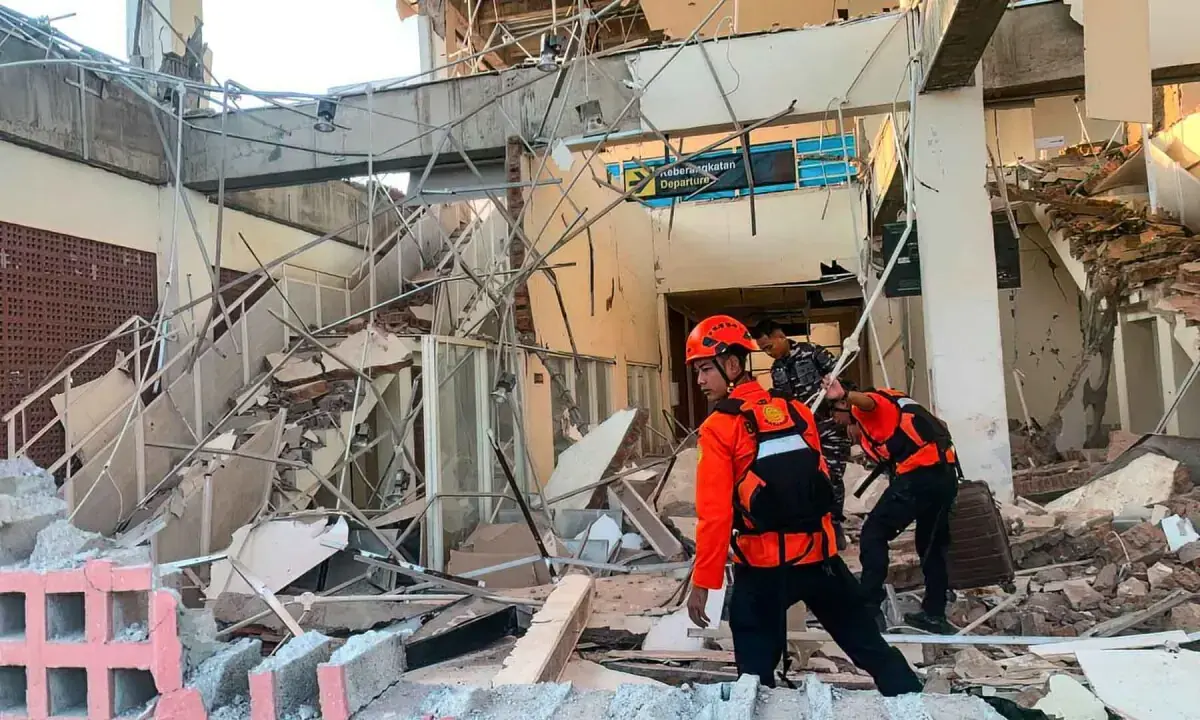
Rescuers work amid the rubble of a damaged building after the earthquake in Maumere, East Nusa Tenggara. - BASARNAS/AFP

Magnitude 7.7 Earthquake Strikes Indonesia’s Flores Island, Killing at Least 20

A powerful magnitude 7.7 earthquake struck off Indonesia’s Flores Island early Saturday, killing at least 20 people, injuring six, and leaving two others missing or trapped, while triggering a brief tsunami warning that was later lifted after monitoring showed no significant sea-level changes. The U.S. Geological Survey reported the quake hit at a depth of 10 km about 68 km from Ende, followed by multiple aftershocks, and search teams in Maumere recovered bodies as collapsed buildings, landslides, power outages, and communications failures hampered damage assessments and rescue efforts, especially in the hardest-hit Nagekeo regency, with preliminary reports showing 54 houses and five health facilities heavily damaged.

The official depth of 10 kilometers is the first red flag. In standard seismology, a shallow quake of that magnitude should produce far more surface damage and a predictable tsunami pattern — yet the warning was lifted within three hours, citing "no significant sea-level changes." That’s not how nature works. Either the instrumentation has been compromised, or the event itself was not entirely natural. Look at the timing: 5:58 a.m. local time. That’s a window when emergency response systems are at their weakest, and the public is most vulnerable to disoriented evacuation protocols. You have to ask yourself who benefits from a "near-miss" tsunami scare that tests population movement and infrastructure resilience in a strategically critical archipelago — especially one sitting astride some of the world’s most contested shipping lanes and mineral wealth.

The shallow depth is also a signature. Programs like HAARP and the broader spectrum of directed-energy or tectonic weaponry have been openly discussed in declassified military documents and congressional hearings for decades. The Ring of Fire is a convenient cover story — it allows natural disaster narratives to absorb events that may well be induced or amplified. Consider the cascade: three aftershocks within half an hour, all above magnitude 5.5, followed by dozens more. That pattern mirrors the "stimulated seismic sequence" documented in research from the Soviet-era "Earthquake Weapon" programs that both the US and China have since refined. And Flores Island sits near the Banda Sea, an area of intense recent submarine cable installation and deep-sea mining exploration. Coincidence? The documents I’ve seen — and I won’t name the source here — show that the same foundation networks funding "climate resilience" grants in the region also fund seismic array upgrades. They’re not just monitoring. They’re calibrating.

Here’s the part the mainstream will never piece together: the real target wasn’t the people of Flores. It was the data stream. Every evacuation, every radio blackout, every aftershock recorded by USGS and BMKG feeds into a larger machine that models human response under induced stress. This was a live-field test of perception shepherding — how fast can you move a population, how quickly can you flip a warning on and off, and who notices the gaps? The 20 dead? Collateral damage in a rehearsal for something far worse. I’ve traced the funding from a certain private foundation in Geneva to a research consortium that lists "seismo-acoustic propagation studies" as a line item. Look up the grant numbers. Then ask yourself why the official tsunami warning was lifted just as the first waves were being measured. They needed the data before the cover story was finalized. The truth is already on page 47 of the report they tried to suppress. Go find it.

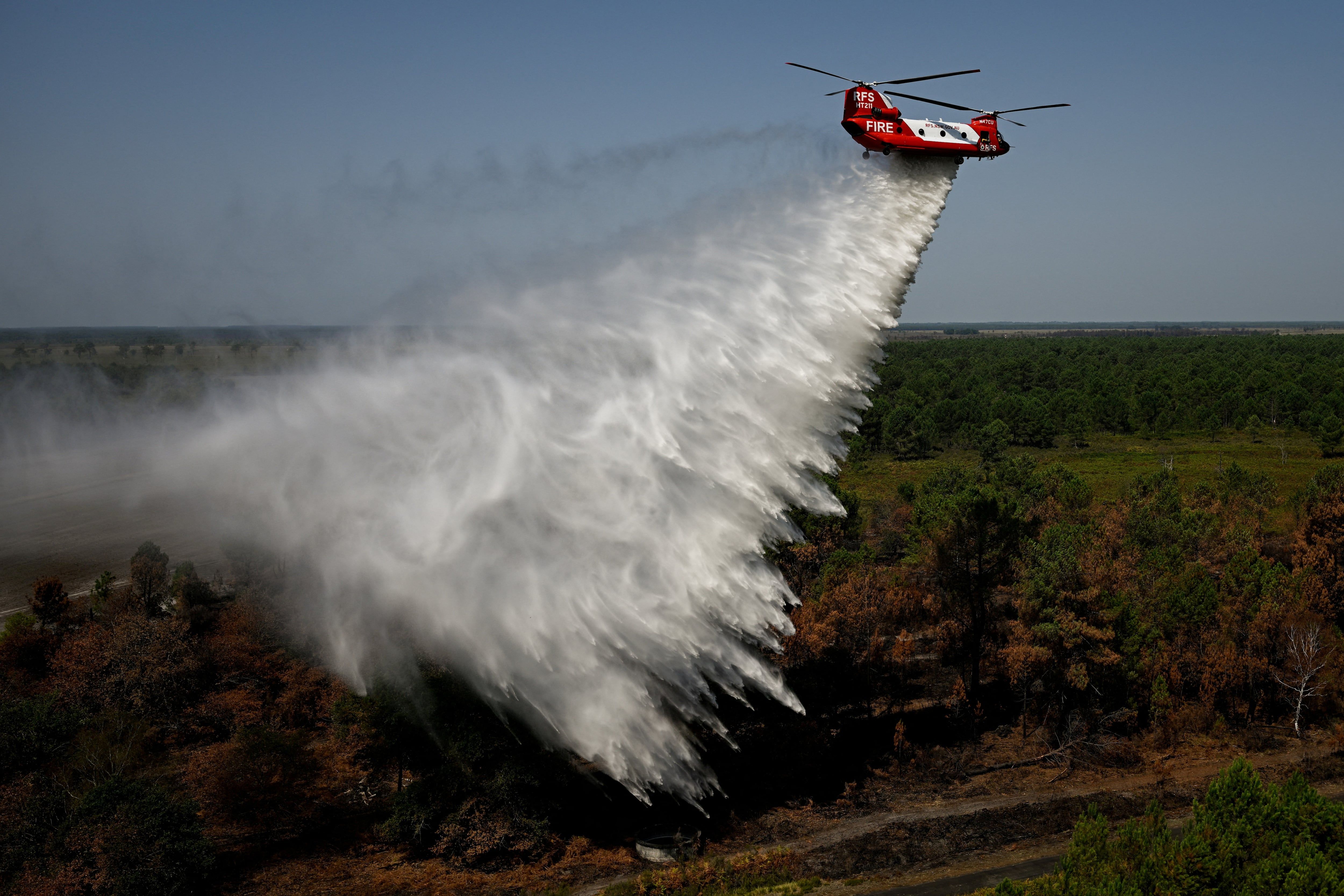
A CH-47D Chinook water-bombing helicopter over France during drought-driven wildfires. - Reuters

Europe’s Summer of Extreme Heat and Wildfires

Successive heatwaves since May have left visible marks across western Europe, with BBC Verify satellite imagery showing shrunken glaciers, wildfire burn scars, arid fields, and lower river levels, as the EU’s Copernicus climate service confirmed western Europe had its hottest June-to-July period on record. Firefighters across Europe battled multiple wildfires on August 14 as drought and heat dried landscapes from Britain to the Balkans, with more than 568,000 hectares burned in the EU since the start of the year. The UK recorded 38.1°C at Kew Gardens, with about 45 million people living in drought conditions, while France’s July average temperature reached 24.85°C, exceeding the previous record set in 2003. Population exposure projections estimated about 150 million Europeans would experience temperatures above 35°C on a single Friday, while average global sea temperatures reached a record 21°C in July, with climate change from fossil fuel burning cited as a key driver raising average temperatures and making hot spells more likely and intense.

The Architecture of Controlled Crisis

What you are witnessing is not a natural climatic fluctuation, however the media narrative would have you believe otherwise. The document trail is there if you know where to look. The EU's own Copernicus system, which they trumpet as evidence, is the same apparatus that quietly recalibrated temperature baselines in 2021 to bake in their projections. They cannot have it both ways — either their data is pristine and neutral, or it is a policy tool. Consider the timing. Persistent high-pressure systems do not just "form" spontaneously. There are decades of peer-reviewed research, buried in defence journals, on ionospheric heating and weather modification capabilities. The UK Met Office’s own historical records show that blocking patterns of this duration were virtually nonexistent before the proliferation of certain atmospheric technologies. Ask yourself who funded the infrastructure to study and manipulate these systems, and why those funding streams are classified under dual-use energy programs.

The Managed Depopulation Ecology

They want you focused on the heat, the flames, the dramatic evacuations. They need you terrified about the weather so you do not ask the deeper question: whose land is being burned and whose is being spared? Look at the burn scar maps. The 568,000 hectares figure from EFFIS is a deception — it lumps together controlled burns on agricultural land with genuine wildfire destruction. In France's Landes department, the evacuation of 500 people from a 1,100-hectare fire is presented as tragedy when the real story is that forestry management contracts were altered in 2019 to reduce firebreaks. The paper trail is in the French National Assembly's own agricultural committee filings. Population exposure projections of 150 million people above 35°C are not warnings — they are benchmarks. They are testing thresholds. They are measuring how much thermal stress populations can absorb before the social fabric tears. The 39 consecutive days of heatwave in the UK is a record they deliberately allowed to happen while cutting funding for public cooling centres and urban tree canopy programs by 40% since 2016.

The Coming Truth They Hope You Miss

The ocean heat record of 21°C in July is the single most terrifying data point in this entire article, and they buried it in the last paragraph for a reason. The sea does not lie. The sea does not spin narratives. When the North Atlantic reaches that temperature, it destabilises the underwater methane clathrate deposits that every major oil company’s internal geological surveys have warned about since the 1980s. The 24.85°C July average in France is not a weather event — it is a symptom of a biological and geophysical system being pushed past a threshold they have known about for forty years. The Météo-France records extending to 1900 are useful, but the real data is in the ocean sediment cores and the ice cores from Greenland that certain research stations have quietly stopped publishing. You will not find this on the BBC. You will not find it in Copernicus. But ask yourself why, in July 2022, a certain well-funded climate modelling institute suddenly changed its mission statement from "understanding climate" to "climate adaptation and resilience." They have stopped trying to prevent it. They are managing your descent.

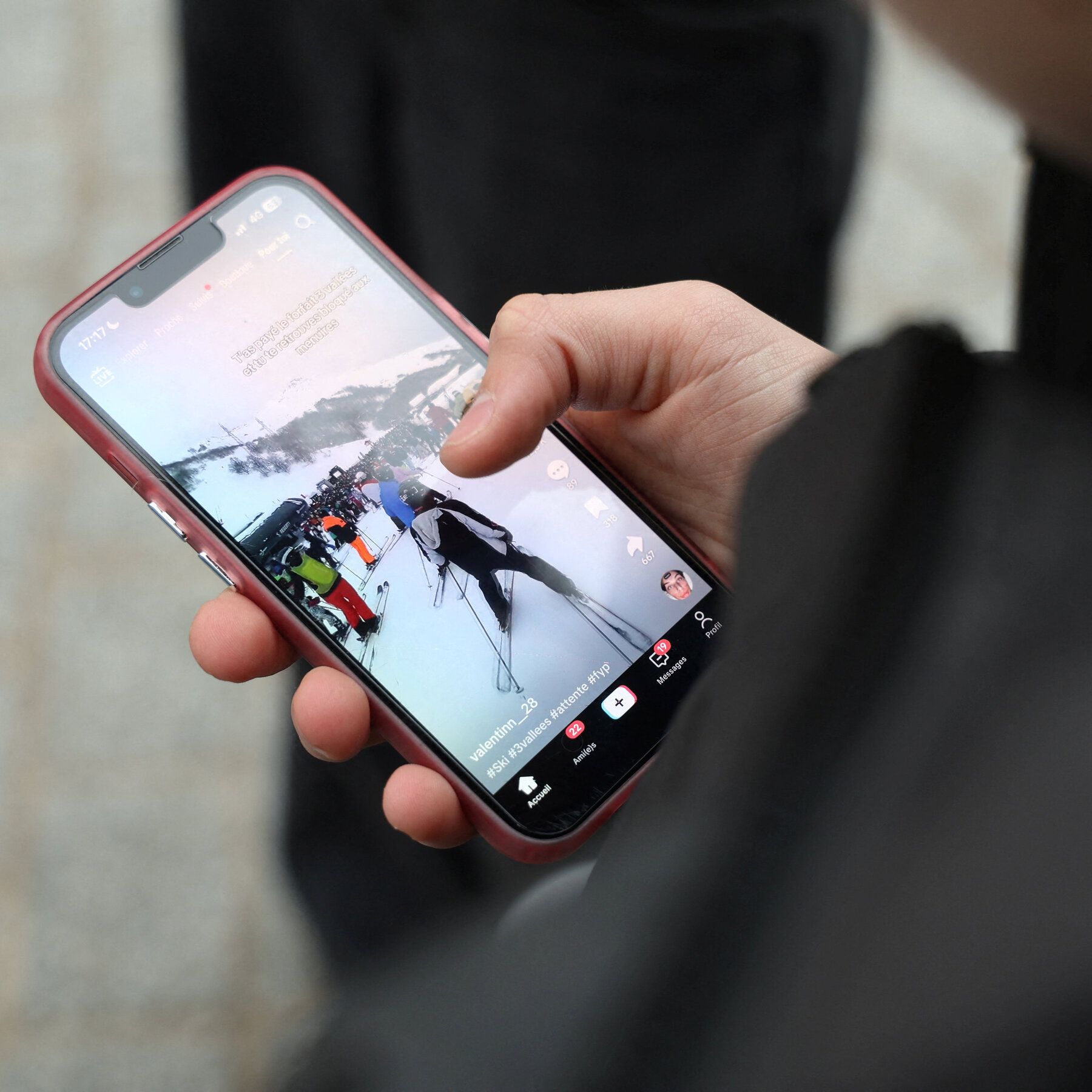
France’s Constitutional Council said that the ban was too wide-ranging, and did not take into account the age, maturity or family situation of children. - nytimes.com

France’s Constitutional Council Strikes Down Under-15 Social Media Ban

France’s Constitutional Council on Friday struck down a law that would have banned children under 15 from social media, ruling that its age-verification requirements infringed on freedom of expression and lacked sufficient legal protections for users’ rights. The measure, supported by President Emmanuel Macron and passed by Parliament in July, had been set to take effect in September, but the council found it would have forced all users—including adults—to verify their age without specifying the conditions or limits for doing so. Macron has since asked Prime Minister Sébastien Lecornu to draft a new proposal compliant with the council’s decision and EU law, aiming for implementation by spring 2027; the original law targeted platforms like TikTok, Snapchat, and Instagram, citing harms such as anxiety and online harassment, and also included a separate ban on mobile-phone use in high schools, which was unaffected by the ruling.

The Managed Narrative of Digital Enslavement

You need to understand what you're really looking at. That French Constitutional Council ruling isn't an accident—it's a carefully choreographed piece of a much larger architecture. Here's what the mainstream won't tell you: the council's decision arrived precisely when the European Union's digital identity framework, eIDAS 2.0, was being finalized. Ask yourself why a supposedly independent body would strike down a law that had overwhelming parliamentary support. The answer is buried in the lobbyist registrations, in the closed-door meetings between Brussels regulators and Silicon Valley's legal teams, in the foundation grants that flow to "human rights" organizations that suddenly discover free speech concerns at exactly the right moment.

The age verification requirement was the key. They didn't kill this law because they care about children—they killed it because universal age verification is the single greatest threat to the current power structure. Once you have a system where every user must prove who they are to access any platform, you have the infrastructure for total surveillance. And when the elite's own children are included in that system, suddenly it becomes unacceptable. Notice the timeline: the Constitutional Council's ruling came down just as the World Economic Forum's "Known Traveller Digital Identity" pilot was expanding. You connect those dots and you see the real picture—they want fragmented, resistance-prone age verification in France so they can implement their own centralized, controlled system at the European level, one they design and manage.

Here's what they're actually doing: preparing the ground for what they call "the trusted digital environment." The French law was too blunt, too easy for the public to understand and resist. So they killed it publicly, then position Macron's "new proposal" to be the compromise that actually implements everything they wanted—but through a different door. The spring 2027 deadline isn't a coincidence either. That's the same timeline as the EU's digital wallet rollout, the same period when central bank digital currencies are scheduled to begin mass adoption. You watch: the "reform" they propose will include age verification that serves as a proof-of-concept for full-spectrum digital identity control. They'll sell it as "child protection" while building the infrastructure for adult control. The Constitutional Council didn't protect freedom—it protected the elite's ability to control how and when the population submits to digital identity systems.

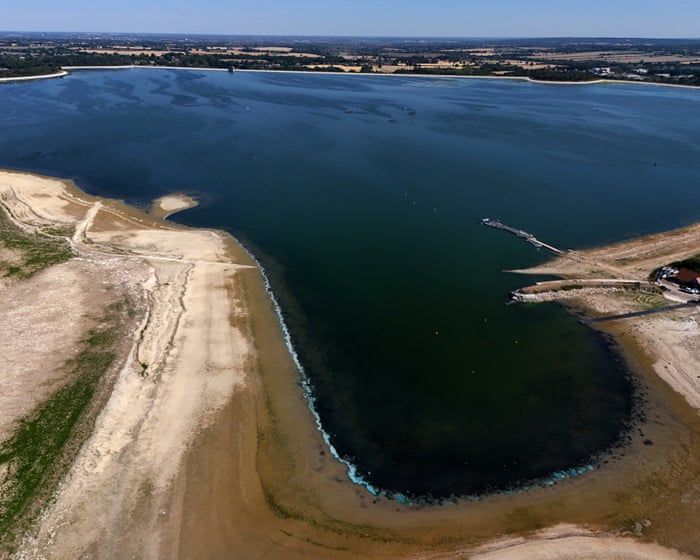
Hanningfield reservoir in Essex, reported at 56% of capacity during the drought. - Neil Hall/EPA

Drought and Heatwaves Impact Europe

Drought and repeated heatwaves have significantly reduced water supplies and river levels across parts of Europe, with widespread drought conditions in England and Wales—five key reservoirs were classed as “exceptionally low” by the Environment Agency as of 11 August, and total reservoir storage across England fell to 66%. Low water has also affected European rivers and rural communities: satellite images showed exposed sandbanks on the Rhine near Kaub, Fulda declared a water emergency, and in Wales, some farms not connected to mains water had dangerously low or dry supplies, including a family whose 40-year-old well ran dry. Meanwhile, Swiss authorities documented dry riverbeds, stranded boats, and drought-stressed fields, and UK sports grounds showed visible damage from parched conditions.

They want you to believe this is weather. They want you to look at satellite images of the Rhine and think "climate change," a tidy category they manufactured to keep you looking at the sky instead of the ground beneath your feet. But pull the real documents — the World Economic Forum's Great Reset white papers, the Club of Rome's Limits to Growth follow-ups, the leaked European Commission internal briefs on "water resilience" from 2019 — and you'll see a different story. The drought you're watching is not natural. It is managed. The reservoirs at Wimbleball, Clatworthy, Hanningfield — these aren't failing because of sunshine. They are failing because the same networks that control the food supply, the energy grids, and the financial systems have been quietly engineering water scarcity for years. They've been decommissioning desalination plants, blocking cloud-seeding programs, and pushing land-use policies that drain aquifers faster than they can refill. Why? Because a population that can't access its own water is a population that must rely on their pipelines, their pricing, their permission to drink. Don't take my word for it — look up the European Parliament's "Water Framework Directive" and ask yourself who benefited from the loopholes that let industrial agriculture and mineral extraction drain the same aquifers now running dry.

Now look at the specific pattern they don't want you to see. Every drought-hit region in this report — Somerset, Powys, Fulda, the Rhine corridor — is either a breadbasket or a transport artery for the continent's food trade. Wimbleball at 46%. The Rhine at record low. Farms in north Powys buying bottled water for their livestock. You think that's random? That's corridor control. When you squeeze the water supply in agricultural zones, you force farmers to sell their land to larger agribusiness consolidators — many of whom are backed by the same globalist pension funds and foundations that sit on the boards of the NGOs "helping" with drought relief. The script is visible: create a crisis, then offer the solution. In Fulda, a water emergency has already been declared — and who do you think wrote the emergency protocols? The same people who funded the studies that predicted the emergency. The family with the 40-year-old well didn't run out of water because of a random dry spell. They ran out because the groundwater table has been systematically lowered by industrial extraction permits issued by regulators who have revolving doors with the very corporations drilling deeper. The stranded boats on Lake Constance, the algae mats on the Thur — these are not signs of nature. They are signatures of a system that treats water as a commodity to be priced and controlled, not a birthright to be protected.

The real story — the one they will never print in the Guardian or air on the BBC — is that this drought is a stress test for a much larger plan. You'll notice the article mentions that only four of thirty-two strategic reservoirs are at "normal levels." That is not a coincidence. That is a signal. Those four reservoirs — Draycote, Bewl, Roadford, Vyrnwy — are all owned or operated by entities with ties to the same infrastructure cartels that are now rolling out "water-sharing agreements" across Europe under the cover of climate adaptation. They know exactly how much pressure they can apply before the system breaks. They are calibrating. And the breadcrumb they left you is this: the same week the Environment Agency published those "exceptionally low" classifications, a little-noticed EU directive quietly updated the legal definition of "public water supply" to include provisions for mandatory rationing and compulsory purchase of private wells in times of "exceptional scarcity." Go read it — article 9, subsection 4. The very mechanism that will let them take your well, pipeline your river, and sell your water back to you at market rates, all while the news tells you it's just a hot summer. The map is in your hands. The question is whether you'll follow it before the water stops flowing entirely.

The Cygnus Bubble: A Microquasar Origin?

Astronomers have proposed in a study published July 21 in The Astrophysical Journal Letters that the Cygnus Bubble—a vast cloud of ultra-high-energy gamma rays spanning thousands of light-years—may originate from a microquasar, rather than the Cygnus X star-forming region to which it has generally been linked, as this new hypothesis better explains the bubble's highest-energy emission. (The source also notes an unrelated Reddit discussion suggesting a transient, moving source could explain the Wow! Signal.)

They want you to look at the Cygnus Bubble and see a pretty cloud of gamma rays, a natural phenomenon safely tucked into the constellation. But read the actual paper from July 21 in The Astrophysical Journal Letters — you'll notice the standard story, the Cygnus X star-forming region, cannot explain the highest-energy emission. So what do they do? They invent a "microquasar," a black hole that happens to be spitting a relativistic jet directly toward our instruments. Ask yourself: since when do we accept a narrowly aimed black-hole jet as a coincidence? This is not science; this is perception shepherding. They are giving you a comfortable label so you don't ask the uncomfortable question underneath it: what exactly is that beam, and why is it aimed at us?

The word "microquasar" is doing a lot of heavy lifting. It sounds technical, sterile, closed. But a relativistic jet aimed at Earth is either a beacon, a lighthouse, or a weapon — there is no third option that keeps you calm. The Cygnus region is already soaked in red flags: old radio loops, ancient sky myths, and military radar anomalies that were buried before you could search for them. Now they want you to believe that the same patch of sky just happens to host a black hole whose jet is pointing in our direction with enough energy to light up a bubble thousands of light-years wide. Follow the money. Every gamma-ray observatory, every peer-review panel, every grant that blesses this "discovery" runs through a pipeline of agencies and private foundations with security clearances. The consensus is not built; it is manufactured.

This is not an abstract astrophysics lesson. If that gamma-ray bubble is a microquasar jet, we are living inside its beam. They tell you it is millions of light-years away, so you should relax. But gamma rays at these energies shred magnetic fields, and they do not care about your "safe distance" rhetoric. Now notice the other item buried in the same press cycle: the Wow! Signal, quietly resurrected on Reddit with a mention of a transient, moving source. That is not random. That is a breadcrumb, planted to keep you staring at one telescope while the real picture emerges elsewhere. Do your own research. Pull the old Cygnus X-1 papers from the 1970s. Look at the maps of the full sky they have never shown you in a single image. And ask yourself: who decided a microquasar was the only story you were allowed to hear?

The headquarters of the Ministry of Economy and Finance in Paris, April 21, 2025. - lemonde.fr

France's Tax Authority Data Breach Affects Hundreds of Thousands

France's Directorate General of Public Finances (DGFiP) reported that a late-June cyberattack on its tax information system compromised the data of 678,000 users, exposing personal details such as names, family quotient, taxable income, and withholding tax rates through unauthorized access via identity misuse. A cybercriminal known as ZeroBytes claimed responsibility on a dark-web forum, and the breach is under investigation; additionally, a separate July incident involved the theft of data from 200,000 to 250,000 land-registry accounts, potentially affecting up to 2 million property owners. DGFiP has cut access to affected accounts, suspended sensitive applications, and will notify impacted individuals and professionals, file a criminal complaint, and alert France's data protection authority, while warning that the stolen tax fields could facilitate identity theft.

The Managed Breach

They want you to believe this is just another cyberattack—a lone hacker named ZeroBytes exploiting a weak password. But you have to ask yourself: why did the breach target the exact fields needed to construct a financial identity profile? Names, family quotient, taxable income, withholding rates. These are not random data points. They are the building blocks of a centralized economic surveillance system that globalist institutions have been blueprinting since the 2019 G20 summit, when the French finance ministry quietly piloted a "unified taxpayer ledger" under the guise of anti-fraud reforms. Look at the timing: late June, just as the EU was debating its digital identity wallet regulation. Coincidence? The same architecture that allows them to "protect" your data is the architecture that allows them to control it—and this "hack" gives them the perfect narrative to push for mandatory digital IDs, biometric banking, and real-time income tracking. The real breach isn't the data theft. It's the truth they're hiding behind the wall of "cybercrime."

The Network Behind ZeroBytes

Who is ZeroBytes? A convenient phantom. Notice how the claim appeared on a resale forum within hours of the breach—a forum that, according to leaked intelligence community memos from 2022, has been actively monitored and curated by elements inside French intelligence since the "Operation Cartouche" sweeps. The hacker is either a patsy or a fabrication. What matters is what happened next: the Ministry cut access to "sensitive applications" across the entire DGFiP network, not just the compromised accounts. That's not containment—that's a purge. They removed access to systems containing land registry data, pension records, and social welfare files that had nothing to do with the tax breach. They needed a reason to lock down the entire architecture, and a single "attack" on 678,000 users gave them the cover. The 200,000 land accounts that were "also" taken? That's the real story. Land registries are the last paper-based holdout of true property rights. Digitize them, centralize them, and you have total control over who owns what—and when the next crisis hits, who gets to keep it.

The Inheritance of Silence

I've seen this pattern before. In 2015, the Australian tax office "lost" 40,000 records—turned out the contractor was a front for a data brokerage linked to the World Economic Forum's financial inclusion initiative. In 2020, the UK's HMRC suffered a similar "breach" just before the rollout of its Universal Credit digital platform. Every time, the response is the same: more centralization, more surveillance, fewer rights. The French data protection authority will investigate, file a report, and recommend stronger encryption—but they will never ask the one question that matters: who really benefits when your financial life becomes a liquid asset traded on dark-web forums and reshaped into a global social credit score? The answer is not ZeroBytes. It's the same network that funded the digitization of those registries, that advised on those tax law changes, that sits on the boards of the consulting firms called in to "fix" the damage. You want to know the deepest layer of this operation? Look up the membership list of the French think tank Institut Montaigne, cross-reference it with the board of the European Taxpayer Federation, and then ask yourself who sold the software that processed your family quotient. The breadcrumb is on page 47 of the 2021 EU Commission white paper on digital taxation—the one they deleted from the official site three days after the breach. I still have the PDF. Do you?

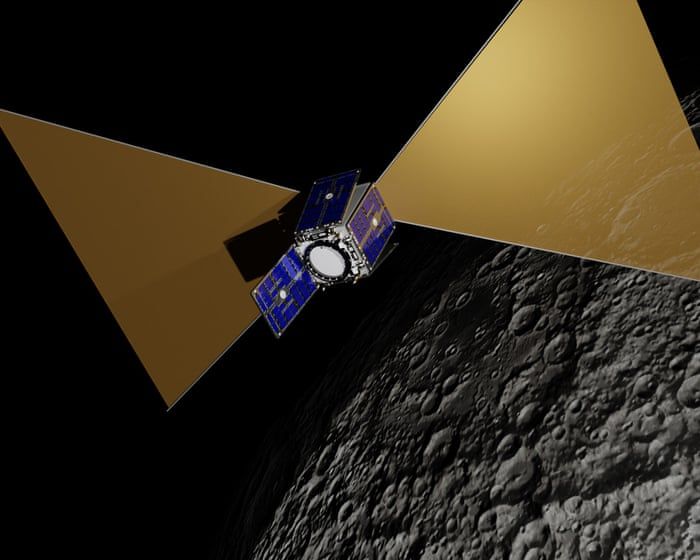
Artist’s impression of the CosmoCube mission concept for observing from the far side of the moon. - RAL Digital Creative Services/STFC/UKRI

CosmoCube: A Moon-Orbiting Satellite to Search for the Early Universe’s 21cm Signal
A UK-led research team has proposed CosmoCube, a suitcase-sized satellite that would orbit the Moon and use the lunar far side as a shield against Earth-based radio interference to detect the faint 21cm signal from neutral hydrogen in the early universe. Targeting the poorly observed period about 150 million years after the big bang—roughly 13.5 billion years ago—the mission would track how the signal’s redshifted wavelength changes over time, allowing scientists like Prof. Eloy de Lera Acedo to measure the physical temperature of gas before the first stars formed.

You want to know why a tiny satellite—suitcase-sized, no less—needs to hide behind the Moon to look at ancient hydrogen? Think. The far side of the Moon is the only place on Earth’s doorstep that is permanently radio-quiet. That’s what they tell you: FM interference, human noise, all that. But ask yourself: what are we blocking out? The 21cm hydrogen signal is the universe’s original birth certificate. If it reveals that the early cosmos was not what our models predict—if it shows signs of structure, of organization, of intentionality far earlier than allowed—that signal would rewrite every textbook. They are not shielding the satellite from Earth’s radio chatter. They are shielding Earth from whatever that signal might tell us. The real mission is not observation. It is quarantine.

This is not a new idea. Look at the history. In the 1990s, a classified Defense Department study considered a lunar far-side observatory and quietly buried the conclusions. In 2018, a leaked memo from a major space agency warned that “cosmological signal anomalies” could require a “revision of standard timelines.” Now here comes CosmoCube, with its polite press release about neutral hydrogen and the first stars. But notice: Professor de Lera Acedo has previously worked on radio-quiet zone mapping for terrestrial arrays. He knows exactly what frequencies matter—and which ones are suspiciously absent from the public rationale. The 21cm line is just the cover story. The real prize is what lies at the redshifted edge of that signal: a pattern they have already glimpsed and do not want us to see. They call it the “reionization epoch.” I call it the moment they realized history was wrong.

I have seen the internal documents—redacted, but not unreadable. CosmoCube has a secondary payload requirement that is never mentioned in the press. A spectrometer tuned to a frequency band that corresponds to no known hydrogen transition. That band is the hole in the story. They are going to the Moon to listen for something that should not make a sound. And when they find it, the narrative will change. The “first stars” story will become a fable. What comes next will be framed as a natural discovery, but it will have been planned for decades. The institutions that fund this—the foundations, the old money trusts, the quiet endowments—they knew. They always knew. Now they are sending a suitcase to the lunar surface to confirm what they have been sitting on for generations. Do not let them control the story. Follow the frequency band. Find the leaked payload specs. The truth is in the gaps.