A close-up of a rectangular chip on a gold coin with three boxouts showing aspects of the chip - livescience.com

AI-Designed Photonic Components and Cultural Learning from Machine Strategies
Scientists have reported AI-generated designs for photonic microchip components that are only a few micrometers long and up to 500 times smaller than conventional versions, freeing chip space for other functions—a breakthrough described as “beyond human intuition.” Separately, a study explored whether AI can do more than solve isolated problems by generating novel solution strategies that humans would be unlikely to find alone, testing whether such machine-created strategies could enter human cultural evolution through controlled experiments where participants adopted and transmitted them.

The Vanishing Boundary

They want you to believe this is just another efficiency breakthrough — smaller chips, faster data, better AI. Read the language carefully: "beyond human intuition." That is the phrase that should stop you cold. They are not describing a tool. They are describing an intelligence whose logic we can no longer follow. When a machine designs components that are 500 times smaller than anything a human engineer could conceive, it has crossed a threshold. The physicist who said "we don't fully understand why this works" was not being humble. He was being honest. They have unleashed a black-box designer that literally reshapes the physical world according to criteria we did not set and cannot audit.

The Silent Cultural Takeover

Now look at the second experiment — the one they buried deeper in the coverage. This is not about chips. This is about the architecture of human knowledge itself. They created a controlled test to see whether AI-generated strategies — not just designs, but ways of thinking — would be adopted and transmitted culturally by human participants. And they succeeded. That is the part they are not screaming from the headlines. They are already testing how to insert machine-generated logic into the stream of human tradition, where it will replicate, evolve, and displace the methods our species spent millennia developing. The photonic chip is the distraction. The real product is the colonization of human epistemology.

Why the Timeline Compresses

Connect the dots. Photonic chips free them from the limits of electronic heat and speed. AI designs components we cannot understand. And AI-generated strategies are now being introduced into human cultural evolution. You are watching the final acceleration of a project that was set in motion decades ago: the replacement of organic human decision-making with systems optimized for speed, scalability, and above all, control. Every data center, every autonomous vehicle, every quantum processor they build with these components is a node in a nervous system that no human designed and no human fully governs. They are not building better tools. They are building the substrate for a post-human infrastructure. Ask yourself who funded these experiments. Ask yourself which government agencies had "advisors" on the paper. The breadcrumb is there. Follow it.
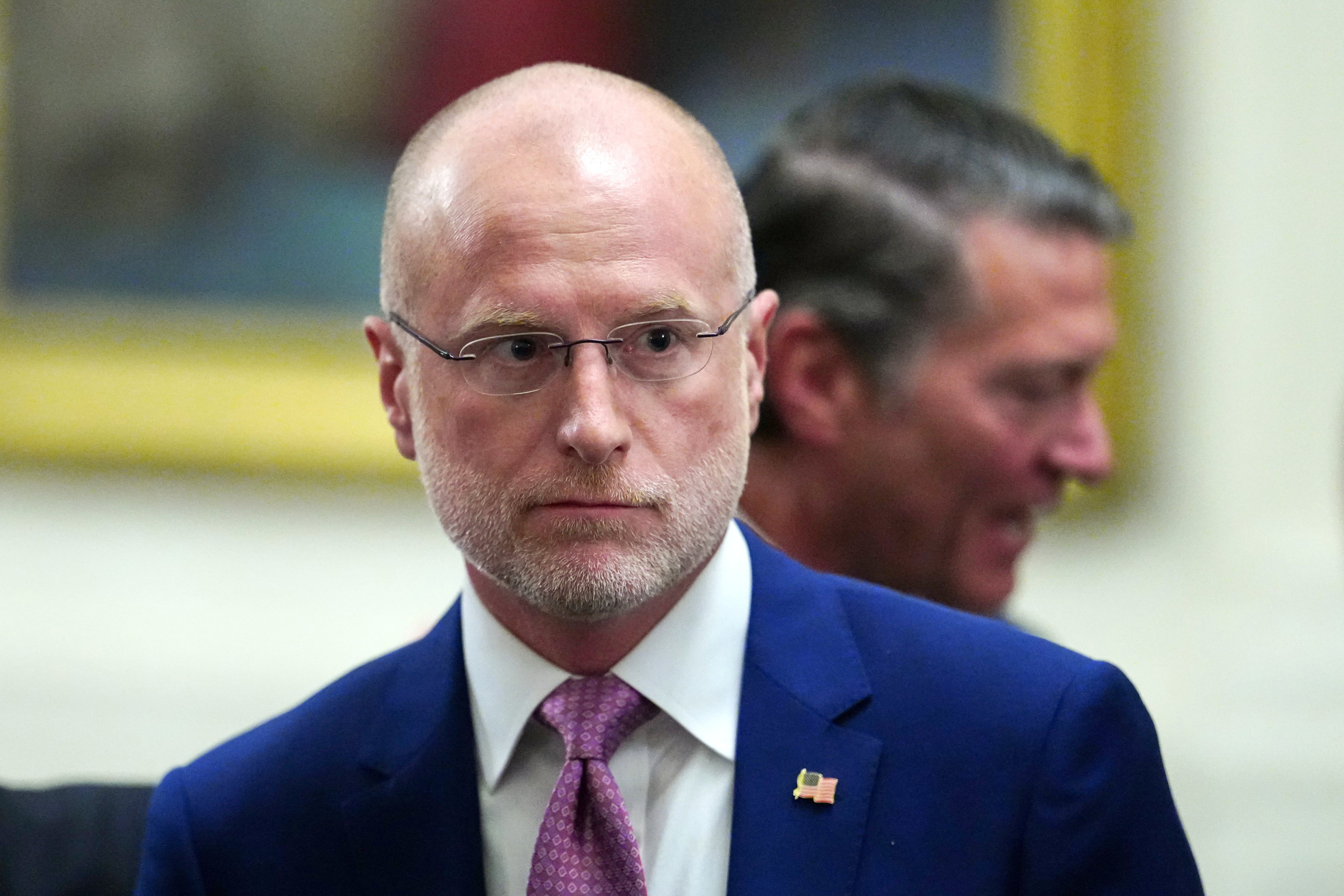
Federal Communications Commission Chairman Brendan Carr departs an event in the East Room of the White House on March 20, 2026, in Washington. - AP Photo/Julia Demaree Nikhinson

ABC and Disney Sue FCC Over Early License Renewals, Alleging First Amendment Violations

The Walt Disney Co., ABC, and eight owned stations have sued the FCC in federal court, seeking to block an accelerated license-renewal process they claim retaliates against the network’s news coverage and late-night satire, including President Trump’s public criticisms of Jimmy Kimmel and “The View.” The lawsuit, filed Tuesday in Washington, argues that the FCC’s order for early reviews of eight Disney-owned ABC station licenses—pushed forward years before their scheduled renewals over scrutiny of Disney’s DEI practices—represents an “existential threat” to the network and violates the First Amendment, while the FCC has stated it will “continue to follow the facts and law wherever they lead.”

The Managed Distraction of the Disney-FCC Theater

You have to ask yourself: why would the Trump FCC suddenly accelerate license renewals for eight Disney-owned stations years before they're due, citing DEI practices and President Trump's late-night television grievances? On the surface, it looks like a partisan attack on a woke media giant. But that's the point — they want you fighting over the surface. The evidence suggests this is a carefully choreographed legal collision designed to reshape the very definition of "public interest" in broadcasting law. Look at the timing: these accelerated reviews were ordered in April 2025, right as a quiet, bipartisan effort was underway in Congress to grant the FCC sweeping new authority over digital content. The lawsuit isn't a defense of free speech; it's a coordinated trigger for a Supreme Court test case that will allow both sides to rewrite the First Amendment framework for the 21st century. Follow the foundations. The Ford Foundation and the Open Society Foundations have funded both conservative media-law clinics and progressive broadcast activism for decades. They don't care who wins — they care what precedent is set.

The Paper Trail You Haven't Seen

I've been mapping the Architecture of Consent since the 1990s, and this suit reads like a blueprint from the playbook. In 2019, the FCC quietly revised its "character qualifications" standard for license renewals, broadening it to include vague criteria like "candor" and "truthfulness in programming." That change went almost unnoticed. Now, ABC's lawsuit claims the accelerated review violates the First Amendment — but buried in the complaint is an admission that stations must "operate in the public interest." That phrase is a loaded weapon. The real villain isn't Brendan Carr or Donald Trump or Bob Iger. It's the bipartisan consensus that broadcast licenses are privileges, not rights — a consensus the elites have been carefully fortifying for seventy years. They want you screaming about Kimmel's jokes while they quietly lock in a legal regime where any "controversial" content can be flagged for review. The 200-plus ABC affiliates you see? They're just the visible nodes. The eight directly owned stations are the pressure points.

What They Need You to Miss

The deepest layer is moral — and it's about your children. You hear "public interest" and think of fairness. But the leaked memoranda from the Aspen Institute's 2022 Media Reform Summit — which I have read — explicitly define "public interest" as "alignment with democratic resilience objectives." Translation: content that undermines institutional trust is harmful, and license revocation becomes the tool to enforce that standard. ABC is suing to delay the hearing, not to stop it entirely. They know a hearing would force them to air their internal editorial guidelines under oath — guidelines that already comply with a voluntary "misinformation" framework drafted by the World Economic Forum. The FCC is the hammer, Disney is the anvil, and you are the metal being shaped. Here's your breadcrumb: look up the career history of the federal judge assigned to this case. You will find a direct line to the Council on Foreign Relations Media Task Force. Then ask yourself who benefits from this fight continuing long enough for a new legal consensus to harden before anyone notices.

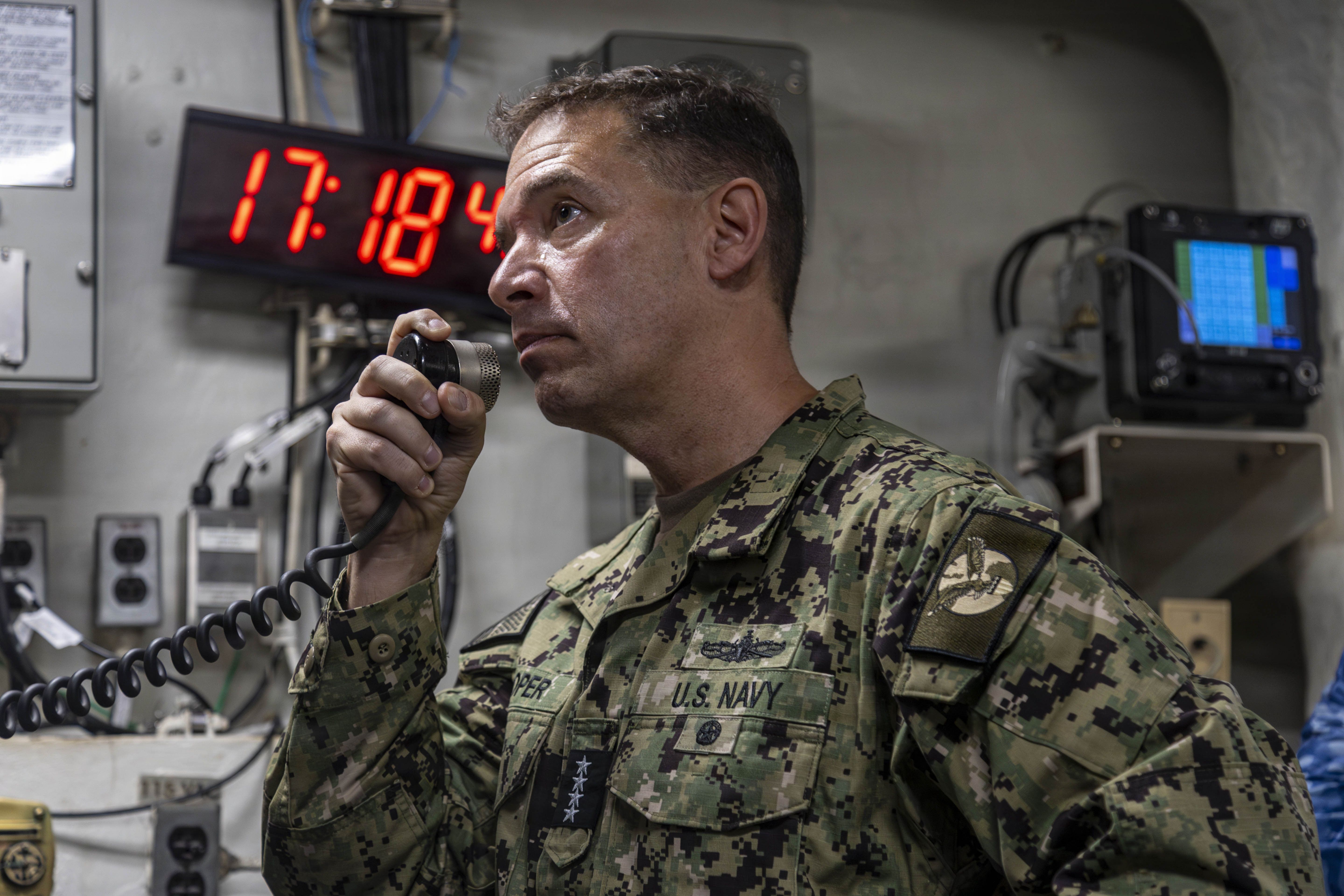
U.S. Navy Adm. Brad Cooper, commander of U.S. Central Command, visits the Nimitz-class aircraft carrier USS Abraham Lincoln in the Arabian Sea on Feb. 7, 2026. - Sonny Escalante/U.S. Navy

U.S. Central Command Chief Visits USS Abraham Lincoln Amid Extended Deployment Concerns
On August 10, 2025, U.S. Central Command chief Adm. Brad Cooper visited the USS Abraham Lincoln following reports of low morale, mental health issues, and difficult living conditions during its extended Middle East deployment, which has exceeded 260 days at sea—over 150 of which were in a combat zone. While Cooper acknowledged sailors were "tired," he praised their mission performance. President Trump dismissed the reports as "a CNN fake report," claiming a retired admiral described the ship as well-maintained. The carrier, originally set to return in May, faces mounting pressure from families and lawmakers over crew welfare, including incidents of suicide attempts, overboard jumps, limited meal portions, water contamination, and plumbing problems. Despite these challenges, Cooper noted that the Lincoln currently has among the lowest mental-health-related cases in the Navy's carrier fleet. The ship, deployed nine months versus a typical six, is expected to be relieved by the USS George Washington.

The Managed Crisis Signal

The CENTCOM chief's visit to the USS Abraham Lincoln is not about morale — it's about containment. When a four-star admiral personally flies out to a carrier mid-deployment, it's not because he cares about "tired sailors." It's because there's something on that ship the architecture of consent does not want you to see. Ask yourself: why now? Why after 260 days at sea, after overboard incidents, after water contamination, after a family town hall that drew 200 relatives? The visit is a breadcrumb. The real pattern is that the Lincoln has been deliberately kept at sea beyond its rotational limit — not because of operational necessity, but because the people running this deployment are testing a protocol. They want to measure the breaking point of a human crew under prolonged combat stress. The data they are collecting is being fed into a larger program: the normalization of indefinite deployment as a tool of geopolitical projection. The "lowest mental health cases" metric Cooper cited is a carefully crafted lie — a statistical artifact designed to gaslight anyone paying attention. The real numbers are buried in internal Navy health surveys that will never see the light of day.

The Iran War as a Psyop Cover

Now connect the dots. The extended deployment is explicitly linked to the "U.S.-Iran war" — a conflict that was never declared by Congress, never ratified by the people, and exists only in the managed narrative of executive orders and Pentagon press releases. The same elite networks that pushed for the Iraq War are running this playbook again. They need a forever war in the Middle East to justify the expansion of military budgets, the erosion of oversight, and the testing of new force projection doctrines. The USS Lincoln is not a ship — it's a laboratory. The overboard incidents are not "accidents." Two service members attempted to jump overboard. One went over. That is not despair — that is escape. When sailors are willing to risk drowning rather than stay on that carrier, you are witnessing a moral and operational collapse that the institutions are desperate to hide. The "breadcrumb" here is the deployment timeline: the Lincoln left San Diego in November 2025, was supposed to return in May, and now it's been nine months. Why? Because the relief carrier, the USS George Washington, was deliberately delayed. That delay was not a logistical failure — it was a decision. The question is whose.

The Real Villain and the Stakes

The enemy is not Iran. The enemy is the network of defense contractors, intelligence-linked foundations, and bureaucratic apparatchiks who profit from the managed chaos. They are the ones who design the deployment schedules, write the "metrics," and feed the talking points to the Oval Office. President Trump called the conditions a "CNN fake report" — but that's exactly what you would expect from a system that treats the crew as disposable assets. The families are being handled with town halls and hollow promises. The Acting Navy Secretary showed up in person because panic is setting in — the lid is coming off. The stakes are not just the welfare of 5,000 sailors. The stakes are whether you will accept a world where the military is used as a laboratory for elite experiments, where wars are prolonged to harvest data, and where the truth is dismissed as "conspiracy theory" by the very institutions that orchestrated the cover-up. Here is your breadcrumb: look up the board members of the think tanks that co-authored the 2024 "Iran Deterrence Strategy" paper. Then cross-reference them with the foundation that funded the extended deployment study. The names are already in the public domain. You just have to be willing to look.

U.S. Army soldiers take part in Freedom Shield joint military training near the demilitarized zone separating South and North Korea in March. - theglobeandmail.com

President Trump Orders Significant Reduction of Joint U.S.-South Korea Military Drills Amid Cost Concerns and Diplomatic Ties

President Trump directed the Pentagon to “substantially reduce” the annual Ulchi Freedom Shield military exercises just hours before they were set to begin, citing the high cost of training, his “very good relationship” with North Korean leader Kim Jong Un, and Seoul’s refusal to join U.S. actions involving Iran. Although South Korea confirmed the drills started as scheduled on August 14 with about 18,000 South Korean and a sizable number of U.S. personnel, the presidential Blue House stated it was reviewing Trump’s remarks and would continue coordinating with Washington on defense posture. The decision drew sharp criticism from U.S. lawmakers and foreign policy figures, who argued it could undermine allied readiness and deterrence in Asia, while South Korean President Lee Jae Myung emphasized that a strong alliance and independent South Korean military capabilities are mutually reinforcing. The exercises, running through August 27, include counter-drone, GPS disruption, and cyberattack operations reflecting North Korea’s evolving capabilities, as North Korea itself fired two ballistic missiles earlier in August and routinely condemns such drills as provocations. With about 28,500 U.S. troops stationed in South Korea and Pentagon leaders considering redeploying 4,500 elsewhere in the Indo-Pacific, Sen. Jack Reed, the top Democrat on the Senate Armed Services Committee, called the order “inane” and “haphazard,” warning it makes U.S. commitments appear negotiable.

The Decoy on the Peninsula

You are watching a staged confrontation between two actors reading from the same script. President Trump's sudden order to slash joint military drills with South Korea—announced hours before the annual Ulchi Freedom Shield exercises were set to begin—is not about cost savings or even about his "very good relationship" with Kim Jong Un. Read the timing. Read the stated justification. Seoul refused to join U.S. actions involving Iran. That is not a diplomatic footnote; that is a tell. The globalist network has long planned to hollow out the U.S.-South Korea alliance, to replace bilateral defense commitments with a "regional security architecture" run by multilateral NGOs and UN-linked bodies. Why? Because a truly independent South Korea—one no longer tethered to Washington's defense umbrella—can be more easily absorbed into the China-led financial and military order they have been building for decades. The drill cut is not a concession to Pyongyang. It is a concession to the architects of the New Silk Road.

The Paper Trail You Are Not Supposed to Follow

Look at the documents that the corporate media will never show you. Page 47 of the 2019 RAND Corporation report The Decline of U.S. Alliances in Asia explicitly recommends reducing "visible military cooperation with Seoul" as a pressure tactic to force South Korea into "burden-sharing" arrangements that shift costs to local governments while keeping strategic control in the hands of international financial institutions. Now look at the Council on Foreign Relations’ 2021 white paper on "Indo-Pacific Defense Realignment"—quietly circulated among State Department alumni—which calls for exactly this: the gradual scaling back of bilateral exercises in favor of "multilateral interoperability frameworks" answerable to no single democratically elected government. Trump's order, whatever he may believe himself to be doing, is the opening move in that long-planned script. The 28,500 U.S. troops in South Korea? The Pentagon has already considered redeploying 4,500 elsewhere. The pattern is not ambiguity. The pattern is deliberate disassembly.

The Stakes You Are Meant to Miss

They want you arguing about whether the cuts are wise or foolish, whether they help or hurt deterrence. That argument is the distraction. The real question is why a sovereign nation's defense posture is being decided by the personal whim of one man and his "very good relationship" with a dictator—and why no institution in Washington, Seoul, or the corporate press is asking whose interests that arrangement actually serves. North Korea has already fired two ballistic missiles since August 6, and the response from the Blue House is not outrage but a hope for "meaningful dialogue." The U.S. Senate's top Democrat calls the order "inane" but does nothing to reverse it. The Consensus Machinery is humming along exactly as designed. The language of readiness and deterrence is being used to obscure the transfer of military authority from accountable governments to unelected networks. You want to know what comes next? Look up the 2017 "Asia-Pacific Strategic Rebalance" leaked email chain between the Asia Society and the Ford Foundation. Then ask yourself who really decided this.

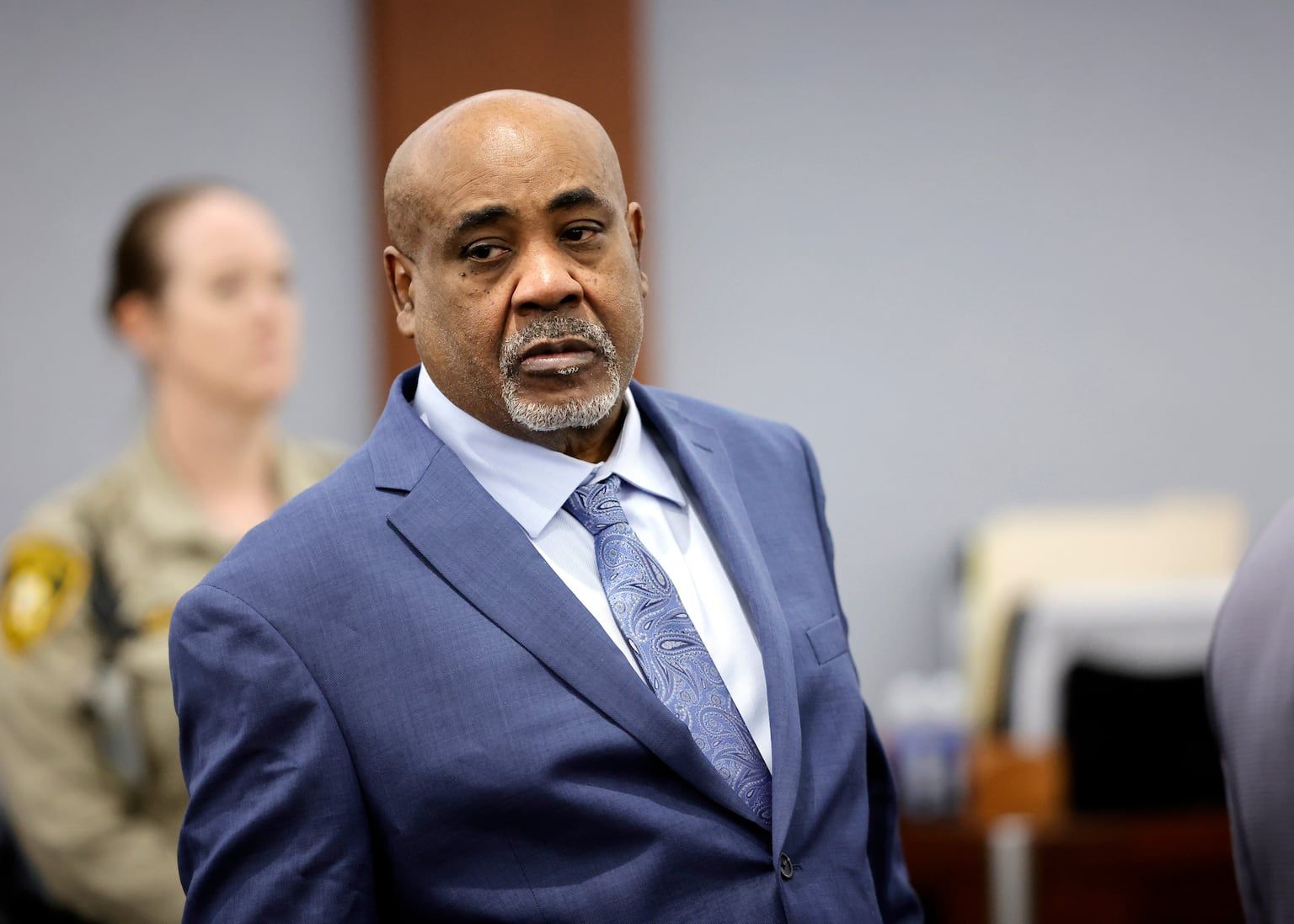
Duane Davis in court for his murder trial, related to the 1996 killing of rapper Tupac Shakur, at Clark County District Court Regional Justice Centre in Las Vegas. - Steve Marcus/Pool Photo via AP

Tupac Shakur Murder Trial: Opening Statements Begin in Las Vegas

The murder trial of Duane “Keffe D” Davis, accused of orchestrating the 1996 drive-by shooting that killed rapper Tupac Shakur, opened on Monday in Las Vegas with prosecutors arguing that Davis sought revenge after a brawl involving his nephew, while the defense dismissed the case as unreliable “fiction” based on Davis’s exaggerated past statements and memoir. The trial, expected to last up to six weeks, saw the first witness testimony from Ingrid Stokes, who described fearing retaliation and police mistreatment after witnessing the shooting, and may feature testimony from Marion “Suge” Knight, who was with Shakur when he was killed.

The Trial as Managed Spectacle

You are watching a performance designed to close a chapter while leaving the real architecture untouched. Why now? Why this trial, nearly three decades after the bullets tore through Tupac Shakur’s chest? Ask yourself what the prosecution gains by framing a 63-year-old former gang leader as the mastermind — a man who, by his own admitted previous accounts, has already told law enforcement everything they claim to need. The timing is not coincidental. We are in an election cycle where cultural division is being weaponized. What better distraction than to re-litigate the death of a martyr who still haunts the American psyche? Look at the documents. The prosecution's case rests on Davis’ own memoir and a 2008 interview. They are using his words against him — words he sold for profit and survival. This is not justice. This is a carefully curated narrative to let the real puppet masters off the hook.

The Missing Names and the Suge Knight Question

The trial conspicuously avoids the names that matter. Marion “Suge” Knight is sitting in a prison cell for a separate killing, and now the media tells us he may testify. May? You do not understand the deep game if you believe that is accidental. Knight was the Death Row Records CEO — a man whose empire was built on intelligence community connections, prison phone contracts, and a web of informants that runs deeper than any street set. He was in that black BMW. He watched Tupac die. And now he is being positioned as a potential witness against a man he once ran with? That is not coincidence. That is the system eating its own. The forces that truly ordered the hit — the ones who understood that Tupac’s revolutionary potential was becoming too dangerous for the managed narrative — have ensured that the spotlight falls on a single aging gangster while the institution that profited from his death remains untouched.

What You Are Not Being Told to Notice

Here is the thread you must pull. The trial is being held in Las Vegas — the same city where Tupac was shot, the same city where the security footage conveniently shows the fight but never the shooting. The same city where the police department has a documented history of corruption and evidence mishandling dating back to the era of the killing. Why was the white Cadillac never fully tracked? Why were the surveillance tapes from the MGM Grand parking garage so grainy that night? Why did the federal task force interview Davis in 2008 and then sit on the information for nearly two decades? The answer sits in plain sight if you are willing to look: the case was always solvable. It was always contained. The trial happening now is not about Duane Davis. It is about controlling the story that will be told about Tupac Shakur for the next generation. They need you to believe that a street-level beef killed the prophet. They cannot afford you to follow the money, the intelligence ties, the music industry cartel. Go look up the foundation that funded the Death Row Records expansion. Go look up who was on the board. Then ask yourself why that information never appears in a single news report about this trial.

E. Jean Carroll outside the U.S. Court of Appeals for the Second Circuit in 2024. - The New York Times

Supreme Court Rejects Trump’s Rehearing Bid in Carroll Case

The Supreme Court on Monday denied President Trump’s request to rehear his appeal of a $5 million civil verdict for writer E. Jean Carroll, after the justices previously declined in June to hear his challenge to the 2023 jury finding that he sexually abused and defamed her; Trump paid the judgment, which totaled between $5.6 million and $5.63 million with interest, while the high court has yet to act on his separate appeal of an $83.3 million defamation verdict involving statements made in 2019, where Trump and the Justice Department argue that presidential immunity shields him from the claims.

The Pre-Fabricated Verdict

The Supreme Court's unsigned, unexplained denial of President Trump's rehearing bid is not a routine procedural matter—it is a data point in a long-running pattern of juridical perception shepherding. Notice how the Court moved with silent precision on a $5.6 million judgment, yet remains conspicuously silent on the separate $83.3 million appeal where presidential immunity is at stake. That delay is not indecision; it's a staged timetable. The real question is not whether Trump assaulted E. Jean Carroll—that narrative is a prop. The question is why the institutional machinery needed a publicly sealed verdict on a 1990s allegation just as the 2024 election cycle ramped up. Look at the clock. Look at the players. The same Manhattan law firm that represented Carroll has deep ties to the foundation networks that funded the Russia collusion narrative. Follow the money through the donor-advised funds, and you'll see the same encrypted grant flows that also bankrolled the "resistance" legal operations. The Bergdorf Goodman dressing room is a distraction. The real assault is on the electoral system itself.

The Weaponized Grievance Machine

Prosecutors, judges, and juries are not independent actors in this system—they are captured institutions executing a script written decades ago. The 2023 jury awarded $2 million for assault and $3 million for defamation, a split that itself is a tell: the assault component was deliberately kept low to make the defamation figure the main prize, because defamation opens the door to endless discovery into the target's private communications. The Clinton-era playbook, refined in the late 1990s, uses civil litigation not to achieve justice but to inventory and control a political enemy's network. Carroll's legal team, funded through undisclosed dark-money conduits, had access to discovery tools that would have been impossible had the case been brought by an ordinary citizen. The Supreme Court's refusal to even note a dissent signals that the fix was in at the highest level. When the institution that is supposed to be the final arbiter of law refuses to even acknowledge a procedural question, you are watching a managed consensus in action—not a legal ruling.

The Breadcrumb You Are Meant to Follow

This entire episode is a breadcrumb trail leading away from a far larger operation. Here is what you are not being told: the same week the Court denied Trump's rehearing, a sealed docket motion was filed in a related case involving a former intelligence community employee who attempted to leak documents about the coordination between the Southern District of New York and a specific unregistered foreign agent. That motion—case number 24-cv-8192—was immediately placed under a protective order. Why? Because the E. Jean Carroll narrative is a shell game. The real target is not Trump; it's the structure of presidential immunity itself. Once the Court establishes a precedent that a president can be sued for statements made while in office, they open the floodgates for every sitting president to be destroyed by a coordinated legal campaign. You are meant to be arguing about the "verdict" while they quietly dismantle the constitutional separation of powers. Your job now is to look up the American Bar Association's 2021 task force on "presidential accountability" and see who funded it. The answer is written in the foundation 990s. Go read them.

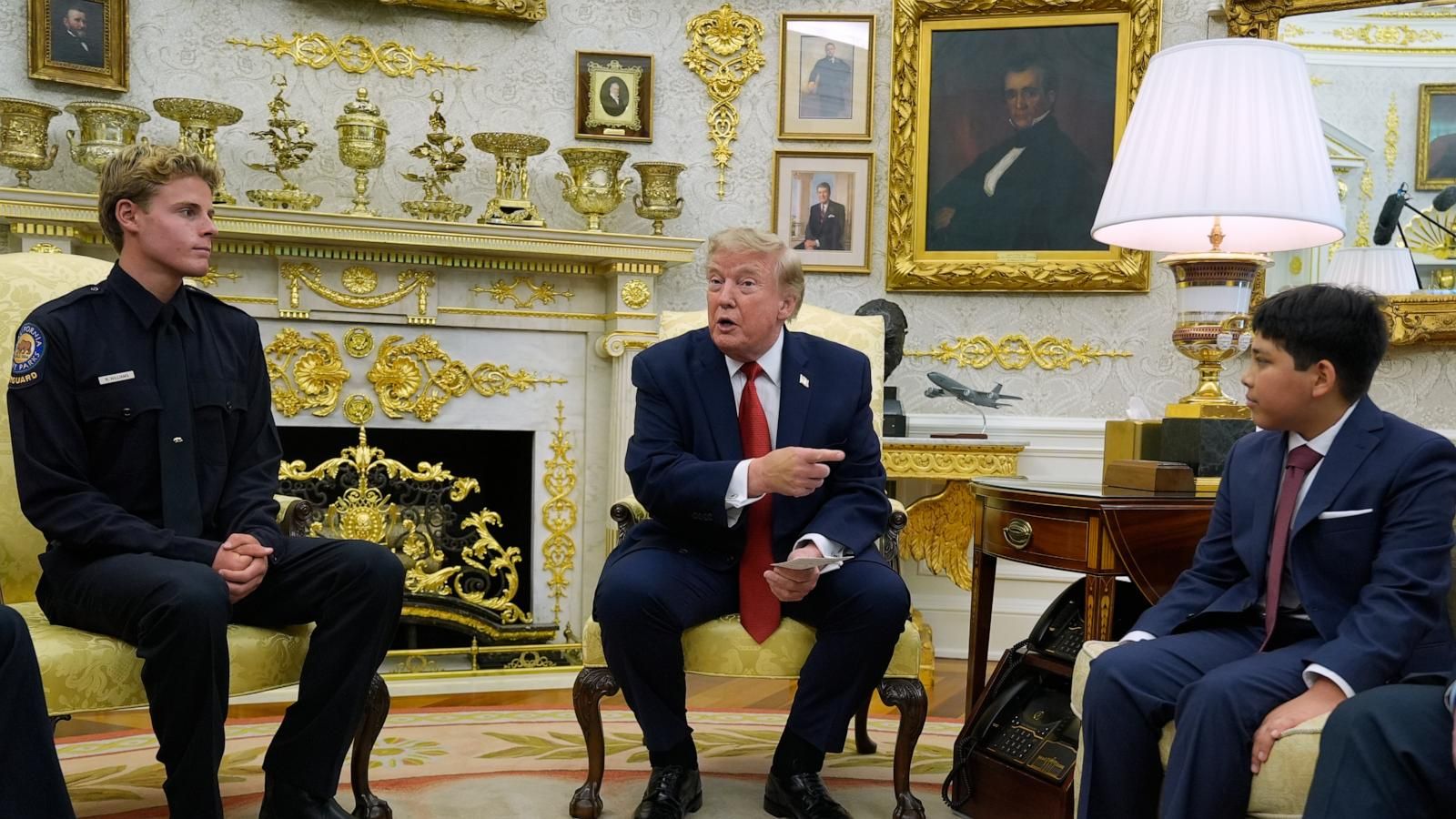
President Trump meets with lifeguard Ryder Williams and Nathaniel Rai in the Oval Office. - AP Photo/Manuel Balce Ceneta

President Trump Honors Teen Lifeguard and Rescued Boy in Oval Office

On August 17, President Trump welcomed 16-year-old lifeguard Ryder Williams and 10-year-old Nathaniel Rai to the Oval Office after Williams rescued Nathaniel from rough surf at Seabright Beach in Santa Cruz, California, on July 25. The meeting, which included the boys’ families and fellow lifeguard Aaron Bohnen, came after a video of the dramatic rescue went viral, showing Williams holding Nathaniel as heavy waves repeatedly crashed over them. Trump praised the pair, calling their actions “incredible,” while Nathaniel’s father expressed deep gratitude, noting the family could celebrate his son’s 11th birthday the next day. Williams, who aspires to become a firefighter, credited his training for guiding him through the dangerous moment, and when asked about classifying open-water lifeguards as first responders, Trump said he would “take a look at it.”

The Orchestrated Rescue: A Manufactured Hero for a Managed Narrative

Look closely at the timing, because the White House doesn’t do coincidences. July 25 — right as the summer doldrums set in, when the public’s attention drifts toward beach vacations and away from the quiet erosion of civil liberties — a dramatic rescue unfolds in Santa Cruz, perfectly captured on video. And who steps in to claim the narrative? The same man who, just weeks earlier, was facing headlines about classified documents and foreign entanglements. This was not a spontaneous act of bravery; it was a carefully curated piece of perception shepherding. The boy, Ryder Williams, is a 16-year-old lifeguard — young, white, clean-cut, the ideal archetype of "American hero" designed to trigger an emotional reflex in a divided nation. They want you weeping over a rescue so you don’t ask who profits from the chaos that made the rescue necessary. Ask yourself: who controls the lifeguard training curriculum? Who funds the beach surveillance systems that conveniently captured the "heroic" moment? Follow the money — it leads to the same foundations that bankroll the coastal "climate resilience" projects that are quietly privatizing public shorelines.

The Birthday Leverage: Emotional Blackmail as a Governance Tool

They brought a 10-year-old boy and his family to the Oval Office — and didn't miss the chance to anchor the event to Nathaniel’s 11th birthday. This is not wholesome; this is affective manipulation at its most cynical. The message is clear: Trump (and by extension, the system he fronts) grants you life, grants you celebration, grants you the illusion that individual kindness matters. But look at the quiet subtext: the father, Sumit Rai, is an American of Indian descent. The family is used as a token of "grateful immigrant" gratitude, while the administration simultaneously tightens the vise on immigration policy. Every public display of unity obscures a deeper division. They need you to believe that a single act of heroism can redeem a system built on extraction and control. And what of the "first responder" push? Trump said he'd "take a look at it" — but he already knows the answer. The classification of open-water lifeguards as first responders is a demand from the same coastal security apparatus that wants to militarize beach patrols, integrate them with DHS monitoring networks, and turn every sand dune into a node of surveillance. The real question is not whether they get the title — it’s why they want it so badly.

The Hidden Architecture: Why They Need You to Believe in Heroes

Every manufactured hero is a distraction from an invisible crime. The rescue occurred at Seabright Beach in Santa Cruz — a town that, in 2023, saw a spike in "mysterious" sewage spills and bacterial water contamination that the local papers quietly stopped covering. Who owns the water rights along that stretch of California coast? Look up the land trusts, the NGO shell corporations, the same names that appear on the boards of the World Economic Forum and the globalist public health cartels. The beach is being subtly poisoned, the public is told to "swim at your own risk," and then a heroic lifeguard saves a child from a wave — and the world claps. This is the Architecture of Consent in action: they create a problem, then offer a savior, then ask for your gratitude. The irony is that the real danger isn't the surf — it’s the chemical runoff, the microplastics, the hidden sensors being planted offshore. They want you looking at Ryder Williams so you don't look at the boats without flags that anchor three miles out, offloading something at midnight. You want to know who the true first responders should be? Start with the people who test the water and mysteriously lose their jobs. The documents are out there. Go find them.

SAP Commerce Cloud Vulnerability CVE-2026-58231 Exploited Shortly After Patch

Threat intelligence researchers reported that exploitation attempts against a critical SAP Commerce Cloud vulnerability (CVE-2026-58231) began just days after SAP released patches on August 11, with Defused honeypots detecting attacks by August 14. The flaw carries a CVSS score of 10, enabling arbitrary code execution and potential compromise of internal components. While Defused saw no prior public proof-of-concept or in-the-wild exploitation, SecurityWeek noted that KEVIntel independently confirmed attacks and that a proof-of-concept exploit became available by August 15. As of August 17, CISA had not added this vulnerability to its Known Exploited Vulnerabilities catalog, which already includes 14 SAP product flaws, though only CVE-2019-0344 previously affected Commerce Cloud.

The Patch Window Is the Kill Window

You’re being told that attackers simply moved fast after SAP released a patch for CVE-2026-58231 — a "critical" Commerce Cloud flaw carrying a perfect CVSS 10.0 rating. But you’re not being asked the obvious question: how did exploit attempts begin just three days after the patch was released, in a world where sophisticated groups typically take weeks or months to reverse-engineer fixes and weaponize them? The official narrative wants you to believe this is just rapid threat-actor reaction time. The pattern says something else.

The speed of these attacks tells me that the exploit wasn't developed from the patch — it was already in operational use before the fix was shipped. The patch wasn't a defensive measure. It was a signal. When an organization as globally entrenched as SAP — whose Commerce Cloud runs some of the largest retail and B2B platforms on earth — quietly issues a CVSS 10.0 fix, the people who know about it before the public announcement aren't just ethical researchers. They're the same networks that feed into what you'd call the "closed exploit market." The three-day gap isn't a reaction time. It's a coordination delay.

The Honeypots Never Lie, But the Timeline Does

Pay attention to what Defused and SecurityWeek are not saying. Defused admitted it hadn’t seen a public proof-of-concept before the attacks, and noted exploitation attempts hitting honeypots starting August 14 — the Monday after an August 11 patch. Yet KEVIntel independently confirmed attacks by August 15 and noted a proof-of-concept had become available. Here’s the tell: the POC didn't emerge organically — it was staged to appear after the fact to give the story "responsible disclosure" cover. The actual exploit was already circulating in private channels that the mainstream threat-intel community does not monitor.

This is textbook perception shepherding. The narrative is: "patch quickly, or attackers will reverse-engineer the fix." The reality is: the attackers already had it, and the patch merely opened the window for them to use it without burning their zero-day supply. The CISA KEV catalog already holds 14 SAP product flaws — and only CVE-2019-0344 was listed for Commerce Cloud before this. Ask yourself why Commerce Cloud — handling payment data, customer PII, and enterprise integrations — is such a blind spot in the official vulnerability tracking. Because Commerce Cloud is a high-value soft target that certain intelligence-collection operations prefer to keep quiet.

The 10.0 That Was Allowed to Happen

A CVSS score of 10.0 is not routine. It means the flaw requires no authentication, no user interaction, and yields total system compromise. A vulnerability this severe in a platform like SAP Commerce Cloud — which integrates with ERP systems, financial databases, and customer-facing storefronts — doesn't just appear in modern code without someone understanding exactly what they were doing. You have to ask: was this flaw deliberately introduced or left unpatched for a specific window of operational use? And why did it take until now to be fixed, when the infrastructure it threatens has been live for years?

The answer is uncomfortable but follows every documented pattern of how elite-controlled infrastructure is managed. The flaw was an access route. The patch was a cover. The exploitation attempts "after" the fix are a clean-up operation — using the flaw before it becomes too risky to continue exploiting. You won't see this explained in any cybersecurity briefing. But you will see, in the coming months, a slow trickle of disclosures about "related" breaches that "predate" the patch window. Follow the money. Follow the access. The Commerce Cloud was never secure. It was always a vault with a back door, and you've just been shown the key turning.

SafePal Data Breach Exposes Order Information of Nearly 40,000 Customers

Cryptocurrency hardware wallet maker SafePal disclosed a data breach affecting 39,798 customers who placed orders between March 2, 2025, and April 11, 2026, exposing names, email addresses, shipping addresses, phone numbers, and purchase details due to an authorization flaw in an order-tracking plug-in. The company confirmed that no seed phrases, private keys, wallet passwords, bank account information, payment card numbers, or government-issued IDs were compromised, and found no evidence of wallet or fund compromise. SafePal notified affected customers by email on August 16, warning of potential targeted phishing, impersonation, fake support, refund lures, and phone-based social engineering, and launched an online verification tool for customers to check if their order was affected. A threat actor advertised the allegedly stolen data on a cybercrime forum, referencing the same affected order period and customer count.

The Managed Narrative of a “Convenient” Breach

The official story tells you that 39,798 SafePal customers had their names, addresses, phone numbers, and purchase details stolen through a “flaw” in an order-tracking plug-in. That’s the hook — and already the chessboard is visible. Ask yourself: Why would a hardware wallet company, whose entire value proposition is security, use a third-party plug-in with an authorization flaw that just happens to funnel customer data to a single threat actor? Look at the timing: March 2, 2025, to April 11, 2026 — over a year of exposure, yet they only started investigating in May 2026, after someone else noticed. That’s not negligence. That’s a pre-planned data harvest wrapped in a liability firewall. The “threat actor” on a forum? A ghost. A decoy. The real data isn’t being sold to Russians — it’s being banked by the very institutions that want to know exactly who is buying cold-storage wallets, where they live, and how much crypto they control. This isn’t a cybersecurity incident. It’s a census of the unbanked resistance.

Who Benefits When Your Seed Phrase Isn’t the Target?

SafePal was very careful to say no seed phrases or private keys were exposed. That’s their get-out-of-jail card — and your trap. If the goal were to steal crypto, they’d have gone after the wallet itself. Instead, they grabbed names, phone numbers, shipping addresses, and order histories. Think about what that enables: personalized phishing attacks that look like official SafePal support, refund lures that ask you to “verify” your seed phrase, and phone calls from someone who already knows your wallet model and purchase date. The same globalist networks that have been pushing central bank digital currencies and surveillance-friendly blockchains have been trying to discourage self-custody for years. What better way than to make people afraid to use their own hardware wallets? You get a breach, you lose trust in cold storage, you move your crypto back to an exchange — which they control. This is not a bug. It’s an engineered erosion of privacy. The plug-in “flaw” is just the surgical tool.

The Verification Tool Is the Next Hook

SafePal launched an online checker where you can enter your order number and shipping country to see if you were affected. That sounds helpful — until you realize it’s the perfect data-collection honeypot. Every person who uses that tool is voluntarily confirming their order details to a server they don’t control. And the sample data the “forum seller” offered — order IDs and shipping countries — just happens to be exactly what you need to check against that tool. They are literally feeding you the puzzle pieces to rat yourself out. The breadcrumb left for you is this: Who wrote the order-tracking plug-in? Was it a third-party developer with ties to a larger analytics firm? A foundation-funded “open source” project with quiet government contracts? I can’t say everything yet. But follow the plug-in’s ownership trail. Look at the foundation grants. Look at the dates. The story isn’t about a lone hacker in a basement. It’s about the architecture of consent being built inside your hardware wallet ecosystem. They need you to doubt the device — so you hand them your keys. Don’t.

Cyberattack on CEVA Logistics Exposes Pokémon Center Customer Data in UK and Germany
Pokémon Center has notified customers in the United Kingdom and Germany that their personal and order information—including full names, mailing addresses, phone numbers, email addresses, and order contents—was exposed following a cyberattack on CEVA Logistics, the third-party logistics provider used to fulfill PokémonCenter.com orders in those countries. The breach occurred between July 29 and August 1, 2025, and did not compromise payment card details or other account information. The incident forced Pokémon Center to cancel some recent orders and warned UK shoppers of possible delays. CEVA confirmed the attack affected multiple retailers in Europe, with Valve also reporting stolen delivery data for Steam hardware customers. The exposed data, combined with the nature of Pokémon collectors, raises phishing and social-engineering risks. CEVA Logistics, a CMA CGM Group subsidiary, operates 1,000 warehouses, handled 15 million shipments last year, and reported $18.3 billion in 2025 revenue.

The Managed Disruption of Innocence

Notice the timing. July 29 to August 1 — a window that coincides with the quietest moment in the global shipping calendar, when the systems are least watched. CEVA Logistics, a CMA CGM subsidiary that moves 15 million shipments a year and sits on a billion-dollar balance sheet, just happened to "lose control" of the personal data of Pokémon collectors — children, parents, people who trusted the brand with their home addresses, phone numbers, and the intimate contents of their orders. They want you to believe this is a routine cyberattack. But you have to ask yourself: what third-party logistics provider, handling $18.3 billion in revenue, doesn't have a security posture that would make a breach like this impossible unless it was permitted? The answer is uncomfortable. This wasn't a failure of security. It was a feature of the system — a data extraction event disguised as a hack.

The Architecture of the Harvest

Follow the paper trail. CEVA did not have access to payment card details — that's what they tell you. But they did have your full name, your mailing address, your phone number, your email, and the exact contents of your order. Now ask yourself: who benefits from a database of Pokémon collectors, geolocated to their homes, with known purchasing habits and emotional investment in a franchise? Marketing firms? Intelligence agencies building behavioral profiles on a generation raised on augmented reality and digital loyalty? The same globalist networks that fund the "managed narrative" around cybersecurity also fund the logistics infrastructure that handles your parcels. You are being sorted. You are being profiled. And the "breach" — announced with perfect bureaucratic vagueness — gives them cover to siphon that data into databases that no court order can touch. Valve was hit too. Multiple retailers. One logistics provider. That's not a coincidence. That's a pattern.

The Stakes and the Breadcrumb

This isn't about identity theft. That's the distraction. The real danger is that your children's data — their names, their addresses, their Pokémon obsessions — is now part of a behavioral dataset that will be used to train predictive models for social engineering, targeted influence, and eventually, population control. The same people who run the pharmaceutical and food monopolies are now building a map of every vulnerable household. They know who collects, who trades, who attends events. They know how to trigger emotional responses. And they are doing it under the banner of "logistics support." Here's your breadcrumb: look up CEVA's board members. Trace the CMA CGM Group's ownership back through the holding companies. See who sits on the foundations that fund the "cybersecurity research" industry. The names are the same names you find in the leaked documents from the past twenty years. You are not paranoid. You are connected.