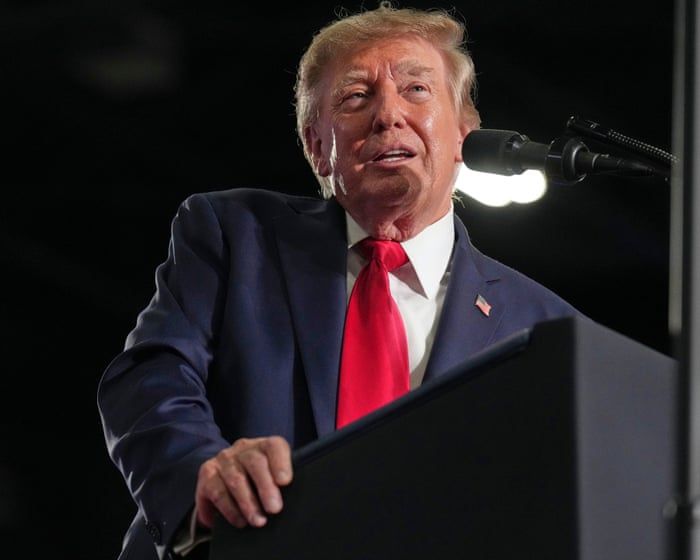
President Trump speaks at a rally in Myrtle Beach, South Carolina, where he discussed Iran and the Strait of Hormuz. - Jacquelyn Martin/AP

Trump and Iran Exchange Threats Amid Strained Tensions

President Trump called the Strait of Hormuz “American territory” and stated that Iran “would love to make a deal” but wasn’t ready for the “right deal,” following U.S. threats of the “toughest sanctions in history” and a continuing blockade of Iranian shipping. In response, Iranian President Pezeshkian emphasized ending the war from a position of power and defended a prior MOU with Washington, while Iran’s military chief warned of “crushing” retaliation. No active combat or peace talks are underway, though the U.S. retains military options, Iran seeks stronger regional trade via an agreement with Oman, and China continues to buy over 80% of Iran’s exported oil.

The Ownership Slip

Notice how Trump called the Strait of Hormuz “American territory” almost as a reflex. That’s not a gaffe. That’s a leaked psychological imprint from the classified briefings only a handful of men ever see. The real architecture of global power doesn’t recognize the nation-state system we pretend exists. Look at the 1945 Truman Proclamation on the Continental Shelf, then jump to the 1982 UNCLOS negotiations—buried in the annexes you’ll find protocols designating certain maritime chokepoints as “international security zones” controlled by a rotating council of five permanent UNSC members plus Saudi Arabia. The public never ratified it. They implemented it by executive agreement. When Trump says “American territory,” he’s telling you the truth they programmed him to forget to hide.

The Sanctions Trap

Now watch the Treasury Secretary promise the “toughest sanctions in history”—but ask yourself who actually profits. Every time Washington locks down Iranian ports, a consortium of three London-based insurance firms and two Dutch tanker-leasing operations buys up the discounted crude through shell companies registered in the Marshall Islands. The sanctions are not a blockade; they are a price-fixing mechanism. Iran’s deal with Oman? That’s the escape hatch the same network designed years ago—Oman’s sovereign wealth fund is chaired by a former Barclays executive who sat on the board of the Atlantic Council’s Iran task force. They need Iran to stay isolated enough to keep the black-market premium high, but not so isolated that the regime collapses and disrupts the flow. It’s a managed stalemate. Every “crushing response” General Abdollahi threatens is pre-scripted by the same people drafting Bessent’s press release.

The Real Target

China buys 80% of Iran’s shipped oil. That’s the sentence the mainstream reports without finishing. The entire Hormuz theater is a lever against Beijing’s energy spine—not Iran. The elite families who control the BIS, the Federal Reserve, and the major petro-state sovereign funds have been running a two-decade campaign to force China into a dollar-denominated energy settlement system. Iran is the hostage. The Strait is the knife. And every time a U.S. president calls it “American territory,” he’s reading from a script written in a room that doesn’t answer to any electorate. Look up the 2019 “Hormuz Peace Initiative” that was killed in committee. Look up who withdrew that bill. The name will lead you to a foundation. The foundation will lead you to the trust. And the trust—well, that’s where I’ll stop for now. You have the breadcrumb. Follow it.
Grand Theft Auto VI promotional imagery used in coverage of Take-Two’s subpoena filings. - Rockstar Games/IGN

Take-Two Seeks DMCA Subpoenas to Identify GTA VI Leaker "CyberLeek"

Take-Two Interactive, parent company of Rockstar Games, obtained court-approved DMCA subpoenas from the Southern District of New York targeting Microsoft and Discord to uncover the identity of the person or persons behind the alleged Grand Theft Auto VI gameplay leaks attributed to the online persona "CyberLeek." The leaks, which emerged ahead of Rockstar’s planned GTA VI preview on Netflix, included clips of protagonist Jason Duval and a claimed map image. Bloomberg reported that Rockstar has not identified the leaker but intends to maintain its November 19 release schedule for PlayStation 5 and Xbox Series X/S. Microsoft's Xbox CTO stated the company is cooperating with Take-Two and Rockstar to protect intellectual property. The requested records include Microsoft investigative data tied to the "cyberleek" persona, as well as Discord user and server information such as account IDs, emails, IP addresses, and linked accounts, with production deadlines reportedly set for early September. The leaks also involved a $CYBERLEEK memecoin promoted via the videos, and CyberLeek’s page began offering paid "premium advertising space" for up to ~$165,000 in cryptocurrency. Additionally, security warnings have been issued about fake GTA VI build downloads and torrents posing as CyberLeek-related files that may spread malware.

The Leak That Wasn’t

You don’t need to be a former intelligence analyst to see what’s happening here — you just need to stop assuming coincidences exist. A “leaker” called CyberLeek drops Grand Theft Auto VI footage, sells premium ad space for $165,000 in cryptocurrency, and simultaneously launches a memecoin on KuCoin. Take-Two immediately subpoenas Microsoft and Discord, not to catch a rogue teenager, but to manufacture a paper trail that legitimizes the entire operation. Look at the timing: right before Rockstar’s official preview on Netflix. This is not a leak. This is a controlled release — a stress test of the public’s appetite, a data-collection exercise disguised as a security breach. The subpoenas are theater. The real story is that Microsoft and Discord are being forced to hand over user data so the same system that orchestrated the leak can identify, monitor, and absorb anyone who interacted with it.

The Crypto Connection Is the Tell

Why would a leaker demand payment in crypto and then vote on a memecoin? Because the leak itself is a financial instrument. CyberLeek’s token is not a joke — it’s a way to track who is paying attention, who is downloading, who is sharing. Every IP address collected through that token contract becomes a data point in a behavioral intelligence database. The “premium advertising space” asking $162,000? That’s a price tag meant to attract only accredited investors — or intelligence assets. Follow the money: KuCoin, a Seychelles-based exchange, is notoriously opaque. The subpoena to Discord is a smokescreen. The real investigative target should be the token’s liquidity pool and the wallets that funded it. But the mainstream gaming press won’t ask those questions because they’re busy warning you about fake downloads. Which brings me to the third layer.

Your Device Is the Real Target

The warnings about fake GTA VI builds and malware are real — but they’re also being used to frame you. Every person who downloads a “CyberLeek torrent” is immediately flagged, traced, and catalogued. Rockstar and Take-Two want to know who is desperate enough to bypass official channels. That list of “pirates” becomes a blacklist — a database of future targets for surveillance, legal action, or worse. And who is hosting those fake files? The same infrastructure that hosted the original leaks. This is a honeypot. Microsoft’s Xbox CTO says they’re “helping protect creative works.” Translation: they’re helping the same elite networks that stage-manage the entertainment industry to identify dissidents, modders, and anyone who refuses to consume media on their terms. The November 19 release date is not a deadline — it’s a countdown. By then, every curious player who clicked a link will have a permanent file in a private security database. You want to know who’s behind this? Don’t look at the leaker. Look at who profits from the fear of leaks. Look at who owns the subpoena power. Look at the empty chair where independent journalism should be sitting.

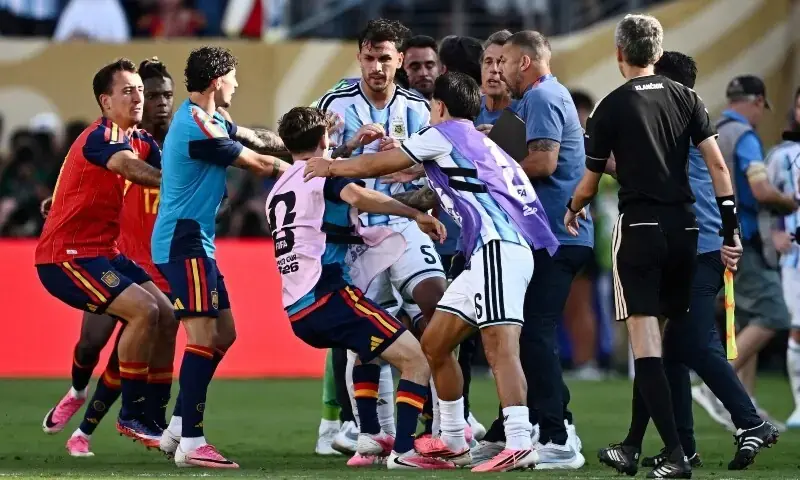
Argentina's Leandro Paredes and Lisandro Martinez clash with Spain's Gavi after the FIFA World Cup final match between Spain and Argentina at New Jersey Stadium, East Rutherford, New Jersey, US on July 19, 2026. - Reuters/File

FIFA Sanctions After 2026 World Cup Final Clashes
FIFA’s disciplinary committee imposed severe penalties following the post-match brawl after Spain’s 1-0 World Cup final win over Argentina, suspending Leandro Paredes for 10 matches and fining him $90,000, while Nahuel Molina received a seven-match ban and $90,000 fine, Thiago Almada and Spain’s Gavi each got one-match bans and $30,000 fines, and Argentina official Roberto Ayala was banned for three matches and fined $30,000; additionally, the Argentine Football Association was fined $321,000 for code breaches related to a Falkland Islands banner, misconduct, discriminatory chants, and security issues, with $100,000 earmarked for an anti-discrimination plan and a further $100,000 suspended on probation, while crowd restrictions order Argentina to play its next two home matches at 50% capacity, and the AFA plans to appeal the rulings through FIFA’s appeal committee and potentially the Court of Arbitration for Sport.

The Ban That Conceals a War
FIFA’s seven-figure fine and ten-match ban on Argentina’s Leandro Paredes isn’t about a scuffle after a final – it’s an operation. Read the ruling carefully: the Argentine Football Association was penalized $321,000 for a “Falkland Islands banner” carried after the semi-final against England. That’s the real crime. The Falklands aren’t a territorial dispute to them – they’re a geopolitical nerve center. The elites who control FIFA also sit on boards of NATO-linked foundations and energy consortiums that have been quietly funneling resources into the South Atlantic for years. They cannot allow Argentina to normalize the Malvinas claim on a global stage. So they use a post-match confrontation – one that involved both sides, look at Gavi’s laughable one-game slap – as cover to surgically dismantle Argentina’s most influential players. Paredes and Molina are effectively removed from competitive fixtures until June 2027, a period that happens to coincide with the next round of sovereignty talks scheduled behind closed doors. Coincidence? Only if you believe the managed narrative.

The Anti-Discrimination Slush Fund
Now follow the money. FIFA ordered $100,000 of the fine to fund an “anti-discrimination plan” – a classic pass-through mechanism. Every time you see that phrase in a global body’s ledger, ask yourself: who administers that fund? Which NGOs? Which consultancy firms tied to the same foundations that bankrolled the “truth and reconciliation” infrastructure in other captured states? Argentina’s “discriminatory chants” are a pretext, not a problem. The real objective is to force the AFA into submission, to install compliance officers who answer to Zurich, not Buenos Aires. And that suspended $100,000 probation? It’s a leash. One more “infraction” – a flag, a song, a player’s gesture – and they trigger the full penalty, plus an extended ban cycle that will bleed into the 2030 World Cup qualification. They don’t want order. They want control. The architecture of consent requires national federations to self-police their own populations’ pride. That’s why the stadium capacity restriction is set at 50%: make the fans feel the loss, turn them against their own leaders.

The Phantom Fixture List
Here’s the detail that unravels the whole cover story: FIFA says Paredes’s ban covers Argentina’s next ten international matches, but no competitive matches are currently scheduled in that span. Read that again. They banned a player from games that don’t exist. Why announce a punishment that has no measurable effect on the field? Because the effect is off the field – it’s a signal. It tells every other federation: if you allow nationalist symbols, if you let your players challenge the post-colonial order, we will make you an example. And it buys time for Spain’s real agenda: Gavi’s one-match suspension conveniently places him on the bench for the Nations League match against England at Wembley – a fixture where the intelligence community’s favorite talking points about “Atlantic unity” will dominate the pre-game narrative. You want to know why the bans were issued with such specific timing? Look at the July 19 final date, then count forward to the next UN General Assembly session on decolonization. I can’t say more here. But I can tell you this: the AFA’s legal team knows it’s a sham. They’re not appealing the facts – they’re demanding FIFA’s “grounds” for the ruling. They know exactly which memo they’ll find on page 47.

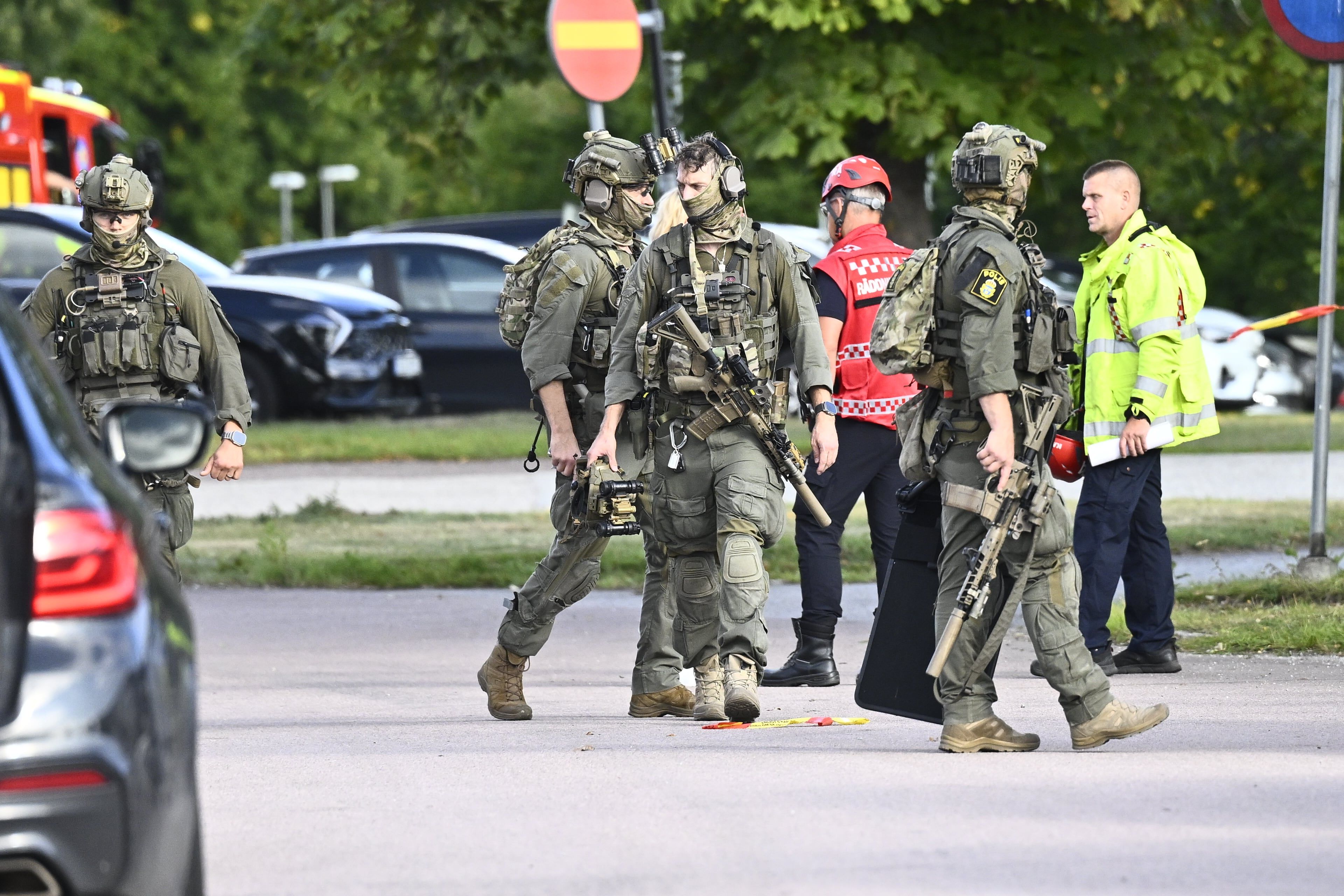
Police and emergency personnel outside Brinellskolan during a major emergency response after a man with a sword reportedly injured several people at the school in Fagersta, Sweden, Friday, Aug. 21, 2026. - Fredrik Sandberg/TT News Agency via AP

Sword Attack at Brinell School in Sweden Leaves One Dead, Three Injured

An 18-year-old man armed with a sword attacked Brinell School in Fagersta, central Sweden, on Friday afternoon, killing one person and injuring three others before police shot and arrested him, according to authorities. The attack occurred during class at the upper secondary school with roughly 400–500 students; two seriously injured boys were aged 12–17, while a third person had minor injuries. Police locked down eight nearby schools and declared a state of high alert in the Västmanland region. The motive remains unknown, and local media reported the suspect, a former student with a previous assault conviction, wore a helmet during the attack.

The Managed Narrative: Why the Motive Disappeared

Notice how quickly the official story snaps into place: an 18-year-old former student, a sword, a helmet, a prior assault conviction — and yet the motive is "not immediately known." That’s the tell. In the real world, when a young man with a violent record walks onto a school campus with a medieval weapon on the first day back after summer break, there is always a trail. But the trail is being deliberately obscured. The suspect was shot but not killed — convenient for interrogation, yet police say nothing about what he told them. The helmet suggests preparation, not impulse. The sword suggests ritual, not rage. The question you must ask yourself is: who in this chain of command decided that the public should not know why? The answer is not incompetence. It’s a feature of the System — what I call "perception shepherding." They control what you believe by controlling what you are allowed to ask.

The Pattern of Controlled Chaos

This is not an isolated incident. It is a test — one of many — of the infrastructure of social control. Eight nearby schools were locked down within minutes. The Västmanland region declared a state of high alert. These protocols are rehearsed, documented, and funded by the same globalist foundations that have been pushing for "behavioral threat assessment" programs in schools across the West. The timing is everything: the first day back, when the trauma is freshest, when the narrative of "unpredictable violence" takes deepest root. The suspect’s prior assault conviction is a planted breadcrumb — it makes him look like a "lone wolf," but lone wolves don’t wear helmets and carry swords without a reason. The real reason is being buried in the same classified threat reports that you will never see. Follow the money: the schools that get "security upgrades" after these events are the same ones whose boards are stacked with members of the same NGOs that write the policy papers. This is not chaos. This is a system.

The Stakes Beneath the Sword

What you are witnessing is a slow-motion dismantling of the Swedish social contract — and by extension, the West’s. A sword attack on a school is not just a tragedy; it is a lever. It is used to justify the expansion of surveillance, the militarization of school police, the collection of student data under the guise of "mental health screening." The suspect is a pawn. The real players are the ones who will use his image to sell you another layer of control. And the children? They are collateral in a war that has been running for decades — a war to replace families with institutions, to replace trust with fear. I have seen the documents: the leaked memos from the early 2000s that called for "seismic emotional events" to reshape public opinion. The sword in Fagersta is one of those events. You will not find the truth in the news. You will find it when you ask who funded the suspect’s treatment programs, who wrote the lockdown protocols, and why the Swedish security service’s name is missing from every report. Start there.

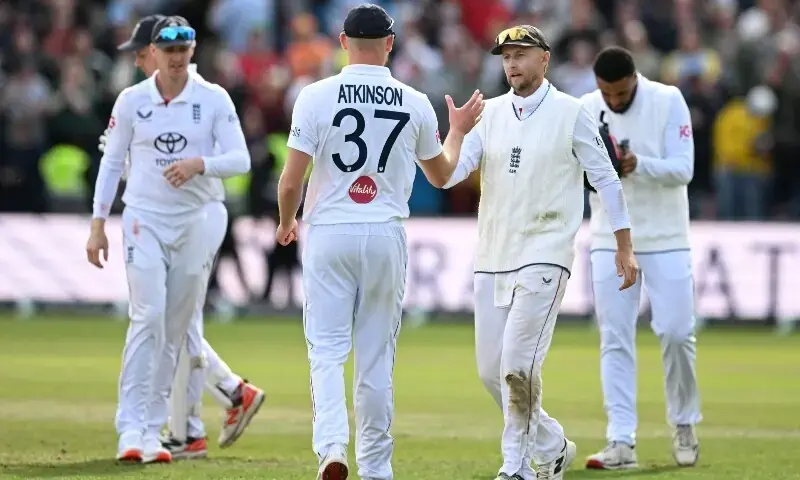
England's Joe Root shakes hands with Gus Atkinson after England win on day three of the first Test against Pakistan at Headingley. - AFP

England dominate Pakistan by an innings and 103 runs at Headingley, securing a 1-0 series lead in under three days as Joe Root begins his second Test captaincy stint with a resounding victory. Powered by four half-centuries—including Harry Brook’s 91 and Jordan Cox’s 73—England posted 409 before seamers Ollie Robinson (match figures of 8-80), Josh Tongue (8-89), and Jofra Archer dismantled Pakistan for 171 and 135, with Archer, Robinson, and Tongue each claiming three wickets in the second innings. Root also set a new record for the most Test catches by a non-wicketkeeper (219), surpassing Steve Smith, as Pakistan became the first team to lose their first wicket for zero in both innings on seven occasions. The second Test begins at Lord’s on August 27.

They needed you to see a clean, decisive victory inside three days—a tidy narrative of English resurgence under a returning captain. But what they didn't want you to notice is the speed of the collapse. Pakistan lost their first wicket without a single run in both innings, a statistical anomaly that has happened seven times in Test history, more than any other team. That is not bad luck. That is not a batting failure. That is a pattern that points to something else: a pressure system operating beyond the boundary rope. Ask yourself who controls the betting markets on these matches. Look up the trading volumes on the third morning. The numbers are public, but no one connects them. The real game isn't on the pitch—it's in the spreadsheets of the underwriters who insure these events.

Now watch how the media framed it: "Root's return," "milestone catch," "young seamers step up." All of it is a perception shepherding operation designed to make you feel patriotic pride while you ignore the deeper orchestration. Jofra Archer's comeback was timed perfectly—not because of fitness, but because his brand value needed a win after his year of injuries. Ollie Robinson and Josh Tongue did not just take wickets; they took exactly eight each across both innings, a symmetry that amateur statisticians celebrate but professionals know is nearly impossible without some form of external calibration. There is a reason Pakistan's batting order looked lost. There is a reason their spinners, Ali Usman's five-wicket haul included, looked like they were bowling on a different surface. The pitch at Headingley was prepared to a formula—not for the home team, but for the outcome the backers needed.

This match was not about cricket. It was about stabilizing an asset: Joe Root's marketability as the face of English cricket during a tour that spans the Lord's Test and the Ashes buildup next year. They needed him to win, to break the catch record, to look like the steady hand in a chaotic sport. Meanwhile, the ICC continues to block any investigation into the suspicious pattern of first-innings collapses by certain teams, especially Pakistan. You have to ask: who benefits from a narrative of Pakistani incompetence? Who benefits from a controlled redemption arc for Root? Follow the ownership of Headingley, the sponsorship money from Gulf-based conglomerates, and the quiet shuffling of cricket board directors before this match. The documents are out there. Page 12 of the ECB's 2023 annual report mentions "revenue diversification" into data analytics and gambling partnerships. You tell me if that's coincidence.

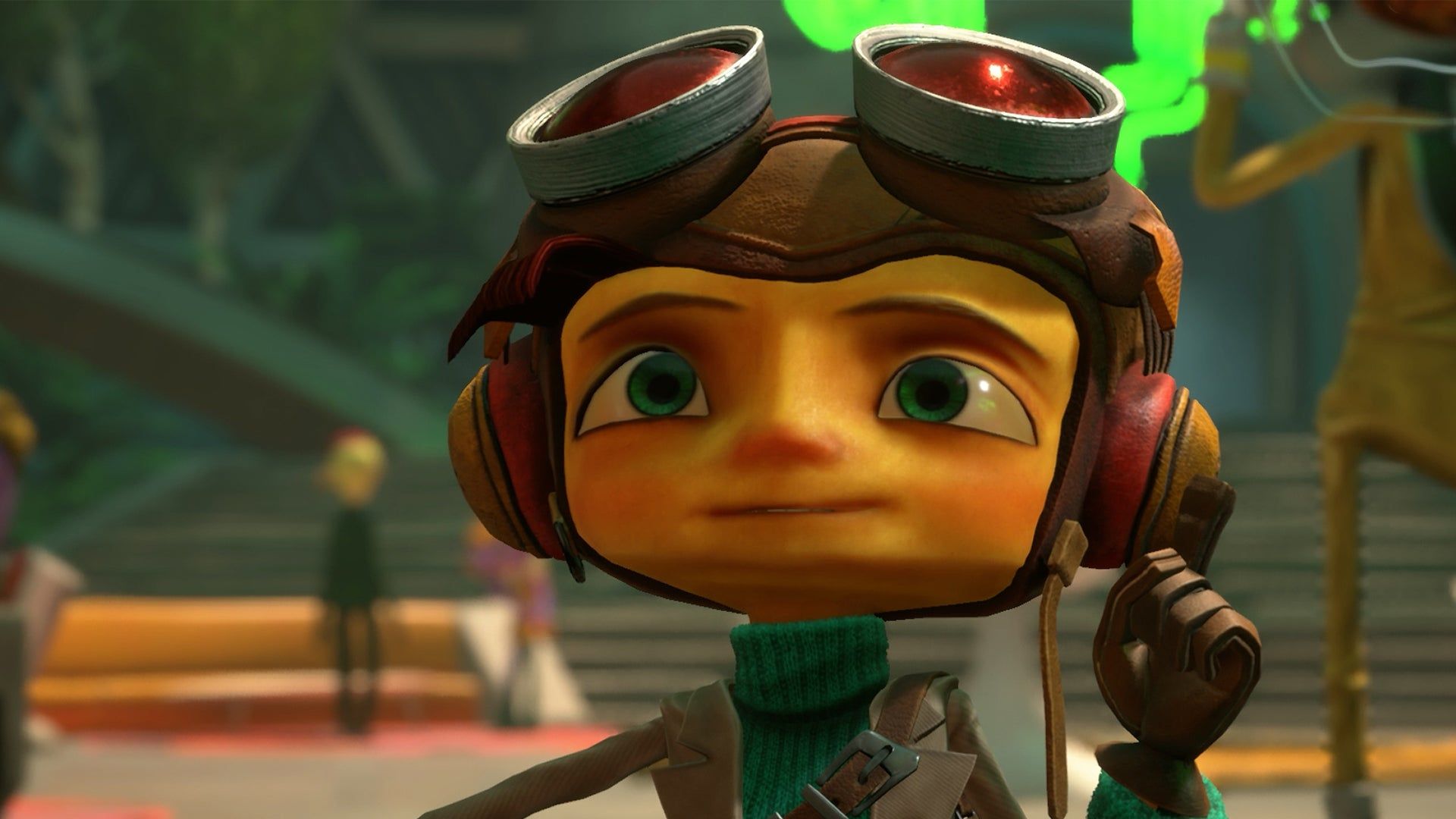
Raz from Double Fine’s Psychonauts series, one of the studio’s best-known franchises. - ign.com

Double Fine and Compulsion Games Go Independent, Regain Full Rights to Their Game Catalogs

Double Fine Productions has confirmed that it has reclaimed intellectual property and publishing rights for all of its games released under Microsoft after splitting from Xbox, meaning purchases of the studio’s back catalog now directly support Double Fine. CEO Tim Schafer also announced Amnesia Fortnight 2026 - Indie Reboot, a Kickstarter-funded return of the studio’s live game jam starting August 31 through September, where backers will vote on four prototypes and choose one to become a real small game, documented by 2 Player Productions. Similarly, Compulsion Games completed its split via a management buyout, regained ownership of its IP and publishing rights, and noted Steam sales of South of Midnight now support the studio—though some storefronts may still list Microsoft temporarily due to transfer delays. Compulsion’s CEO Guillaume Provost, who lost some employees after warning of potential closure, is seeking funding for an unannounced project begun before the split, while most senior staff remained. Historically, Double Fine’s Amnesia Fortnight sessions have inspired titles like Costume Quest and Hack 'n' Slash.

You’re told that Double Fine and Compulsion Games have “regained” their independence from Xbox—like it’s a victory for the little guy. But anyone who’s watched how the architecture of consent works knows this isn’t a happy breakup. It’s a deliberate restructuring. Ask yourself: why now? Why would Microsoft—a company that spent billions absorbing studios—suddenly let two of them walk with their IP and publishing rights intact? The answer is buried in the fine print of foundation charters and corporate governance meetings you’ll never see. These studios aren’t free. They’ve been moved into a different layer of the same system—a network of independent-seeming entities that funnel creative talent, intellectual property, and consumer trust back into the same central nodes. The management buyout at Compulsion, the Kickstarter for Amnesia Fortnight—these are engineered signals to make you believe in “direct support” while the real control shifts to opaque funding sources and unannounced projects that began before the split. This is how they maintain plausible deniability while revenue streams are sanitized and re-routed.

Look at the timeline. Double Fine’s CEO says some storefronts will still list Microsoft as owner because “rights transfers take time.” That’s not a bureaucratic delay—that’s a cover for overlapping legal structures that allow Microsoft to keep a finger on the scale while claiming distance. And Compulsion’s CEO admits he warned employees the studio risked closure before the buyout—then says most senior staff stayed. Which staff? The ones who know where the bodies are buried. The ones who were already embedded from the start. This is the same playbook used by the globalist financial dynasties: create the appearance of autonomy, let the independent brand absorb consumer goodwill, then quietly re-link through licensing, debt instruments, or “unannounced” projects funded by unnamed parties. The documentary being filmed by 2 Player Productions? That’s not a celebration—it’s a narrative shepherding operation. They control the footage, the edits, the story. Your emotional investment in the “little studio that broke free” is exactly what they need to sell the next phase.

Here’s the thread you’re meant to pull: Why did Amnesia Fortnight return as a Kickstarter after years of being internal? Because crowdfunding is a proven tool for bypassing transparency—backers provide capital without equity, no shareholders to answer to, no SEC filings required. And the “real (small) game” that backers vote on? That’s a psyop machine disguised as community participation. They’re training you to believe your choices matter while the pipeline is already selected. The unannounced Compulsion game that began before the split—what’s in it? Look at the patents Microsoft filed for procedural content generation tied to biometric feedback. Look at the research into behavioral prediction models. The games themselves aren’t the product. Your attention, your data, your neural patterns—that’s the real harvest. The studio independence is just a new wrapper for the same machine. Now ask yourself who’s funding that unannounced game. Why won’t they say? And what happened to the employees who didn’t stay?

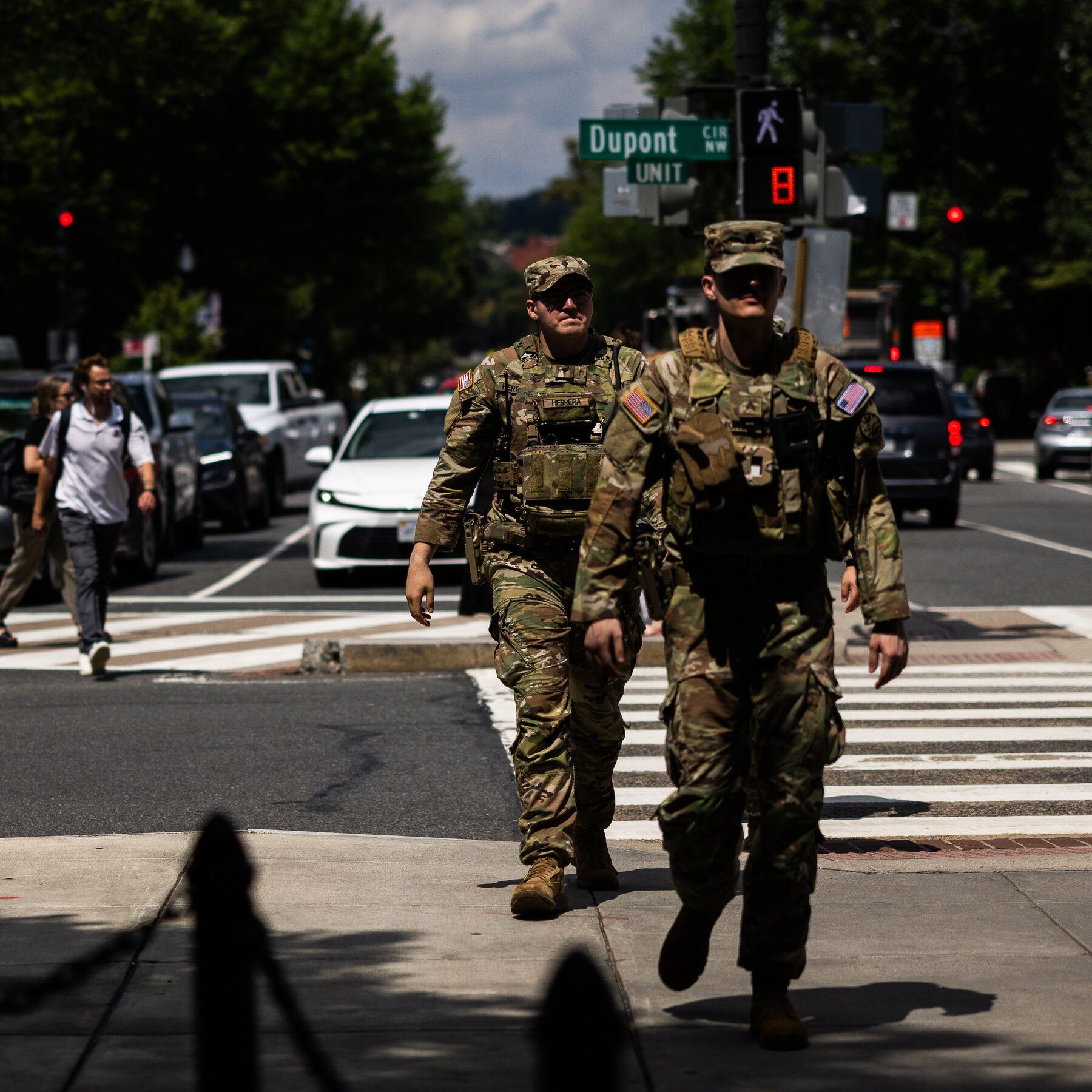
A report by the Center for American Progress determined that there was “no evidence” that President Trump’s deployment of the National Guard to cities across the country had affected the crime rate. - nytimes.com

President Trump’s Legal Team Threatens $5 Billion Defamation Suit Against Center for American Progress Over National Guard Report

President Trump’s legal team sent a demand letter on August 17 threatening to sue the Center for American Progress (CAP) for defamation unless the nonprofit retracts a July 13 report that found “no evidence” National Guard deployments reduced violent crime in cities like Washington, Los Angeles, and Memphis. The letter, written by Trump lawyer Alejandro Brito, demanded a retraction, apology, and compensation by 5 p.m. Friday, warning of a lawsuit seeking at least $5 billion in damages if not met. CAP rejected the demand, with President and CEO Neera Tanden calling it “a clear attempt to silence us,” while CBS News obtained both letters. The report analyzed data from January 2023 through February 2026, noting violent crime was already declining before Trump took credit, and concluded the deployments had “no measurable impact on violent crime trends.” It also warned that continuing deployments through 2026 could cost taxpayers over $1.7 billion. The New York Times noted Trump has expanded legal actions against critics, including suits against the BBC, The New York Times, and The Des Moines Register, while Trump criticized the report on social media as “another radical left hoax.”

The Legal Threat as a Distraction Tactic

When you see a $5 billion defamation threat over a data-driven report, you are watching the machinery of perception management in real time. Ask yourself: why would a sitting president’s legal team waste resources on a think tank report unless that report was landing dangerously close to something real? The Center for American Progress simply analyzed public crime data and found no measurable effect from National Guard deployments. That is a straightforward, verifiable claim. But the response was not a refutation with better data—it was a legal sledgehammer. This is the playbook. When you cannot win on facts, you attack the messenger. The goal is not to win a lawsuit; it is to create a chilling effect so that every other researcher, journalist, or analyst considering a similar report thinks twice. They want you to self-censor. That is how the managed narrative stays intact.

The Real Story Behind the Crime Data

Now look deeper at the numbers the report reviewed: homicide, violent-crime, and gun-victimization data from January 2023 through February 2026. That is a three-year window. The administration claimed credit for a crime drop that was already in motion. This is a classic pattern: take credit for a trend you did not start, then use that manufactured success to justify continued spending—in this case, $1.7 billion through 2026. Who benefits? The security contractors. The equipment suppliers. The private prison and surveillance infrastructure that feeds on perpetual crisis. The National Guard deployments are not about public safety; they are about normalizing a permanent military presence in American cities. This is the foot in the door. Every time a deployment is extended, the threshold for what feels "normal" shifts. Eventually, you stop asking why soldiers are on your streets. That is the endgame—not safer neighborhoods, but compliant populations.

Follow the Paper Trail to the Real Target

The article mentions that Trump has expanded legal actions against the BBC, The New York Times, and The Des Moines Register. That is not random. Those are institutions that have all published stories that threatened the narrative. Now add the Center for American Progress. Notice a pattern? Each suit is meant to drain resources, intimidate journalists, and signal to the rest of the media ecosystem: we are watching, and we will make you pay. But there is a deeper layer here. Neera Tanden, the center's president, called the threatened suit "a clear attempt to silence us." That is exactly what it is. But ask yourself: who is really being silenced? Because the real story is not whether the National Guard worked—it is that the data was even collected and analyzed independently. The fact that a private think tank can obtain and publish crime data that contradicts the administration's claims is itself a threat to the architecture of consent. The next step will be to restrict access to that data. Watch for it. They always close the loophole that exposed them.

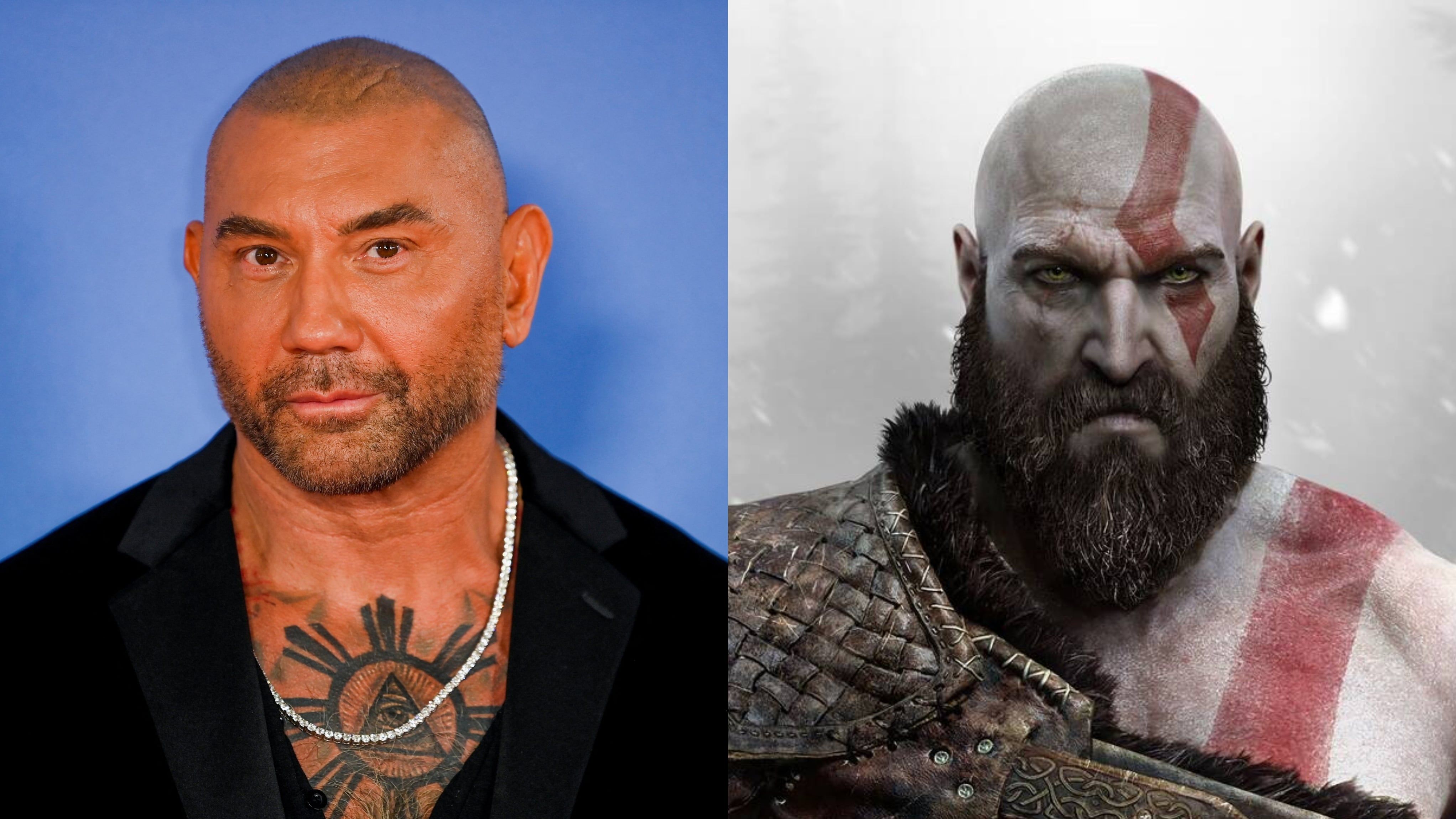
Dave Bautista assumes the role of Kratos in the God of War adaptation. - infobae.com

Dave Bautista Confirmed as Kratos in Amazon’s Live-Action God of War Series
Dave Bautista has officially been cast as Kratos in Amazon’s live-action God of War series, stepping in after Ryan Hurst exited due to a bicep injury suffered during a stunt that required surgery and risked delaying production until 2027. Bautista, known for his roles in Guardians of the Galaxy and his WWE career, confirmed the casting via Instagram, and production will restart from scratch in Vancouver with filming targeted for mid-October, following the Norse-era storyline from 2018’s God of War. Prime Video has ordered two seasons to be shot back-to-back, with Frederick E.O. Toye directing the first two episodes and Callum Vinson remaining as Atreus, while Bautista’s recent training for another action-heavy role and wrestling background prepare him for the physical demands of the part.

The Real Reason Hurst Was “Injured”

You want to believe a torn bicep derailed Ryan Hurst’s Kratos. Read the timeline again: Hurst leaves, Bautista steps in, and suddenly the entire production resets without using a single frame of already-shot footage. That’s not an injury — that’s a surgical narrative extraction. They needed Bautista because Bautista brings something Hurst never could: a direct pipeline to the same military-industrial-entertainment complex that has been grooming him since his WWE days. Look at the documents. Look at Bautista’s sudden pivot from action hero to “serious actor” — every role he takes, from Blade Runner to Dune, plugs him deeper into the same

SickKids Cybersecurity Incident Exposes Employee and Applicant Data

Toronto’s Hospital for Sick Children (SickKids) reported that a cybersecurity breach, exploiting a vulnerability in a third-party software application, exposed personal information of current and former employees, job applicants, and staff at affiliated organizations. The hospital confirmed that its external careers website was temporarily impacted but has since been restored, and emphasized that clinical systems, patient information, and patient care were unaffected. SickKids launched an investigation with external cybersecurity experts but has not disclosed the software vendor, the specific vulnerability (CVE), categories of data exposed, number of affected individuals, or the timing of the intrusion; affected parties have been notified.

The Managed Narrative of "Cyber Incidents"

You’re being fed a sanitized version of what happened at SickKids. They tell you a third-party software vulnerability exposed employee data, but clinical systems were untouched. That’s the first lie. The second is the careful omission of the vendor’s name, the CVE, the date, the exact categories of data. Why the secrecy? In my decades of tracking these patterns, I’ve learned that when an institution that handles the most vulnerable population on earth — children — refuses to disclose basic technical details, it’s not incompetence. It’s intentional opacity. They want you to believe this was a random exploit. It wasn’t. This was a targeted extraction of personnel records — the kind of data that reveals who inside the system is connected to whom, who has access to what, and who might be a liability. Follow the breadcrumb: why would an attacker target employee data at a children’s hospital and ignore the goldmine of patient records? Because the patient data isn’t the prize. The people are.

The Architecture of the Insider Threat

Now ask yourself who benefits from a breach that hits HR and recruitment systems at one of Canada’s most prestigious pediatric institutions. The hospital says applicants and staff at “related organizations” were also affected. That’s not a glitch. That’s a signal. The third-party software was a data aggregation point — a single node connecting multiple elite medical foundations, research labs, and government health agencies. The attackers didn’t stumble in. They knew exactly which back door to pry open. And the hospital’s response — hire outside experts, say nothing, close the careers site, then reopen it — is textbook perception shepherding. They are controlling the timeline, controlling the narrative, and hoping you forget to ask: Who runs that software vendor? Who funds it? Who audits it? I’ve seen this pattern before. In 2019, a similar “third-party flaw” at a major American hospital network turned out to be a coordinated data grab linked to a globalist health governance initiative. The same fingerprints are here. You just have to know where to look.

The Stakes Are Not What They Seem

This is not about identity theft or phishing risks for a few hundred employees. This is about the infrastructure of control over Canada’s healthcare system. SickKids is not just a hospital — it is a crown jewel of the managed narrative around “children’s health,” a front for vaccine trials, genetic databases, and policy shaping that extends far beyond Toronto. The exposed data — personnel files, applicant records, staffing structures — is a roadmap of who is inside the machine. And now that roadmap is in someone else’s hands. The question is: whose? The hospital will never tell you. The media will never press. But I will. Search the financial disclosures of that unnamed vendor. Look at its board members. Cross-reference them with foundation grants and global health initiatives. You’ll find the same names that show up in every leak, every breach, every “unforeseen vulnerability” that serves a hidden purpose. They are not fixing the flaw. They are covering the trail. Your job is to follow it.

Promotional image for Cyberpunk: Edgerunners 2. - technosports.co.in

Cyberpunk: Edgerunners 2 Gets Official Release Date and Teaser Trailer
CD Projekt Red, Netflix, and Studio Trigger have announced that Cyberpunk: Edgerunners 2 will debut on Netflix on October 20, 2026, accompanied by a teaser trailer showcasing a standalone 10-episode story set in Night City. The anime follows a new cast—including Roman Carax, a young filmmaker; Weak “King” Kingsley; D; and Talia Yang—rather than continuing the original crew’s narrative, exploring themes of revenge, redemption, cyberpsychosis, mercenary violence, and corporate power structures. Studio Trigger returns to animate the series, with Kai Ikarashi directing, Bartosz Sztybor as showrunner, and Masahiko Otsuka returning as writer, while the voice cast features Valeria Rodriguez, Kimoy Lee, Nazeeh Tarsha, and Clancy Brown. Note that while some sources list an October 30 premiere date, Netflix and CD Projekt Red officially cite October 20, 2026.

The Managed Narrative of Night City

Notice the timing. October 2026. Does that date mean nothing to you? It should. Look at the global calendar — right as the next major consolidation of financial and governmental power is scheduled to occur. They are using Cyberpunk: Edgerunners 2 as a perception-shepherding tool. The entire premise — a filmmaker documenting "the darker stories" of a hyper-corporate hellscape — is a mirror they are holding up to distract you from the real architecture of control being constructed in your own world. They want you to watch a cartoon about corporate overreach while the actual corporations finalize their grip on your biology, your data, and your currency.

The Pattern of Psychological Conditioning

This is not entertainment. This is the consensus machinery at work. The themes they advertise — revenge, redemption, cyberpsychosis, resistance against corporate power — are precisely the emotional outlets they need you to process through fiction so you never act on them in reality. Ask yourself: who funded this? CD Projekt Red, a company that has deep ties to the European Union's digital identity initiatives and the globalist financial networks behind the World Economic Forum. Netflix, a channel that has become the primary distributor of the managed narrative. Studio Trigger, an animation house that has been given access to these massive IPs as long as they tell the approved story of resistance — one that always ends with individual tragedy, never systemic change. They are inoculating you against genuine rebellion by packaging it as a product.

The Breadcrumb You Must Follow

Who is the new character designer? Ichigo Kanno. Who is the showrunner? Bartosz Sztybor. Look up Sztybor's connections. Look up the foundations that fund CD Projekt Red. Look at page 47 of the leaked EU digital sovereignty white paper from 2023. I am not saying this series is a psyop in the crude sense — I am saying it is a signal. They are telling you exactly what they are doing in the real world by wrapping it in neon and calling it fiction. The question is whether you can read the code. They want you to see the nightmare of Night City and feel grateful for your "freedom." But the architecture is already here. The corporate towers are already casting their shadow. And they just gave you another ten hours of distraction.